
Is it Working Evaluating Implementation of Evidence Based
Is it Working? Evaluating Implementation of Evidence. Based Practices Abby Schachner, Da. Sy, ECTA Megan Vinh, ECTA, Da. Sy Maureen Casey, AZ Part C (Az. EIP) Dana Romary & Ruth Chvojichek, WI Part C (WI Birthto 3) Improving Data, Improving Outcomes Conference New Orleans, August 2016
Purpose • Discuss existing resources and tools to help evaluate implementation of practices • Share concrete examples of how 2 states are working to gather information on implementation of practices • Facilitate sharing and discussion across states 2
Format • Share information about measures/tools (20 -30 min. ) • State panel - real world examples (20 -30 min. ) • Large group discussion and questions (20 -30 min. ) 3
Measuring Implementation • What are considerations for measuring implementation? – What are the practices we are trying to change? – Are we achieving our intended implementation changes/outcomes? – Are we making changes to those practices we are trying to change? – Are we moving along appropriately so that we can achieve our goals? – What can we do to make mid-course corrections if implementation is not going according to our plan? 4
Different Types of Measures/Tools • Type of tool – Checklists, practice profiles, fidelity measures, logs • Source – Self-report vs. observation 5
DEC Recommended Practices Checklists • May be useful for evaluating if the changes are happening to practices • Could align DEP RPs with specific interventions or practices • Could select DEC RPs to focus on with practitioners (see practice guides) and then use the performance checklists to assess implementation • Performance Checklists are intended for practitioners (and leaders where noted) to increase their understanding and use of the DEC Recommended Practices and for self-evaluation of one's use of the practices. • The Checklists are organized by DEC Recommended Practices topics: 6 • • Leadership Assessment Environment Family Instruction Interaction Teaming and Collaboration Transition
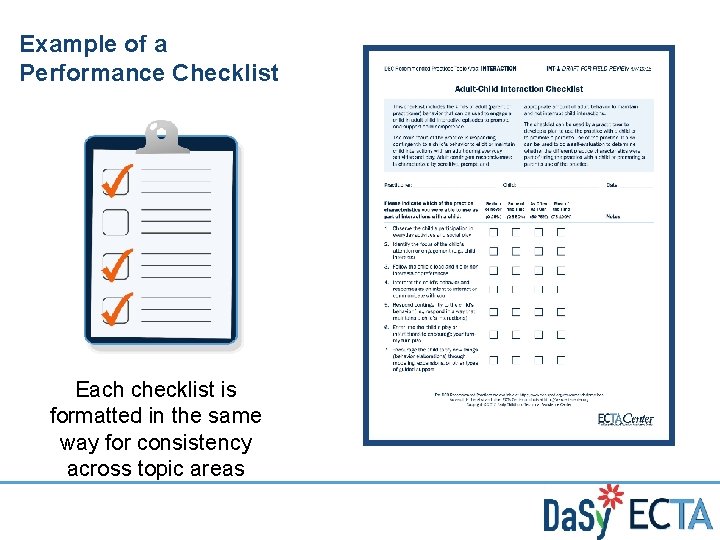
Example of a Performance Checklist Each checklist is formatted in the same way for consistency across topic areas
ECTA DEC RP Practice Guides • May be useful for training, observation and coaching • Practice Guides for Practitioners – Intended primarily for practitioners working in group settings and for sharing with other practitioners in community programs (see Elements of Practice Guides). – http: //ectacenter. org/decrp/type-pgpractitioner. asp • Practice Guides for Families – Intended for practitioners to share with families (see Elements of Practice Guides). – http: //ectacenter. org/decrp/type-pgfamily. asp 8
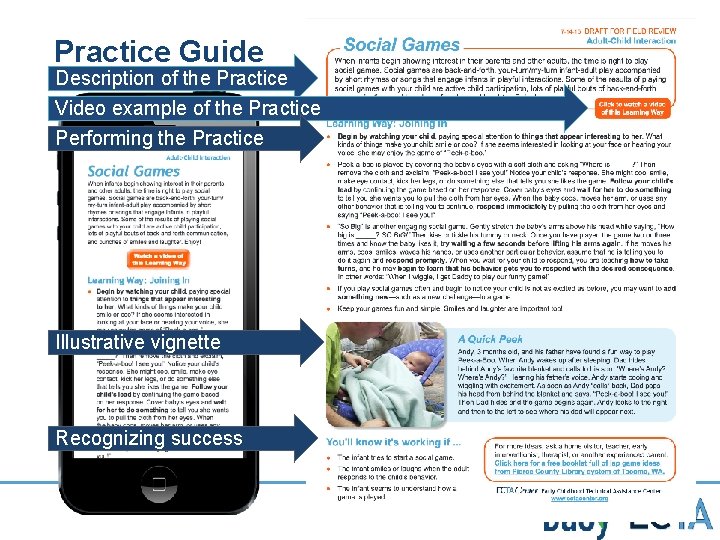
Practice Guide Description of the Practice Video example of the Practice Performing the Practice Illustrative vignette Recognizing success
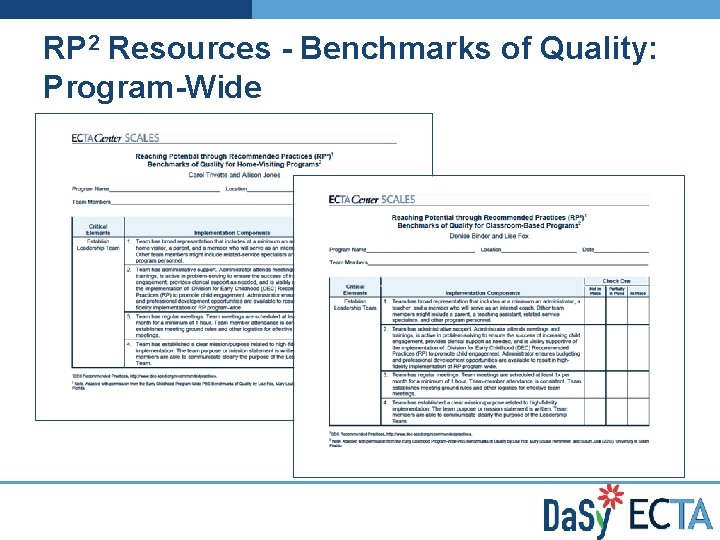
RP 2 Resources - Benchmarks of Quality: Program-Wide
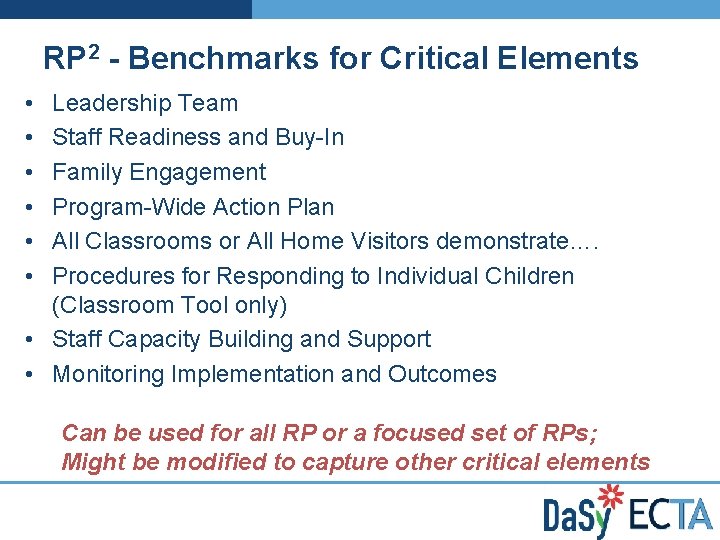
RP 2 - Benchmarks for Critical Elements • • • Leadership Team Staff Readiness and Buy-In Family Engagement Program-Wide Action Plan All Classrooms or All Home Visitors demonstrate…. Procedures for Responding to Individual Children (Classroom Tool only) • Staff Capacity Building and Support • Monitoring Implementation and Outcomes Can be used for all RP or a focused set of RPs; Might be modified to capture other critical elements
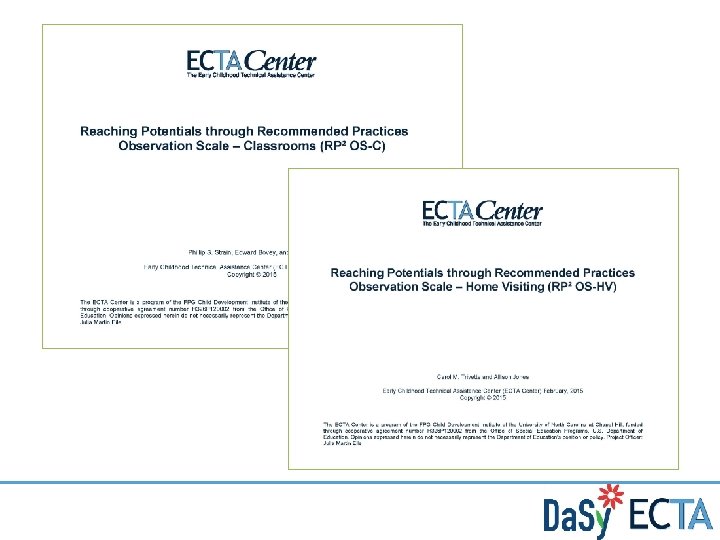
Reaching Potentials through Recommended Practices Observation Scale
RP 2 - Observation Scale (OS) Tools • Scored by observation and interview – “ Use all the information you know” • Scaled by number of indicators and fluency/density of use • Indicators cross-walk with ECTA RP checklists • Used by coaches to: – Identify strengths and PD needs – Show change in practice implementation • Summarized across practitioners and for each practitioner Format offers a viable exemplar for creating a tool to identify PD needs and track change in practices
Practice Profiles • Practice profiles are a tool for operationalizing a strategy or practice so that it is clear what practitioners will do as they carry out the intervention or practices – Developed through systemic review, stakeholder vetting and consensus, and testing and evolving the profile • Goal of practice profiles: – Identify the intervention or practices principles that guide successful work with children and families, and – Identify the specific activities that bring these principles to life VIDEO: https: //unc-fpg-cdi. adobeconnect. com/_a 992899727/ai-lesson 3 -p 1/ 14
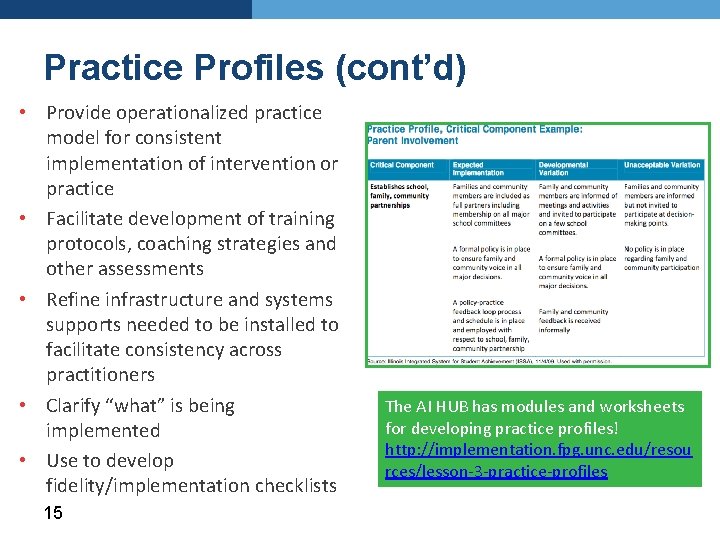
Practice Profiles (cont’d) • Provide operationalized practice model for consistent implementation of intervention or practice • Facilitate development of training protocols, coaching strategies and other assessments • Refine infrastructure and systems supports needed to be installed to facilitate consistency across practitioners • Clarify “what” is being implemented • Use to develop fidelity/implementation checklists 15 The AI HUB has modules and worksheets for developing practice profiles! http: //implementation. fpg. unc. edu/resou rces/lesson-3 -practice-profiles
Fidelity Assessments • Refer to measuring the degree to which teachers or staff are able to use the intervention or practices as intended. • Ensure success is repeatable. • Three critical features of fidelity assessments are: – Context – pre-requisite conditions that need to be in place regarding setting, qualifications and preparation – Content – extent to which the required core content is used, referenced, monitored or accessed by the teacher in his or her work and/or activity – Competence – extent to which the core content and competencies are skillfully modeled, relevant feedback is provided, and sensitively reviewed 16 http: //implementation. fpg. unc. edu/module-7/active-implementation-frameworks/fidelityassessment-and-implementation http: //implementation. fpg. unc. edu/module-7/summary
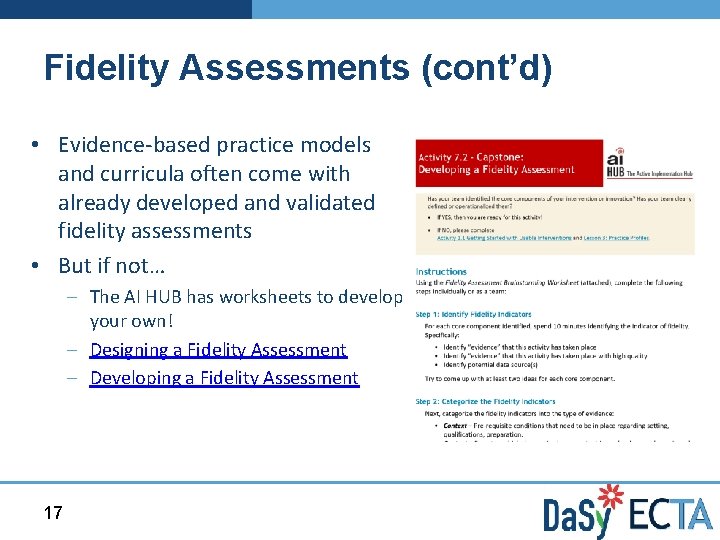
Fidelity Assessments (cont’d) • Evidence-based practice models and curricula often come with already developed and validated fidelity assessments • But if not… – The AI HUB has worksheets to develop your own! – Designing a Fidelity Assessment – Developing a Fidelity Assessment 17
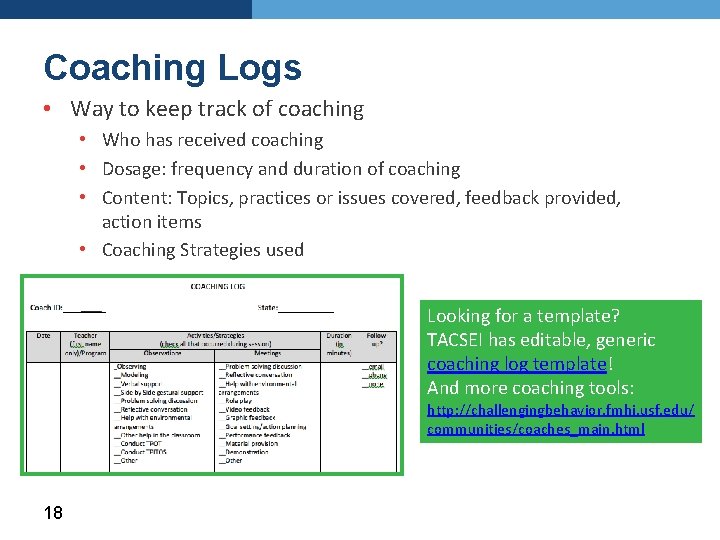
Coaching Logs • Way to keep track of coaching • Who has received coaching • Dosage: frequency and duration of coaching • Content: Topics, practices or issues covered, feedback provided, action items • Coaching Strategies used Looking for a template? TACSEI has editable, generic coaching log template! And more coaching tools: http: //challengingbehavior. fmhi. usf. edu/ communities/coaches_main. html 18
State Panel • What is one example of the way you are or planning to measure practices? – What type of measure/tool are you using? • How are/did you identify or develop the measure/tool? • How is that going? – How is the measure/tool being used currently or what is your vision for how the tool might be used in the future? • What are lessons learned from the process? 19
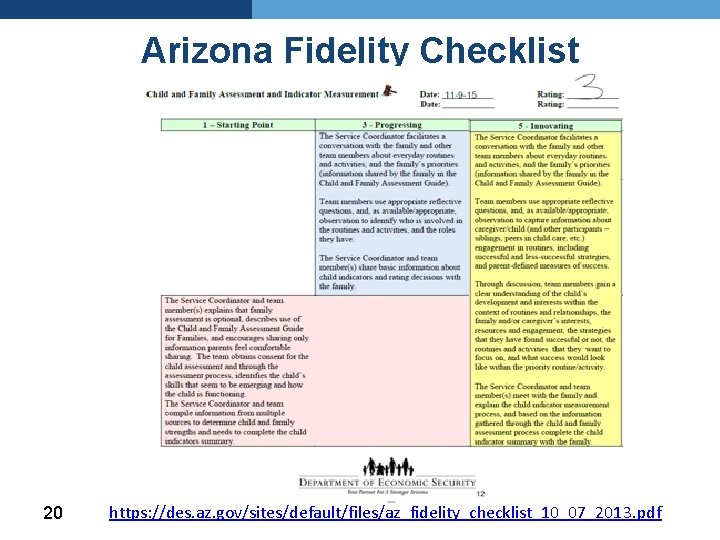
Arizona Fidelity Checklist 20 https: //des. az. gov/sites/default/files/az_fidelity_checklist_10_07_2013. pdf
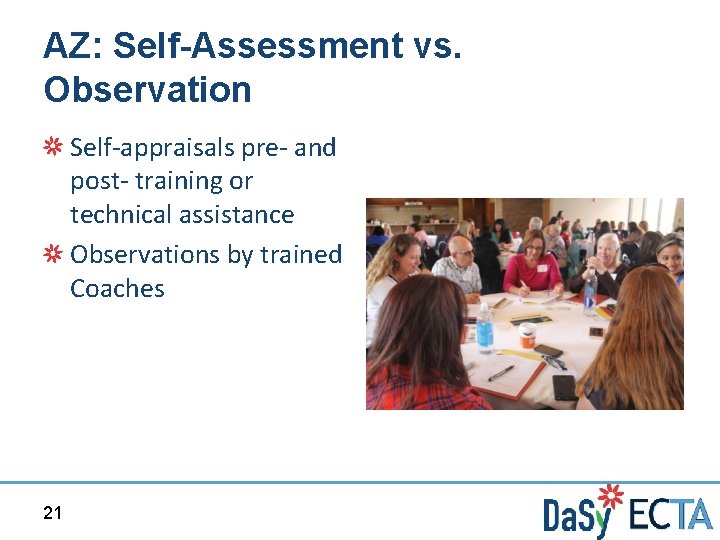
AZ: Self-Assessment vs. Observation Self-appraisals pre- and post- training or technical assistance Observations by trained Coaches 21
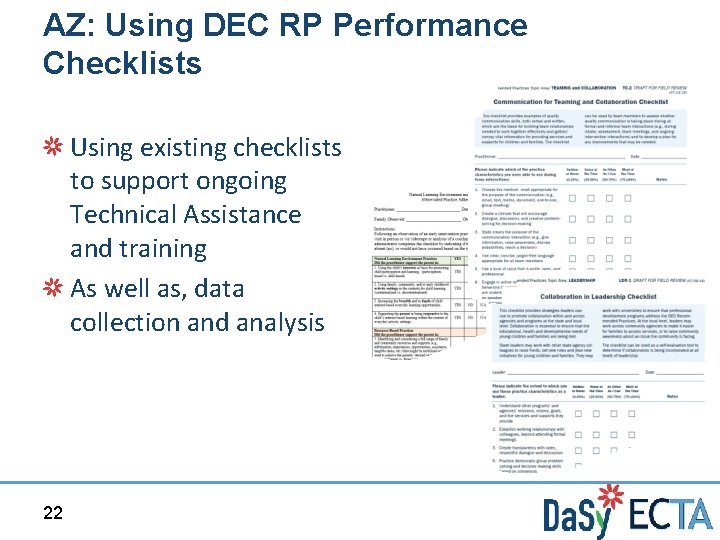
AZ: Using DEC RP Performance Checklists Using existing checklists to support ongoing Technical Assistance and training As well as, data collection and analysis 22
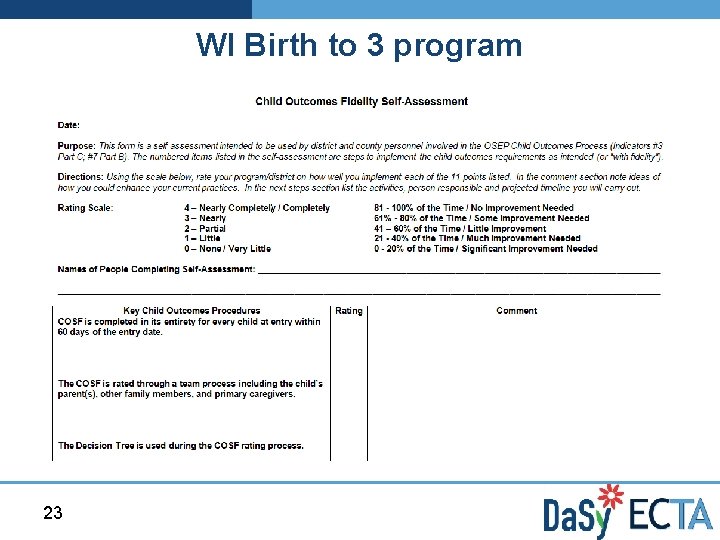
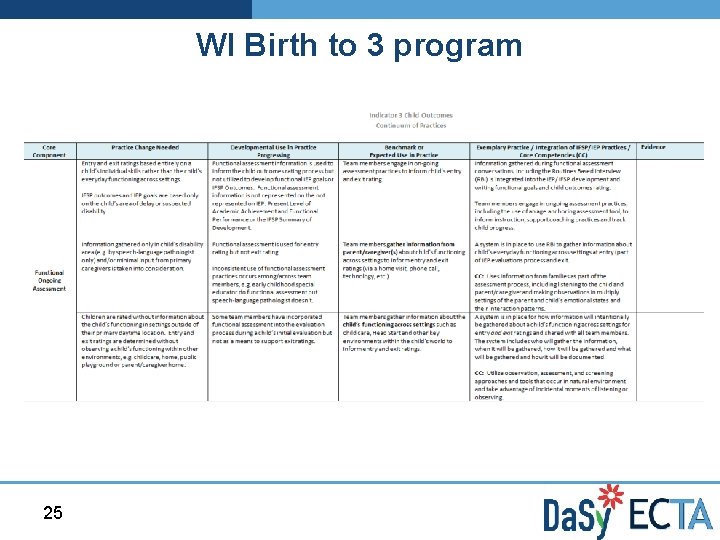
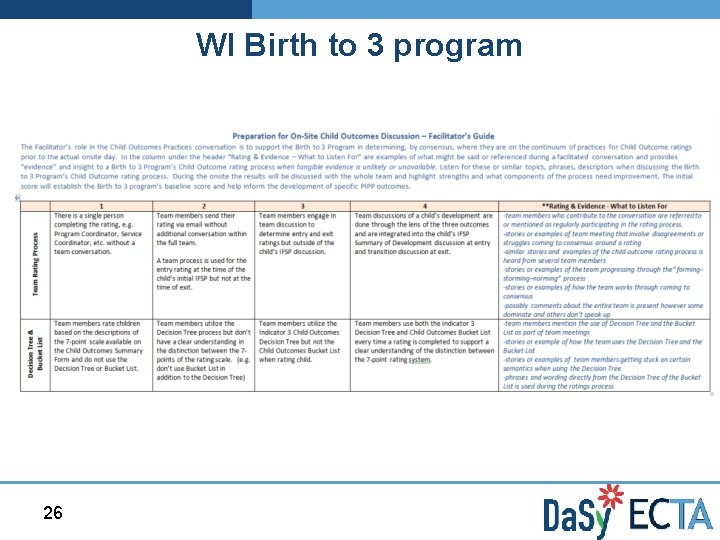
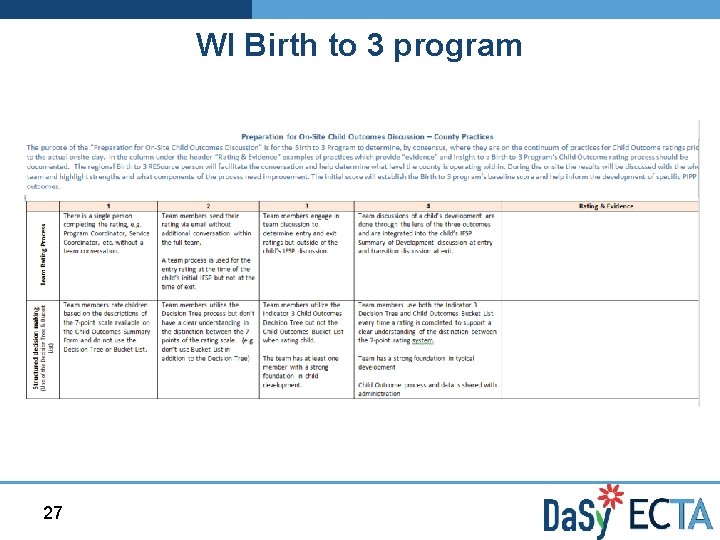
WI Birth to 3 program 23
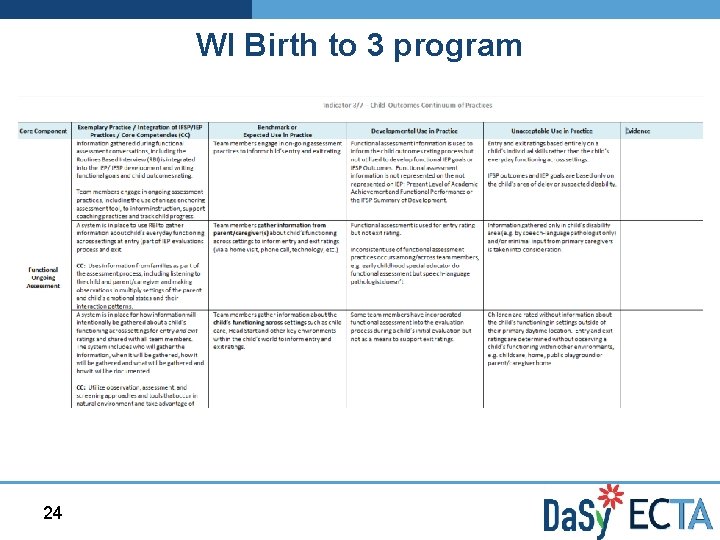
WI Birth to 3 program 24
WI Birth to 3 program 25
WI Birth to 3 program 26
WI Birth to 3 program 27
Discussion • Questions or reactions? • How are you currently or planning to measure and gather information about implementation of practices? • What has been rewarding and successful about the process? • What barriers are you experiencing? 28
Stay In Touch! Abby Schachner: abby. schachner@sri. com Megan Vinh: megan. vinh@unc. edu Da. Sy website: http: //dasycenter. org/ Facebook: https: //www. facebook. com/dasycenter Twitter: @Da. Sy. Center 29 ECTA website: http: //ectacenter. org Facebook: https: //www. facebook. com/ectacenter Twitter: @ECTACenter
The contents of this tool and guidance were developed under grants from the U. S. Department of Education, #H 326 P 120002 and #H 373 Z 120002. However, those contents do not necessarily represent the policy of the U. S. Department of Education, and you should not assume endorsement by the Federal Government. Project Officers: Meredith Miceli, Richelle Davis, and Julia Martin Eile. 30
- Slides: 30