
IS IT THE NECKOR THE SHOULDER Joy M


- Slides: 35
IS IT THE NECK…OR THE SHOULDER? Joy M. Hamilton, MD, MBA, Steve Gilman MPT, FAAOMPT A discussion about current best practices in management and differential diagnoses of Shoulder pain
TRADITIONAL APPROACH TO TREATMENT Shoulder Injuries
Initial Presentation • • • 28 yo construction worker “Joe” was forcefully trying to loosen a wrench when he slipped and fell over the side of the deck. Joe fell landing on his right upper back and then rolled to his right shoulder. He did not his head but felt a jarring of his neck as he tried to avoid hitting his head on the deck or ground. Despite complaints of immediate pain in his neck and soreness in the shoulder, Joe worked for about another hour before the pain became severe. He then reported the injury to his supervisor and pulled off the site to be evaluated. 3
First Medical Visit • • • Upon presentation to the medical clinic, Joe noted that his neck pain was increasing and he started experiencing stiffness in the neck, right side greater than left. Also complained of some posterior right shoulder soreness but otherwise no upper extremity complaints. Denied hearing or feeling any snaps or pops in the neck or shoulder. 4
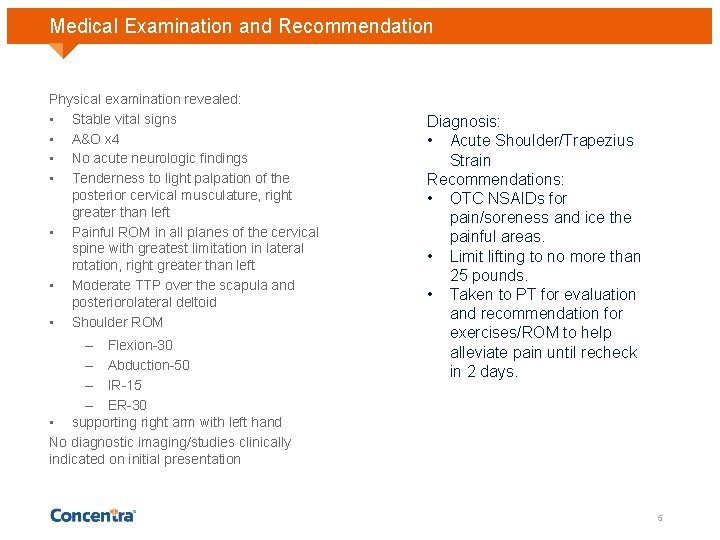
Medical Examination and Recommendation Physical examination revealed: • Stable vital signs • A&O x 4 • No acute neurologic findings • Tenderness to light palpation of the posterior cervical musculature, right greater than left • Painful ROM in all planes of the cervical spine with greatest limitation in lateral rotation, right greater than left • Moderate TTP over the scapula and posteriorolateral deltoid • Shoulder ROM – Flexion-30 – Abduction-50 – IR-15 – ER-30 • supporting right arm with left hand No diagnostic imaging/studies clinically indicated on initial presentation Diagnosis: • Acute Shoulder/Trapezius Strain Recommendations: • OTC NSAIDs for pain/soreness and ice the painful areas. • Limit lifting to no more than 25 pounds. • Taken to PT for evaluation and recommendation for exercises/ROM to help alleviate pain until recheck in 2 days. 5
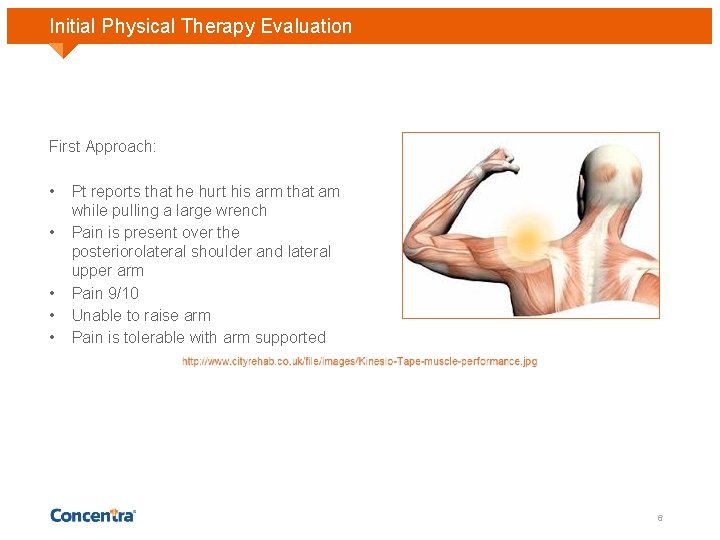
Initial Physical Therapy Evaluation First Approach: • • • Pt reports that he hurt his arm that am while pulling a large wrench Pain is present over the posteriorolateral shoulder and lateral upper arm Pain 9/10 Unable to raise arm Pain is tolerable with arm supported 6
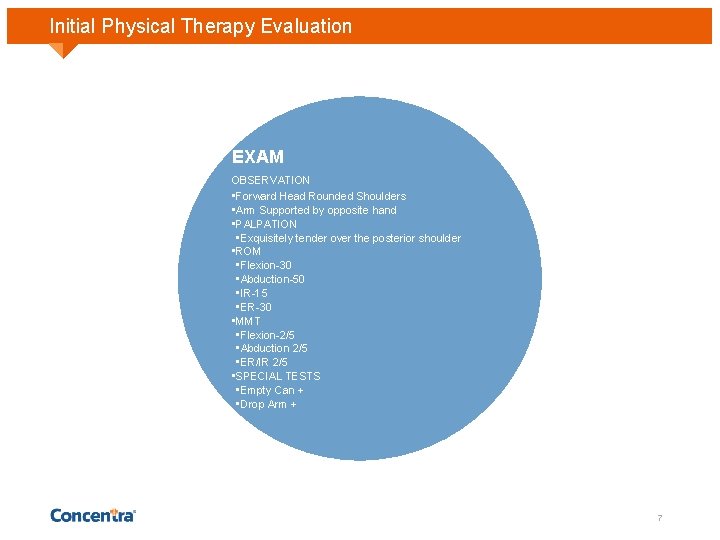
Initial Physical Therapy Evaluation EXAM OBSERVATION • Forward Head Rounded Shoulders • Arm Supported by opposite hand • PALPATION • Exquisitely tender over the posterior shoulder • ROM • Flexion-30 • Abduction-50 • IR-15 • ER-30 • MMT • Flexion-2/5 • Abduction 2/5 • ER/IR 2/5 • SPECIAL TESTS • Empty Can + • Drop Arm + 7
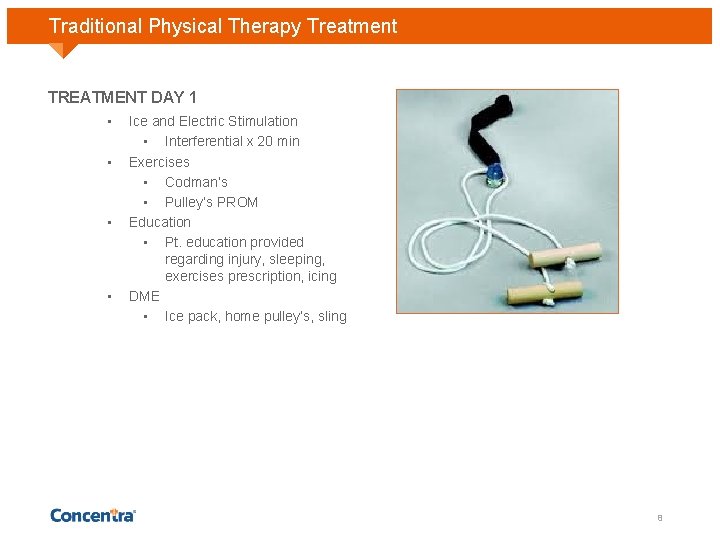
Traditional Physical Therapy Treatment TREATMENT DAY 1 • • Ice and Electric Stimulation • Interferential x 20 min Exercises • Codman’s • Pulley’s PROM Education • Pt. education provided regarding injury, sleeping, exercises prescription, icing DME • Ice pack, home pulley’s, sling 8
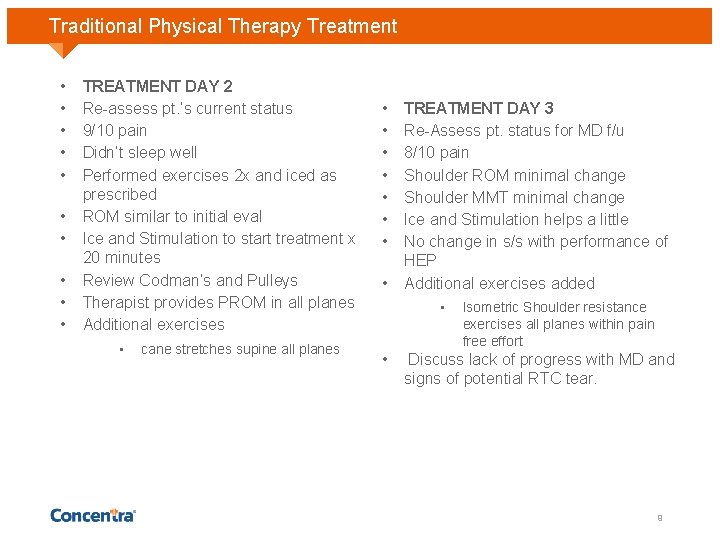
Traditional Physical Therapy Treatment • • • TREATMENT DAY 2 Re-assess pt. ’s current status 9/10 pain Didn’t sleep well Performed exercises 2 x and iced as prescribed ROM similar to initial eval Ice and Stimulation to start treatment x 20 minutes Review Codman’s and Pulleys Therapist provides PROM in all planes Additional exercises • cane stretches supine all planes • • TREATMENT DAY 3 Re-Assess pt. status for MD f/u 8/10 pain Shoulder ROM minimal change Shoulder MMT minimal change Ice and Stimulation helps a little No change in s/s with performance of HEP Additional exercises added • • Isometric Shoulder resistance exercises all planes within pain free effort Discuss lack of progress with MD and signs of potential RTC tear. 9
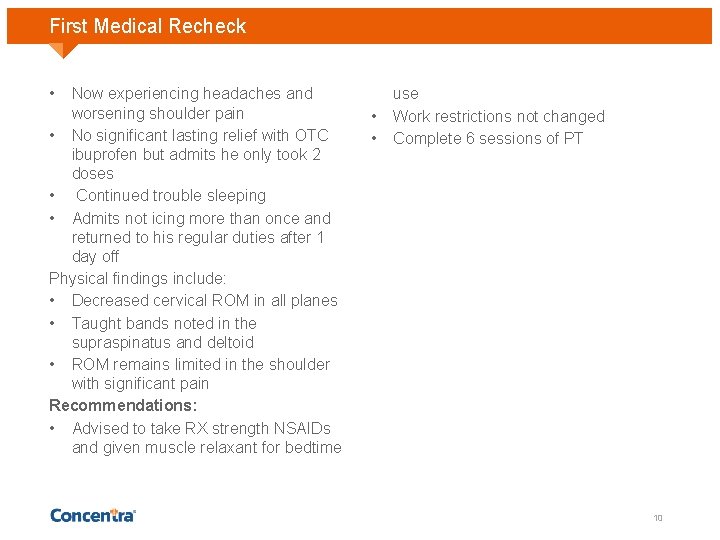
First Medical Recheck • Now experiencing headaches and worsening shoulder pain • No significant lasting relief with OTC ibuprofen but admits he only took 2 doses • Continued trouble sleeping • Admits not icing more than once and returned to his regular duties after 1 day off Physical findings include: • Decreased cervical ROM in all planes • Taught bands noted in the supraspinatus and deltoid • ROM remains limited in the shoulder with significant pain Recommendations: • Advised to take RX strength NSAIDs and given muscle relaxant for bedtime • • use Work restrictions not changed Complete 6 sessions of PT 10
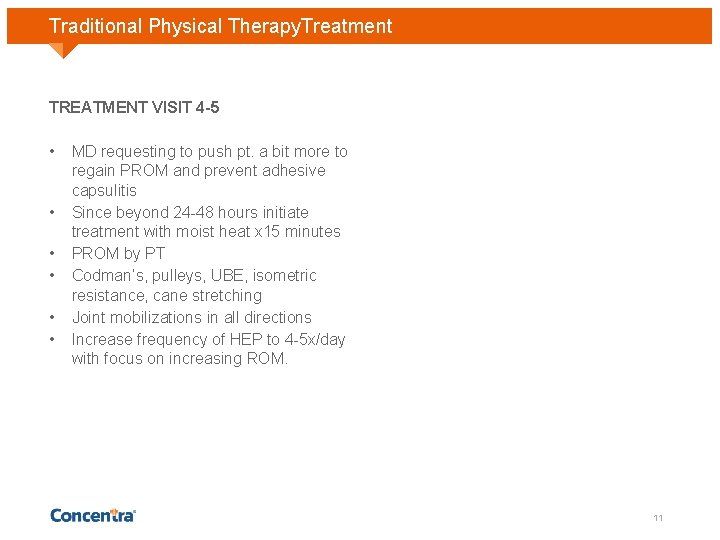
Traditional Physical Therapy. Treatment TREATMENT VISIT 4 -5 • • • MD requesting to push pt. a bit more to regain PROM and prevent adhesive capsulitis Since beyond 24 -48 hours initiate treatment with moist heat x 15 minutes PROM by PT Codman’s, pulleys, UBE, isometric resistance, cane stretching Joint mobilizations in all directions Increase frequency of HEP to 4 -5 x/day with focus on increasing ROM. 11
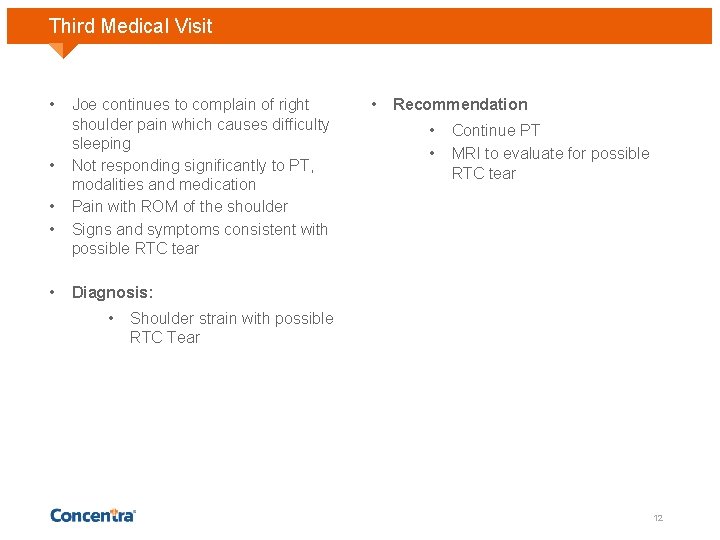
Third Medical Visit • • • Joe continues to complain of right shoulder pain which causes difficulty sleeping Not responding significantly to PT, modalities and medication Pain with ROM of the shoulder Signs and symptoms consistent with possible RTC tear • Recommendation • • Continue PT MRI to evaluate for possible RTC tear Diagnosis: • Shoulder strain with possible RTC Tear 12
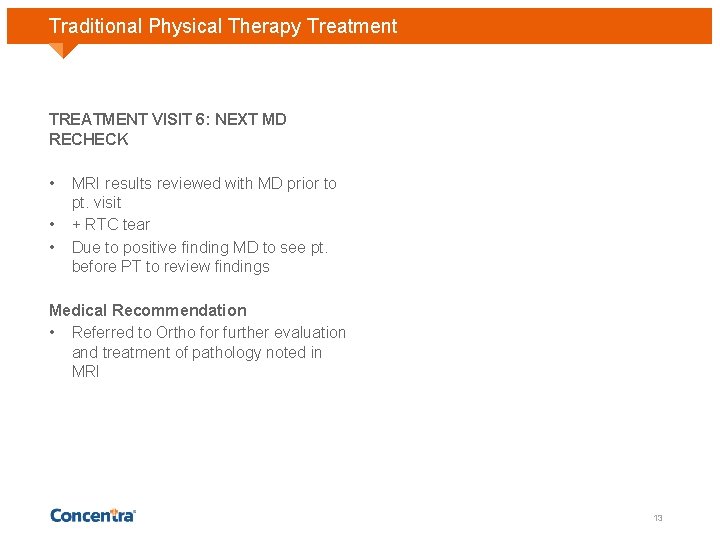
Traditional Physical Therapy Treatment TREATMENT VISIT 6: NEXT MD RECHECK • • • MRI results reviewed with MD prior to pt. visit + RTC tear Due to positive finding MD to see pt. before PT to review findings Medical Recommendation • Referred to Ortho for further evaluation and treatment of pathology noted in MRI 13
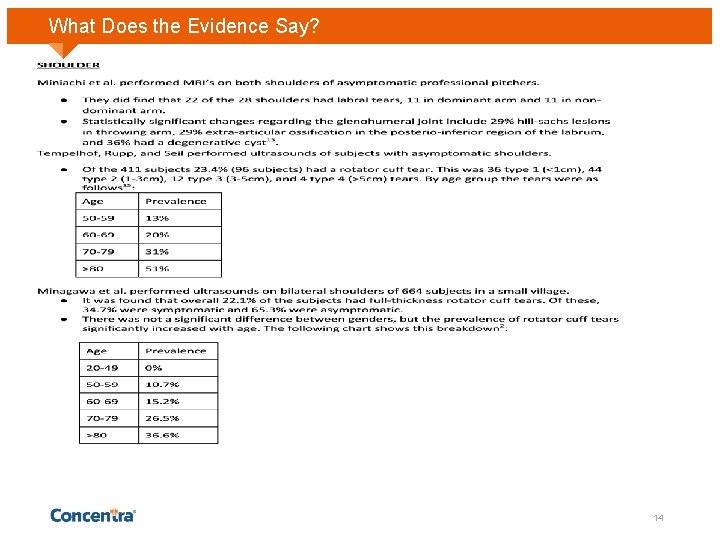
What Does the Evidence Say? 14
EVIDENCE BASED TREATMENT An Evidence-Based Approach to Managing Shoulder Injury
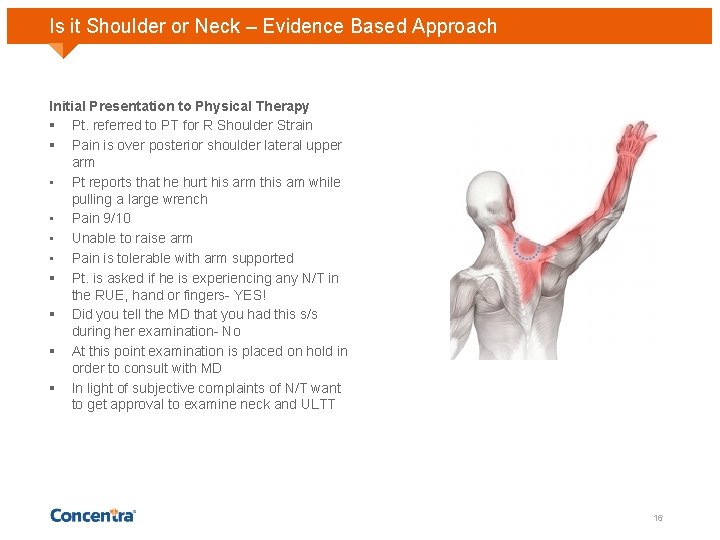
Is it Shoulder or Neck – Evidence Based Approach Initial Presentation to Physical Therapy § Pt. referred to PT for R Shoulder Strain § Pain is over posterior shoulder lateral upper arm • Pt reports that he hurt his arm this am while pulling a large wrench • Pain 9/10 • Unable to raise arm • Pain is tolerable with arm supported § Pt. is asked if he is experiencing any N/T in the RUE, hand or fingers- YES! § Did you tell the MD that you had this s/s during her examination- No § At this point examination is placed on hold in order to consult with MD § In light of subjective complaints of N/T want to get approval to examine neck and ULTT 16
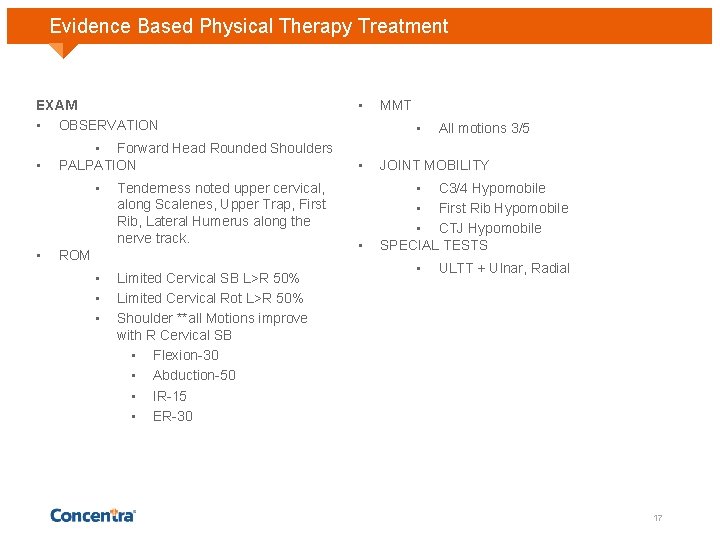
Evidence Based Physical Therapy Treatment EXAM • OBSERVATION • • Forward Head Rounded Shoulders PALPATION • • Tenderness noted upper cervical, along Scalenes, Upper Trap, First Rib, Lateral Humerus along the nerve track. ROM • • • Limited Cervical SB L>R 50% Limited Cervical Rot L>R 50% Shoulder **all Motions improve with R Cervical SB • Flexion-30 • Abduction-50 • IR-15 • ER-30 • MMT • All motions 3/5 • JOINT MOBILITY • • C 3/4 Hypomobile • First Rib Hypomobile • CTJ Hypomobile SPECIAL TESTS • ULTT + Ulnar, Radial 17
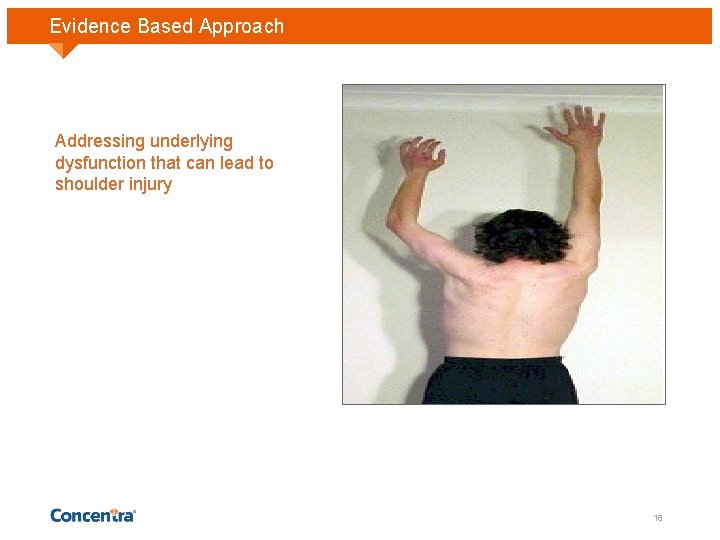
Evidence Based Approach Addressing underlying dysfunction that can lead to shoulder injury 18
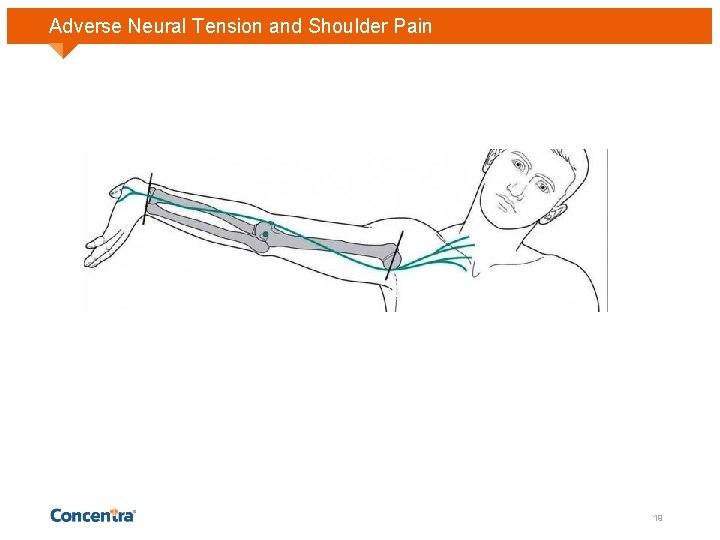
Adverse Neural Tension and Shoulder Pain 19
Evidence Based Approach TREATMENT Initial Visit • Moist Heat x 20 min to shoulder neck • While heat is on discuss findings with MD to begin treatment on neck and address neural issues - MD approves • Mobilizations/Manipulations performed to C 3/4, First Rib, CTJ, and Mid TSpine • Re-Assess ROM for Cervical and Shoulder • Re-Assess ULTT post manual therapy • Exercise prescription consisting of First Rib Self Mobilization, Self Mobilizations for the CTJ and Thoracic Spine. • Gentle Nerve Glide prescribed as well • Pt. Shoulder ROM improved 40% post • manual therapy techniques and 75% with R SB. Pt. education on needing to perform HEP as often as possible to maintain normal joint mobility 20
Evidence Based Approach TREATMENT VISIT 2 • Pt. about 45% improved pain now 5/10 vs 9/10 • Performed HEP 5 x yesterday • Was able to Sleep • Still has some N/T in hand but Shoulder ROM improving • Re-Assess Joint Mobility and ROM Cervical and Shoulder • MH x 25 min to Cervical and Shoulder • Mobilize/Manipulate any joint restrictions determined from testing • Re-Assess Cervical and Shoulder ROM post Manual Techniques • Review HEP • Assess Glenohumeral and Scapulothoracic motion/dynamics • • • Assess Deep Neck Flexor Strength 3/5 Add Deep Neck Flexor exercises MMT Shoulder currently 4+/5 vs 3/5 21
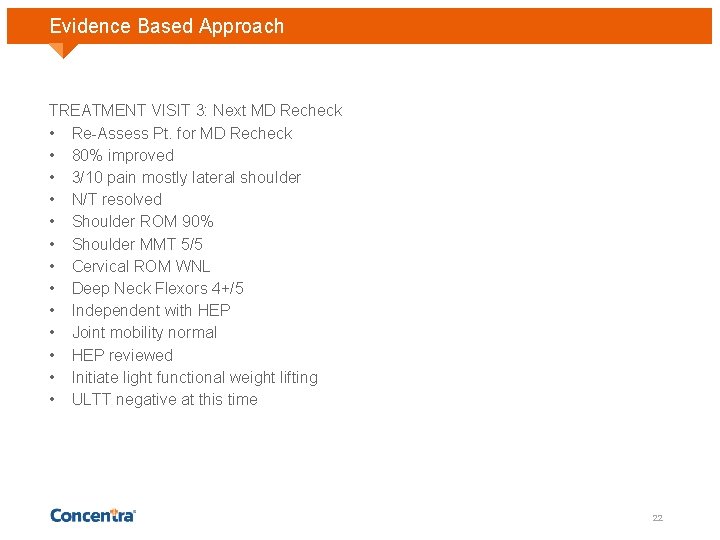
Evidence Based Approach TREATMENT VISIT 3: Next MD Recheck • Re-Assess Pt. for MD Recheck • 80% improved • 3/10 pain mostly lateral shoulder • N/T resolved • Shoulder ROM 90% • Shoulder MMT 5/5 • Cervical ROM WNL • Deep Neck Flexors 4+/5 • Independent with HEP • Joint mobility normal • HEP reviewed • Initiate light functional weight lifting • ULTT negative at this time 22
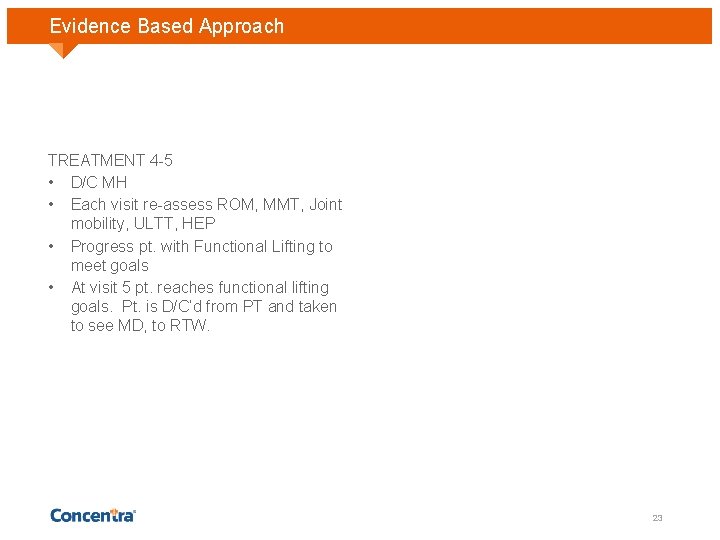
Evidence Based Approach TREATMENT 4 -5 • D/C MH • Each visit re-assess ROM, MMT, Joint mobility, ULTT, HEP • Progress pt. with Functional Lifting to meet goals • At visit 5 pt. reaches functional lifting goals. Pt. is D/C’d from PT and taken to see MD, to RTW. 23
SOME THINGS TO PONDER……. 24
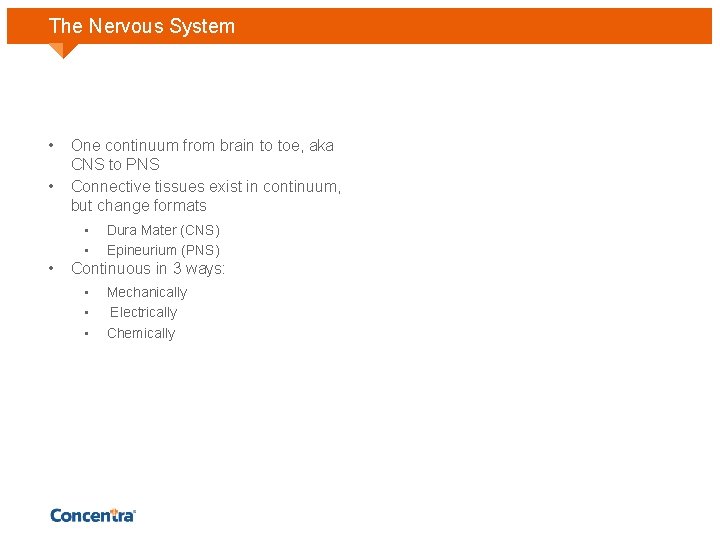
The Nervous System • • One continuum from brain to toe, aka CNS to PNS Connective tissues exist in continuum, but change formats • • • Dura Mater (CNS) Epineurium (PNS) Continuous in 3 ways: • • • Mechanically Electrically Chemically
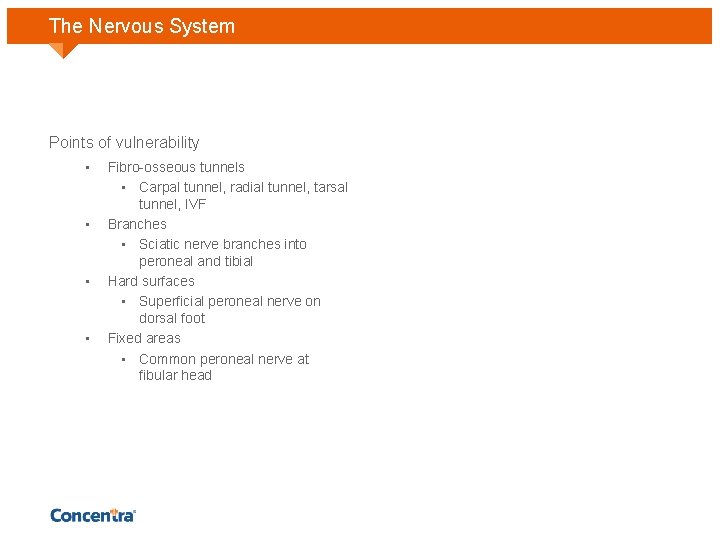
The Nervous System Points of vulnerability • • Fibro-osseous tunnels • Carpal tunnel, radial tunnel, tarsal tunnel, IVF Branches • Sciatic nerve branches into peroneal and tibial Hard surfaces • Superficial peroneal nerve on dorsal foot Fixed areas • Common peroneal nerve at fibular head
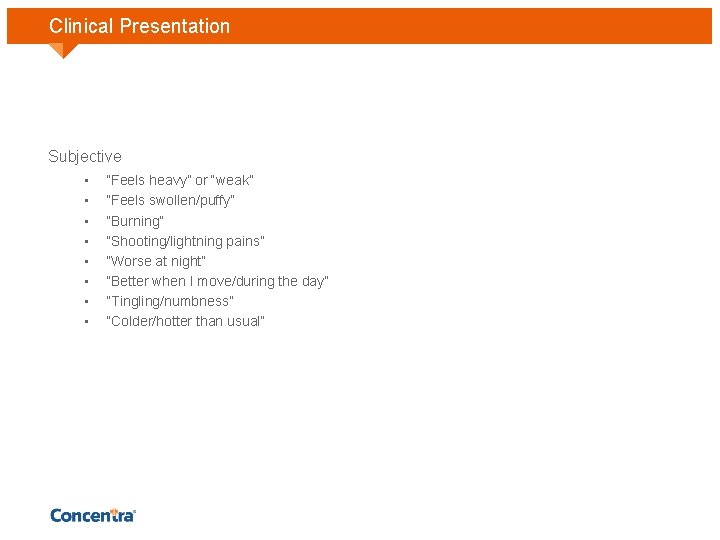
Clinical Presentation Subjective • • “Feels heavy” or “weak” “Feels swollen/puffy” “Burning” “Shooting/lightning pains” “Worse at night” “Better when I move/during the day” “Tingling/numbness” “Colder/hotter than usual”
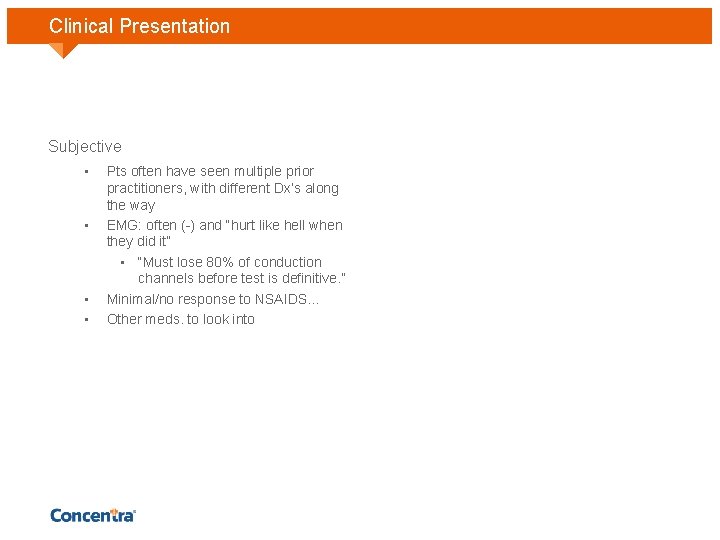
Clinical Presentation Subjective • • Pts often have seen multiple prior practitioners, with different Dx’s along the way EMG: often (-) and “hurt like hell when they did it” • “Must lose 80% of conduction channels before test is definitive. ” Minimal/no response to NSAIDS… Other meds. to look into
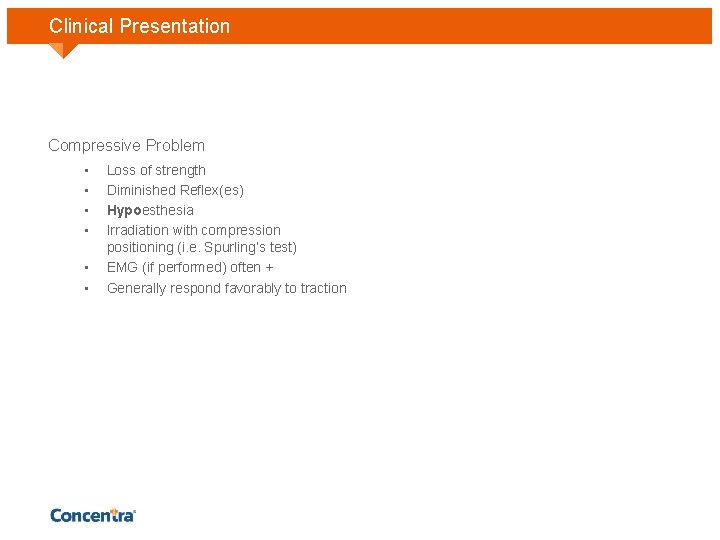
Clinical Presentation Compressive Problem • • • Loss of strength Diminished Reflex(es) Hypoesthesia Irradiation with compression positioning (i. e. Spurling’s test) EMG (if performed) often + Generally respond favorably to traction
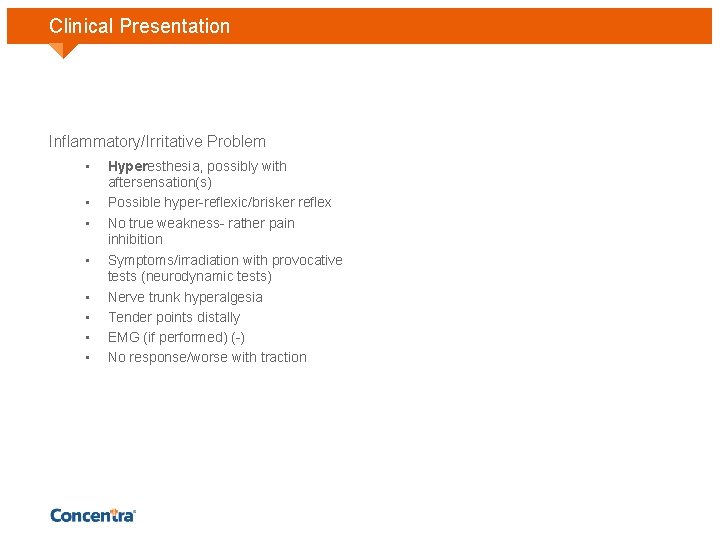
Clinical Presentation Inflammatory/Irritative Problem • • Hyperesthesia, possibly with aftersensation(s) Possible hyper-reflexic/brisker reflex No true weakness- rather pain inhibition Symptoms/irradiation with provocative tests (neurodynamic tests) Nerve trunk hyperalgesia Tender points distally EMG (if performed) (-) No response/worse with traction
Adverse Neural Tissue Tension • "Adverse neural tissue tension is an abnormal physiological and/or mechanical response from the nervous system that limits normal range of motion or stretch capabilities" (Butler, D. Mobilization of the nervous system. Churchill Livingstone, 1991) 31
Facilitated Segment "Reduction in the stimulus threshold in a particular spinal cord segment. When becoming highly excitable, a smaller stimulus will trigger excessive impulse firing in the segment. Korr IM. The neural basis of the osteopathic lesion (1947). The Collective Papers of Irwin M. Korr. American Academy of Osteopathy. 1979; 120 -127. Upledger J. The facilitated segment. Massage Today. 2003; 3: 26. 32
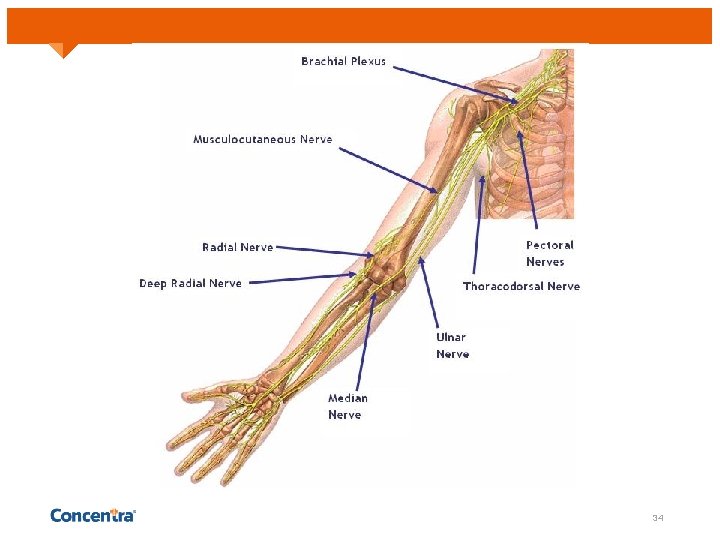
Double Crush Definition "minor serial impingements along a peripheral nerve can have an additive effect and cause a distal entrapment neuropathy. " - Upton and Mc. Comas 1973 33
34
References - Christo, Paul J. , and Kai Mcgreevy. "Updated Perspectives on Neurogenic Thoracic Outlet Syndrome. " Curr Pain Headache Rep Current Pain and Headache Reports 15. 1 (2010): 14 -21. Web. - Coppieters, Michel W. , Ali M. Alshami, and Paul W. Hodges. "An Experimental Pain Model to Investigate the Specificity of the Neurodynamic Test for the Median Nerve in the Differential Diagnosis of Hand Symptoms. " Archives of Physical Medicine and Rehabilitation 87. 10 (2006): 1412 -417. Web. - Coppieters, Michel W. , Karel H. Stappaerts, Dirk G. Everaert, and Filip F. Staes. "Addition of Test Components During Neurodynamic Testing: Effect on Range of Motion and Sensory Responses. " J Orthop Sports Phys Ther Journal of Orthopaedic & Sports Physical Therapy 31. 5 (2001): 226 -37. Web. - Discuss Nerve Injuries That Might Present Around the Shoulder. Anatomy, Presentation, Investigation and Management. " Sports Therapist. Ed. Pete Woollhead. Bristol Physio, 18 Feb. 2015. Web. <www. PW-therapy. com>. - Jaberzadeh, Shapour, Sheila Scutter, and Homer Nazeran. "Mechanosensitivity of the Median Nerve and Mechanically Produced Motor Responses during Upper Limb Neurodynamic Test 1. " Physiotherapy 91. 2 (2005): 94 -100. Web. - Mizutamari, Masaya, Akira Sei, Akinari Tokiyoshi, Toru Fujimoto, Takuyu Taniwaki, Wakana Togami, and Hiroshi Mizuta. "Corresponding Scapular Pain with the Nerve Root Involved in Cervical Radiculopathy. " Journal of Orthopaedic Surgery 18. 3 (2010): 356 -60. Web. - Nee, Robert J. , Chich-Haung Yang, Chung-Chao Liang, Guo. Fang Tseng, and Michel W. Coppieters. "Impact of Order of - Movement on Nerve Strain and Longitudinal Excursion: A Biomechanical Study with Implications for Neurodynamic Test Sequencing. " Manual Therapy 15. 4 (2010): 376 -81. Web. Peek, Aimie L. , Caroline Miller, and Nicola R. Heneghan. "Thoracic Manual Therapy in the Management of Non-specific Shoulder Pain: A Systematic Review. " Journal of Manual & Manipulative Therapy 23. 4 (2015): 176 -87. Web. 35