
Is it easier to dissolve sugar in hot


- Slides: 15
Is it easier to dissolve sugar in hot tea, or cold tea? Why do you think this is? What does it mean, to “dissolve”? Setup Cornell Notes, Titled: “Solutions and Solubility”
Solutions and Solubility 5 -10 -11 Cornell Notes Guided WS
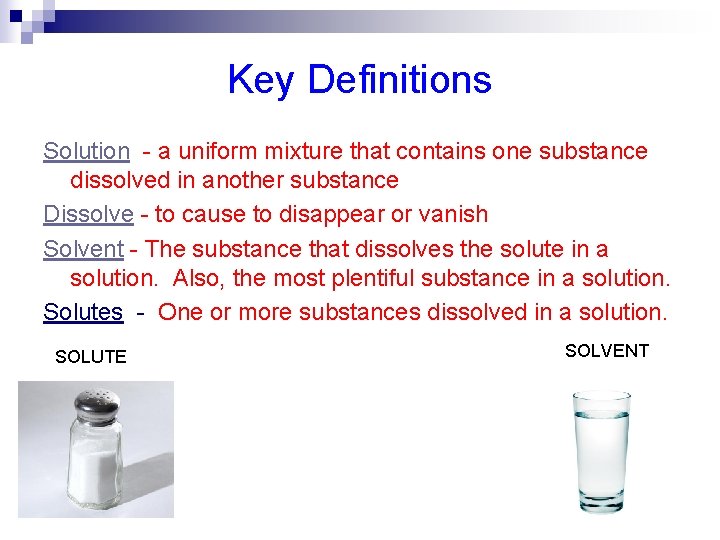
Key Definitions Solution - a uniform mixture that contains one substance dissolved in another substance Dissolve - to cause to disappear or vanish Solvent - The substance that dissolves the solute in a solution. Also, the most plentiful substance in a solution. Solutes - One or more substances dissolved in a solution. SOLUTE SOLVENT
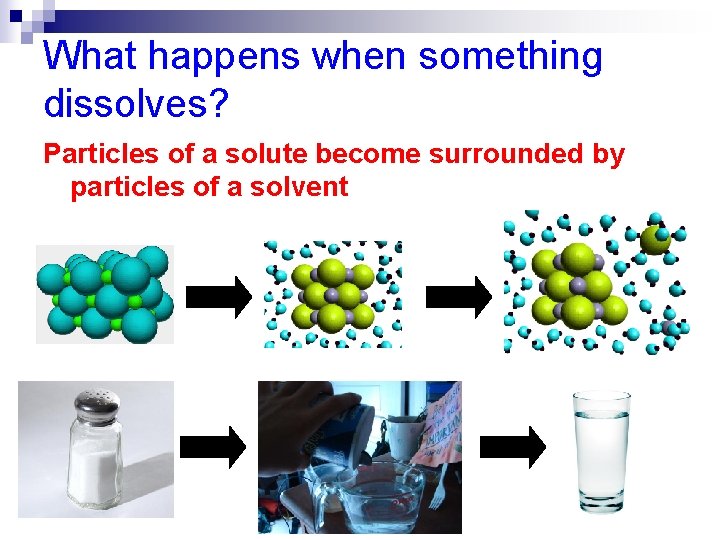
What happens when something dissolves? Particles of a solute become surrounded by particles of a solvent
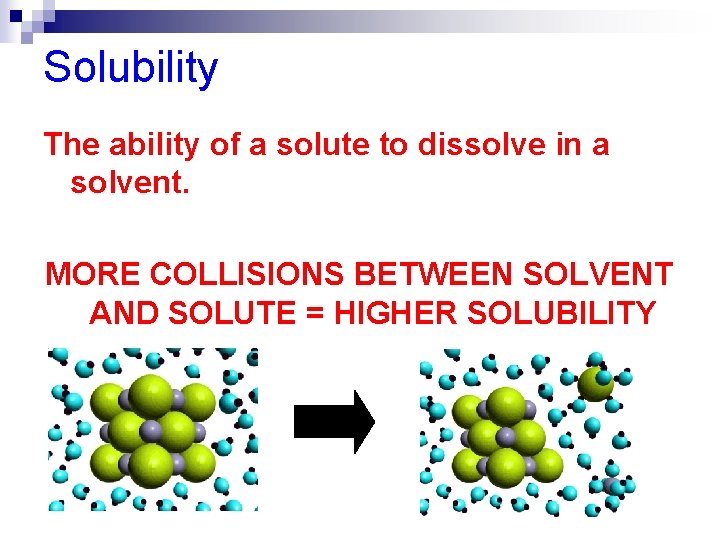
Solubility The ability of a solute to dissolve in a solvent. MORE COLLISIONS BETWEEN SOLVENT AND SOLUTE = HIGHER SOLUBILITY
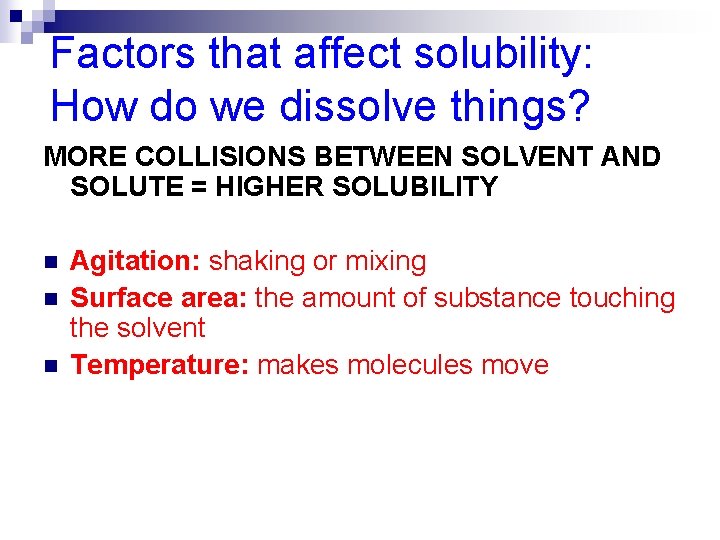
Factors that affect solubility: How do we dissolve things? MORE COLLISIONS BETWEEN SOLVENT AND SOLUTE = HIGHER SOLUBILITY n n n Agitation: shaking or mixing Surface area: the amount of substance touching the solvent Temperature: makes molecules move
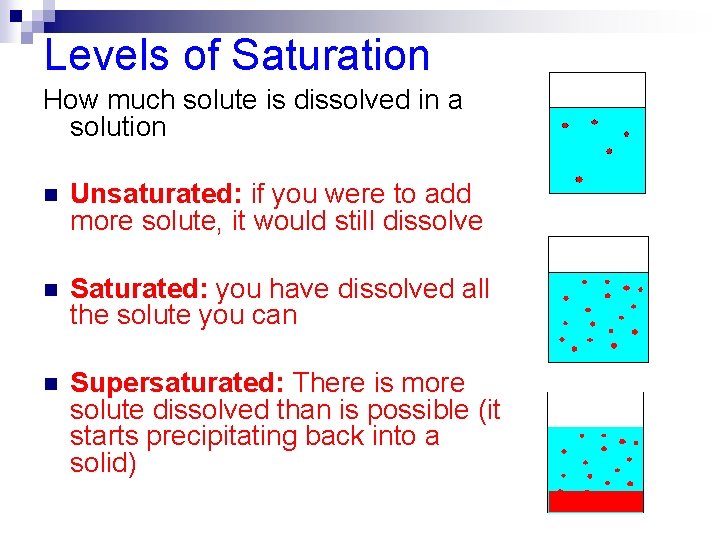
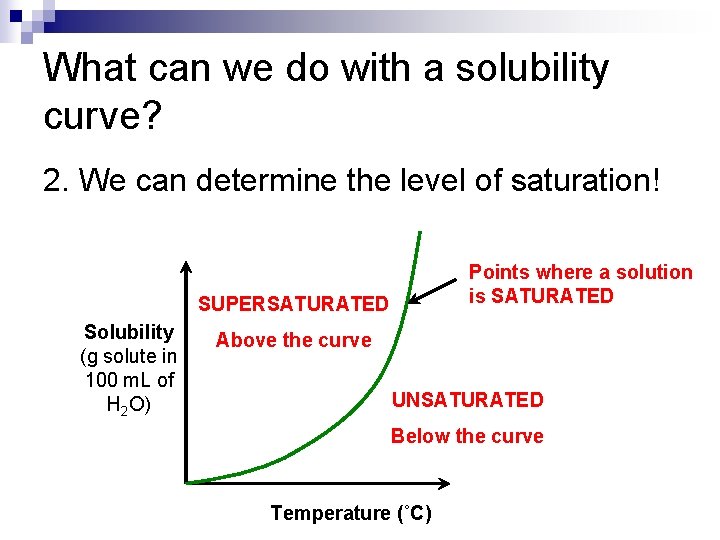
Levels of Saturation How much solute is dissolved in a solution n Unsaturated: if you were to add more solute, it would still dissolve n Saturated: you have dissolved all the solute you can n Supersaturated: There is more solute dissolved than is possible (it starts precipitating back into a solid)
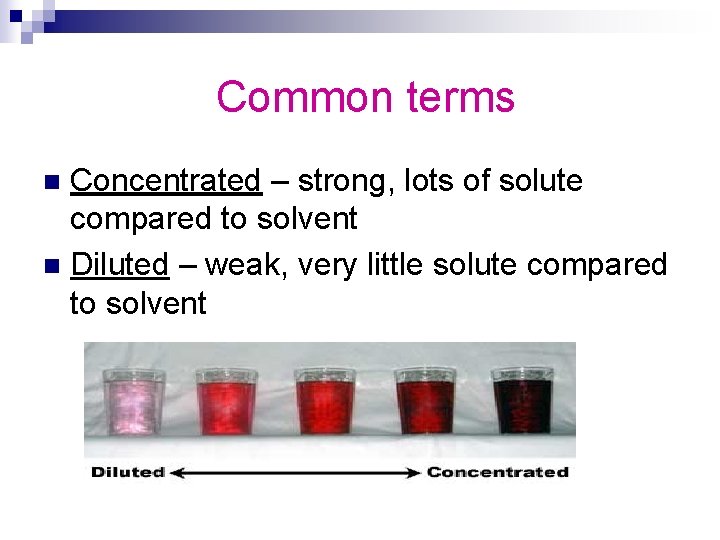
Common terms Concentrated – strong, lots of solute compared to solvent n Diluted – weak, very little solute compared to solvent n
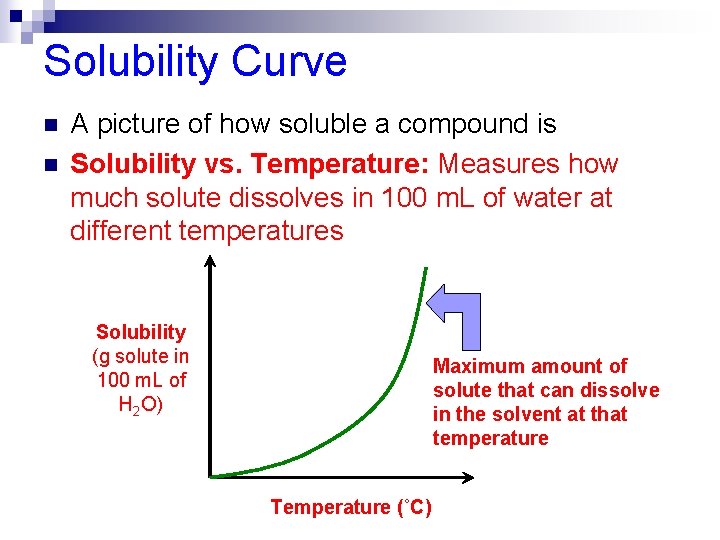
Solubility Curve n n A picture of how soluble a compound is Solubility vs. Temperature: Measures how much solute dissolves in 100 m. L of water at different temperatures Solubility (g solute in 100 m. L of H 2 O) Maximum amount of solute that can dissolve in the solvent at that temperature Temperature (˚C)
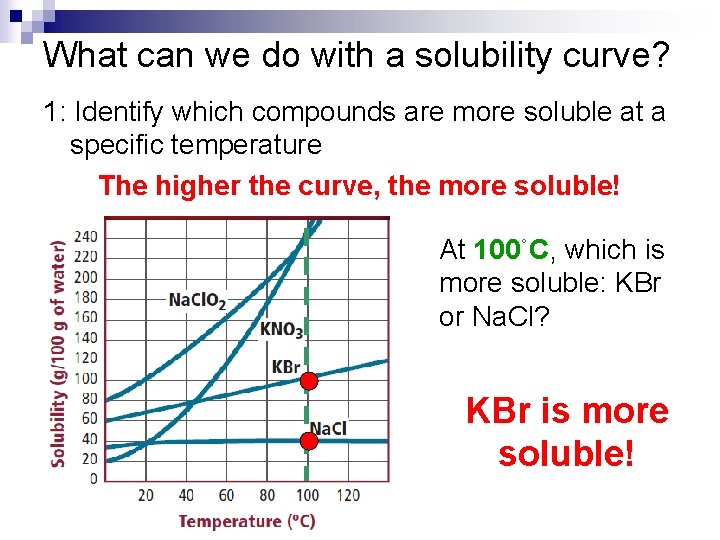
What can we do with a solubility curve? 1: Identify which compounds are more soluble at a specific temperature The higher the curve, the more soluble! At 100˚C, which is more soluble: KBr or Na. Cl? KBr is more soluble!
What can we do with a solubility curve? 2. We can determine the level of saturation! Points where a solution is SATURATED SUPERSATURATED Solubility (g solute in 100 m. L of H 2 O) Above the curve UNSATURATED Below the curve Temperature (˚C)
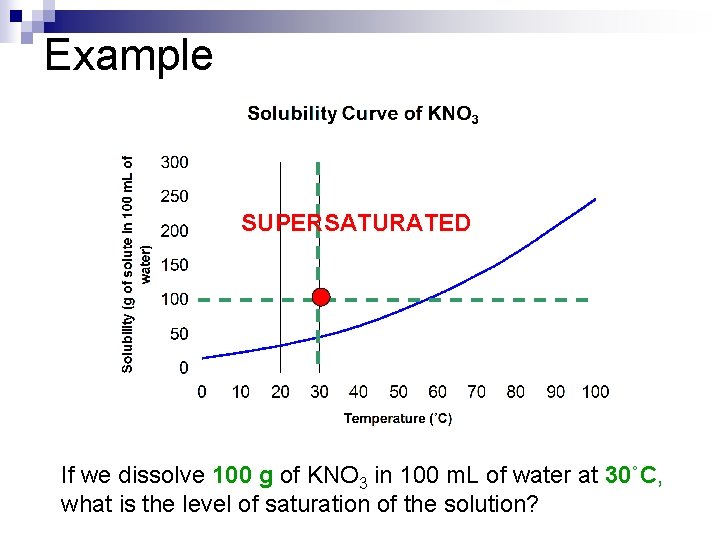
Example SUPERSATURATED If we dissolve 100 g of KNO 3 in 100 m. L of water at 30˚C, what is the level of saturation of the solution?
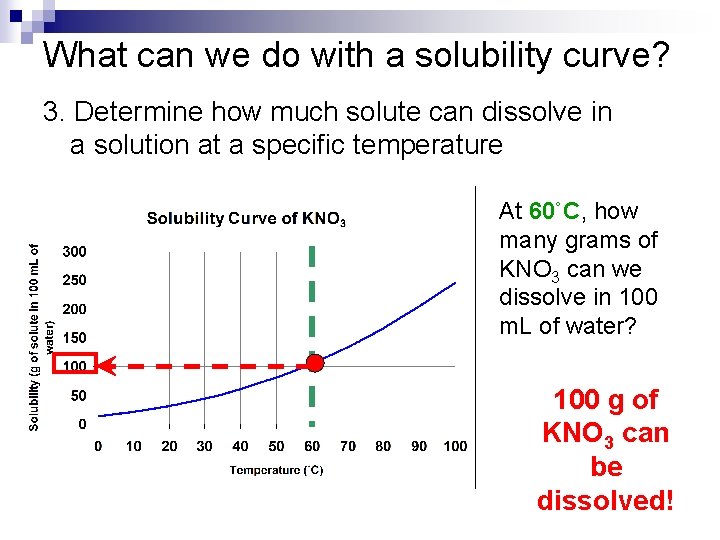
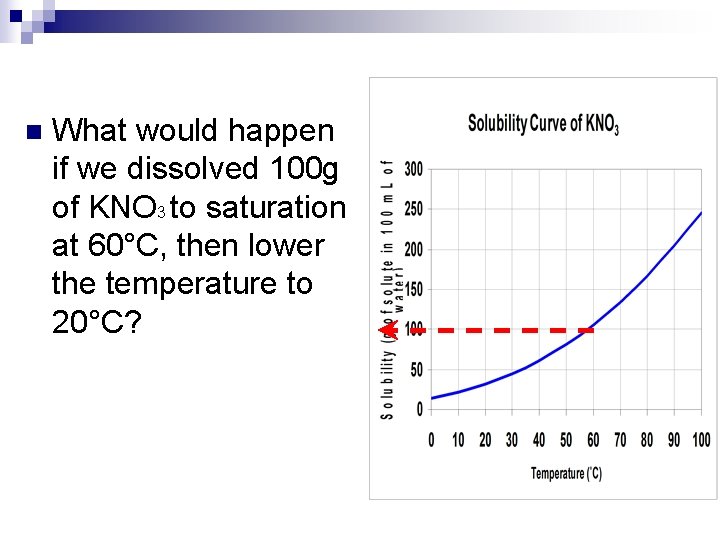
What can we do with a solubility curve? 3. Determine how much solute can dissolve in a solution at a specific temperature At 60˚C, how many grams of KNO 3 can we dissolve in 100 m. L of water? 100 g of KNO 3 can be dissolved!
n What would happen if we dissolved 100 g of KNO 3 to saturation at 60°C, then lower the temperature to 20°C?
Start Worksheet!