
Irvine Ranch Water District Energy Savings and Embedded
Irvine Ranch Water District Energy Savings and Embedded Energy Programs Paul A. Weghorst Executive Director of Water Policy August 12, 2014
Presentation Overview • Irvine Ranch Water District programs that save energy • Energy master planning • Recommended programs to save energy • Embedded energy plan development 2
IRWD Programs that Save Energy • Reducing dependency on imported water • • • Water conservation Recycled water use Use of groundwater Participation in SCE’s Savings by Design Program Solar energy generation (322 KW) Installation of energy efficient UV system Demand response (Monthly bids ~1. 6 MW) Minimizing peak time of pumping Premium efficiency pumps, motors, RO cartridges, VFD’s , HVAC systems, etc. Energy Master Planning Embedded Energy Plan development Biosolids and Energy Recovery Project (up to 1. 6 MW) 3
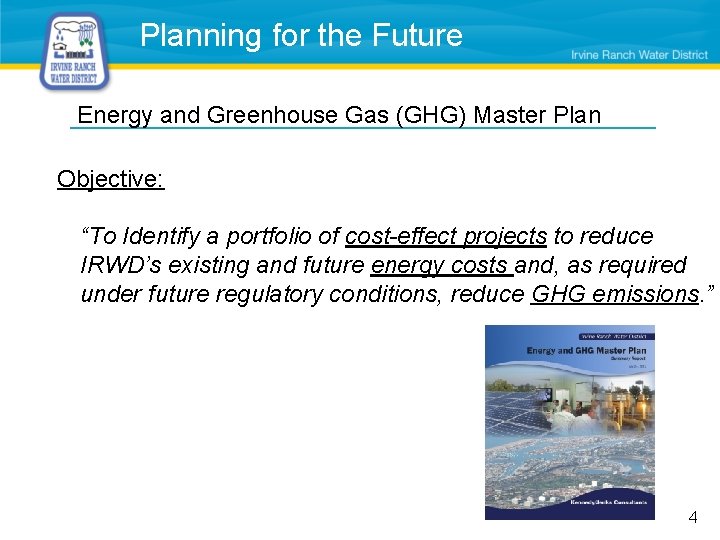
Planning for the Future Energy and Greenhouse Gas (GHG) Master Plan Objective: “To Identify a portfolio of cost-effect projects to reduce IRWD’s existing and future energy costs and, as required under future regulatory conditions, reduce GHG emissions. ” 4
IRWD’s Estimated Future Energy Use 5
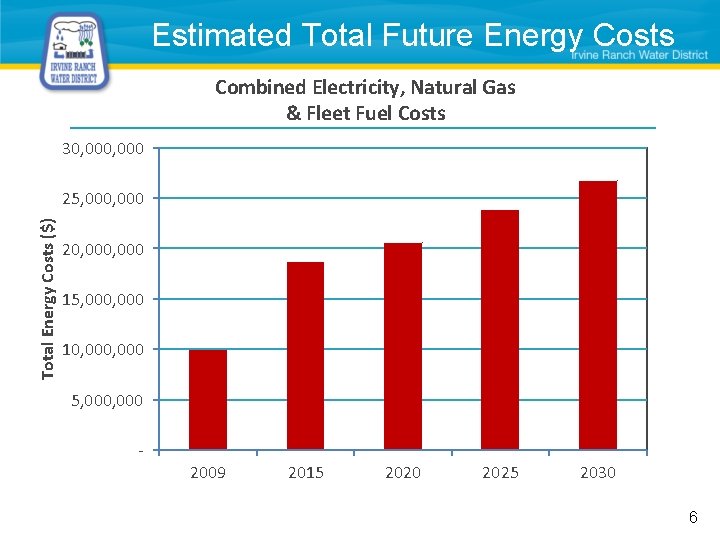
Estimated Total Future Energy Costs Combined Electricity, Natural Gas & Fleet Fuel Costs 30, 000 Total Energy Costs ($) 25, 000 20, 000 15, 000 10, 000 5, 000 - 2009 2015 2020 2025 2030 6
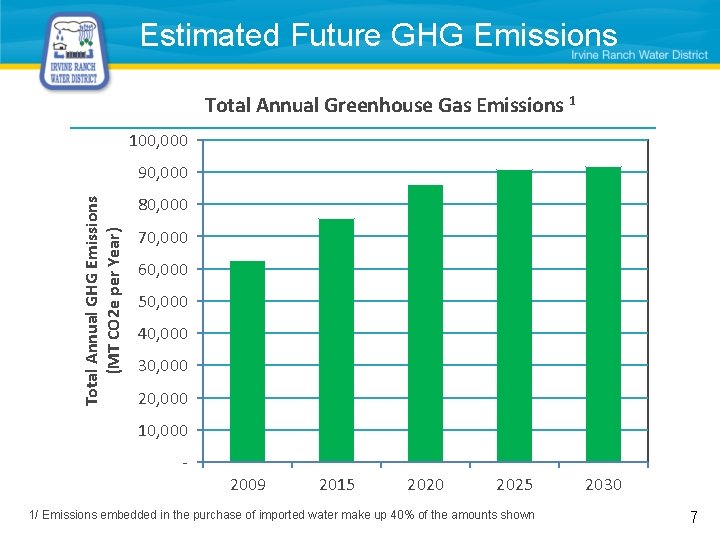
Estimated Future GHG Emissions Total Annual Greenhouse Gas Emissions 1 100, 000 Total Annual GHG Emissions (MT CO 2 e per Year) 90, 000 80, 000 70, 000 60, 000 50, 000 40, 000 30, 000 20, 000 10, 000 - 2009 2015 2020 2025 1/ Emissions embedded in the purchase of imported water make up 40% of the amounts shown 2030 7

Energy Saving Project Identification Process Started with 64 projects such as: Building & facility energy efficiency § Wastewater treatment optimization § § § 20 Projects Assessed 12 Additional Analysis 9 Recommended § § § § § Pump and motor efficiency Digestion of pre-processed food waste IC engines, microturbines & fuel cells Solar power Wind power Microhydro Fleet fuel reductions New groundwater supplies Renewable energy credits Additional water conservation Pump storage projects 8
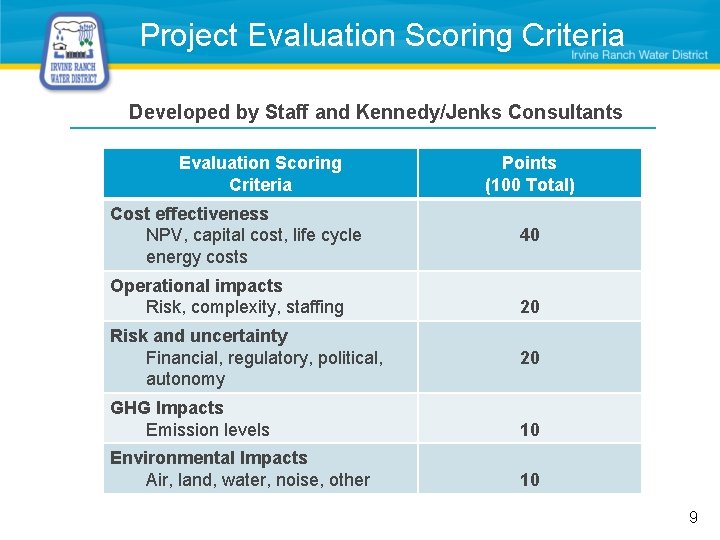
Project Evaluation Scoring Criteria Developed by Staff and Kennedy/Jenks Consultants Evaluation Scoring Criteria Cost effectiveness NPV, capital cost, life cycle energy costs Operational impacts Risk, complexity, staffing Risk and uncertainty Financial, regulatory, political, autonomy Points (100 Total) 40 20 20 GHG Impacts Emission levels 10 Environmental Impacts Air, land, water, noise, other 10 9
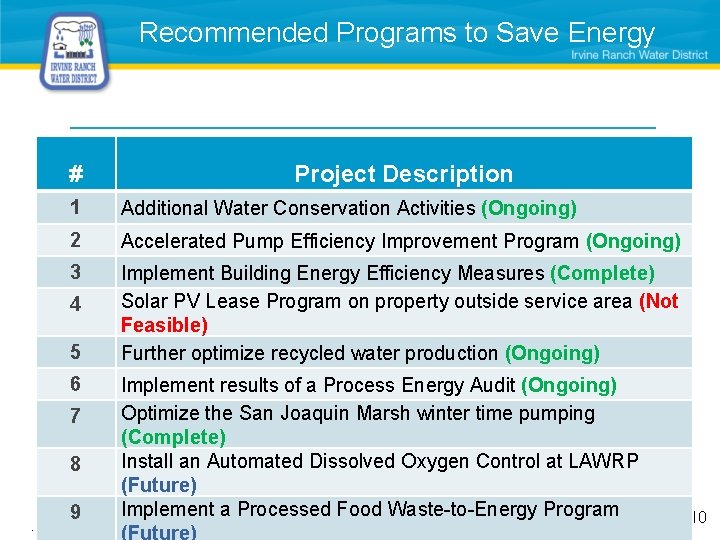
Recommended Programs to Save Energy # 1 Additional Water Conservation Activities (Ongoing) 2 Accelerated Pump Efficiency Improvement Program (Ongoing) 3 Implement Building Energy Efficiency Measures (Complete) Solar PV Lease Program on property outside service area (Not Feasible) Further optimize recycled water production (Ongoing) 4 5 6 7 8. Project Description 9 Implement results of a Process Energy Audit (Ongoing) Optimize the San Joaquin Marsh winter time pumping (Complete) Install an Automated Dissolved Oxygen Control at LAWRP (Future) Implement a Processed Food Waste-to-Energy Program (Future) 10
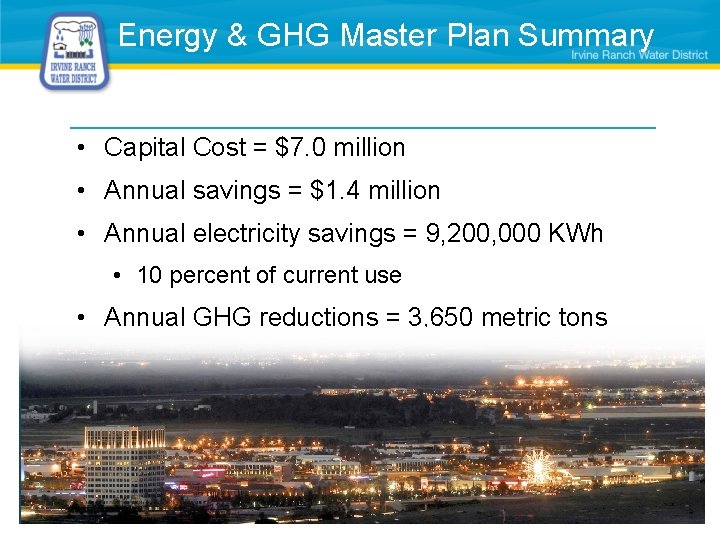
Energy & GHG Master Plan Summary • Capital Cost = $7. 0 million • Annual savings = $1. 4 million • Annual electricity savings = 9, 200, 000 KWh • 10 percent of current use • Annual GHG reductions = 3, 650 metric tons 11
Embedded Energy Plan Development • To support additional energy savings through water conservation • Consultant team of Navigant Consulting and HDR • Work began in May 2014 • Will quantify energy use associated with: • Production, treatment and distribution of potable water (k. Wh/af) • Sewage collection, treatment and distribution of recycled water (k. Wh/af) • Production of reusable biosolids (k. Wh/ton) 12
Embedded Energy Components 13
Benefits of Embedded Energy Plan • Identify facilities of operational changes and energy efficiency improvements • Quantify the avoided cost of energy due to past and present water conservation programs • Identify the most cost-effective areas to target future water conservation programs • To develop pumping surcharge recommendations • To position IRWD to obtain energy utility funding for water conservation programs • To provide embedded energy estimates for 20 years into the future 14
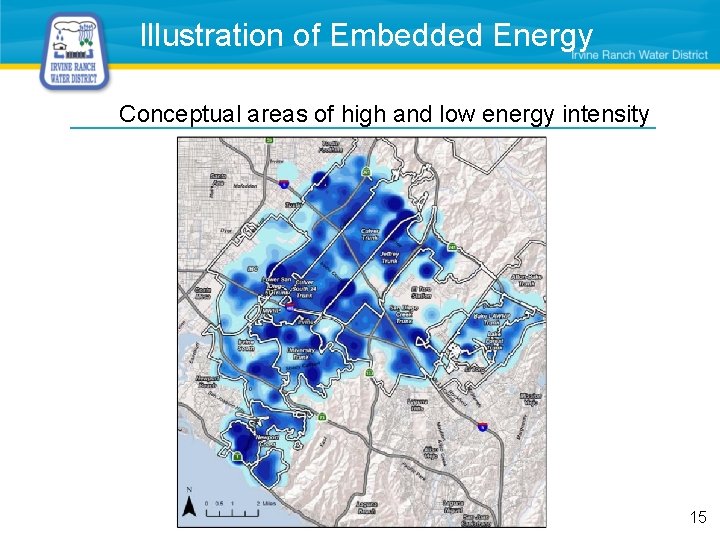
Illustration of Embedded Energy Conceptual areas of high and low energy intensity 15
Questions? Contact Information: Paul Weghorst Executive Director of Water Policy Irvine Ranch Water District weghorst@irwd. com (949)-453 -5632 16
- Slides: 16