
IRU Policies and Taxi Regulation in Finland 28


- Slides: 12
IRU Policies and Taxi Regulation in Finland 28 th March 2013 Moscow Nina Nizovsky The Finnish Taxi Owners´ Federation IRU Taxi Group www. taksiliitto. fi
IRU Policies on the Social Role of Taxis www. taksiliitto. fi
IRU Taxis and Hire Cars with Driver Group • Working Group in the IRU • Represents the interests of the taxi sector • Vis-a-vis national and international decision-makers • To promote and develop taxi transport for the good of the industry and of the customers • 15 member states • Meetings 2 times / year • Ad hoc Working groups and projects www. taksiliitto. fi
The Taxi Group monitors and intervenes • Exchanges experiences and best practices • Innovative new solutions for taxi transport, diversification of services • Traffic safety and security of taxi drivers • Iniatives to EU bodies • Industry-friendly social rules i. e. working time rules • Development of new markets and special services • Taxi fares • New and cleaner vehicles • New technologies , Apps, Smart phones, cahless payment, cameras www. taksiliitto. fi
The Taxi Group promotes • The quality of the taxi market and taxi services • Access to Profession rules • Recognition of taxis as a means of collective / public transport • The EU public-private High Level Group recognises now also taxis as a key part of the public passanger mobility chain • Doubling the use of collective passanger transport including taxis • The image of taxis • Taxis are the most flexible mode of public transport • Taxi – Anytime! Anywhere! www. taksiliitto. fi
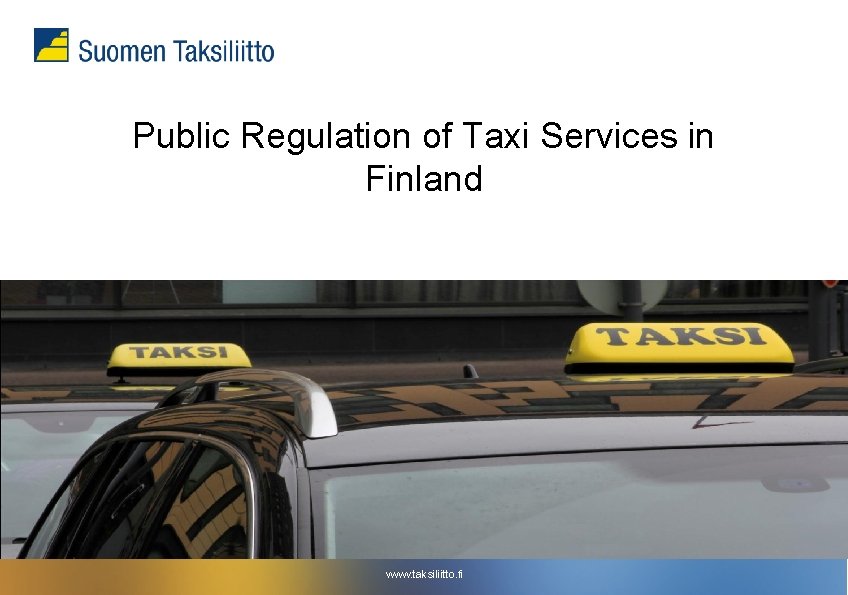
Public Regulation of Taxi Services in Finland www. taksiliitto. fi
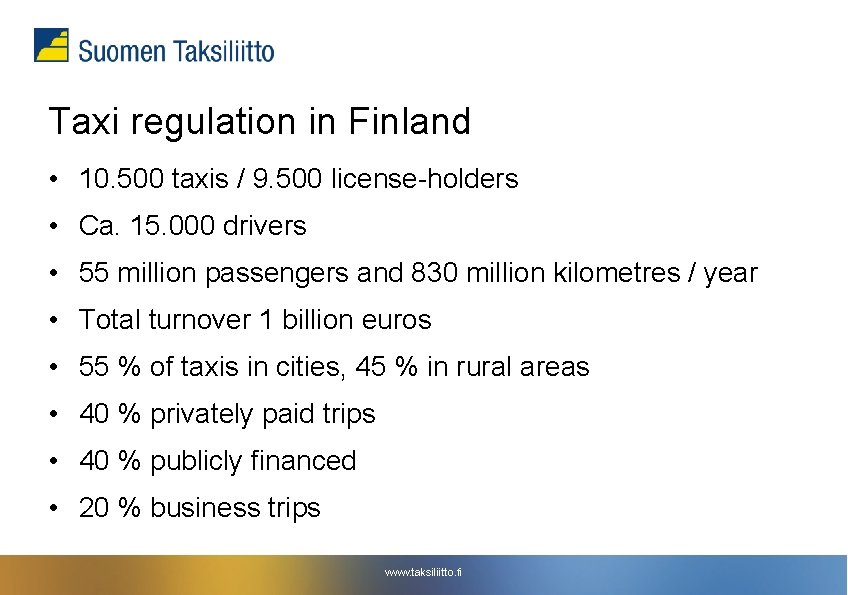
Taxi regulation in Finland • 10. 500 taxis / 9. 500 license-holders • Ca. 15. 000 drivers • 55 million passengers and 830 million kilometres / year • Total turnover 1 billion euros • 55 % of taxis in cities, 45 % in rural areas • 40 % privately paid trips • 40 % publicly financed • 20 % business trips www. taksiliitto. fi
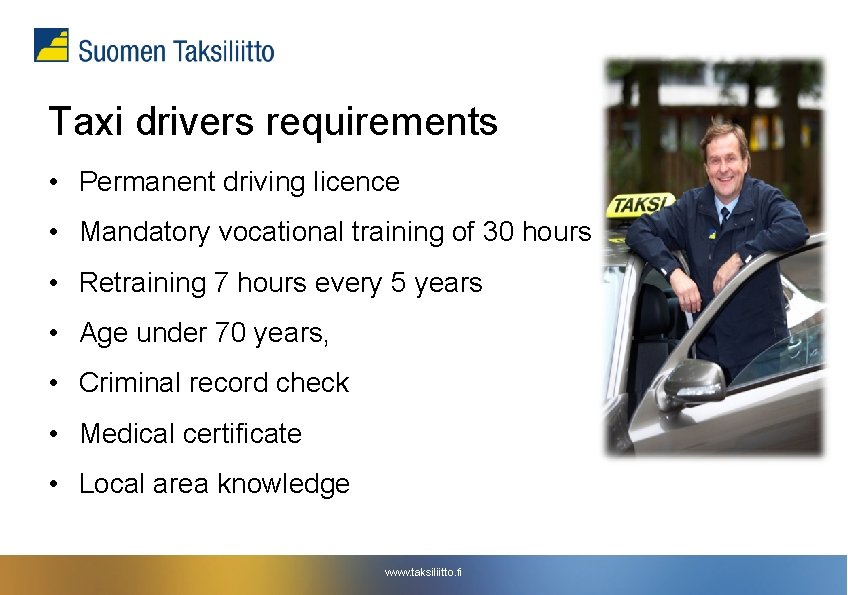
Taxi drivers requirements • Permanent driving licence • Mandatory vocational training of 30 hours • Retraining 7 hours every 5 years • Age under 70 years, • Criminal record check • Medical certificate • Local area knowledge www. taksiliitto. fi
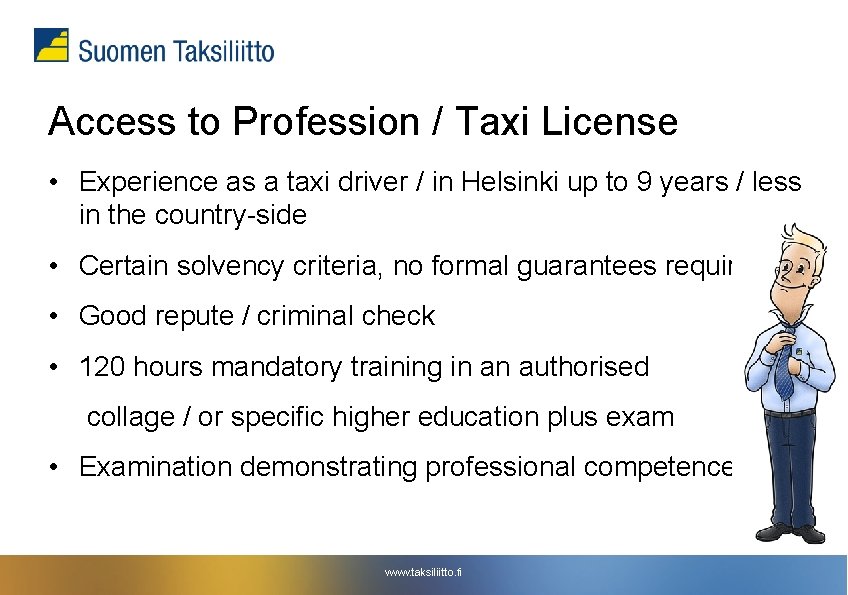
Access to Profession / Taxi License • Experience as a taxi driver / in Helsinki up to 9 years / less in the country-side • Certain solvency criteria, no formal guarantees required • Good repute / criminal check • 120 hours mandatory training in an authorised collage / or specific higher education plus exam • Examination demonstrating professional competence www. taksiliitto. fi
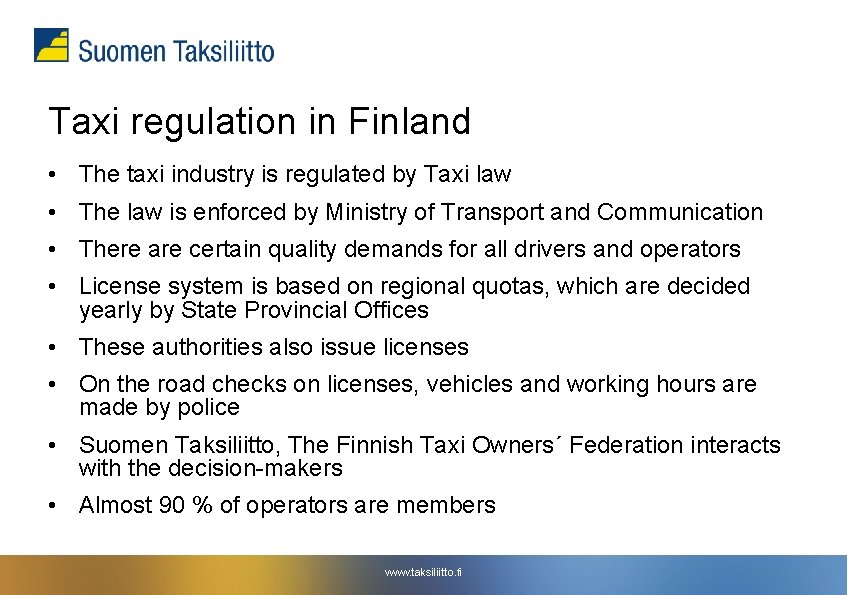
Taxi regulation in Finland • The taxi industry is regulated by Taxi law • The law is enforced by Ministry of Transport and Communication • There are certain quality demands for all drivers and operators • License system is based on regional quotas, which are decided yearly by State Provincial Offices • These authorities also issue licenses • On the road checks on licenses, vehicles and working hours are made by police • Suomen Taksiliitto, The Finnish Taxi Owners´ Federation interacts with the decision-makers • Almost 90 % of operators are members www. taksiliitto. fi
Taxi licensing system • One license / car • No restrictions on amount of licenses / operator / normally 1 - 2 • Licenses are issued according to seniority among qualified applicants • From 2013 licenses are issued every 3 years to existing operators • Licenses are valid permanently • But there is a criminal record check and financial check yearly • Licenses are not transferable, except for 330 companies in Helsinki, which can be bought and sold until 2017 • Only tax is paid for the licence www. taksiliitto. fi
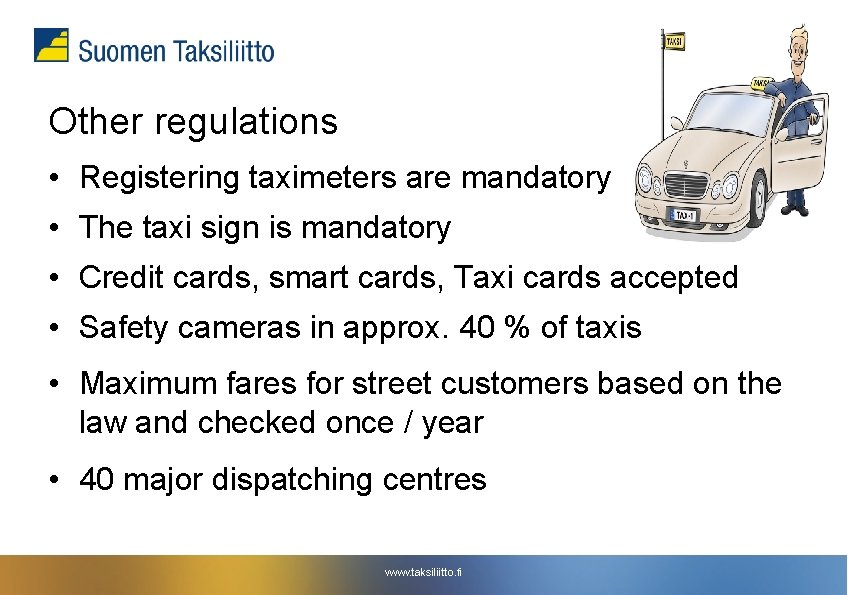
Other regulations • Registering taximeters are mandatory • The taxi sign is mandatory • Credit cards, smart cards, Taxi cards accepted • Safety cameras in approx. 40 % of taxis • Maximum fares for street customers based on the law and checked once / year • 40 major dispatching centres www. taksiliitto. fi