
Irregular Verbs in the Preterit Tense Regular Preterit
Irregular Verbs in the Preterit Tense
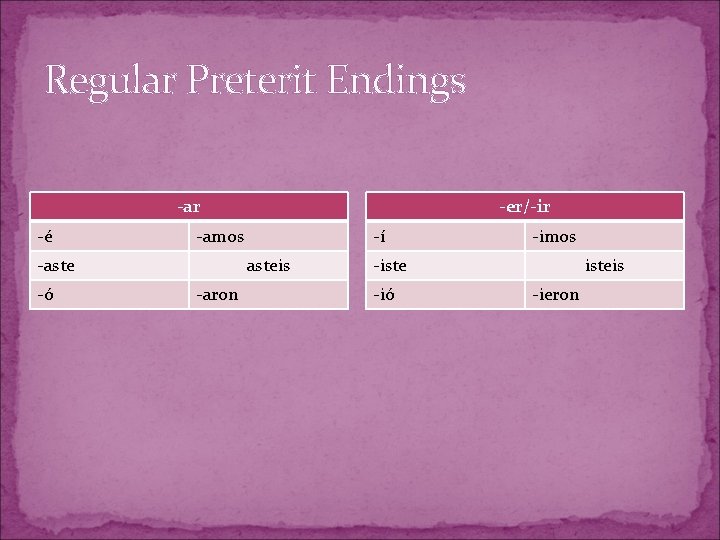
Regular Preterit Endings -ar -é -amos -aste -ó -er/-ir -í asteis -aron -imos -iste -ió isteis -ieron
Irregular Preterit Verbs Many of the most common verbs in Spanish are irregular in the preterit tense. Fortunately, even the irregular verbs follow patterns.
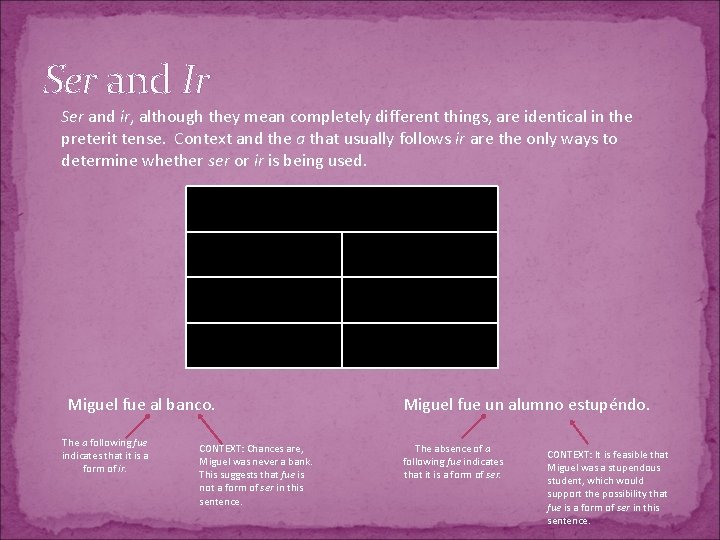
Ser and Ir Ser and ir, although they mean completely different things, are identical in the preterit tense. Context and the a that usually follows ir are the only ways to determine whether ser or ir is being used. Ser / Ir fuimos fuisteis fueron Miguel fue al banco. The a following fue indicates that it is a form of ir. CONTEXT: Chances are, Miguel was never a bank. This suggests that fue is not a form of ser in this sentence. Miguel fue un alumno estupéndo. The absence of a following fue indicates that it is a form of ser. CONTEXT: It is feasible that Miguel was a stupendous student, which would support the possibility that fue is a form of ser in this sentence.
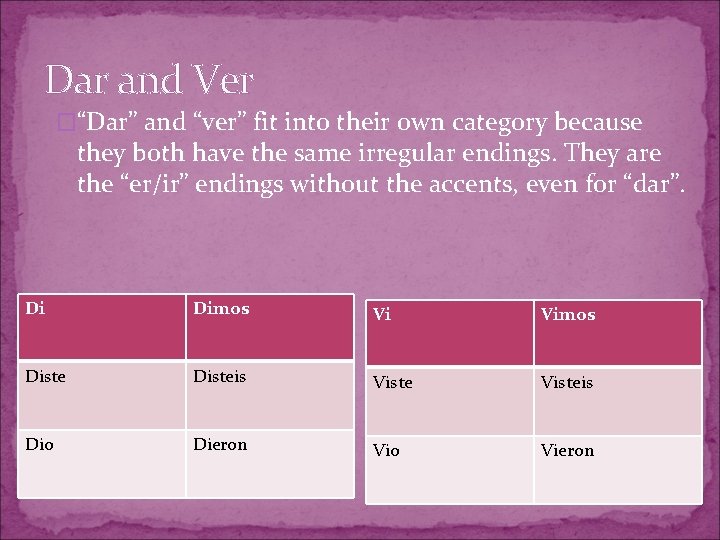
Dar and Ver �“Dar” and “ver” fit into their own category because they both have the same irregular endings. They are the “er/ir” endings without the accents, even for “dar”. Di Dimos Vi Vimos Disteis Visteis Dio Dieron Vio Vieron
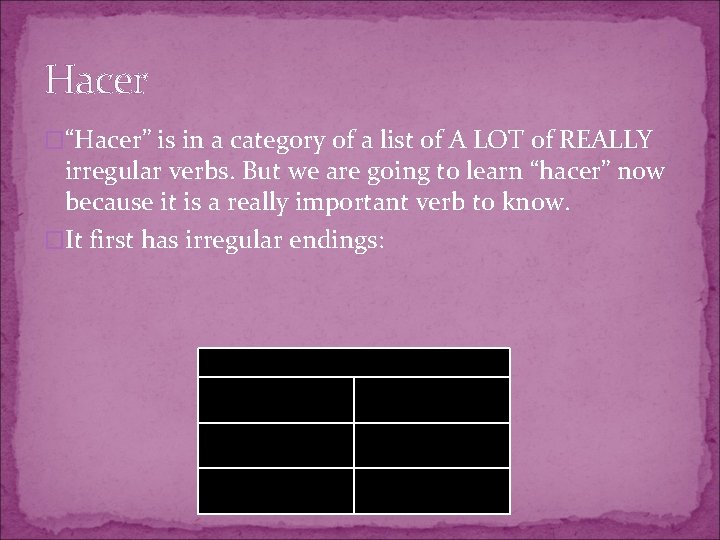
Hacer �“Hacer” is in a category of a list of A LOT of REALLY irregular verbs. But we are going to learn “hacer” now because it is a really important verb to know. �It first has irregular endings: Common Irregular Preterit Endings -e -iste -o -imos isteis -ieron
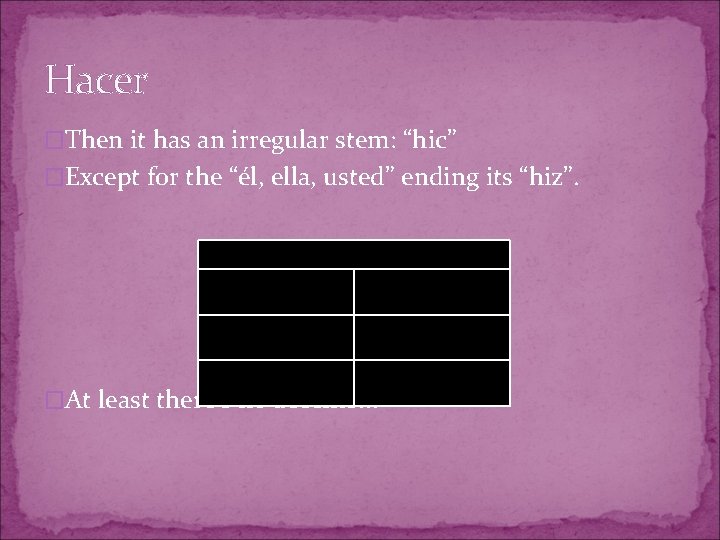
Hacer �Then it has an irregular stem: “hic” �Except for the “él, ella, usted” ending its “hiz”. Hacer hice hicimos hicisteis hizo hicieron �At least there’s no accents!!!
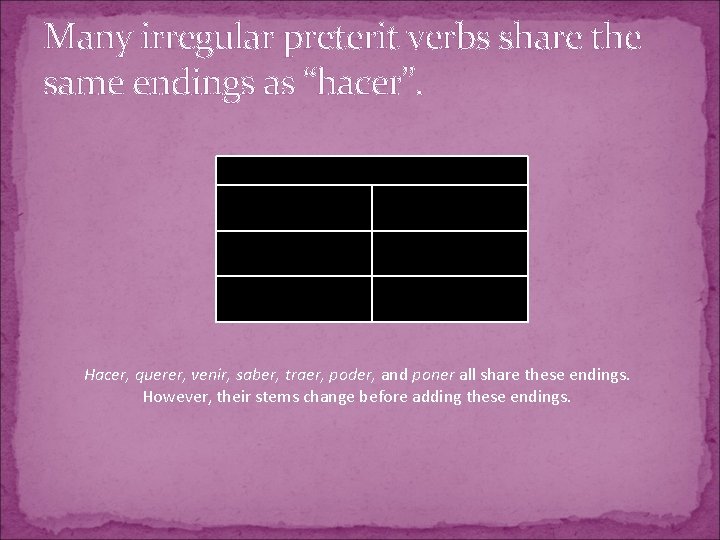
Many irregular preterit verbs share the same endings as “hacer”. Common Irregular Preterit Endings -e -iste -o -imos isteis -ieron Hacer, querer, venir, saber, traer, poder, and poner all share these endings. However, their stems change before adding these endings.
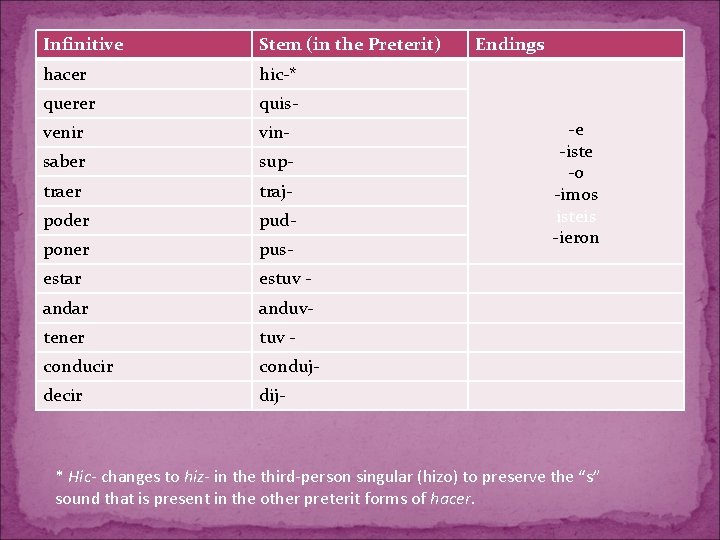
Infinitive Stem (in the Preterit) hacer hic-* querer quis- venir vin- saber sup- traer traj- poder pud- poner pus- estar estuv - andar anduv- tener tuv - conducir conduj- decir dij- Endings -e -iste -o -imos isteis -ieron * Hic- changes to hiz- in the third-person singular (hizo) to preserve the “s” sound that is present in the other preterit forms of hacer.
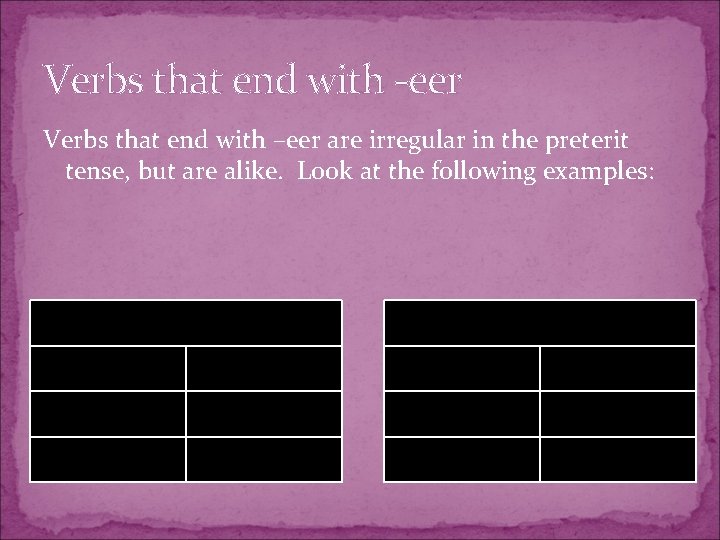
Verbs that end with -eer Verbs that end with –eer are irregular in the preterit tense, but are alike. Look at the following examples: leíste leyó leer leímos leísteis leyeron creer creímos creísteis creyó creyeron

Oir �Oir fits in the same category with verbs that end in “- eer” w/ accents on all “I’s” and “y” in the bottom of the boot. Oí Oímos Oísteis Oyó Oyeron
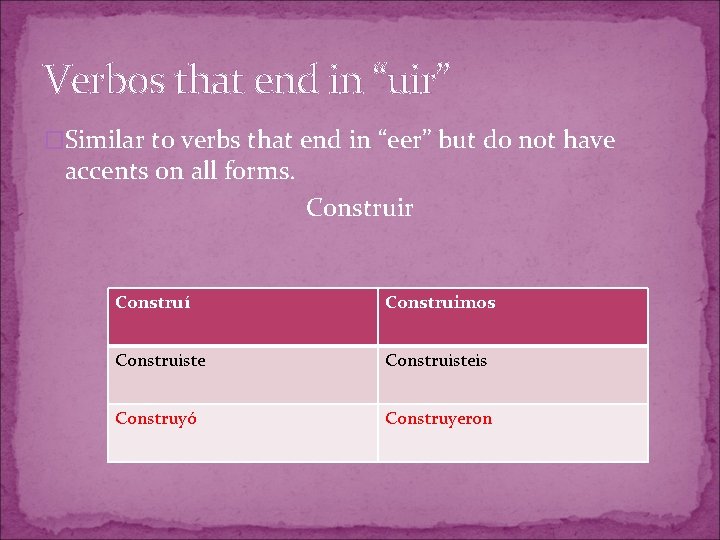
Verbos that end in “uir” �Similar to verbs that end in “eer” but do not have accents on all forms. Construir Construí Construimos Construisteis Construyó Construyeron
Haber �Hay – There is/are �Habia – There was/ were �*****Hubo****** – There was/were
- Slides: 13