
Irregular Verbs I All of the following verbs
Irregular Verbs I
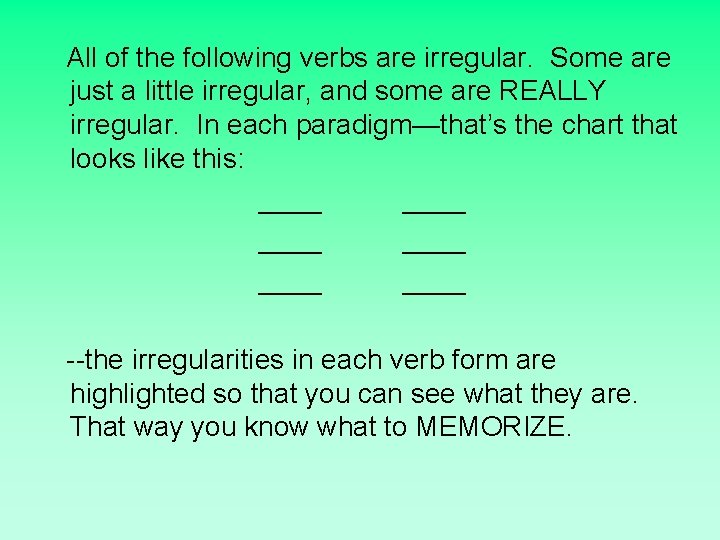
All of the following verbs are irregular. Some are just a little irregular, and some are REALLY irregular. In each paradigm—that’s the chart that looks like this: ____ ____ --the irregularities in each verb form are highlighted so that you can see what they are. That way you know what to MEMORIZE.
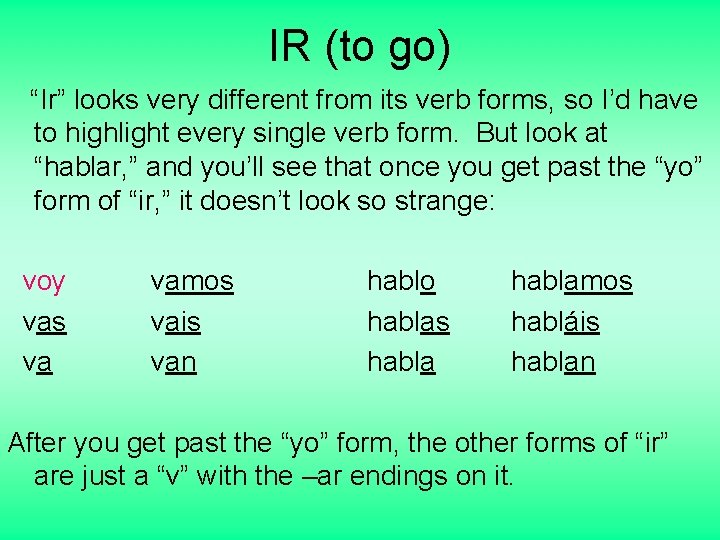
IR (to go) “Ir” looks very different from its verb forms, so I’d have to highlight every single verb form. But look at “hablar, ” and you’ll see that once you get past the “yo” form of “ir, ” it doesn’t look so strange: voy vas va vamos vais van hablo hablas hablamos habláis hablan After you get past the “yo” form, the other forms of “ir” are just a “v” with the –ar endings on it.
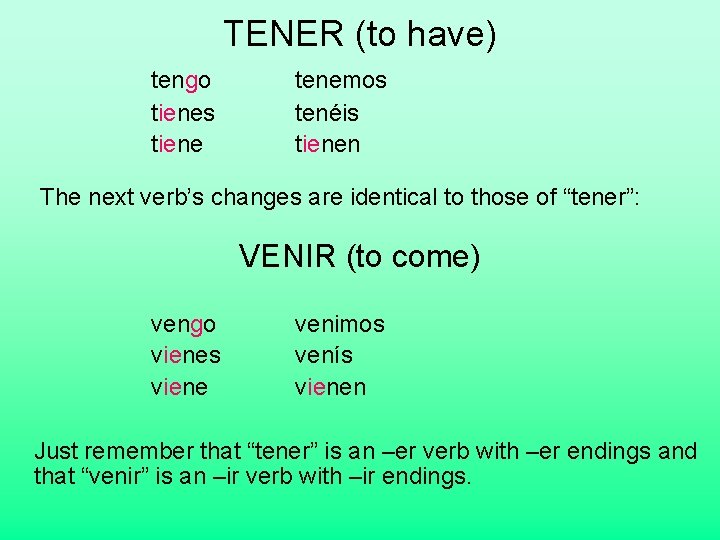
TENER (to have) tengo tienes tiene tenemos tenéis tienen The next verb’s changes are identical to those of “tener”: VENIR (to come) vengo vienes viene venimos venís vienen Just remember that “tener” is an –er verb with –er endings and that “venir” is an –ir verb with –ir endings.
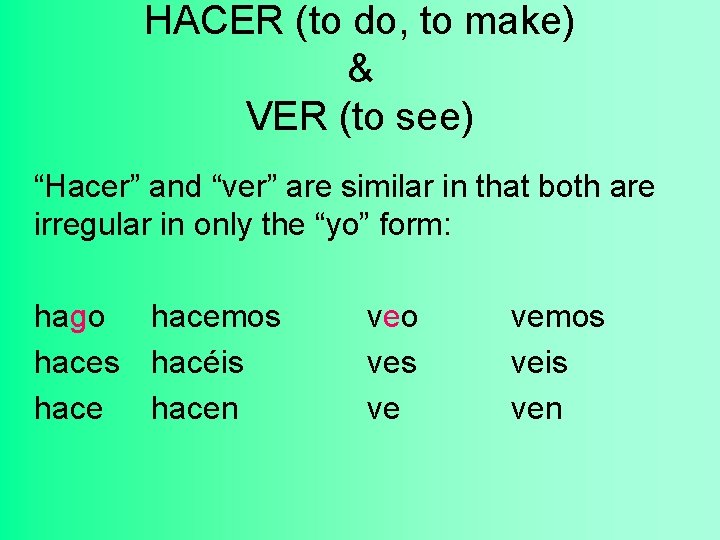
HACER (to do, to make) & VER (to see) “Hacer” and “ver” are similar in that both are irregular in only the “yo” form: hago hacemos haces hacéis hacen veo ves ve vemos veis ven
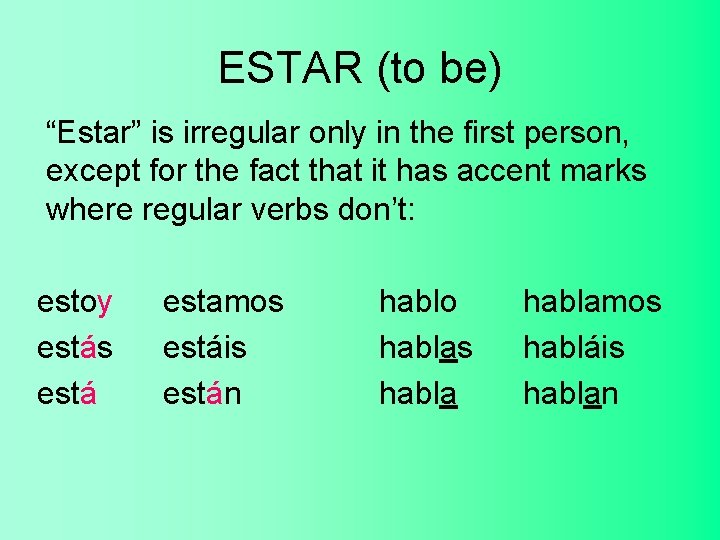
ESTAR (to be) “Estar” is irregular only in the first person, except for the fact that it has accent marks where regular verbs don’t: estoy estás está estamos estáis están hablo hablas hablamos habláis hablan
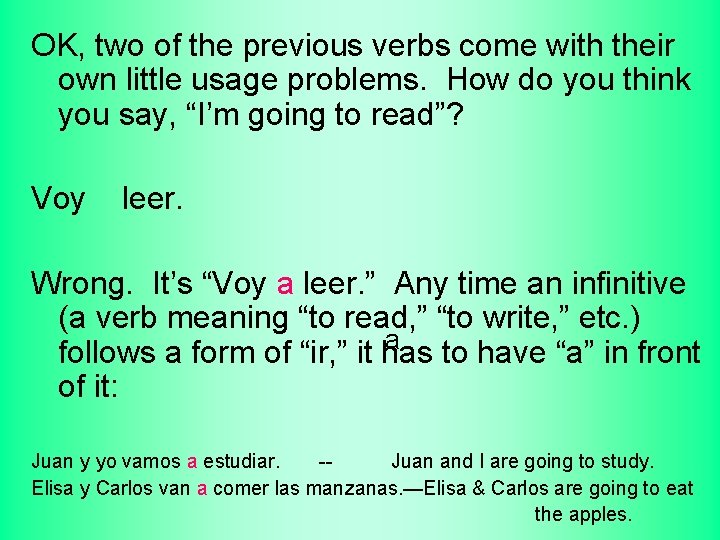
OK, two of the previous verbs come with their own little usage problems. How do you think you say, “I’m going to read”? Voy leer. Wrong. It’s “Voy a leer. ” Any time an infinitive (a verb meaning “to read, ” “to write, ” etc. ) a to have “a” in front follows a form of “ir, ” it has of it: Juan y yo vamos a estudiar. -Juan and I are going to study. Elisa y Carlos van a comer las manzanas. —Elisa & Carlos are going to eat the apples.
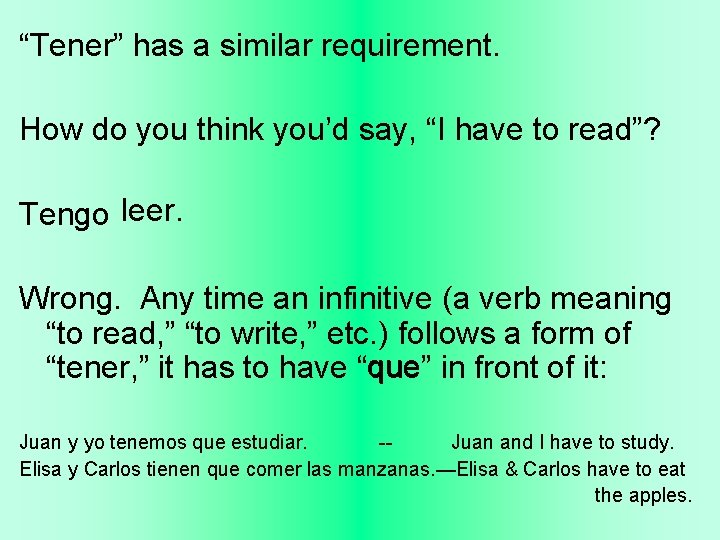
“Tener” has a similar requirement. How do you think you’d say, “I have to read”? Tengo leer. Wrong. Any time an infinitive (a verb meaning “to read, ” “to write, ” etc. ) follows a form of que in front of it: “tener, ” it has to have “que” Juan y yo tenemos que estudiar. -Juan and I have to study. Elisa y Carlos tienen que comer las manzanas. —Elisa & Carlos have to eat the apples.
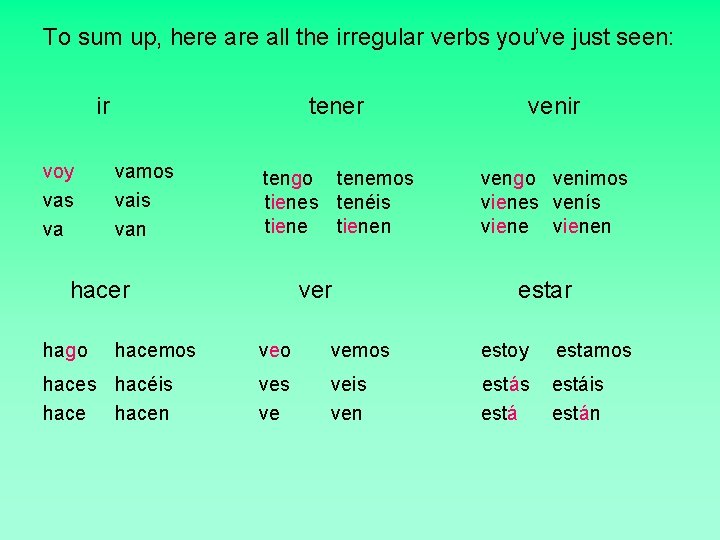
To sum up, here all the irregular verbs you’ve just seen: ir voy vas va vamos vais van tener venir tengo tenemos tienes tenéis tienen vengo venimos vienes venís vienen hacer hago hacemos haces hacéis hacen ver estar veo vemos estoy estamos ve veis ven estás estáis están

And that’s it. Click here to go to your homework.
- Slides: 10