
Irregular and Regular Verbs Key Learning Using appropriate
Irregular and Regular Verbs
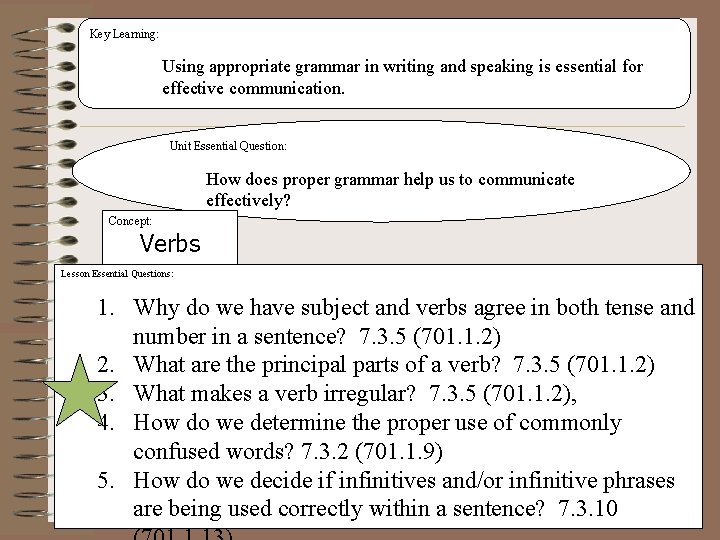
Key Learning: Using appropriate grammar in writing and speaking is essential for effective communication. Unit Essential Question: How does proper grammar help us to communicate effectively? Concept: Verbs Lesson Essential Questions: 1. Why do we have subject and verbs agree in both tense and number in a sentence? 7. 3. 5 (701. 1. 2) 2. What are the principal parts of a verb? 7. 3. 5 (701. 1. 2) 3. What makes a verb irregular? 7. 3. 5 (701. 1. 2), 4. How do we determine the proper use of commonly confused words? 7. 3. 2 (701. 1. 9) 5. How do we decide if infinitives and/or infinitive phrases are being used correctly within a sentence? 7. 3. 10
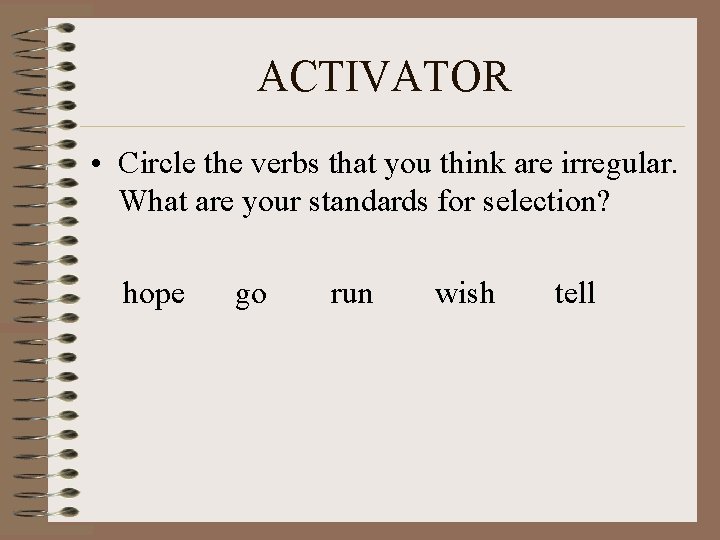
ACTIVATOR • Circle the verbs that you think are irregular. What are your standards for selection? hope go run wish tell
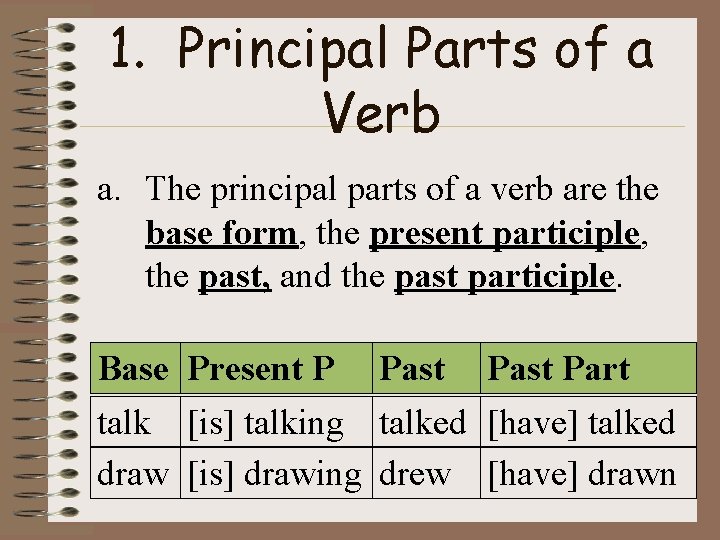
1. Principal Parts of a Verb a. The principal parts of a verb are the base form, the present participle, the past, and the past participle. Base Present P Past Part talk [is] talking talked [have] talked draw [is] drawing drew [have] drawn
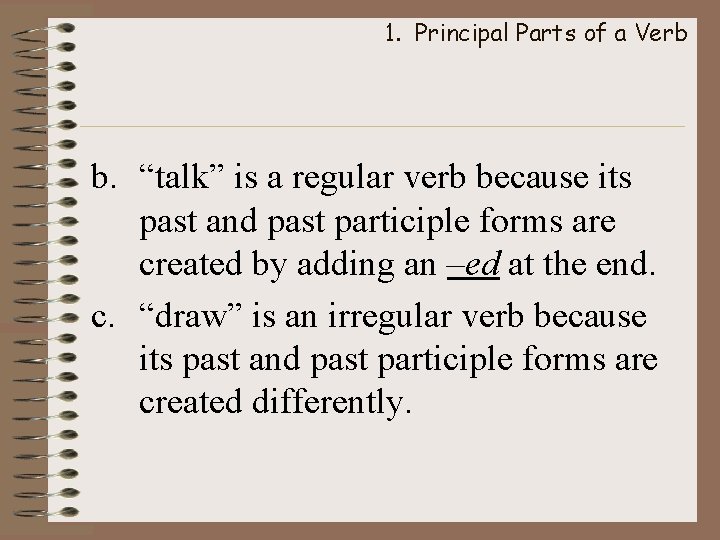
1. Principal Parts of a Verb b. “talk” is a regular verb because its past and past participle forms are created by adding an –ed at the end. c. “draw” is an irregular verb because its past and past participle forms are created differently.

Assessment Prompt • 1 s, tell 2 s: Name a verb in base form. With your partner, take turns changing the verb to present participle, past, and past participle? • 2 s, select a new verb and do the same.
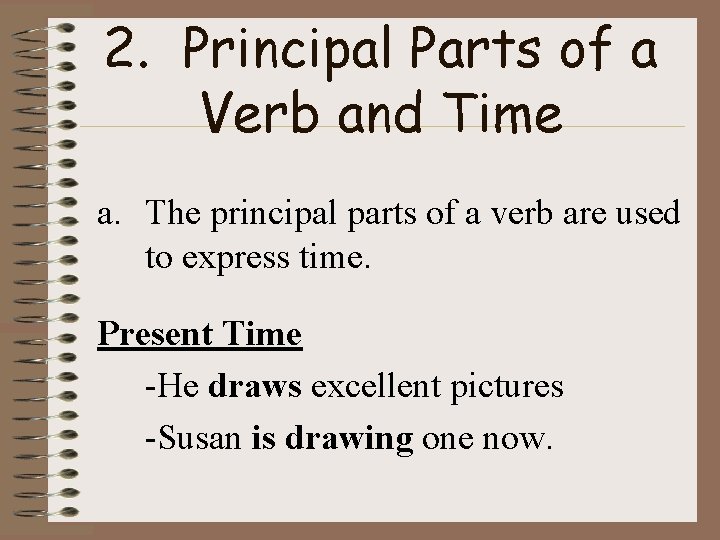
2. Principal Parts of a Verb and Time a. The principal parts of a verb are used to express time. Present Time -He draws excellent pictures -Susan is drawing one now.
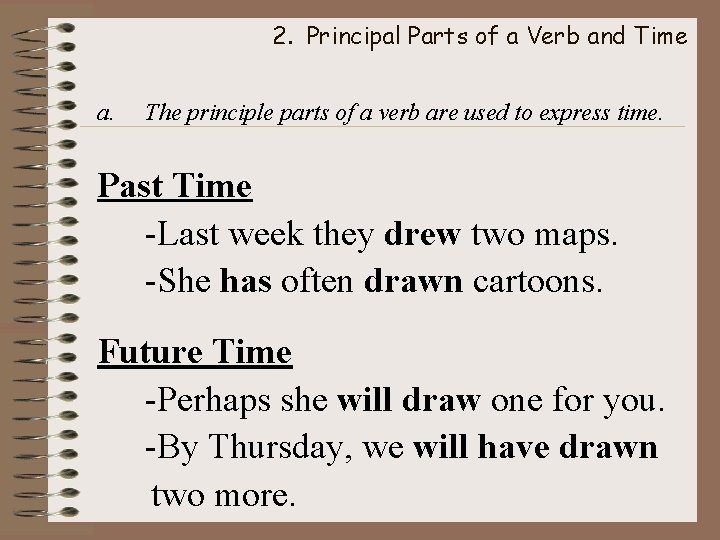
2. Principal Parts of a Verb and Time a. The principle parts of a verb are used to express time. Past Time -Last week they drew two maps. -She has often drawn cartoons. Future Time -Perhaps she will draw one for you. -By Thursday, we will have drawn two more.
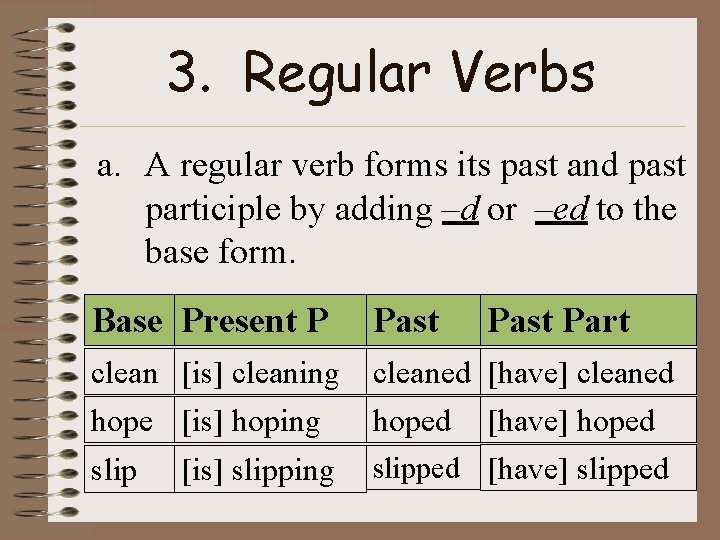
3. Regular Verbs a. A regular verb forms its past and past participle by adding –d or –ed to the base form. Base Present P Past clean [is] cleaning hope [is] hoping cleaned [have] cleaned hoped [have] hoped slipped [have] slipped slip [is] slipping Past Part
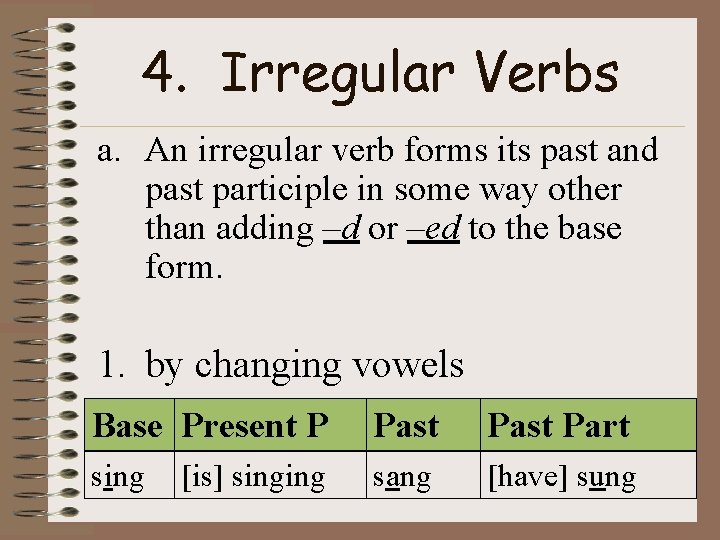
4. Irregular Verbs a. An irregular verb forms its past and past participle in some way other than adding –d or –ed to the base form. 1. by changing vowels Base Present P Past Part sing sang [have] sung [is] singing
![4. Irregular Verbs 2. by changing consonants Base Present P Past Part make [is]](http://slidetodoc.com/presentation_image_h2/a73d1dc226ed9789920016e39de0297b/image-11.jpg "4. Irregular Verbs 2. by changing consonants Base Present P Past Part make [is]")
4. Irregular Verbs 2. by changing consonants Base Present P Past Part make [is] making made [have] made 3. by changing vowels and consonants Base Present P Past Part do did [have] done [is] doing
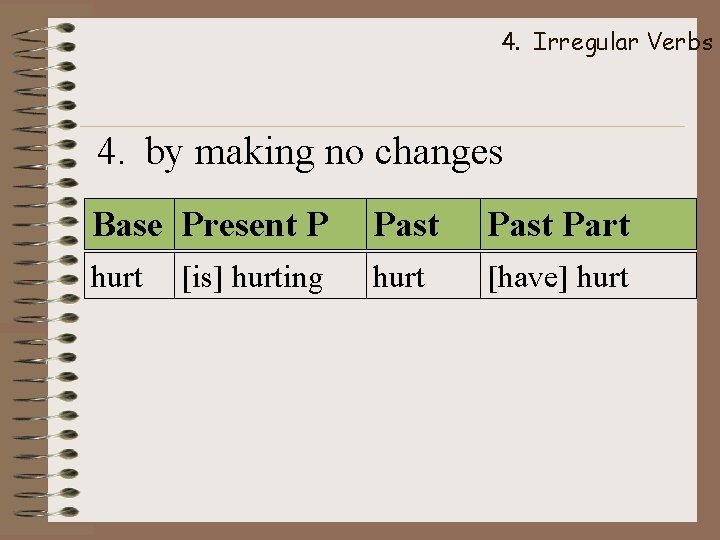
4. Irregular Verbs 4. by making no changes Base Present P Past Part hurt [have] hurt [is] hurting
Assessment Prompt • What makes a verb irregular? • Give one example per group member –also, taking the base through each of the principal parts.
5. Common Irregular Verbs • We will be placing two sheets in your binder/spiral – Make sure that you fill in the blanks as we go through the notes.
![5. Common Irregular Verbs Base Form 1 2 begin bite Present Participle [is] beginning](http://slidetodoc.com/presentation_image_h2/a73d1dc226ed9789920016e39de0297b/image-15.jpg "5. Common Irregular Verbs Base Form 1 2 begin bite Present Participle [is] beginning")
5. Common Irregular Verbs Base Form 1 2 begin bite Present Participle [is] beginning [is] biting 3 blow [is] blowing 4 break [is] breaking 5 bring [is] bringing 6 build [is] building 7 burst [is] bursting 8 buy [is] buying 9 catch [is] catching Past Tense began bit Past Participle [have] begun [have] bitten or bit blew [have] blown broke [have] broken brought [have] brought built [have] built burst [have] burst bought [have] bought caught [have] caught
![5. Common Irregular Verbs 10 11 choose come [is] choosing [is] coming 12 13](http://slidetodoc.com/presentation_image_h2/a73d1dc226ed9789920016e39de0297b/image-16.jpg "5. Common Irregular Verbs 10 11 choose come [is] choosing [is] coming 12 13")
5. Common Irregular Verbs 10 11 choose come [is] choosing [is] coming 12 13 cost cut [is] costing [is] cutting 14 15 16 do draw drink [is] doing [is] drawing [is] drinking 17 18 19 20 21 22 drive eat fall feel fight find [is] driving [is] eating [is] falling [is] feeling [is] fighting [is] finding 23 fly [is] flying chose came cost cut did drew drank drove ate fell felt fought found flew chosen come [have] cost [have] cut [have] done [have] drawn [have] drunk [have] driven [have] eaten [have] fallen [have] felt [have] fought [have] found [have] flown [have]
![5. Common Irregular Verbs 24 forgive [is] forgiving 25 freeze [is] freezing 26 [is]](http://slidetodoc.com/presentation_image_h2/a73d1dc226ed9789920016e39de0297b/image-17.jpg "5. Common Irregular Verbs 24 forgive [is] forgiving 25 freeze [is] freezing 26 [is]")
5. Common Irregular Verbs 24 forgive [is] forgiving 25 freeze [is] freezing 26 [is] getting 27 28 29 30 31 32 get give go grow have hear hide 33 hit 34 hold 35 know [is] giving [is] going [is] growing [is] having [is] hearing [is] hiding [is] hitting [is] holding [is] knowing forgave froze got gave went grew had heard hit held knew [have]forgiven frozen [have] got or gotten [have] given [have] gone [have] grown [have] had [have] heard [have] hid or hidden [have] hit [have] held [have] know [have]
![5. Common Irregular Verbs 36 lead [is] leading 37 leave [is] leaving 38 lend](http://slidetodoc.com/presentation_image_h2/a73d1dc226ed9789920016e39de0297b/image-18.jpg "5. Common Irregular Verbs 36 lead [is] leading 37 leave [is] leaving 38 lend")
5. Common Irregular Verbs 36 lead [is] leading 37 leave [is] leaving 38 lend 39 let 40 light [is] lending [is] letting [is] lighting 41 42 43 44 45 46 [is] losing [is] making [is] meeting [is] paying [is] putting [is] reading lose make meet pay put read 47 ride [is] riding led left lent let lighted or lit lost made met paid put read rode [have] [have] [have] led left lent let lighted or lit lost made met paid put read ridden
![5. Common Irregular Verbs 48 ring [is] ringing 49 run 50 say 51 see](http://slidetodoc.com/presentation_image_h2/a73d1dc226ed9789920016e39de0297b/image-19.jpg "5. Common Irregular Verbs 48 ring [is] ringing 49 run 50 say 51 see")
5. Common Irregular Verbs 48 ring [is] ringing 49 run 50 say 51 see [is] running [is] saying [is] seeing 52 seek 53 sell 54 send [is] seeking [is] selling [is] sending 55 [is] shrinking shrink 56 sing 57 sink [is] singing [is] sinking 58 speak 59 spend [is] speaking [is] spending ran said saw sought sold sent shrank or shrunk sang sank or sunk spoke spent rung [have] run [have] said [have] seen [have] sought [have] sold [have] sent [have] shrunk [have] sung [have] sunk [have] spoken [have] spent [have]
![5. Common Irregular Verbs 60 61 62 63 stand steal swim swing [is] standing](http://slidetodoc.com/presentation_image_h2/a73d1dc226ed9789920016e39de0297b/image-20.jpg "5. Common Irregular Verbs 60 61 62 63 stand steal swim swing [is] standing")
5. Common Irregular Verbs 60 61 62 63 stand steal swim swing [is] standing [is] stealing [is] swimming [is] swinging 64 65 66 67 68 69 take teach tear tell think throw [is] taking [is] teaching [is] tearing [is] telling [is] thinking [is] throwing stood stole swam swung took taught tore told thought threw stood stolen swum swung [have] taken [have] taught [have] torn [have] told [have] thought [have] thrown [have]
![5. Common Irregular Verbs 70 wear [is] wearing 71 win [is] winning 72 [is]](http://slidetodoc.com/presentation_image_h2/a73d1dc226ed9789920016e39de0297b/image-21.jpg "5. Common Irregular Verbs 70 wear [is] wearing 71 win [is] winning 72 [is]")
5. Common Irregular Verbs 70 wear [is] wearing 71 win [is] winning 72 [is] writing write wore won wrote [have] worn won written
SUMMARIZER What makes a verb irregular? Give 5 examples of irregular verbs.
Trackers Out, Please • GUM Workbook Pages: – Page 169 (Ex. A) – Page 170 (Ex. B) – Page 171 (Ex. A) – Page 172 (Ex. A) … there will be more pages to follow
- Slides: 23