
Irradiation for Reducing Pathogens in Meat and Poultry








- Slides: 53
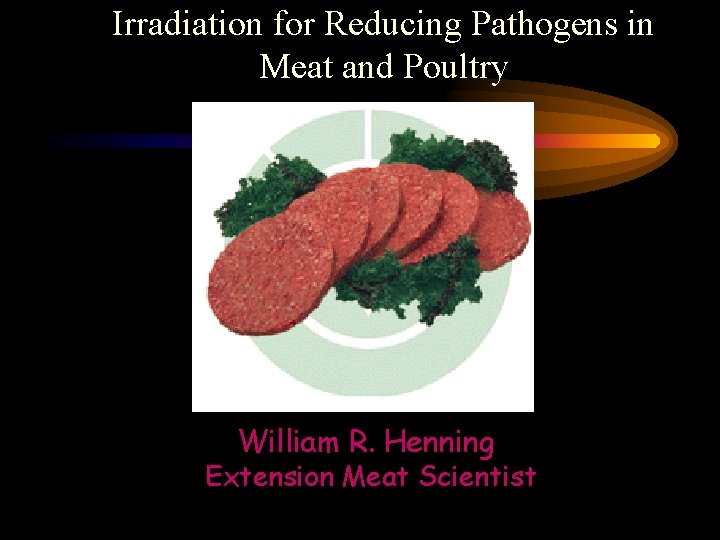
Irradiation for Reducing Pathogens in Meat and Poultry William R. Henning Extension Meat Scientist
Use of Ionizing Radiation for Reducing Pathogens in Meat and Poultry NEW FRONTIERS FOR FOOD SAFTEY
What we hope to show you • • Science of the technology Current uses of Irradiation Plants in operation Why it is used Safety and efficacy How it affects pathogens What consumers think How it tastes
Why get involved? • Irradiated ground beef is coming to a city near you, SOON • Consumer activists will likely oppose it • Fore-warned is fore-armed – Educate consumers before it is on the market • Don’t want another GMO debate
What is the Role of an Extension Educator? Educator or Advocate
What is Food Irradiation? • Provide energy which destroys DNA in bacteria, parasites, insects, molds • SOURCE – Gamma Rays from radioactive material • Cobalt 60 • Cesium 137 • Accelerated electron beams • X-Rays
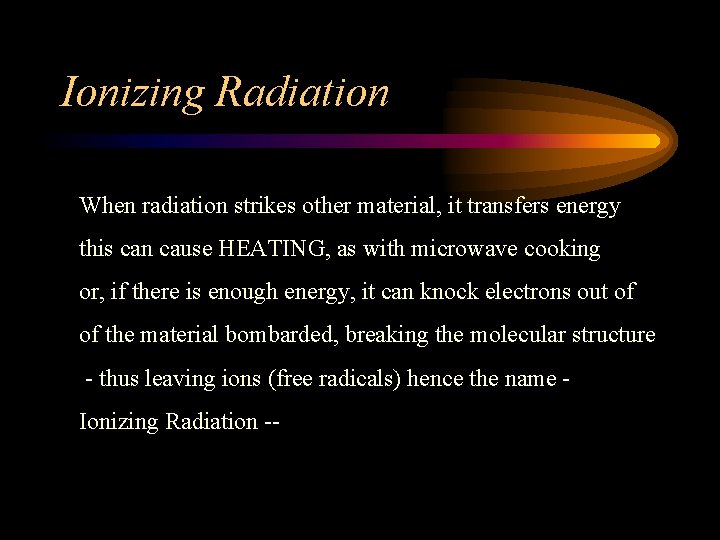
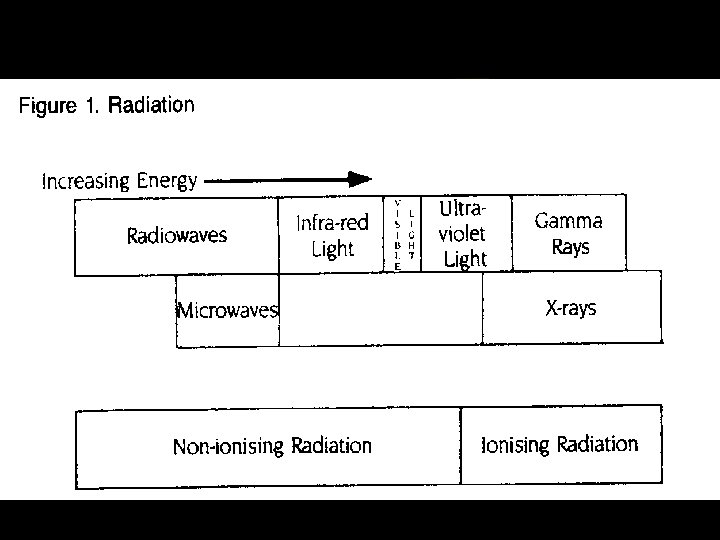
Ionizing Radiation When radiation strikes other material, it transfers energy this can cause HEATING, as with microwave cooking or, if there is enough energy, it can knock electrons out of of the material bombarded, breaking the molecular structure - thus leaving ions (free radicals) hence the name Ionizing Radiation --
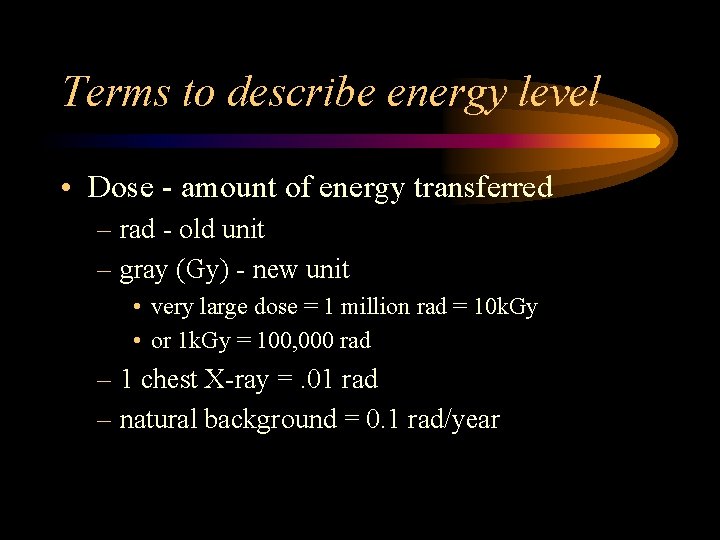
Terms to describe energy level • Dose - amount of energy transferred – rad - old unit – gray (Gy) - new unit • very large dose = 1 million rad = 10 k. Gy • or 1 k. Gy = 100, 000 rad – 1 chest X-ray =. 01 rad – natural background = 0. 1 rad/year
Levels of Food Irradiation • Radurization (low) < 1 k. Gy – vegetable sprouting, fruit ripening, insect sterilization • Radicidation (medium) 1 -10 k. Gy – kills most pathogens and many food spoilage organisms, kills insects and parasites • Rappertization (high) > 10 k. Gy – can sterilize by killing all bacteria and viruses
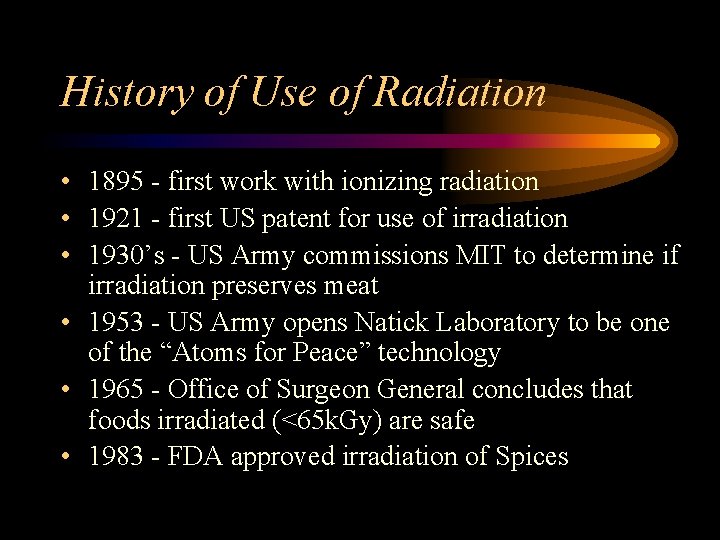
History of Use of Radiation • 1895 - first work with ionizing radiation • 1921 - first US patent for use of irradiation • 1930’s - US Army commissions MIT to determine if irradiation preserves meat • 1953 - US Army opens Natick Laboratory to be one of the “Atoms for Peace” technology • 1965 - Office of Surgeon General concludes that foods irradiated (<65 k. Gy) are safe • 1983 - FDA approved irradiation of Spices
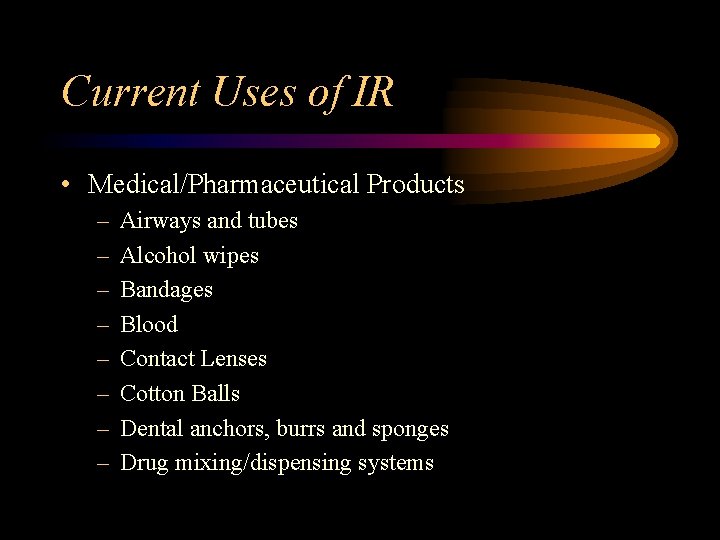
Current Uses of IR • Medical/Pharmaceutical Products – – – – Airways and tubes Alcohol wipes Bandages Blood Contact Lenses Cotton Balls Dental anchors, burrs and sponges Drug mixing/dispensing systems
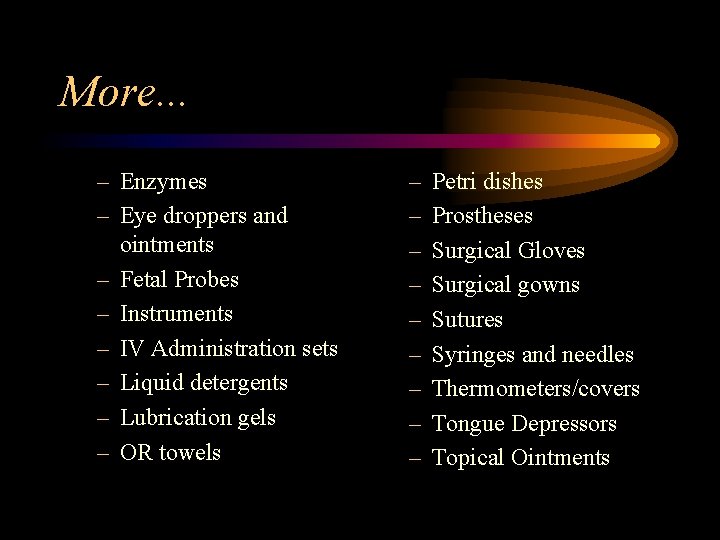
More. . . – Enzymes – Eye droppers and ointments – Fetal Probes – Instruments – IV Administration sets – Liquid detergents – Lubrication gels – OR towels – – – – – Petri dishes Prostheses Surgical Gloves Surgical gowns Sutures Syringes and needles Thermometers/covers Tongue Depressors Topical Ointments
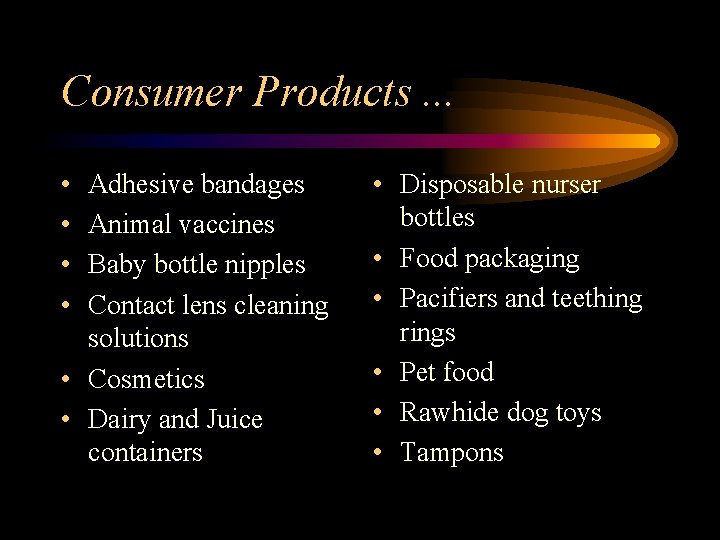
Consumer Products. . . • • Adhesive bandages Animal vaccines Baby bottle nipples Contact lens cleaning solutions • Cosmetics • Dairy and Juice containers • Disposable nurser bottles • Food packaging • Pacifiers and teething rings • Pet food • Rawhide dog toys • Tampons
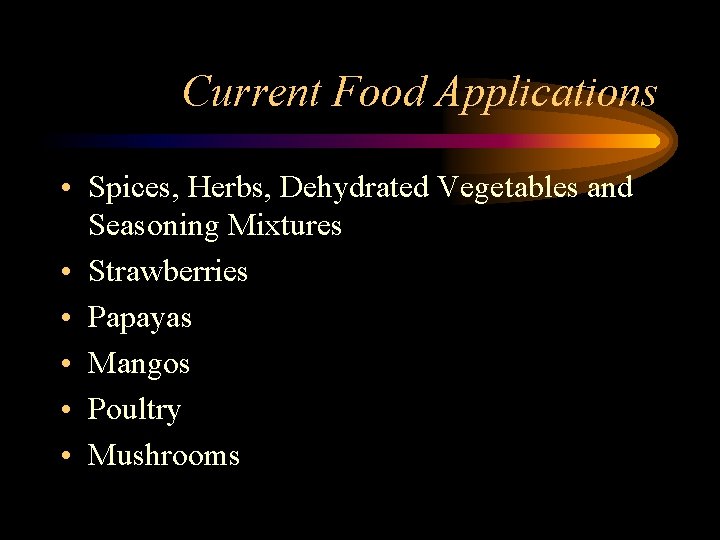
Current Food Applications • Spices, Herbs, Dehydrated Vegetables and Seasoning Mixtures • Strawberries • Papayas • Mangos • Poultry • Mushrooms
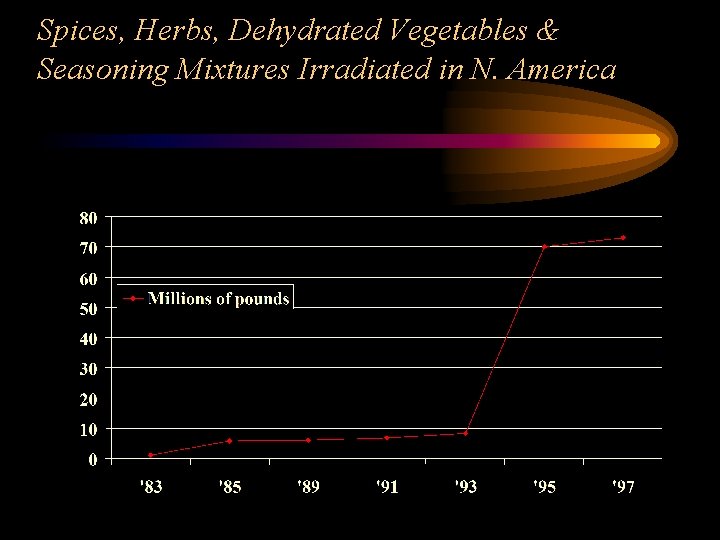
Spices, Herbs, Dehydrated Vegetables & Seasoning Mixtures Irradiated in N. America
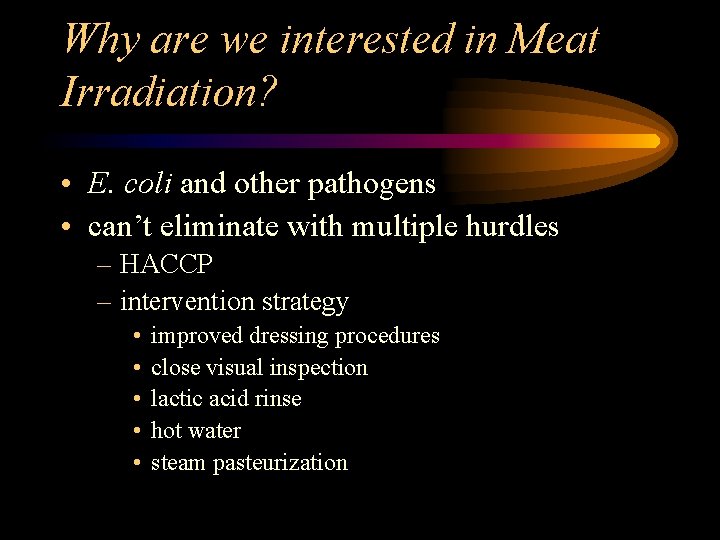
Why are we interested in Meat Irradiation? • E. coli and other pathogens • can’t eliminate with multiple hurdles – HACCP – intervention strategy • • • improved dressing procedures close visual inspection lactic acid rinse hot water steam pasteurization
Current Regulatory Changes • 1987 - FDA approved irradiation of pork for Trichina control (0. 3 -1. 0 k. Gy) • 1992 - FDA approved irradiation for fresh or frozen packaged poultry to control bacteria (1. 53. 0 k. Gy) • 1998 - FDA approved use in fresh or frozen beef to control pathogens- (1. 5 - 4. 5 k. Gy) • 1999 or early 2000 - USDA final rule for beef. . .
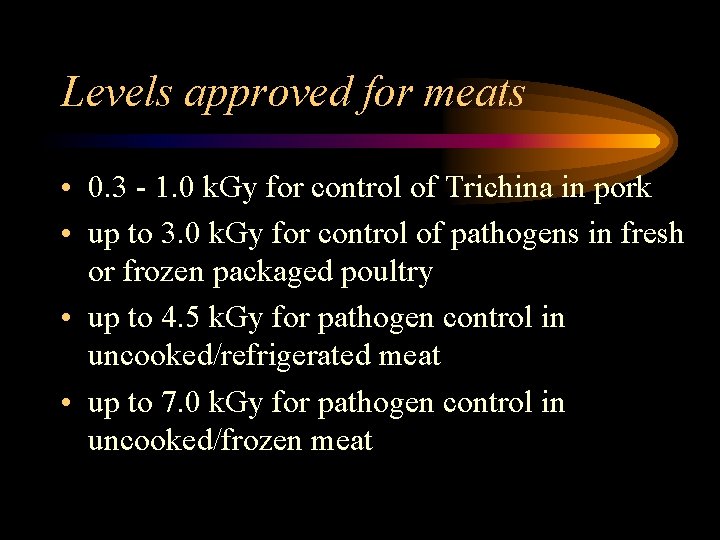
Levels approved for meats • 0. 3 - 1. 0 k. Gy for control of Trichina in pork • up to 3. 0 k. Gy for control of pathogens in fresh or frozen packaged poultry • up to 4. 5 k. Gy for pathogen control in uncooked/refrigerated meat • up to 7. 0 k. Gy for pathogen control in uncooked/frozen meat
Levels approved in other foods • • • Wheat 0. 2 -0. 5 k. Gy (insect disinfestation) Potatoes 0. 05 -0. 15 k. Gy (sprout inhibition) Fruit 1 k. Gy max (ripening delay) Vegetables 1 k. Gy max (disinfestation) Spices 30 k. Gy max (microbial control) Animal and Pet food (2 -25 k. Gy) (Salmonella control)
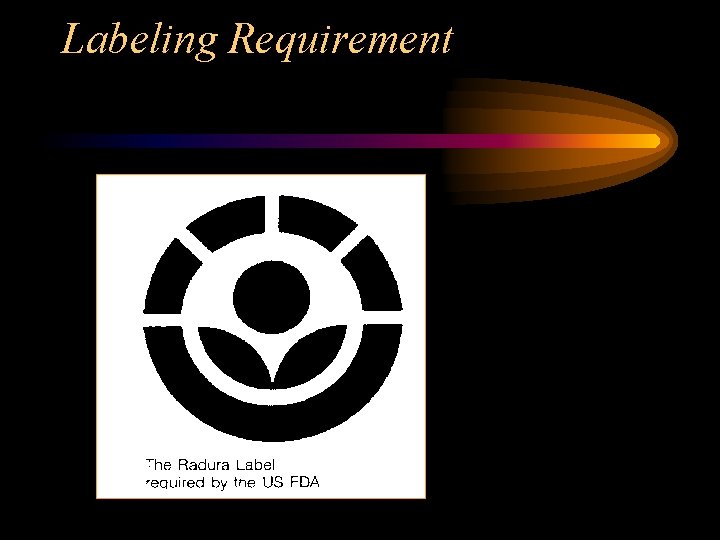
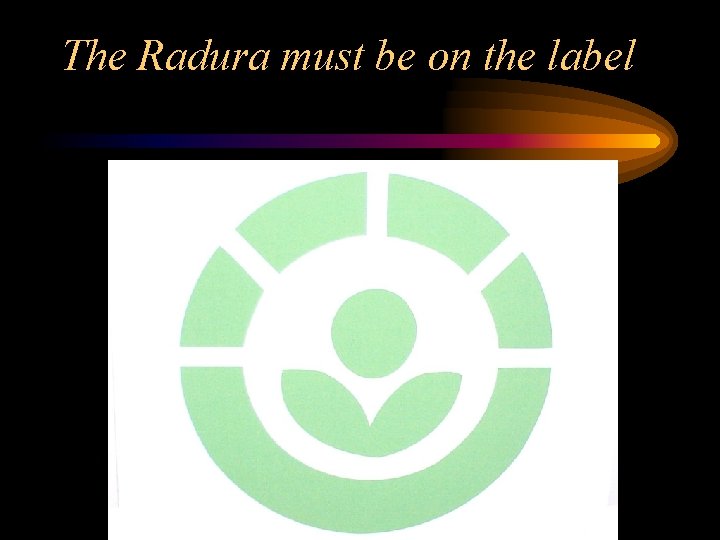
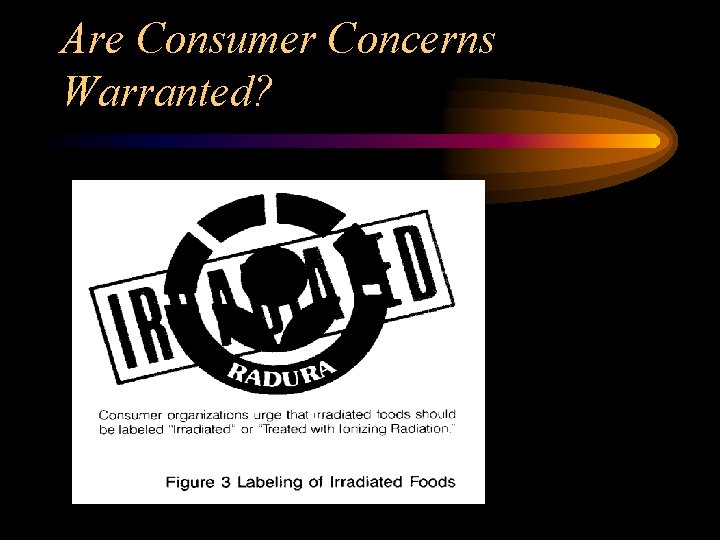
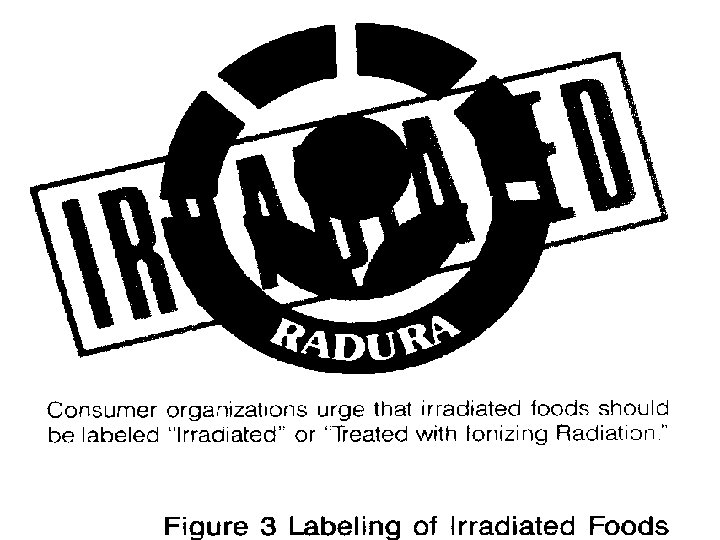
Labeling Requirement
The Radura must be on the label
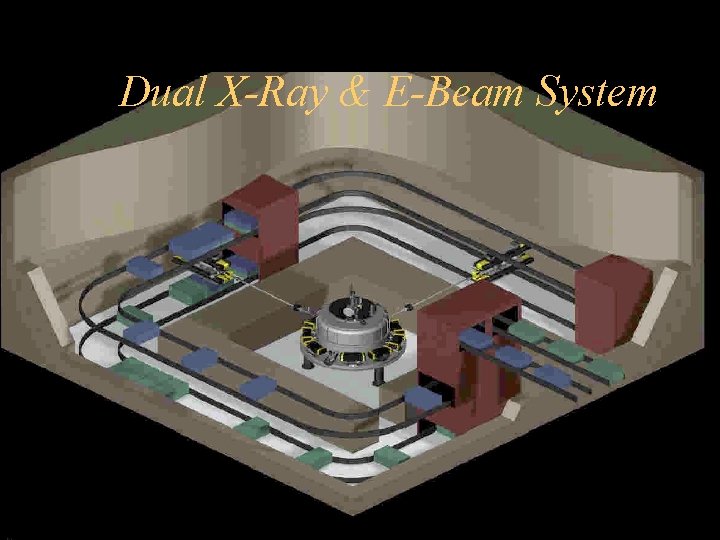
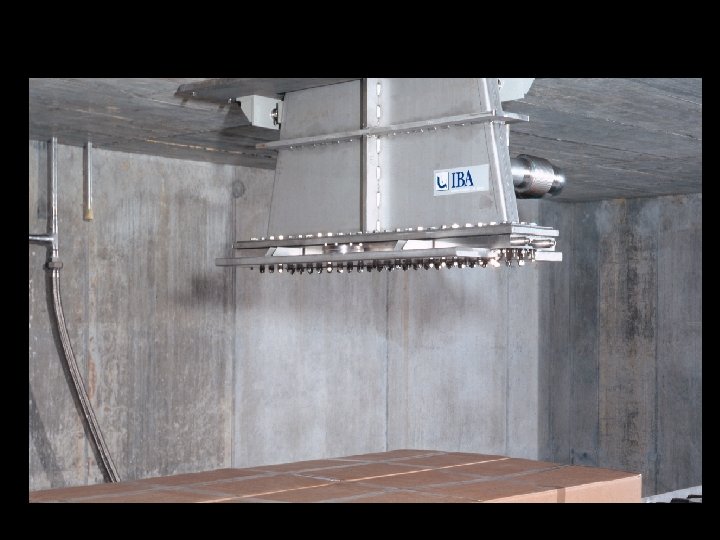
Source vs. Electron Beam • Source • • costly to build source loses power (disposal) worker safety and environmental concerns better penetration (but slower) • Electron Beam • safer for workers and environment • faster • more costly to build and operate
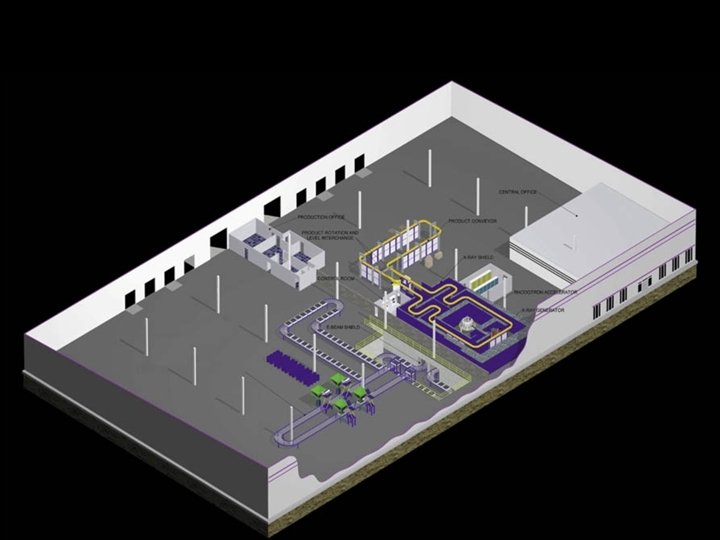
Irradiation Facilities in Use • 36 countries approved irradiation – 140 irradiation facilities – 115 for medical products • US • 40 irradiation facilities • 2 for food treatment – FOOD TECHnology Service, Plant City, FL – Titan, Sioux City, IA (to be open soon)
Titan Plant Commitment • • • IBP Cargill (Excel) Emmpak Foods Hawaii Pride Huisken Meats
Bridgeport, NJ
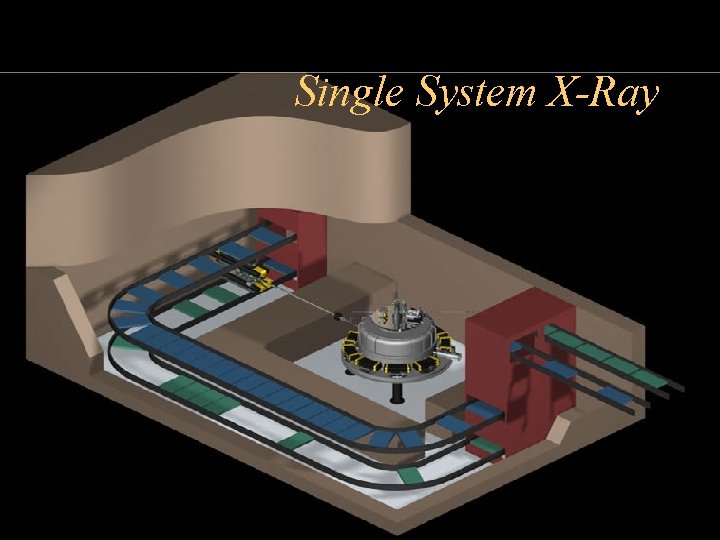
Dual X-Ray & E-Beam System
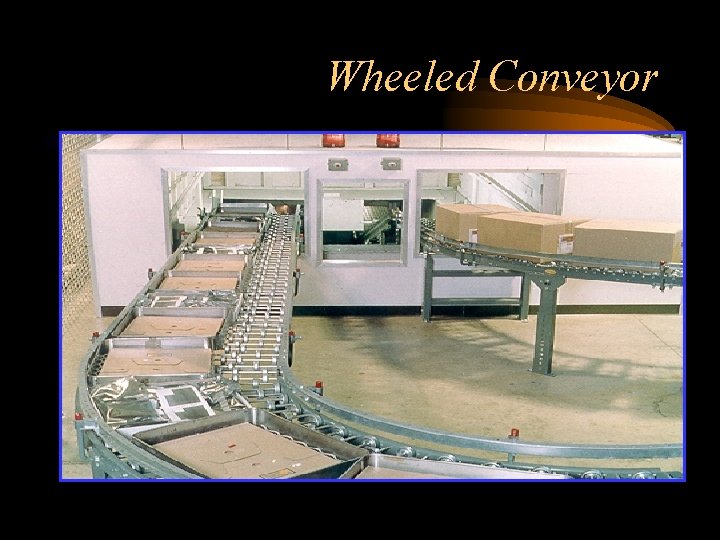
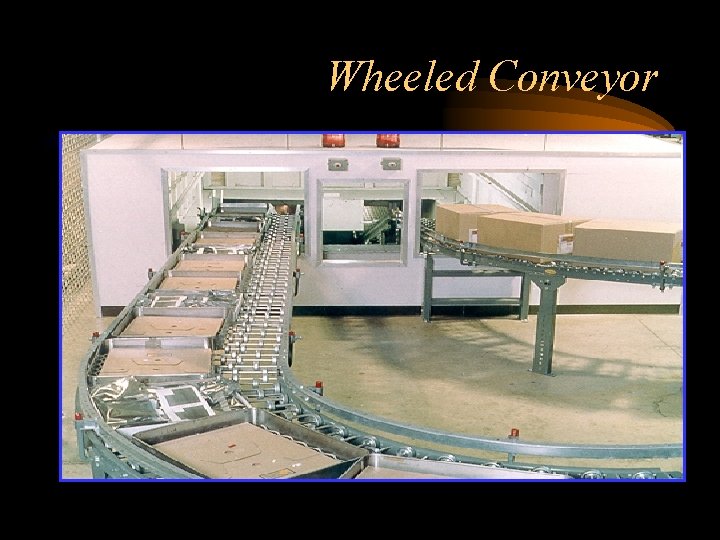
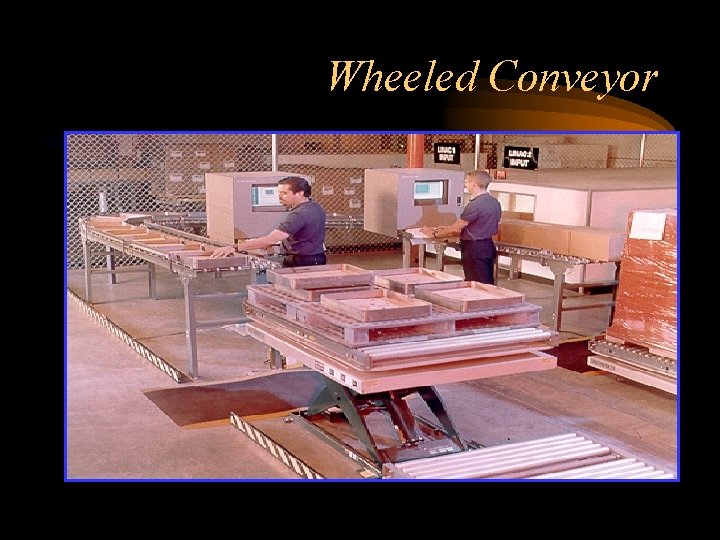
Wheeled Conveyor
Wheeled Conveyor
Uses and Limitations • • • Use on finished, packaged product Fresh or frozen E-beam penetration 2 ½ - 3 inches May have to treat both sides Source is slower Need to change source in 5 years
Drawbacks • Consumer perception – is food safe to eat – is the environment safe • nutrient loss • off flavor, aroma, color
Cost: Benefit • • Costs Benefits Drawbacks Dangers
Costs • Not enough being done to get true cost • estimated cost – $. 05 - $. 10 / lb – plus cost of transportation – One retailer was charging a premium of $. 75/lb
Public Concerns? ? • Will new potentially harmful, chemical compounds be created in irradiated foods? • Would nutrients be lost if foods were irradiated? • Can unscrupulous processors use irradiation to conceal contamination of spoiled foods? • Will workers or others be exposed to dangerous levels of radiation?
Human Health (potential) • Unique radiolytic products (URP) • Cancer – polyploidy • Spoiled/decaying food • Environmental contamination
Are Consumer Concerns Warranted?
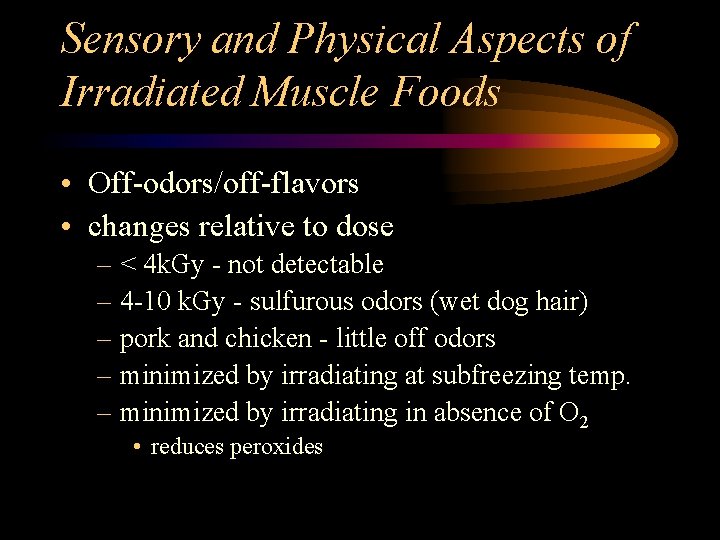
Sensory and Physical Aspects of Irradiated Muscle Foods • Off-odors/off-flavors • changes relative to dose – < 4 k. Gy - not detectable – 4 -10 k. Gy - sulfurous odors (wet dog hair) – pork and chicken - little off odors – minimized by irradiating at subfreezing temp. – minimized by irradiating in absence of O 2 • reduces peroxides
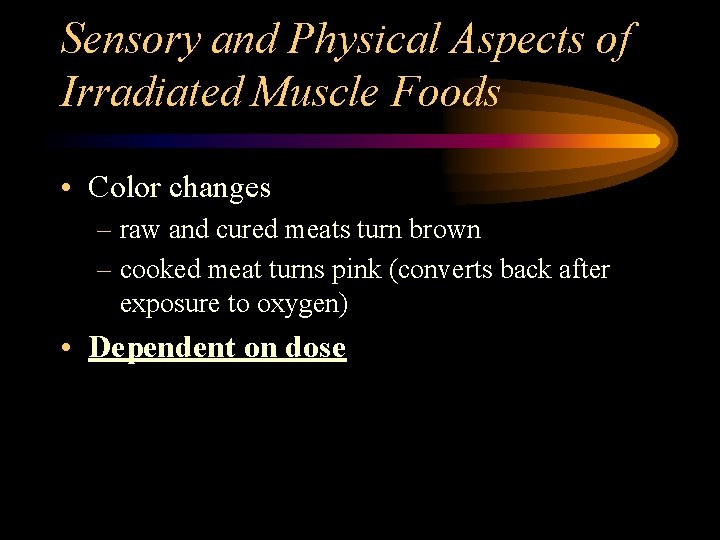
Sensory and Physical Aspects of Irradiated Muscle Foods • Color changes – raw and cured meats turn brown – cooked meat turns pink (converts back after exposure to oxygen) • Dependent on dose
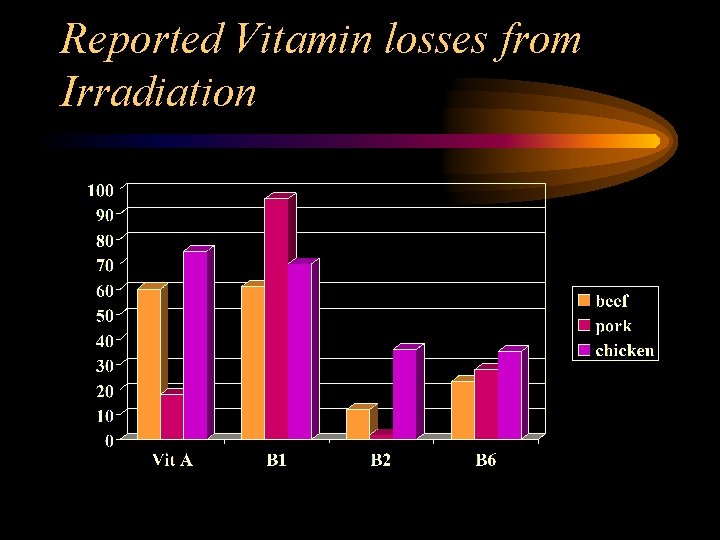
Reported Vitamin losses from Irradiation
Will they buy it? ? • Strawberries - 1992, over 1000 pints sold in 5 days in North Miami Beach • Poultry - 1993, sold out of boneless breasts in 2 days in Northbrook, IL • Poultry - has sold irradiated poultry since 1993
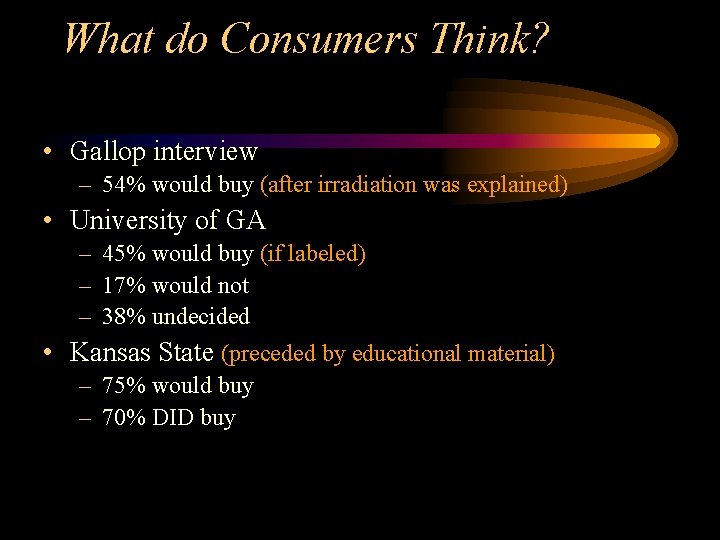
What do Consumers Think? • Gallop interview – 54% would buy (after irradiation was explained) • University of GA – 45% would buy (if labeled) – 17% would not – 38% undecided • Kansas State (preceded by educational material) – 75% would buy – 70% DID buy
• I hope this has helped you understand more about the application of irradiation in meat. • Thank you • Questions?
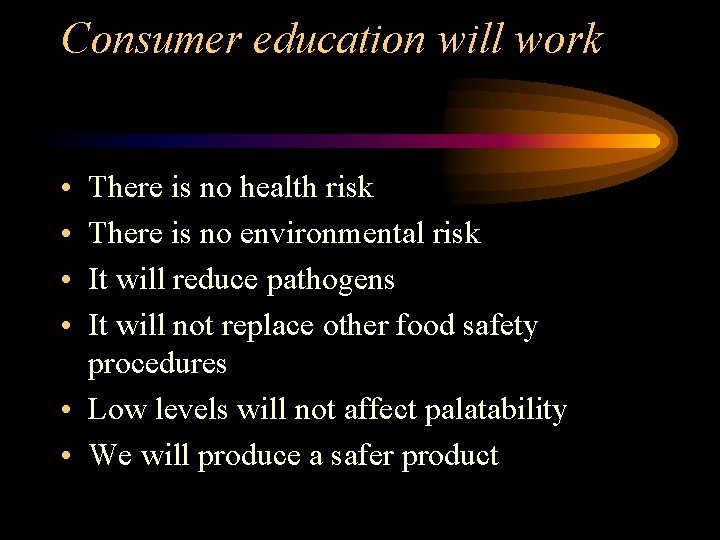
Consumer education will work • • There is no health risk There is no environmental risk It will reduce pathogens It will not replace other food safety procedures • Low levels will not affect palatability • We will produce a safer product
Wheeled Conveyor
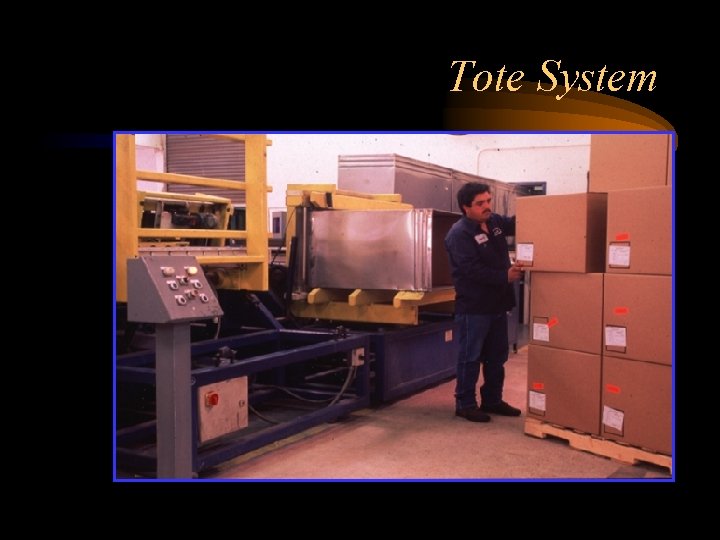
Tote System
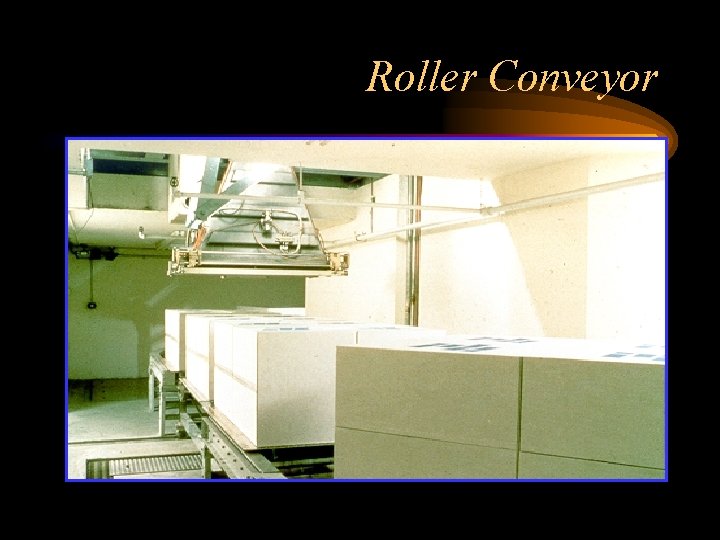
Roller Conveyor
Single System X-Ray