
Iroquois and Algonquian Cultures Created by Kasha Mastrodomenico
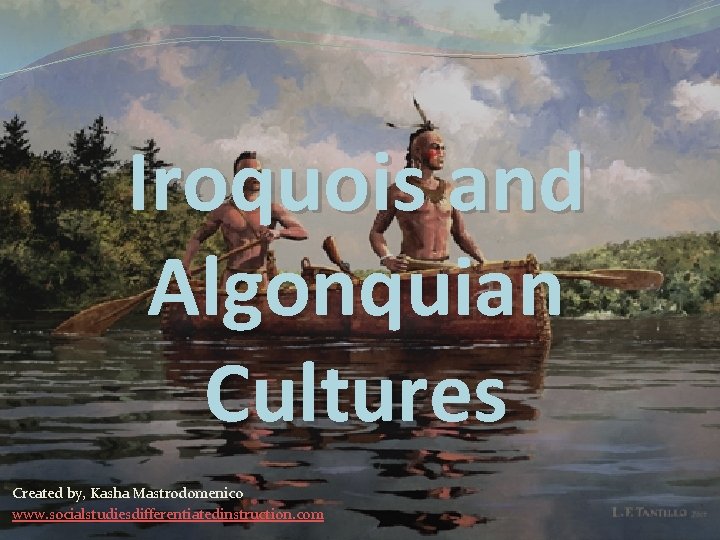
Iroquois and Algonquian Cultures Created by, Kasha Mastrodomenico www. socialstudiesdifferentiatedinstruction. com
Essential Questions �What are the similarities between the Iroquois and the Algonquian cultures? �What are the differences between the Iroquois and the Algonquian cultures? �Why is nature so important to both cultures? �Where were the Iroquois and Algonquian cultures located in NYS?
Vocabulary �Palisades: A high fence made of stakes used for defense �Monotheism: Belief in one God �Polytheism: Belief in more than one God �Matriarchy: Society that follows the mothers line and where women have high importance in politics �Natural Resources: Something that can be used by humans that comes from nature like forests and water �Tribe: A group of people with common ancestry, culture, traditions and leaders �Culture: behaviors and beliefs of a group of people
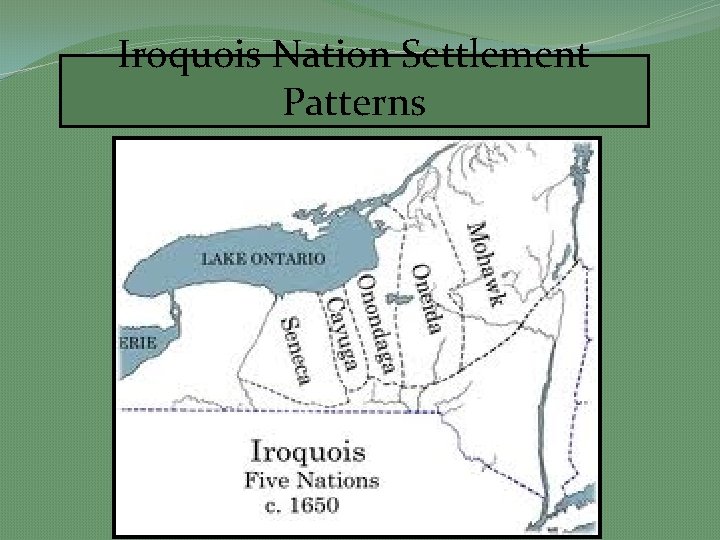
Iroquois Nation Settlement Patterns
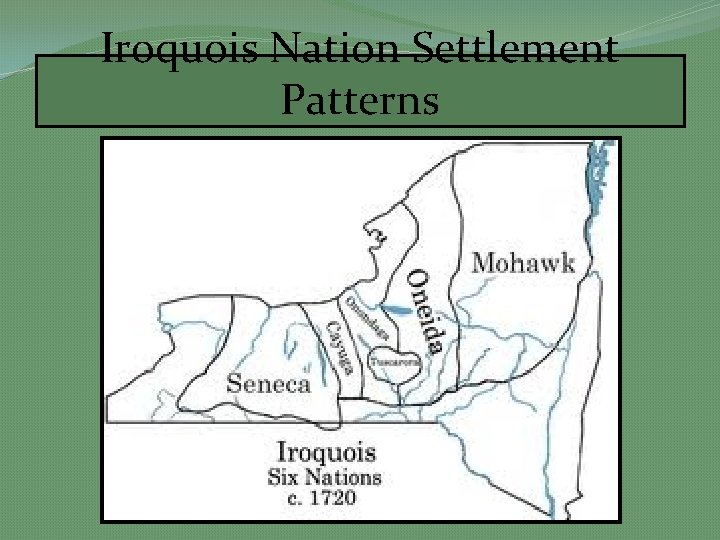
Iroquois Nation Settlement Patterns
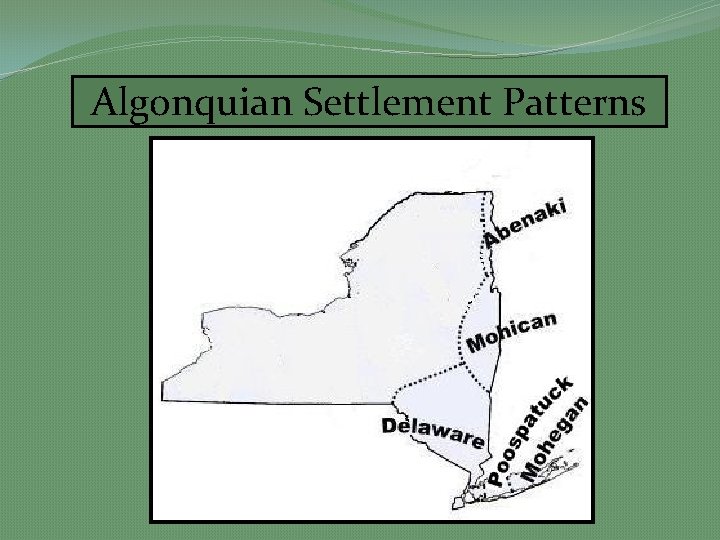
Algonquian Settlement Patterns
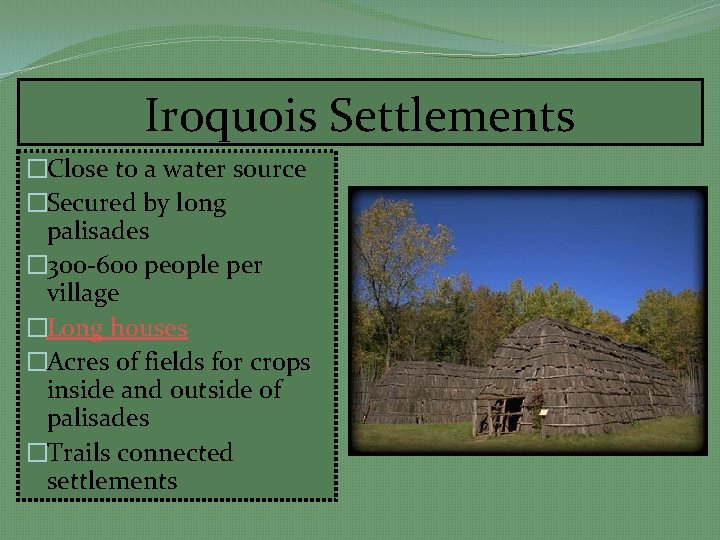
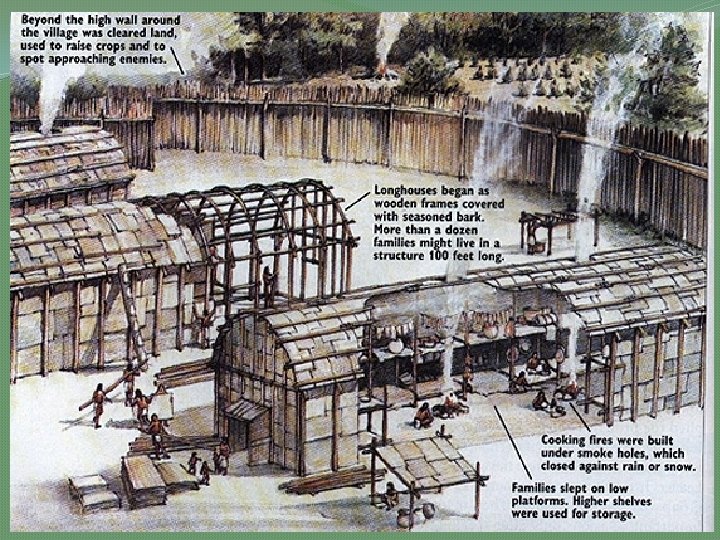
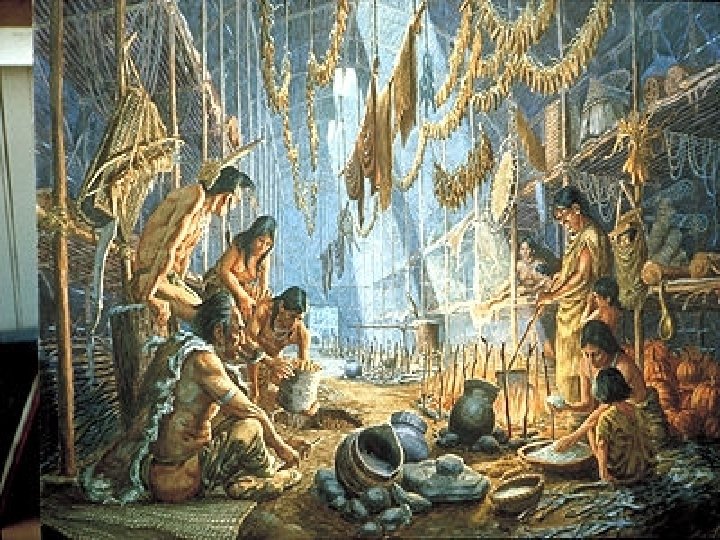
Iroquois Settlements �Close to a water source �Secured by long palisades � 300 -600 people per village �Long houses �Acres of fields for crops inside and outside of palisades �Trails connected settlements
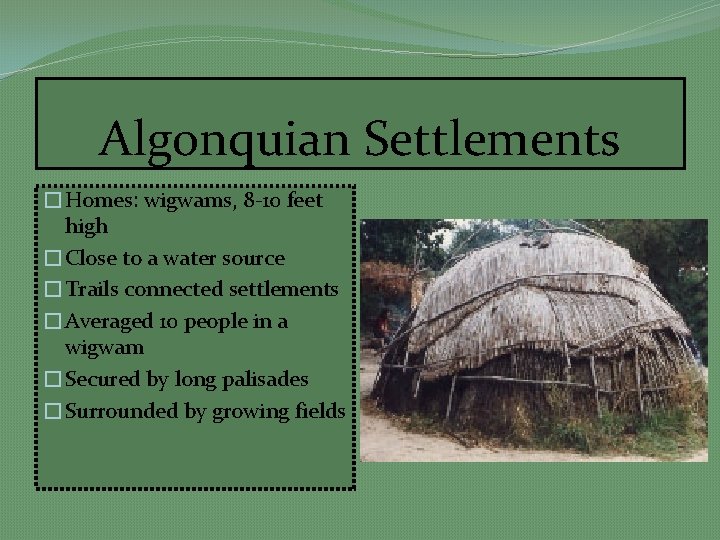
Algonquian Settlements �Homes: wigwams, 8 -10 feet high �Close to a water source �Trails connected settlements �Averaged 10 people in a wigwam �Secured by long palisades �Surrounded by growing fields
Who Are the Iroquois and Algonquians? Iroquois Algonquians �Iroquois means “real snakes” and is an Algonquian word (they were enemies) �Originally: Kanonsionni - people of the longhouse �Now: Haudenosaunee - 6 separate Indian nations: Seneca, Cayuga, Onondaga, Oneida, Mohawk, Tuscarora �Algonquian doesn’t mean anything. It was made up by anthropologists to describe a linguistic family. �Tribes in NY include: Mohican, Mohegan, Munsee Delaware, Abenaki, and Poospatuck
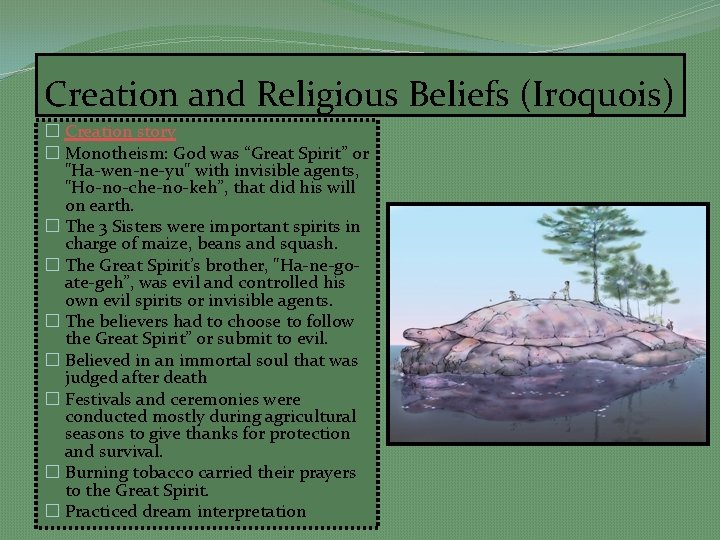
Creation and Religious Beliefs (Iroquois) � Creation story � Monotheism: God was “Great Spirit” or "Ha-wen-ne-yu" with invisible agents, "Ho-no-che-no-keh”, that did his will on earth. � The 3 Sisters were important spirits in charge of maize, beans and squash. � The Great Spirit’s brother, "Ha-ne-goate-geh”, was evil and controlled his own evil spirits or invisible agents. � The believers had to choose to follow the Great Spirit” or submit to evil. � Believed in an immortal soul that was judged after death � Festivals and ceremonies were conducted mostly during agricultural seasons to give thanks for protection and survival. � Burning tobacco carried their prayers to the Great Spirit. � Practiced dream interpretation
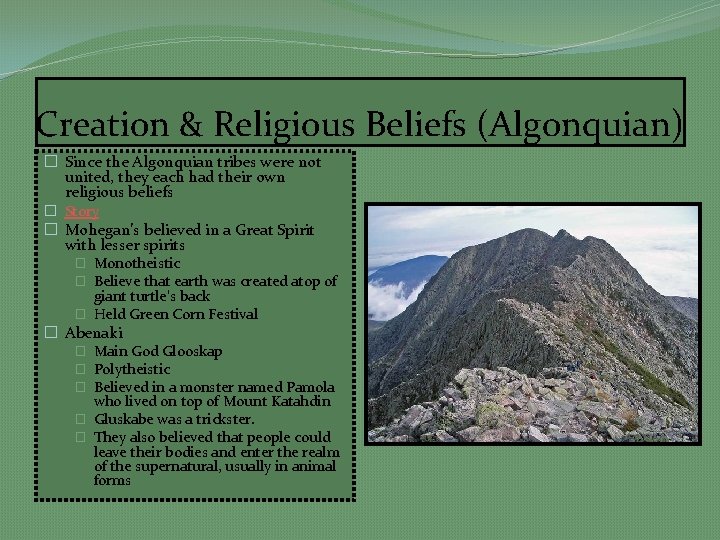
Creation & Religious Beliefs (Algonquian) � Since the Algonquian tribes were not united, they each had their own religious beliefs � Story � Mohegan’s believed in a Great Spirit with lesser spirits � Monotheistic � Believe that earth was created atop of giant turtle’s back � Held Green Corn Festival � Abenaki � Main God Glooskap � Polytheistic � Believed in a monster named Pamola who lived on top of Mount Katahdin � Gluskabe was a trickster. � They also believed that people could leave their bodies and enter the realm of the supernatural, usually in animal forms
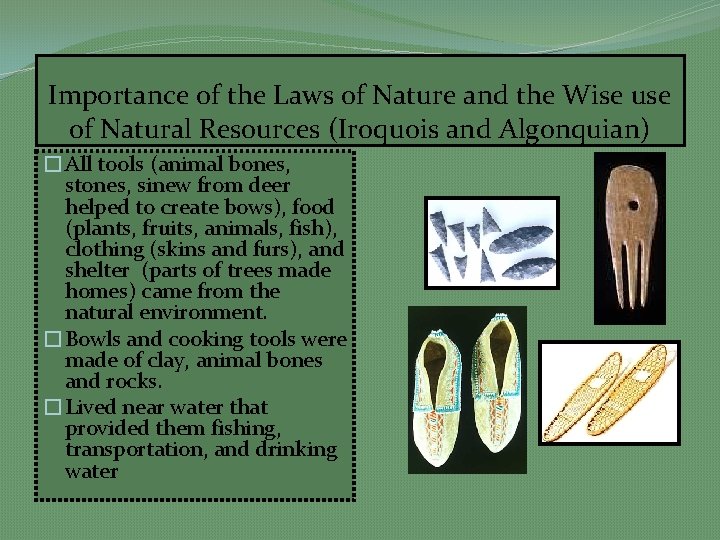
Importance of the Laws of Nature and the Wise use of Natural Resources (Iroquois and Algonquian) �All tools (animal bones, stones, sinew from deer helped to create bows), food (plants, fruits, animals, fish), clothing (skins and furs), and shelter (parts of trees made homes) came from the natural environment. �Bowls and cooking tools were made of clay, animal bones and rocks. �Lived near water that provided them fishing, transportation, and drinking water
Gender Roles Iroquois � Women: keeper of culture, responsible for educating youth using oral tradition and life skills until the age of 12, tended crops, appointed political leaders, head of household, owner of property, social structure followed mothers family line including the clan the children were raised in as well as the last name, made clothing and food, clan mothers, in charge of festivals � Men: hunters and fisherman, taught boys how to do those life skills, warriors, chiefs, traveled between tribes, and trading, collected herbs and made basic medicine, shamans Algonquian � Mohegan: � Men: cleared new corn fields, cut wood for the palisades, made canoes, hunted � Women: tended the corn fields with the help of children, gathered roots and berries � Both men and women gathered and processed fish and shellfish. � Family line and land ownership followed both males and females � Abenaki: � Men: hunters, fishermen, leaders, and shamans � Women: gatherers, hide workers and curers � patrilineal � Both the Mohegan and Abenaki had polygamy in their culture but not everyone had multiple wives.
Family and Kinship and Education Iroquois Algonquian � No other child would be born until the previous child reached the age of 5, if a child was born before that, adoption was honorable and common. � Adults wouldn’t intervene unless a child was in danger and allowed them to learn from their own mistakes. � Corporal punishment, spanking or hitting, was not done. A child may be reprimanded by the parent and then was reprimanded by others in the community which was embarrassing. They were praised when they did well by all in the community. If a child was really disobedient, water would be thrown in their face with no threat of drowning. � Children were considered adults at the age of 12 and split into gender education through mentors. (boys hunting, fishing and girls crafts and field tending and homemaking) � Boys played lacrosse � Mohegan: � Boys learned fishing, hunting, and competed in sports. � Girls learned crafts. � Discipline was verbal. � Abenaki: � Adoption was common. � Adults were teachers and not punishers. � Boys were taught to hunt, fish, and provide for the family. � Girls were taught to take care of babies, cook, and make clothing.
Language Iroquois Algonquian �Hear the languages �All Iroquois belong to the Iroquoian language family. �In NYS these branches of the language were spoken: �Hear the Mohegan language �All Algonquian tribes belong to the Algonquian language family. �In NYS each Algonquian tribe spoke a similar language but had unique aspects. � Northern Iroquoian branch: Tuscarora � 5 Nations Group: Onondaga, Seneca, Cayuga, Mohawk, and Oneida
Essential Questions �What are the similarities between the Iroquois and the Algonquian cultures? �What are the differences between the Iroquois and the Algonquian cultures? �Why is nature so important to both cultures? �Where were the Iroquois and Algonquian cultures located in NYS?
- Slides: 18