
IRLA Parent Information Session Overview What is IRLA
- Slides: 17
IRLA Parent Information Session
Overview • • • What is IRLA? What is a Power Goal? Characteristics of different level readers What can I do to help my child become a better reader at home? Parent resources
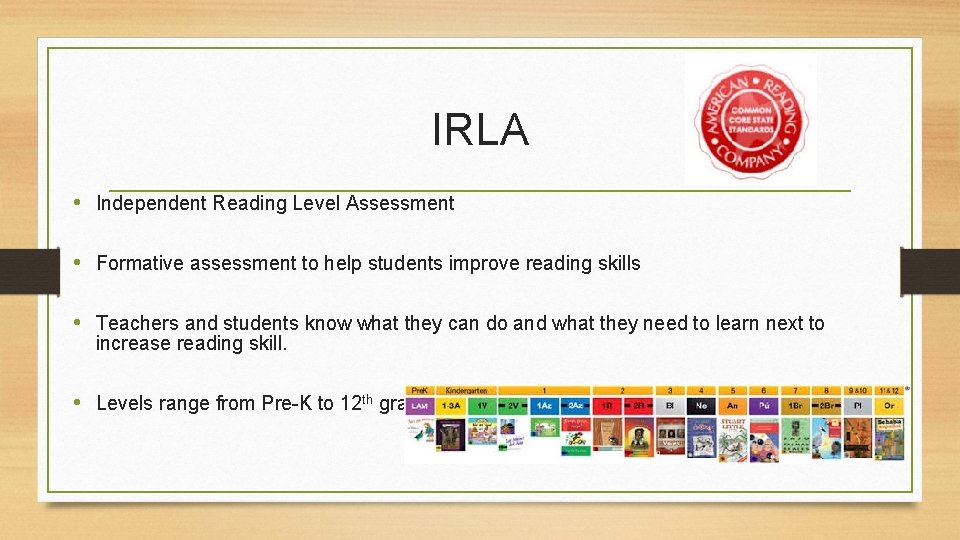
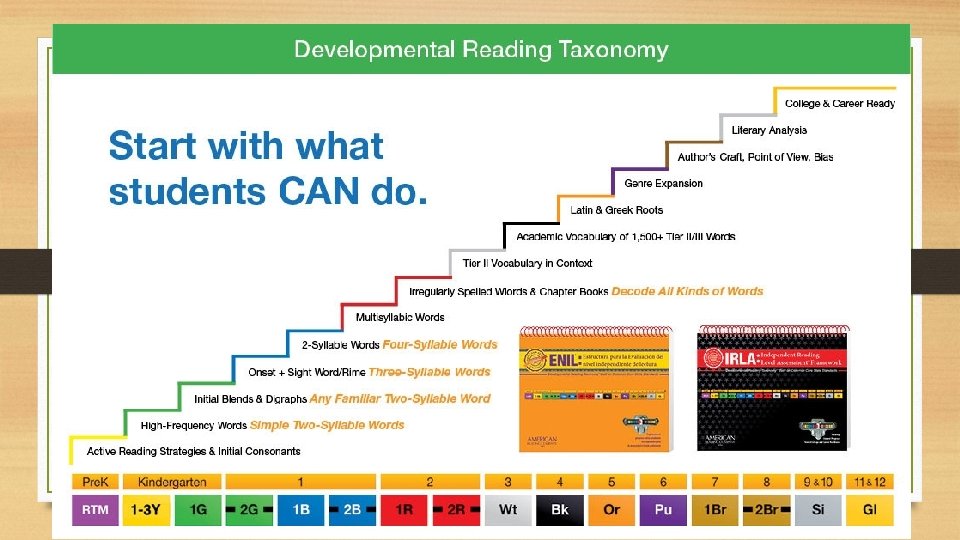
IRLA • Independent Reading Level Assessment • Formative assessment to help students improve reading skills • Teachers and students know what they can do and what they need to learn next to increase reading skill. • Levels range from Pre-K to 12 th grade
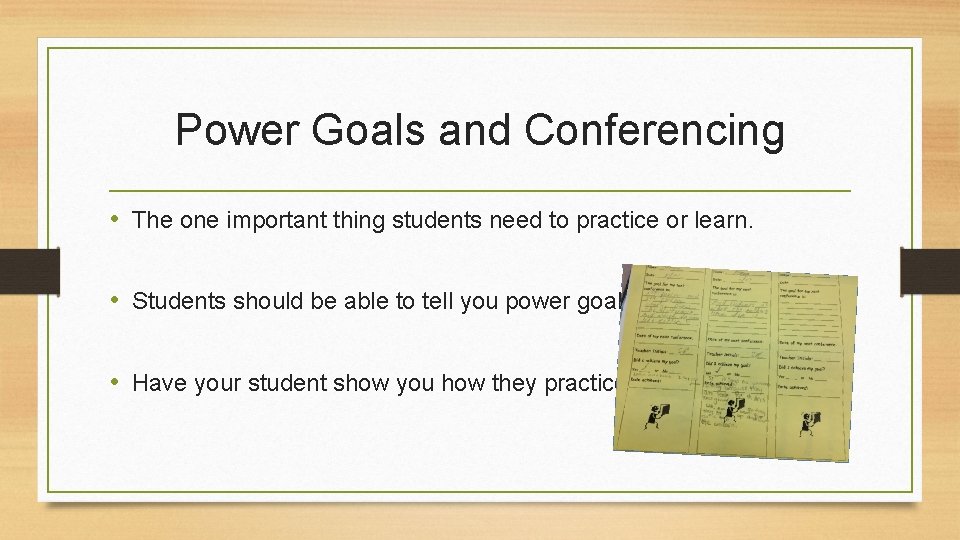
Power Goals and Conferencing • The one important thing students need to practice or learn. • Students should be able to tell you power goal. • Have your student show you how they practice it.
1 Yellow - 3 Yellow Readers • 1 Y Readers • Remember and use a sentence pattern to ”read” the rest of the book. • Figure out the one word that changes on each page by reading the main idea of the picture. • 2 Y Readers • Point to each word as they say it. • Use the spaces to separate words. • Figure out the one new word that changes on each page by reading the main idea of the picture. • 3 Y Readers • Put their mouth in position to make the first letter sound of the new word on each page. • Say a word that matches the first letter sound of a word and makes sense with the picture.
1 Green Readers • • Recognize at least 25 Power Words at flash speed. Makes the primary sound for each consonant. Read and comprehend 1 G text. Ask and answer questions about key details.
2 Green Readers • • • Recognize 60 Power Words at flash speed Recognize and read irregularly spelled words Make the initial sound for blends and diagraphs Read a 2 G text with sufficient accuracy and fluency Ask and answer question about key details in a text
1 Blue Readers • • • Blend and segment onsets and rimes of single-syllable words Decode regularly spelled one-syllable words Recognize and read irregularly spelled words Read a 1 B text with sufficient accuracy and fluency Ask and answer questions about key details
2 Blue Readers • • • Decode two-syllable words following basic patterns Read words with inflectional endings (-ed, -ing, -est) Recognize and read 2 B irregularly spelled words Read a 2 B text with sufficient accuracy and fluency Ask and answer questions about key details
1 Red Readers • • Know and apply phonics and word analysis when decoding words Recognize and read irregularly spelled words Read a 1 R text with sufficient accuracy and fluency Ask and answer who, what, where, when, why, and how questions to demonstrate understanding
2 Red Readers • Identify words with inconsistent but common spelling-sound correspondence • Read with sufficient accuracy and fluency • Ask and answer who, what, where, when, why, and how questions to demonstrate understanding of key details
White Level Readers • Determine the meaning of general academic and domain-specific words and phrases, distinguishing literal from non-literal language • Decode multisyllabic words • Ask and answer questions to demonstrate understanding, referring explicitly to the text as the basis for the answers • By the end of the year, read and comprehend 3 rd grade text independently and proficiently
Black Level Readers • Acquire and use accurately grade-appropriate general academic and doman-specific words and phrases. • Refer to details and examples in a text when explaining what the text says explicitly and when drawing inferences. • By the end of the year, read and comprehend literature. Including stories, dramas, and poetry.
Orange Level Readers • Acquire and use accurately grade-appropriate general academic and domain-specific words and phrases. • Quote accurately from a text when explaining what the text says explicitly and when drawing inferences from the text. • By the end of the year, read and comprehend literature, including stories, dramas, poetry and informational text.
How you can help at home • Turn off TV, phone, computers, and games. Eliminate distractions. • Read with your child, or observe him/her reading for 30 minutes. • For children in 1 Yellow through 1 Red, taking breaks may be necessary. • Think and talk about the books afterward.
Parent Resources • SAES Website- Parents Tab • American Reading at Home website- www. americanreadingathome. com • Skill Cards Parent Guides • Level Information Sheets