
Irish Music Chapter 9 Irish Traditional Music Encompasses

- Slides: 13
Irish Music Chapter 9
Irish Traditional Music �Encompasses traditional, neo-traditional, and posttraditional styles �“Europe’s most commercially successful music” �Backdrop: formation of Irish nation and nationalism, history of oppression (Irish potato famine) and strife (“The Troubles”), Irish diaspora, transnational flows �Five main categories: �Sean nós, or “old way” songs (Irish Gaelic) (CD 3 -4) �Instrumental airs (often in free rhythm) �Songs sung in English �Irish harp music (harp = national symbol) �Instrumental dance tunes and medleys (our focus)
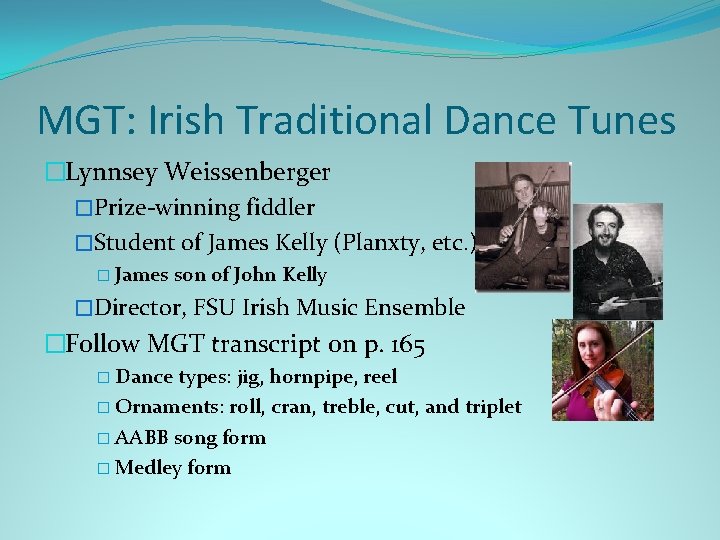
MGT: Irish Traditional Dance Tunes �Lynnsey Weissenberger �Prize-winning fiddler �Student of James Kelly (Planxty, etc. ) � James son of John Kelly �Director, FSU Irish Music Ensemble �Follow MGT transcript on p. 165 � Dance types: jig, hornpipe, reel � Ornaments: roll, cran, treble, cut, and triplet � AABB song form � Medley form
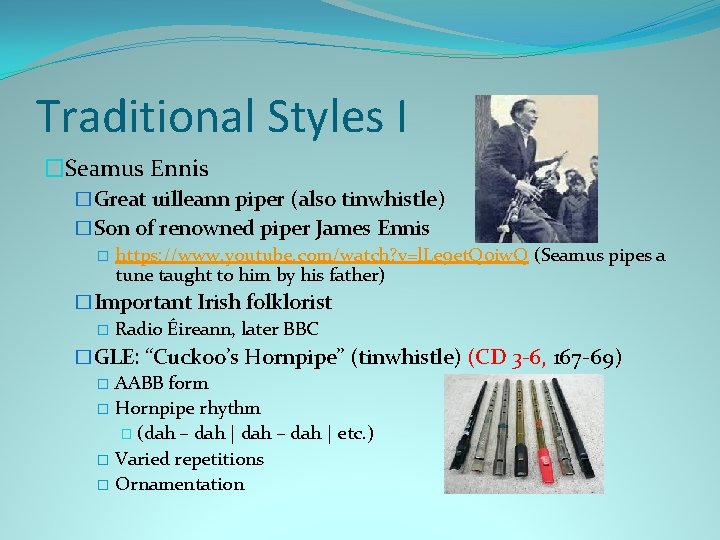
Traditional Styles I �Seamus Ennis �Great uilleann piper (also tinwhistle) �Son of renowned piper James Ennis � https: //www. youtube. com/watch? v=l. Le 9 et. Q 0 iw. Q (Seamus pipes a tune taught to him by his father) �Important Irish folklorist � Radio Éireann, later BBC �GLE: “Cuckoo’s Hornpipe” (tinwhistle) (CD 3 -6, 167 -69) � AABB form � Hornpipe rhythm � (dah – dah | etc. ) � Varied repetitions � Ornamentation
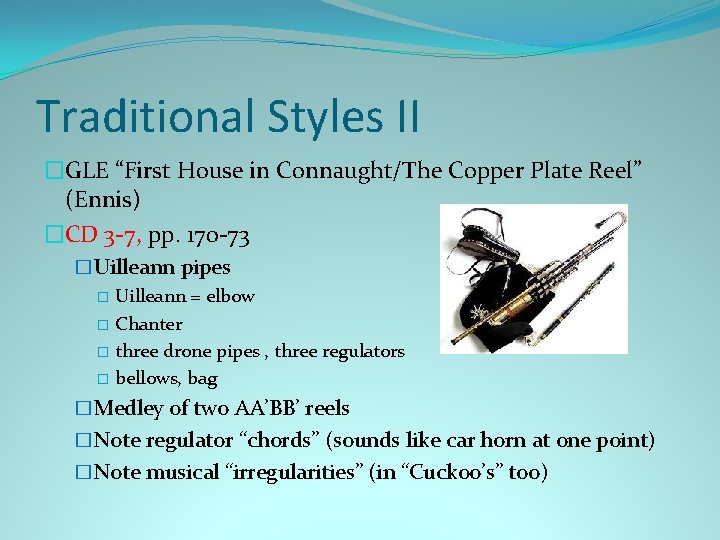
Traditional Styles II �GLE “First House in Connaught/The Copper Plate Reel” (Ennis) �CD 3 -7, pp. 170 -73 �Uilleann pipes � Uilleann = elbow � Chanter � three drone pipes , three regulators � bellows, bag �Medley of two AA’BB’ reels �Note regulator “chords” (sounds like car horn at one point) �Note musical “irregularities” (in “Cuckoo’s” too)
Neo-Traditional Styles, Irish Music Revival �Traditional music decline through 1950 s � 1960 s brought musical revival (along with economic upturn), as well as musical transformations �More formal, structured �Guitar and other chordal instruments added to traditional insts. (fiddle, flute, tinwhistle, uillean pipes) �Competitions (fleadhs) �Professionalism, move away from dancing to dance tunes �Increasing commodification overall – from domestic gatherings to pubs, concert halls, festivals, etc.
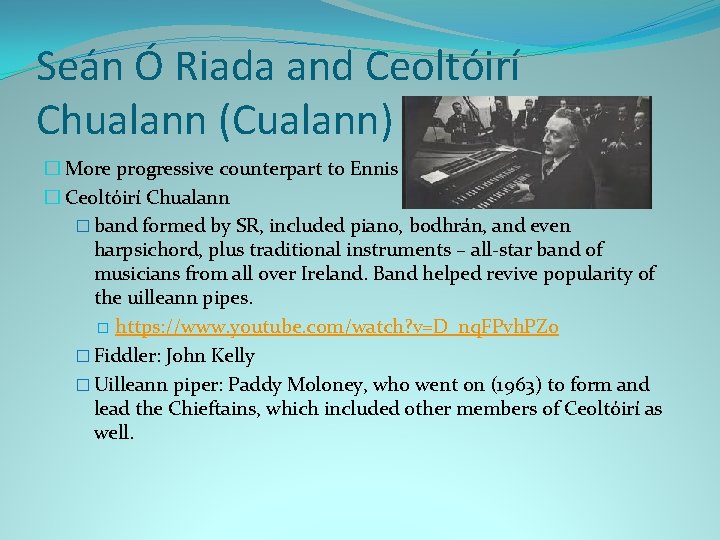
Seán Ó Riada and Ceoltóirí Chualann (Cualann) � More progressive counterpart to Ennis � Ceoltóirí Chualann � band formed by SR, included piano, bodhrán, and even harpsichord, plus traditional instruments – all-star band of musicians from all over Ireland. Band helped revive popularity of the uilleann pipes. � https: //www. youtube. com/watch? v=D_nq. FPvh. PZo � Fiddler: John Kelly � Uilleann piper: Paddy Moloney, who went on (1963) to form and lead the Chieftains, which included other members of Ceoltóirí as well.
The Chieftains �Best-known Irish traditional music group of all time �International ambassadors of Irish music �Have collaborated with everyone from Mick Jagger to Ziggy Marley �“Redemption Song”: https: //www. youtube. com/watch? v=YEMbj 3 bguk 0 �“The Dingle Set” (CD 3 -8), pp. 177 -78 �Medley of three reels: “Far From Home” (AABB), “Gladstone” (AB) “The Scartaglen” (AB) �Instruments: tinwhistle and uilleann pipes (Moloney), fiddles (incl. guest Ashley Mac. Isaac), Irish wooden flute, Irish harp, accordion, concertina, banjo, bodhrán
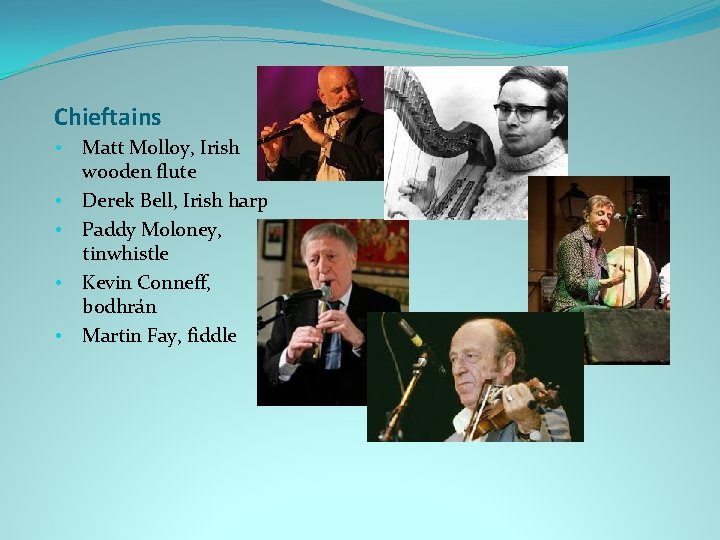
Chieftains • • • Matt Molloy, Irish wooden flute Derek Bell, Irish harp Paddy Moloney, tinwhistle Kevin Conneff, bodhrán Martin Fay, fiddle
The 1970 s: Revival, Second Generation �Second generation of Irish music revival �New generation of Irish musicians who: �Had grown up with other kinds of music: rock, jazz, classical �Fused Irish traditional with rock, jazz, and other international and popular styles �Simultaneously carried on songs, dance tunes, and performance traditions of Irish forebears �Often had close relationships with the older musicians (e. g. , Seamus Ennis and Planxty piper Liam O’Flynn) �Bands: Planxty, Clannad, Bothy Band, De Danaan, Horslips �Planxty: “Bean Pháidín” CD 3 -9 (p. 179)
Modern Ensemble Sound of Irish Traditional Music �Instrumentation combines trad insts. w. chordal accomp insts. �Chording insts. include guitar, Irish bouzouki (p. 181), and others—stylistic elements from jazz, rock, flamenco, etc. �Drums, other percussion instruments (e. g. , conga) �Traditional dance rhythms (e. g. , reel) enhanced by jazz, rock, Latin, African, Balkan rhythms �Highly varied musical textures, arrangements �More separation of dance tunes from dancing (though also dance revivals in theatrical productions like Riverdance)
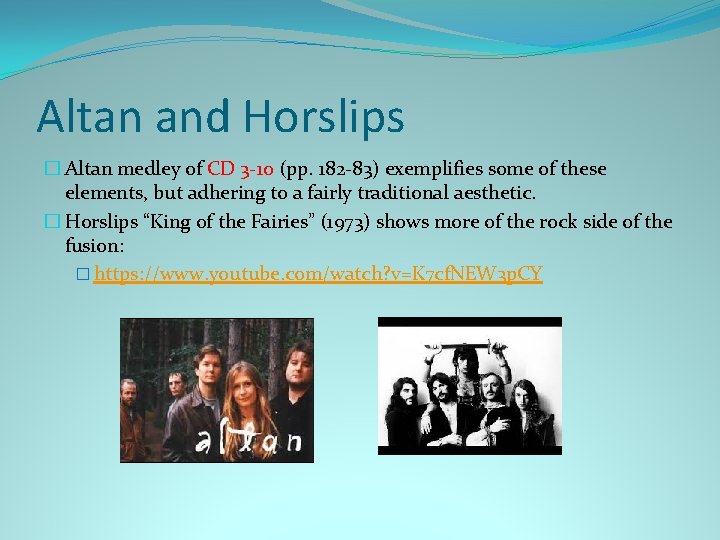
Altan and Horslips � Altan medley of CD 3 -10 (pp. 182 -83) exemplifies some of these elements, but adhering to a fairly traditional aesthetic. � Horslips “King of the Fairies” (1973) shows more of the rock side of the fusion: � https: //www. youtube. com/watch? v=K 7 cf. NEW 3 p. CY
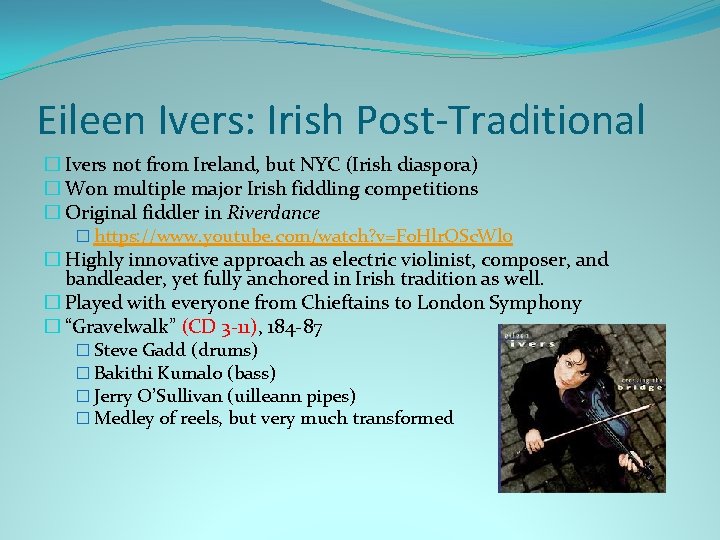
Eileen Ivers: Irish Post-Traditional � Ivers not from Ireland, but NYC (Irish diaspora) � Won multiple major Irish fiddling competitions � Original fiddler in Riverdance � https: //www. youtube. com/watch? v=Fo. Hlr. QSc. Wl 0 � Highly innovative approach as electric violinist, composer, and bandleader, yet fully anchored in Irish tradition as well. � Played with everyone from Chieftains to London Symphony � “Gravelwalk” (CD 3 -11), 184 -87 � Steve Gadd (drums) � Bakithi Kumalo (bass) � Jerry O’Sullivan (uilleann pipes) � Medley of reels, but very much transformed