
IRB Overview and e Prost Redesigned Joey Casanova
IRB Overview and e. Prost Redesigned Joey Casanova, Education Coordinator Human Subject Research Office
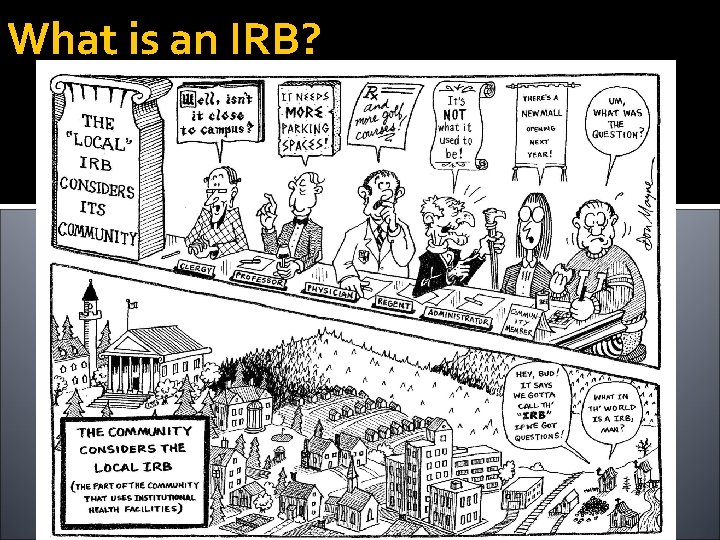
What is an IRB?
Belmont Principles Respect: individuals must be autonomous in their decisions of whether to participate in research (making informed decisions) Beneficence: securing well-being of participants by reducing risks Justice: considerations appropriate to avoid injustices that arise from social, racial, sexual, and cultural biases
Regulations Overview (HHS & FDA) The mission of the OHRP is to monitor and promote compliance with regulations set forth from the Department of Health and Human Services (DHHS) that relate to the ethical standards of research involving human subjects (45 CFR 46). Any research involving a drug, a biologic, or a medical device is subject to Food & Drug Administration (FDA) regulation (21 CFR 50, 56, respectively).
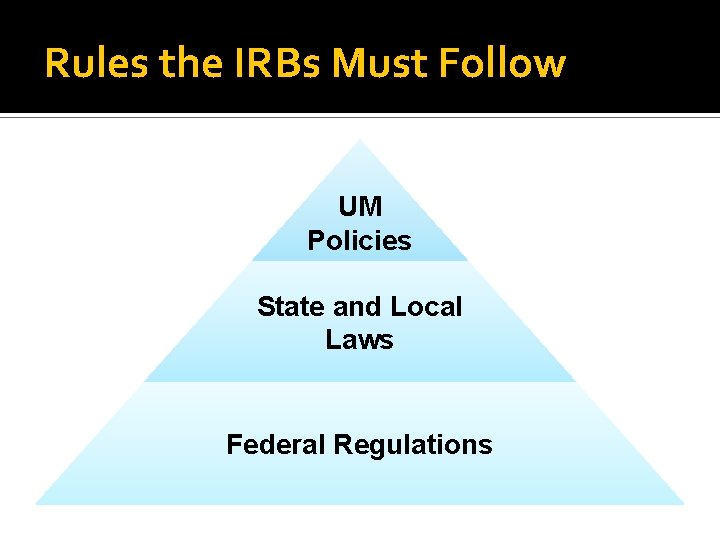
Rules the IRBs Must Follow UM Policies & Procedures State and Local Laws Federal Regulations
What is human subjects research?
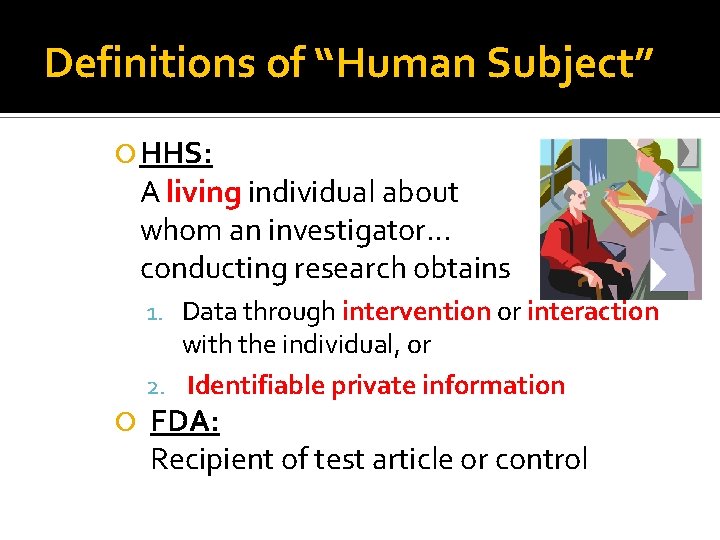
Definitions of “Human Subject” HHS: A living individual about whom an investigator… conducting research obtains 1. Data through intervention or interaction with the individual, or 2. Identifiable private information FDA: Recipient of test article or control
Definitions of Research HHS: A systematic investigation designed to develop or contribute to generalizeable knowledge FDA: Clinical Investigations of FDA Regulated Products – any experiment in which a drug, biologic or significant risk device is administered or dispensed to or used involving one or more human subjects
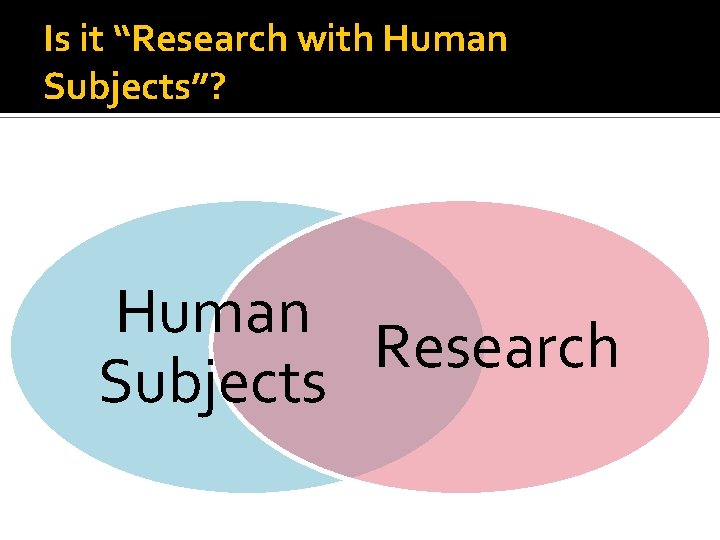
Is it “Research with Human Subjects”? Human Research Subjects
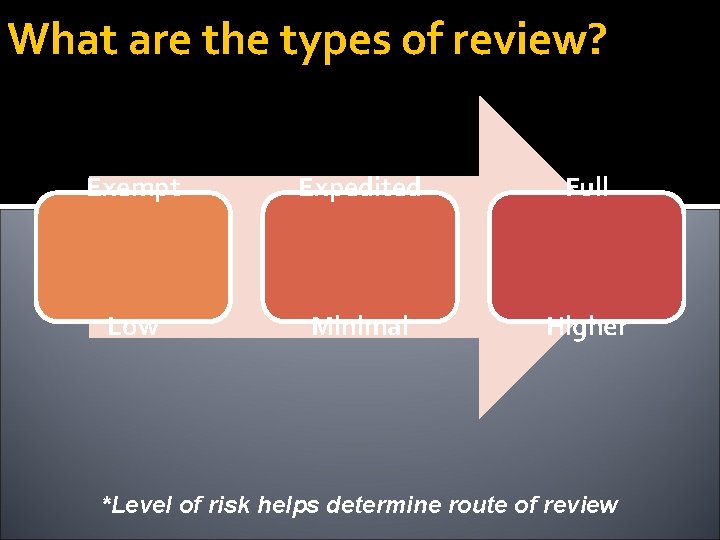
What are the types of review? Exempt Expedited Full Low Minimal Higher *Level of risk helps determine route of review
What is Minimal Risk? DHHS 45 CFR 46. 102(i) & FDA 21 CFR 56: The probability and magnitude of harm or discomfort anticipated in the research are not greater in and of themselves than those ordinarily encountered in daily life or during routine physical or psychological exams or tests OHRP Guidance: Minimal risk is relative to the daily life of a normal, healthy person. The risk threshold cannot increase because the person is sick and faces greater risk due to illness
Exempt Research Six categories defined by 45 CFR 46 Research must fall into one or more of the categories to be exempt IRB has the responsibility to determine exemption, PI cannot make determination May still require consent or other safeguards How is data being collected? Is there a code that links data to subjects (easily identifiable)?
Exemption Categories (1) Educational research (2 -3) Tests, surveys, interviews or public observation (4) Research on existing public or anonymous data or specimens (5) Federal demonstration projects (6) Taste and food evaluation
Expedited Review Expedited does not mean quicker Rigor of review is the same, number of reviewers different Review carried out by IRB chair or by one or more experienced reviewers Reviewers may approve or modify, but may not disapprove
An IRB may use the expedited review procedure to review either of the following: Some or all of the research appearing on the list and found by the reviewer(s) to involve no more than minimal risk Minor changes in previously approved research during the period (of one year or less) for which approval is authorized
Eligible for Expedited Review: (Initial Review) (1) Clinical studies: IND/IDE not required (2) Blood sample collection (routine methods – small amounts) (3) Prospective collection of biological samples – noninvasive means (4) Data collected through noninvasive means (routinely practiced in clinical settings) (5) Materials (data, documents, specimens) have been collected or will be collected for nonresearch purposes (6) Collection of voice, video or digital data for research purposes (7) Individual or group behavior, surveys, interviews, oral histories
“It is not invasive so it must be minimal risk” This is not correct. The IRB must consider the risk of criminal/civil liability, financial risk, employment risk, risk of stigmatization, risk to insurability, and risk of embarrassment in addition to physical risk when deciding if risk is truly minimal.
Full Review means: A full quorum is assembled (at least half of the members plus one, includes nonscientist) All members participate in discussion and make comments (plenary review) Decision is rendered by a majority of the assembled quorum No member with a conflict of interest participates in the decision Numerical vote is taken and recorded
Criteria for Approval Minimized risks (not eliminated) Reasonable risk/benefit assessment Equitable subject selection Informed consent process Informed consent documentation Data monitored for safety Confidentiality/privacy maintained Vulnerable populations protected
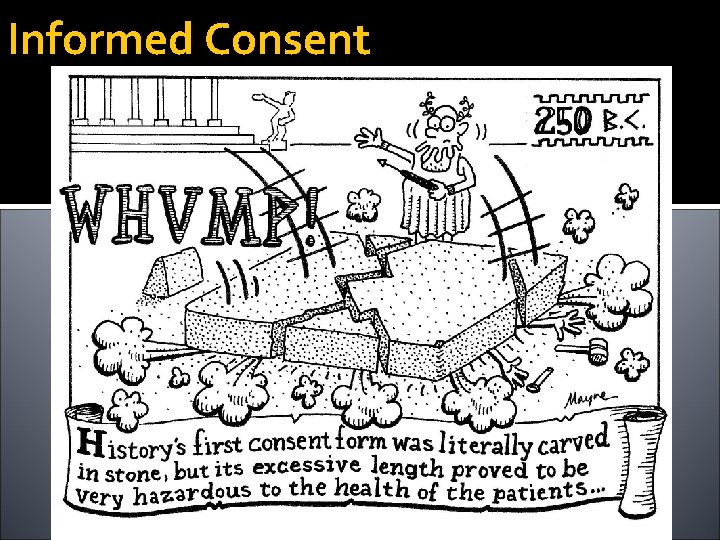
Informed Consent
General Requirements: Unless waived by the IRB, the investigator must obtain the legally effective informed consent of the subject or the subject’s legally authorized representative Must provide the subject sufficient opportunity to consider participation and minimize undue influence Information must be in language understandable to the subject May not include exculpatory language
Informed Consent as a Process Consent is a Process in which: You disclose relevant information The potential subject has the opportunity to ask questions You answer questions The consent form is a permanent record of… The information you conveyed The fact that the process occurred The subject’s willingness to participate
Elements of Informed Consent Research acknowledgement Purpose of the study Description of procedures Description of potential risks Description of potential benefits Alternatives Confidentiality Compensation for Injury Who will answer questions Participation is voluntary
Other Elements as Necessary The fact there may be unforeseeable risks Involuntary termination of participation Additional research costs Consequences of subject withdrawal Significant new finding will be reported to subject Approximate number of subjects Payments/Reimbursement
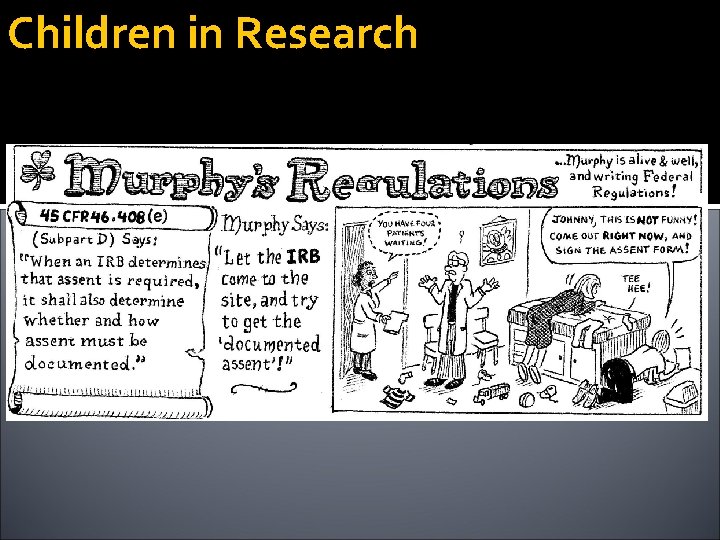
Children in Research
HSRO Assent Policy �Applies to children 7 through 17 years of age. �Failure to object is not assent �IRB determines whether and how it is documented �Assent is required except: when child not capable: age, maturity, or psychological state; Research presents direct benefit; important to the child’s well-being, and available only in context of research
HSRO Assent Policy Assent can be waived if: Research involves no more than minimal risk Waiver will not adversely affect the rights and welfare Research could not be practicably carried out without the waiver Whenever appropriate the participants will be provided with additional pertinent information
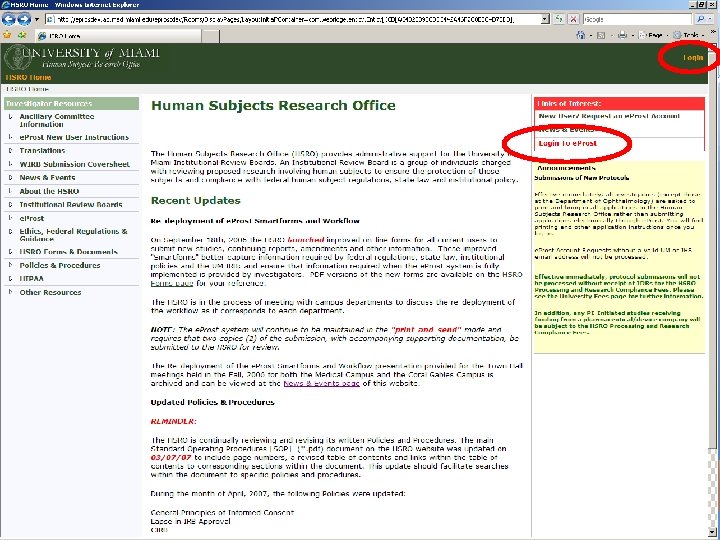
e. Prost: Re-Designed http: //hsro. miami. edu
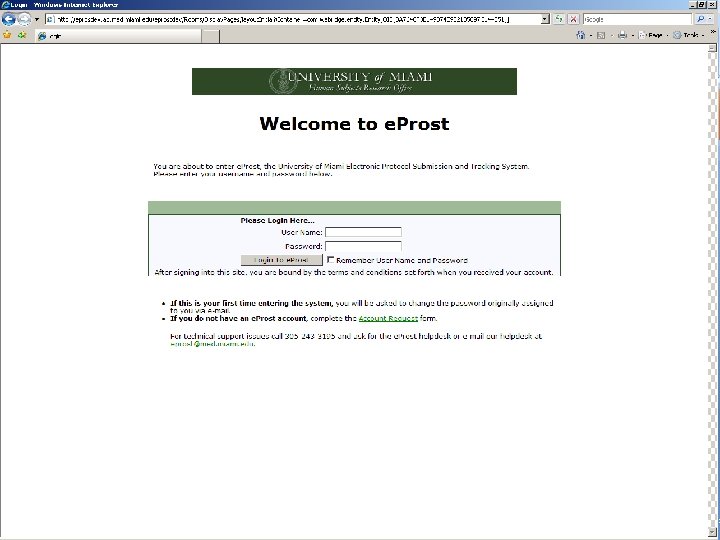
e. Prost Background Electronic PROtocol Submission & Tracking system Assists the HSRO in supporting and managing all biomedical and social behavioral research Access via standard internet browser Internet Explorer (PC Users) Safari (Apple Users) Captures information capture as required by federal regulations, state laws, and institutional policies
The Electronic Workflow Full Re-deployment of the electronic workflow will be completed in February 2008 Study teams will continue to complete protocol forms in e. Prost All members of the Protocol Team need to Submit their Conflict of Interest disclosures individually Principal Investigator will then be able to Submit Protocol Study will now be traveling through the workflow
Benefits of Workflow Accessible anywhere you have internet access Faster turnaround time for submissions to the HSRO Easier tracking of studies through review process Incorporated audit trail Improved interaction between study teams and Institutional Review Board staff Back-ups performed regularly by both the HSRO and Med-IT IRB-approved and watermarked documents available online
Western IRB No new studies are being reviewed at WIRB Many existing studies currently at WIRB are being reacquired at continuing review WIRB submissions will still need to be printed for submission to the HSRO and subsequently WIRB Only WIRB forms required for continuing report or amendment ◦ Investigators asked to update smart form for amendments when necessary
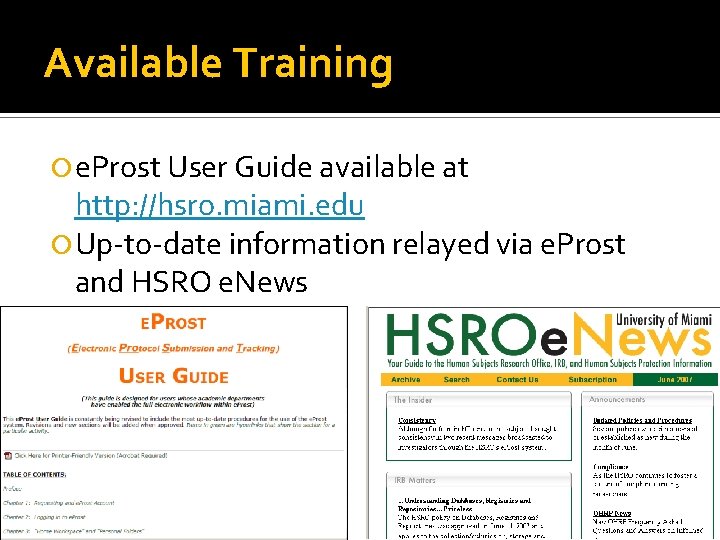
Available Training e. Prost User Guide available at http: //hsro. miami. edu Up-to-date information relayed via e. Prost and HSRO e. News
Investigator Resources available on the HSRO Website
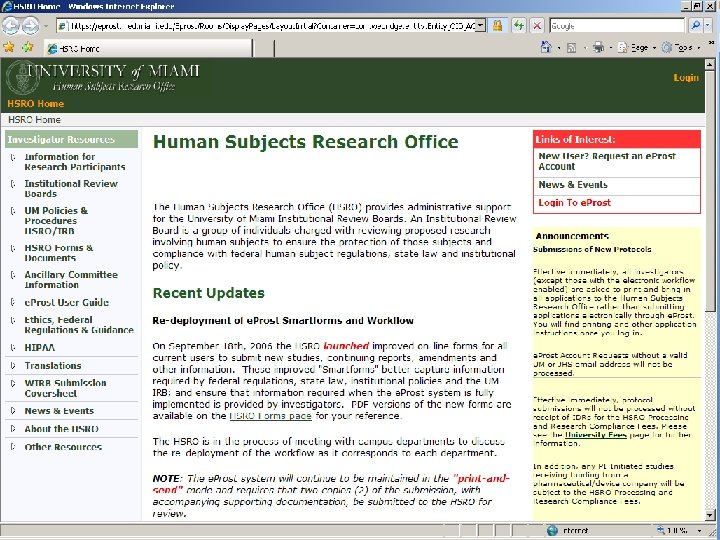
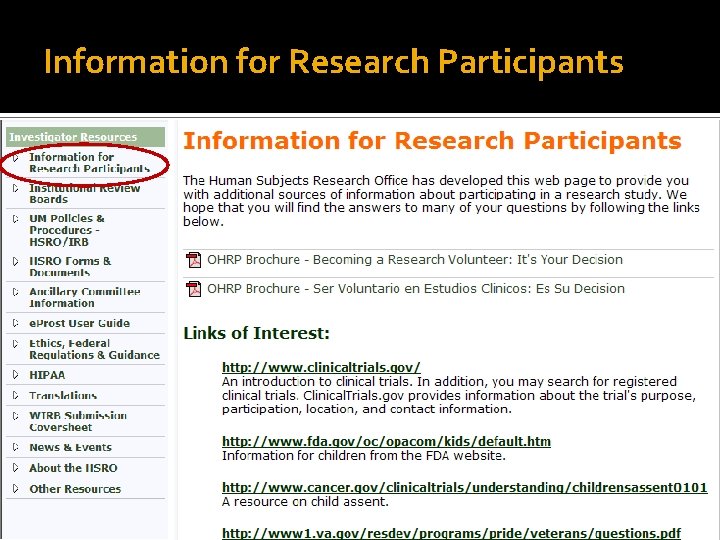
Information for Research Participants
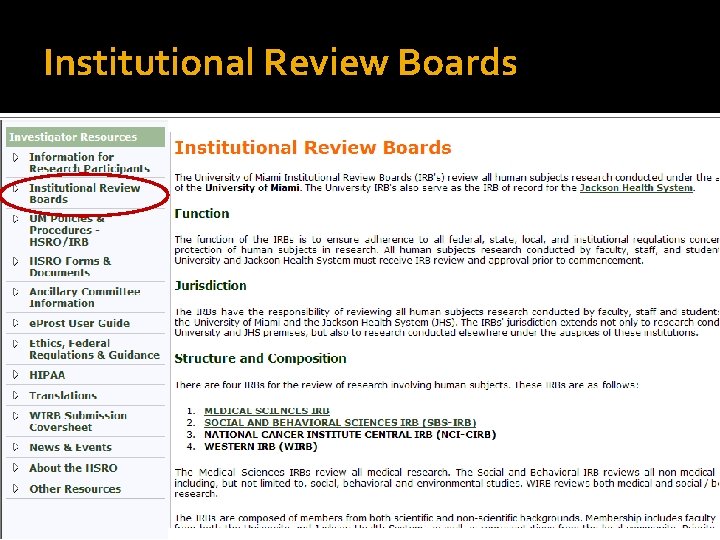
Institutional Review Boards
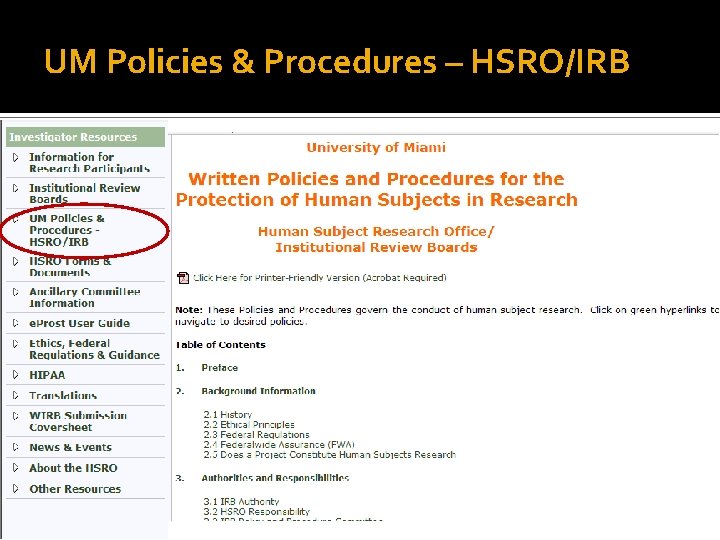
UM Policies & Procedures – HSRO/IRB
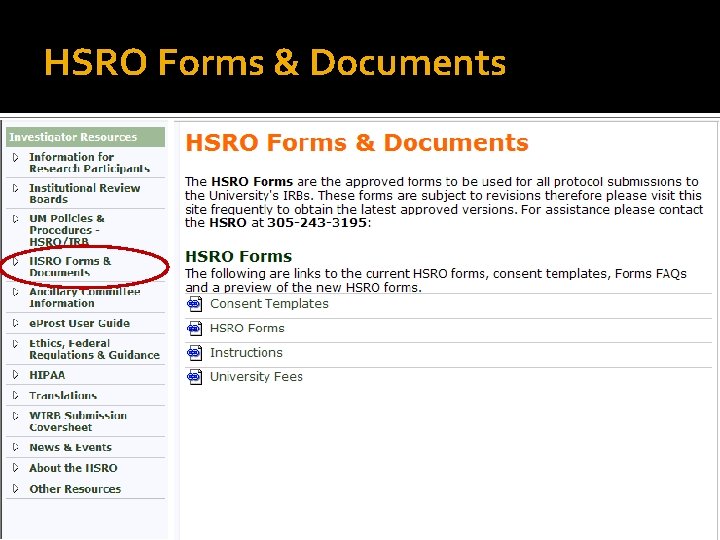
HSRO Forms & Documents
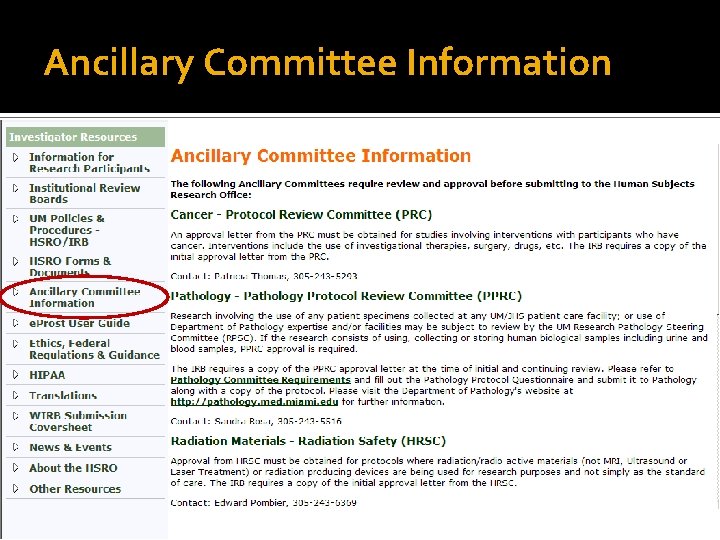
Ancillary Committee Information
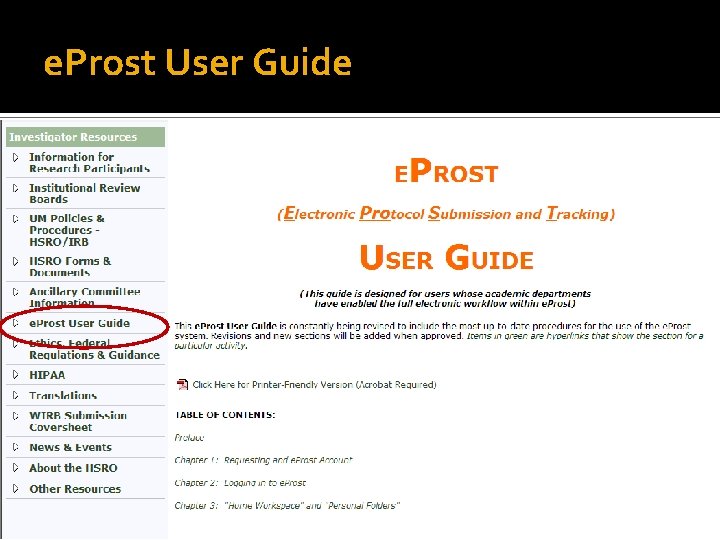
e. Prost User Guide
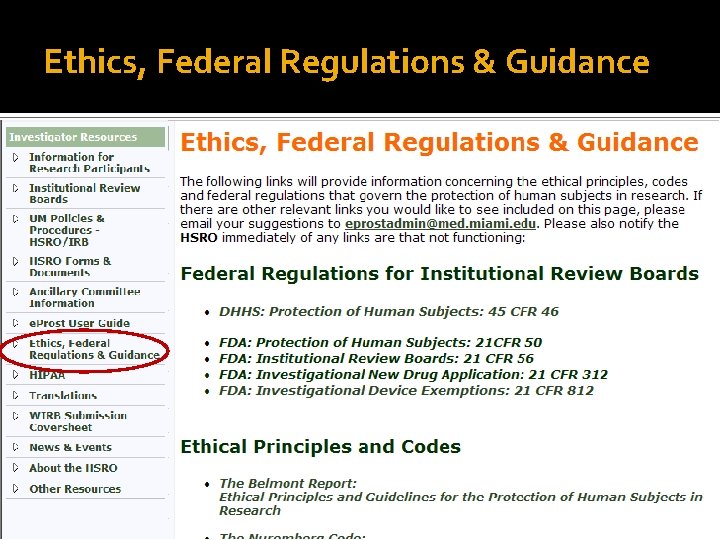
Ethics, Federal Regulations & Guidance
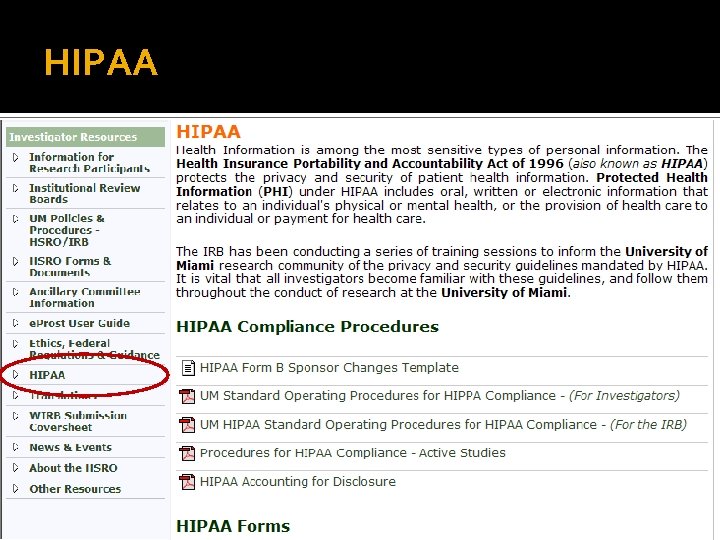
HIPAA
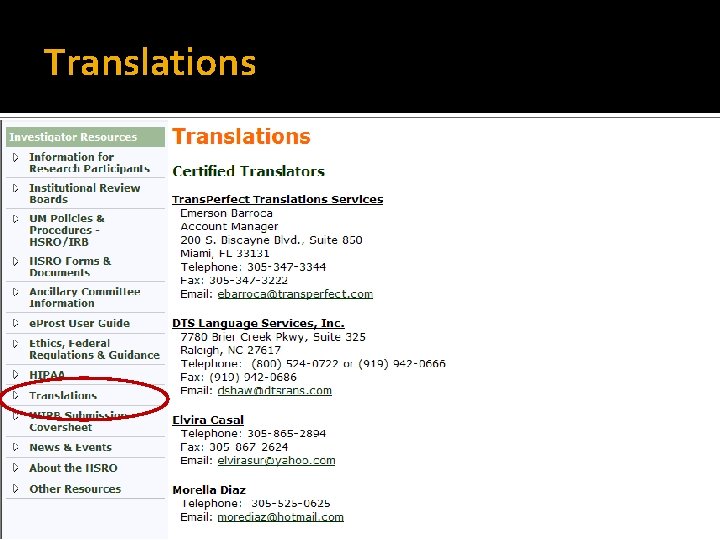
Translations
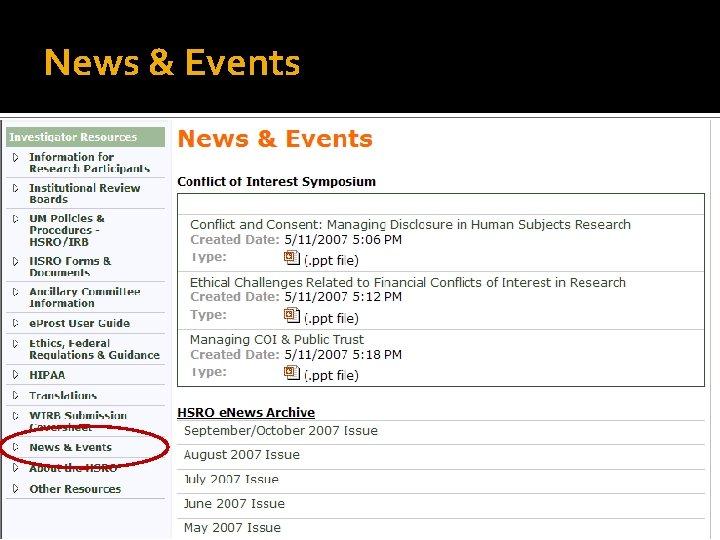
News & Events
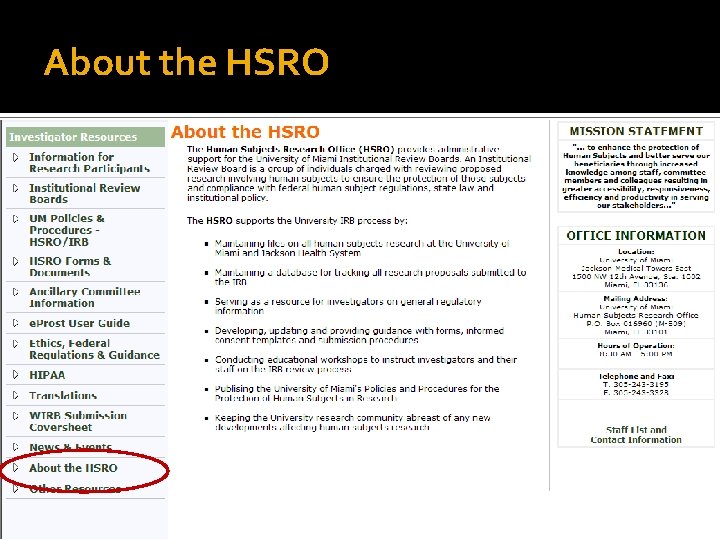
About the HSRO
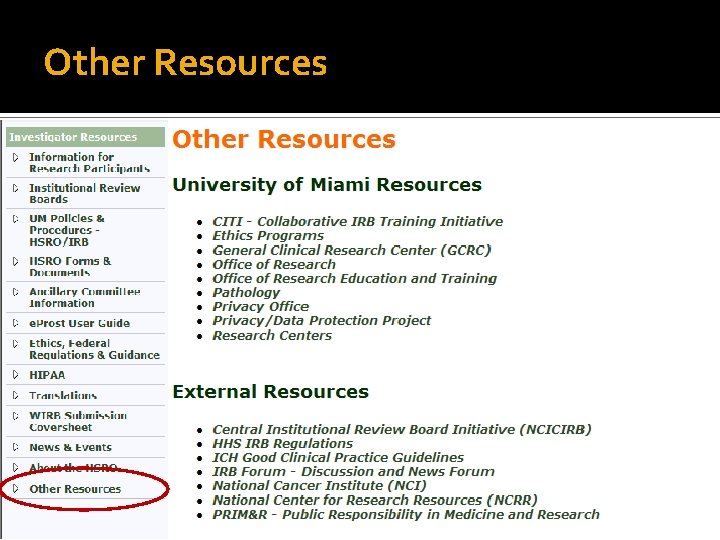
Other Resources
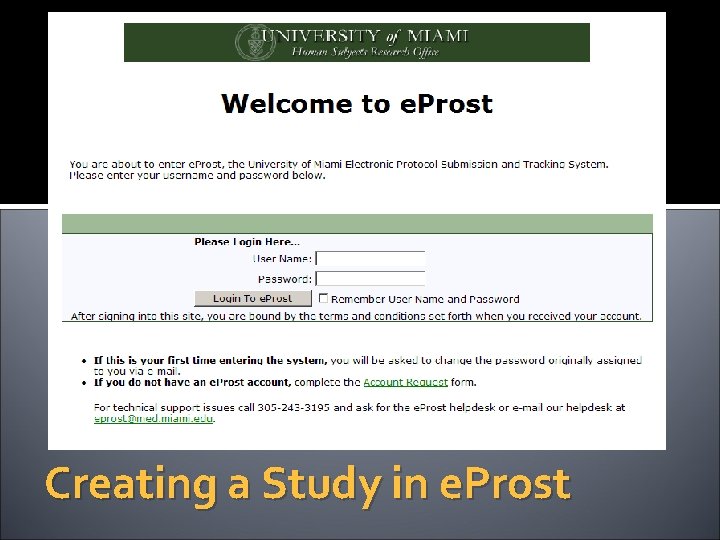
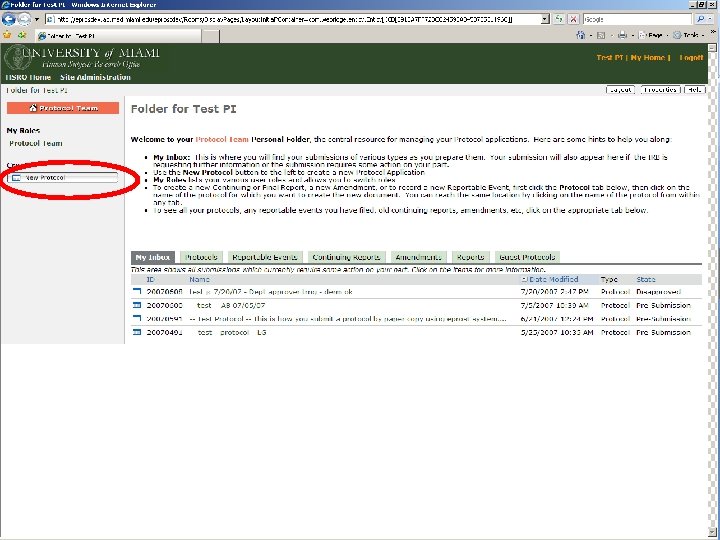
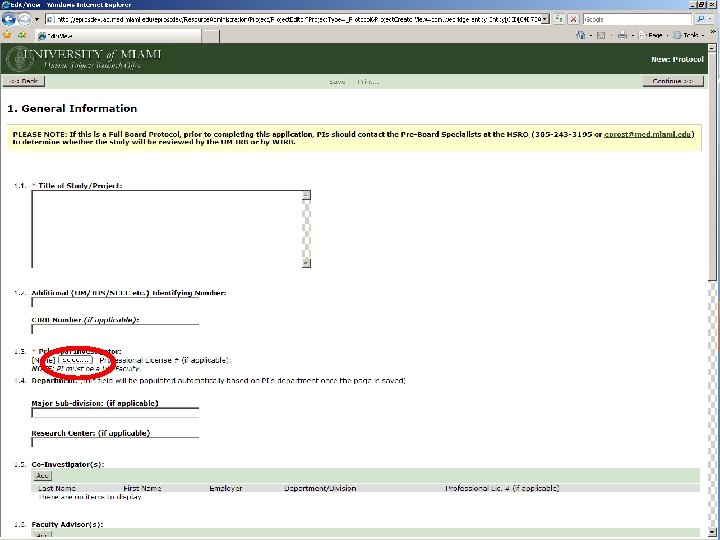
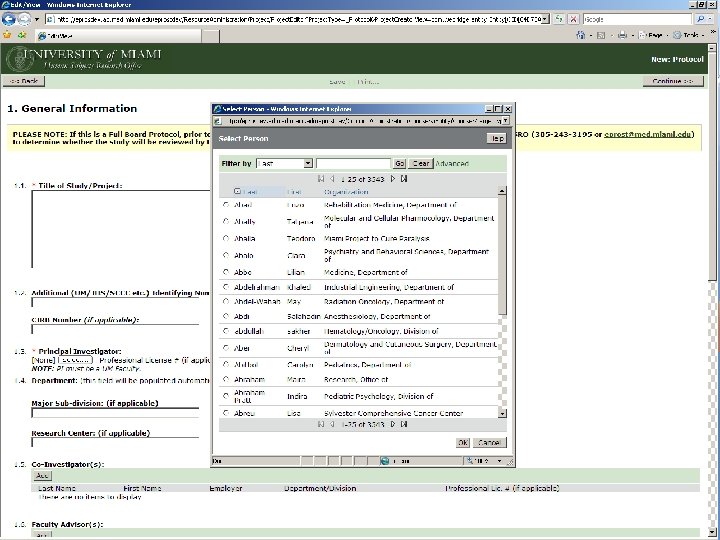
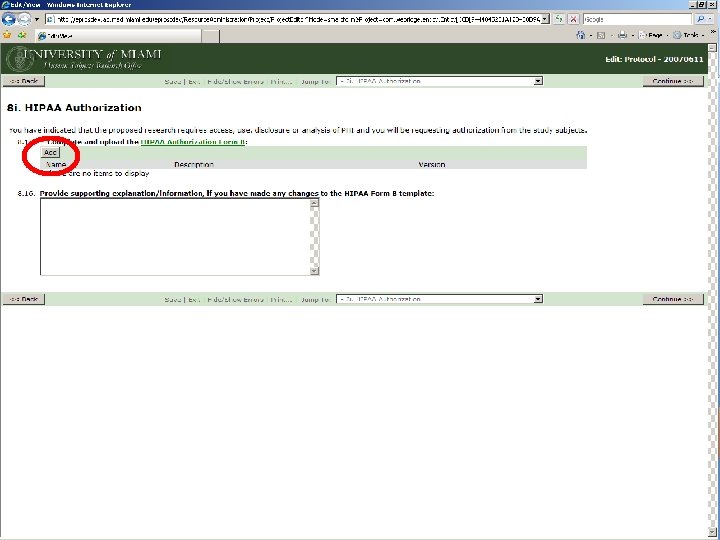
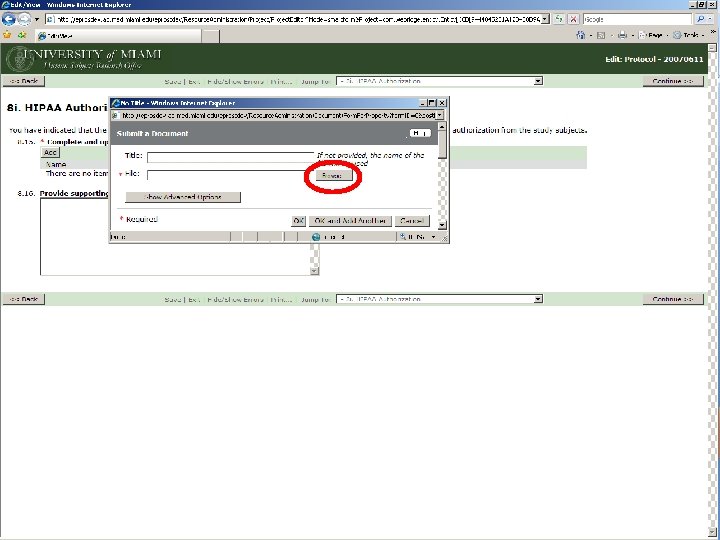
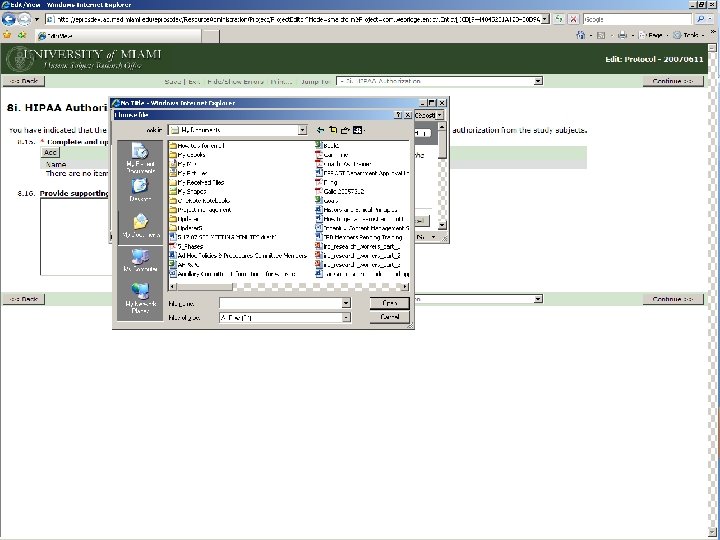
Creating a Study in e. Prost
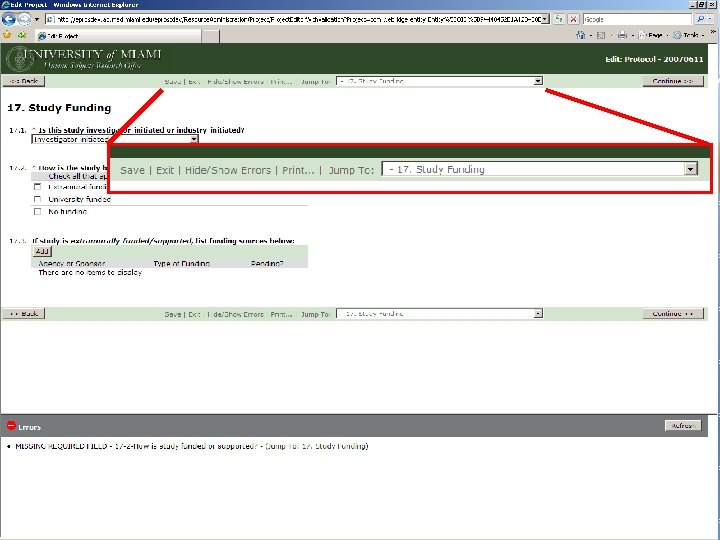
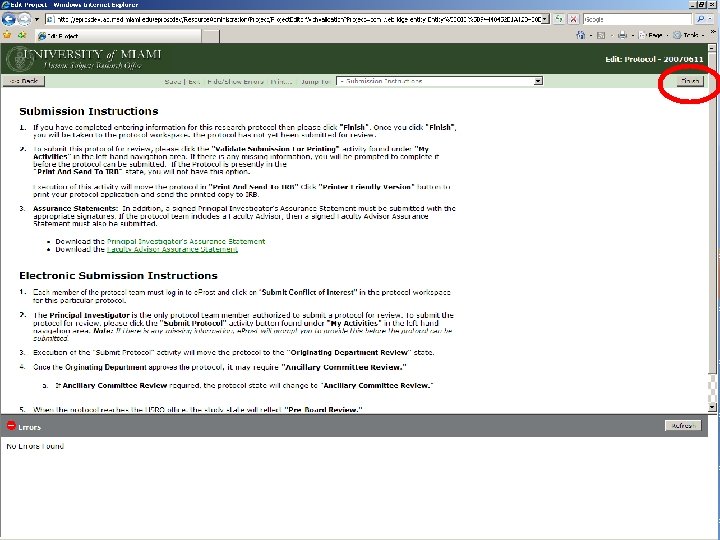
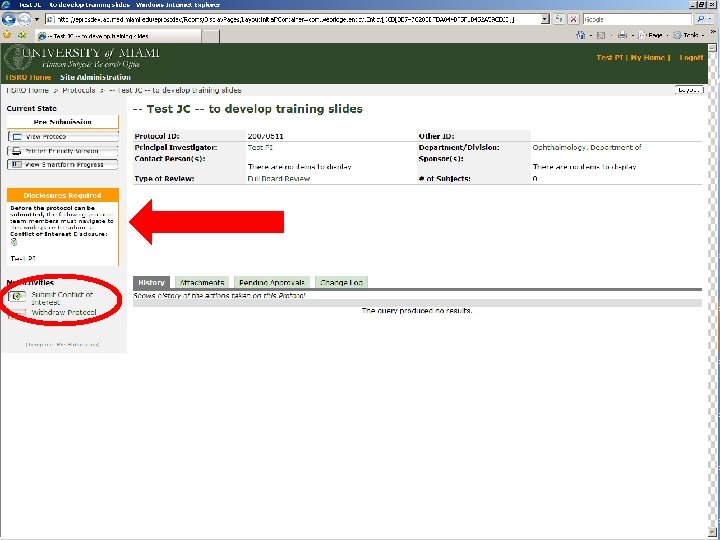
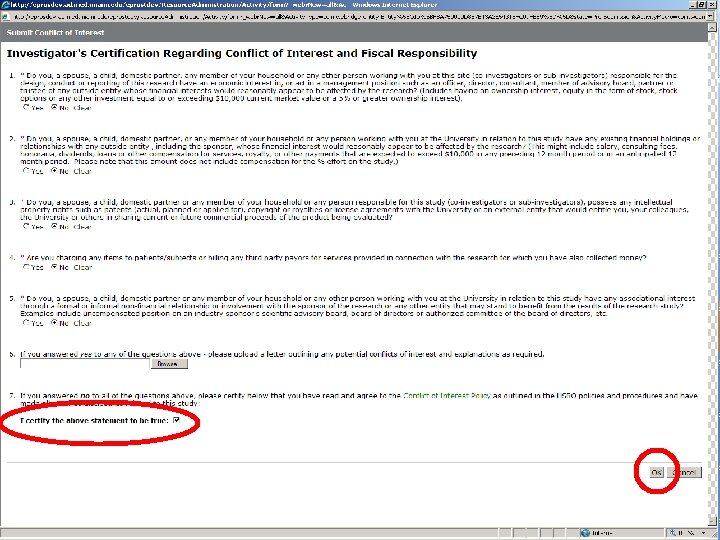
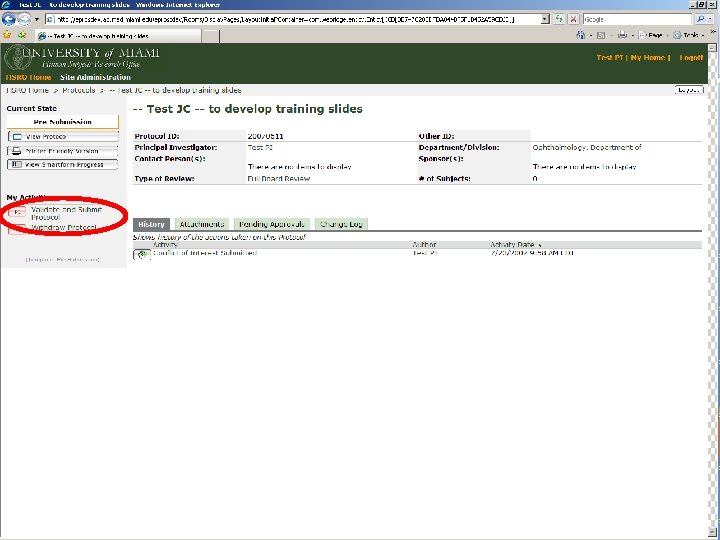
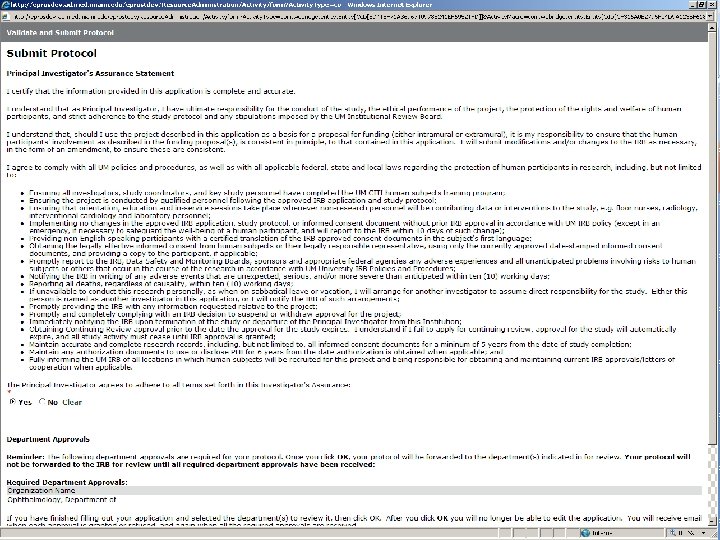
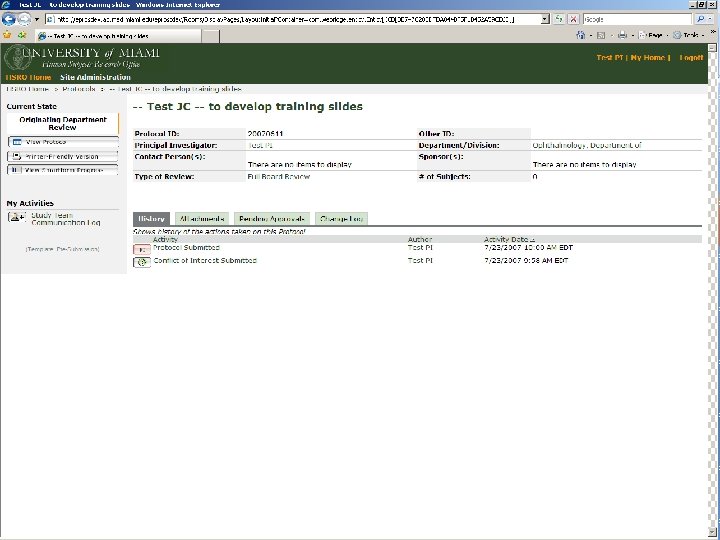
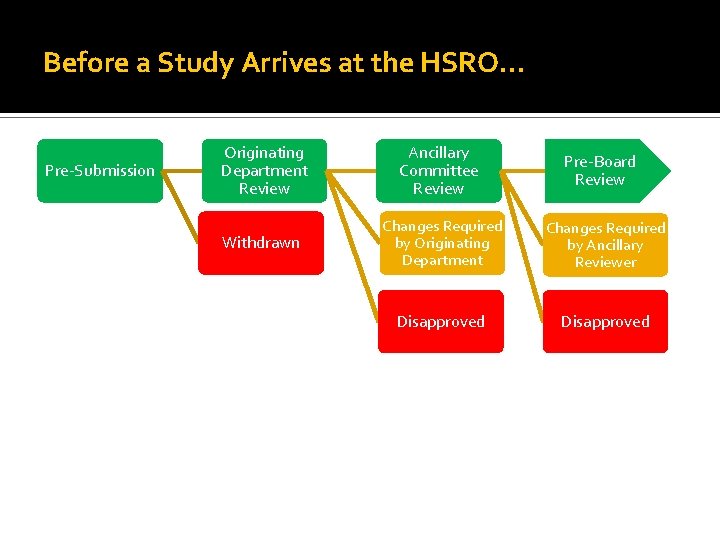
Before a Study Arrives at the HSRO… Pre-Submission Originating Department Review Ancillary Committee Review Withdrawn Changes Required by Originating Department Changes Required by Ancillary Reviewer Disapproved Pre-Board Review
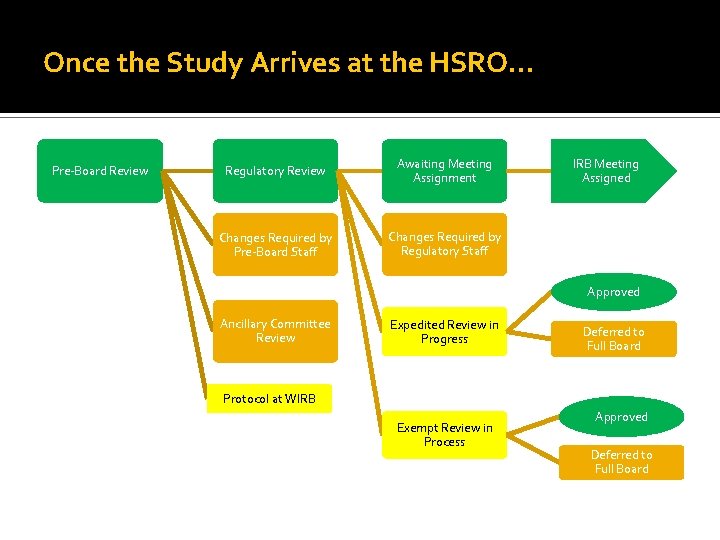
Once the Study Arrives at the HSRO… Pre-Board Review Regulatory Review Awaiting Meeting Assignment Changes Required by Pre-Board Staff Changes Required by Regulatory Staff IRB Meeting Assigned Approved Ancillary Committee Review Expedited Review in Progress Deferred to Full Board Protocol at WIRB Exempt Review in Process Approved Deferred to Full Board
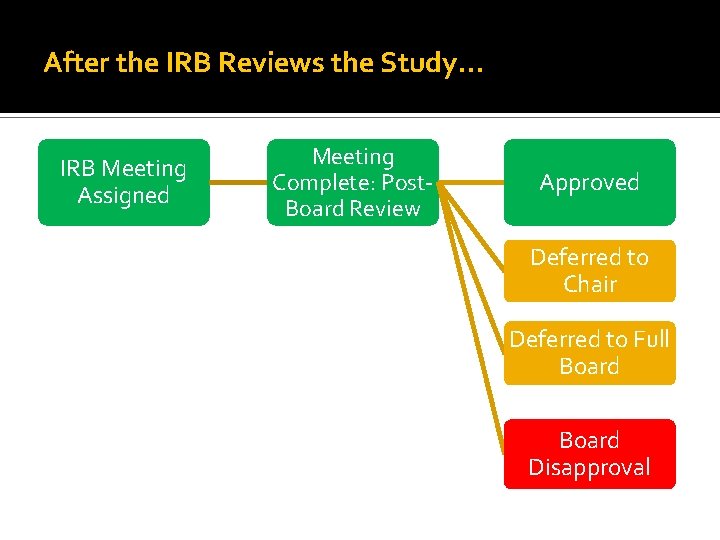
After the IRB Reviews the Study… IRB Meeting Assigned Meeting Complete: Post. Board Review Approved Deferred to Chair Deferred to Full Board Disapproval
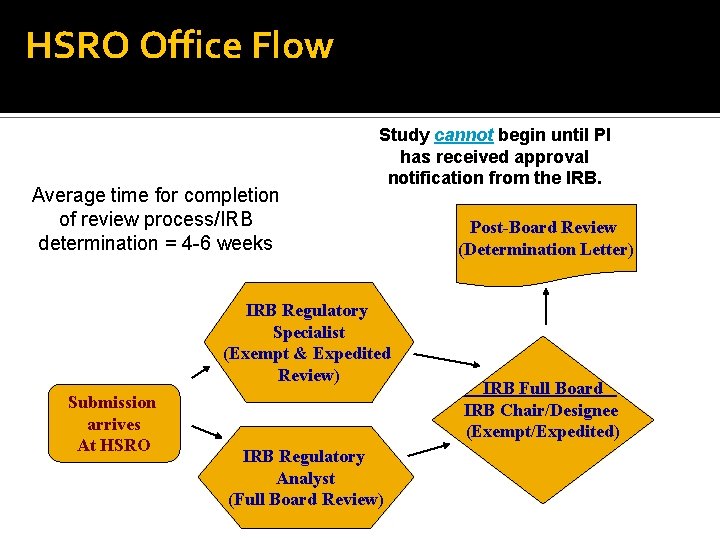
HSRO Office Flow Average time for completion of review process/IRB determination = 4 -6 weeks Study cannot begin until PI has received approval notification from the IRB Regulatory Specialist (Exempt & Expedited Review) Submission arrives At HSRO IRB Regulatory Analyst (Full Board Review) Post-Board Review (Determination Letter) IRB Full Board IRB Chair/Designee (Exempt/Expedited)
Contacts � Educational Initiatives � Marisabel Davalos, M. S. Ed. , C. I. P. Assistant Director for Educational Initiatives mdavalos@med. miami. edu 305 -243 -9769 Joey Casanova Education Coordinator jcasanova@med. miami. edu 305 -243 -3476 � � Sr. Systems Administrator suyeno@med. miami. edu 305 -243 -3196 Leandro Guzman Software Specialist II lguzman 3@med. miami. edu 305 -243 -8554 Amanda Coltes-Rojas, M. P. H. , C. I. P. Associate Director for Regulatory Affairs and Educational Initiatives acoltes@med. miami. edu 305 -243 -6494 e. Prost Help Desk Daniel Auguste IRB Senior Staff Assistant dauguste@med. miami. edu 305 -243 -9662 HSRO IT Group Stella Uyeno Regulatory Guidance/ Participant Complaints � e. Prost General Technical Assistance Via email: eprost@med. miami. edu 305 -243 -3195

- Slides: 69