
IR spectroscopy of firstrow transition metal clusters and
![Depletion of elemental species in Interstellar Medium [10 -15 mbar] 10 -30 K Relative](https://slidetodoc.com/presentation_image_h2/615737104b7fa5700d94e6e17a9c1ecc/image-2.jpg "Depletion of elemental species in Interstellar Medium [10 -15 mbar] 10 -30 K Relative")
- Slides: 26
IR spectroscopy of first-row transition metal clusters and their complexes with simple molecules Denis M. Kiawi FELIX facility, Radboud University Nijmegen, the Netherlands Anton Pannekoek Astronomical Institute, University of Amsterdam, the Netherlands
Depletion of elemental species in Interstellar Medium [10 -15 mbar] 10 -30 K Relative atomic abundance (H=1) in -19 mbar] molecular cloud [10 dense 30 -100 K Williams & Herbst, Surf. Sci. 500, 823 (2002
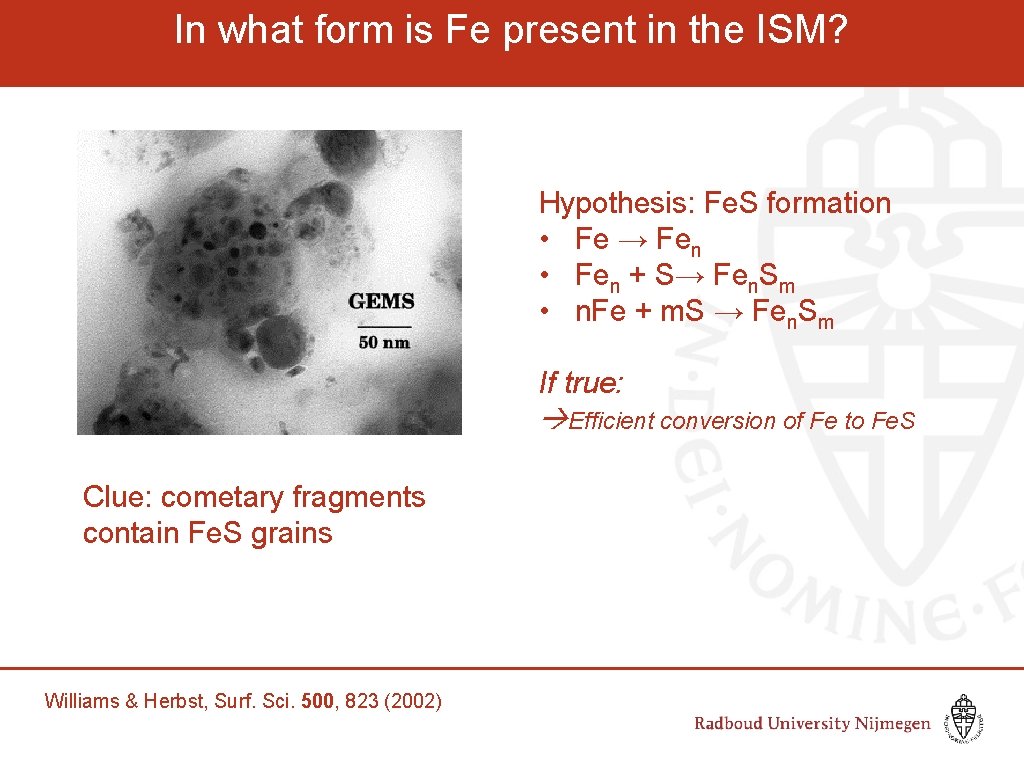
In what form is Fe present in the ISM? Hypothesis: Fe. S formation • Fe → Fen • Fen + S→ Fen. Sm • n. Fe + m. S → Fen. Sm If true: Efficient conversion of Fe to Fe. S Clue: cometary fragments contain Fe. S grains Williams & Herbst, Surf. Sci. 500, 823 (2002)
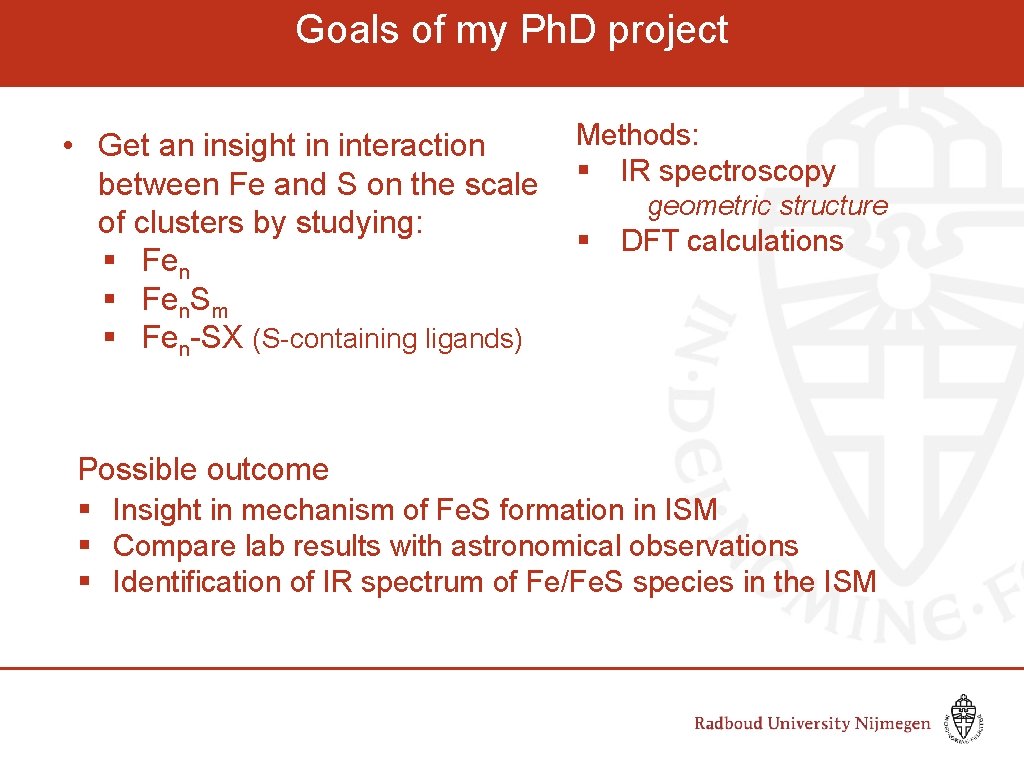
Goals of my Ph. D project • Get an insight in interaction between Fe and S on the scale of clusters by studying: § Fen. Sm § Fen-SX (S-containing ligands) Methods: § IR spectroscopy geometric structure § DFT calculations Possible outcome § Insight in mechanism of Fe. S formation in ISM § Compare lab results with astronomical observations § Identification of IR spectrum of Fe/Fe. S species in the ISM
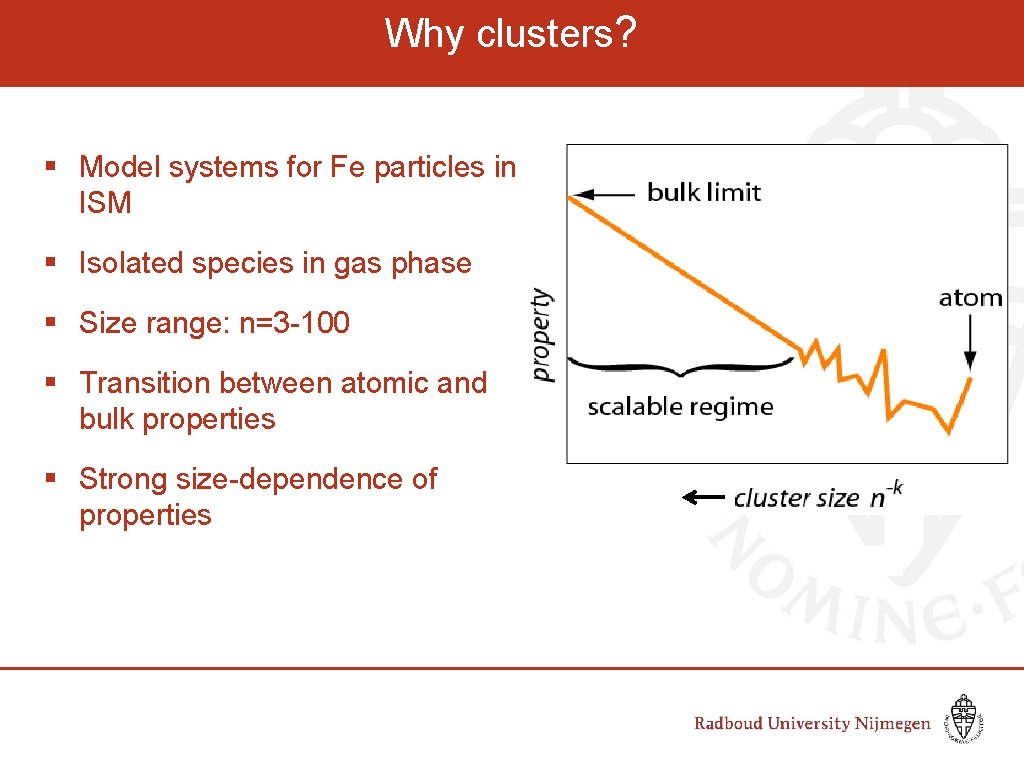
Why clusters? § Model systems for Fe particles in ISM § Isolated species in gas phase § Size range: n=3 -100 § Transition between atomic and bulk properties § Strong size-dependence of properties
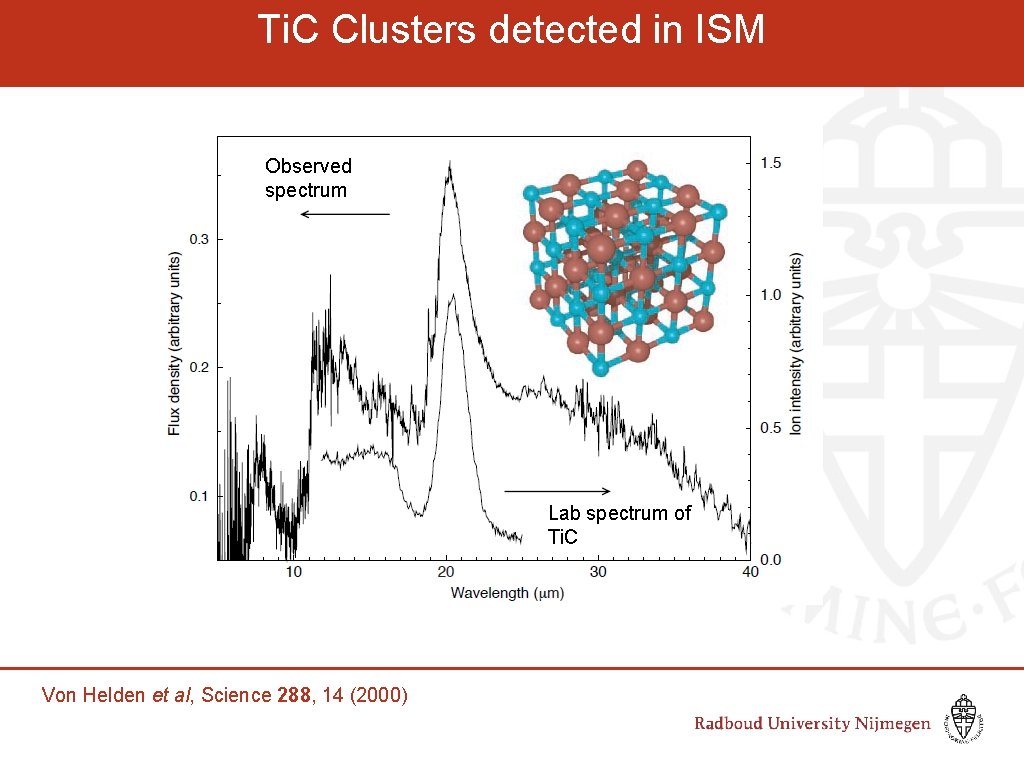
Ti. C Clusters detected in ISM Observed spectrum Lab spectrum of Ti. C Von Helden et al, Science 288, 14 (2000)
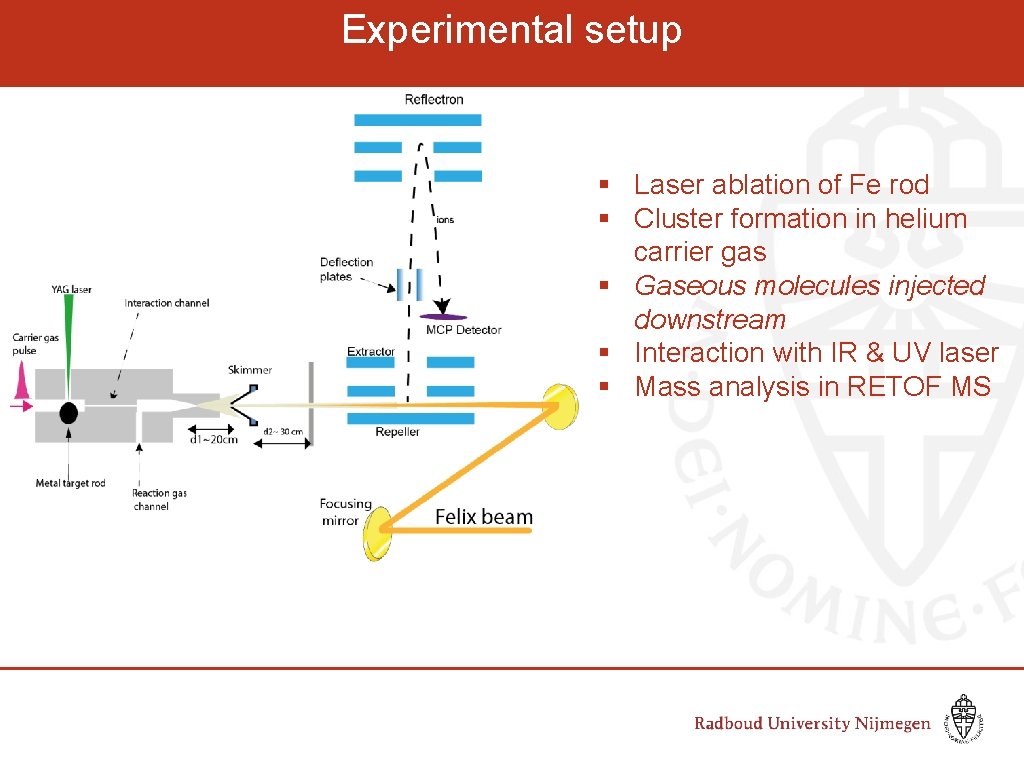
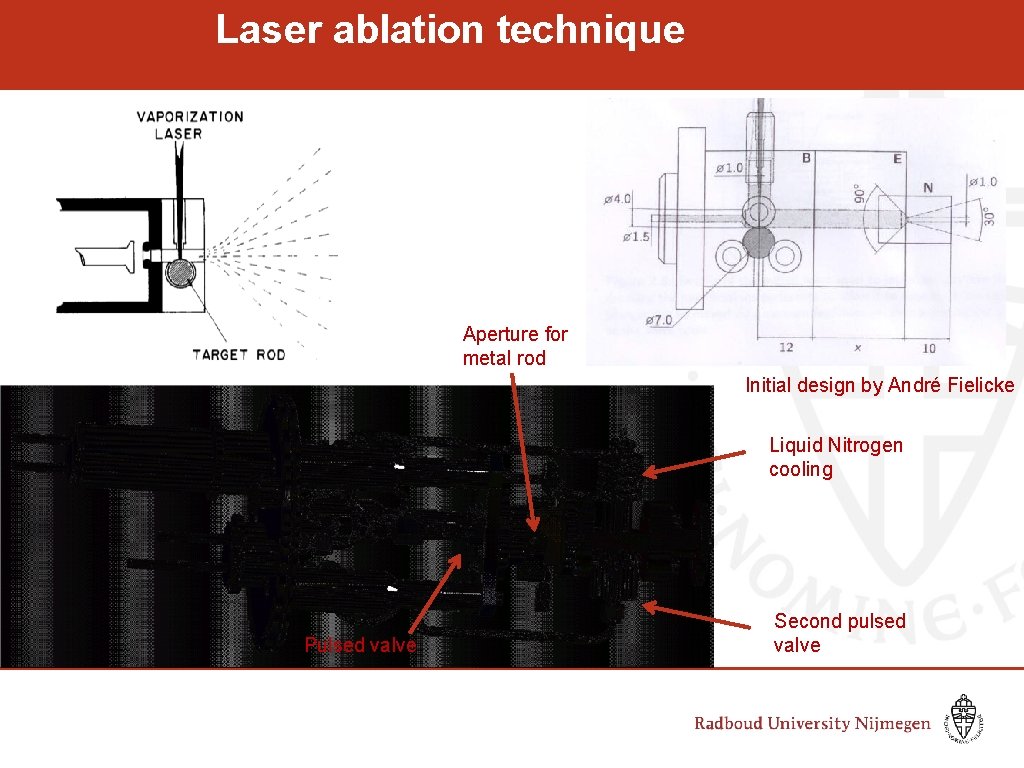
Experimental setup § Laser ablation of Fe rod § Cluster formation in helium carrier gas § Gaseous molecules injected downstream § Interaction with IR & UV laser § Mass analysis in RETOF MS
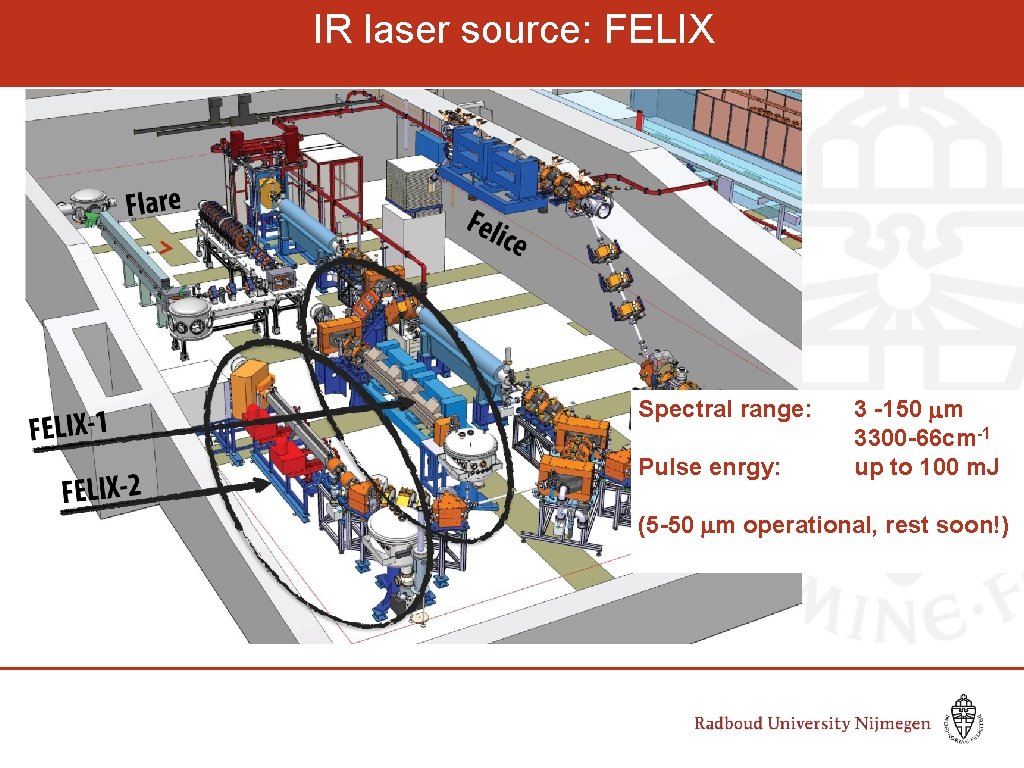
IR laser source: FELIX Inter-Cavity Spectral range: Pulse enrgy: 3 -150 mm 3300 -66 cm-1 up to 100 m. J (5 -50 mm operational, rest soon!)
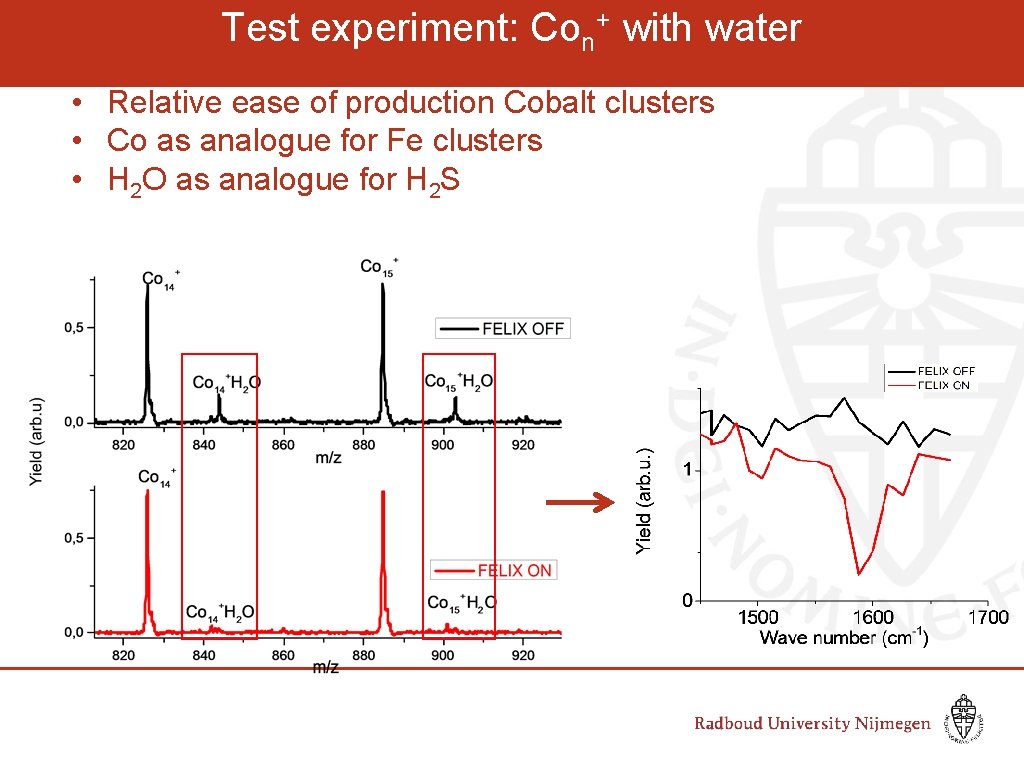
Test experiment: Con+ with water • Relative ease of production Cobalt clusters • Co as analogue for Fe clusters • H 2 O as analogue for H 2 S
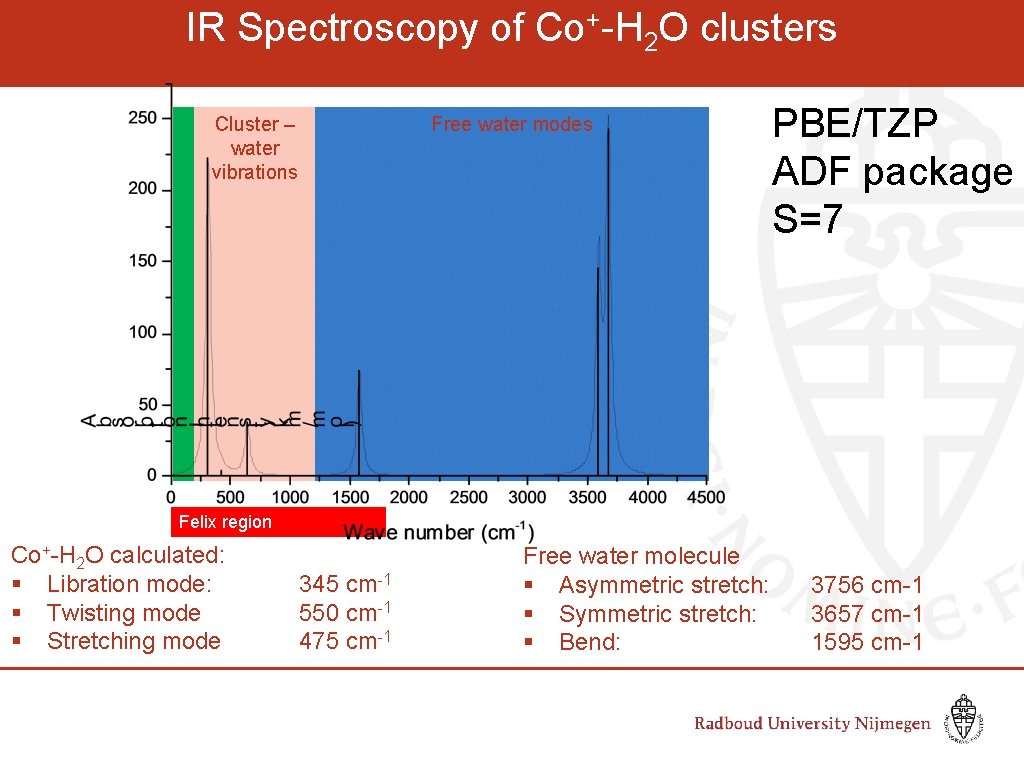
IR Spectroscopy of Co+-H 2 O clusters Cluster – water vibrations Free water modes PBE/TZP ADF package S=7 Felix region Co+-H 2 O calculated: § Libration mode: § Twisting mode § Stretching mode 345 cm-1 550 cm-1 475 cm-1 Free water molecule § Asymmetric stretch: § Symmetric stretch: § Bend: 3756 cm-1 3657 cm-1 1595 cm-1
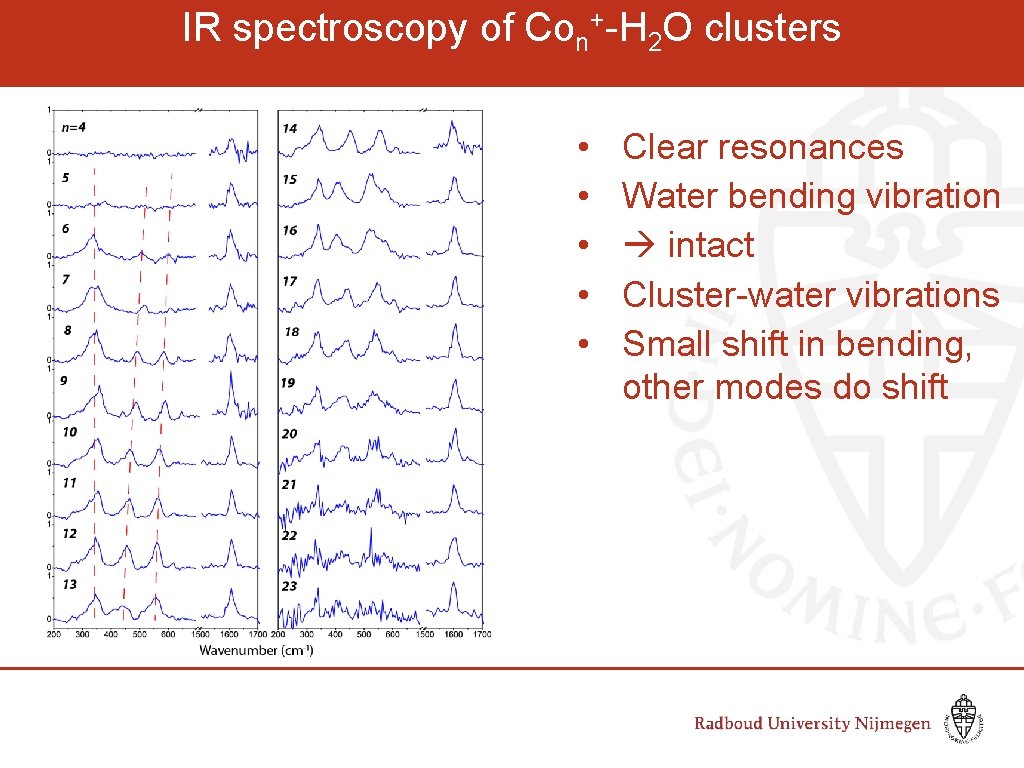
IR spectroscopy of Con+-H 2 O clusters • • • Clear resonances Water bending vibration intact Cluster-water vibrations Small shift in bending, other modes do shift
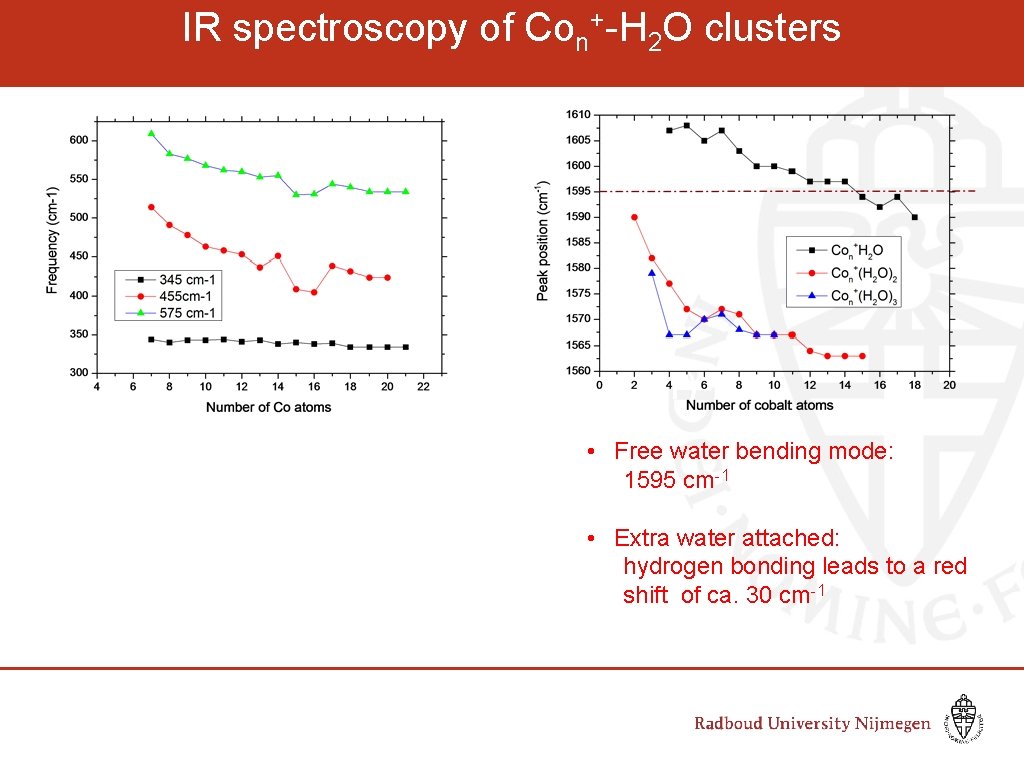
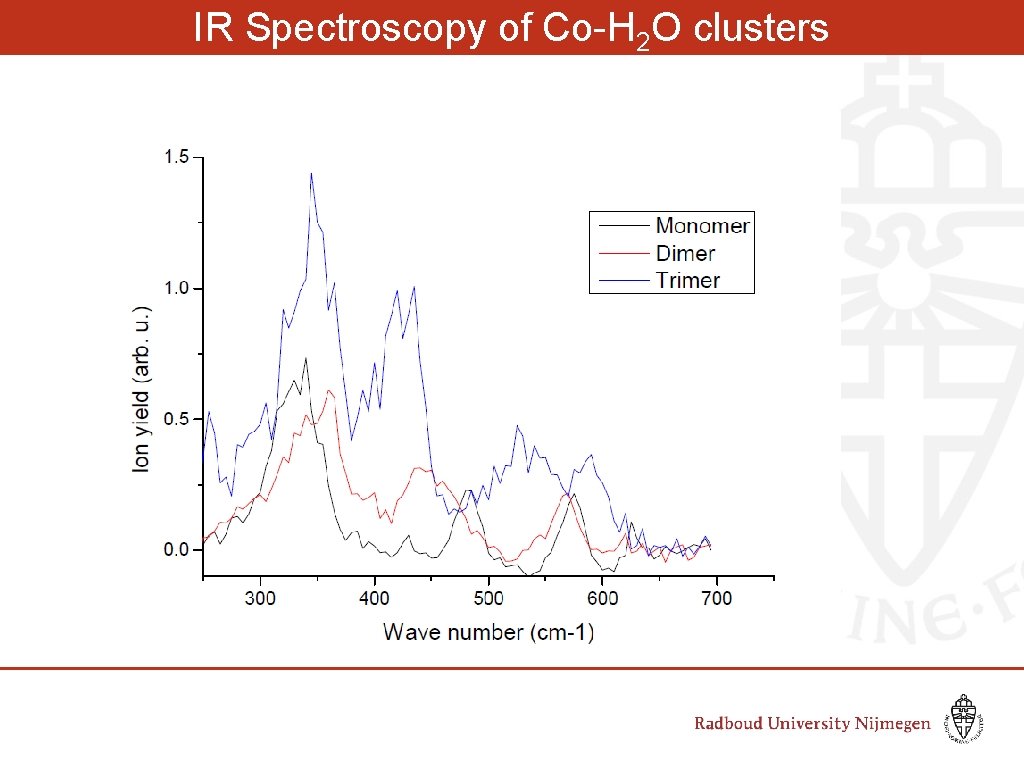
IR spectroscopy of Con+-H 2 O clusters Wave number (cm-1) • Free water bending mode: 1595 cm-1 • Extra water attached: hydrogen bonding leads to a red shift of ca. 30 cm-1
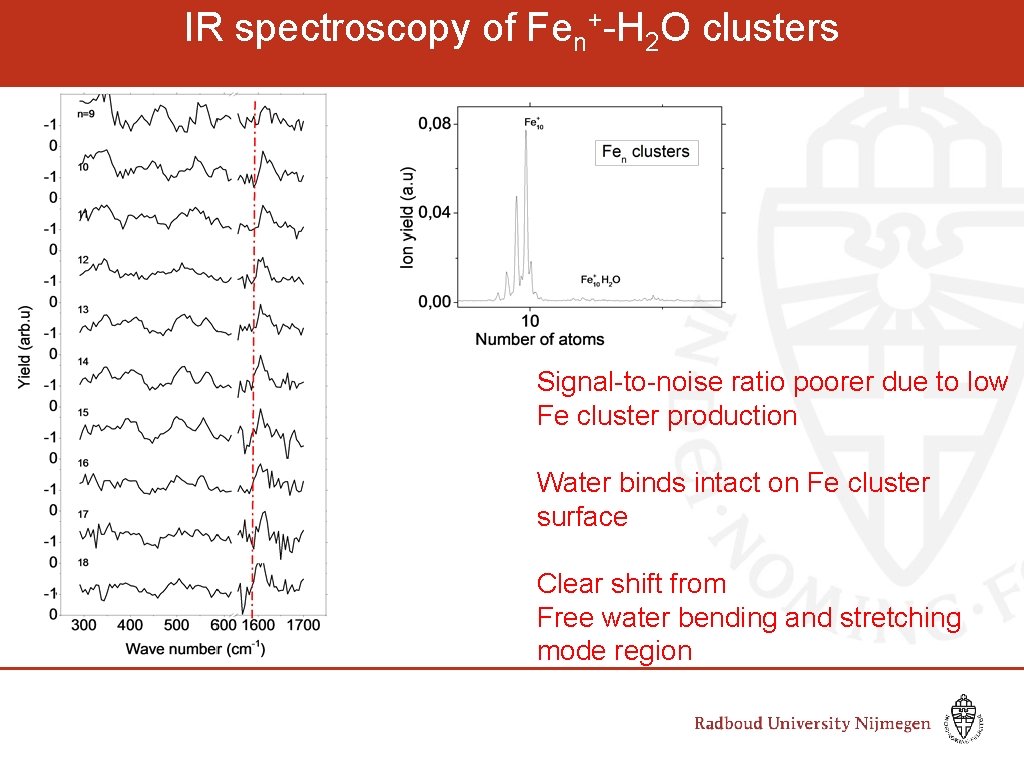
IR spectroscopy of Fen+-H 2 O clusters Signal-to-noise ratio poorer due to low Fe cluster production Water binds intact on Fe cluster surface Clear shift from Free water bending and stretching mode region
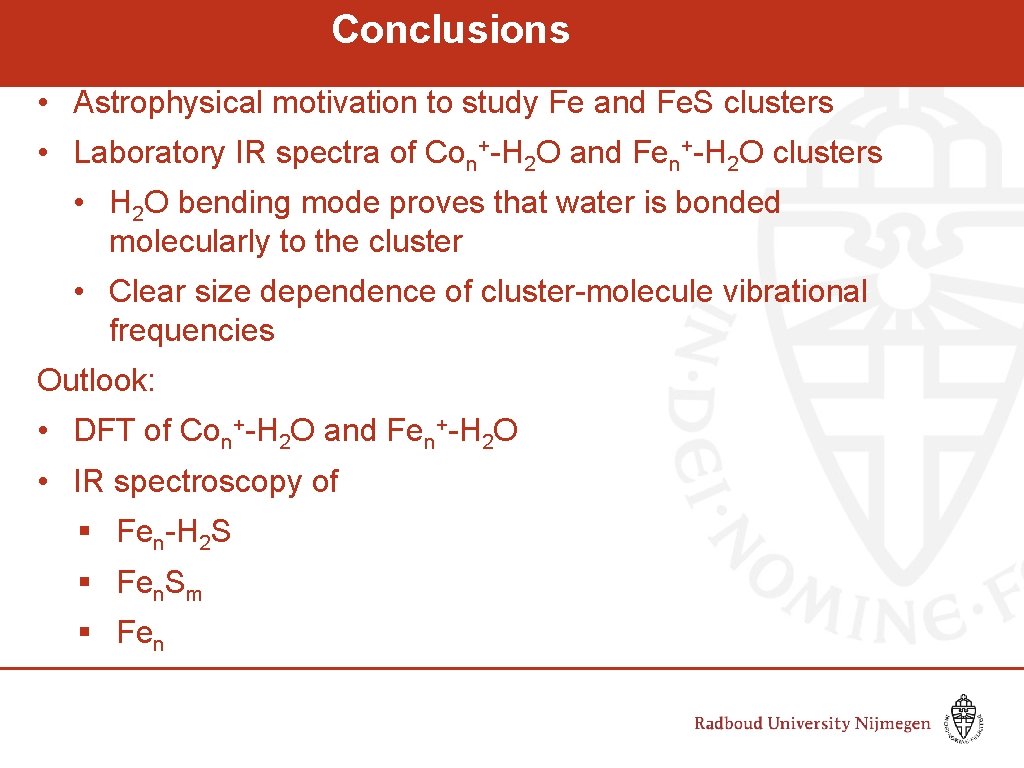
Conclusions • Astrophysical motivation to study Fe and Fe. S clusters • Laboratory IR spectra of Con+-H 2 O and Fen+-H 2 O clusters • H 2 O bending mode proves that water is bonded molecularly to the cluster • Clear size dependence of cluster-molecule vibrational frequencies Outlook: • DFT of Con+-H 2 O and Fen+-H 2 O • IR spectroscopy of § Fen-H 2 S § Fen. Sm § Fen
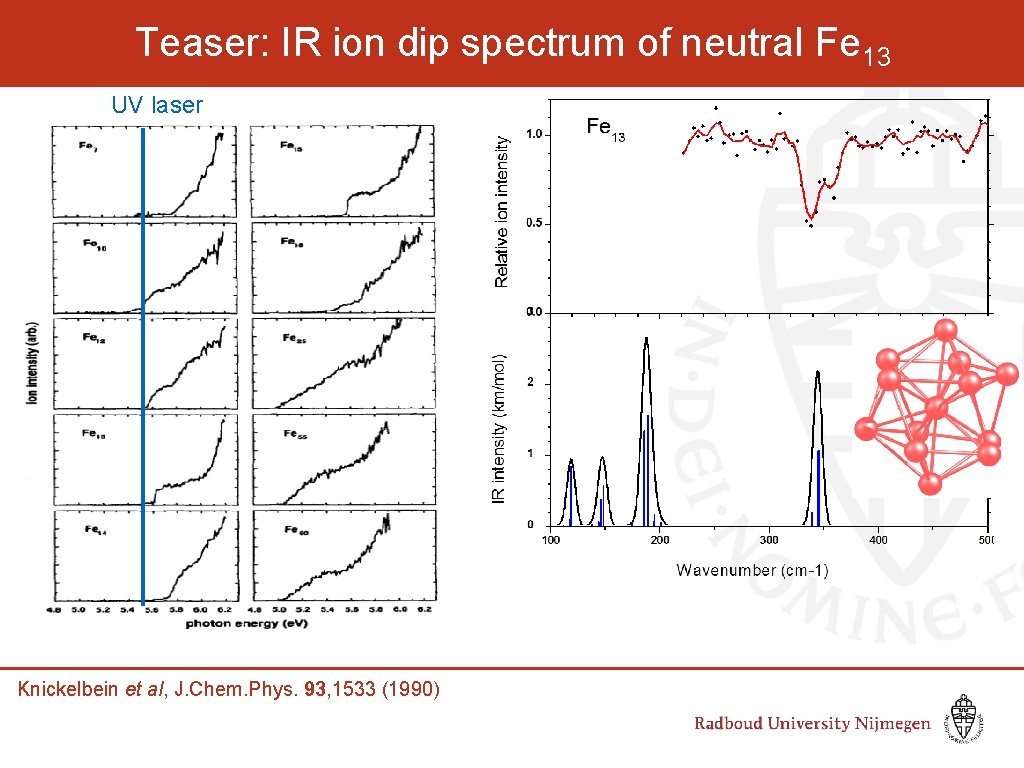
Teaser: IR ion dip spectrum of neutral Fe 13 UV laser Knickelbein et al, J. Chem. Phys. 93, 1533 (1990)
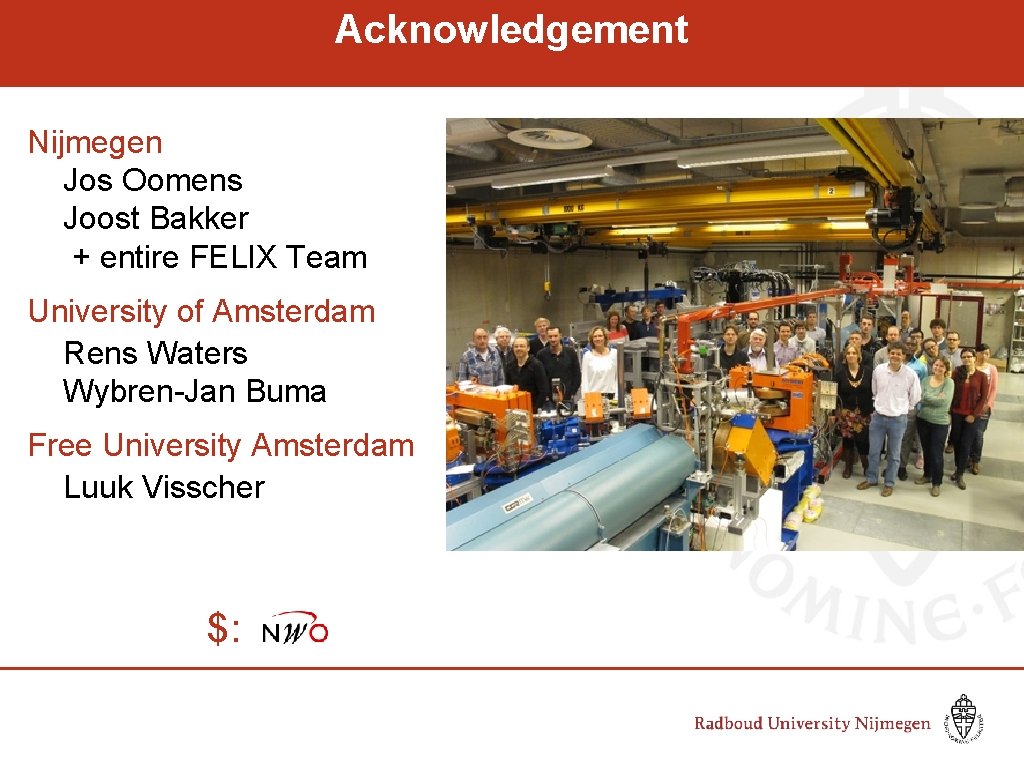
Acknowledgement Nijmegen Jos Oomens Joost Bakker + entire FELIX Team University of Amsterdam Rens Waters Wybren-Jan Buma Free University Amsterdam Luuk Visscher $:
The END
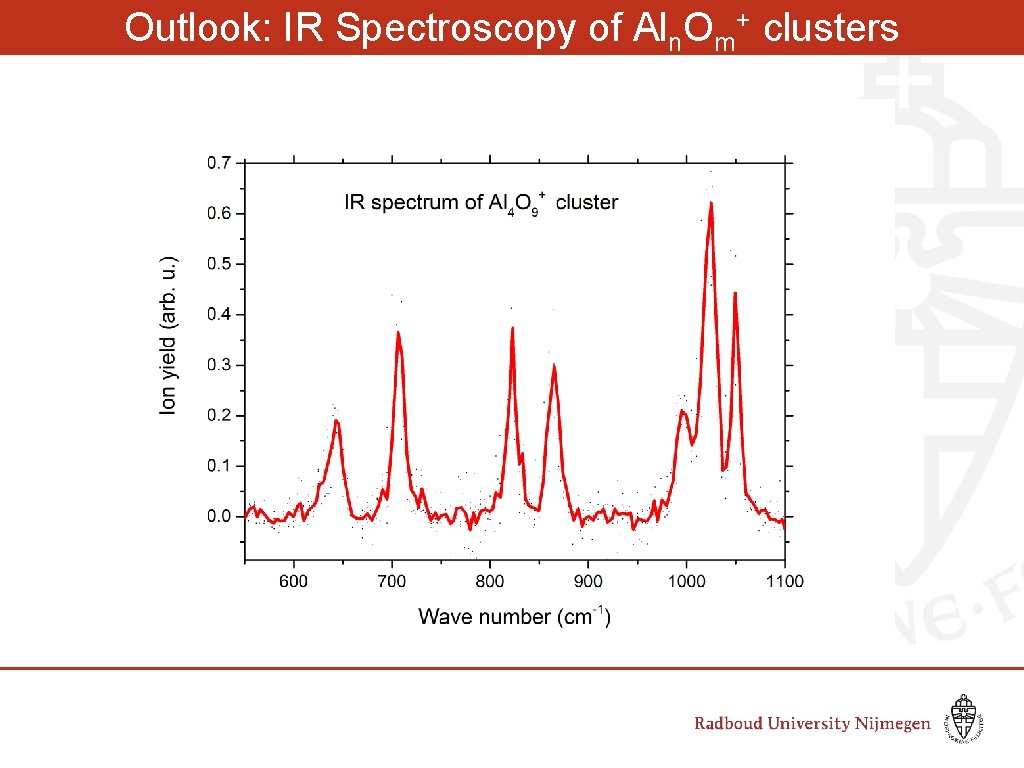
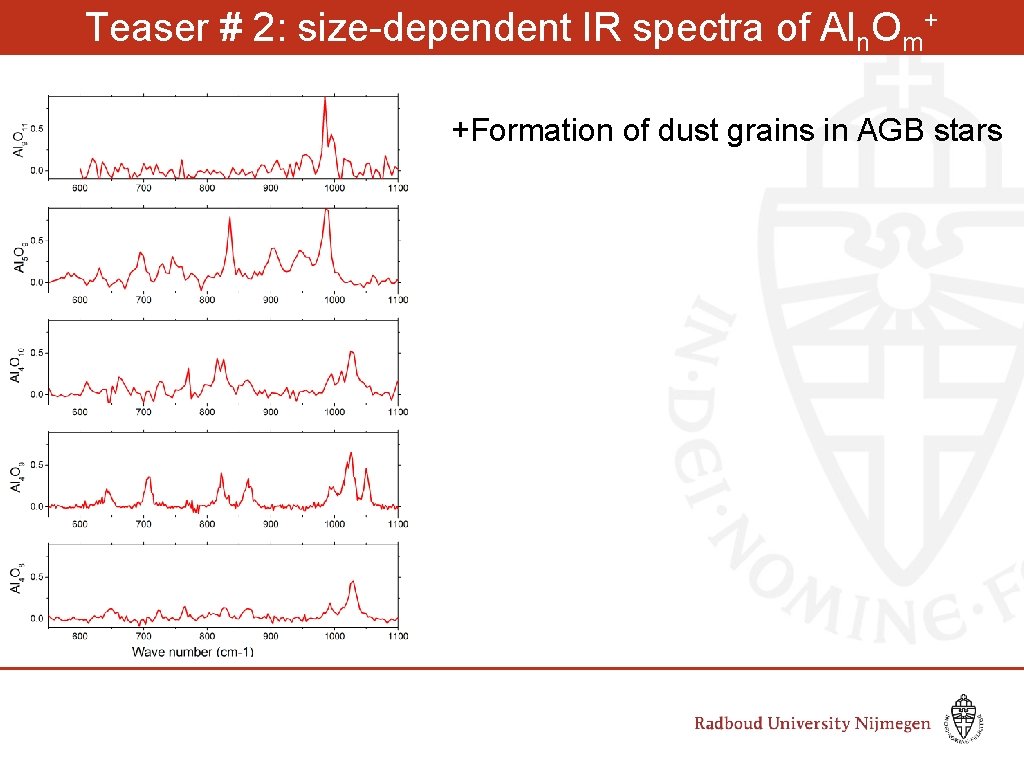
Outlook: IR Spectroscopy of Aln. Om+ clusters
IR Spectroscopy of Co-H 2 O clusters Wave number (cm-1)
Laser ablation technique Aperture for metal rod Initial design by André Fielicke Liquid Nitrogen cooling Pulsed valve Second pulsed valve
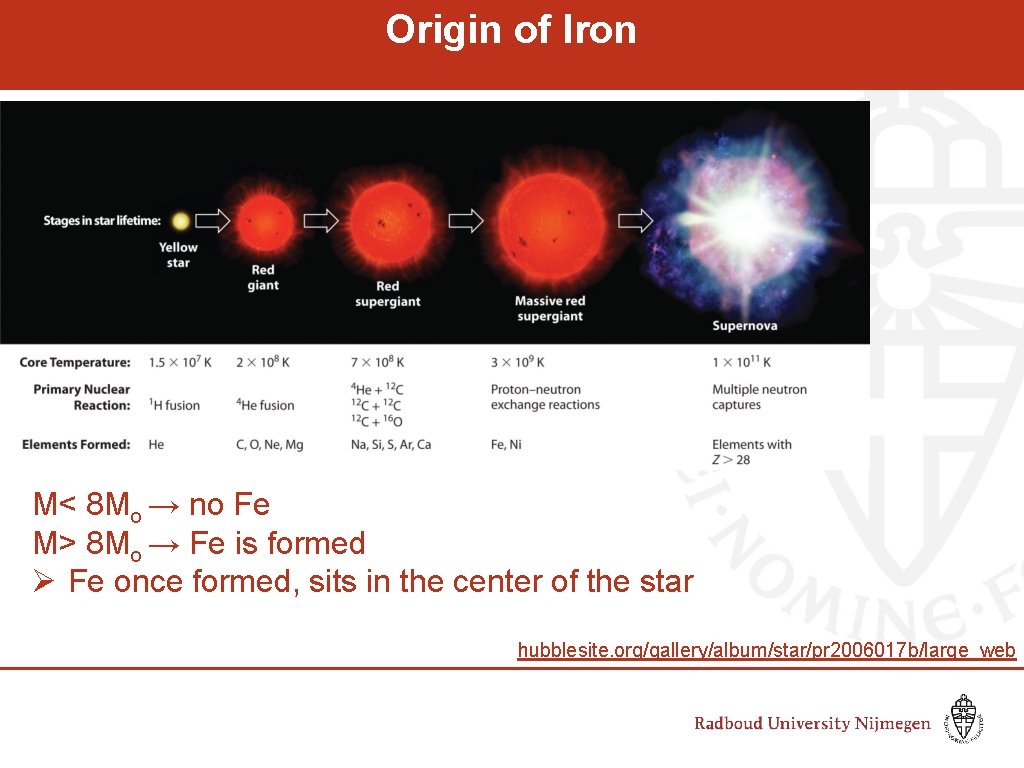
Origin of Iron M< 8 Mo → no Fe M> 8 Mo → Fe is formed Ø Fe once formed, sits in the center of the star hubblesite. org/gallery/album/star/pr 2006017 b/large_web
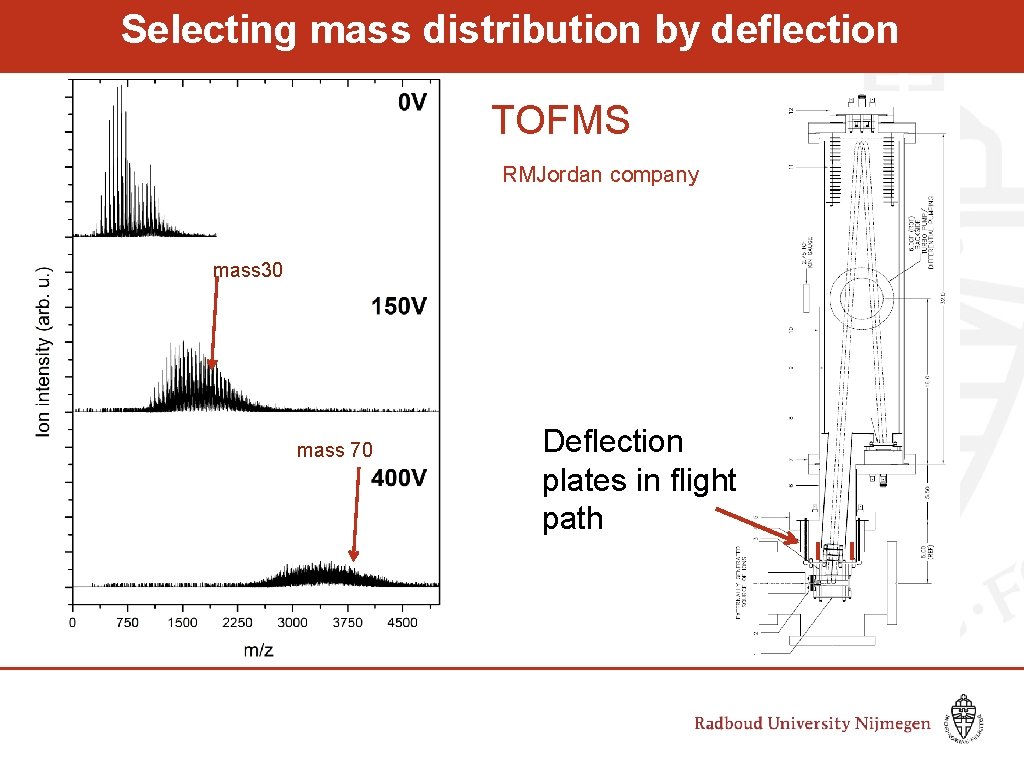
Selecting mass distribution by deflection TOFMS RMJordan company mass 30 mass 70 Deflection plates in flight path
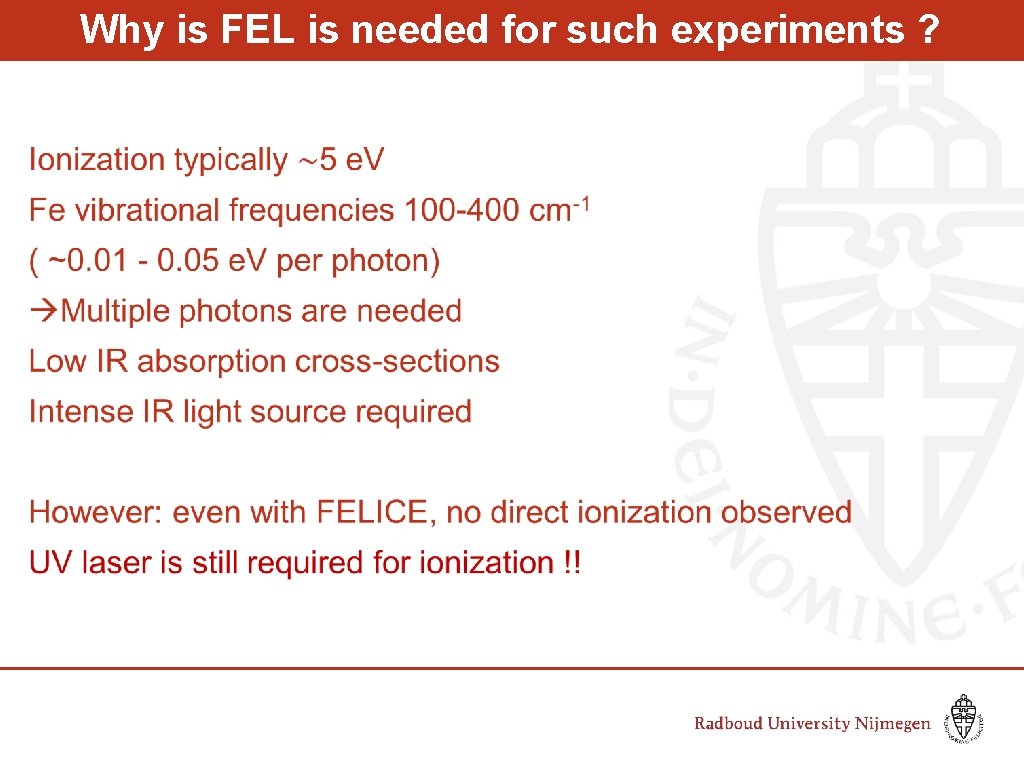
Why is FEL is needed for such experiments ?
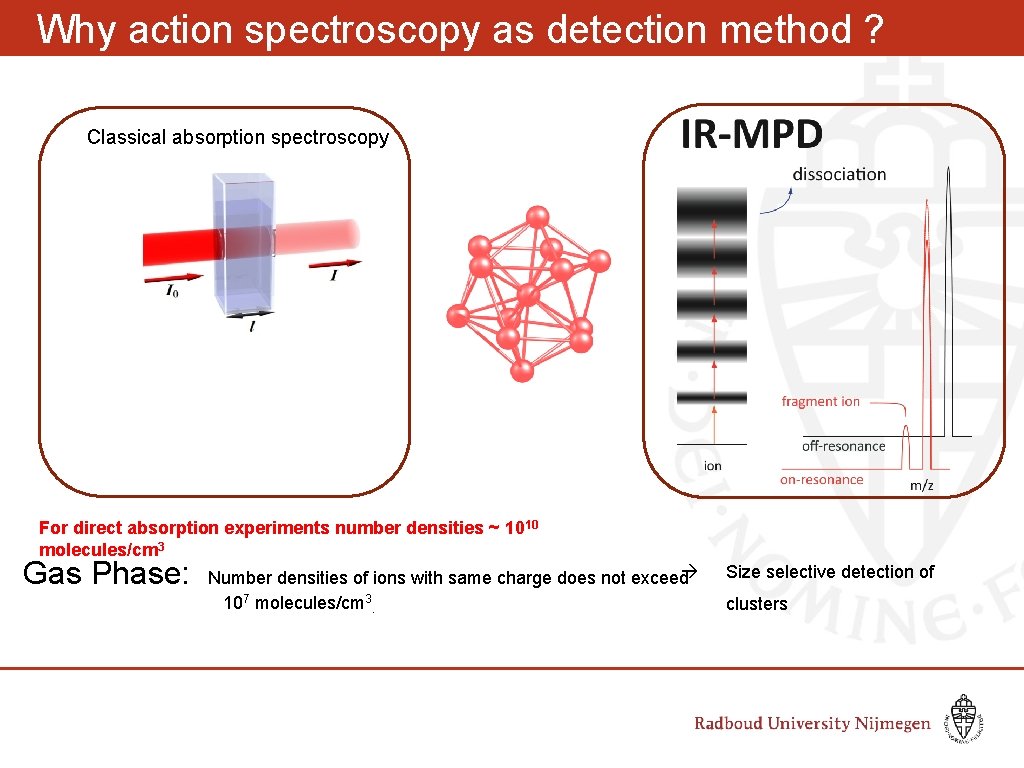
Why action spectroscopy as detection method ? Classical absorption spectroscopy For direct absorption experiments number densities ~ 1010 molecules/cm 3 Gas Phase: Number densities of ions with same charge does not exceed 10 7 molecules/cm 3. Size selective detection of clusters
DFT Calculations Theory Outcome • DFT geometry optimization • Evaluate many spin states! • Functionals - PBE - TPSS • Basis set - TZP • Analytical frequency calculations • Binding energy of various cluster geometries • IR spectra Commercial package ADF Amsterdam Density Functional
Teaser # 2: size-dependent IR spectra of Aln. Om+ +Formation of dust grains in AGB stars