
IR design status IR Design Status and Update
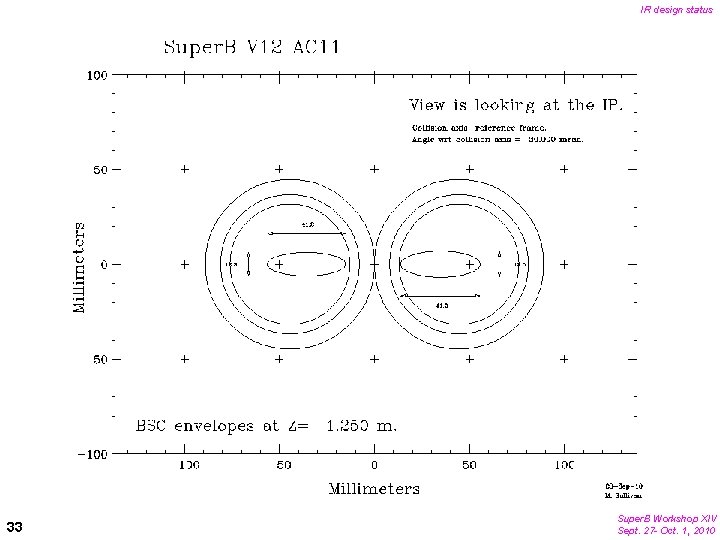
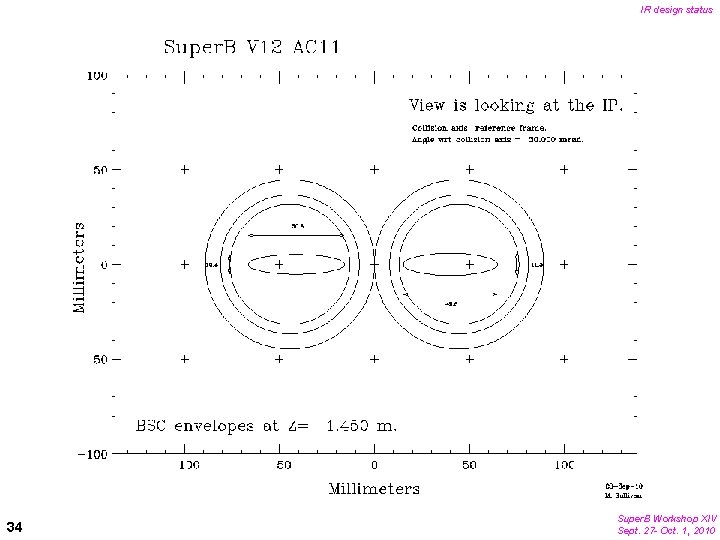
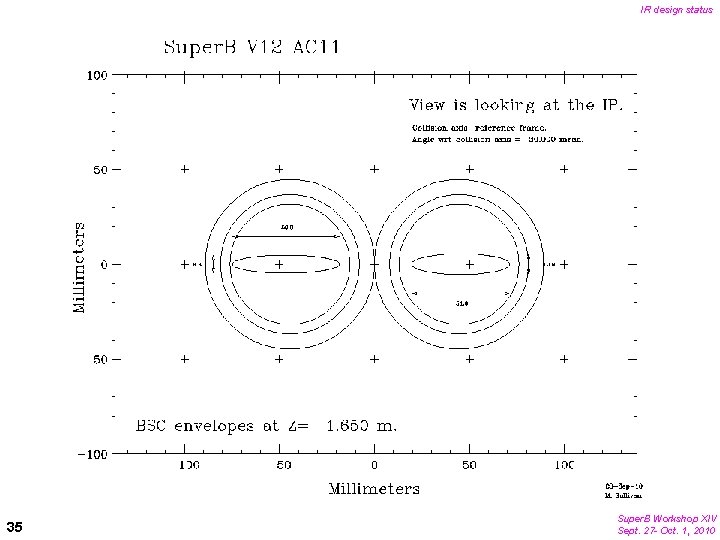
- Slides: 47
IR design status IR Design Status and Update M. Sullivan For M. Boscolo, K. Bertsche, E. Paoloni, S. Bettoni, P. Raimondi, M. Biagini, P. Vobly, I. Okunev, A. Novokhatski, S. Weathersby, et al. Super. B General Meeting XIV INFN Frascati, Italy September 27 - October 1, 2010 1 Super. B Workshop XIV Sept. 27 - Oct. 1, 2010
IR design status Outline • IR design – Quick recap from last meeting • As with all cliffhangers we need the story retold a little before the end of the last episode • Latest designs – Changes – SR calculations • Rates • Power • Summary 2 Super. B Workshop XIV Sept. 27 - Oct. 1, 2010
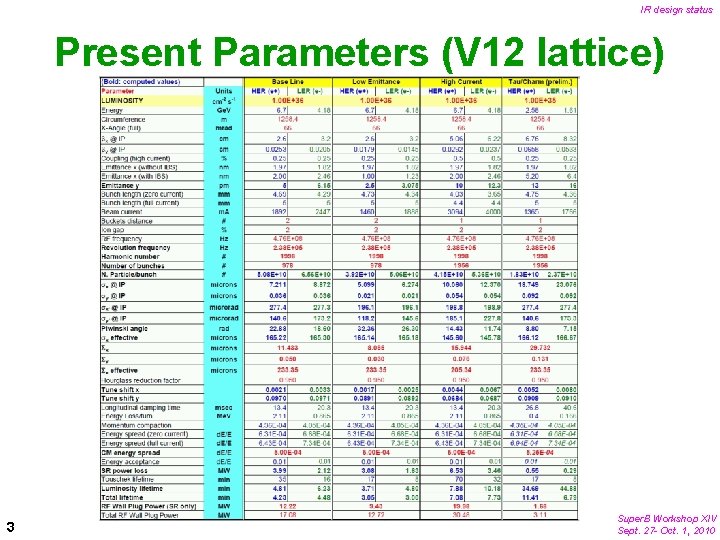
IR design status Present Parameters (V 12 lattice) 3 Super. B Workshop XIV Sept. 27 - Oct. 1, 2010
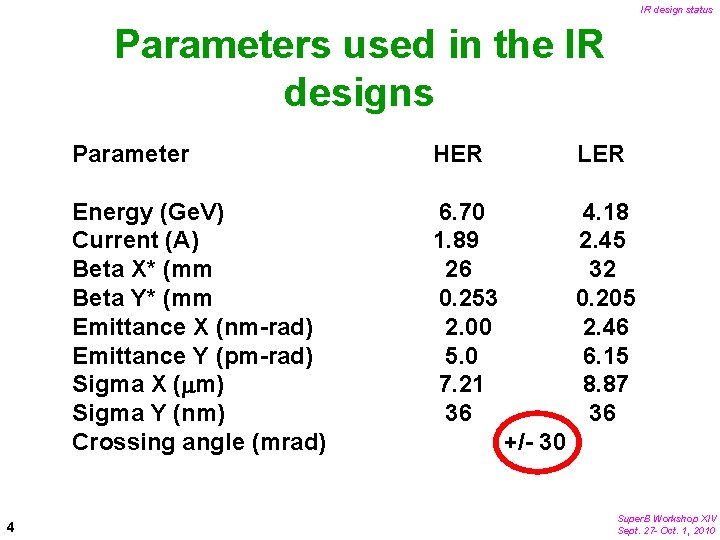
IR design status Parameters used in the IR designs 4 Parameter HER LER Energy (Ge. V) Current (A) Beta X* (mm Beta Y* (mm Emittance X (nm-rad) Emittance Y (pm-rad) Sigma X ( m) Sigma Y (nm) Crossing angle (mrad) 6. 70 1. 89 26 0. 253 2. 00 5. 0 7. 21 36 4. 18 2. 45 32 0. 205 2. 46 6. 15 8. 87 36 +/- 30 Super. B Workshop XIV Sept. 27 - Oct. 1, 2010
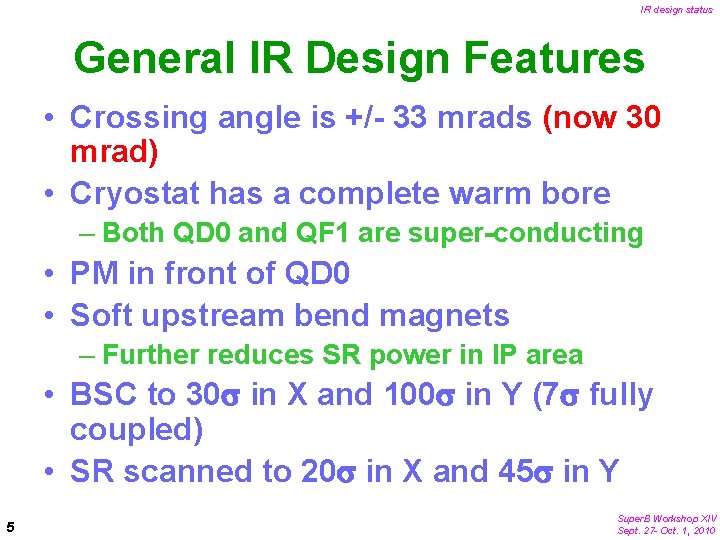
IR design status General IR Design Features • Crossing angle is +/- 33 mrads (now 30 mrad) • Cryostat has a complete warm bore – Both QD 0 and QF 1 are super-conducting • PM in front of QD 0 • Soft upstream bend magnets – Further reduces SR power in IP area • BSC to 30 in X and 100 in Y (7 fully coupled) • SR scanned to 20 in X and 45 in Y 5 Super. B Workshop XIV Sept. 27 - Oct. 1, 2010
IR design status SR background problems • At the last meeting (Elba), the new IR changes – all designed to improve the machine components and performance and make more space for the final focus magnets – somehow made it impossible to find a solution for SR backgrounds • Drastic measures were needed to get the direct SR photons off of the detector beam pipe 6 Super. B Workshop XIV Sept. 27 - Oct. 1, 2010
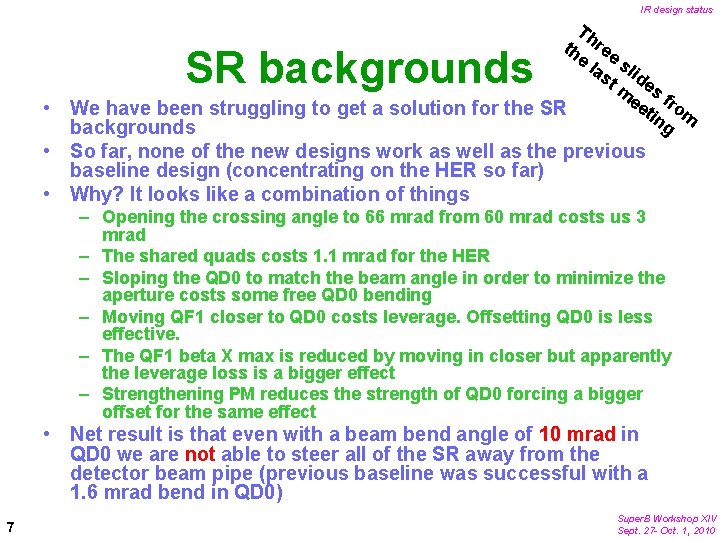
IR design status Th th ree e la sli st de m s ee fro We have been struggling to get a solution for the SR tin m g backgrounds SR backgrounds • • So far, none of the new designs work as well as the previous baseline design (concentrating on the HER so far) • Why? It looks like a combination of things – Opening the crossing angle to 66 mrad from 60 mrad costs us 3 mrad – The shared quads costs 1. 1 mrad for the HER – Sloping the QD 0 to match the beam angle in order to minimize the aperture costs some free QD 0 bending – Moving QF 1 closer to QD 0 costs leverage. Offsetting QD 0 is less effective. – The QF 1 beta X max is reduced by moving in closer but apparently the leverage loss is a bigger effect – Strengthening PM reduces the strength of QD 0 forcing a bigger offset for the same effect • Net result is that even with a beam bend angle of 10 mrad in QD 0 we are not able to steer all of the SR away from the detector beam pipe (previous baseline was successful with a 1. 6 mrad bend in QD 0) 7 Super. B Workshop XIV Sept. 27 - Oct. 1, 2010
IR design status SR backgrounds (2) • The Holmium solution looks the best and that may be due to the stronger magnets and to the lower beta X max – Even this solution needs a least an 8 mrad bend angle from the HER QD 0 magnets – Air-core quads is second best but needs a 10 mrad bend and still doesn’t quite get all of the direct SR off of the beam pipe • A 10 mrad bend puts a lot (k. Ws) of SR power on the beam pipe just upstream of the detector beampipe – The all vanadium permendur Panofsky quad solution deposits ~5 k. W on 10 cm of beam pipe – a power level we can not handle • However, we do not want to give up all of the lattice improvements either 8 Super. B Workshop XIV Sept. 27 - Oct. 1, 2010
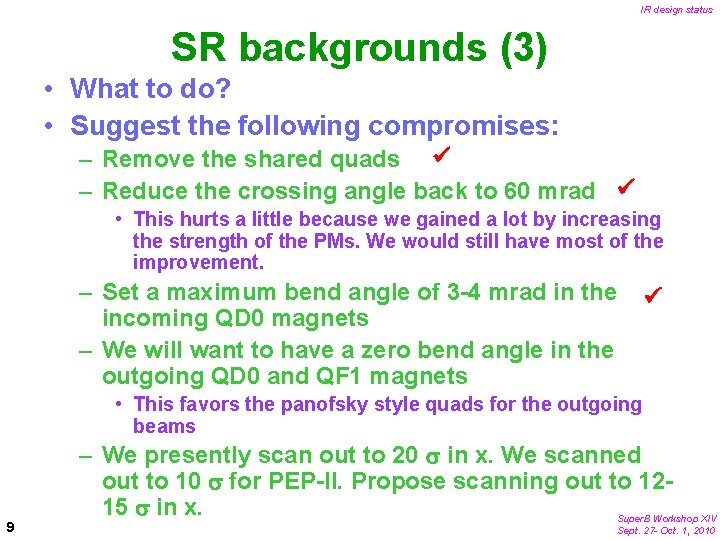
IR design status SR backgrounds (3) • What to do? • Suggest the following compromises: – Remove the shared quads – Reduce the crossing angle back to 60 mrad • This hurts a little because we gained a lot by increasing the strength of the PMs. We would still have most of the improvement. – Set a maximum bend angle of 3 -4 mrad in the incoming QD 0 magnets – We will want to have a zero bend angle in the outgoing QD 0 and QF 1 magnets • This favors the panofsky style quads for the outgoing beams 9 – We presently scan out to 20 in x. We scanned out to 10 for PEP-II. Propose scanning out to 1215 in x. Super. B Workshop XIV Sept. 27 - Oct. 1, 2010
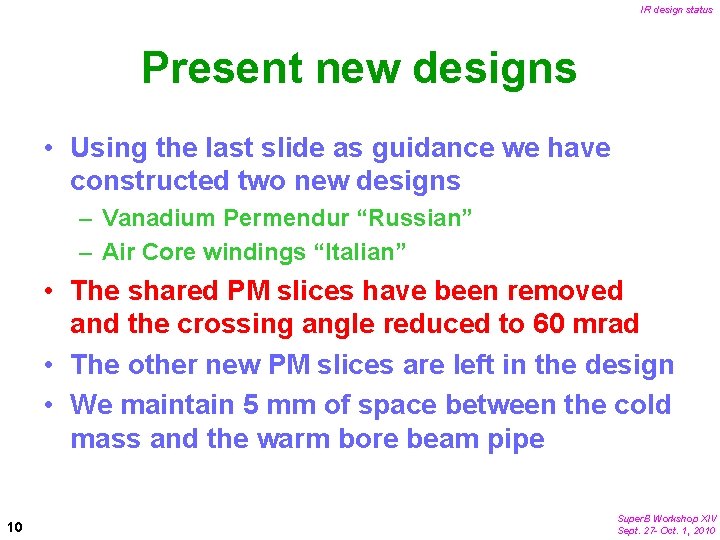
IR design status Present new designs • Using the last slide as guidance we have constructed two new designs – Vanadium Permendur “Russian” – Air Core windings “Italian” • The shared PM slices have been removed and the crossing angle reduced to 60 mrad • The other new PM slices are left in the design • We maintain 5 mm of space between the cold mass and the warm bore beam pipe 10 Super. B Workshop XIV Sept. 27 - Oct. 1, 2010
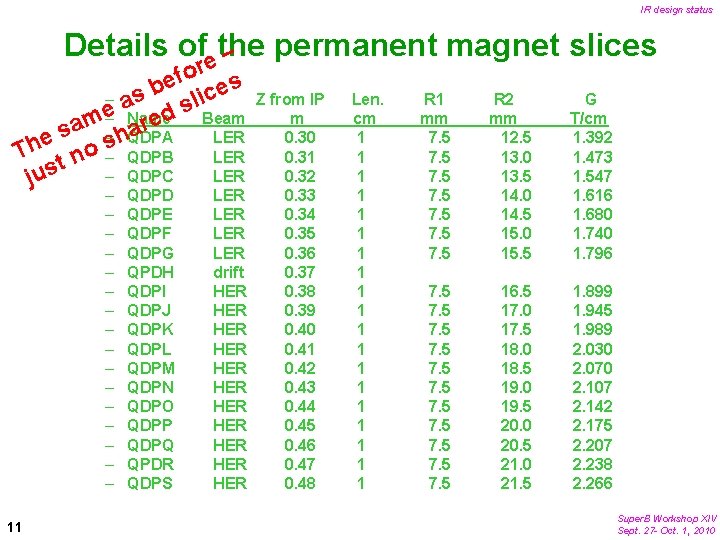
IR design status Details ofethe permanent magnet slices – r o f e s b e c – as li s e d Beam – Name m e r a a s –sh. QDPA LER e h T t no – QDPB LER – QDPC LER jus – – – – 11 QDPD QDPE QDPF QDPG QPDH QDPI QDPJ QDPK QDPL QDPM QDPN QDPO QDPP QDPQ QPDR QDPS LER LER drift HER HER HER Z from IP m 0. 30 0. 31 0. 32 0. 33 0. 34 0. 35 0. 36 0. 37 0. 38 0. 39 0. 40 0. 41 0. 42 0. 43 0. 44 0. 45 0. 46 0. 47 0. 48 Len. cm 1 1 1 1 1 R 1 mm 7. 5 7. 5 R 2 mm 12. 5 13. 0 13. 5 14. 0 14. 5 15. 0 15. 5 G T/cm 1. 392 1. 473 1. 547 1. 616 1. 680 1. 740 1. 796 7. 5 7. 5 16. 5 17. 0 17. 5 18. 0 18. 5 19. 0 19. 5 20. 0 20. 5 21. 0 21. 5 1. 899 1. 945 1. 989 2. 030 2. 070 2. 107 2. 142 2. 175 2. 207 2. 238 2. 266 Super. B Workshop XIV Sept. 27 - Oct. 1, 2010
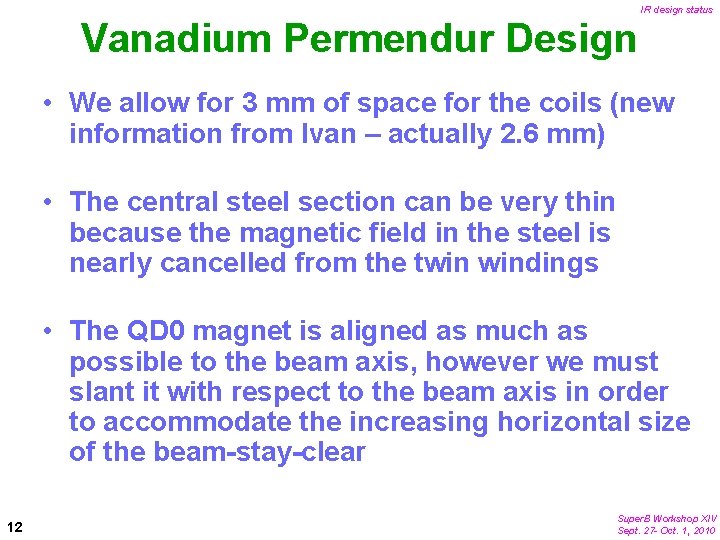
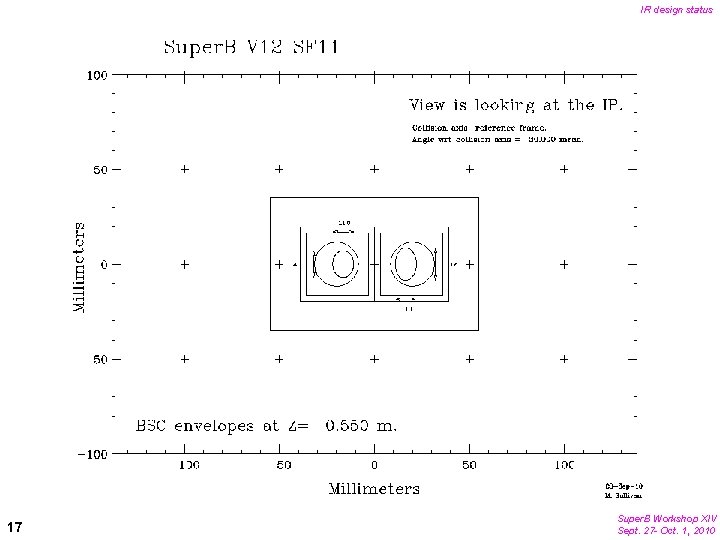
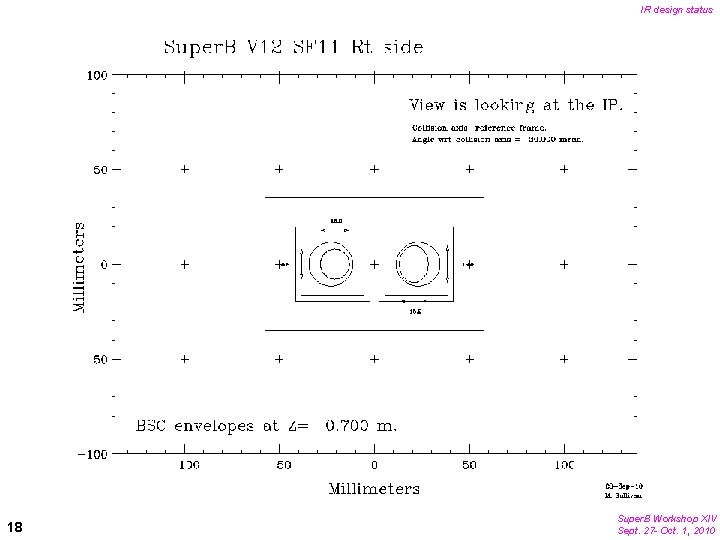
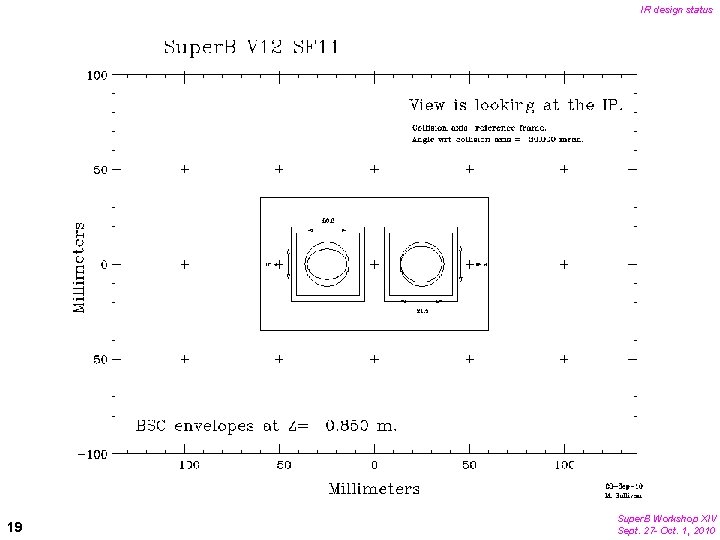
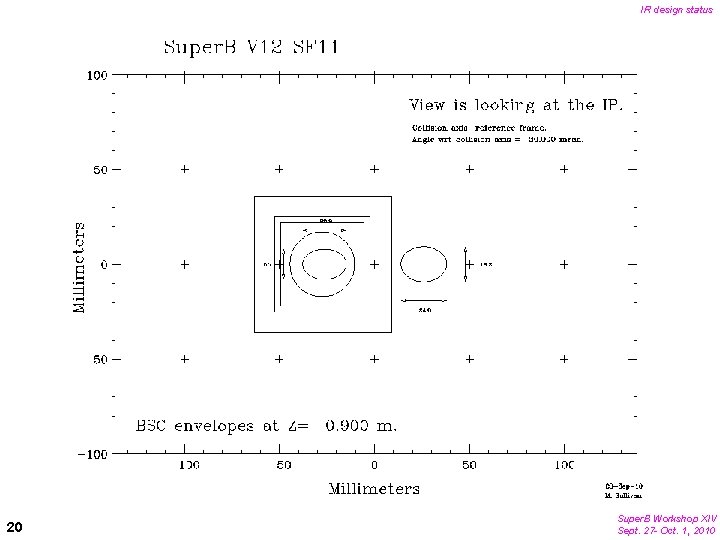
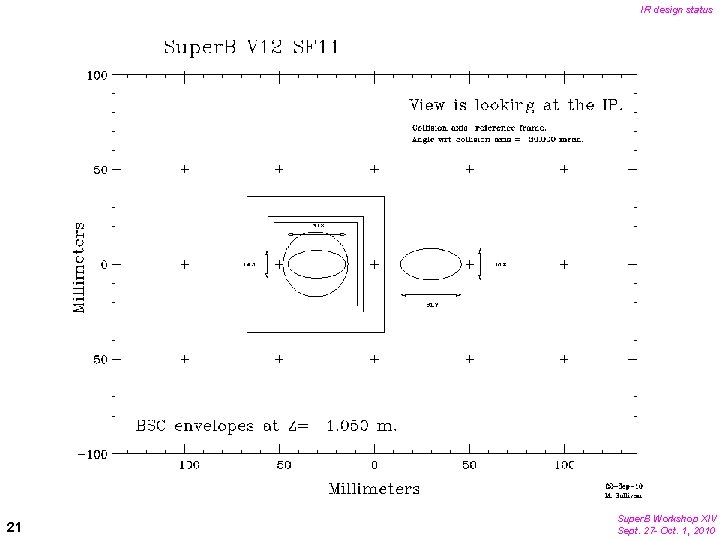
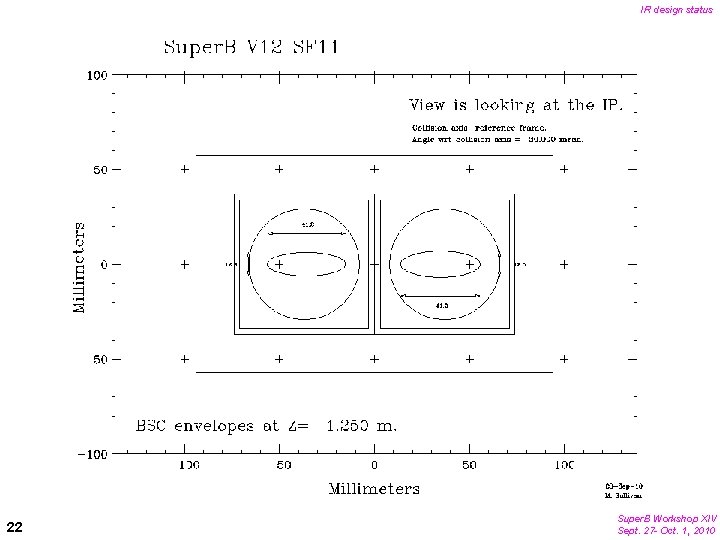
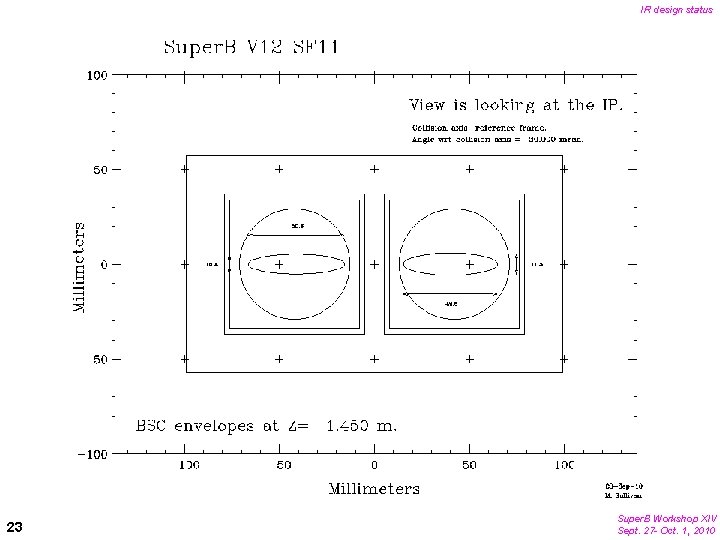
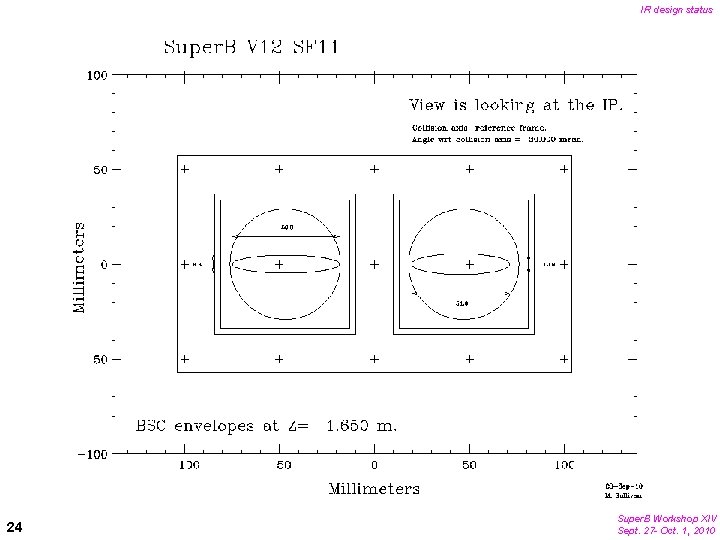
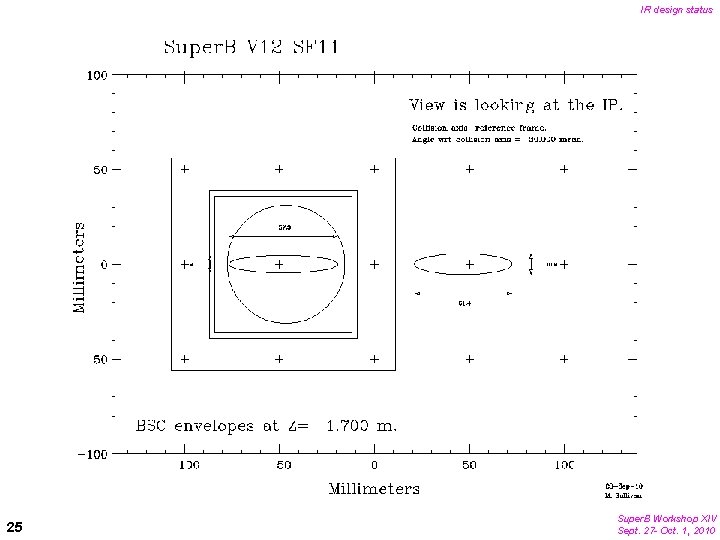
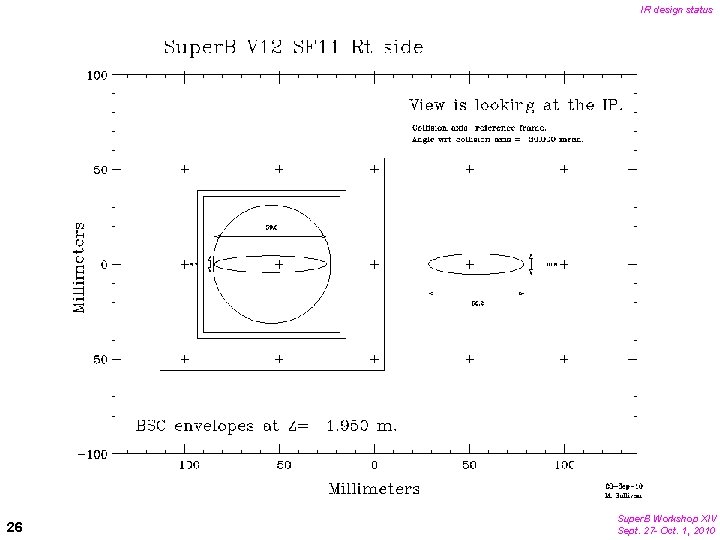
IR design status Vanadium Permendur Design • We allow for 3 mm of space for the coils (new information from Ivan – actually 2. 6 mm) • The central steel section can be very thin because the magnetic field in the steel is nearly cancelled from the twin windings • The QD 0 magnet is aligned as much as possible to the beam axis, however we must slant it with respect to the beam axis in order to accommodate the increasing horizontal size of the beam-stay-clear 12 Super. B Workshop XIV Sept. 27 - Oct. 1, 2010
IR design status Vanadium Permendur “Russian” Design 13 Super. B Workshop XIV Sept. 27 - Oct. 1, 2010
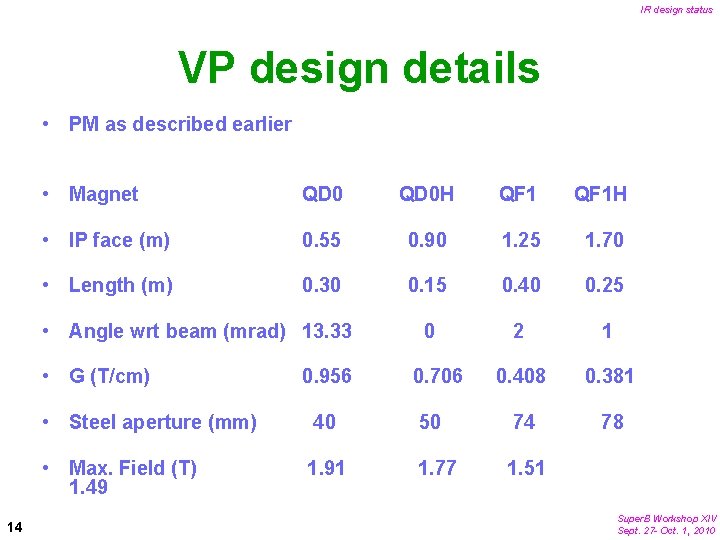
IR design status VP design details • PM as described earlier • Magnet QD 0 H QF 1 H • IP face (m) 0. 55 0. 90 1. 25 1. 70 • Length (m) 0. 30 0. 15 0. 40 0. 25 0 2 1 0. 408 0. 381 78 • Angle wrt beam (mrad) 13. 33 • G (T/cm) 14 0. 956 0. 706 • Steel aperture (mm) 40 50 74 • Max. Field (T) 1. 49 1. 91 1. 77 1. 51 Super. B Workshop XIV Sept. 27 - Oct. 1, 2010
IR design status 15 Super. B Workshop XIV Sept. 27 - Oct. 1, 2010
IR design status 16 Super. B Workshop XIV Sept. 27 - Oct. 1, 2010
IR design status 17 Super. B Workshop XIV Sept. 27 - Oct. 1, 2010
IR design status 18 Super. B Workshop XIV Sept. 27 - Oct. 1, 2010
IR design status 19 Super. B Workshop XIV Sept. 27 - Oct. 1, 2010
IR design status 20 Super. B Workshop XIV Sept. 27 - Oct. 1, 2010
IR design status 21 Super. B Workshop XIV Sept. 27 - Oct. 1, 2010
IR design status 22 Super. B Workshop XIV Sept. 27 - Oct. 1, 2010
IR design status 23 Super. B Workshop XIV Sept. 27 - Oct. 1, 2010
IR design status 24 Super. B Workshop XIV Sept. 27 - Oct. 1, 2010
IR design status 25 Super. B Workshop XIV Sept. 27 - Oct. 1, 2010
IR design status 26 Super. B Workshop XIV Sept. 27 - Oct. 1, 2010
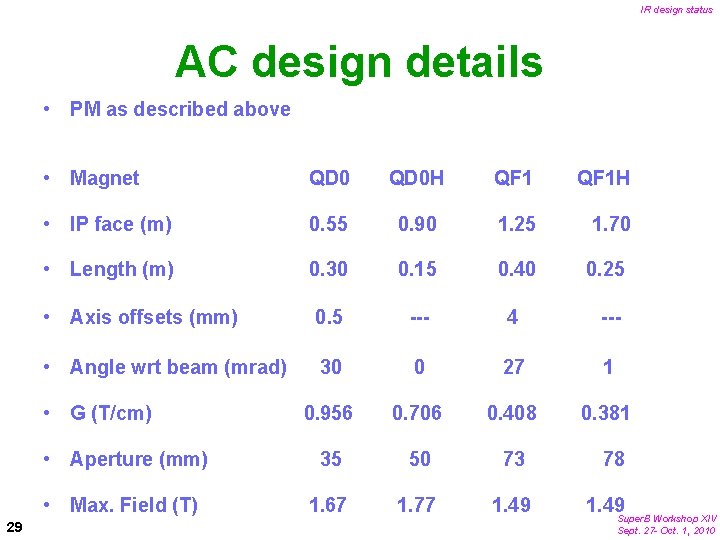
IR design status Air-Core “Italian” Design • We replace the shared QD 0 and QF 1 parts of the VP design with the air-core design • Also place QD 0 and QF 1 parallel to the detector axis • Then we have the same field strengths and the LER and HER pieces are the same strength as the VP design 27 Super. B Workshop XIV Sept. 27 - Oct. 1, 2010
IR design status Air core “Italian” QD 0, QF 1 28 Super. B Workshop XIV Sept. 27 - Oct. 1, 2010
IR design status AC design details • PM as described above • Magnet QD 0 H QF 1 H • IP face (m) 0. 55 0. 90 1. 25 1. 70 • Length (m) 0. 30 0. 15 0. 40 0. 25 • Axis offsets (mm) 0. 5 --- 4 --- • Angle wrt beam (mrad) 30 0 27 1 0. 956 0. 706 0. 408 0. 381 • Aperture (mm) 35 50 73 78 • Max. Field (T) 1. 67 1. 77 1. 49 • G (T/cm) 29 Super. B Workshop XIV Sept. 27 - Oct. 1, 2010
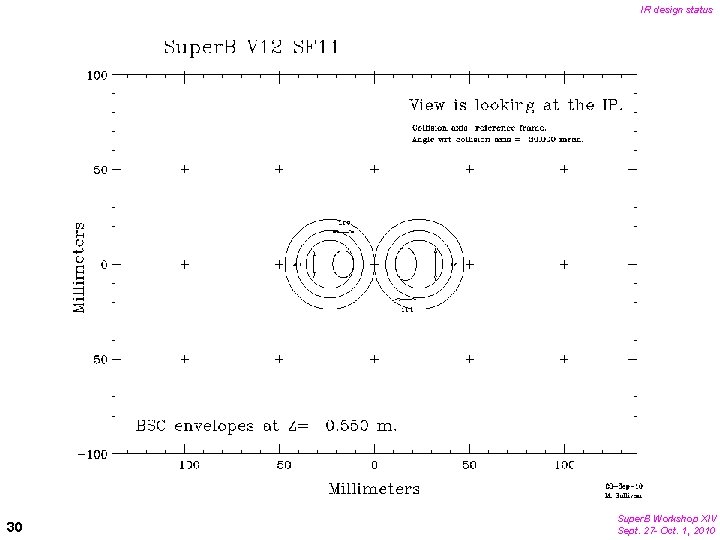
IR design status 30 Super. B Workshop XIV Sept. 27 - Oct. 1, 2010
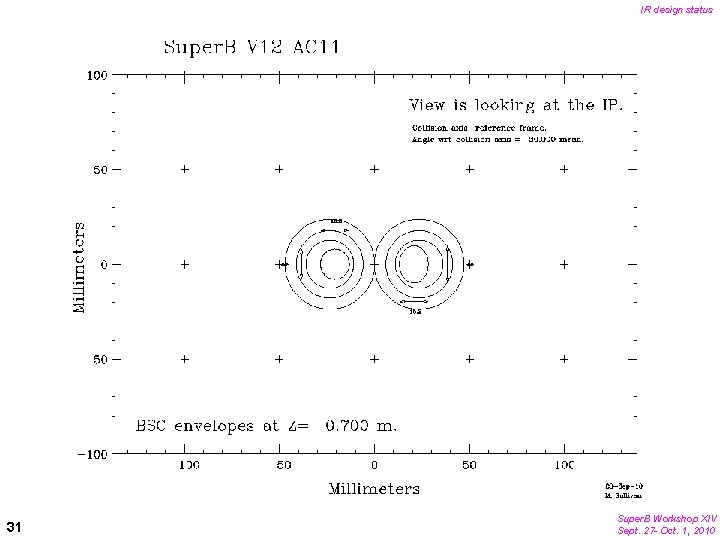
IR design status 31 Super. B Workshop XIV Sept. 27 - Oct. 1, 2010
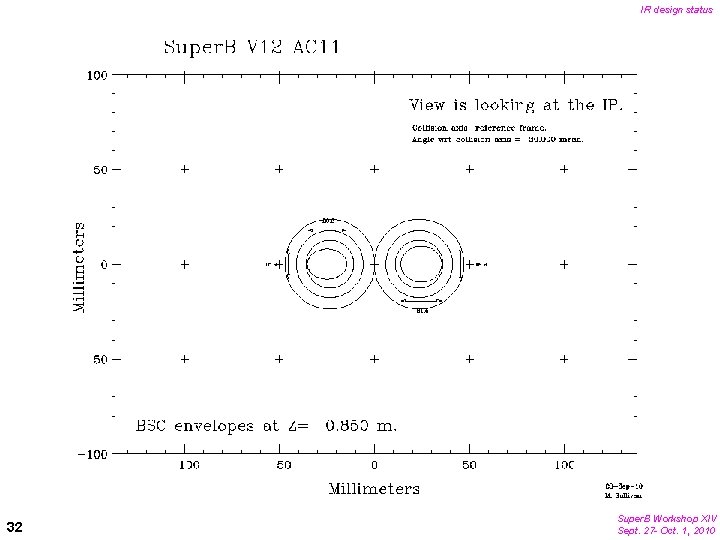
IR design status 32 Super. B Workshop XIV Sept. 27 - Oct. 1, 2010
IR design status 33 Super. B Workshop XIV Sept. 27 - Oct. 1, 2010
IR design status 34 Super. B Workshop XIV Sept. 27 - Oct. 1, 2010
IR design status 35 Super. B Workshop XIV Sept. 27 - Oct. 1, 2010
IR design status Brief Aside • While studying the SR backgrounds I changed the beam directions from what we see in the previous pictures • The new directions match the ring layouts and injection scheme • Initially I thought I detected a large difference in SR background rates (the new beam directions were much worse) • However, upon using more carefully constructed simulations it looks like the difference is rather small • This is good news. It means SR backgrounds from the design are independent of the beam direction 36 Super. B Workshop XIV Sept. 27 - Oct. 1, 2010
IR design status Brief aside (2) • However, there is one thing that prefers the beams entering the IR from the outside rings • The SR power from the last soft bend magnets strike the beam pipe inside the cryostat on the opposite side from the very close sides where the beam pipe will need to be thin • This is especially true in QD 0 but also true for QF 1 • So present conclusion: – IR design prefers the beams entering from the outside rings if at all possible but can probably also work if the beams enter the IR from the inside rings 37 Super. B Workshop XIV Sept. 27 - Oct. 1, 2010
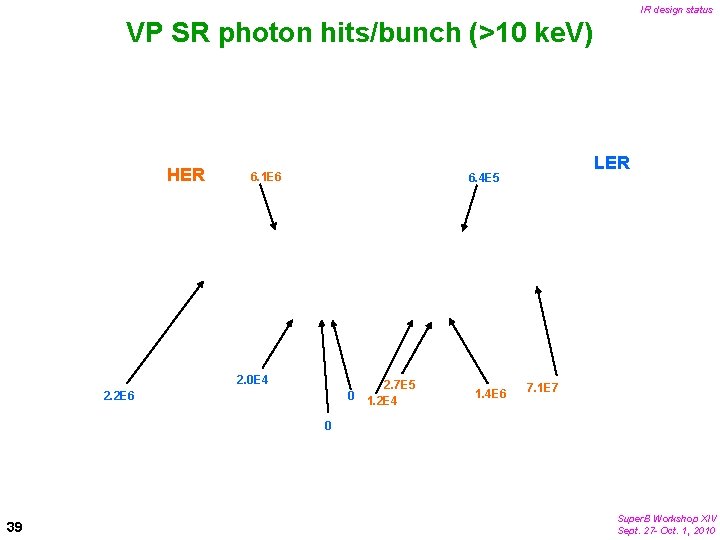
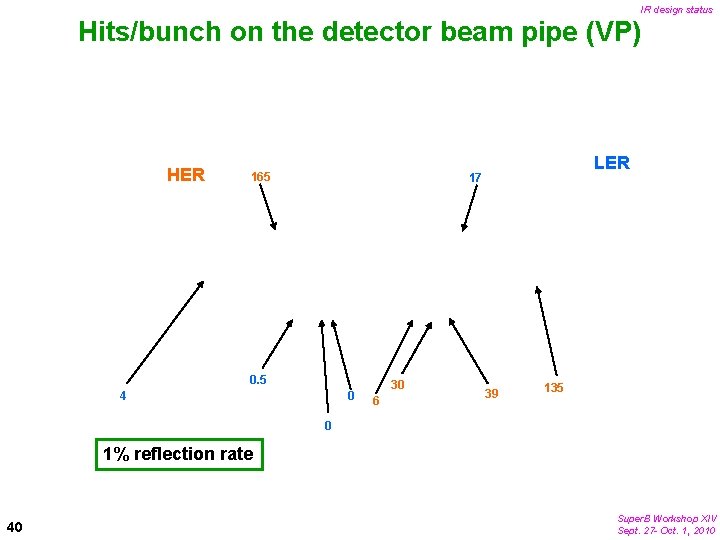
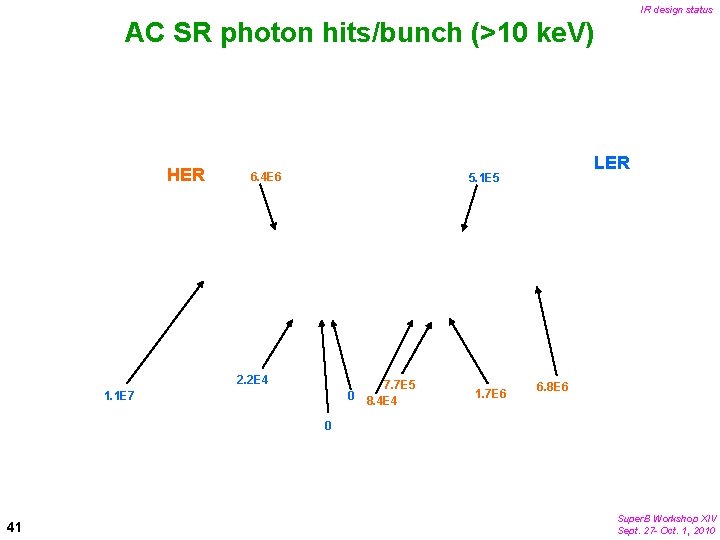
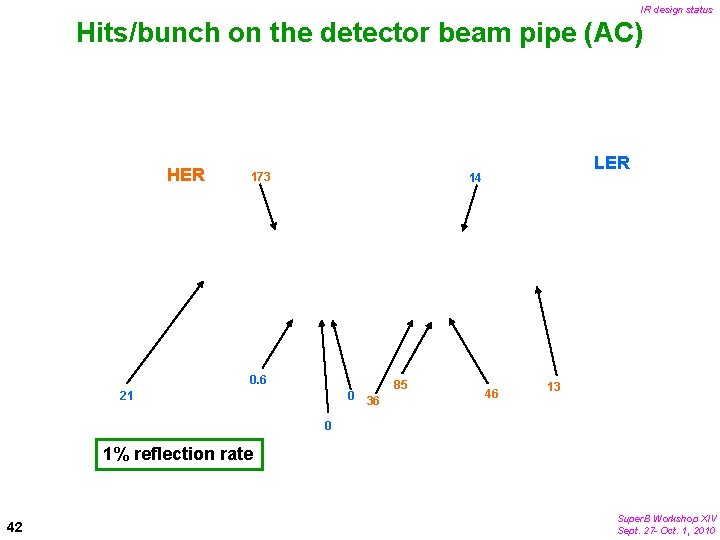
IR design status SR backgrounds • No photons strike the physics window – We trace the beam out to 20 X and 45 Y – The physics window is defined as +/-4 cm for a 1 cm radius beam pipe • Photons from particles at high beam sigmas presently strike 7 -10 cm downstream of the IP • However, the highest rate on the detector beam pipe comes from points that are a little farther away 38 • This is true for both the vanadium permendur and the air-core design Super. B Workshop XIV Sept. 27 - Oct. 1, 2010
IR design status VP SR photon hits/bunch (>10 ke. V) HER 6. 1 E 6 LER 6. 4 E 5 2. 0 E 4 2. 7 E 5 0 1. 2 E 4 2. 2 E 6 1. 4 E 6 7. 1 E 7 0 39 Super. B Workshop XIV Sept. 27 - Oct. 1, 2010
IR design status Hits/bunch on the detector beam pipe (VP) HER 165 LER 17 0. 5 0 4 30 6 39 135 0 1% reflection rate 40 Super. B Workshop XIV Sept. 27 - Oct. 1, 2010
IR design status AC SR photon hits/bunch (>10 ke. V) HER 6. 4 E 6 LER 5. 1 E 5 2. 2 E 4 7. 7 E 5 0 8. 4 E 4 1. 1 E 7 1. 7 E 6 6. 8 E 6 0 41 Super. B Workshop XIV Sept. 27 - Oct. 1, 2010
IR design status Hits/bunch on the detector beam pipe (AC) HER 173 LER 14 0. 6 0 36 21 85 46 13 0 1% reflection rate 42 Super. B Workshop XIV Sept. 27 - Oct. 1, 2010
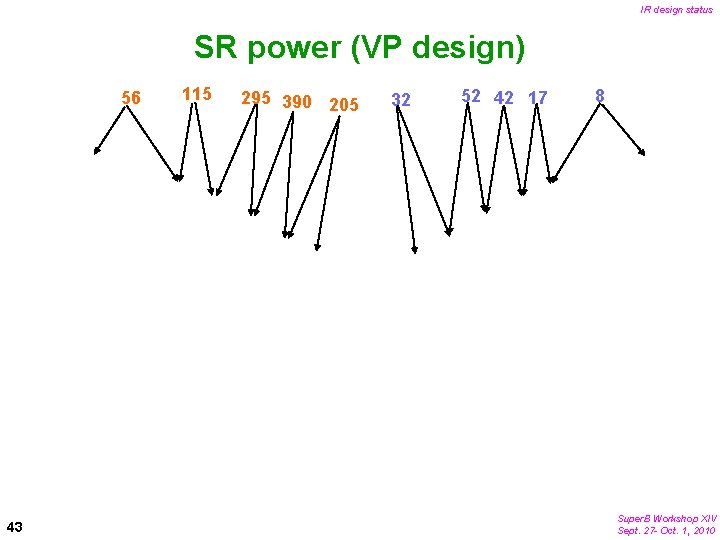
IR design status SR power (VP design) 56 43 115 295 390 205 32 52 42 17 8 Super. B Workshop XIV Sept. 27 - Oct. 1, 2010
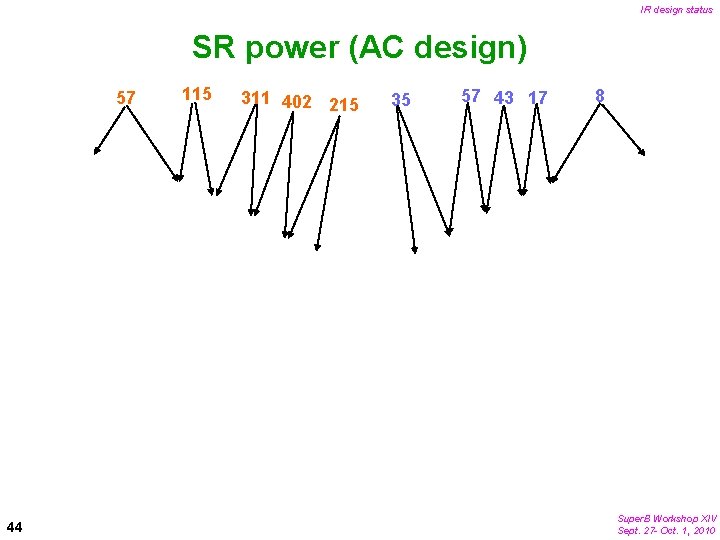
IR design status SR power (AC design) 57 44 115 311 402 215 35 57 43 17 8 Super. B Workshop XIV Sept. 27 - Oct. 1, 2010
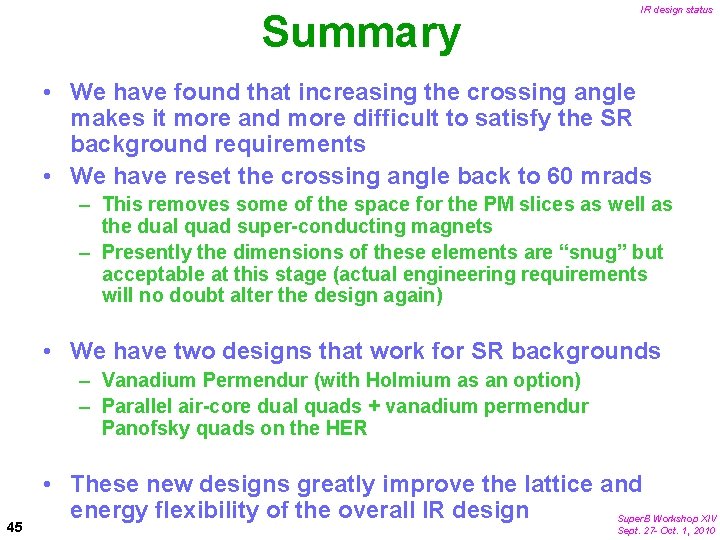
Summary IR design status • We have found that increasing the crossing angle makes it more and more difficult to satisfy the SR background requirements • We have reset the crossing angle back to 60 mrads – This removes some of the space for the PM slices as well as the dual quad super-conducting magnets – Presently the dimensions of these elements are “snug” but acceptable at this stage (actual engineering requirements will no doubt alter the design again) • We have two designs that work for SR backgrounds – Vanadium Permendur (with Holmium as an option) – Parallel air-core dual quads + vanadium permendur Panofsky quads on the HER 45 • These new designs greatly improve the lattice and energy flexibility of the overall IR design Super. B Workshop XIV Sept. 27 - Oct. 1, 2010
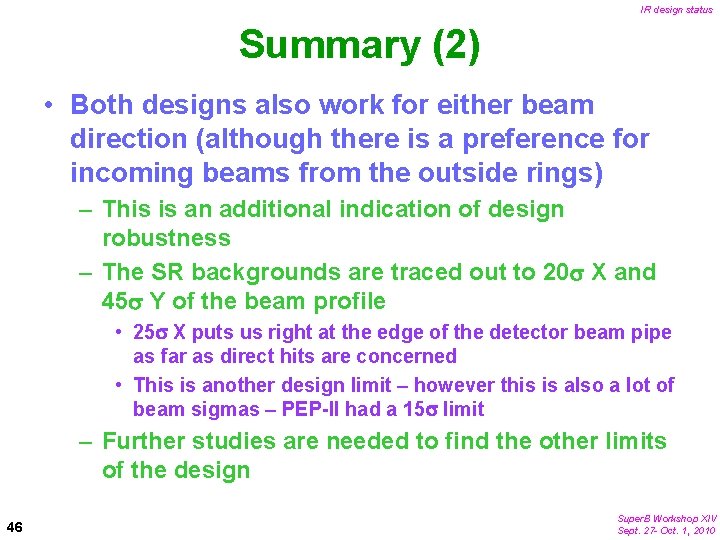
IR design status Summary (2) • Both designs also work for either beam direction (although there is a preference for incoming beams from the outside rings) – This is an additional indication of design robustness – The SR backgrounds are traced out to 20 X and 45 Y of the beam profile • 25 X puts us right at the edge of the detector beam pipe as far as direct hits are concerned • This is another design limit – however this is also a lot of beam sigmas – PEP-II had a 15 limit – Further studies are needed to find the other limits of the design 46 Super. B Workshop XIV Sept. 27 - Oct. 1, 2010
IR design status Conclusions • We have two designs that satisfy our first order SR requirements • These two designs demonstrate initial robustness which we need to further explore by mapping other design limits • The IR design is looking better, is converging and is maintaining flexibility 47 Super. B Workshop XIV Sept. 27 - Oct. 1, 2010