
Ir Dar and Estar oy verbs Ir Yo
Ir, Dar and Estar: oy verbs
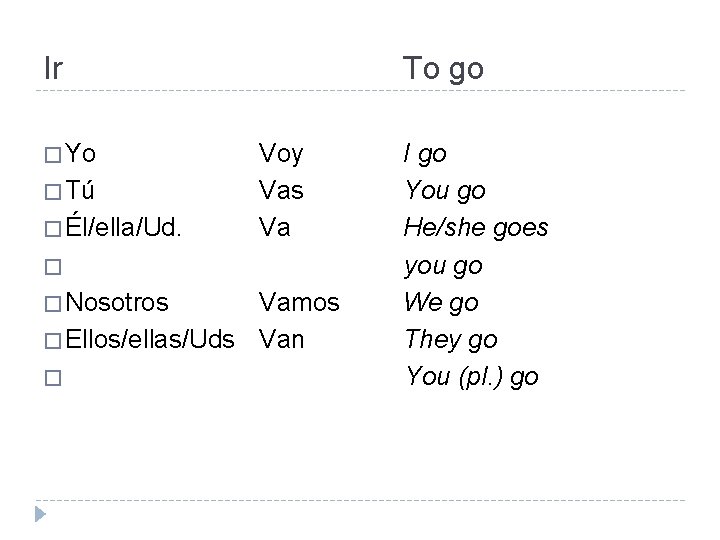
Ir � Yo � Tú � Él/ella/Ud. To go Voy Vas Va � � Nosotros Vamos � Ellos/ellas/Uds Van � I go You go He/she goes you go We go They go You (pl. ) go
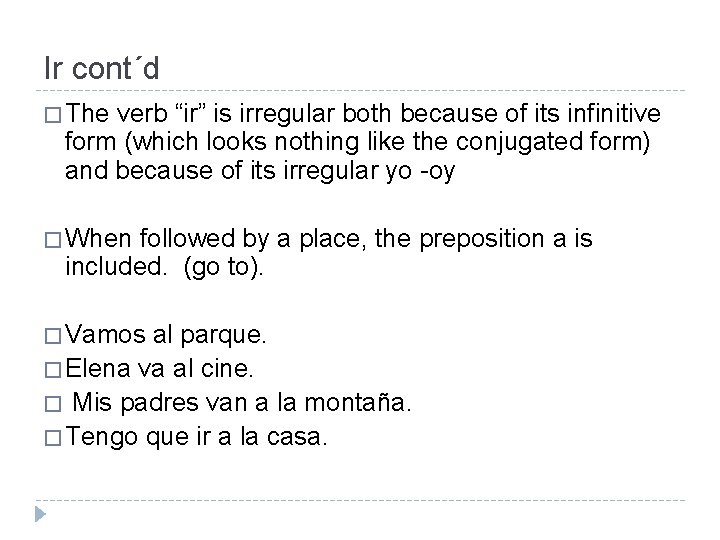
Ir cont´d � The verb “ir” is irregular both because of its infinitive form (which looks nothing like the conjugated form) and because of its irregular yo -oy � When followed by a place, the preposition a is included. (go to). � Vamos al parque. � Elena va al cine. � Mis padres van a la montaña. � Tengo que ir a la casa.
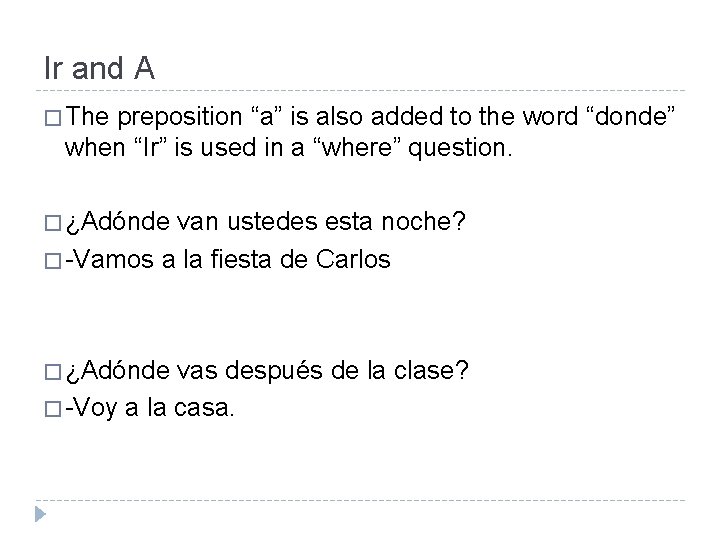
Ir and A � The preposition “a” is also added to the word “donde” when “Ir” is used in a “where” question. � ¿Adónde van ustedes esta noche? � -Vamos a la fiesta de Carlos � ¿Adónde vas después de la clase? � -Voy a la casa.
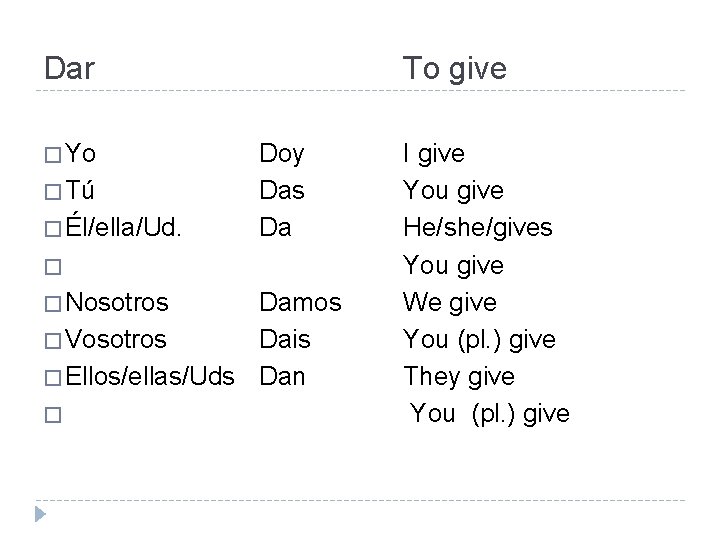
Dar � Yo � Tú � Él/ella/Ud. To give Doy Das Da � � Nosotros Damos � Vosotros Dais � Ellos/ellas/Uds Dan � I give You give He/she/gives You give We give You (pl. ) give They give You (pl. ) give
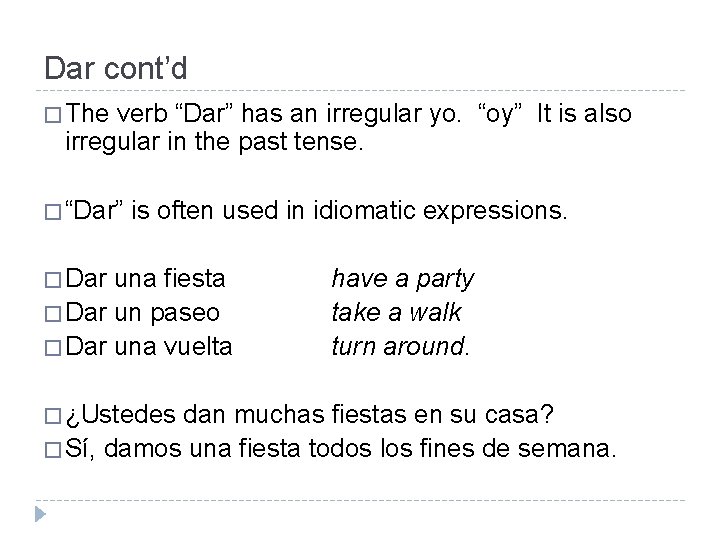
Dar cont’d � The verb “Dar” has an irregular yo. “oy” It is also irregular in the past tense. � “Dar” is often used in idiomatic expressions. � Dar una fiesta � Dar un paseo � Dar una vuelta � ¿Ustedes have a party take a walk turn around. dan muchas fiestas en su casa? � Sí, damos una fiesta todos los fines de semana.
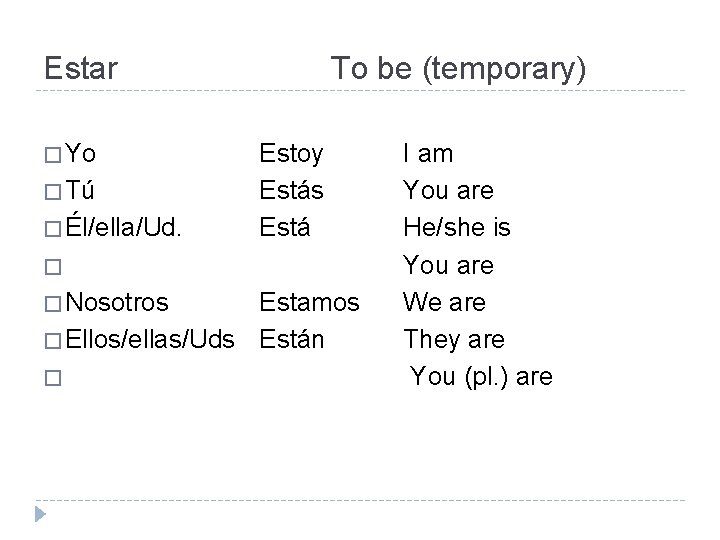
Estar � Yo � Tú � Él/ella/Ud. To be (temporary) Estoy Estás Está � � Nosotros Estamos � Ellos/ellas/Uds Están � I am You are He/she is You are We are They are You (pl. ) are
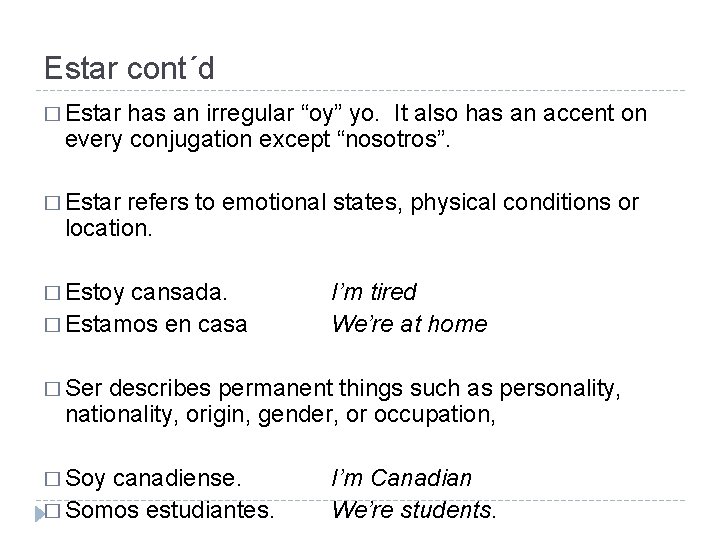
Estar cont´d � Estar has an irregular “oy” yo. It also has an accent on every conjugation except “nosotros”. � Estar refers to emotional states, physical conditions or location. � Estoy cansada. � Estamos en casa I’m tired We’re at home � Ser describes permanent things such as personality, nationality, origin, gender, or occupation, � Soy canadiense. � Somos estudiantes. I’m Canadian We’re students.
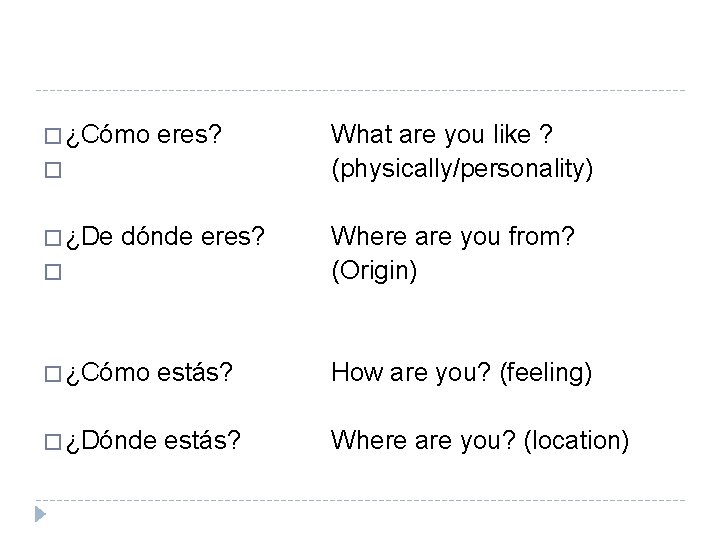
� ¿Cómo eres? � � ¿De dónde eres? � � ¿Cómo estás? � ¿Dónde estás? What are you like ? (physically/personality) Where are you from? (Origin) How are you? (feeling) Where are you? (location)
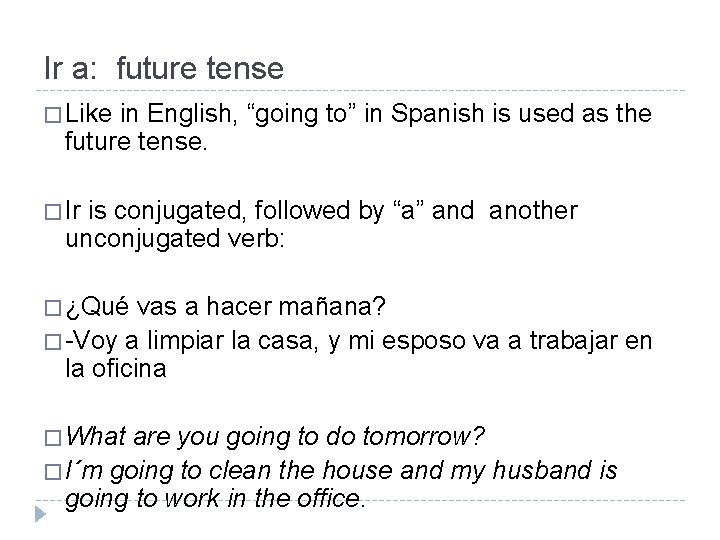
Ir a: future tense � Like in English, “going to” in Spanish is used as the future tense. � Ir is conjugated, followed by “a” and another unconjugated verb: � ¿Qué vas a hacer mañana? � -Voy a limpiar la casa, y mi esposo va a trabajar en la oficina � What are you going to do tomorrow? � I´m going to clean the house and my husband is going to work in the office.
- Slides: 10