
IPv 6 Addressing Agenda OSI TCPIP Model IPv
- Slides: 38
IPv 6 Addressing
Agenda • OSI & TCP/IP Model • IPv 4 Addressing • IPv 6 Addressing
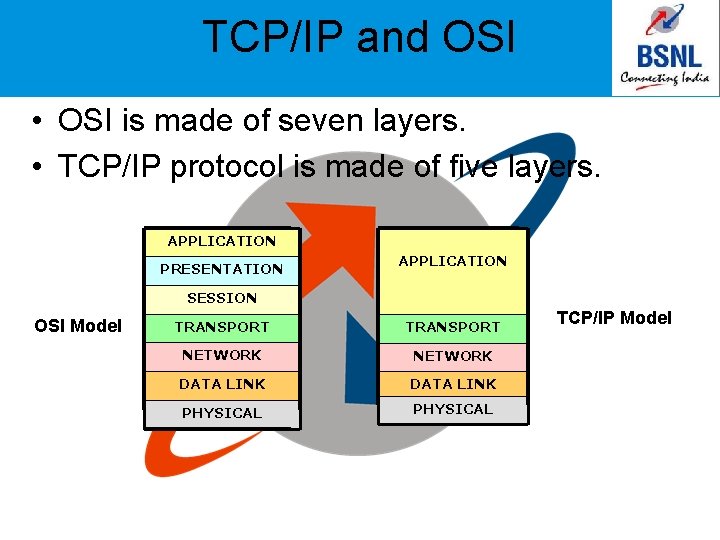
TCP/IP and OSI • OSI is made of seven layers. • TCP/IP protocol is made of five layers. APPLICATION PRESENTATION APPLICATION SESSION OSI Model TRANSPORT NETWORK DATA LINK PHYSICAL TCP/IP Model
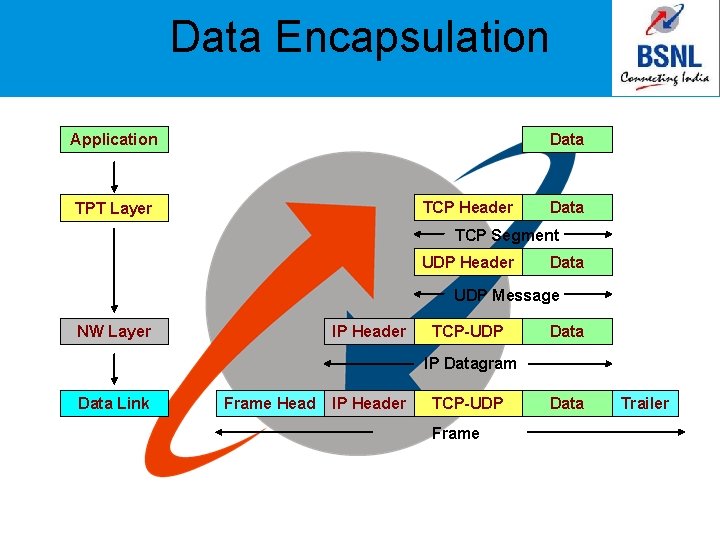
Data Encapsulation Application Data TCP Header TPT Layer Data TCP Segment UDP Header Data UDP Message NW Layer IP Header TCP-UDP Data IP Datagram Data Link Frame Head IP Header TCP-UDP Frame Data Trailer
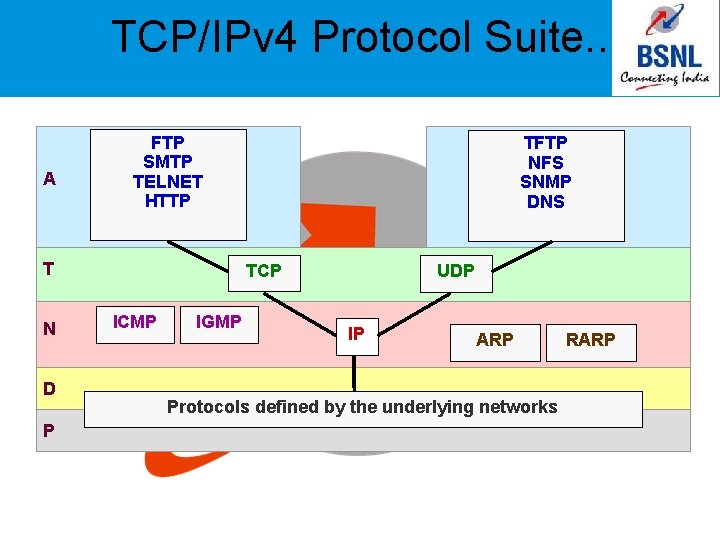
TCP/IPv 4 Protocol Suite. . A FTP SMTP TELNET HTTP T N D P TFTP NFS SNMP DNS TCP ICMP IGMP UDP IP ARP Protocols defined by the underlying networks RARP
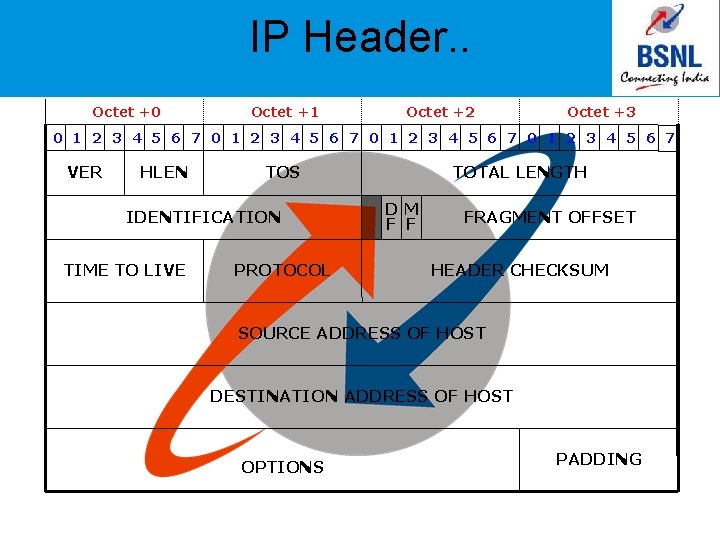
IP Header. . Octet +0 Octet +1 Octet +2 Octet +3 0 1 2 3 4 5 6 7 VER HLEN TOS IDENTIFICATION TIME TO LIVE PROTOCOL TOTAL LENGTH DM F F FRAGMENT OFFSET HEADER CHECKSUM SOURCE ADDRESS OF HOST DESTINATION ADDRESS OF HOST OPTIONS PADDING
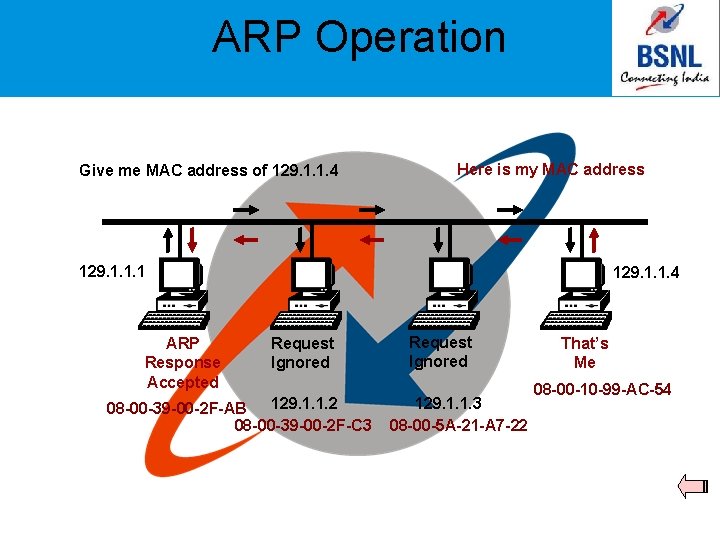
ARP Operation Give me MAC address of 129. 1. 1. 4 Here is my MAC address 129. 1. 1. 1 ARP Response Accepted 129. 1. 1. 4 Request Ignored 129. 1. 1. 2 08 -00 -39 -00 -2 F-AB 08 -00 -39 -00 -2 F-C 3 Request Ignored 129. 1. 1. 3 08 -00 -5 A-21 -A 7 -22 That’s Me 08 -00 -10 -99 -AC-54
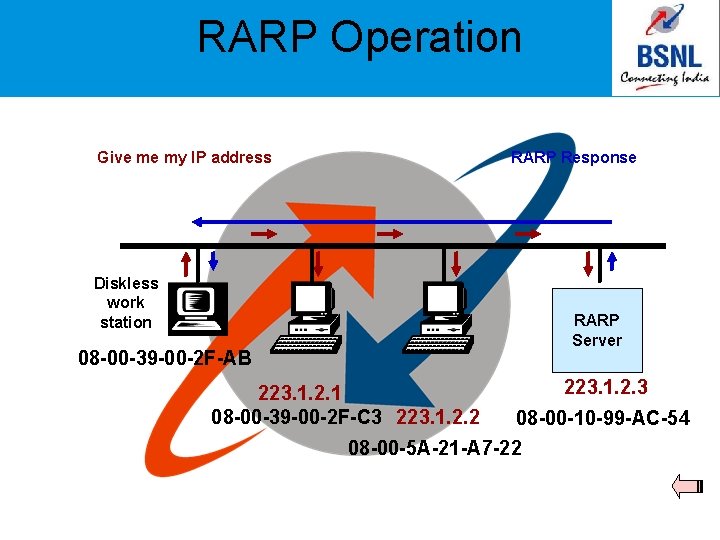
RARP Operation Give me my IP address RARP Response Diskless work station RARP Server 08 -00 -39 -00 -2 F-AB 223. 1. 2. 1 08 -00 -39 -00 -2 F-C 3 223. 1. 2. 2 223. 1. 2. 3 08 -00 -10 -99 -AC-54 08 -00 -5 A-21 -A 7 -22
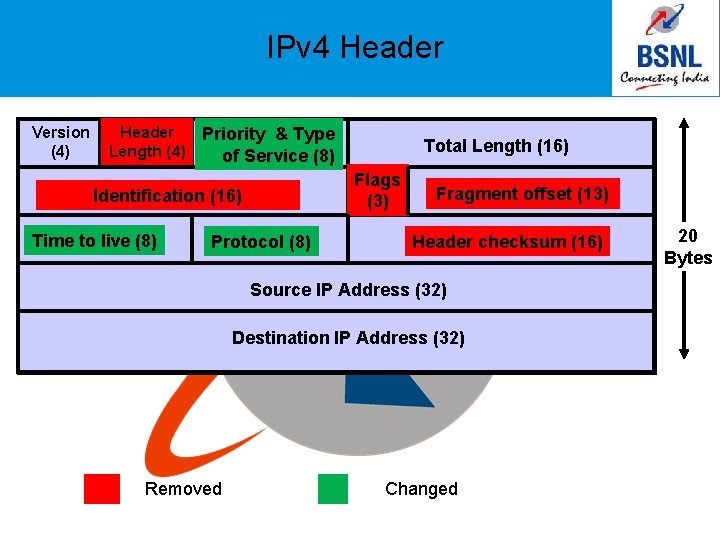
IPv 4 Header Version (4) Header Length (4) Priority & Type of Service (8) Flags (3) Identification (16) Time to live (8) Total Length (16) Protocol (8) Fragment offset (13) Header checksum (16) Source IP Address (32) Destination IP Address (32) Removed Changed 20 Bytes
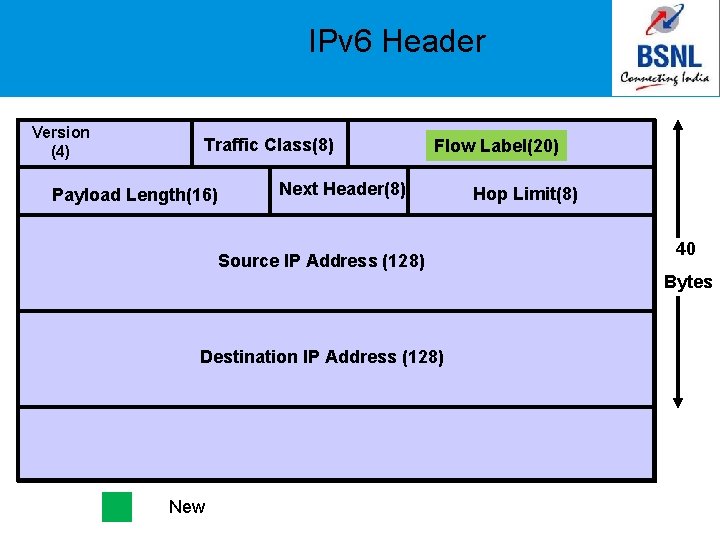
IPv 6 Header Version (4) Traffic Class(8) Payload Length(16) Flow Label(20) Next Header(8) Source IP Address (128) Hop Limit(8) 40 Bytes Destination IP Address (128) New
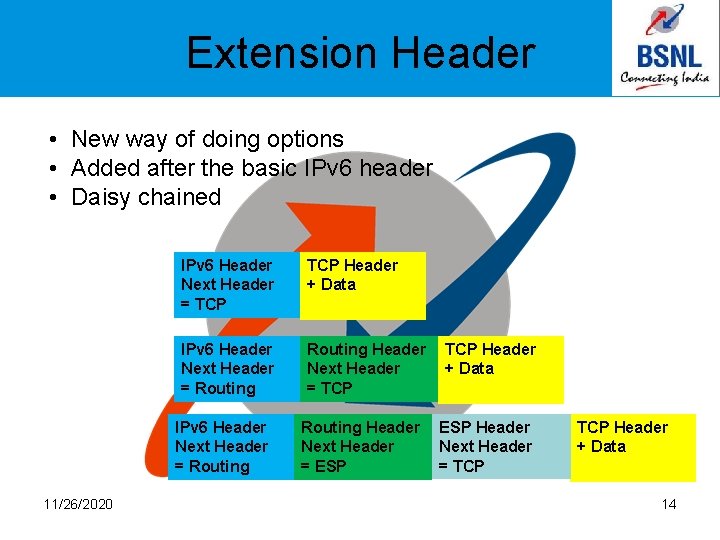
Extension Header • New way of doing options • Added after the basic IPv 6 header • Daisy chained IPv 6 Header Next Header = TCP Header + Data IPv 6 Header Next Header = Routing Header Next Header = TCP IPv 6 Header Next Header = Routing 11/26/2020 Routing Header Next Header = ESP TCP Header + Data ESP Header Next Header = TCP Header + Data 14
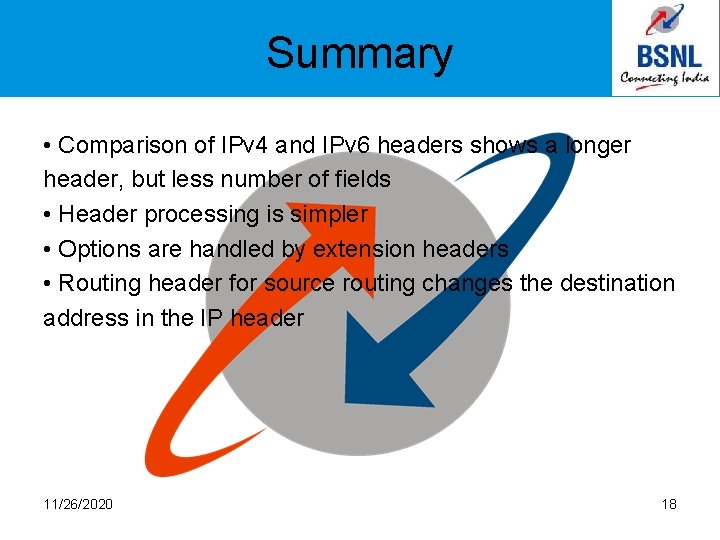
Summary • Comparison of IPv 4 and IPv 6 headers shows a longer header, but less number of fields • Header processing is simpler • Options are handled by extension headers • Routing header for source routing changes the destination address in the IP header 11/26/2020 18
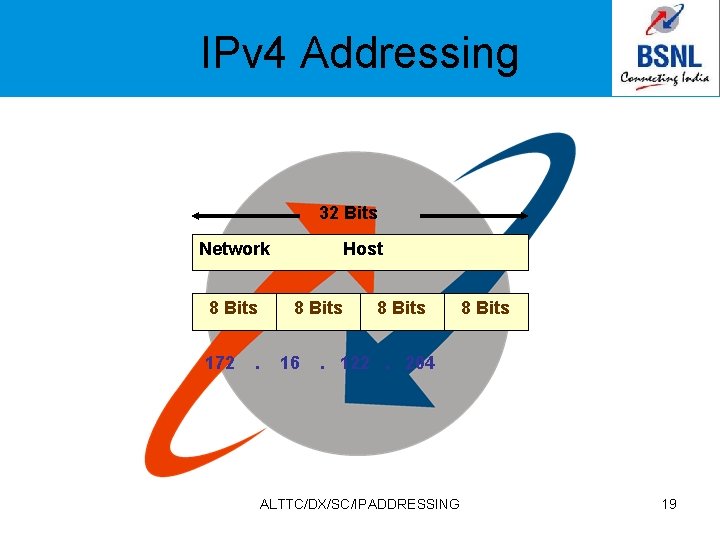
IPv 4 Addressing 32 Bits Network 8 Bits 172 Host 8 Bits . 16 8 Bits . 122. 204 ALTTC/DX/SC/IPADDRESSING 19
IPv 4 Address Scheme • Two types of addressing schemes for IPv 4 – Classful – Classless • Classful – Original style of addressing based on first few bits of the address. – Generally used in customer sites. • Classless – A new type of addressing that disregards the class bit of an address and applies a variable prefix (mask) to determine the network number. ALTTC/DX/SC/IPADDRESSING 20
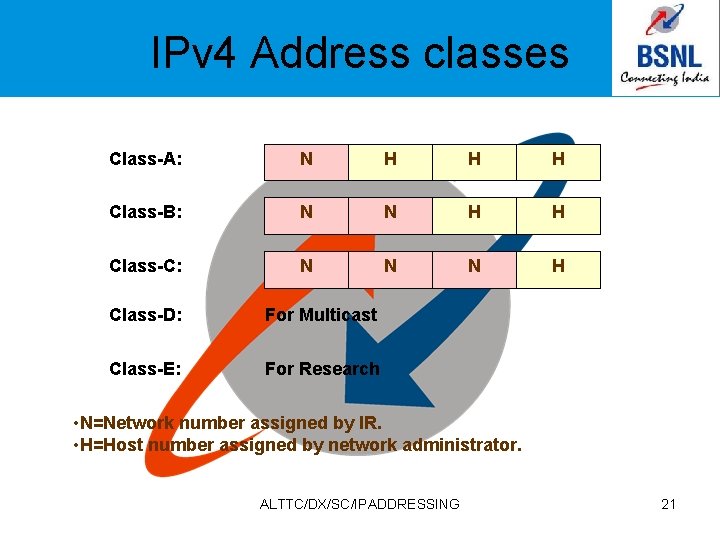
IPv 4 Address classes Class-A: N H H H Class-B: N N H H Class-C: N N N H Class-D: For Multicast Class-E: For Research • N=Network number assigned by IR. • H=Host number assigned by network administrator. ALTTC/DX/SC/IPADDRESSING 21
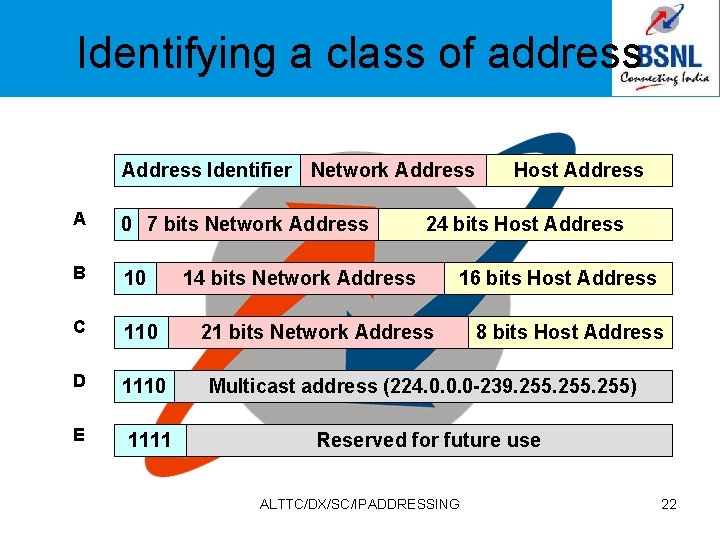
Identifying a class of address Address Identifier Network Address A 0 7 bits Network Address B 10 C 110 D 1110 E 1111 Host Address 24 bits Host Address 14 bits Network Address 16 bits Host Address 21 bits Network Address 8 bits Host Address Multicast address (224. 0. 0. 0 -239. 255) Reserved for future use ALTTC/DX/SC/IPADDRESSING 22
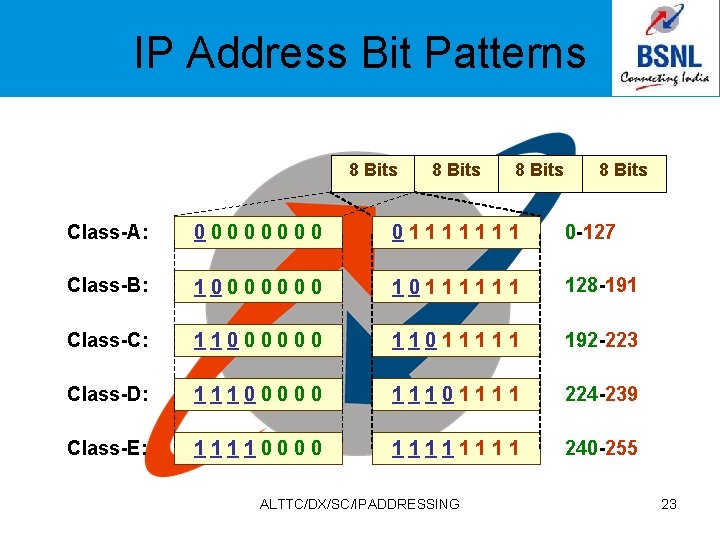
IP Address Bit Patterns 8 Bits Class-A: 0000 01111111 0 -127 Class-B: 10000000 10111111 128 -191 Class-C: 11000000 11011111 192 -223 Class-D: 11100000 11101111 224 -239 Class-E: 11110000 1111 240 -255 ALTTC/DX/SC/IPADDRESSING 23
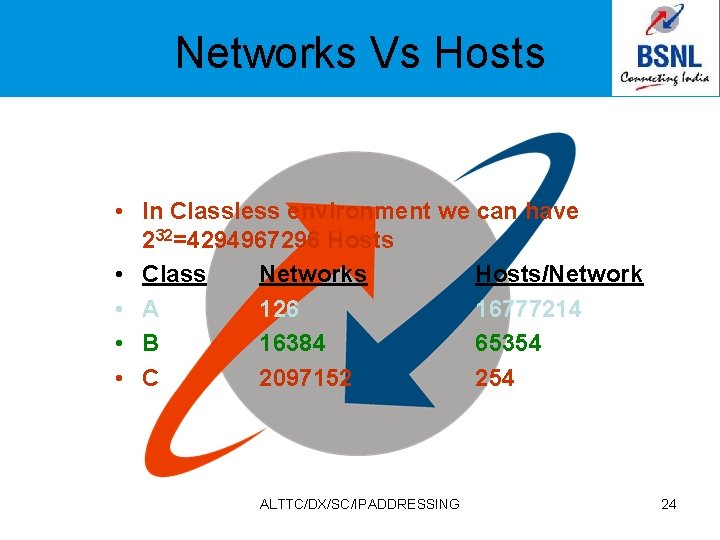
Networks Vs Hosts • In Classless environment we can have 232=4294967296 Hosts • Class Networks Hosts/Network • A 126 16777214 • B 16384 65354 • C 2097152 254 ALTTC/DX/SC/IPADDRESSING 24
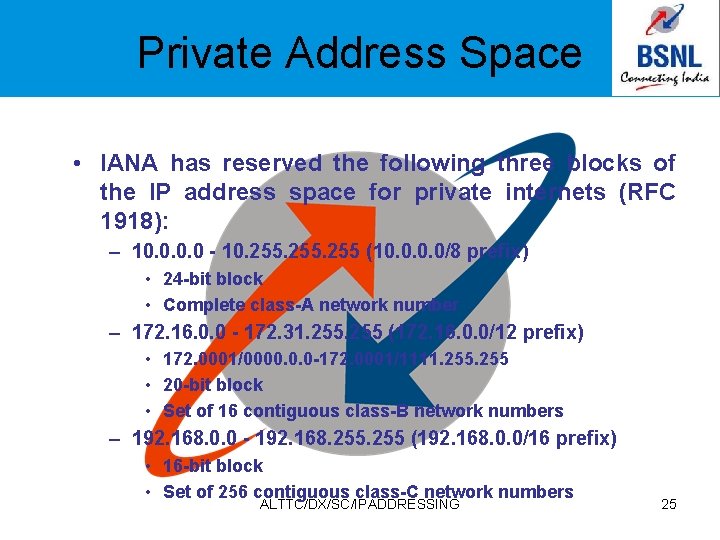
Private Address Space • IANA has reserved the following three blocks of the IP address space for private internets (RFC 1918): – 10. 0 - 10. 255 (10. 0/8 prefix) • 24 -bit block • Complete class-A network number – 172. 16. 0. 0 - 172. 31. 255 (172. 16. 0. 0/12 prefix) • 172. 0001/0000. 0. 0 -172. 0001/1111. 255 • 20 -bit block • Set of 16 contiguous class-B network numbers – 192. 168. 0. 0 - 192. 168. 255 (192. 168. 0. 0/16 prefix) • 16 -bit block • Set of 256 contiguous class-C network numbers ALTTC/DX/SC/IPADDRESSING 25
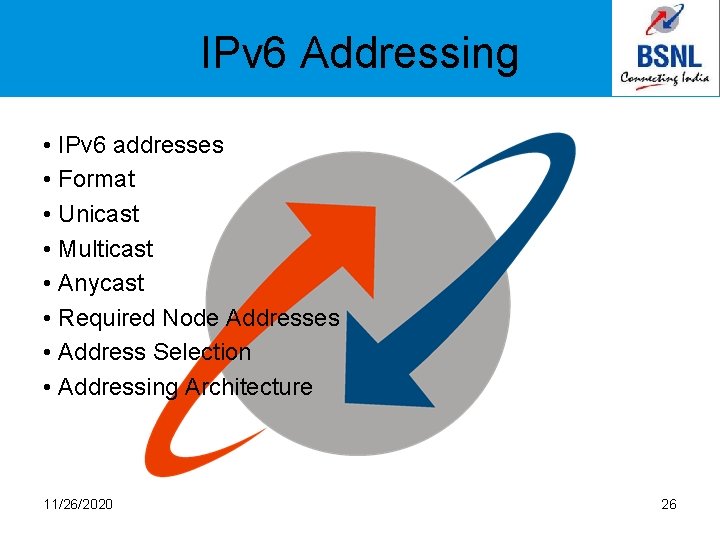
IPv 6 Addressing • IPv 6 addresses • Format • Unicast • Multicast • Anycast • Required Node Addresses • Address Selection • Addressing Architecture 11/26/2020 26
Addresses • IPv 4 = 32 bits • IPv 6 = 128 bits – This is not 4 times the number of addresses – This is 4 times the number of bits – ~3, 4 * 1038 possible addressable nodes – 1030 addresses person on the planet – Well, as with any numbering scheme, we will be using only a portion of the full address space 11/26/2020 27
Address Format • x: x: x – Where x is a 16 bits hexadecimal field • 2001: 0000: 1234: 0000: C 1 C 0: ABCD: 0876 • Case insensitive • 2001: 0000: 1234: 0000: c 1 c 0: abcd: 0876 • Leading zeros in a field are optional: • 2001: 0: 1234: 0: 0: C 1 C 0: ABCD: 876 11/26/2020 28
Address format • Successive fields of 0 are represented as : : , but only once in an address: – 2001: 0: 1234: : C 1 C 0: ABCD: 876 – Not valid: 2001: : 1234: : C 1 C 0: ABCD: 876 • Other examples: – FF 02: 0: 0: 0: 1 => FF 02: : 1 – 0: 0: 1 => : : 1 – 0: 0: 0 => : : 11/26/2020 29
Addresses in URL • In a URL, it is enclosed in brackets – http: //[2001: 1: 4 F 3 A: : 206: AE 14]: 8080/index. html – URL parsers have to be modified – Cumbersome for users • Mostly for diagnostic purposes • Should use Fully Qualified Domain Names (FQDN) 11/26/2020 30
Address Types • Unicast – Unspecified – Loopback – Scoped addresses: • Link-local • Site-local (Deprecated now) • Unique-Local – Aggregatable Global: • Multicast – Broadcast: none in IPv 6 • Anycast 31
Unspecified • Used as a placeholder when no address available – Initial DHCP request – Duplicate Address Detection (DAD) • Like 0. 0 in IPv 4 0: 0: 0 or : : 11/26/2020 32
Loopback • • • Identifies self Localhost Like 127. 0. 0. 1 in IPv 4 0: 0: 1 or : : 1 To find if your IPv 6 stack works: – Ping 6 : : 1 11/26/2020 33
Link-Local • Scoped address (new in IPv 6) • Scope = local link (i. e. VLAN, subnet) – Can only be used between nodes of the same link – Cannot be routed • Automatically configured on each interface – Uses the interface identifier (based on MAC address) • Format: – FE 80: 0: <interface identifier> • Gives every node an IPv 6 address to start communications 11/26/2020 34
Site-Local( now ULA) • Scoped address • Scope = site (a network of links) – Can only be used between nodes of the same site – Cannot be routed outside the site (i. e. the Internet) – Very similar to IPv 4 private addresses • Not configured by default 11/26/2020 35
Unique local address • ULA is an IPv 6 address in the block fc 00: : /7 defined in RFC 4193. • To be used for systems that are not connected to the Internet. • Divided into two /8 address groups – assigned and random – valid /48 prefixes are derived 11/26/2020 36
Aggregatable Global • Generic use. Globally reachable. • Allocated by IANA – To Regional Registries – Then to Tier-1 Providers • Called Top-level Aggregator (TLA) – Then to Intermediate Providers • Called Next-level Aggregator (NLA) – Then to sites – Then to subnets 11/26/2020 37
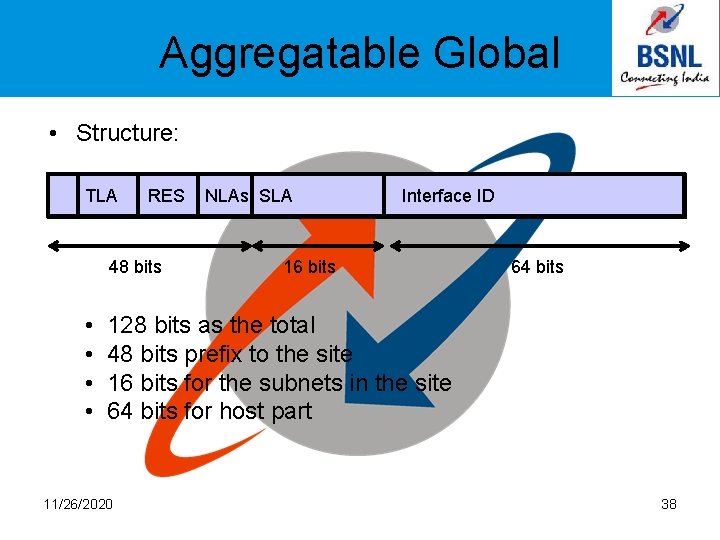
Aggregatable Global • Structure: TLA RES 48 bits • • NLAs SLA Interface ID 16 bits 64 bits 128 bits as the total 48 bits prefix to the site 16 bits for the subnets in the site 64 bits for host part 11/26/2020 38
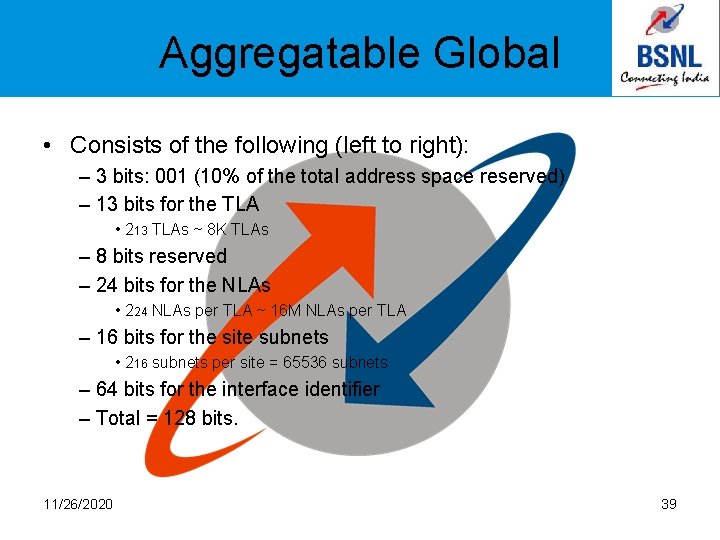
Aggregatable Global • Consists of the following (left to right): – 3 bits: 001 (10% of the total address space reserved) – 13 bits for the TLA • 213 TLAs ~ 8 K TLAs – 8 bits reserved – 24 bits for the NLAs • 224 NLAs per TLA ~ 16 M NLAs per TLA – 16 bits for the site subnets • 216 subnets per site = 65536 subnets – 64 bits for the interface identifier – Total = 128 bits. 11/26/2020 39
Multicast • Multicast = one-to-many • No broadcast in IPv 6. Multicast is used instead, mostly on local links • Scoped addresses: – Node, link, site, organisation, global – No TTL as in IPv 4 • Format: – FF<flags><scope>: : <multicast group> 11/26/2020 40
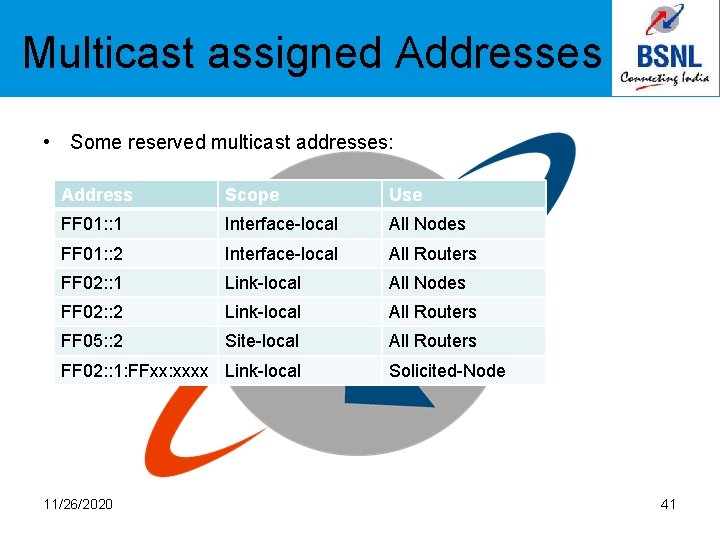
Multicast assigned Addresses • Some reserved multicast addresses: Address Scope Use FF 01: : 1 Interface-local All Nodes FF 01: : 2 Interface-local All Routers FF 02: : 1 Link-local All Nodes FF 02: : 2 Link-local All Routers FF 05: : 2 Site-local All Routers FF 02: : 1: FFxx: xxxx Link-local 11/26/2020 Solicited-Node 41
Anycast • One-to-nearest: great for discovery functions • Anycast addresses are indistinguishable from unicast addresses – Allocated from the unicast addresses space – Some anycast addresses are reserved for specific uses • Few uses: – Router-subnet – Mobile. IPv 6 home-agent discovery – discussions for DNS discovery 11/26/2020 42
Required Node Addresses • Any IPv 6 node should recognize the following addresses as identifying itself: – Link-local address for each interface – Assigned (manually or automatically) unicast/anycast addresses – Loopback address – All-nodes multicast address – Solicited-node multicast address for each of its assigned unicast and anycast address – Multicast address of all other groups to which the host belongs 11/26/2020 43
Thanks 11/26/2020 44