
IPM Strategies and Techniques Learn the important strategies


- Slides: 33
IPM Strategies and Techniques Learn the important strategies used to implement an effective IPM program. There is much more to IPM than oils and soaps! Rafael Andy Vega and Norman C. Leppla, Ph. D. UF, IFAS, IPM Florida
About me
Outline of objectives What is IPM and why should we incorporate these strategies? How do we identify problems before they get out of hand? Specific example of IPM in practice. Resources available for you to use.
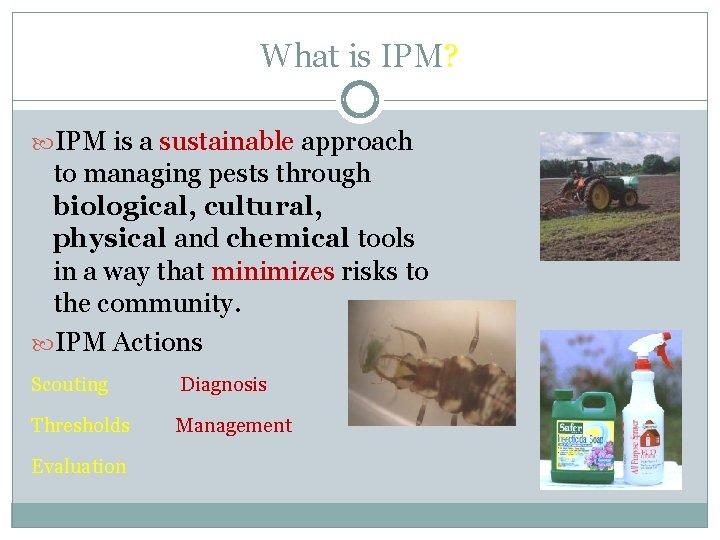
What is IPM? IPM is a sustainable approach to managing pests through biological, cultural, physical and chemical tools in a way that minimizes risks to the community. IPM Actions Scouting Diagnosis Thresholds Management Evaluation
So why do we need IPM? To control pests Enhance sustainable practices Reduce use of dangerous chemicals Increase efficiency of crop production Minimize environmental impacts
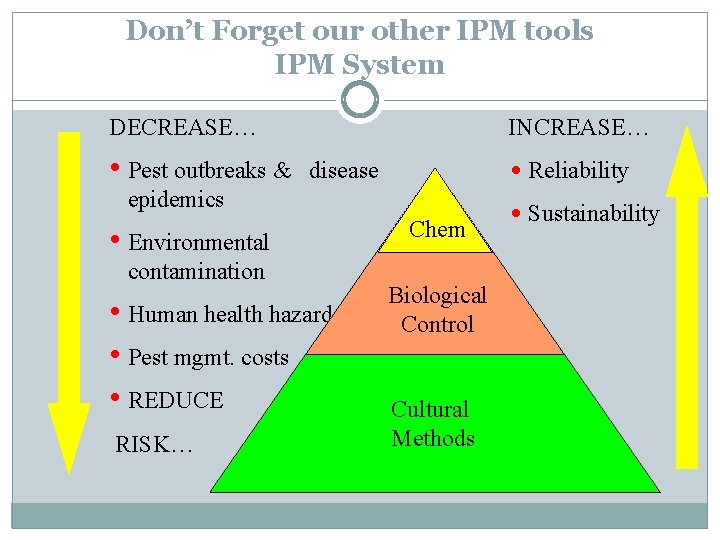
Don’t Forget our other IPM tools IPM System DECREASE… INCREASE… • Pest outbreaks & disease • Reliability epidemics • Environmental contamination • Human health hazards • Pest mgmt. costs • REDUCE RISK… Chem Biological Control Cultural Methods • Sustainability
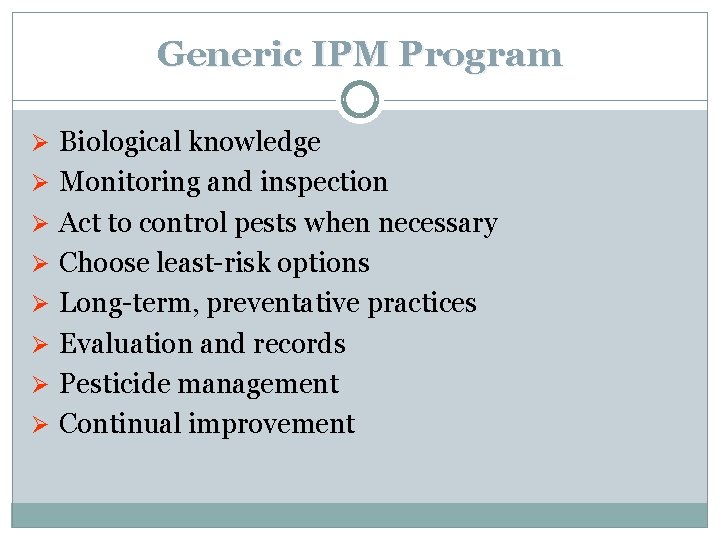
Generic IPM Program Ø Biological knowledge Ø Monitoring and inspection Ø Act to control pests when necessary Ø Choose least-risk options Ø Long-term, preventative practices Ø Evaluation and records Ø Pesticide management Ø Continual improvement
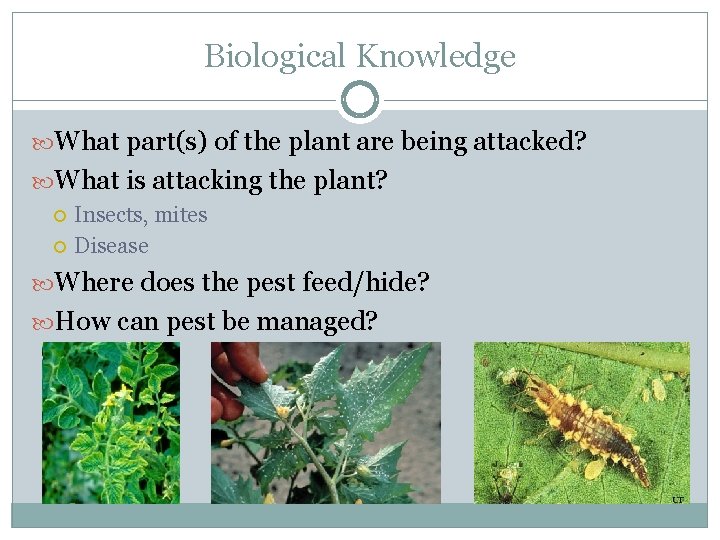
Biological Knowledge What part(s) of the plant are being attacked? What is attacking the plant? Insects, mites Disease Where does the pest feed/hide? How can pest be managed?
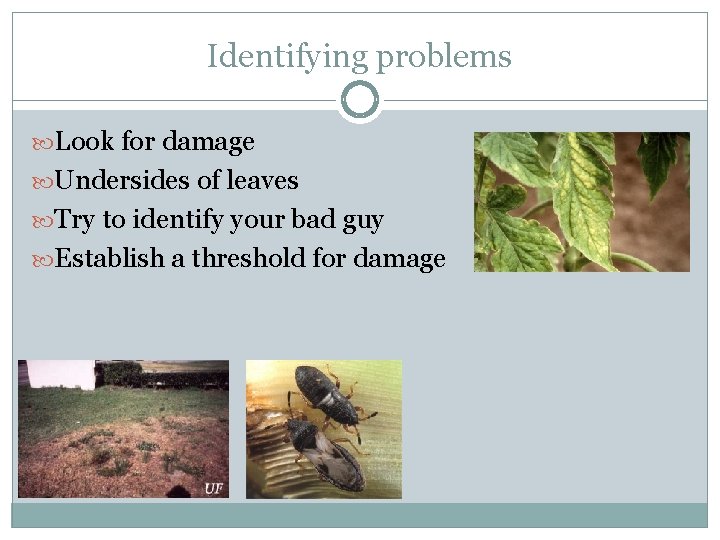
Identifying problems Look for damage Undersides of leaves Try to identify your bad guy Establish a threshold for damage
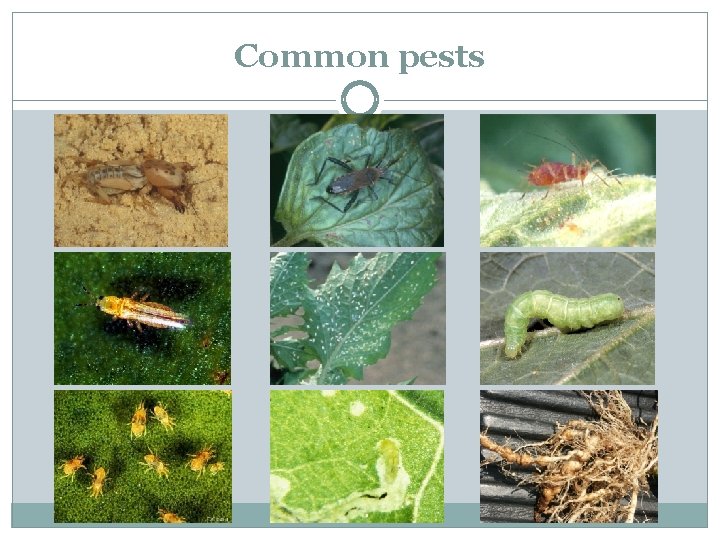
Common pests
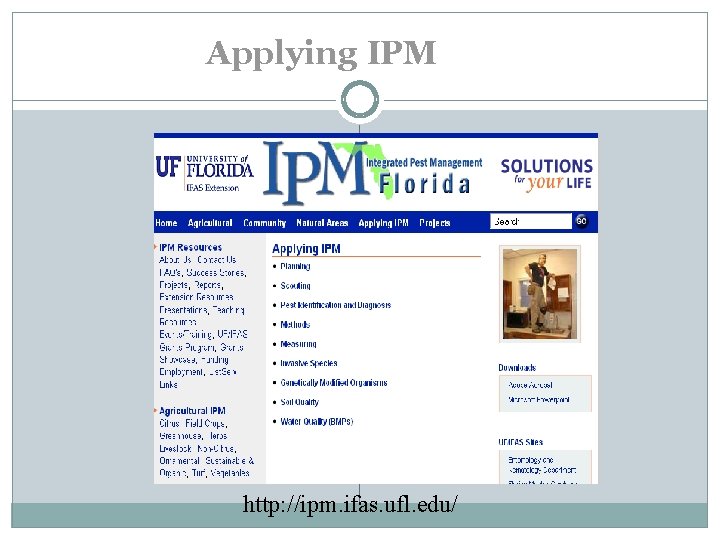
Applying IPM http: //ipm. ifas. ufl. edu/
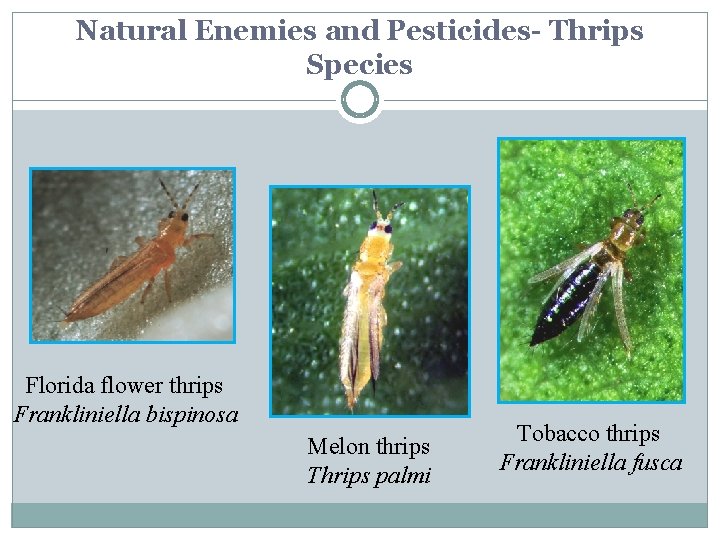
Natural Enemies and Pesticides- Thrips Species Florida flower thrips Frankliniella bispinosa Melon thrips Thrips palmi Tobacco thrips Frankliniella fusca
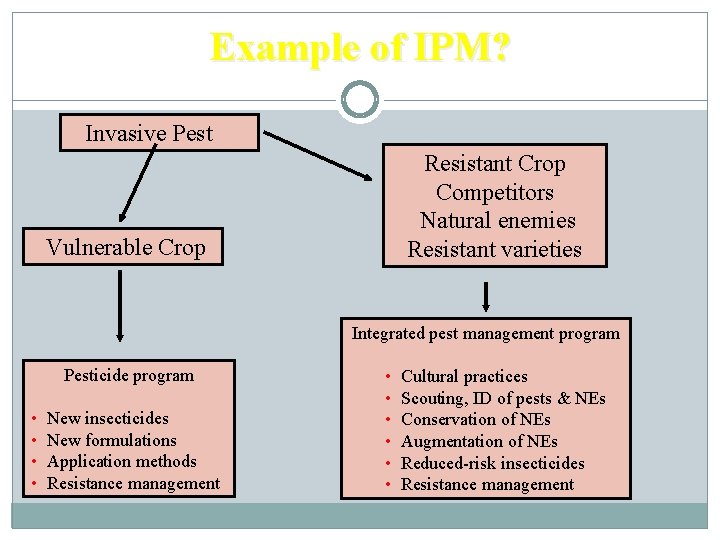
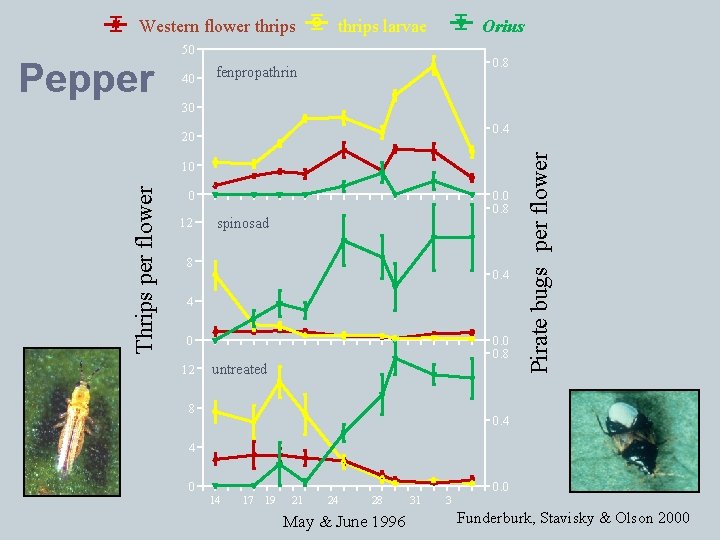
Example of IPM? Invasive Pest Vulnerable Crop Resistant Crop Competitors Natural enemies Resistant varieties Integrated pest management program Pesticide program • New insecticides • New formulations • Application methods • Resistance management • Cultural practices • Scouting, ID of pests & NEs • Conservation of NEs • Augmentation of NEs • Reduced-risk insecticides • Resistance management
Western flower thrips 50 40 fenpropathrin Orius 0. 8 30 0. 4 20 Thrips per flower 10 0 12 0. 0 0. 8 spinosad 8 0. 4 4 0 12 0. 0 0. 8 untreated 8 Pirate bugs per flower Pepper thrips larvae 0. 4 4 0 0. 0 14 17 19 21 24 28 31 3 May & June 1996 Funderburk, Stavisky & Olson 2000
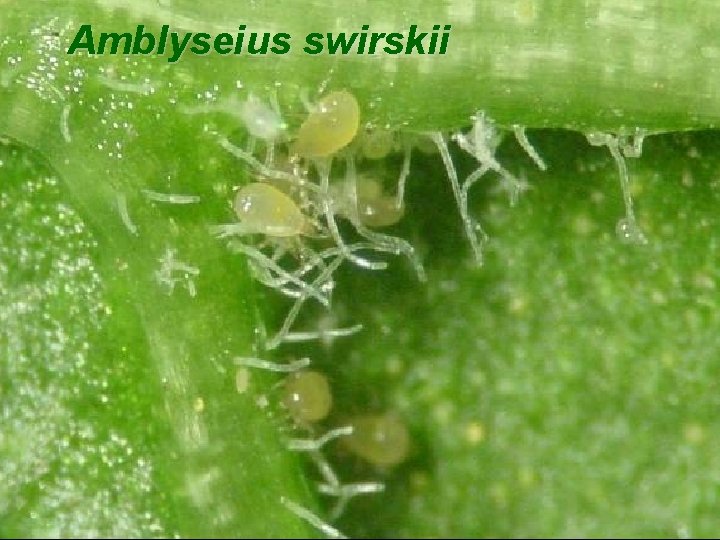
Amblyseius swirskii
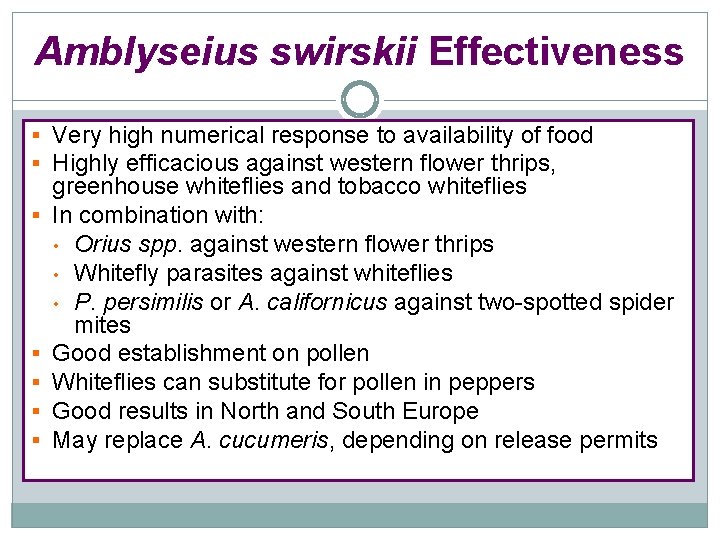
Amblyseius swirskii Effectiveness § Very high numerical response to availability of food § Highly efficacious against western flower thrips, § § § greenhouse whiteflies and tobacco whiteflies In combination with: • Orius spp. against western flower thrips • Whitefly parasites against whiteflies • P. persimilis or A. californicus against two-spotted spider mites Good establishment on pollen Whiteflies can substitute for pollen in peppers Good results in North and South Europe May replace A. cucumeris, depending on release permits
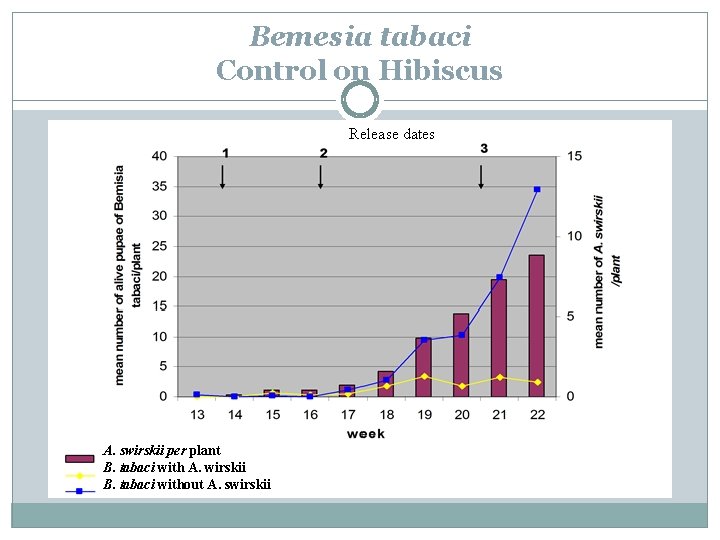
Bemesia tabaci Control on Hibiscus Release dates A. swirskii per plant B. tabaci with A. wirskii B. tabaci without A. swirskii
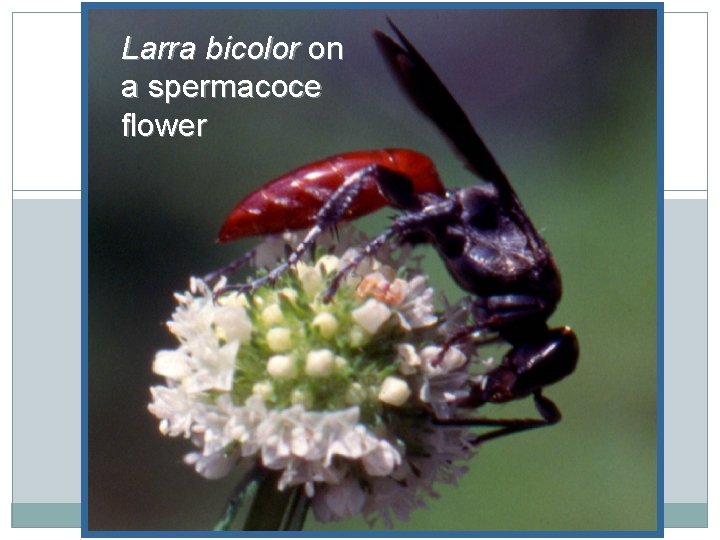
Larra bicolor on a spermacoce flower
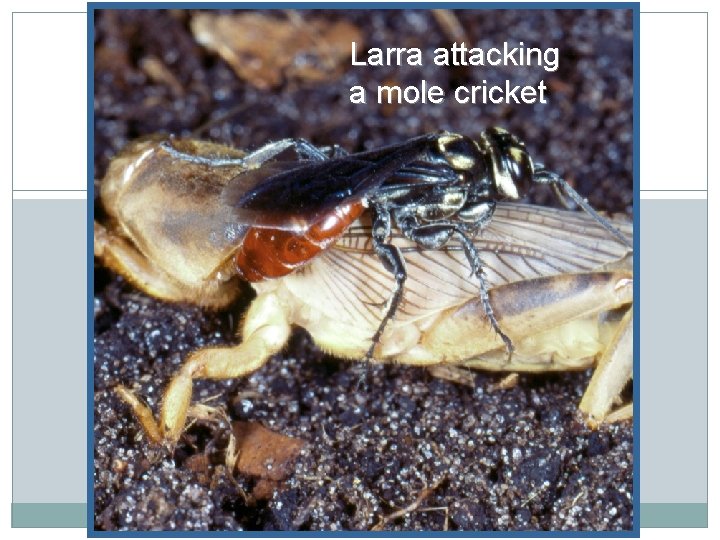
Larra attacking a mole cricket
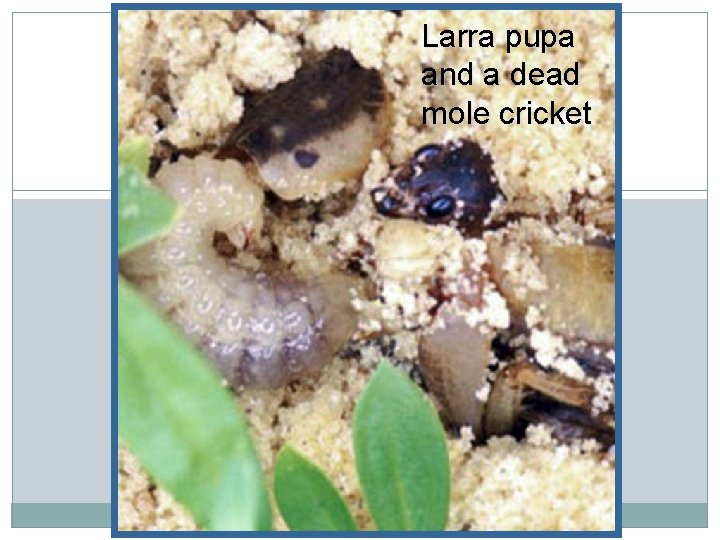
Larra pupa and a dead mole cricket
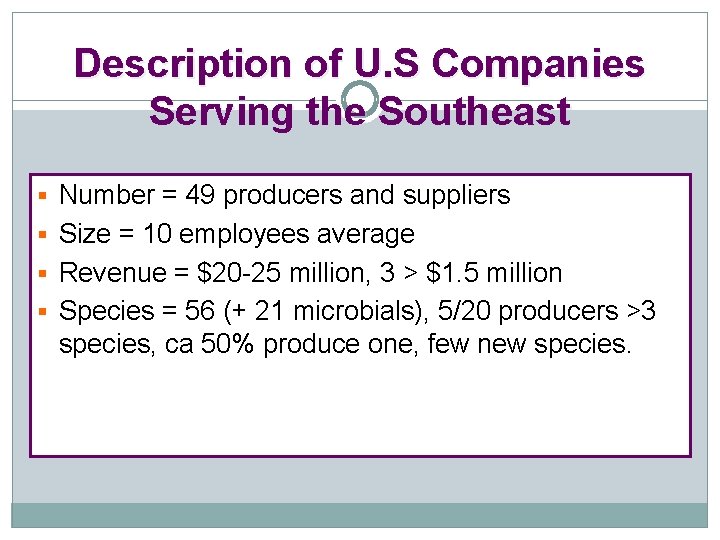
Description of U. S Companies Serving the Southeast § Number = 49 producers and suppliers § Size = 10 employees average § Revenue = $20 -25 million, 3 > $1. 5 million § Species = 56 (+ 21 microbials), 5/20 producers >3 species, ca 50% produce one, few new species.
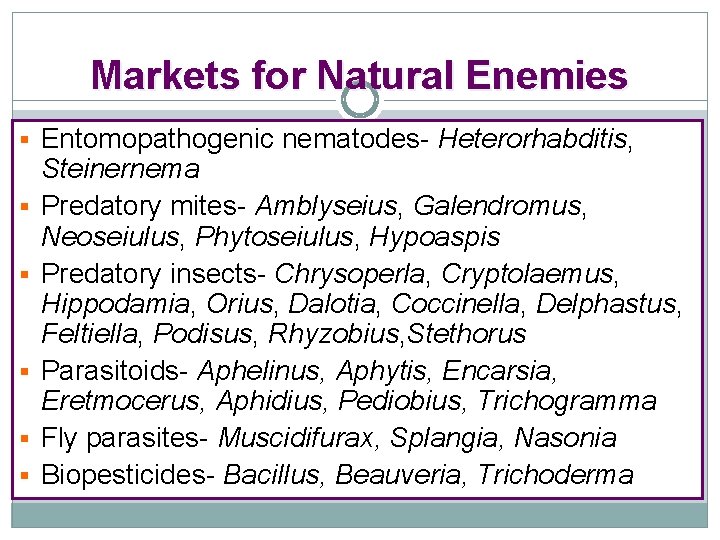
Markets for Natural Enemies § Entomopathogenic nematodes- Heterorhabditis, § § § Steinernema Predatory mites- Amblyseius, Galendromus, Neoseiulus, Phytoseiulus, Hypoaspis Predatory insects- Chrysoperla, Cryptolaemus, Hippodamia, Orius, Dalotia, Coccinella, Delphastus, Feltiella, Podisus, Rhyzobius, Stethorus Parasitoids- Aphelinus, Aphytis, Encarsia, Eretmocerus, Aphidius, Pediobius, Trichogramma Fly parasites- Muscidifurax, Splangia, Nasonia Biopesticides- Bacillus, Beauveria, Trichoderma
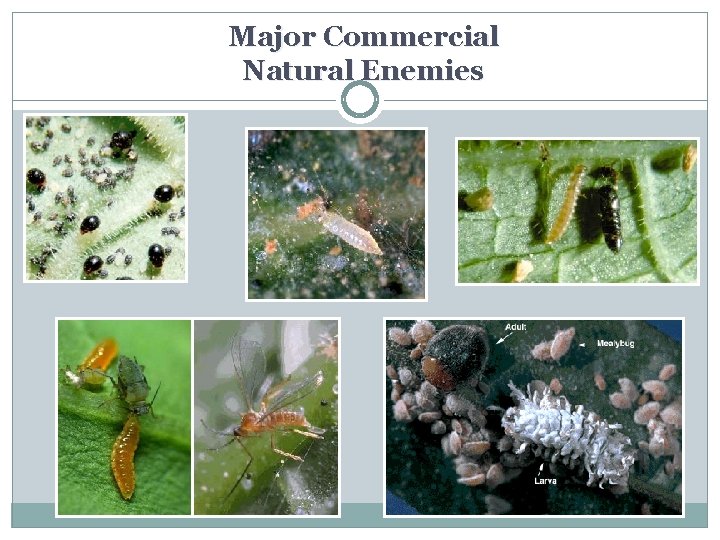
Major Commercial Natural Enemies
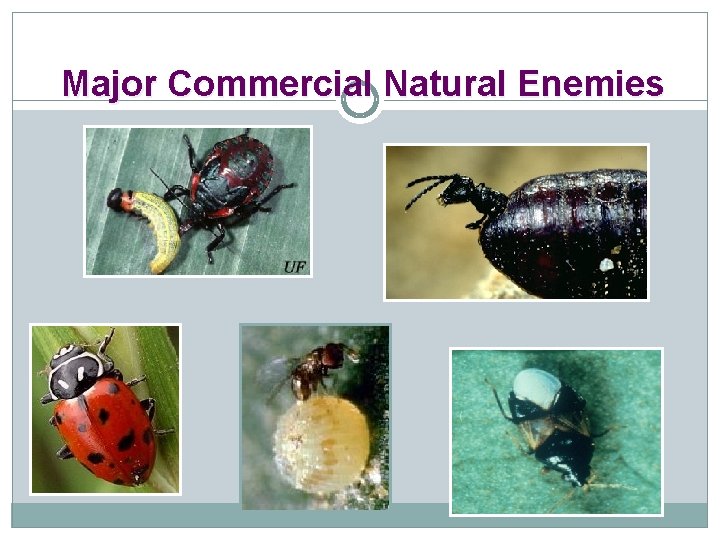
Major Commercial Natural Enemies
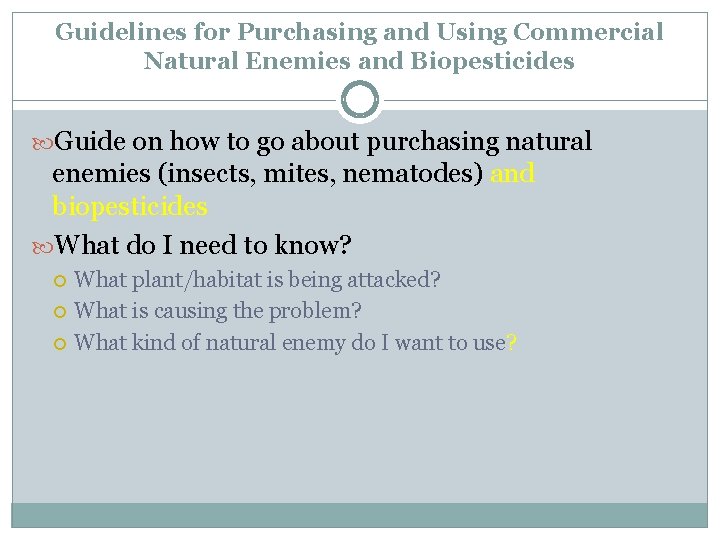
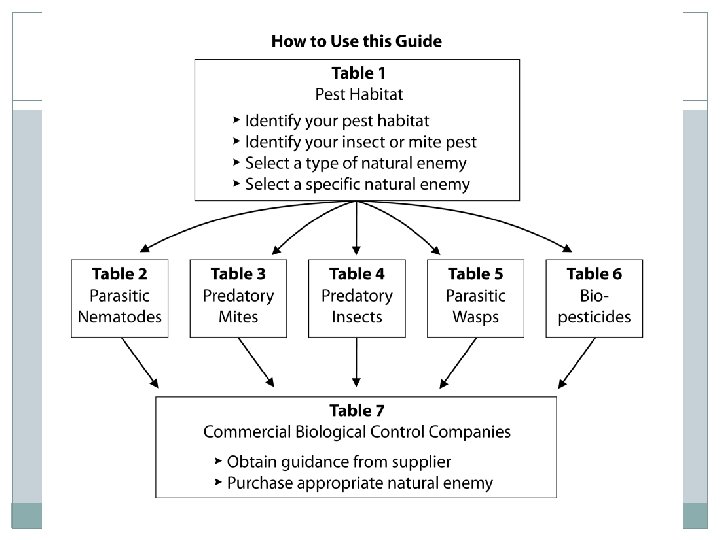
Guidelines for Purchasing and Using Commercial Natural Enemies and Biopesticides Guide on how to go about purchasing natural enemies (insects, mites, nematodes) and biopesticides What do I need to know? What plant/habitat is being attacked? What is causing the problem? What kind of natural enemy do I want to use?
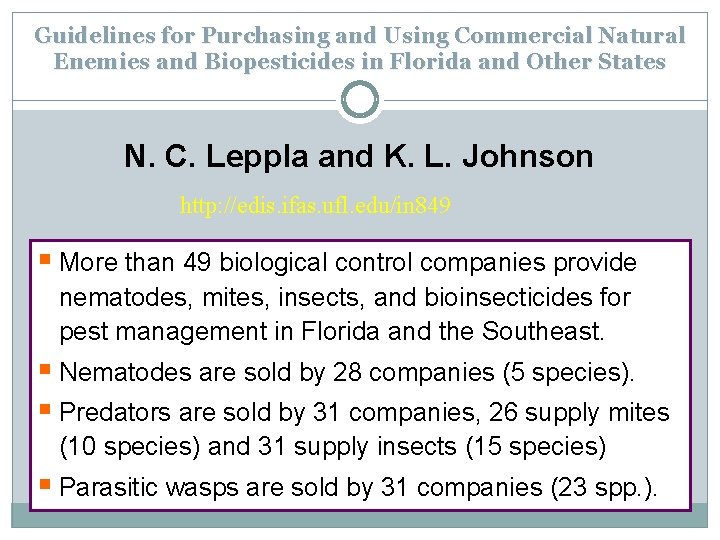
Guidelines for Purchasing and Using Commercial Natural Enemies and Biopesticides in Florida and Other States N. C. Leppla and K. L. Johnson http: //edis. ifas. ufl. edu/in 849 § More than 49 biological control companies provide nematodes, mites, insects, and bioinsecticides for pest management in Florida and the Southeast. § Nematodes are sold by 28 companies (5 species). § Predators are sold by 31 companies, 26 supply mites (10 species) and 31 supply insects (15 species) § Parasitic wasps are sold by 31 companies (23 spp. ).
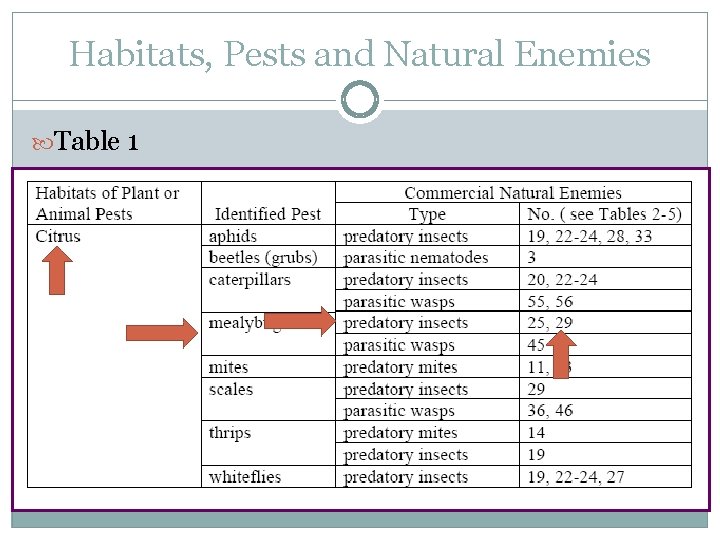
Habitats, Pests and Natural Enemies Table 1
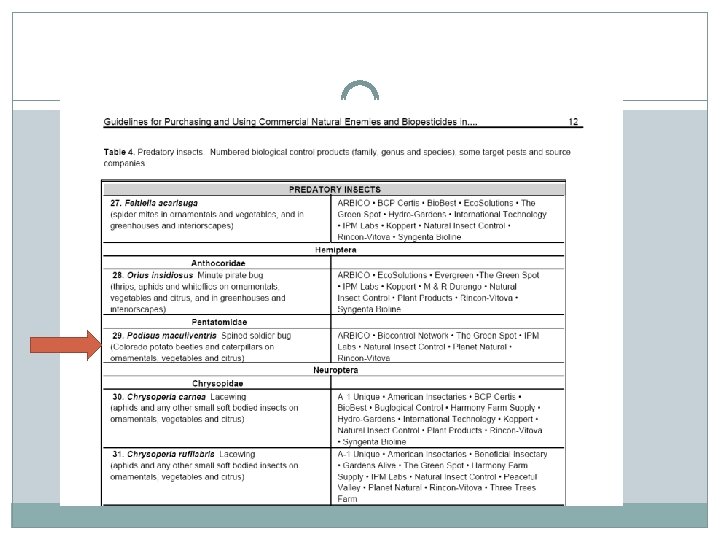
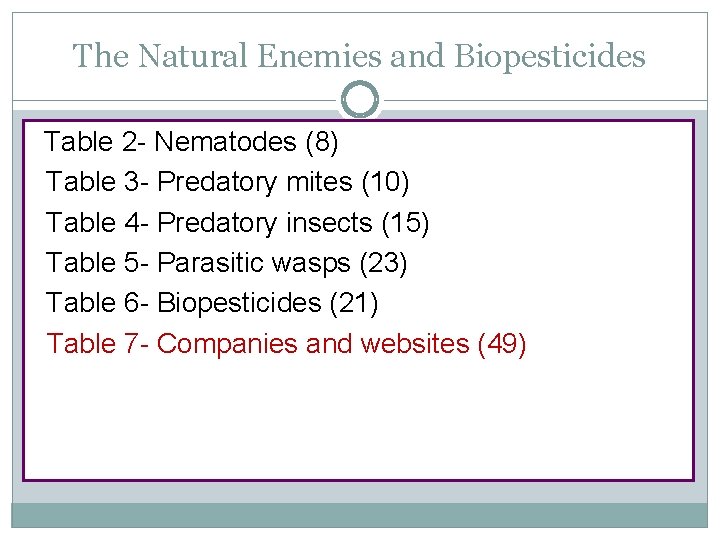
The Natural Enemies and Biopesticides Table 2 - Nematodes (8) Table 3 - Predatory mites (10) Table 4 - Predatory insects (15) Table 5 - Parasitic wasps (23) Table 6 - Biopesticides (21) Table 7 - Companies and websites (49)
Customer Service § Many companies provide detailed information on how to use their products. § The best companies deliver excellent customer service for site-specific biocontrol. § The marketplace ultimately determines the usefulness of commercial natural enemies.
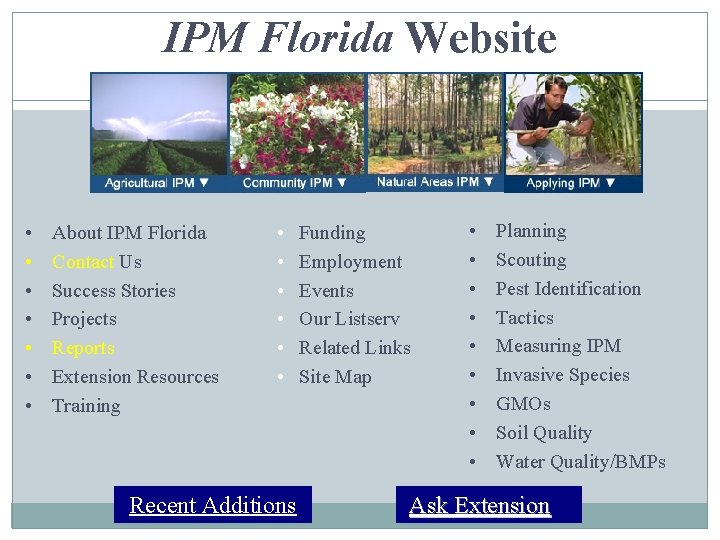
IPM Florida Website • • About IPM Florida Contact Us Success Stories Projects Reports Extension Resources Training • Funding • Employment • Events • Our Listserv • Related Links • Site Map Recent Additions • • • Planning Scouting Pest Identification Tactics Measuring IPM Invasive Species GMOs Soil Quality Water Quality/BMPs Ask Extension
IPM Florida provides statewide, interdisciplinary and inter-unit coordination and assistance for UF/IFAS integrated pest management research Extension and education faculty