
IPC Part 3 Base Material for Printed Circuit
IPC Part: 3 Base Material for Printed Circuit Boards A PWB is born and develops into an unruly teenager.
Product spec Component data Electronic scheme Routing Net list BOM IPC-2141 A IPC-2251 IPC-2152 IPC-7093 IPC-7094 J-STD-609 A IPC-1752 A IPC-2610 Gerber files Drill files Bare Board Spec Footprints Component placement IPC-2221 B IPC-2222 A IPC-7351 B IPC-2581 IPC-7095 C IPC-7525 B IPC-7527 Program for: -Laser Plotter -Drilling -Routing -AOI -Electric test To Bare Board Production
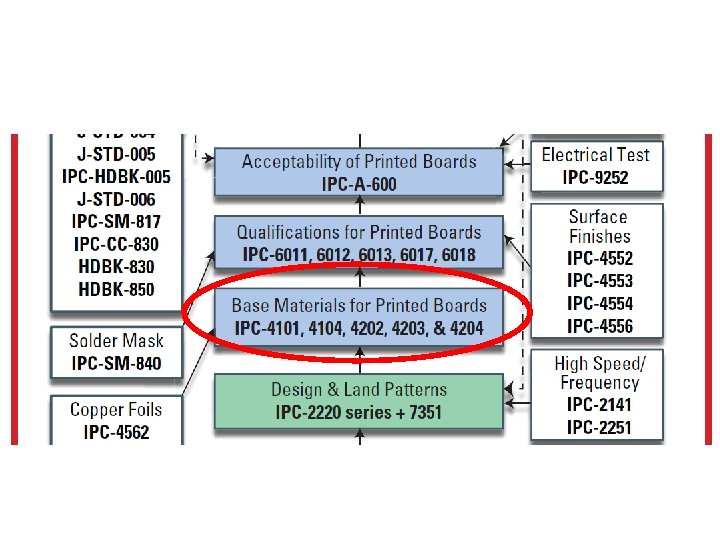
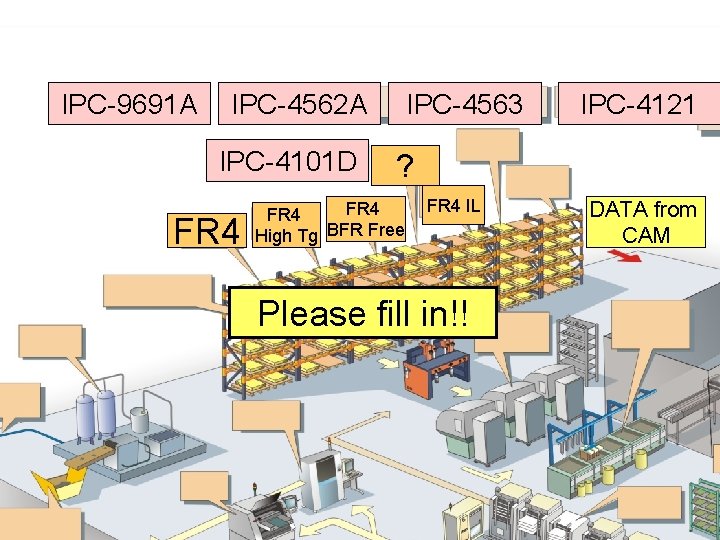
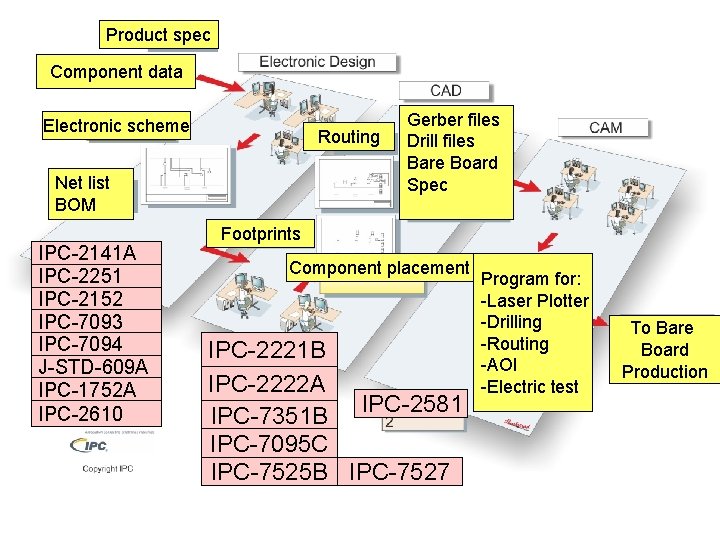
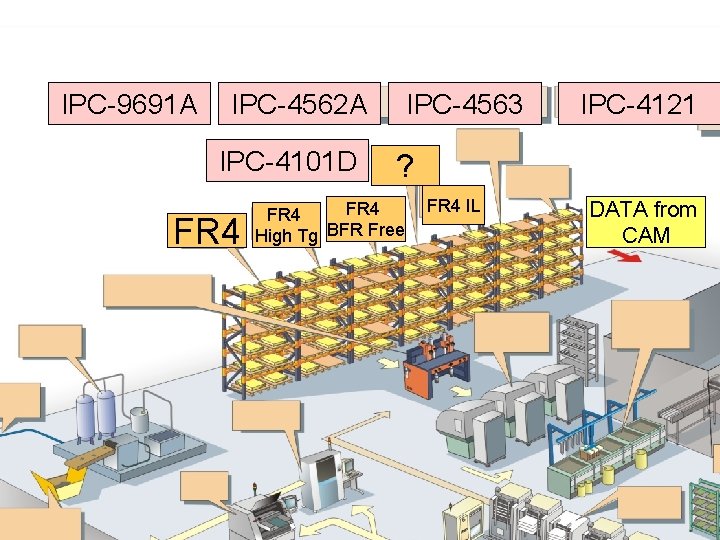
IPC-9691 A IPC-4562 A IPC-4101 D FR 4 IPC-4563 IPC-4121 ? FR 4 High Tg BFR Free FR 4 IL Please fill in!! DATA from CAM
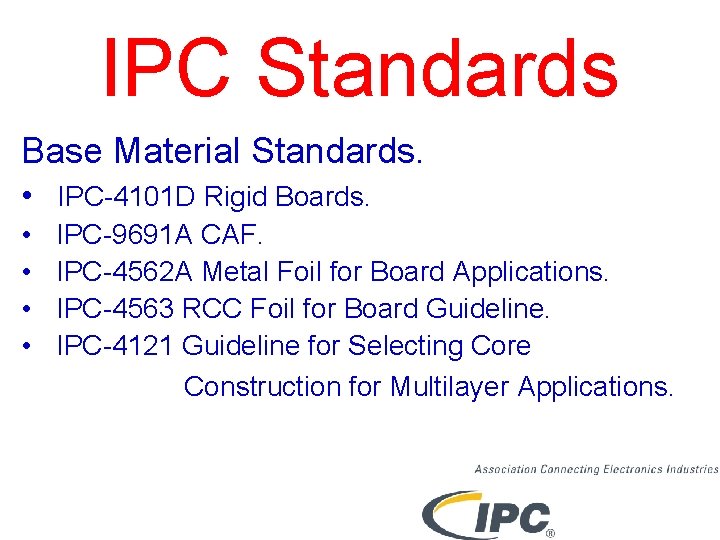
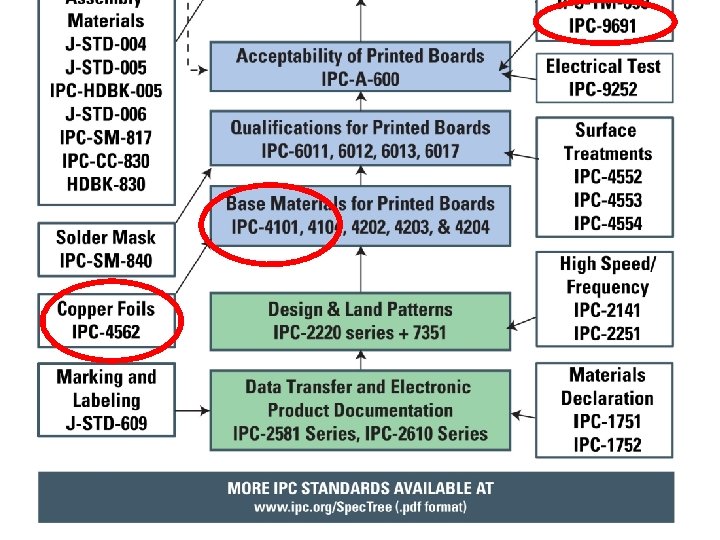
IPC Standards Base Material Standards. • IPC-4101 D Rigid Boards. • • IPC-9691 A CAF. IPC-4562 A Metal Foil for Board Applications. IPC-4563 RCC Foil for Board Guideline. IPC-4121 Guideline for Selecting Core Construction for Multilayer Applications.
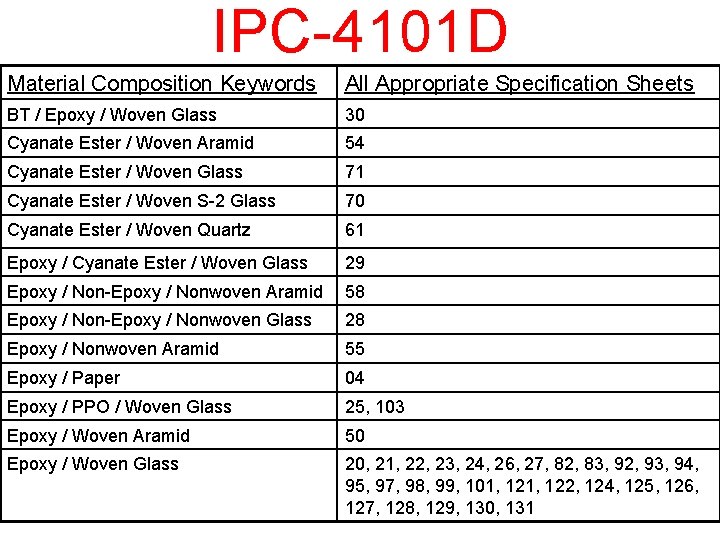
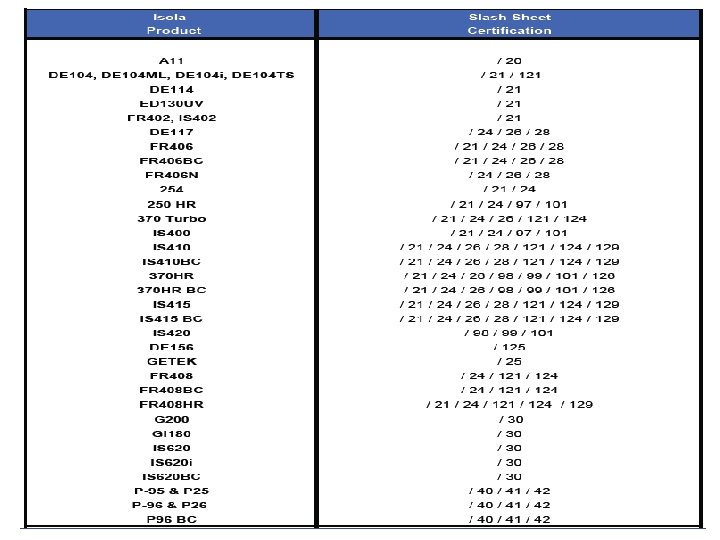
IPC-4101 D Material Composition Keywords All Appropriate Specification Sheets BT / Epoxy / Woven Glass 30 Cyanate Ester / Woven Aramid 54 Cyanate Ester / Woven Glass 71 Cyanate Ester / Woven S-2 Glass 70 Cyanate Ester / Woven Quartz 61 Epoxy / Cyanate Ester / Woven Glass 29 Epoxy / Non-Epoxy / Nonwoven Aramid 58 Epoxy / Non-Epoxy / Nonwoven Glass 28 Epoxy / Nonwoven Aramid 55 Epoxy / Paper 04 Epoxy / PPO / Woven Glass 25, 103 Epoxy / Woven Aramid 50 Epoxy / Woven Glass 20, 21, 22, 23, 24, 26, 27, 82, 83, 92, 93, 94, 95, 97, 98, 99, 101, 122, 124, 125, 126, 127, 128, 129, 130, 131

IPC-4101 D Material Composition Keywords All Appropriate Specification Sheets Epoxy / Woven Glass / Nonwoven Glass 12, 16, 81 Epoxy / Woven Glass / Paper 10, 15, 80 Phenolic / Paper 00, 01, 02, 03, 05 Polyester / Glass 13 Polyester / Woven Glass / Nonwoven Glass 11 Polyimide / Epoxy / Woven Glass 42 Polyimide / Nonwoven Aramid 53 Polyimide / Woven Glass 40, 41 Polyimide / Woven Quartz 60 PPE / Woven Glass 90, 91, 96, 102
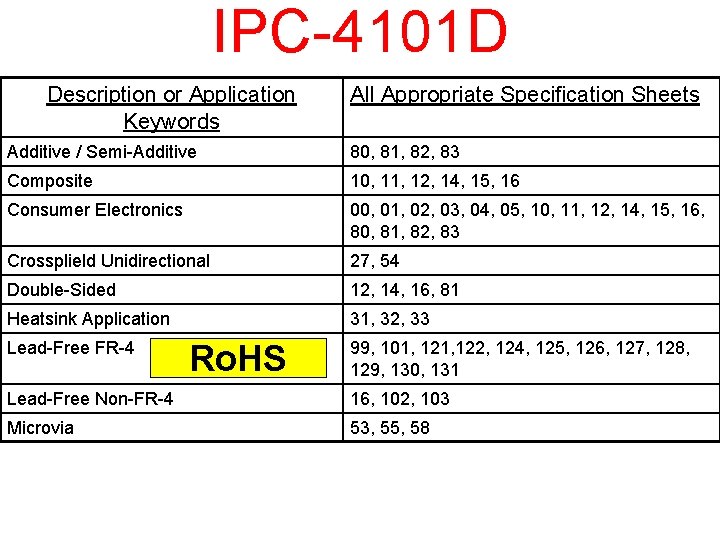
IPC-4101 D Description or Application Keywords All Appropriate Specification Sheets Additive / Semi-Additive 80, 81, 82, 83 Composite 10, 11, 12, 14, 15, 16 Consumer Electronics 00, 01, 02, 03, 04, 05, 10, 11, 12, 14, 15, 16, 80, 81, 82, 83 Crossplield Unidirectional 27, 54 Double-Sided 12, 14, 16, 81 Heatsink Application 31, 32, 33 Lead-Free FR-4 99, 101, 122, 124, 125, 126, 127, 128, 129, 130, 131 Ro. HS Lead-Free Non-FR-4 16, 102, 103 Microvia 53, 55, 58
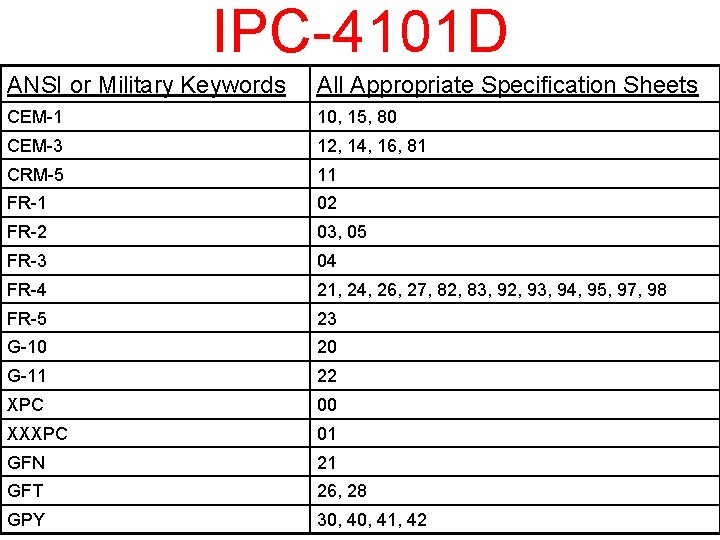
IPC-4101 D ANSI or Military Keywords All Appropriate Specification Sheets CEM-1 10, 15, 80 CEM-3 12, 14, 16, 81 CRM-5 11 FR-1 02 FR-2 03, 05 FR-3 04 FR-4 21, 24, 26, 27, 82, 83, 92, 93, 94, 95, 97, 98 FR-5 23 G-10 20 G-11 22 XPC 00 XXXPC 01 GFN 21 GFT 26, 28 GPY 30, 41, 42

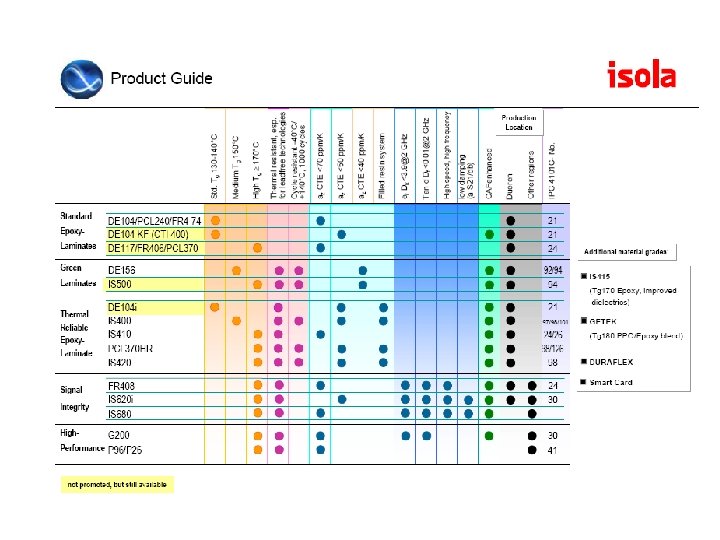
IPC-4101 D Material Property Keywords All Appropriate Specification Sheets CAF Resistance 29, 30, 61, 70, 71, 102, 126, 129, 130, 131 High Td (Decomposition Temp) 99, 124, 125, 126, 128, 129, 130, 131 Ro. HS High Reliability 40, 41, 42 Hot Flex Strength 22, 23 Low Dk / Df 13, 25, 50, 53, 54, 55, 58, 61, 70, 71, 90, 91, 96, 102, 103 Low Halogen Content 05, 14, 15, 58, 92, 93, 94, 95, 96, 122, 125, 127, 128, 130, 131 Ro. HS Low X / Y CTE Low Z-axis CTE 50, 53, 54, 55, 58, 60, 61, 70 Ro. HS 99, 101, 102, 121, 122, 124, 125, 126, 127, 128 129, 130, 131 Non-Flame Retardant 20, 22 Thermally Conductive 31, 32, 33
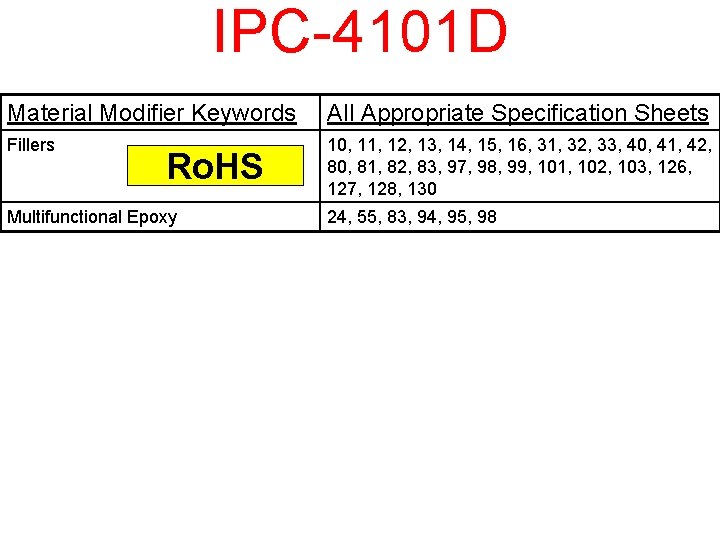
IPC-4101 D Material Modifier Keywords All Appropriate Specification Sheets Fillers 10, 11, 12, 13, 14, 15, 16, 31, 32, 33, 40, 41, 42, 80, 81, 82, 83, 97, 98, 99, 101, 102, 103, 126, 127, 128, 130 Ro. HS Multifunctional Epoxy 24, 55, 83, 94, 95, 98
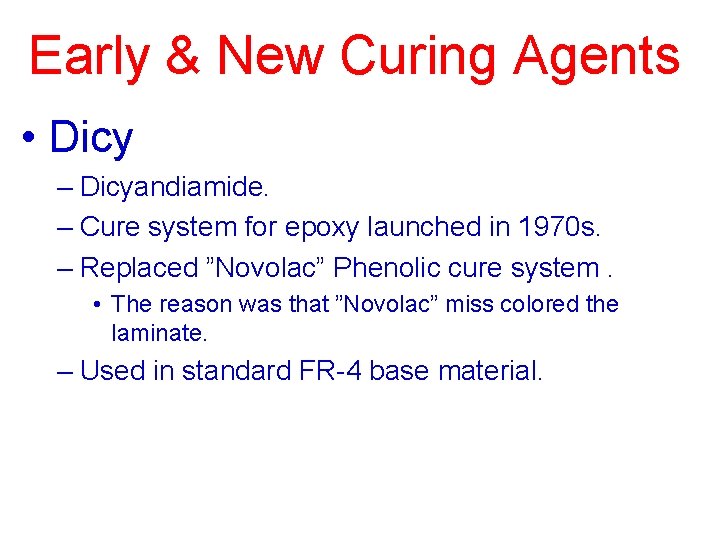
Early & New Curing Agents • Dicy – Dicyandiamide. – Cure system for epoxy launched in 1970 s. – Replaced ”Novolac” Phenolic cure system. • The reason was that ”Novolac” miss colored the laminate. – Used in standard FR-4 base material.
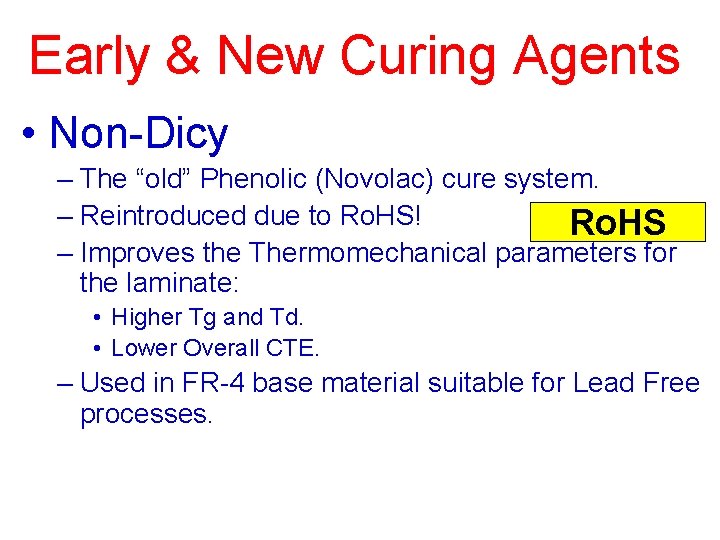
Early & New Curing Agents • Non-Dicy – The “old” Phenolic (Novolac) cure system. – Reintroduced due to Ro. HS! Ro. HS – Improves the Thermomechanical parameters for the laminate: • Higher Tg and Td. • Lower Overall CTE. – Used in FR-4 base material suitable for Lead Free processes.
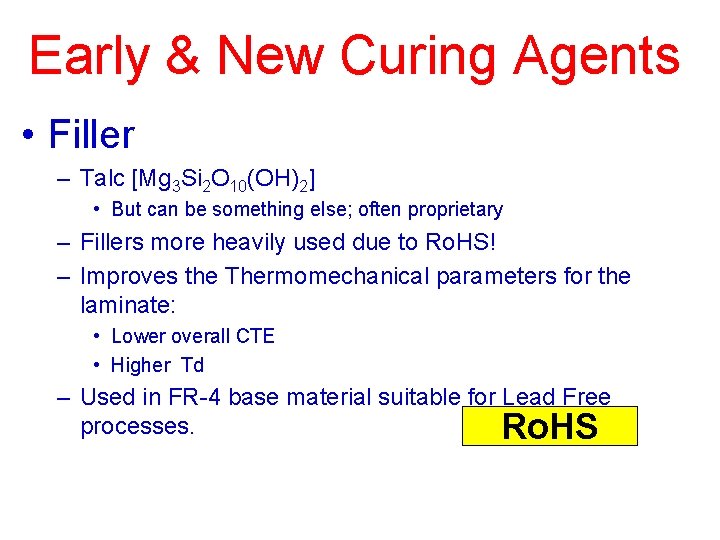
Early & New Curing Agents • Filler – Talc [Mg 3 Si 2 O 10(OH)2] • But can be something else; often proprietary – Fillers more heavily used due to Ro. HS! – Improves the Thermomechanical parameters for the laminate: • Lower overall CTE • Higher Td – Used in FR-4 base material suitable for Lead Free processes. Ro. HS
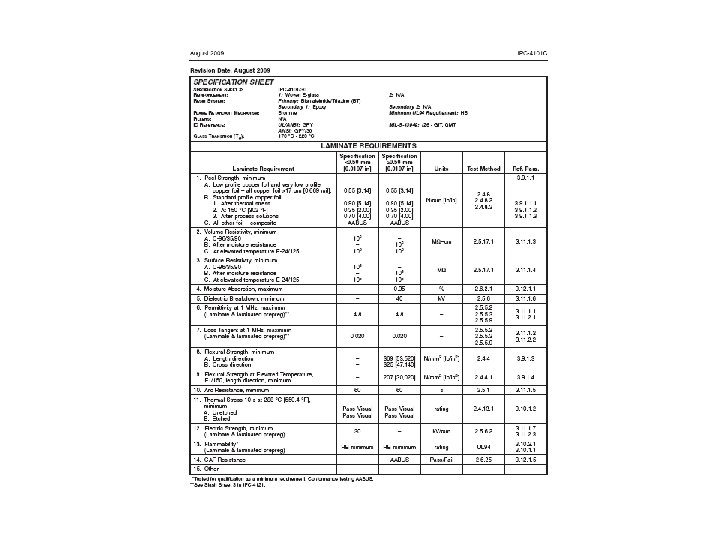
IPC-4101 D Specification for Base Material • Cupper foil thickness. • Thickness tolerances. • Overview Tables. • Specification Sheets for Base Laminates (66 separate base Materials)
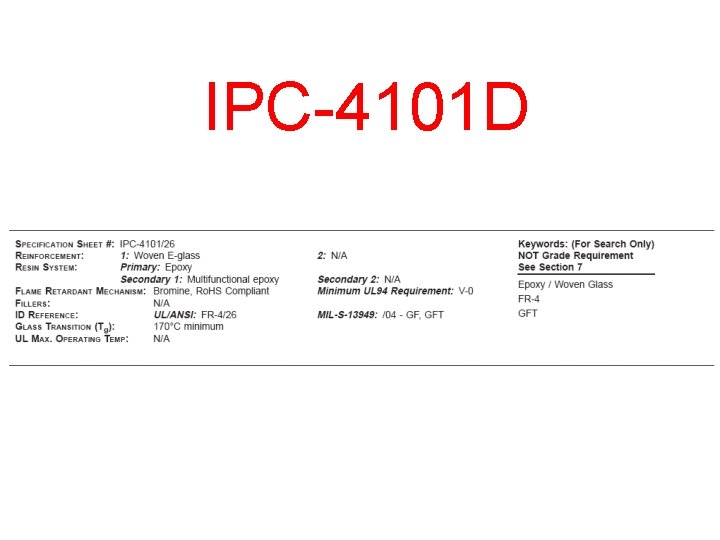
IPC-4101 D
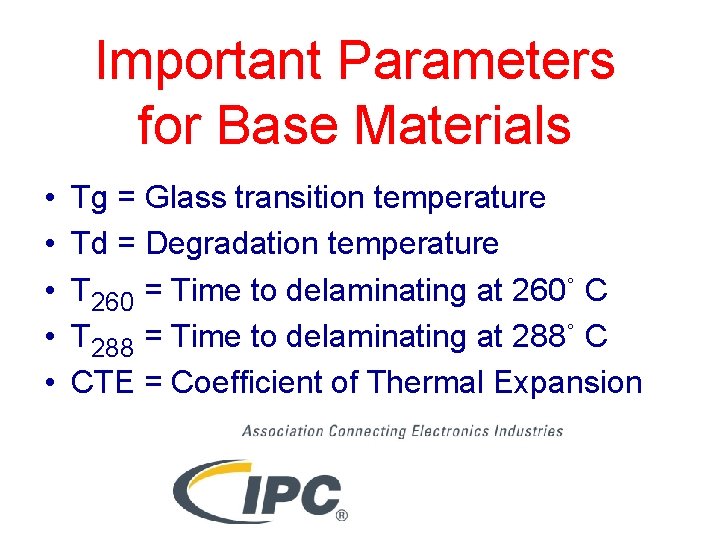
Important Parameters for Base Materials • • • Tg = Glass transition temperature Td = Degradation temperature T 260 = Time to delaminating at 260˚ C T 288 = Time to delaminating at 288˚ C CTE = Coefficient of Thermal Expansion
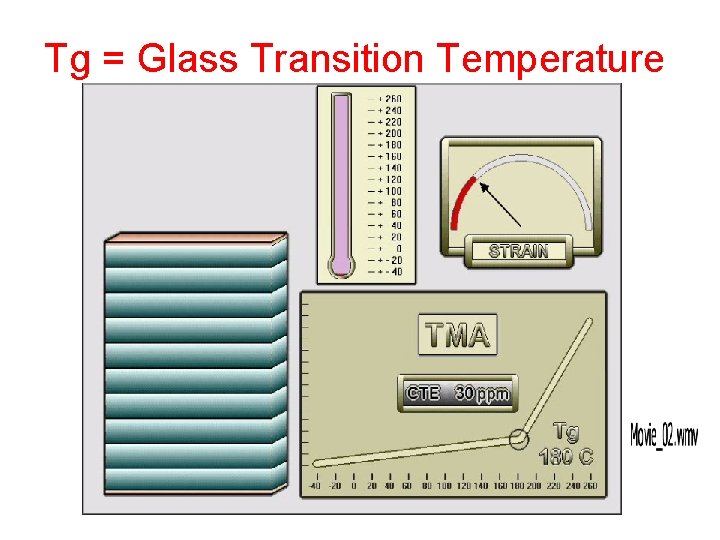
Tg = Glass Transition Temperature
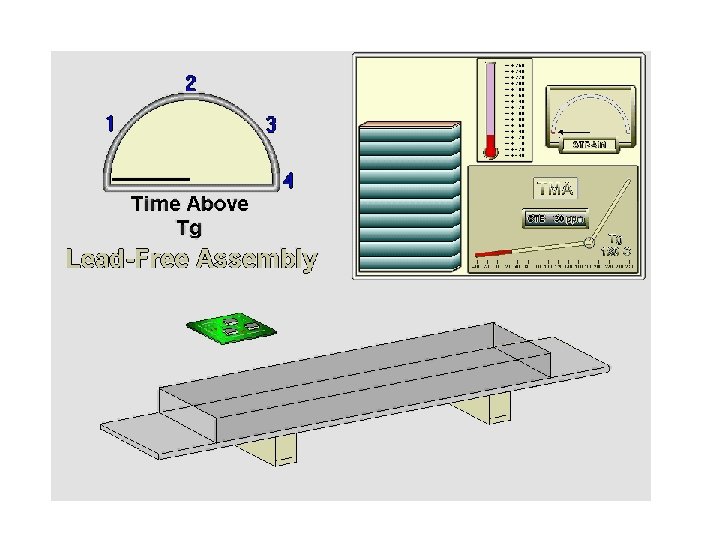
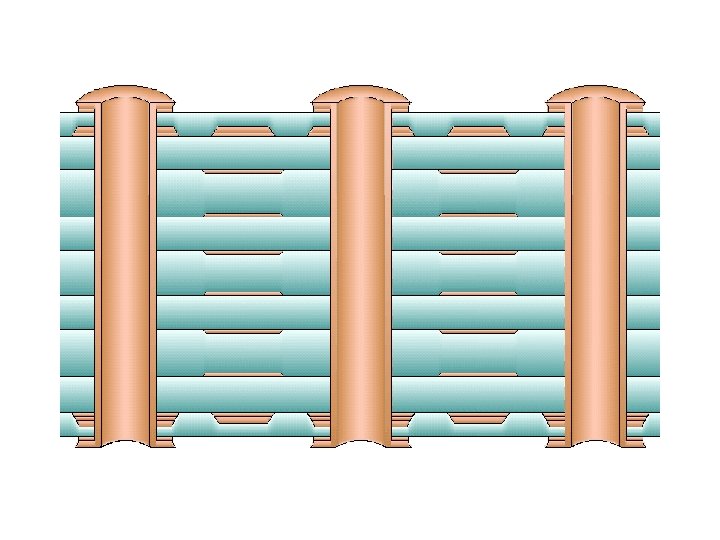
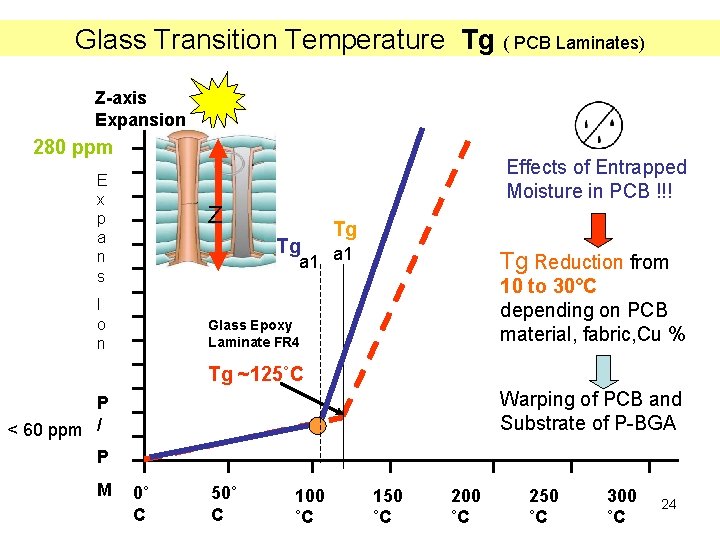
Glass Transition Temperature Tg ( PCB Laminates) Z-axis Expansion 280 ppm E x p a n s Effects of Entrapped Moisture in PCB !!! Z Tg Tg a 1 I o n Tg Reduction from 10 to 30°C depending on PCB material, fabric, Cu % Glass Epoxy Laminate FR 4 Tg ~125˚C Warping of PCB and Substrate of P-BGA P < 60 ppm / P M 0˚ C 50˚ C 100 ˚C 150 ˚C 200 ˚C 250 ˚C 300 ˚C 24
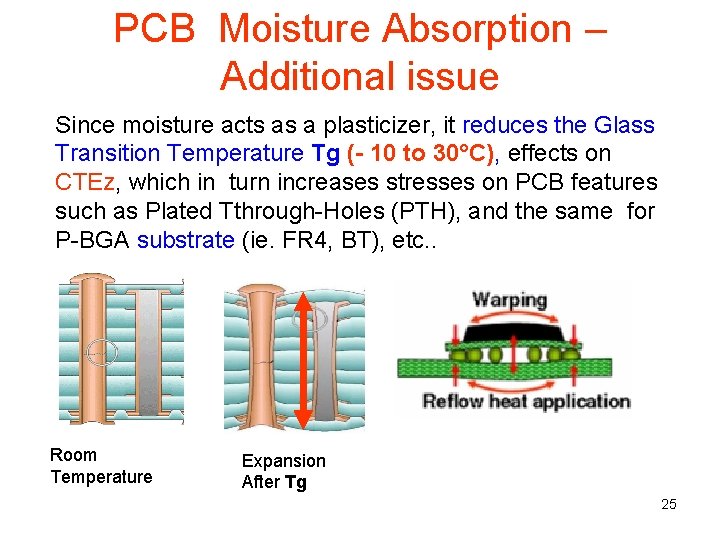
PCB Moisture Absorption – Additional issue Since moisture acts as a plasticizer, it reduces the Glass Transition Temperature Tg (- 10 to 30°C), effects on CTEz, which in turn increases stresses on PCB features such as Plated Tthrough-Holes (PTH), and the same for P-BGA substrate (ie. FR 4, BT), etc. . Room Temperature Expansion After Tg 25
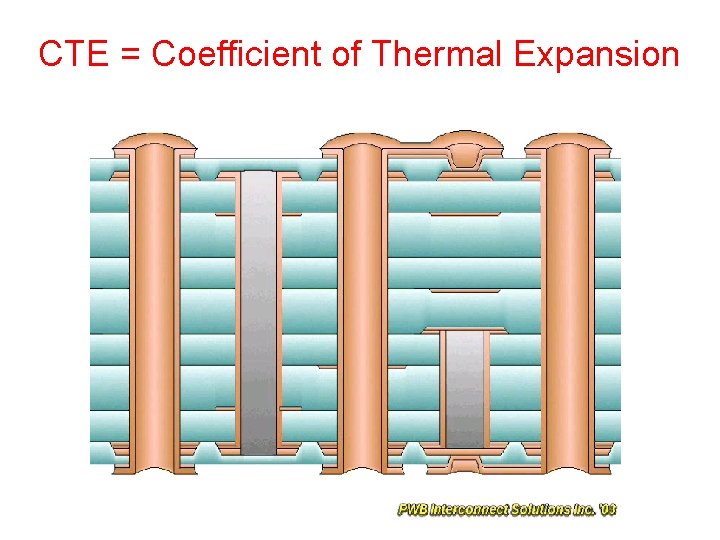
CTE = Coefficient of Thermal Expansion
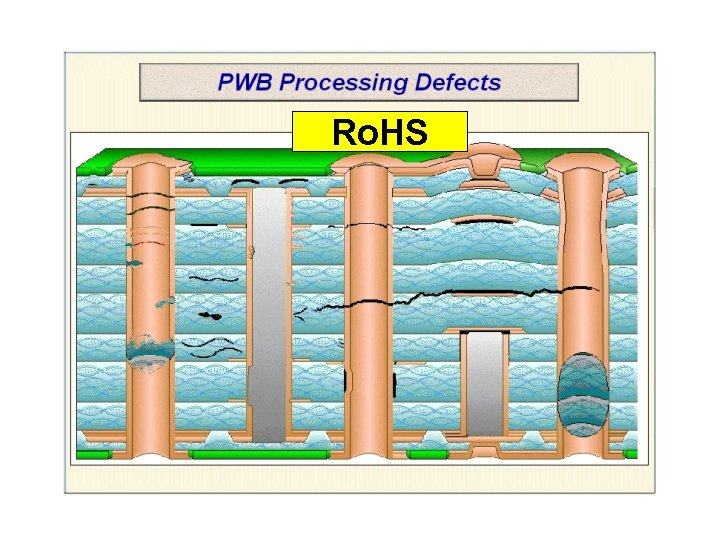
Ro. HS
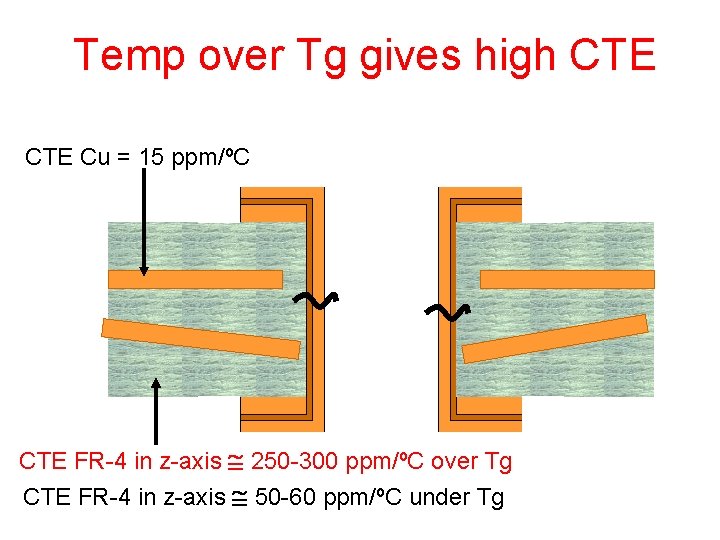
Temp over Tg gives high CTE Cu = 15 ppm/ºC CTE FR-4 in z-axis 250 -300 ppm/ºC over Tg CTE FR-4 in z-axis 50 -60 ppm/ºC under Tg
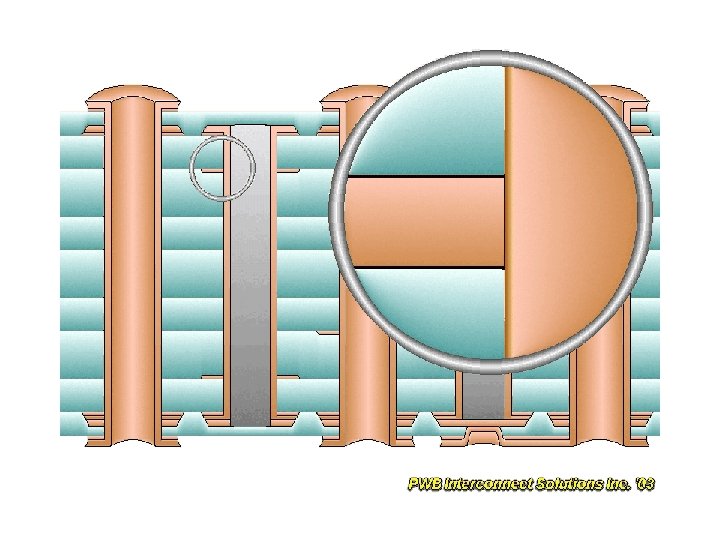
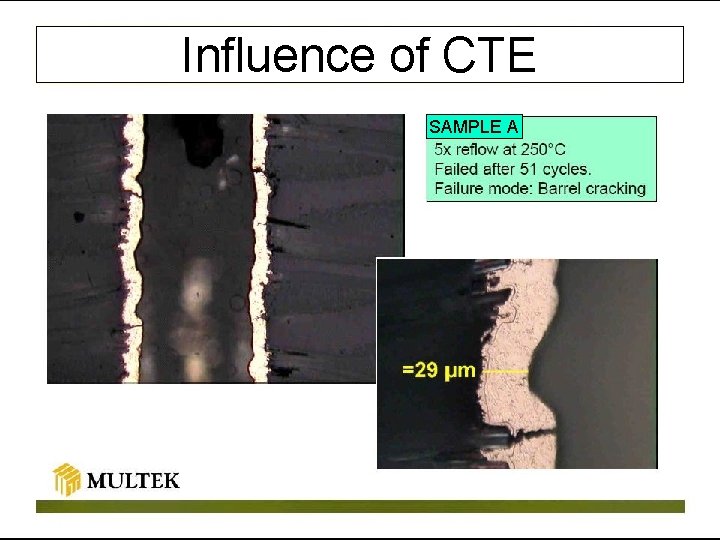
Influence of CTE SAMPLE A
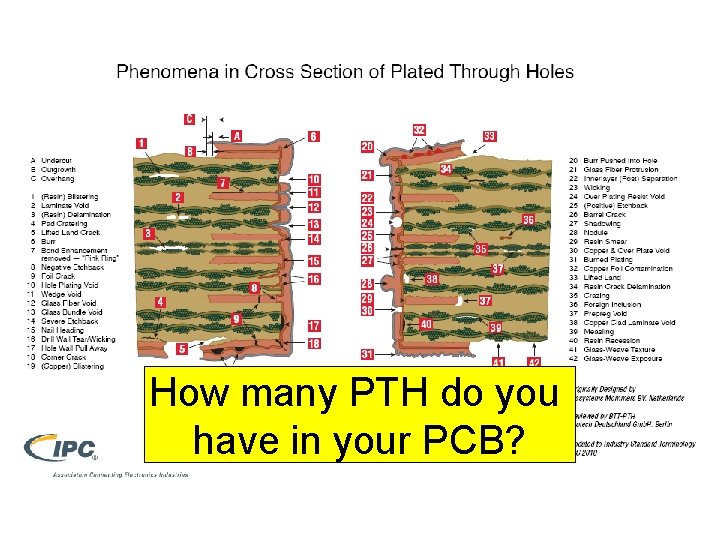
How many PTH do you have in your PCB?
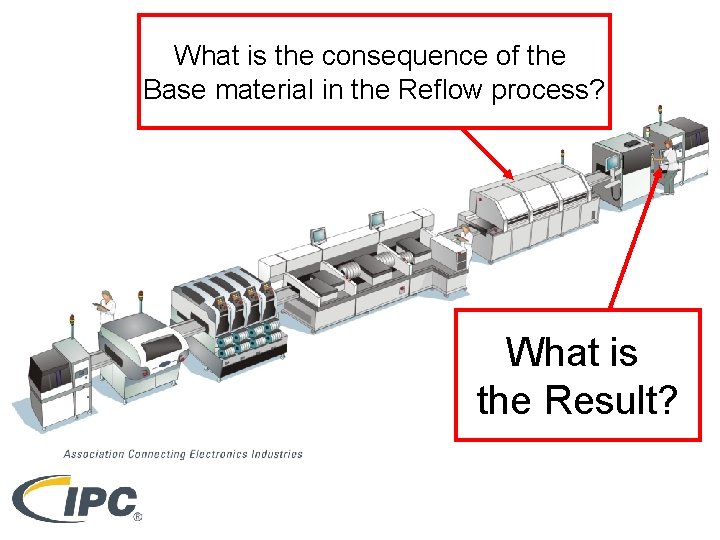
What is the consequence of the Base material in the Reflow process? What is the Result?
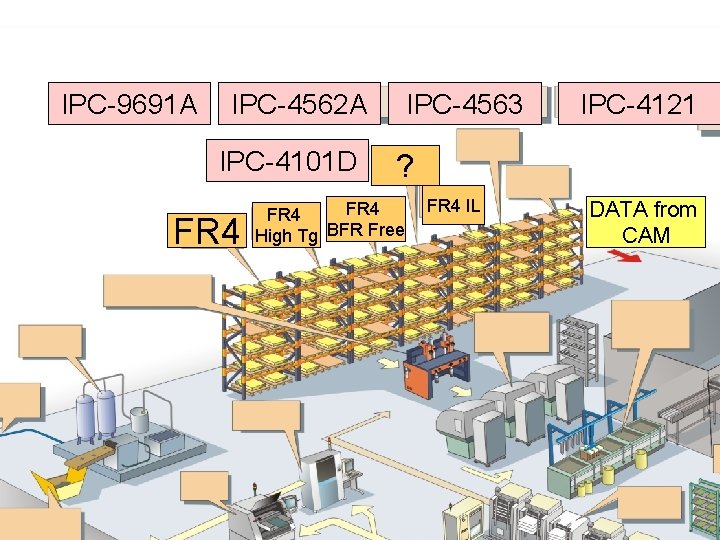
IPC-9691 A IPC-4562 A IPC-4101 D FR 4 IPC-4563 IPC-4121 ? FR 4 High Tg BFR Free FR 4 IL DATA from CAM
CAF Conductive Anodic Filament
How does it look like in the real world? Regarding CAF 38
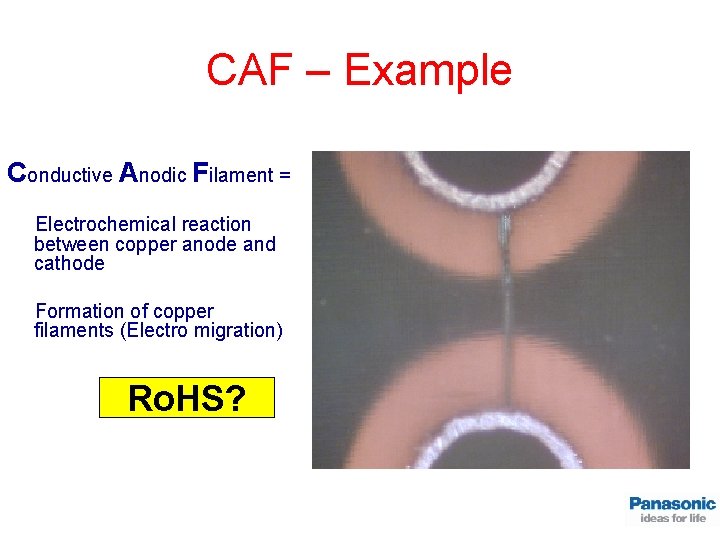
CAF – Example Conductive Anodic Filament = Electrochemical reaction between copper anode and cathode Formation of copper filaments (Electro migration) Ro. HS?
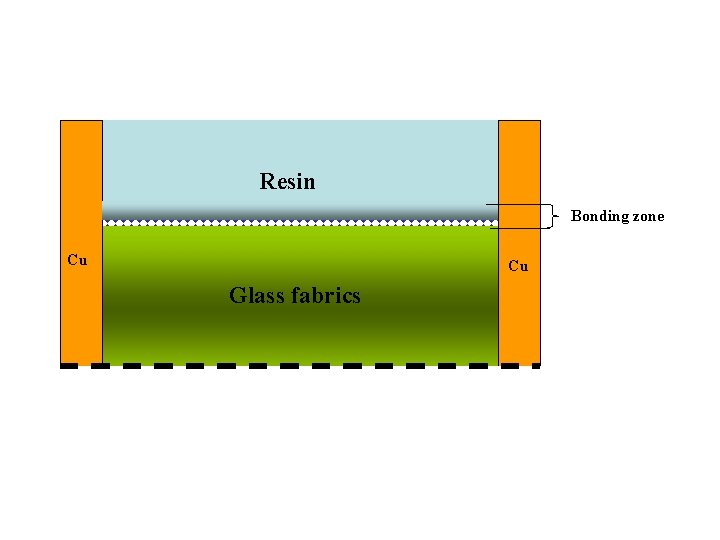
Resin Bonding zone Cu Cu Glass fabrics
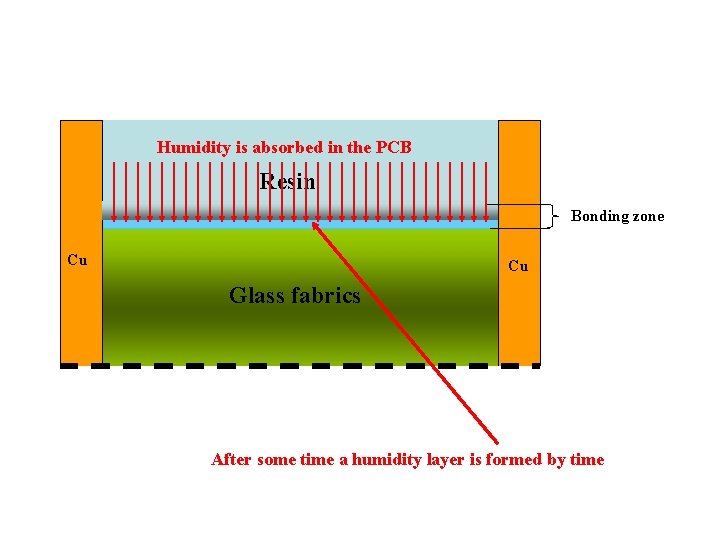
Humidity is absorbed in the PCB Resin Bonding zone Cu Cu Glass fabrics After some time a humidity layer is formed by time
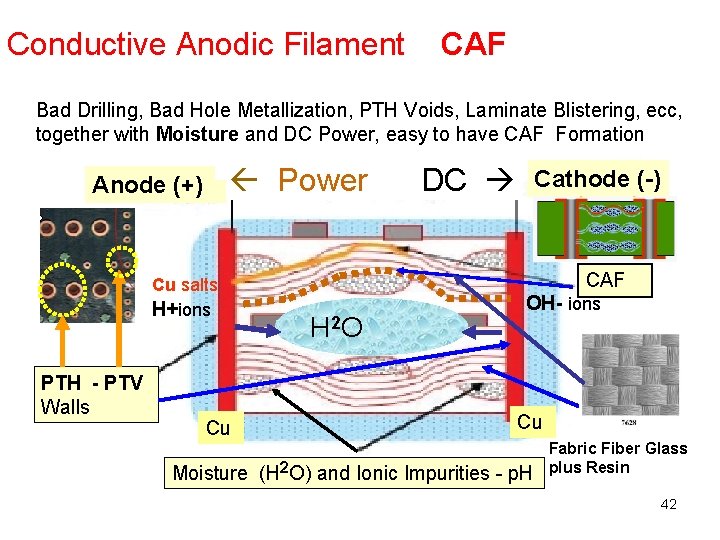
Conductive Anodic Filament CAF Bad Drilling, Bad Hole Metallization, PTH Voids, Laminate Blistering, ecc, together with Moisture and DC Power, easy to have CAF Formation Power Anode (+) Cu salts H+ions PTH - PTV Walls Cu DC Cathode (-) CAF H 2 O OH- ions Cu Moisture (H 2 O) and Ionic Impurities - p. H Fabric Fiber Glass plus Resin 42
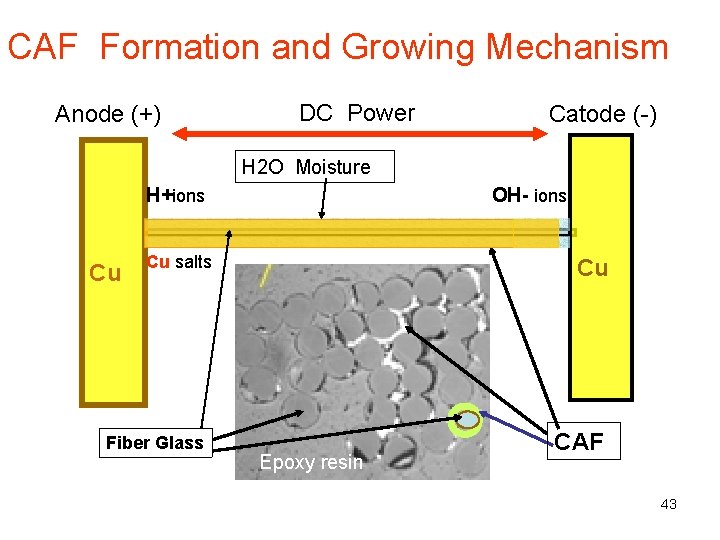
CAF Formation and Growing Mechanism Anode (+) DC Power Catode (-) H 2 O Moisture H+ions Cu OH- ions Cu salts Fiber Glass Cu Epoxy resin CAF 43
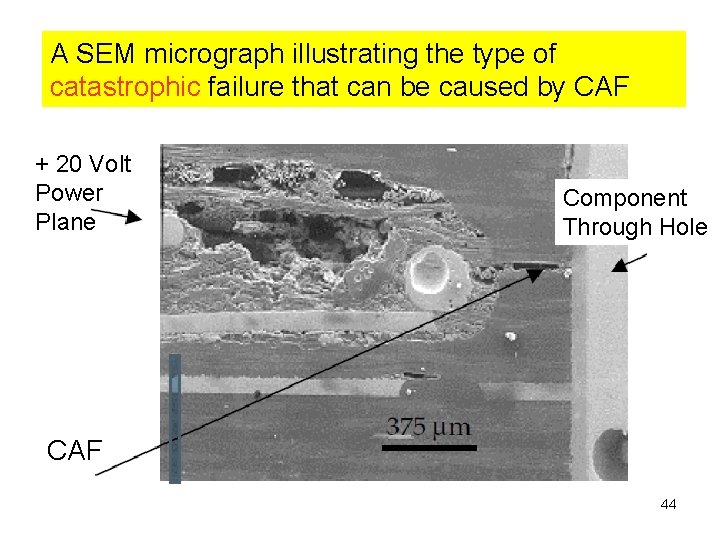
A SEM micrograph illustrating the type of catastrophic failure that can be caused by CAF + 20 Volt Power Plane Component Through Hole CAF 44
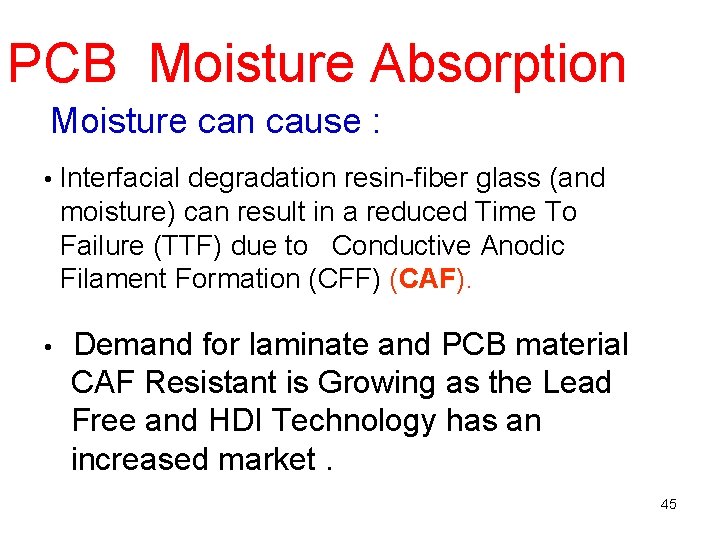
PCB Moisture Absorption Moisture can cause : • Interfacial degradation resin-fiber glass (and moisture). can result in a reduced Time To Failure (TTF) due to. . Conductive Anodic Filament Formation (CFF) (CAF). • Demand for laminate and PCB material CAF Resistant is Growing as the Lead Free and HDI Technology has an increased market. 45
IPC User Guide for the IPC-TM-650 • IPC-9691 A – 2. 6. 25 Conductive Anodic Filament (CAF) Resistance Test (Electrochemical Migration Testing)
IPC-9691 A IPC-4562 A IPC-4101 D FR 4 IPC-4563 IPC-4121 ? FR 4 High Tg BFR Free FR 4 IL DATA from CAM
Practical Advice You need an IPC Checklist!!

- Slides: 50