
IPA example Simone Campanoni simoneceecs northwestern edu analysis


- Slides: 40
IPA example Simone Campanoni simonec@eecs. northwestern. edu analysis
Research paper Title: Practical and Accurate Low-Level Pointer Analysis VLLPA Authors: Bolei Guo Matthew J. Bridges Spyridon Triantafyllis Guilherme Ottoni Easwaran Raman David I. August CGO, 2005
Outline • Motivation • Abstractions used • Data-flow intra-procedural analysis • Inter-procedural analysis • Evaluation
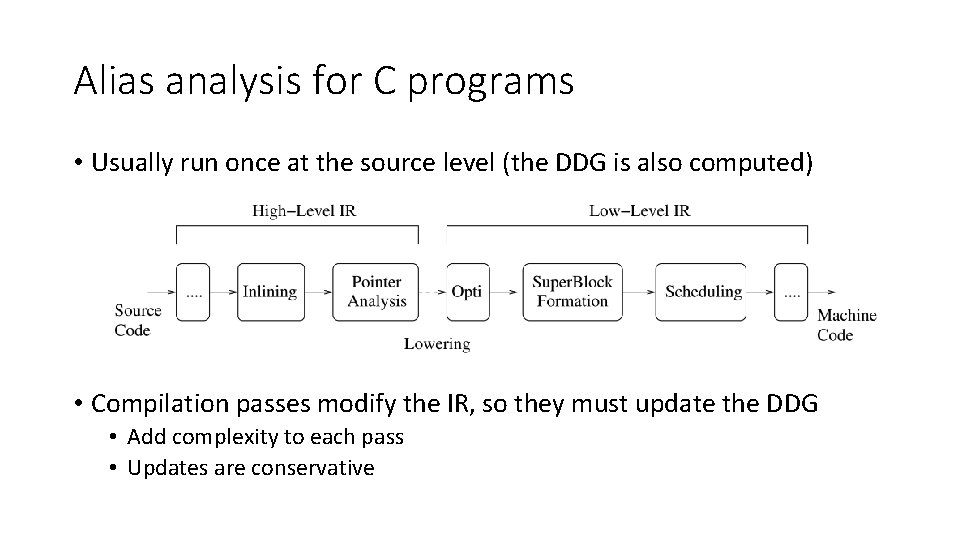
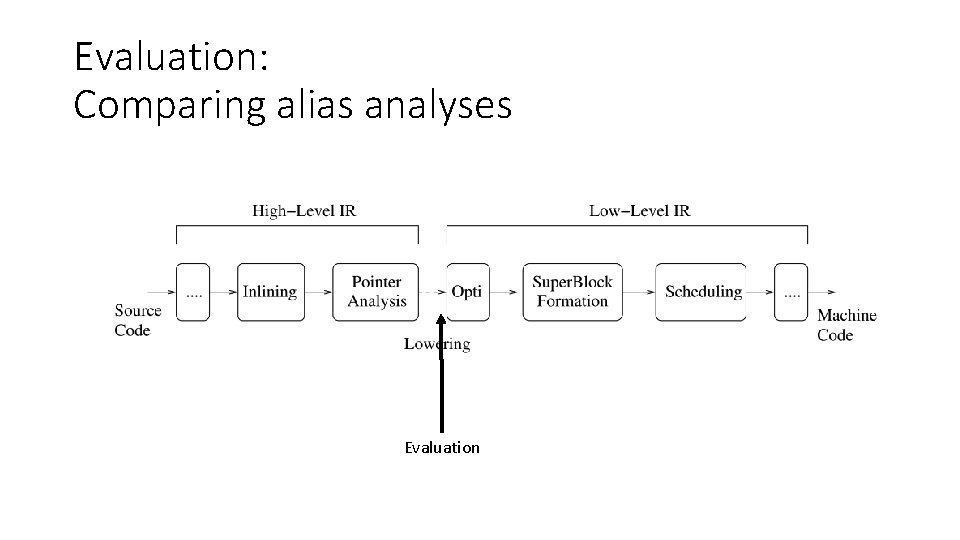
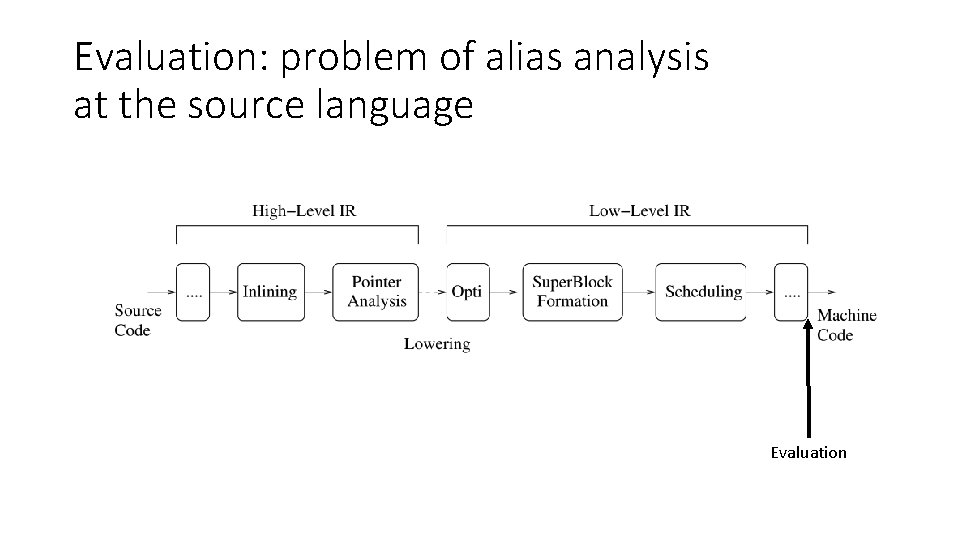
Alias analysis for C programs • Usually run once at the source level (the DDG is also computed) • Compilation passes modify the IR, so they must update the DDG • Add complexity to each pass • Updates are conservative
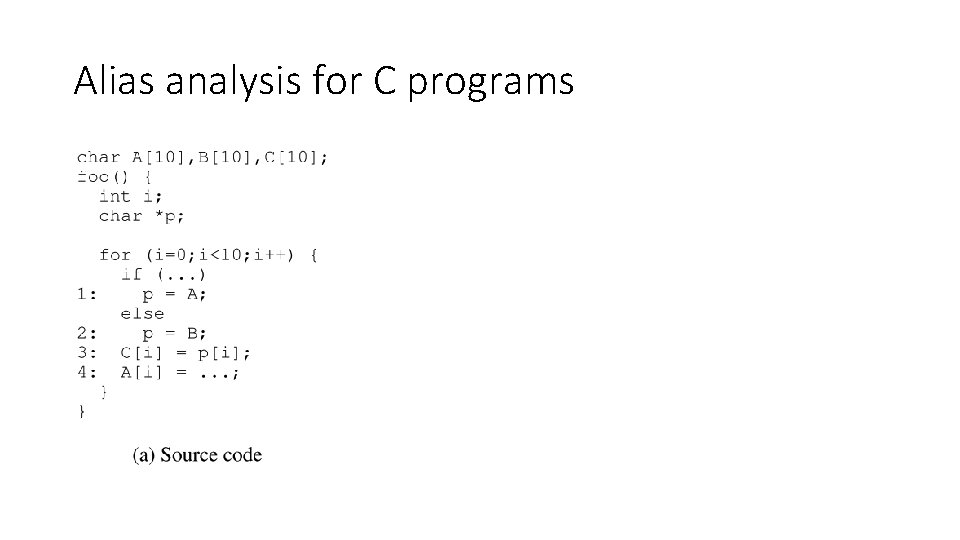
Alias analysis for C programs
VLLPA: a low level pointer analysis for C programs • This paper proposes an alias analysis at the IR level • • It can be run multiple times No conservative updates Passes are simpler No data type information (not very useful for C anyway) • The first context-sensitive and partially flow-sensitive low-level points-to analysis algorithm
Outline • Motivation • Abstractions used • Data-flow intra-procedural analysis • Inter-procedural analysis • Evaluation
Memory abstraction • Memory location at analysis time = abstract address • Abstract structure = contiguous set of abstract addresses • Memory is divided into a set of abstract structures, each with a unique name • Each structure can correspond to multiple blocks at runtime • Unbounded set of memory blocks -> finite set of abstract names • An abstract structure is created for each global variable
Memory abstraction • Activation frame: • One abstract structure for each • Incoming parameter space • Outgoing parameter space • Local variable space • Heap object allocated: • Named according to the context (2 call stack depth)
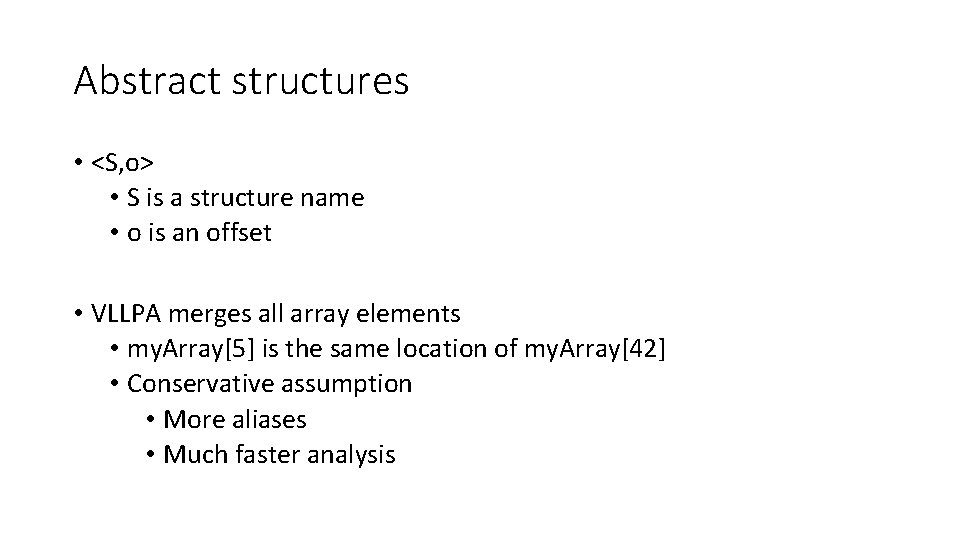
Abstract structures • <S, o> • S is a structure name • o is an offset • VLLPA merges all array elements • my. Array[5] is the same location of my. Array[42] • Conservative assumption • More aliases • Much faster analysis
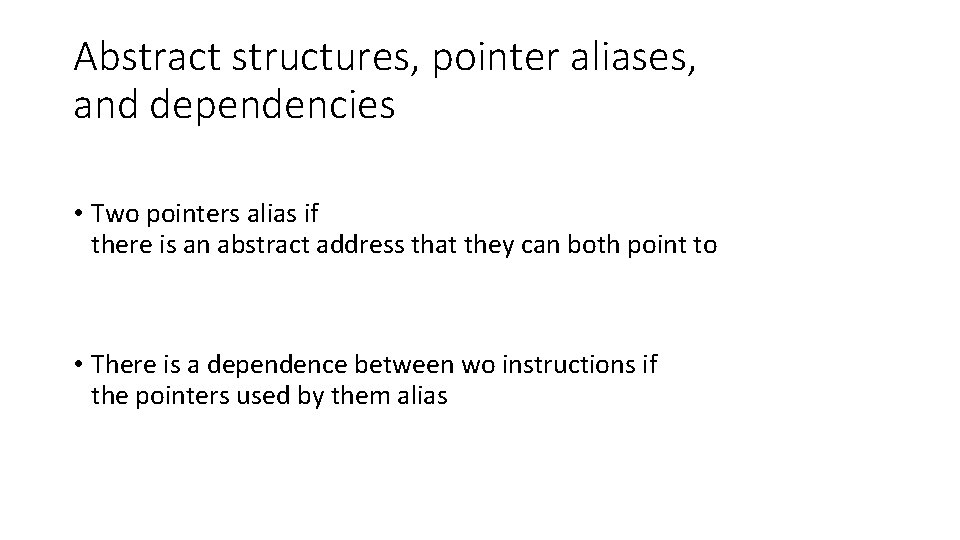
Abstract structures, pointer aliases, and dependencies • Two pointers alias if there is an abstract address that they can both point to • There is a dependence between wo instructions if the pointers used by them alias
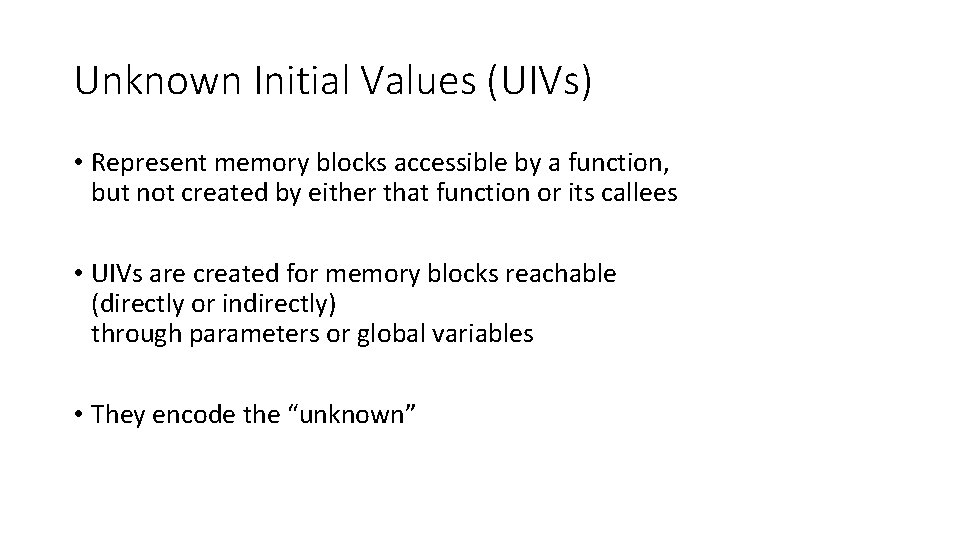
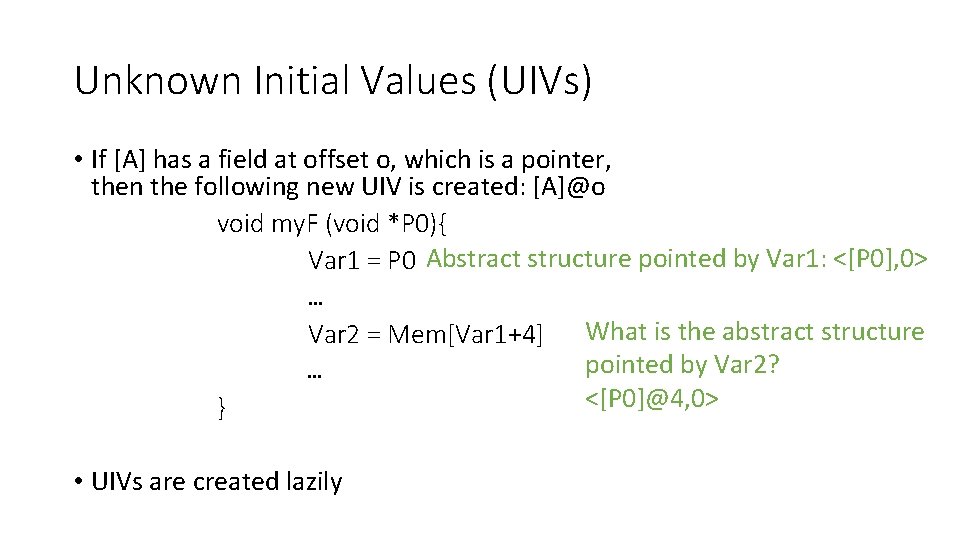
Unknown Initial Values (UIVs) • Represent memory blocks accessible by a function, but not created by either that function or its callees • UIVs are created for memory blocks reachable (directly or indirectly) through parameters or global variables • They encode the “unknown”
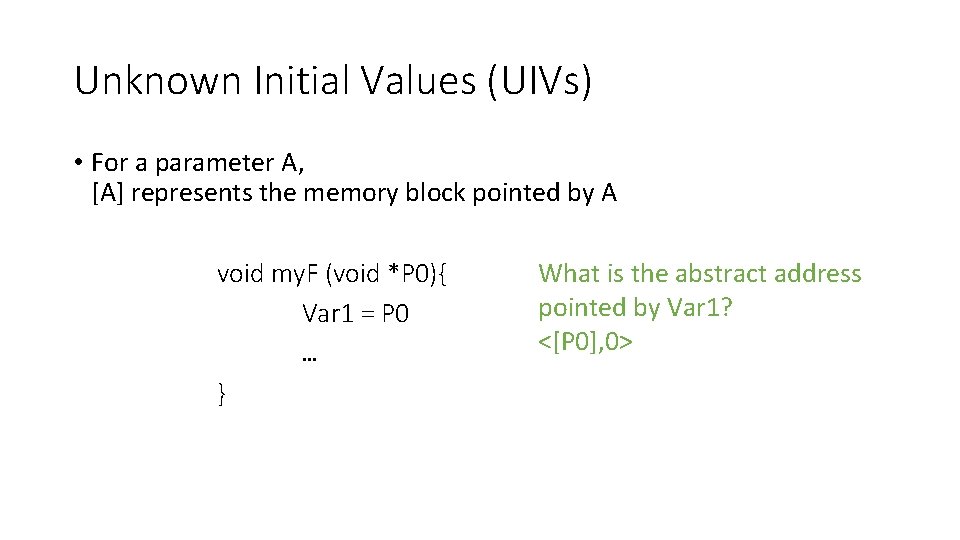
Unknown Initial Values (UIVs) • For a parameter A, [A] represents the memory block pointed by A void my. F (void *P 0){ Var 1 = P 0 … } What is the abstract address pointed by Var 1? <[P 0], 0>
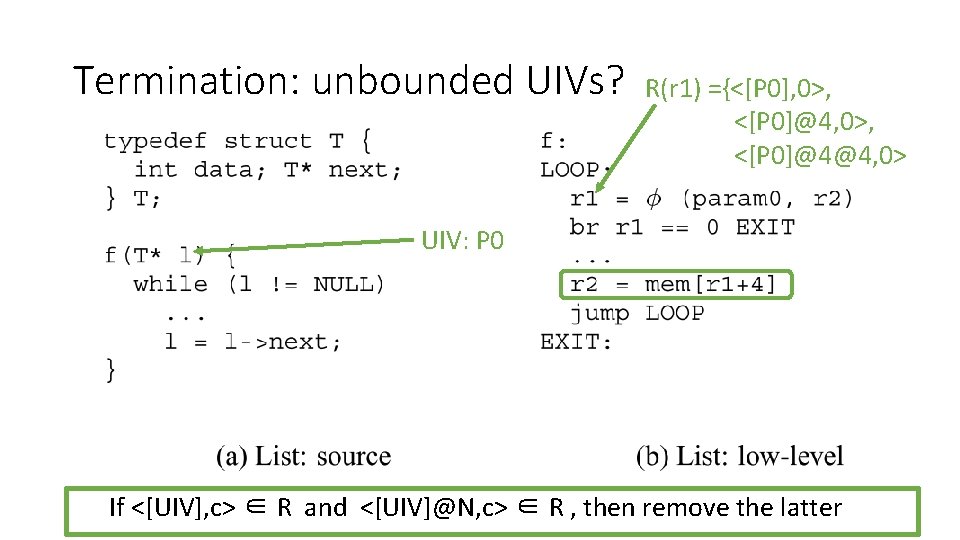
Unknown Initial Values (UIVs) • If [A] has a field at offset o, which is a pointer, then the following new UIV is created: [A]@o void my. F (void *P 0){ Var 1 = P 0 Abstract structure pointed by Var 1: <[P 0], 0> … Var 2 = Mem[Var 1+4] What is the abstract structure pointed by Var 2? … <[P 0]@4, 0> } • UIVs are created lazily
Outline • Motivation • Abstractions used • Data-flow intra-procedural analysis • Inter-procedural analysis • Evaluation
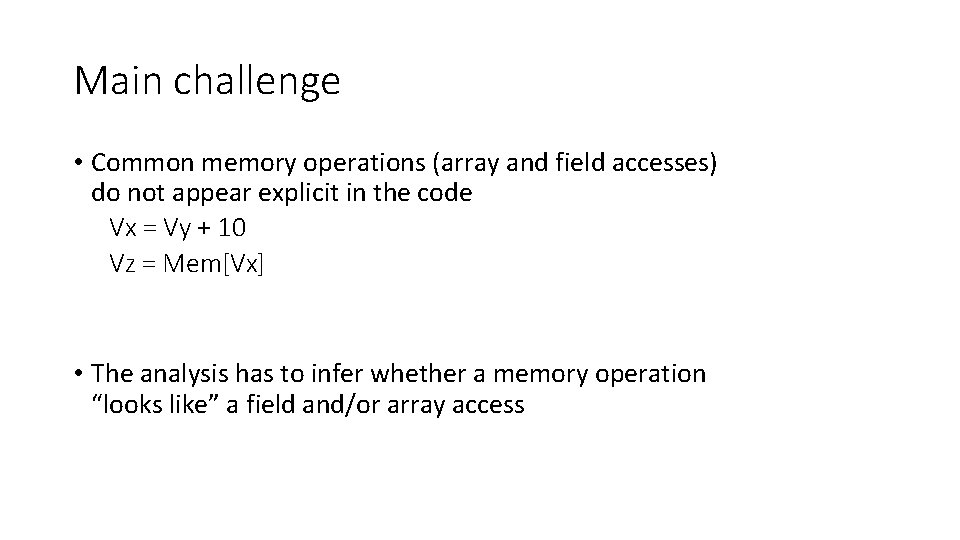
Main challenge • Common memory operations (array and field accesses) do not appear explicit in the code Vx = Vy + 10 Vz = Mem[Vx] • The analysis has to infer whether a memory operation “looks like” a field and/or array access
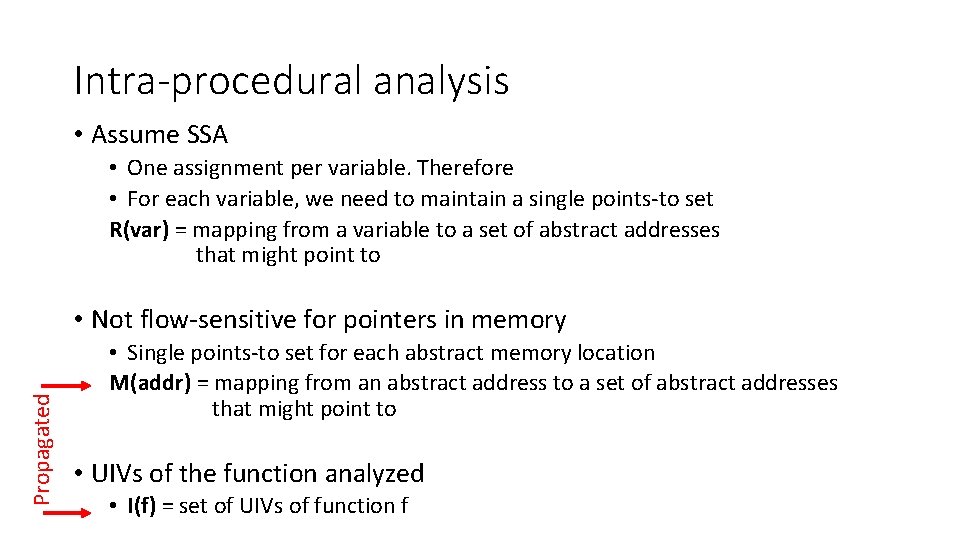
Intra-procedural analysis • Assume SSA • One assignment per variable. Therefore • For each variable, we need to maintain a single points-to set R(var) = mapping from a variable to a set of abstract addresses that might point to Propagated • Not flow-sensitive for pointers in memory • Single points-to set for each abstract memory location M(addr) = mapping from an abstract address to a set of abstract addresses that might point to • UIVs of the function analyzed • I(f) = set of UIVs of function f
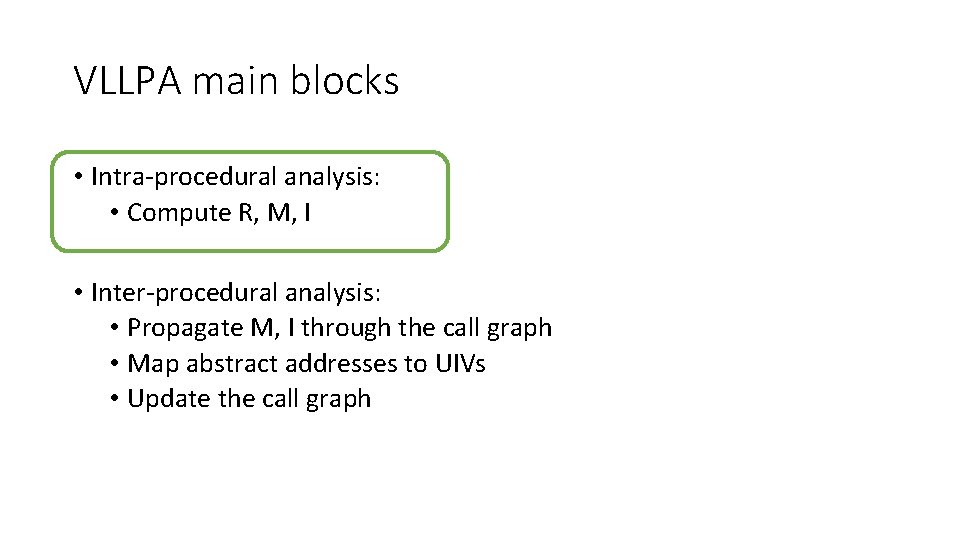
VLLPA main blocks • Intra-procedural analysis: • Compute R, M, I • Inter-procedural analysis: • Propagate M, I through the call graph • Map abstract addresses to UIVs • Update the call graph
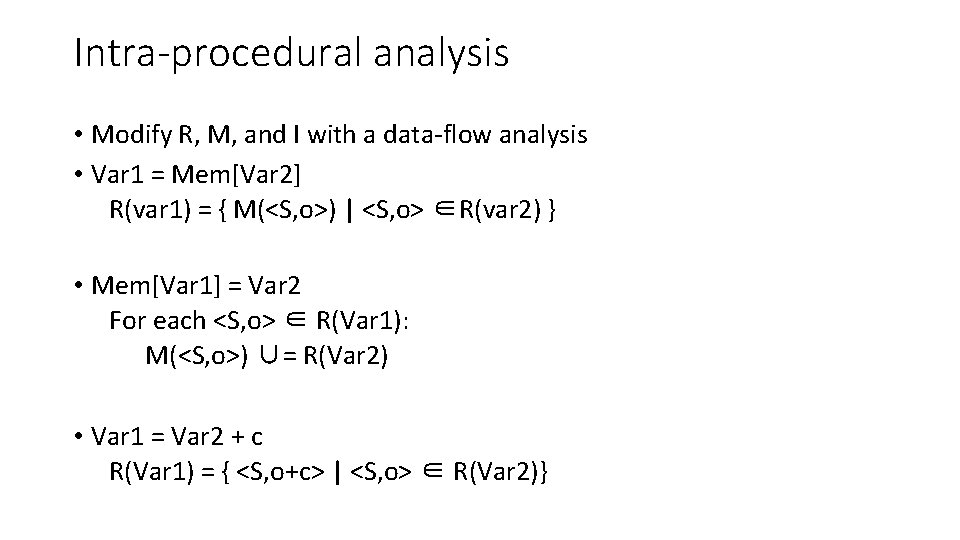
Intra-procedural analysis • Modify R, M, and I with a data-flow analysis • Var 1 = Mem[Var 2] R(var 1) = { M(<S, o>) | <S, o> ∈R(var 2) } • Mem[Var 1] = Var 2 For each <S, o> ∈ R(Var 1): M(<S, o>) ∪= R(Var 2) • Var 1 = Var 2 + c R(Var 1) = { <S, o+c> | <S, o> ∈ R(Var 2)}
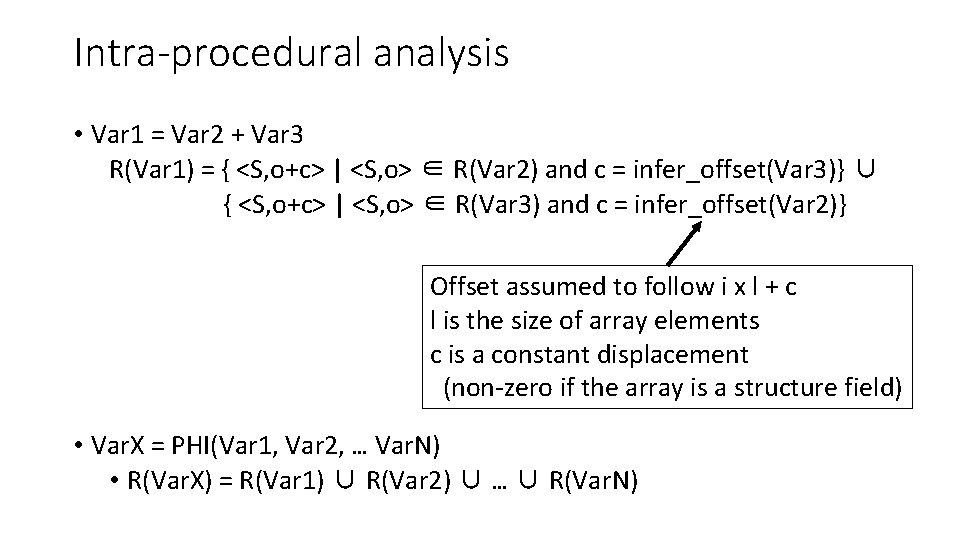
Intra-procedural analysis • Var 1 = Var 2 + Var 3 R(Var 1) = { <S, o+c> | <S, o> ∈ R(Var 2) and c = infer_offset(Var 3)} ∪ { <S, o+c> | <S, o> ∈ R(Var 3) and c = infer_offset(Var 2)} Offset assumed to follow i x l + c l is the size of array elements c is a constant displacement (non-zero if the array is a structure field) • Var. X = PHI(Var 1, Var 2, … Var. N) • R(Var. X) = R(Var 1) ∪ R(Var 2) ∪ … ∪ R(Var. N)
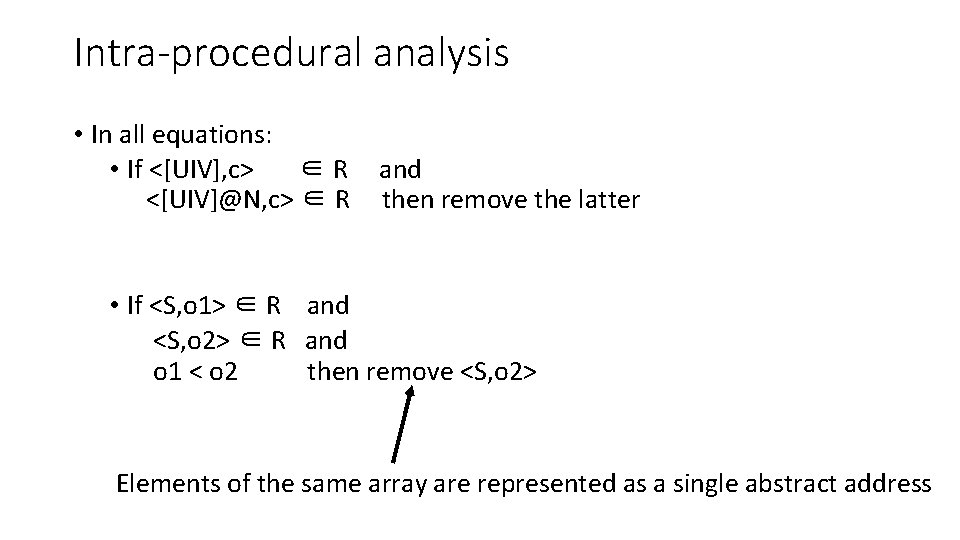
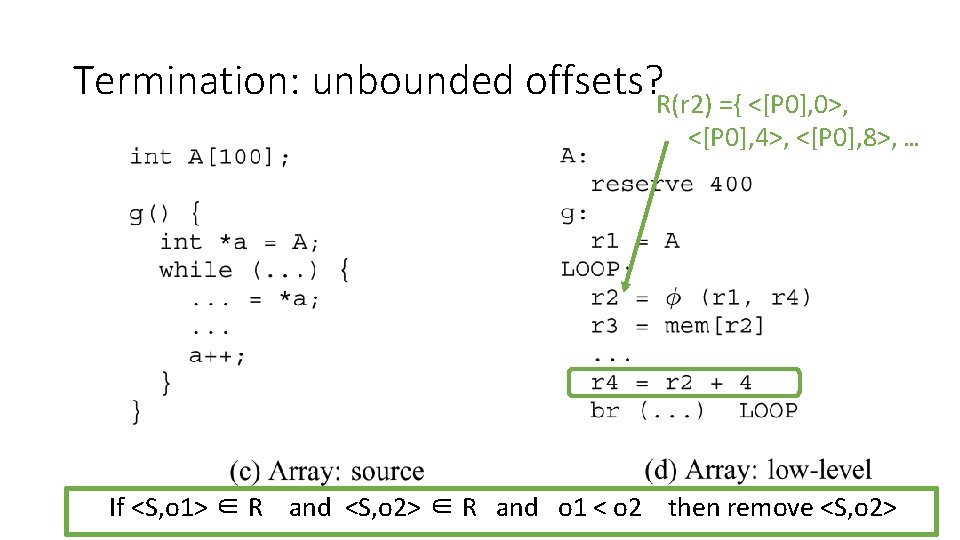
Intra-procedural analysis • In all equations: • If <[UIV], c> ∈R <[UIV]@N, c> ∈ R and then remove the latter • If <S, o 1> ∈ R and <S, o 2> ∈ R and o 1 < o 2 then remove <S, o 2> Elements of the same array are represented as a single abstract address
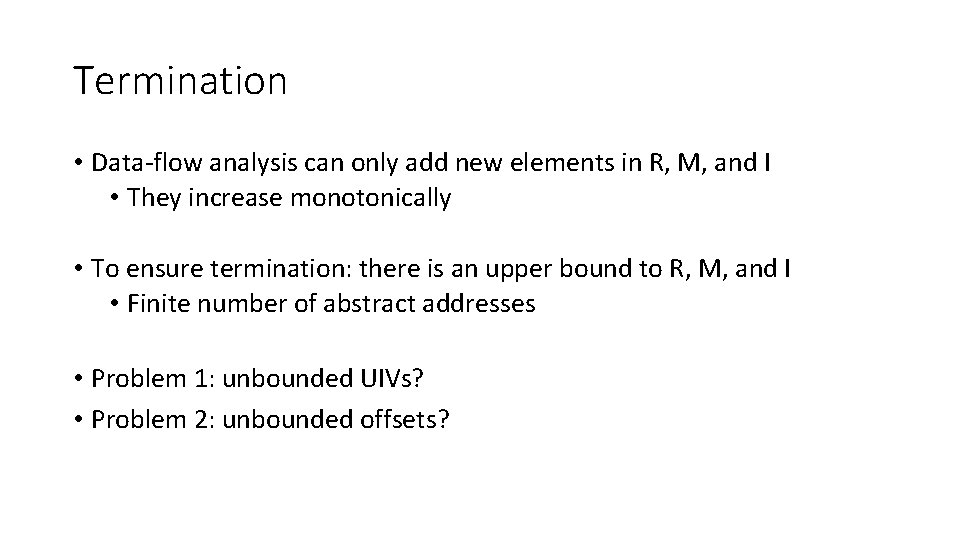
Termination • Data-flow analysis can only add new elements in R, M, and I • They increase monotonically • To ensure termination: there is an upper bound to R, M, and I • Finite number of abstract addresses • Problem 1: unbounded UIVs? • Problem 2: unbounded offsets?
Termination: unbounded UIVs? R(r 1) ={<[P 0], 0>, <[P 0]@4@4, 0> UIV: P 0 If <[UIV], c> ∈ R and <[UIV]@N, c> ∈ R , then remove the latter
Termination: unbounded offsets? R(r 2) ={ <[P 0], 0>, <[P 0], 4>, <[P 0], 8>, … If <S, o 1> ∈ R and <S, o 2> ∈ R and o 1 < o 2 then remove <S, o 2>
Outline • Motivation • Abstractions used • Data-flow intra-procedural analysis • Inter-procedural analysis • Evaluation
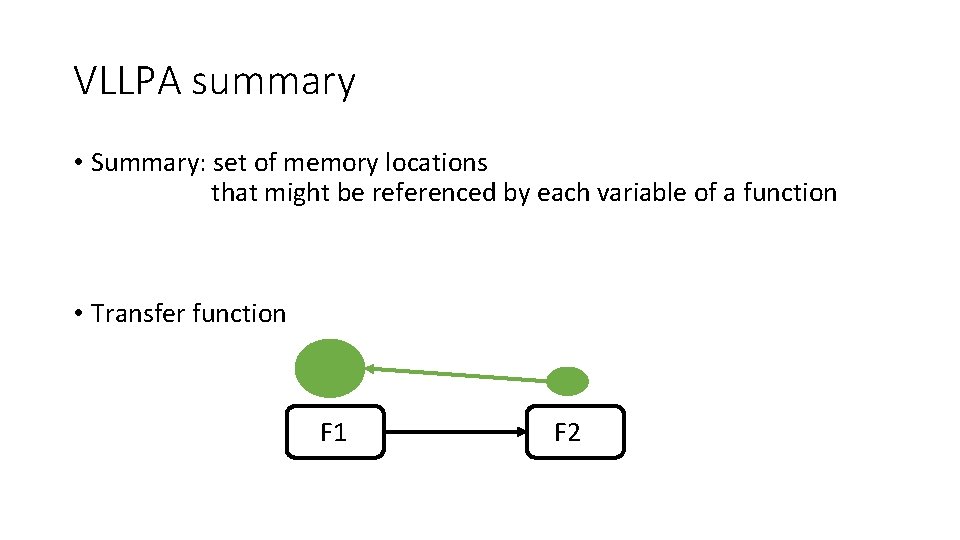
VLLPA summary • Summary: set of memory locations that might be referenced by each variable of a function • Transfer function F 1 F 2
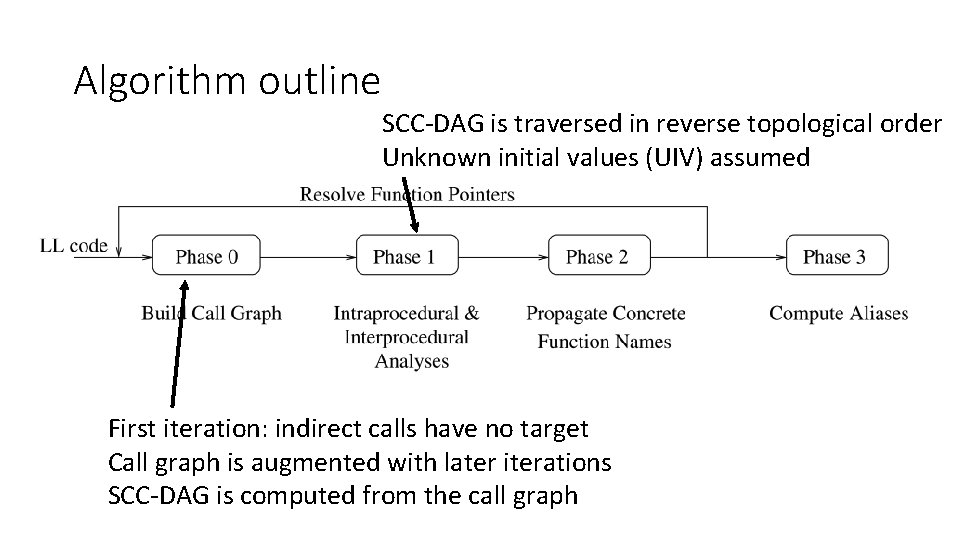
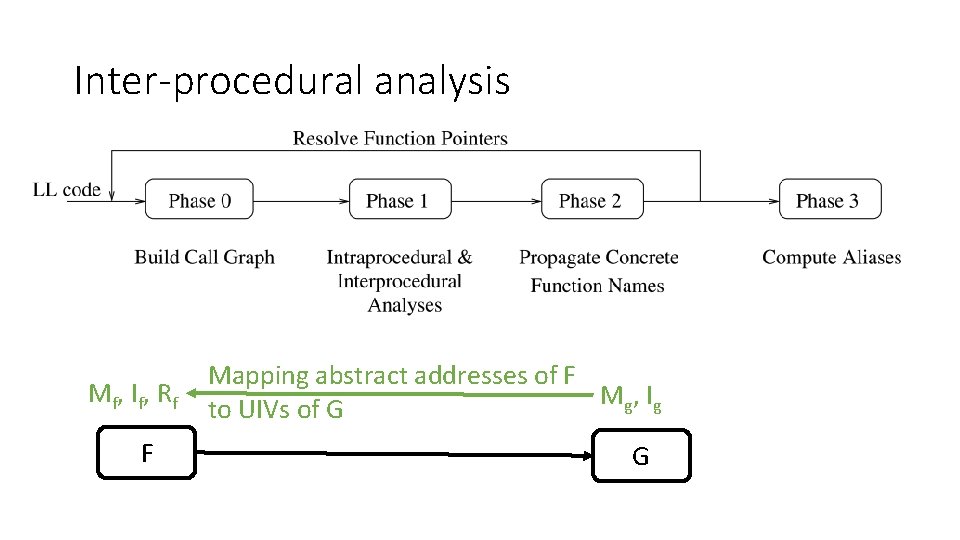
Algorithm outline SCC-DAG is traversed in reverse topological order Unknown initial values (UIV) assumed First iteration: indirect calls have no target Call graph is augmented with later iterations SCC-DAG is computed from the call graph
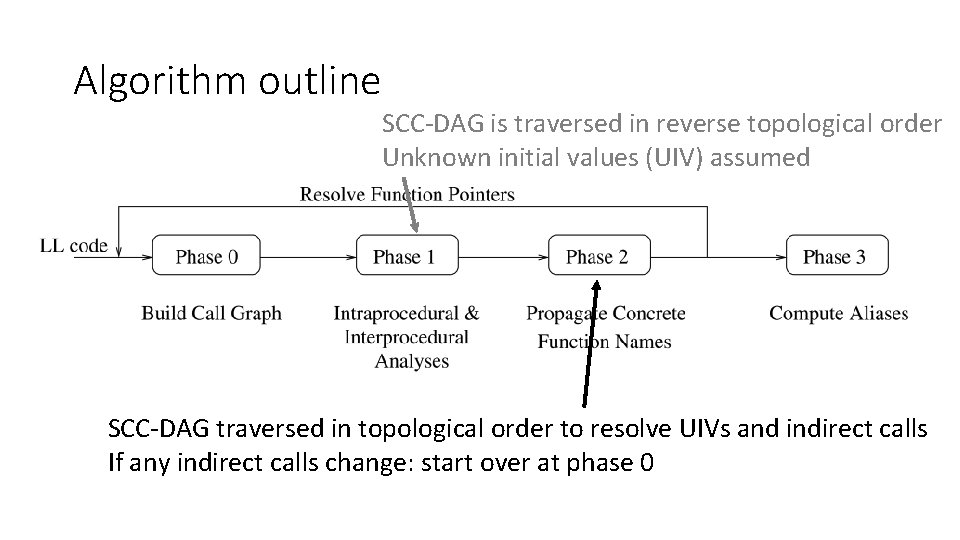
Algorithm outline SCC-DAG is traversed in reverse topological order Unknown initial values (UIV) assumed SCC-DAG traversed in topological order to resolve UIVs and indirect calls If any indirect calls change: start over at phase 0
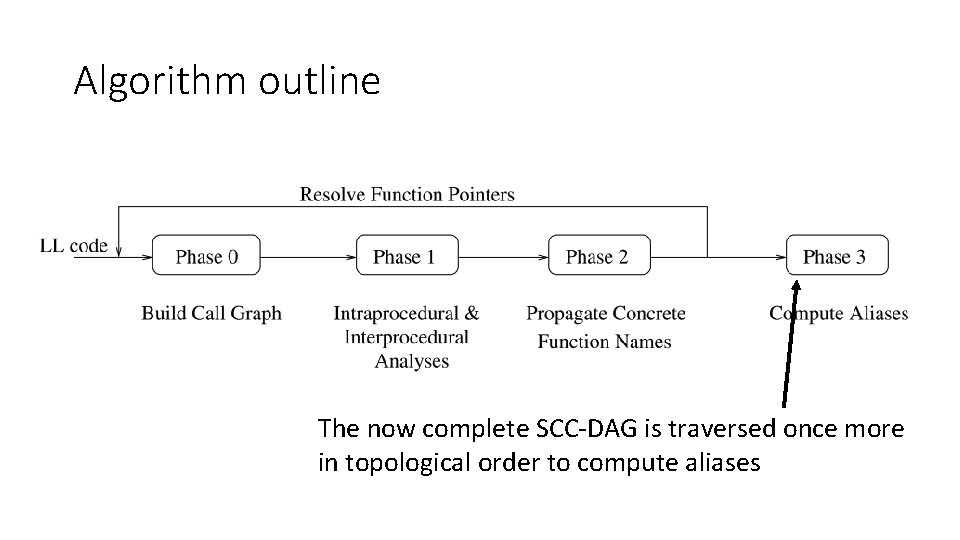
Algorithm outline The now complete SCC-DAG is traversed once more in topological order to compute aliases
Inter-procedural analysis M f, I f, R f F Mapping abstract addresses of F M g, I g to UIVs of G G
Outline • Motivation • Abstractions used • Data-flow intra-procedural analysis • Inter-procedural analysis • Evaluation
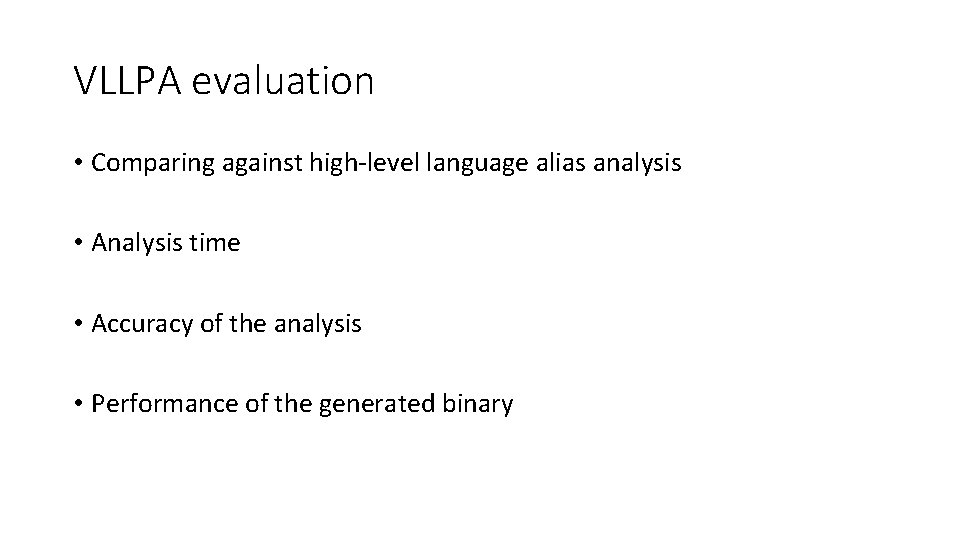
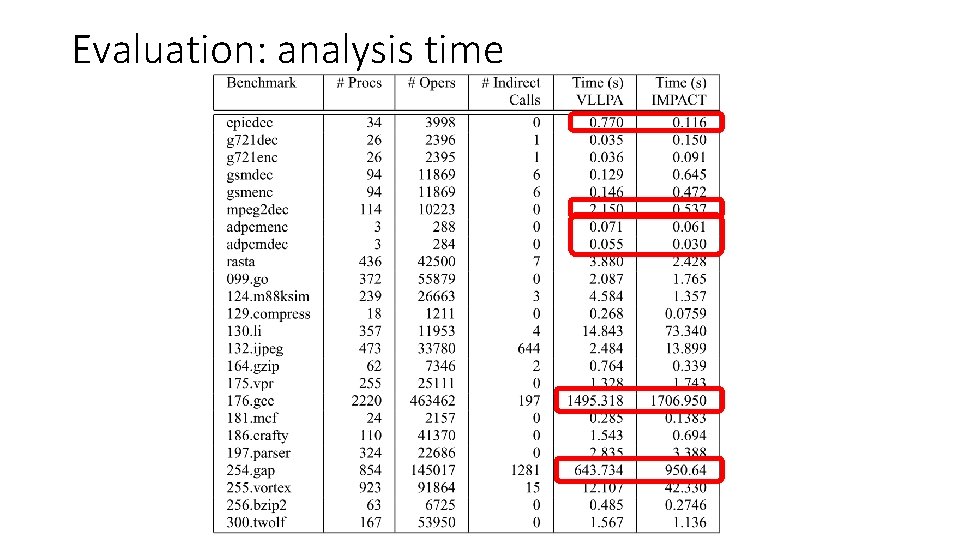
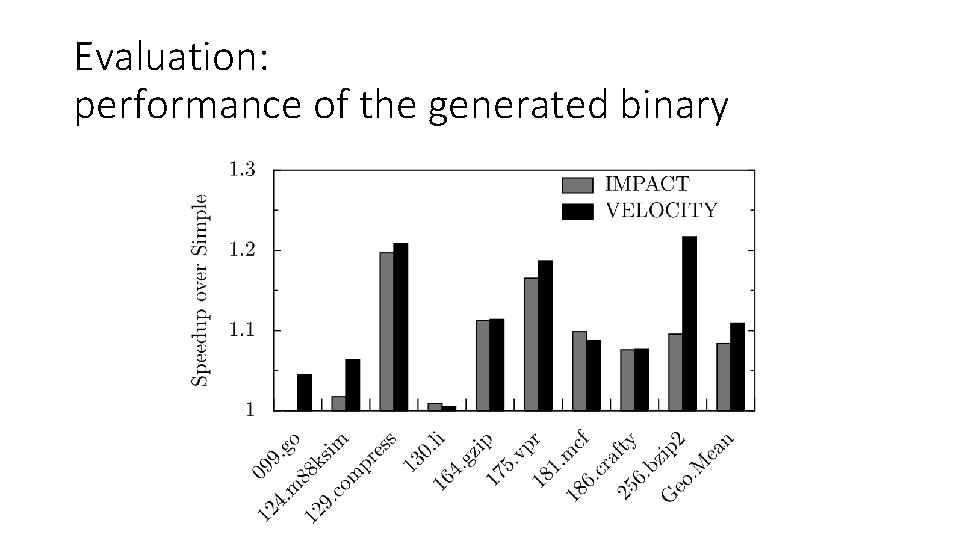
VLLPA evaluation • Comparing against high-level language alias analysis • Analysis time • Accuracy of the analysis • Performance of the generated binary
Evaluation: Comparing alias analyses Evaluation
Evaluation: analysis time
Evaluation: accuracy
Evaluation: problem of alias analysis at the source language Evaluation
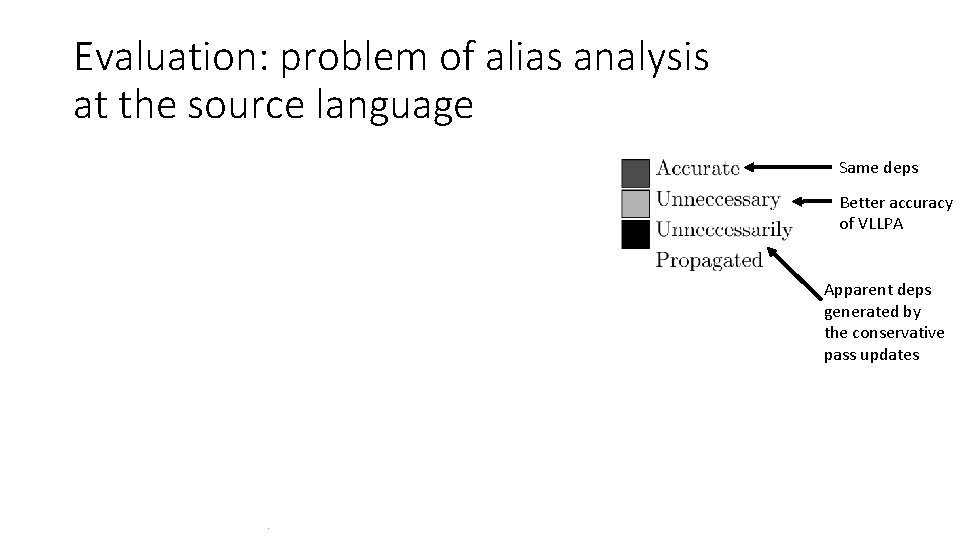
Evaluation: problem of alias analysis at the source language Same deps Better accuracy of VLLPA Apparent deps generated by the conservative pass updates
Evaluation: performance of the generated binary
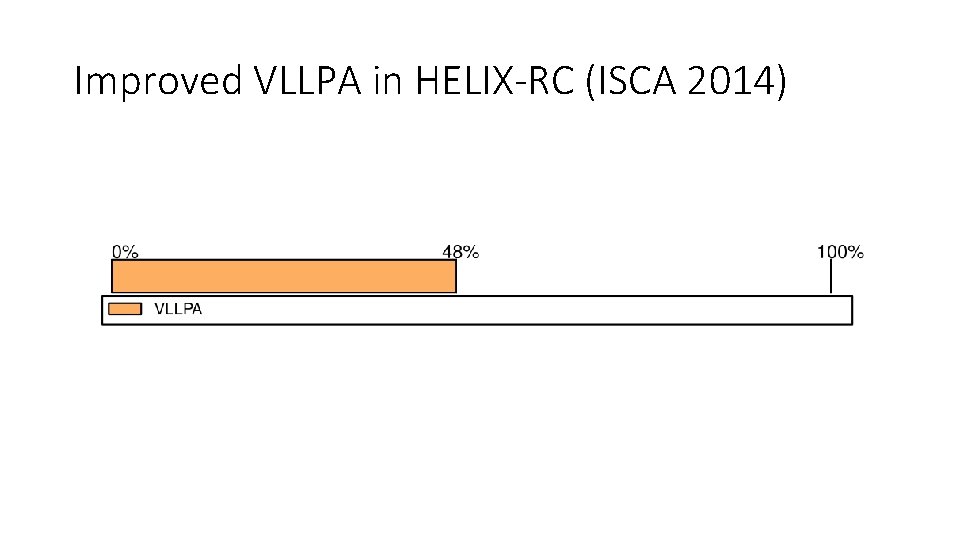
Improved VLLPA in HELIX-RC (ISCA 2014)
After 2014 • Approximating Flow-Sensitive Pointer Analysis Using Frequent Itemset Mining Vaivaswatha Nagaraj and R. Govindarajan CGO 2015 • … many others • A Collaborative Dependence Analysis Framework Nick P. Johnson, Jordan Fix, Taewook Oh, Stephen R. Beard, Thomas B. Jablin, and David I. August CGO 2017