
Ions Resting Potential Cell is negatively charged compared
- Slides: 10
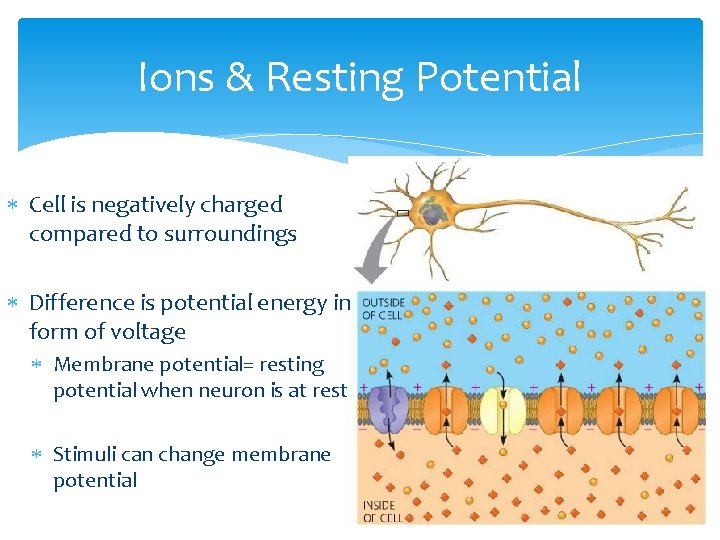
Ions & Resting Potential Cell is negatively charged compared to surroundings Difference is potential energy in form of voltage Membrane potential= resting potential when neuron is at rest Stimuli can change membrane potential
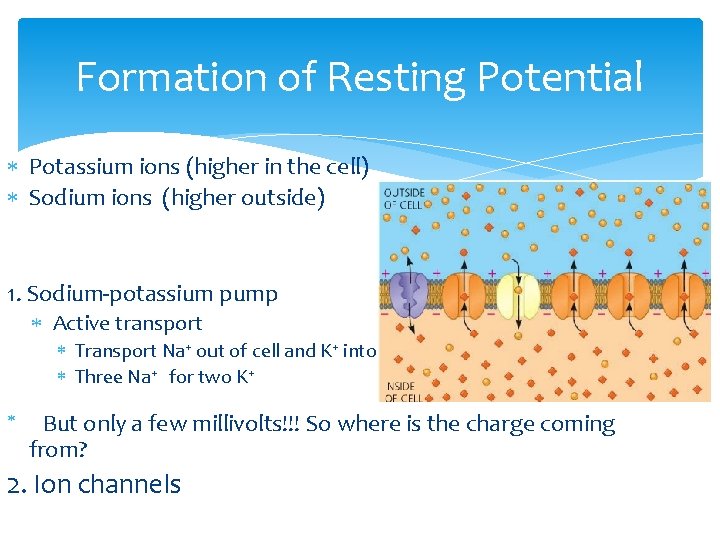
Formation of Resting Potential Potassium ions (higher in the cell) Sodium ions (higher outside) 1. Sodium-potassium pump Active transport Transport Na+ out of cell and K+ into cell Three Na+ for two K+ But only a few millivolts!!! So where is the charge coming from? 2. Ion channels
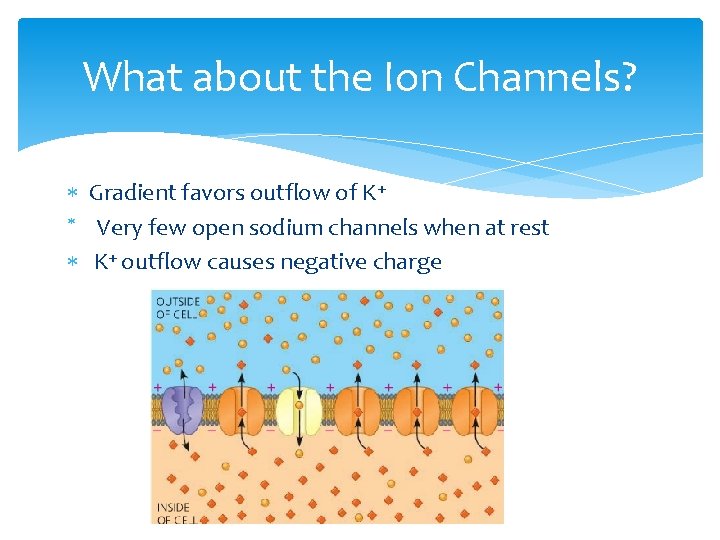
What about the Ion Channels? Gradient favors outflow of K+ Very few open sodium channels when at rest K+ outflow causes negative charge
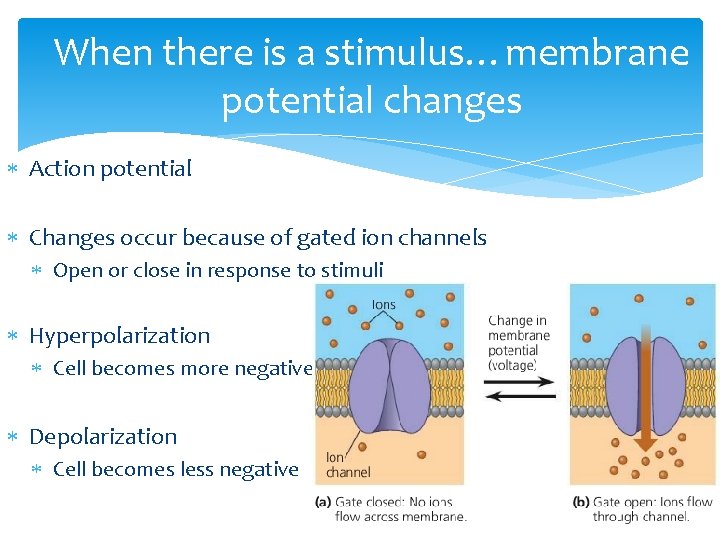
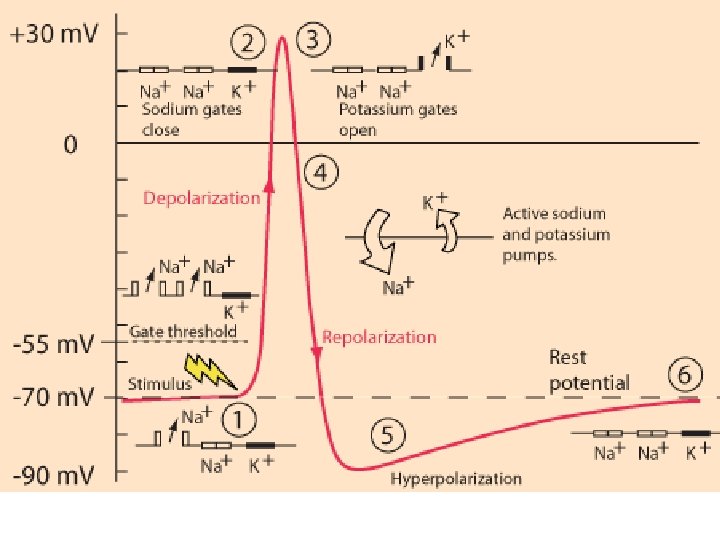
When there is a stimulus…membrane potential changes Action potential Changes occur because of gated ion channels Open or close in response to stimuli Hyperpolarization Cell becomes more negative Depolarization Cell becomes less negative
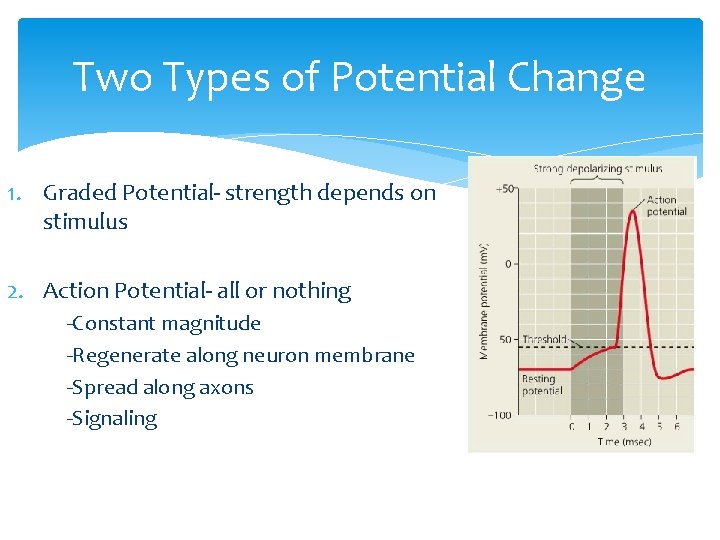
Two Types of Potential Change 1. Graded Potential- strength depends on stimulus 2. Action Potential- all or nothing -Constant magnitude -Regenerate along neuron membrane -Spread along axons -Signaling
Action Potential Voltage-gated ion channels Open or close when membrane potential reaches threshold Depolarization of voltage-gated sodium channel? Positive feedback Potassium channel will open at end to return neuron to resting state
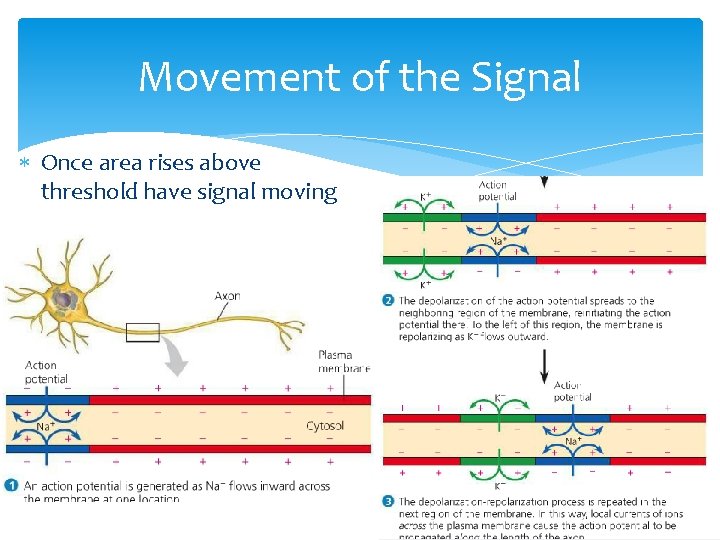
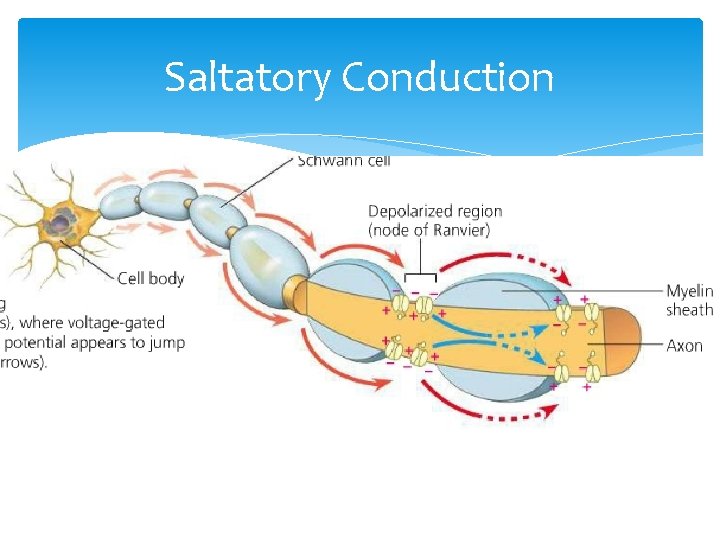
Movement of the Signal Once area rises above threshold have signal moving
Saltatory Conduction
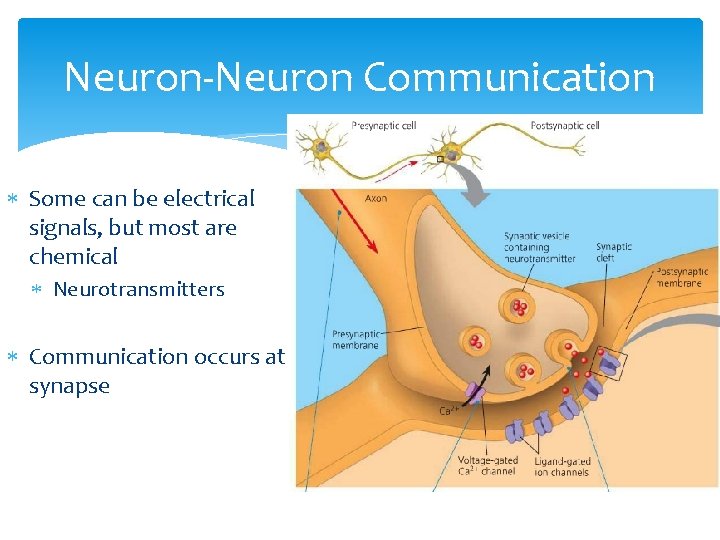
Neuron-Neuron Communication Some can be electrical signals, but most are chemical Neurotransmitters Communication occurs at a synapse