
Ionization Energy and Electron Affinity Section 8 4
![Irregularity (3 A) • Decrease from Be to B Be: [He] 2 s 2](https://slidetodoc.com/presentation_image_h/2e3c36f53ab92f646bb2e738cf65e686/image-12.jpg "Irregularity (3 A) • Decrease from Be to B Be: [He] 2 s 2")
![Irregularity (6 A) O is lower than N N: [He]2 s 2 2 p](https://slidetodoc.com/presentation_image_h/2e3c36f53ab92f646bb2e738cf65e686/image-14.jpg "Irregularity (6 A) O is lower than N N: [He]2 s 2 2 p")
- Slides: 19
Ionization Energy and Electron Affinity Section 8. 4 -8. 5
Objectives • Examine periodic trends in ionization energy • Examine periodic trends in electron affinity
Key Terms • Ionization energy • Electron Affinity
Ionization Energy • Energy required to remove an electron from an atom or ion • I 1 removing first electron from neutral atom • I 2 removing an electron from a +1 ion • Greater the I, the more difficult to remove e(indicating a stronger hold by the nucleus)
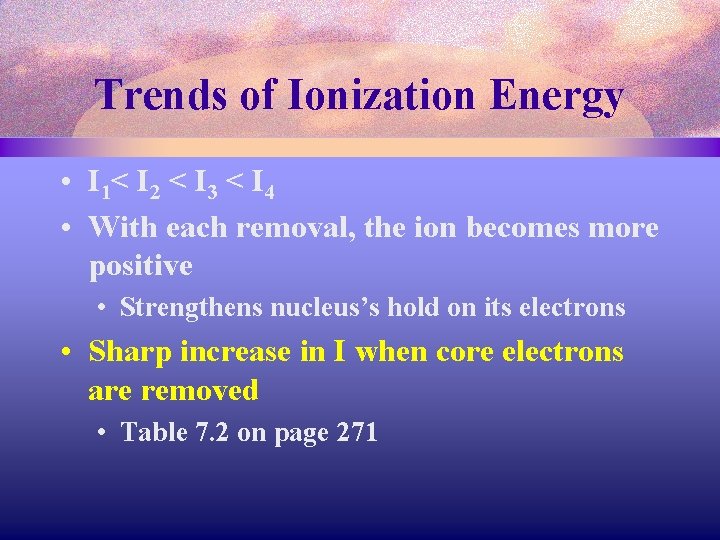
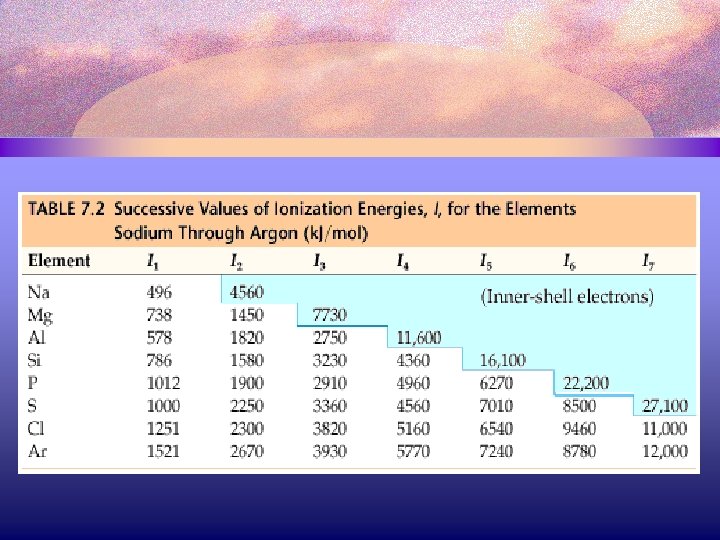
Trends of Ionization Energy • I 1< I 2 < I 3 < I 4 • With each removal, the ion becomes more positive • Strengthens nucleus’s hold on its electrons • Sharp increase in I when core electrons are removed • Table 7. 2 on page 271
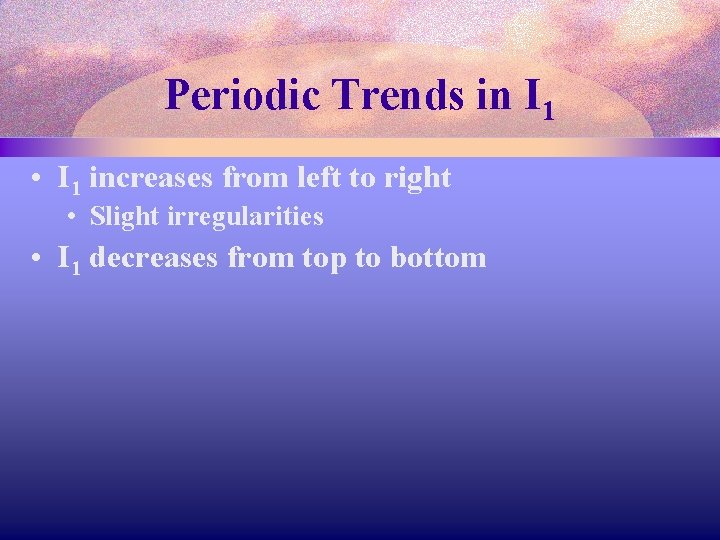
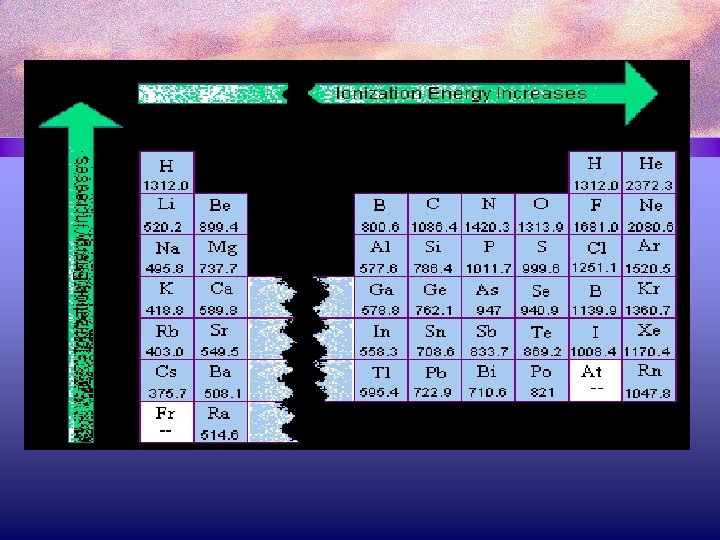
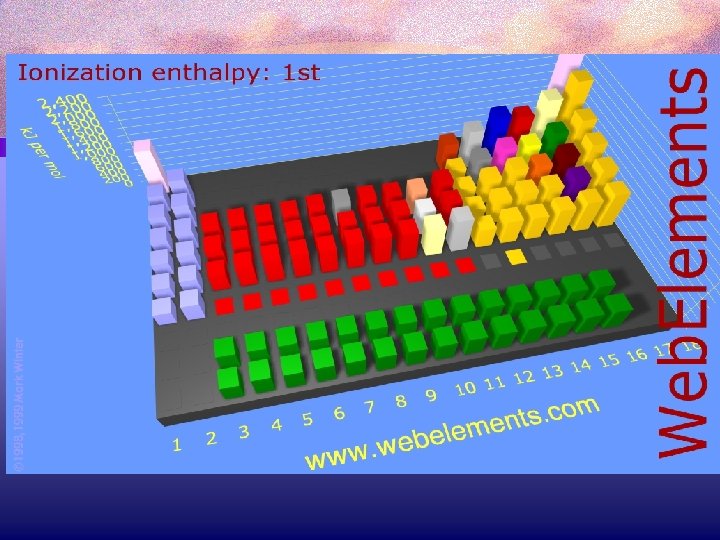
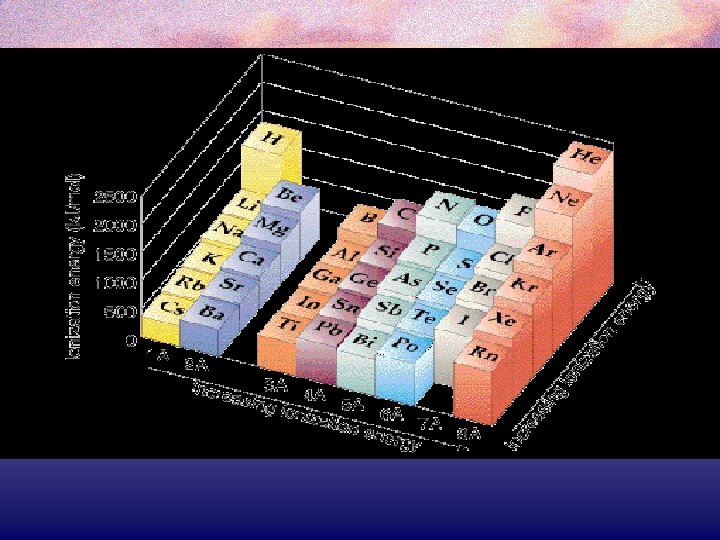
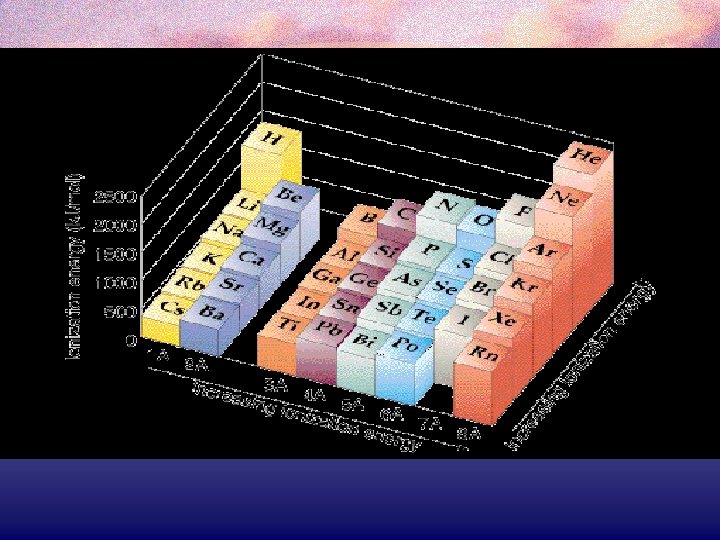
Periodic Trends in I 1 • I 1 increases from left to right • Slight irregularities • I 1 decreases from top to bottom
Factors Affecting Trends • More energy is needed to remove an electron as: • Zeff increases/Atomic Radius decreases (hard to remove e- from a small atom…electrons are closer to nucleus)
Irregularity (3 A) • Decrease from Be to B Be: [He] 2 s 2 B: [He]2 s 2 2 p 1 • 2 p electron of B needs less energy to remove than the 2 s electron of Be • Same for Al and Ga
Irregularity (6 A) O is lower than N N: [He]2 s 2 2 p 3 O: [He]2 s 2 2 p 4 • Hund’s rule: electrons act to minimize repulsion force (stay far apart as possible) • Same for S and Se
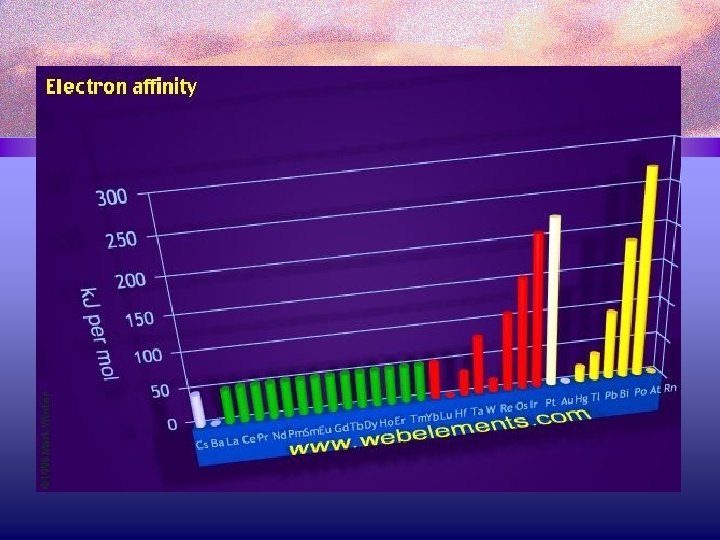
Electron Affinities • Energy change that occurs when electron are added to an atom • Indicates how attracted an atom is to an electron • Usually negative values (energy is released) • More negative affinity = greater attraction
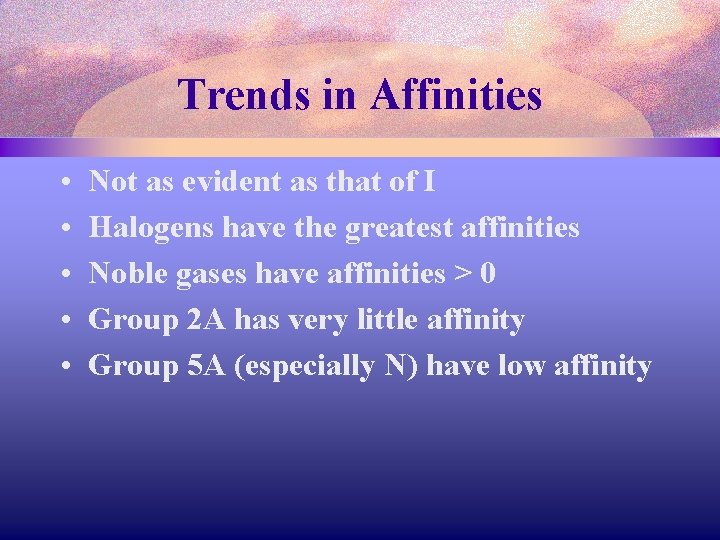
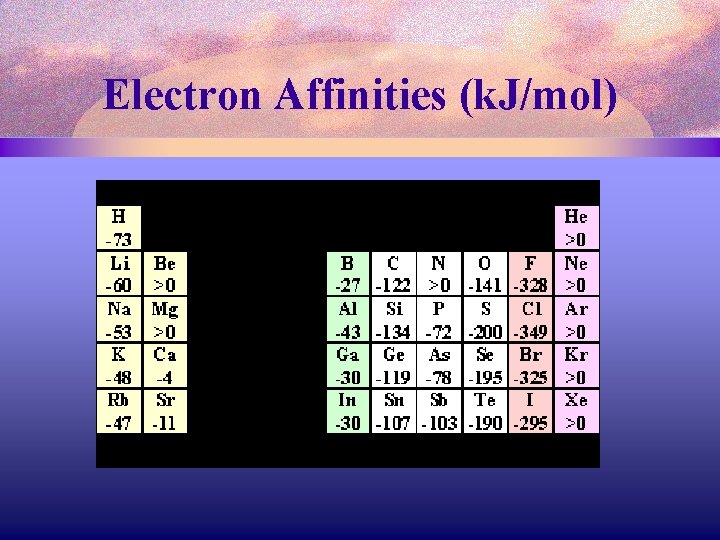
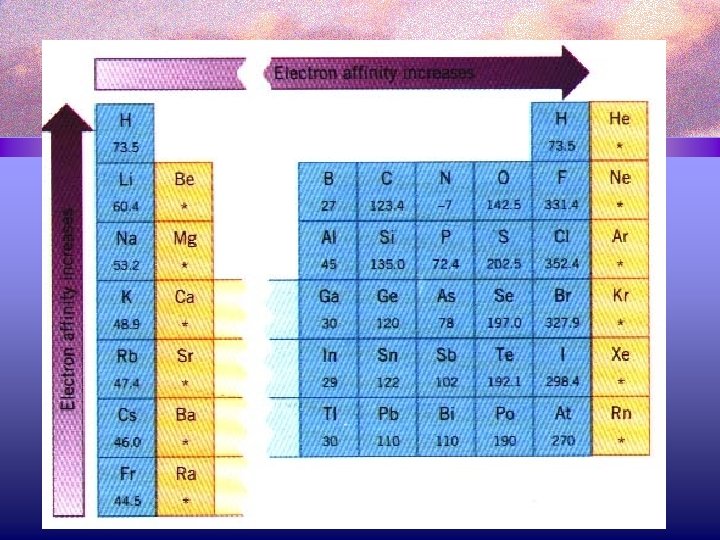
Trends in Affinities • • • Not as evident as that of I Halogens have the greatest affinities Noble gases have affinities > 0 Group 2 A has very little affinity Group 5 A (especially N) have low affinity
Electron Affinities (k. J/mol)