
Ionization Constants of Acids and Bases Strengths of
-Ionization Constants of Acids and Bases -Strengths of Acids and Bases Chemistry Mrs. Coyle
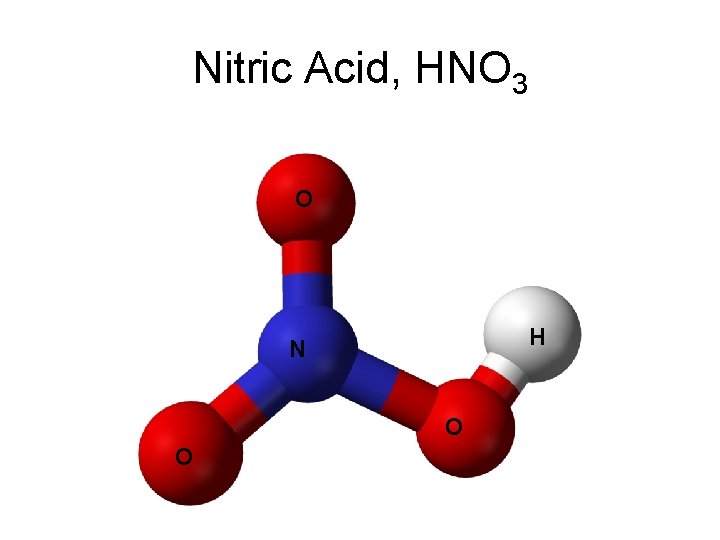
Nitric Acid, HNO 3 O H N O O
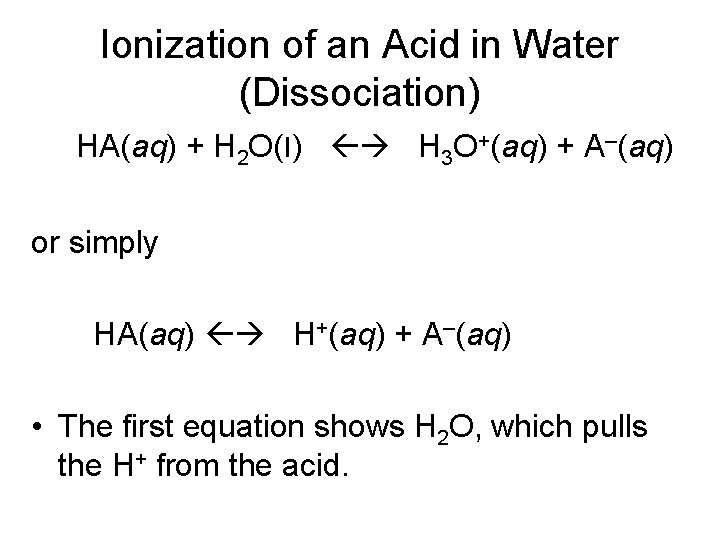
Ionization of an Acid in Water (Dissociation) HA(aq) + H 2 O(l) H 3 O+(aq) + A–(aq) or simply HA(aq) H+(aq) + A–(aq) • The first equation shows H 2 O, which pulls the H+ from the acid.
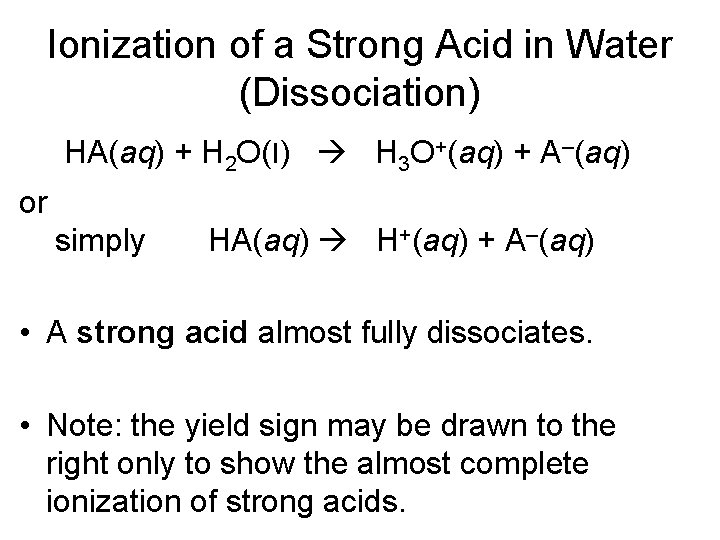
Ionization of a Strong Acid in Water (Dissociation) HA(aq) + H 2 O(l) H 3 O+(aq) + A–(aq) or simply HA(aq) H+(aq) + A–(aq) • A strong acid almost fully dissociates. • Note: the yield sign may be drawn to the right only to show the almost complete ionization of strong acids.
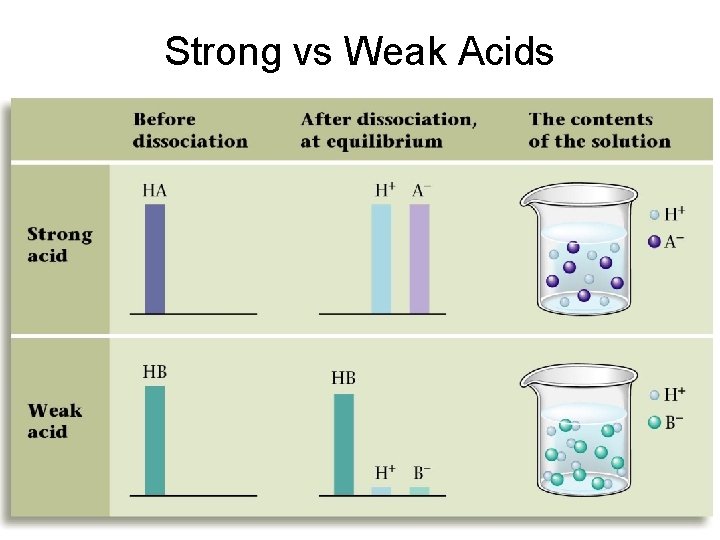
Strong vs Weak Acids
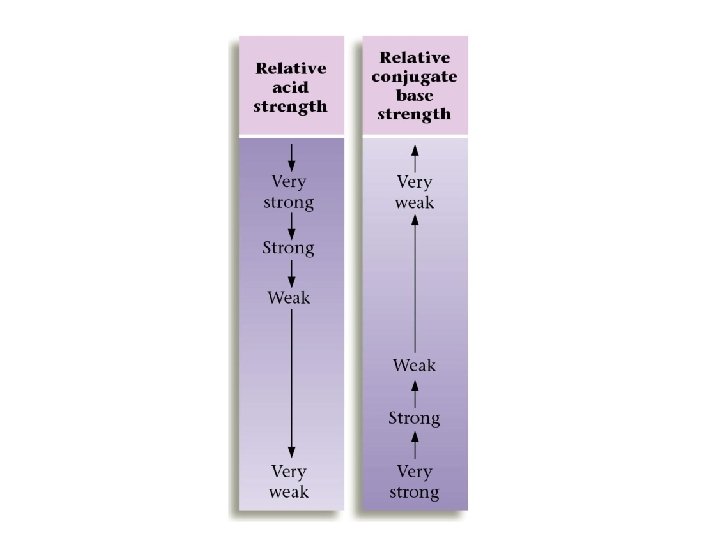
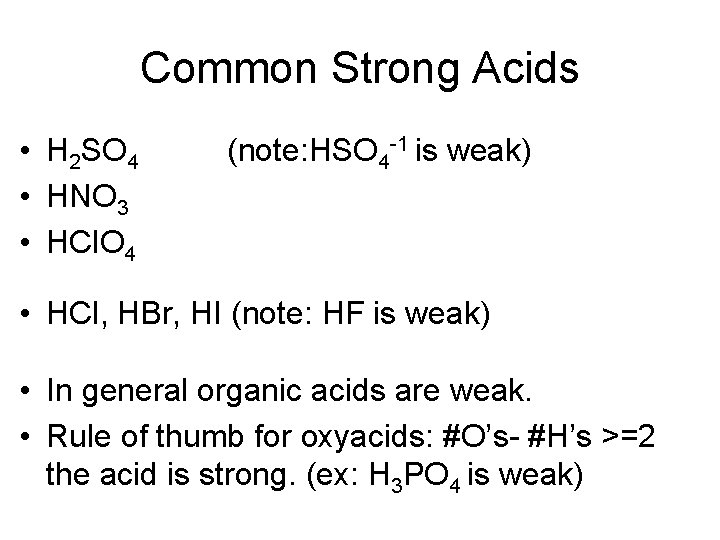
Common Strong Acids • H 2 SO 4 • HNO 3 • HCl. O 4 (note: HSO 4 -1 is weak) • HCl, HBr, HI (note: HF is weak) • In general organic acids are weak. • Rule of thumb for oxyacids: #O’s- #H’s >=2 the acid is strong. (ex: H 3 PO 4 is weak)
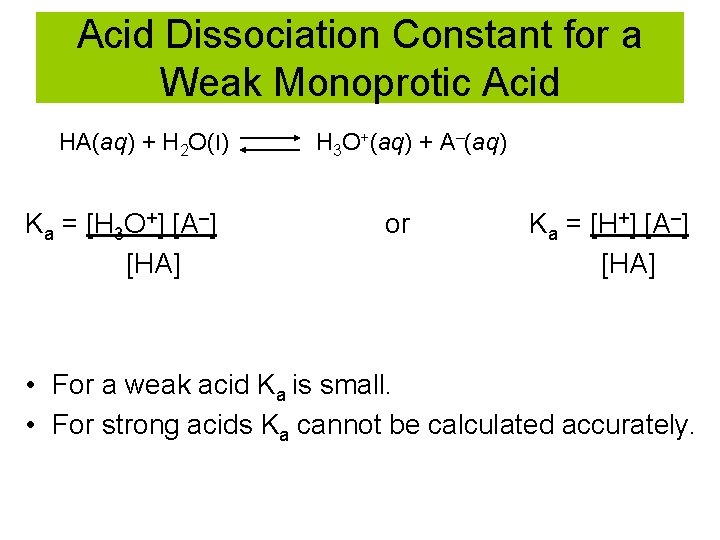
Acid Dissociation Constant for a Weak Monoprotic Acid HA(aq) + H 2 O(l) Ka = [H 3 O+] [A–] [HA] H 3 O+(aq) + A–(aq) or Ka = [H+] [A–] [HA] • For a weak acid Ka is small. • For strong acids Ka cannot be calculated accurately.
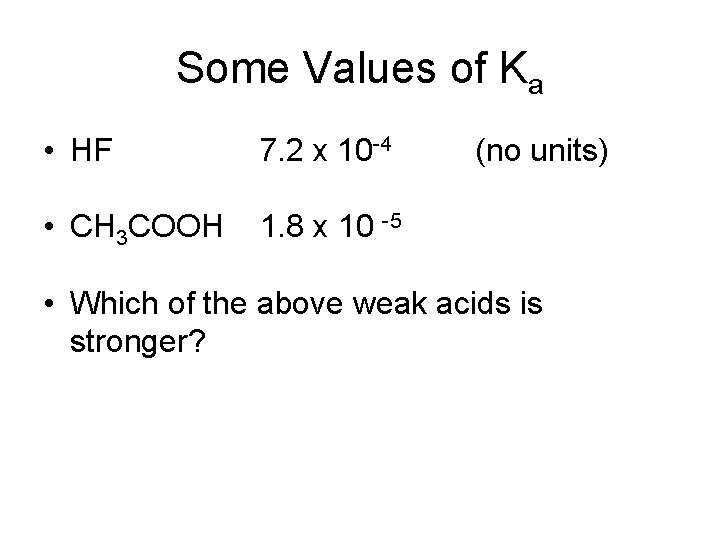
Some Values of Ka • HF 7. 2 x 10 -4 • CH 3 COOH 1. 8 x 10 -5 (no units) • Which of the above weak acids is stronger?
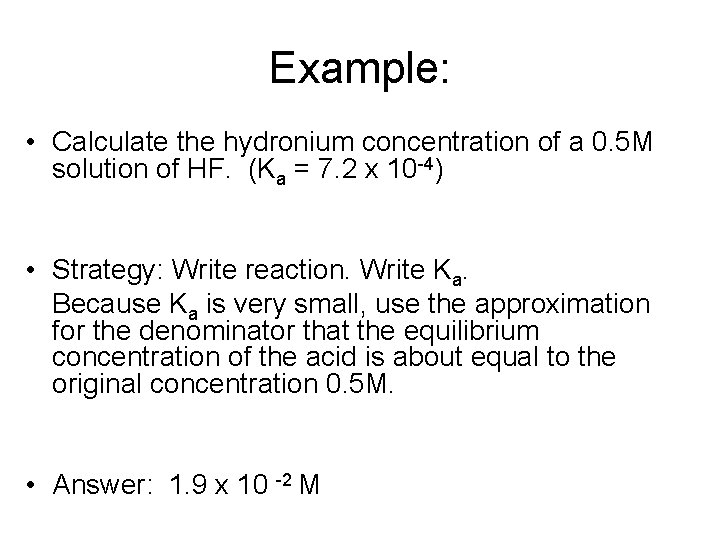
Example: • Calculate the hydronium concentration of a 0. 5 M solution of HF. (Ka = 7. 2 x 10 -4) • Strategy: Write reaction. Write Ka. Because Ka is very small, use the approximation for the denominator that the equilibrium concentration of the acid is about equal to the original concentration 0. 5 M. • Answer: 1. 9 x 10 -2 M
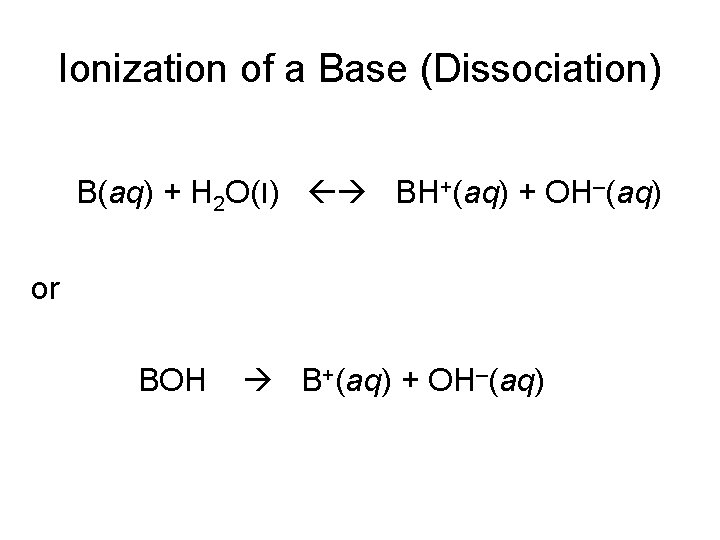
Ionization of a Base (Dissociation) B(aq) + H 2 O(l) BH+(aq) + OH–(aq) or BOH B+(aq) + OH–(aq)
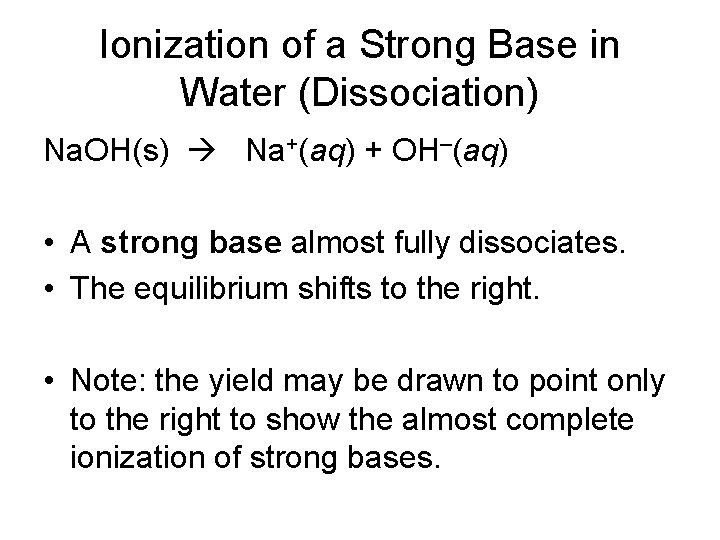
Ionization of a Strong Base in Water (Dissociation) Na. OH(s) Na+(aq) + OH–(aq) • A strong base almost fully dissociates. • The equilibrium shifts to the right. • Note: the yield may be drawn to point only to the right to show the almost complete ionization of strong bases.
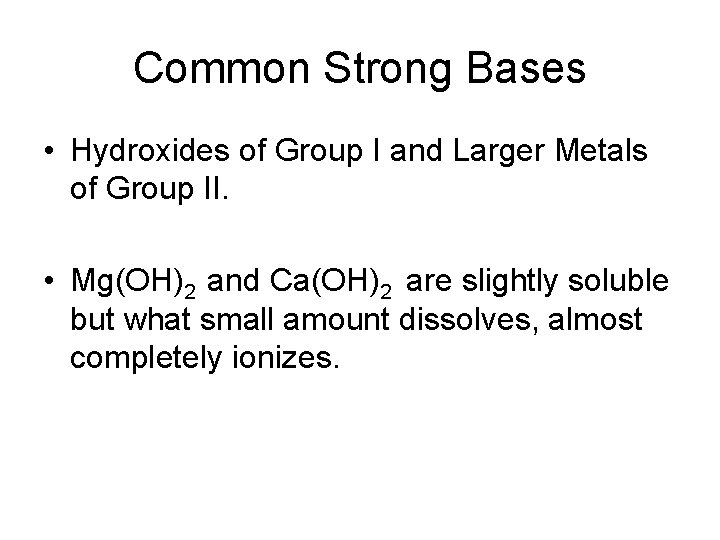
Common Strong Bases • Hydroxides of Group I and Larger Metals of Group II. • Mg(OH)2 and Ca(OH)2 are slightly soluble but what small amount dissolves, almost completely ionizes.
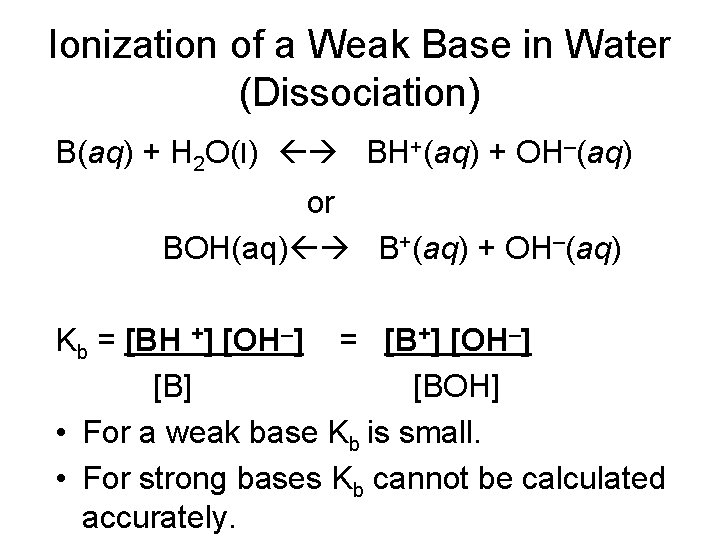
Ionization of a Weak Base in Water (Dissociation) B(aq) + H 2 O(l) BH+(aq) + OH–(aq) or BOH(aq) B+(aq) + OH–(aq) Kb = [BH +] [OH–] = [B+] [OH–] [BOH] • For a weak base Kb is small. • For strong bases Kb cannot be calculated accurately.
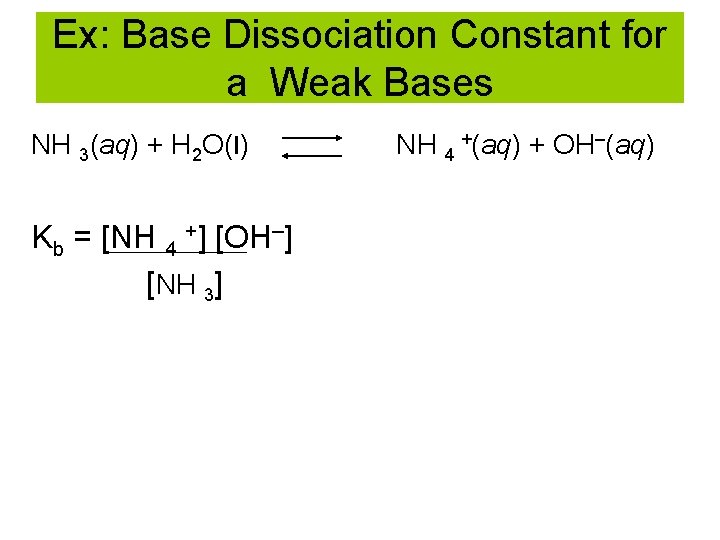
Ex: Base Dissociation Constant for a Weak Bases NH 3(aq) + H 2 O(l) Kb = [NH 4 +] [OH–] [NH 3] NH 4 +(aq) + OH–(aq)
- Slides: 15