
Ionic Compounds What holds them together Ion Pair


- Slides: 23
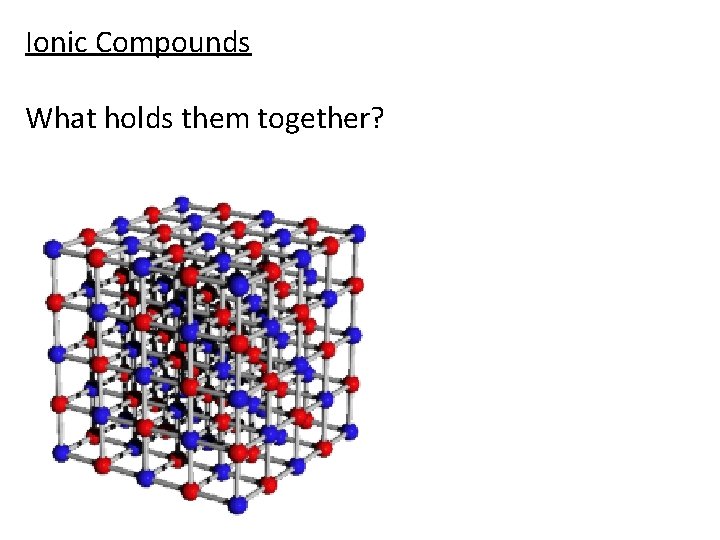
Ionic Compounds What holds them together?
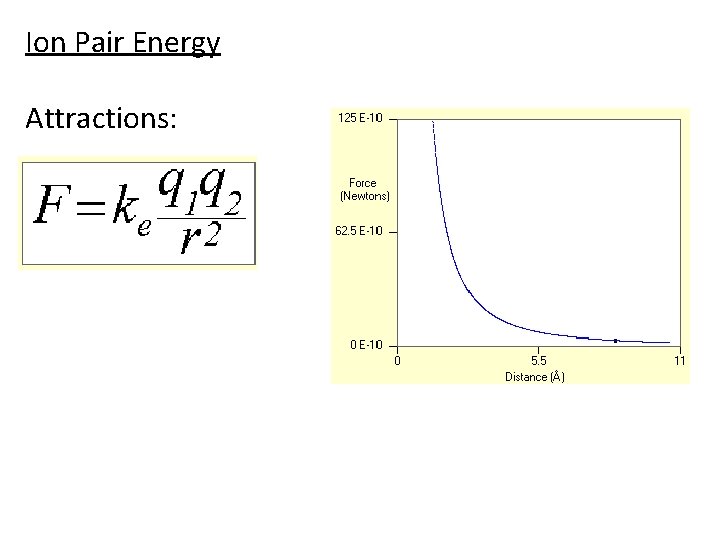
Ion Pair Energy Attractions:
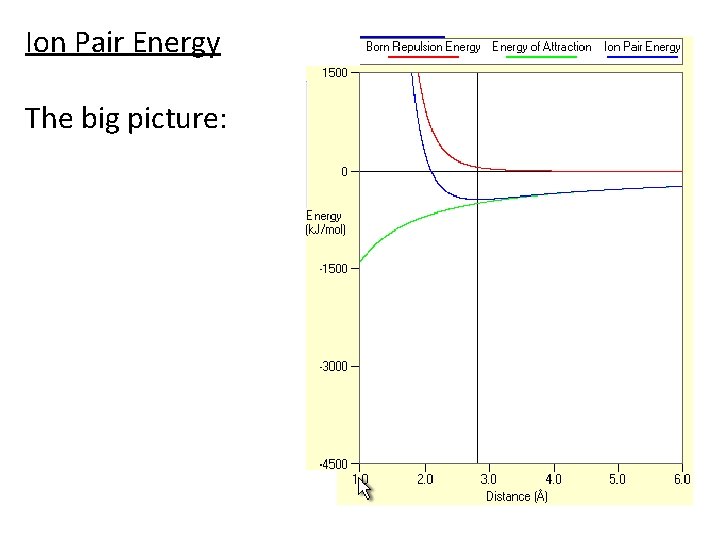
Ion Pair Energy The big picture:
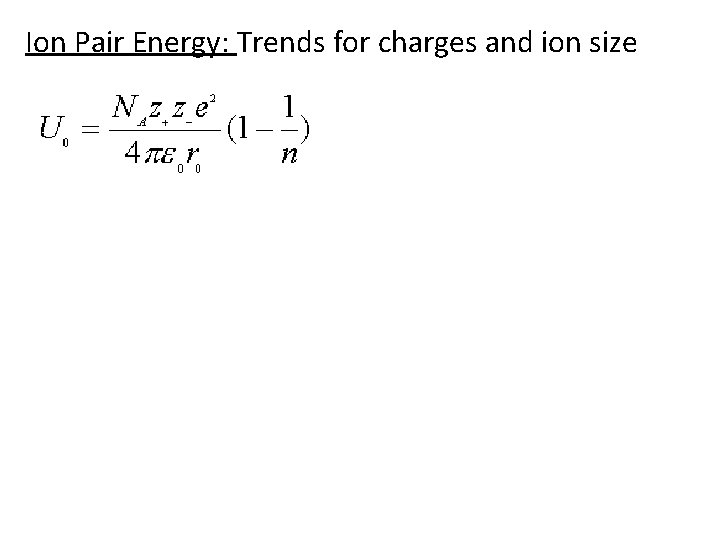
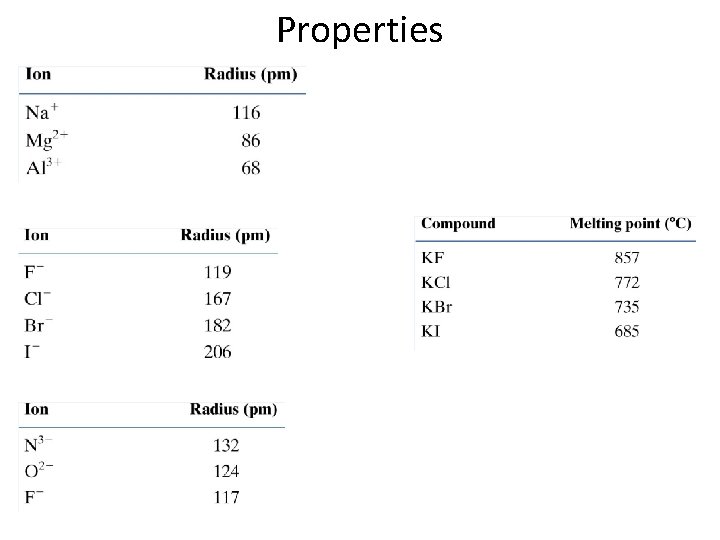
Ion Pair Energy: Trends for charges and ion size
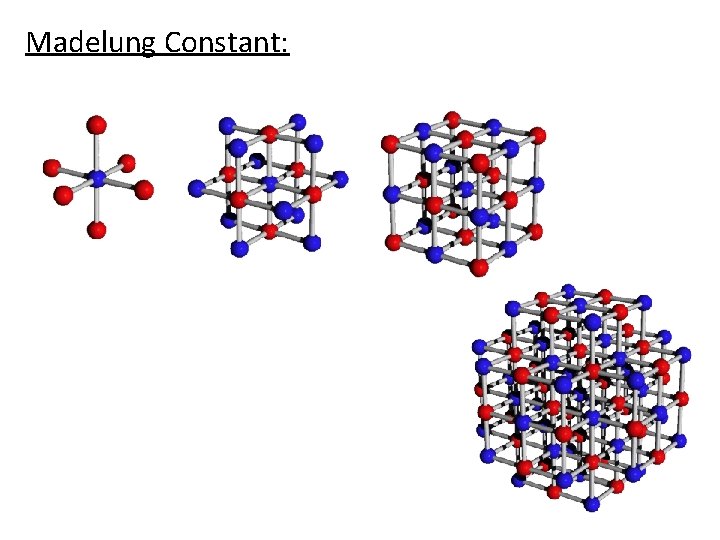
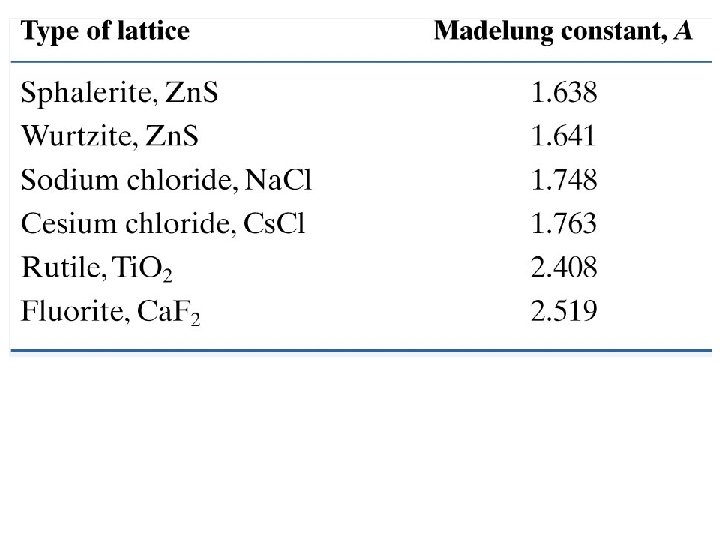
Madelung Constant:
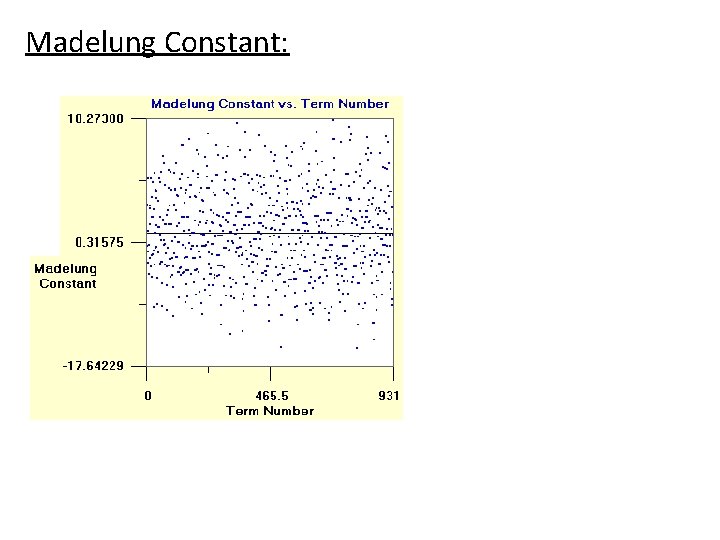
Madelung Constant:
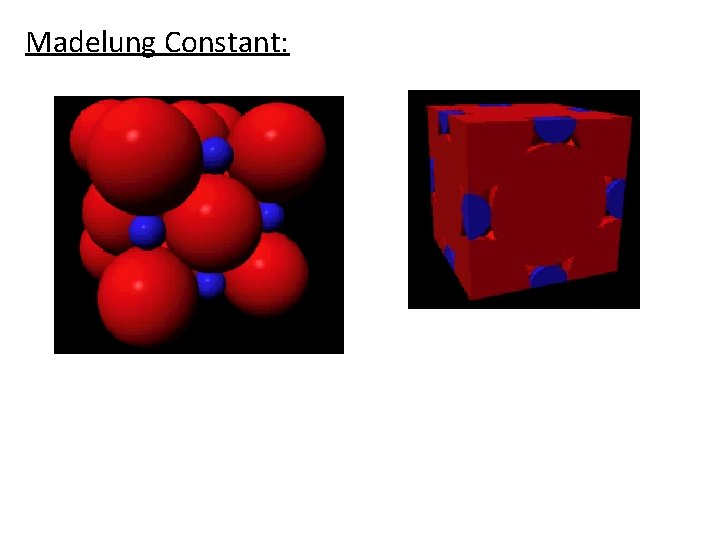
Madelung Constant:
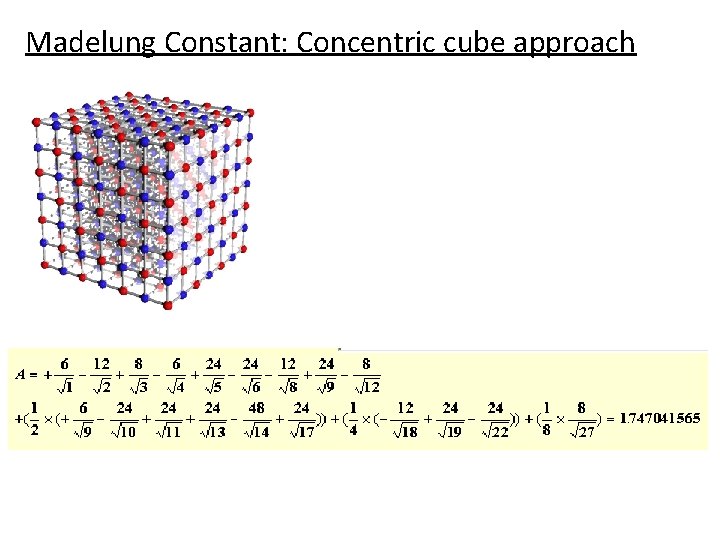
Madelung Constant: Concentric cube approach
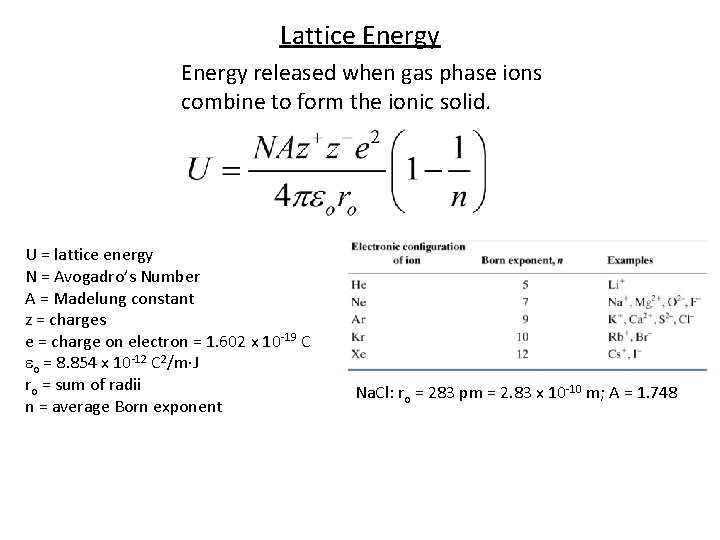
Lattice Energy released when gas phase ions combine to form the ionic solid. U = lattice energy N = Avogadro’s Number A = Madelung constant z = charges e = charge on electron = 1. 602 x 10 -19 C o = 8. 854 x 10 -12 C 2/m J ro = sum of radii n = average Born exponent Na. Cl: ro = 283 pm = 2. 83 x 10 -10 m; A = 1. 748
Lattice Energy released when gas phase ions combine to form the ionic solid. U = lattice energy N = Avogadro’s Number A = Madelung constant z = charges e = charge on electron = 1. 602 x 10 -19 C o = 8. 854 x 10 -12 C 2/m J ro = sum of radii n = average Born exponent Na. Cl: ro = 283 pm = 2. 83 x 10 -10 m; A = 1. 748
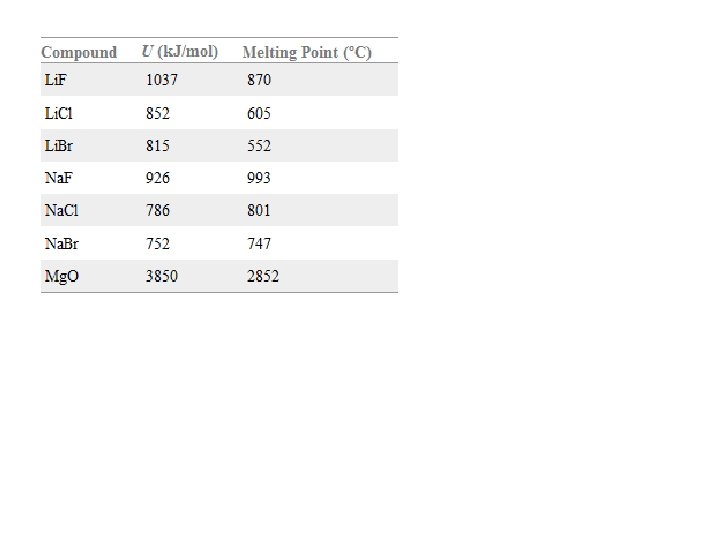
Properties
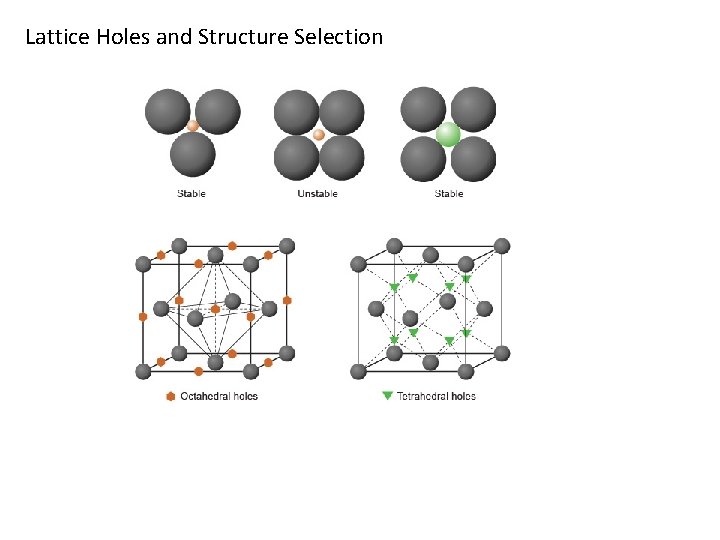
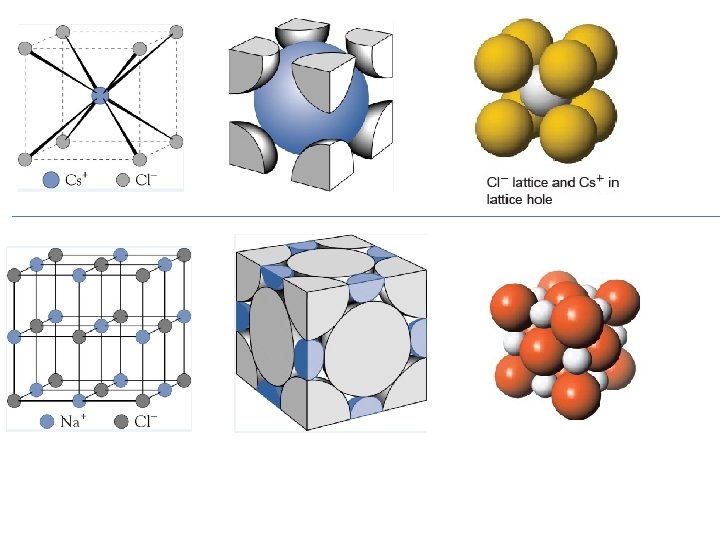
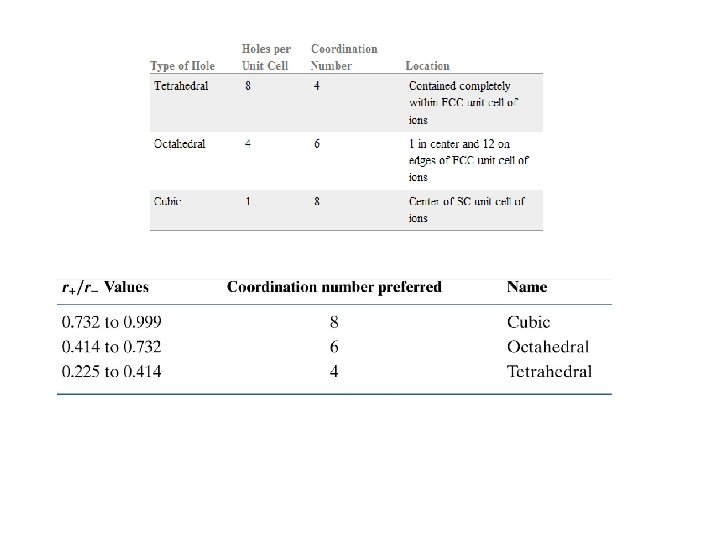
Lattice Holes and Structure Selection
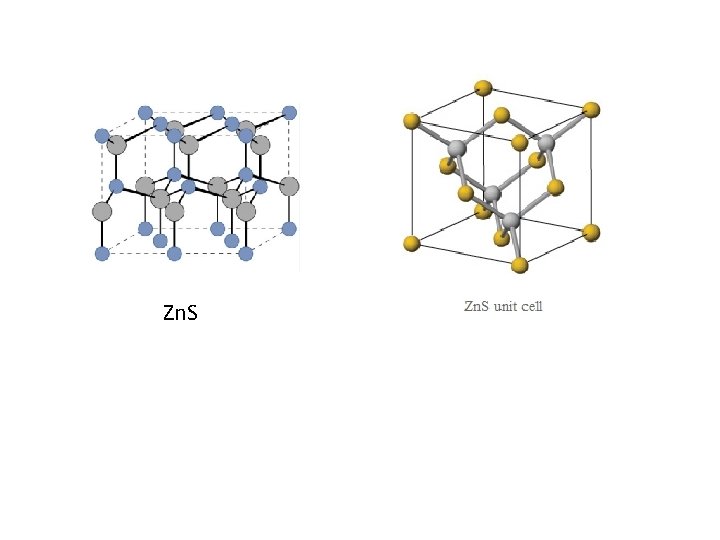
Zn. S
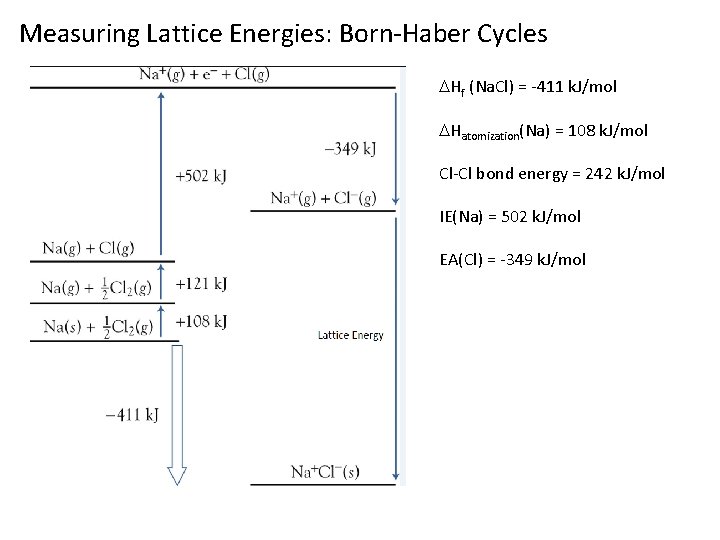
Measuring Lattice Energies: Born-Haber Cycles Hf (Na. Cl) = -411 k. J/mol Hatomization(Na) = 108 k. J/mol Cl-Cl bond energy = 242 k. J/mol IE(Na) = 502 k. J/mol EA(Cl) = -349 k. J/mol
Question: Is the driving force formation of Na. Cl the electron transfer from Na to Cl? That is, is it because Cl wants Na’s valence electron more than Na wants it?
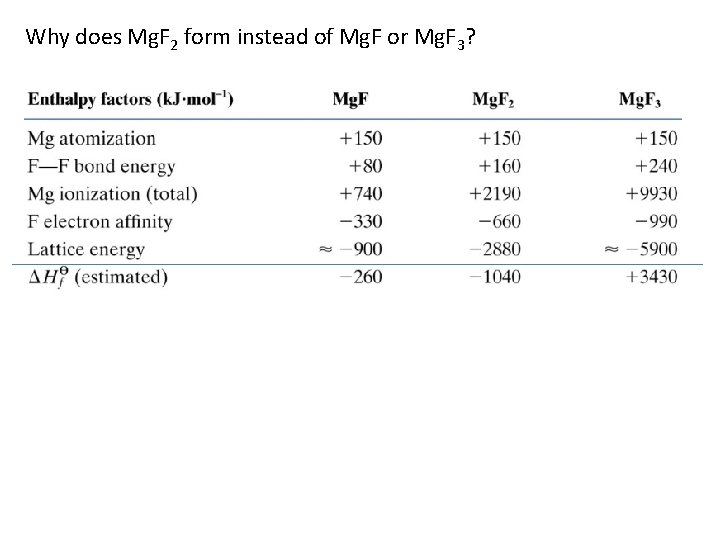
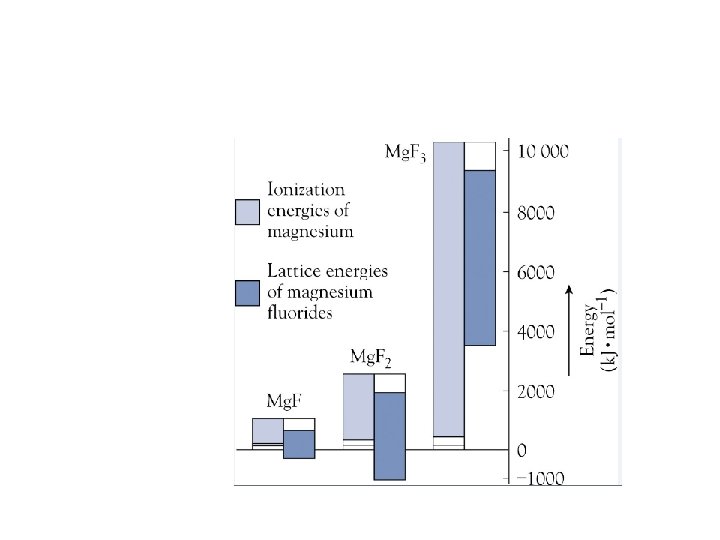
Why does Mg. F 2 form instead of Mg. F or Mg. F 3?