
Ionic Compounds Multivalent Metals and Polyatomics Lesson 2
- Slides: 9
Ionic Compounds: Multivalent Metals and Polyatomics Lesson #2:
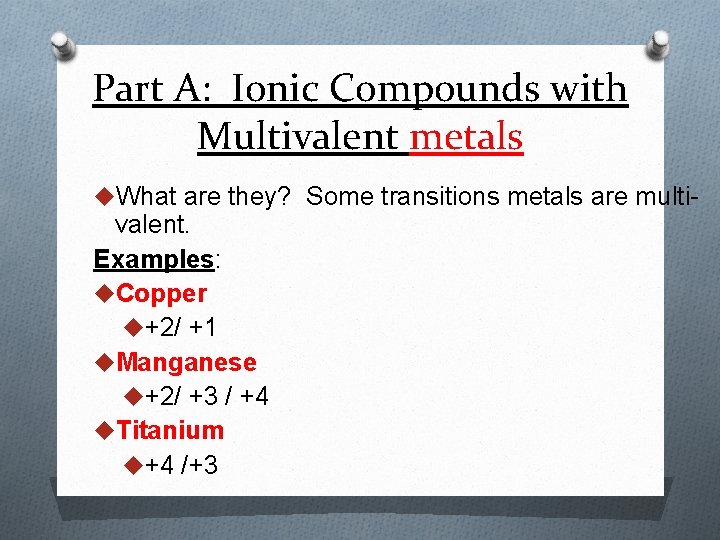
Part A: Ionic Compounds with Multivalent metals u. What are they? Some transitions metals are multi- valent. Examples: u. Copper u+2/ +1 u. Manganese u+2/ +3 / +4 u. Titanium u+4 /+3
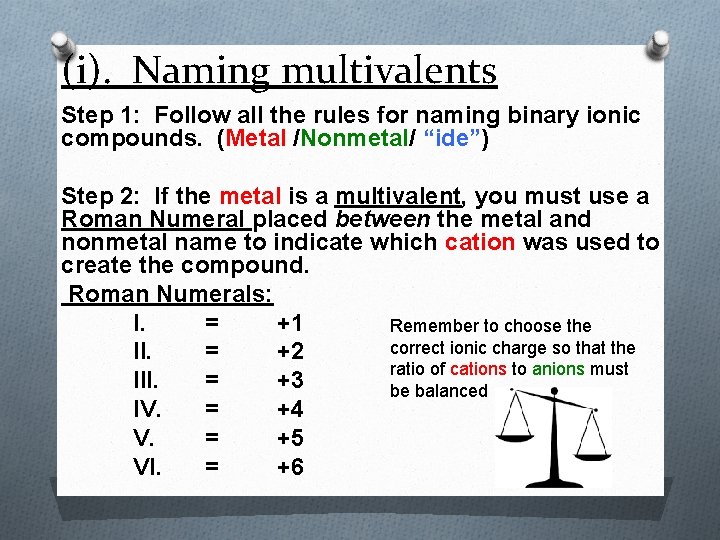
(i). Naming multivalents Step 1: Follow all the rules for naming binary ionic compounds. (Metal /Nonmetal/ “ide”) Step 2: If the metal is a multivalent, you must use a Roman Numeral placed between the metal and nonmetal name to indicate which cation was used to create the compound. Roman Numerals: I. = +1 Remember to choose the correct ionic charge so that the II. = +2 ratio of cations to anions must III. = +3 be balanced IV. = +4 V. = +5 VI. = +6
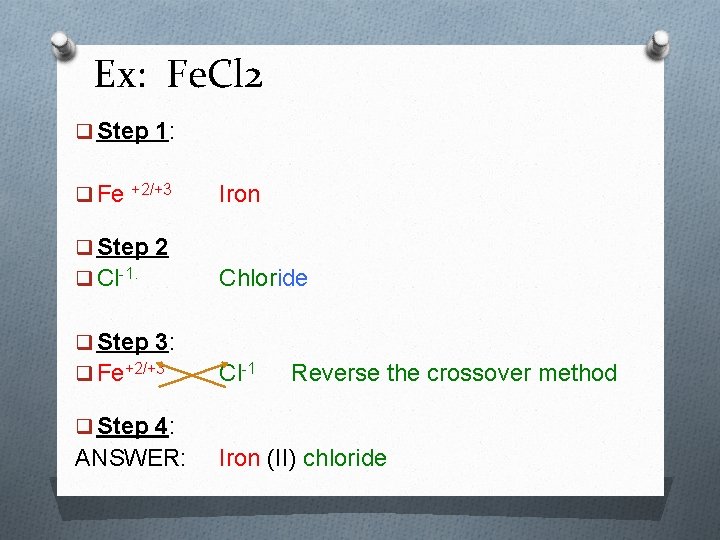
Ex: Fe. Cl 2 q Step 1: q Fe +2/+3 Iron q Step 2 q Cl-1. Chloride q Step 3: q Fe+2/+3 Cl-1 Reverse the crossover method q Step 4: ANSWER: Iron (II) chloride
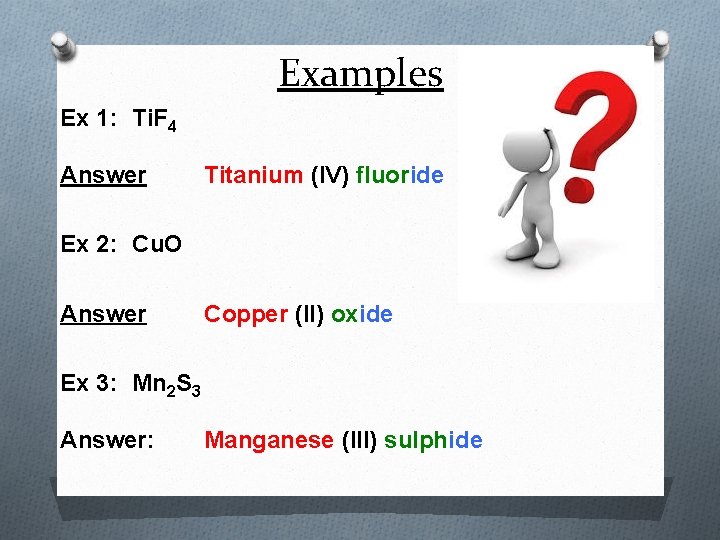
Examples Ex 1: Ti. F 4 Answer Titanium (IV) fluoride Ex 2: Cu. O Answer Copper (II) oxide Ex 3: Mn 2 S 3 Answer: Manganese (III) sulphide
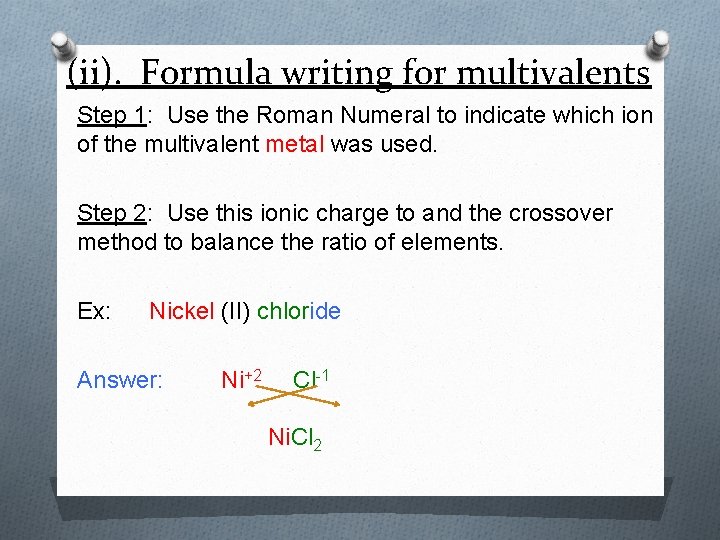
(ii). Formula writing for multivalents Step 1: Use the Roman Numeral to indicate which ion of the multivalent metal was used. Step 2: Use this ionic charge to and the crossover method to balance the ratio of elements. Ex: Nickel (II) chloride Answer: Ni+2 Cl-1 Ni. Cl 2
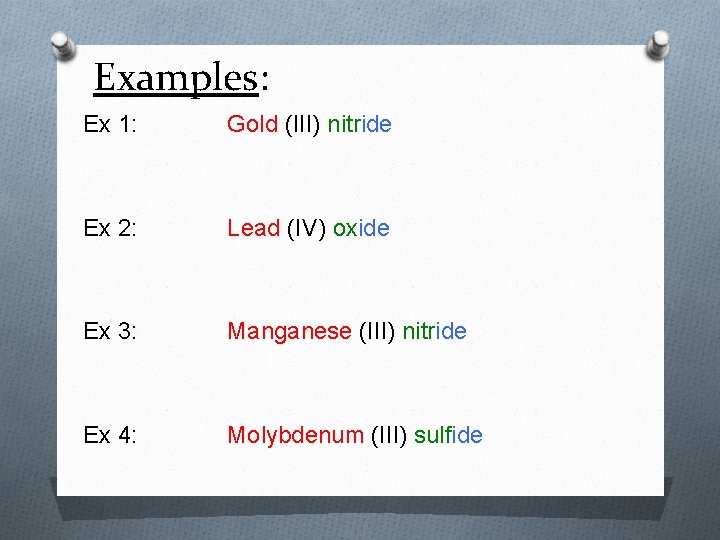
Examples: Ex 1: Gold (III) nitride Ex 2: Lead (IV) oxide Ex 3: Manganese (III) nitride Ex 4: Molybdenum (III) sulfide
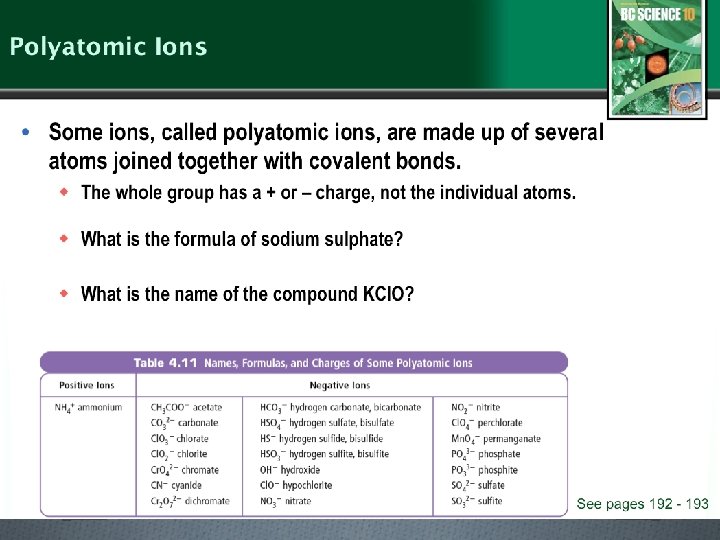
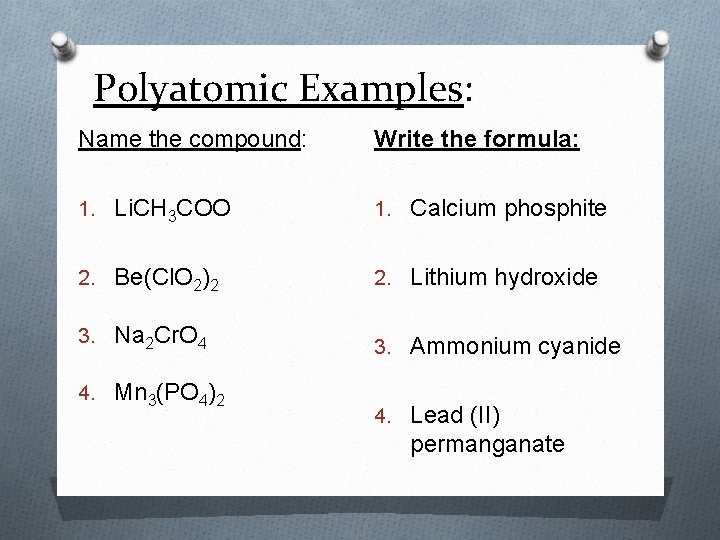
Polyatomic Examples: Name the compound: Write the formula: 1. Li. CH 3 COO 1. Calcium phosphite 2. Be(Cl. O 2)2 2. Lithium hydroxide 3. Na 2 Cr. O 4 3. Ammonium cyanide 4. Mn 3(PO 4)2 4. Lead (II) permanganate