
Ionic compounds made up of positive and negative
- Slides: 6
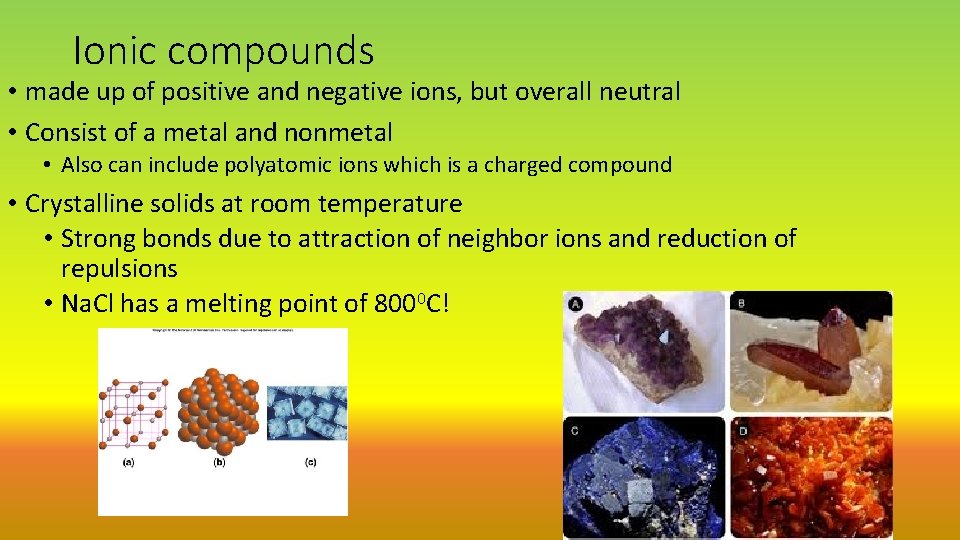
Ionic compounds • made up of positive and negative ions, but overall neutral • Consist of a metal and nonmetal • Also can include polyatomic ions which is a charged compound • Crystalline solids at room temperature • Strong bonds due to attraction of neighbor ions and reduction of repulsions • Na. Cl has a melting point of 8000 C!
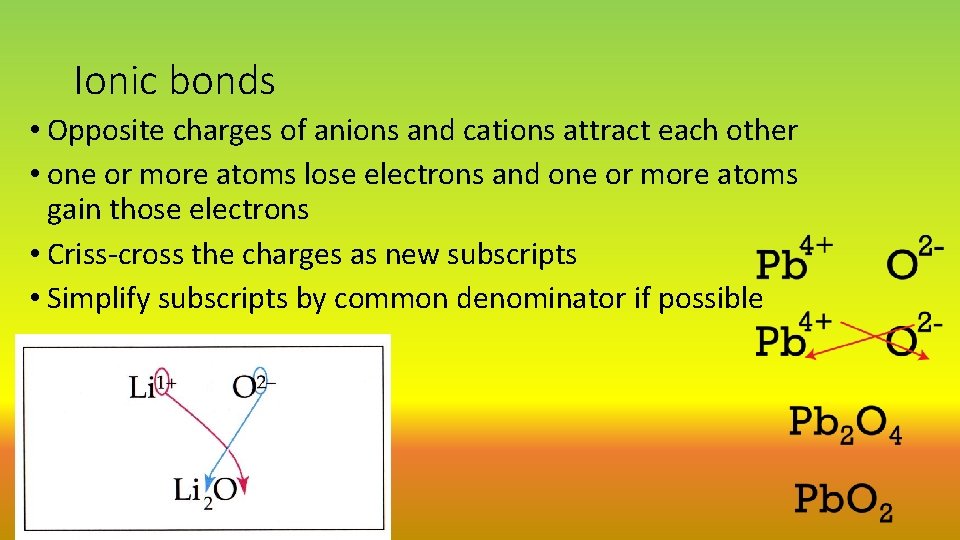
Ionic bonds • Opposite charges of anions and cations attract each other • one or more atoms lose electrons and one or more atoms gain those electrons • Criss-cross the charges as new subscripts • Simplify subscripts by common denominator if possible
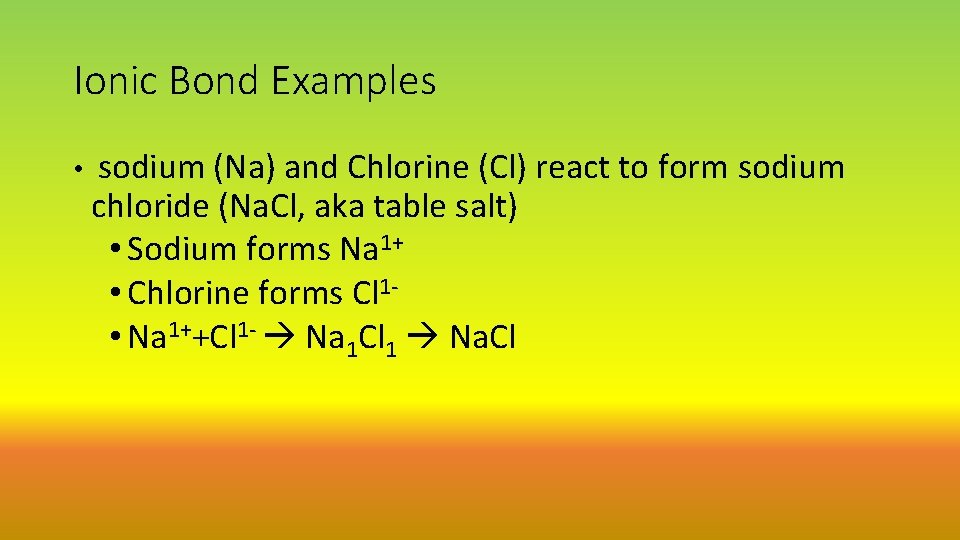
Ionic Bond Examples • sodium (Na) and Chlorine (Cl) react to form sodium chloride (Na. Cl, aka table salt) • Sodium forms Na 1+ • Chlorine forms Cl 1 • Na 1++Cl 1 - Na 1 Cl 1 Na. Cl
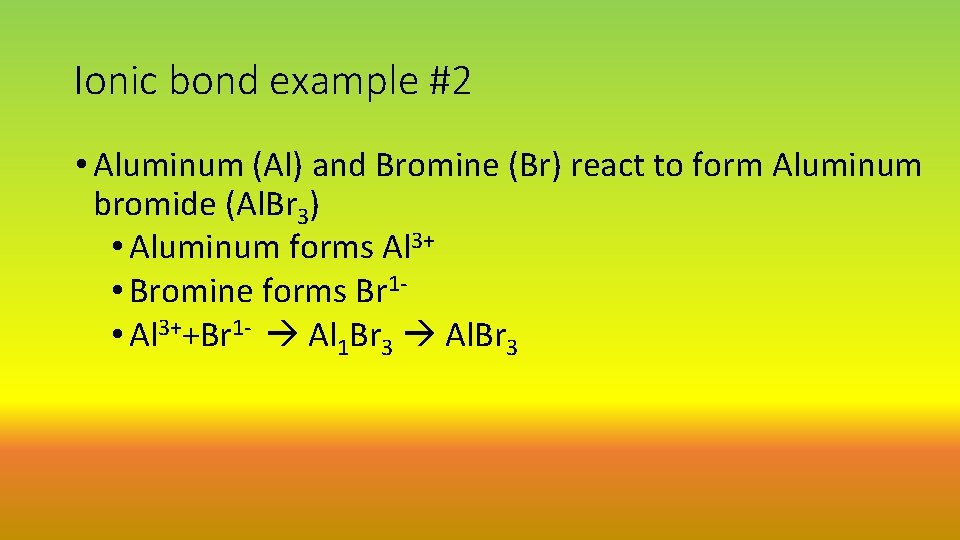
Ionic bond example #2 • Aluminum (Al) and Bromine (Br) react to form Aluminum bromide (Al. Br 3) • Aluminum forms Al 3+ • Bromine forms Br 1 • Al 3++Br 1 - Al 1 Br 3 Al. Br 3
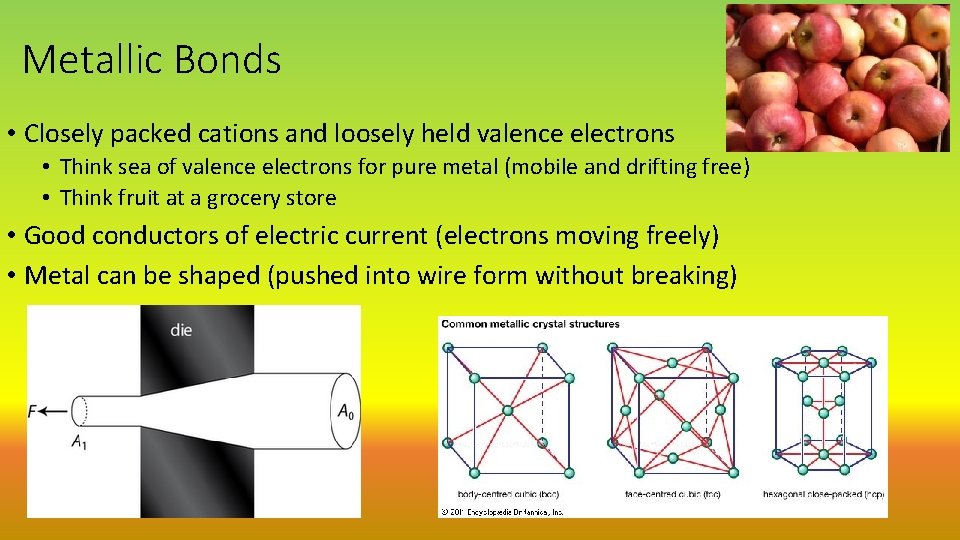
Metallic Bonds • Closely packed cations and loosely held valence electrons • Think sea of valence electrons for pure metal (mobile and drifting free) • Think fruit at a grocery store • Good conductors of electric current (electrons moving freely) • Metal can be shaped (pushed into wire form without breaking)
Alloys • Combination of two or more elements with at least one being a metal • Superior properties of individual elements • Harder and more durable, but easier to shape • Ex bronze, sterling silver