
Ionic Compounds Atoms vs Ions Ion an atom

- Slides: 40
Ionic Compounds
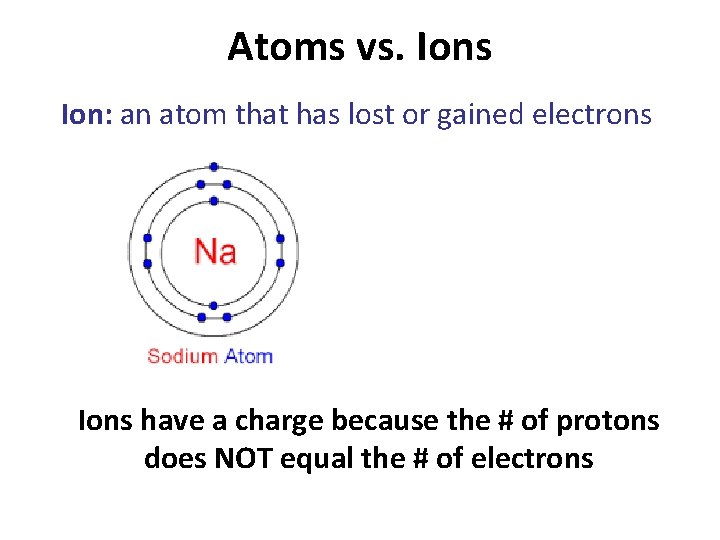
Atoms vs. Ions Ion: an atom that has lost or gained electrons Ions have a charge because the # of protons does NOT equal the # of electrons
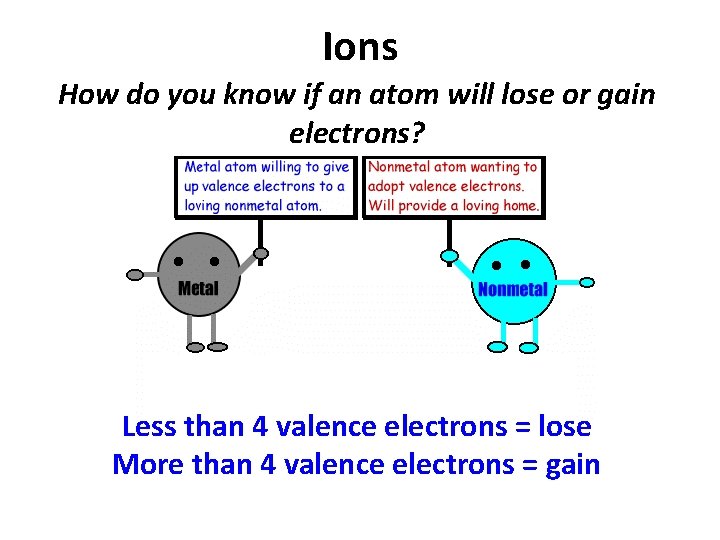
Ions How do you know if an atom will lose or gain electrons? Less than 4 valence electrons = lose More than 4 valence electrons = gain
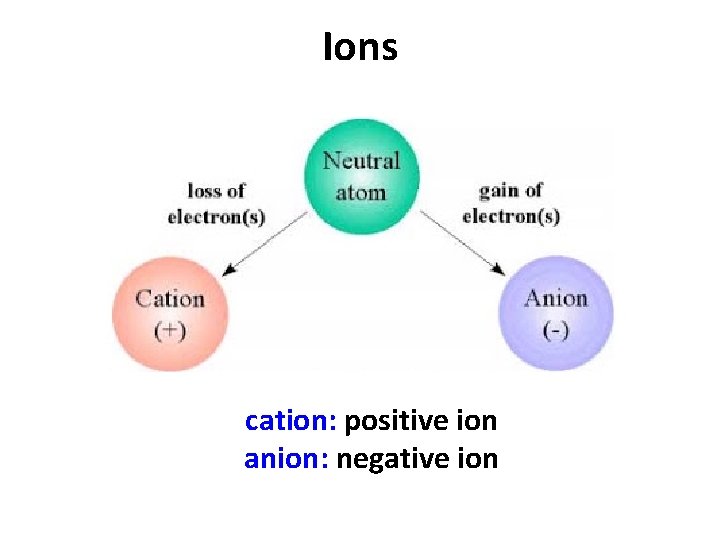
Ions cation: positive ion anion: negative ion
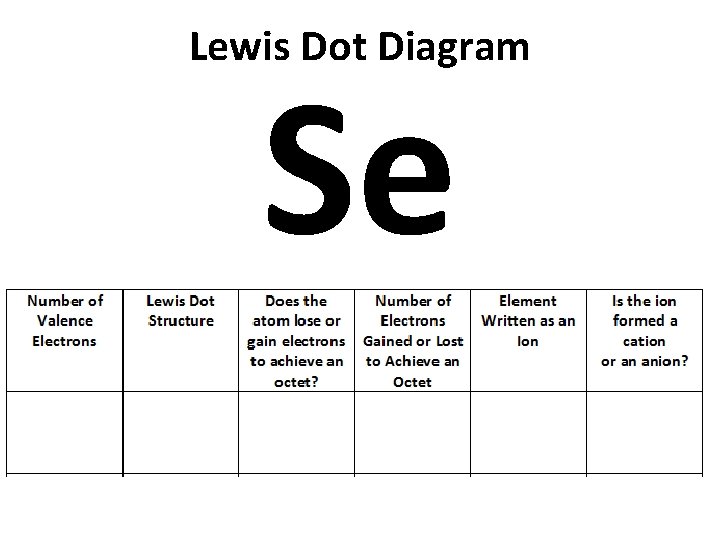
Lewis Dot Diagram Se
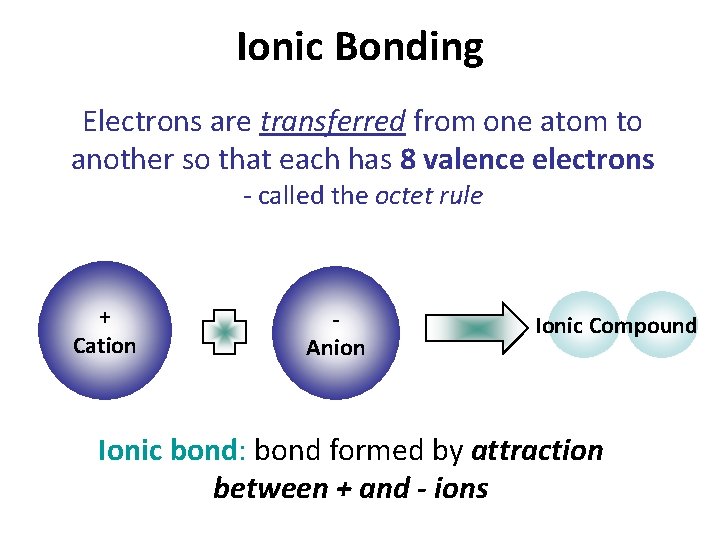
Ionic Bonding Electrons are transferred from one atom to another so that each has 8 valence electrons - called the octet rule + Cation Anion Ionic Compound Ionic bond: bond formed by attraction between + and - ions
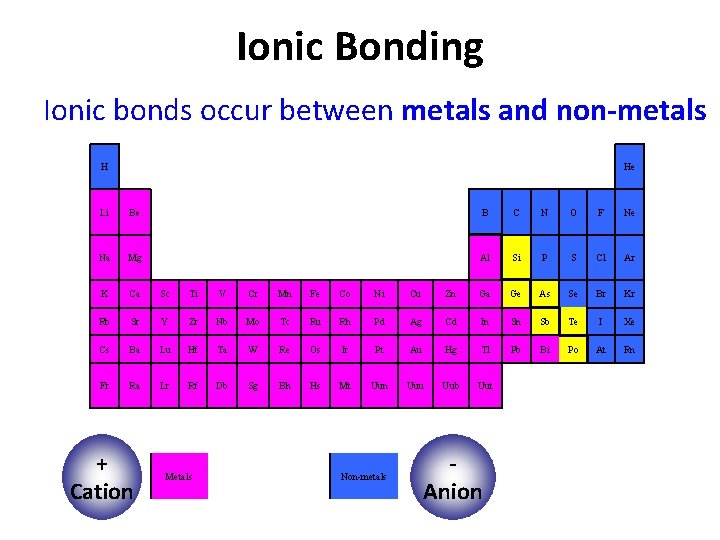
Ionic Bonding Ionic bonds occur between metals and non-metals H He Li Be B C N O F Ne Na Mg Al Si P S Cl Ar K Ca Sc Ti V Cr Mn Fe Co Ni Cu Zn Ga Ge As Se Br Kr Rb Sr Y Zr Nb Mo Tc Ru Rh Pd Ag Cd In Sn Sb Te I Xe Cs Ba Lu Hf Ta W Re Os Ir Pt Au Hg Tl Pb Bi Po At Rn Fr Ra Lr Rf Db Sg Bh Hs Mt Uun Uuu Uub Uut + Cation Metals Metalloids Non-metals Anion
Binary Ionic Compounds Formula to Name
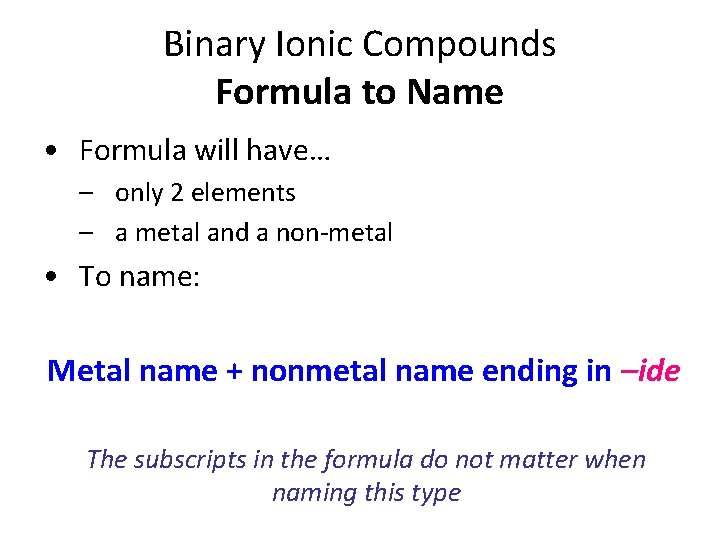
Binary Ionic Compounds Formula to Name • Formula will have… – only 2 elements – a metal and a non-metal • To name: Metal name + nonmetal name ending in –ide The subscripts in the formula do not matter when naming this type
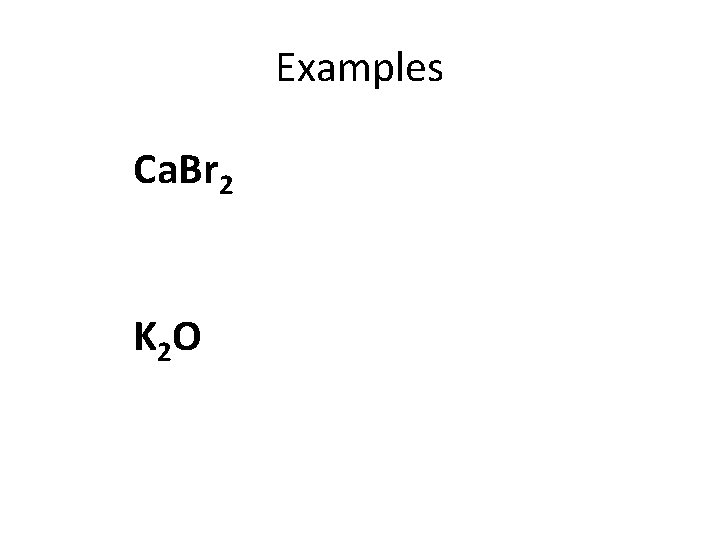
Examples Ca. Br 2 K 2 O
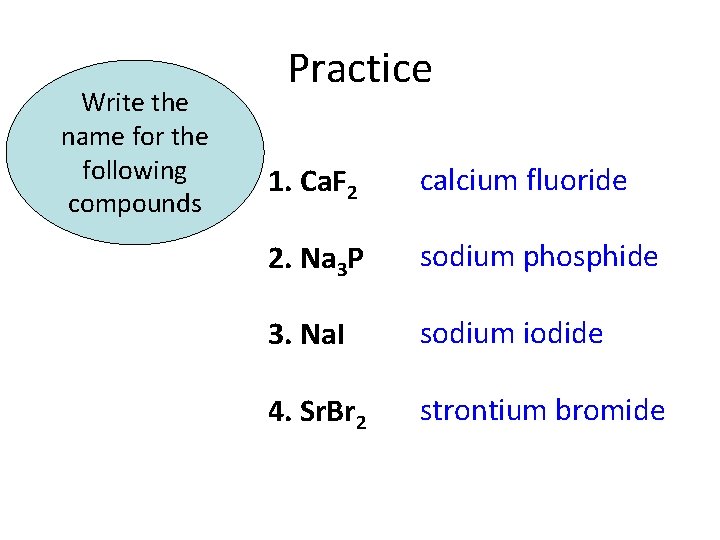
Write the name for the following compounds Practice 1. Ca. F 2 calcium fluoride 2. Na 3 P sodium phosphide 3. Na. I sodium iodide 4. Sr. Br 2 strontium bromide
Binary Ionic Compounds Name to Formula
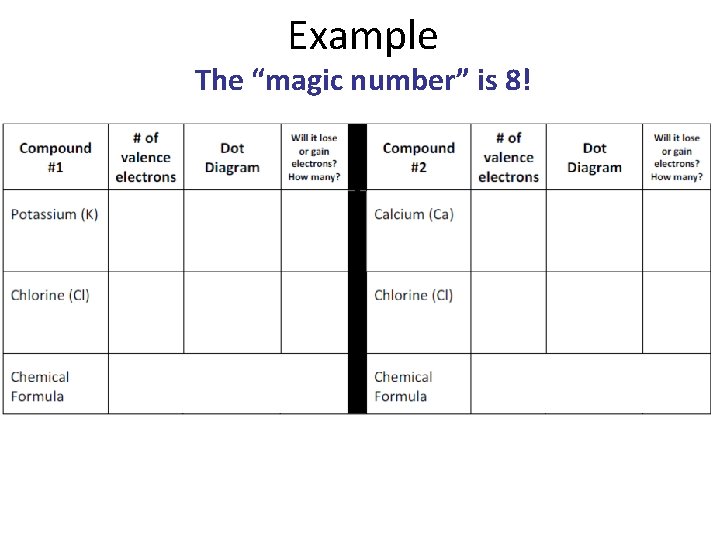
Example The “magic number” is 8!
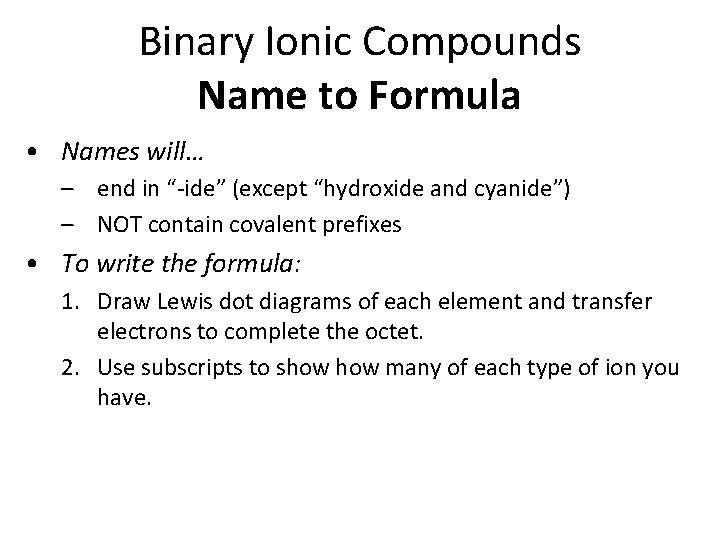
Binary Ionic Compounds Name to Formula • Names will… – end in “-ide” (except “hydroxide and cyanide”) – NOT contain covalent prefixes • To write the formula: 1. Draw Lewis dot diagrams of each element and transfer electrons to complete the octet. 2. Use subscripts to show many of each type of ion you have.
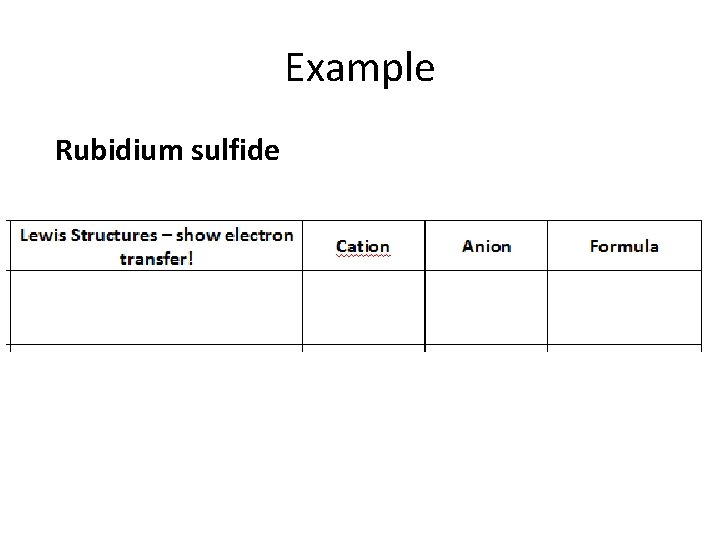
Example Rubidium sulfide
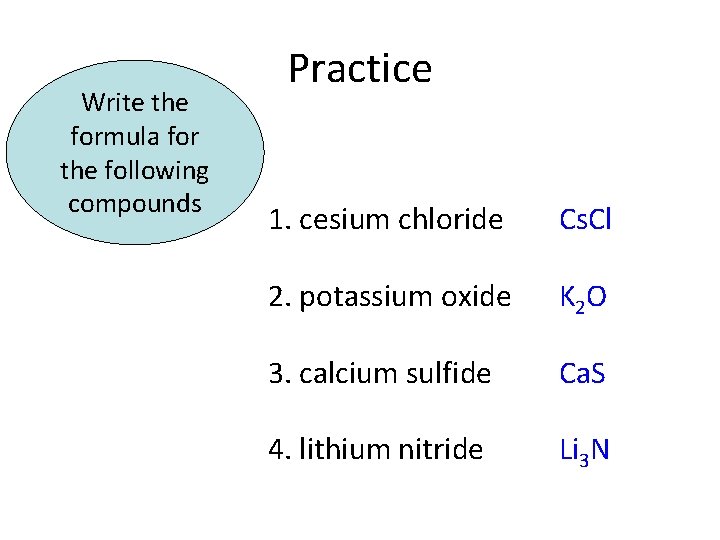
Write the formula for the following compounds Practice 1. cesium chloride Cs. Cl 2. potassium oxide K 2 O 3. calcium sulfide Ca. S 4. lithium nitride Li 3 N
Multivalent Ionic Compounds Name to Formula
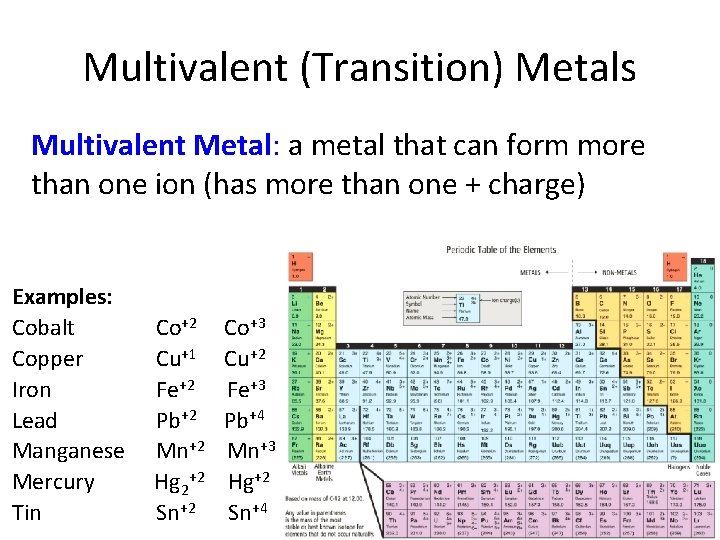
Multivalent (Transition) Metals Multivalent Metal: a metal that can form more than one ion (has more than one + charge) Examples: Cobalt Copper Iron Lead Manganese Mercury Tin Co+2 Cu+1 Fe+2 Pb+2 Mn+2 Hg 2+2 Sn+2 Co+3 Cu+2 Fe+3 Pb+4 Mn+3 Hg+2 Sn+4
Multivalent Ionic Compounds Name to Formula • Names will… – have roman numerals (I, III, IV, etc. ) • To write the formula: – Same as binary, except Roman numerals tell the charge of the metal cation
Examples Iron (III) oxide Copper (I) nitride
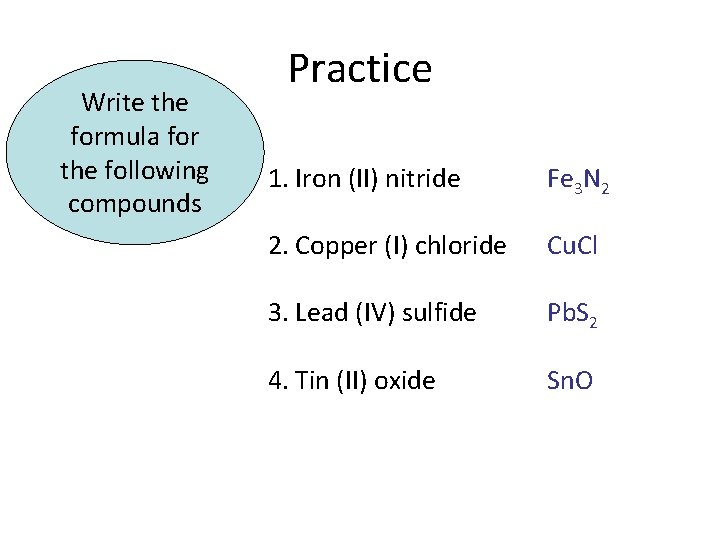
Write the formula for the following compounds Practice 1. Iron (II) nitride Fe 3 N 2 2. Copper (I) chloride Cu. Cl 3. Lead (IV) sulfide Pb. S 2 4. Tin (II) oxide Sn. O
Multivalent Ionic Compounds Formula to Name
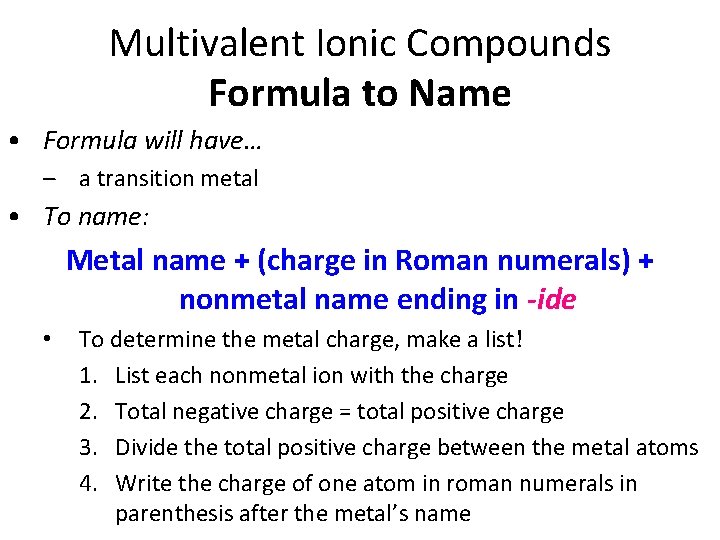
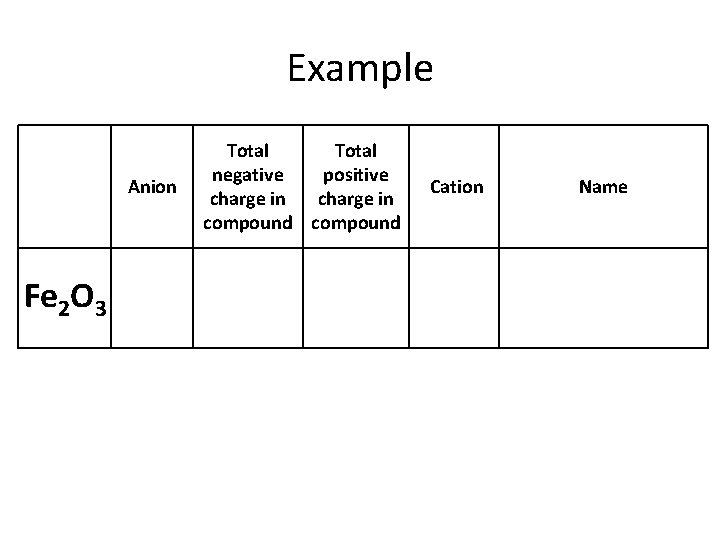
Multivalent Ionic Compounds Formula to Name • Formula will have… – a transition metal • To name: Metal name + (charge in Roman numerals) + nonmetal name ending in -ide • To determine the metal charge, make a list! 1. List each nonmetal ion with the charge 2. Total negative charge = total positive charge 3. Divide the total positive charge between the metal atoms 4. Write the charge of one atom in roman numerals in parenthesis after the metal’s name
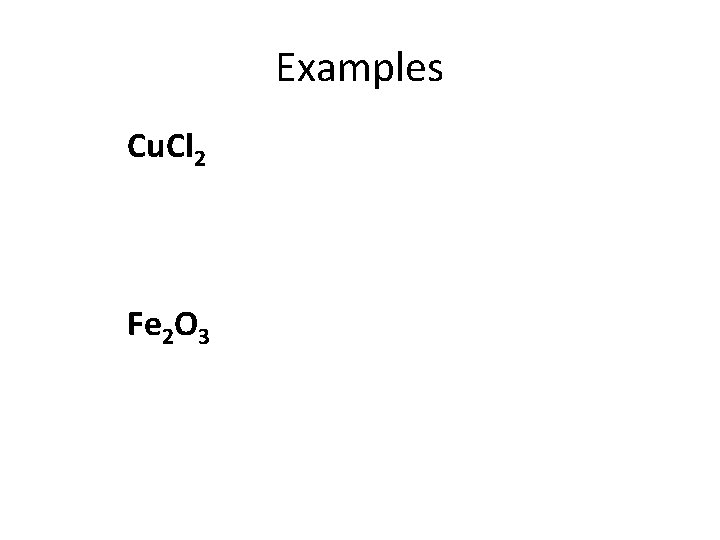
Examples Cu. Cl 2 Fe 2 O 3
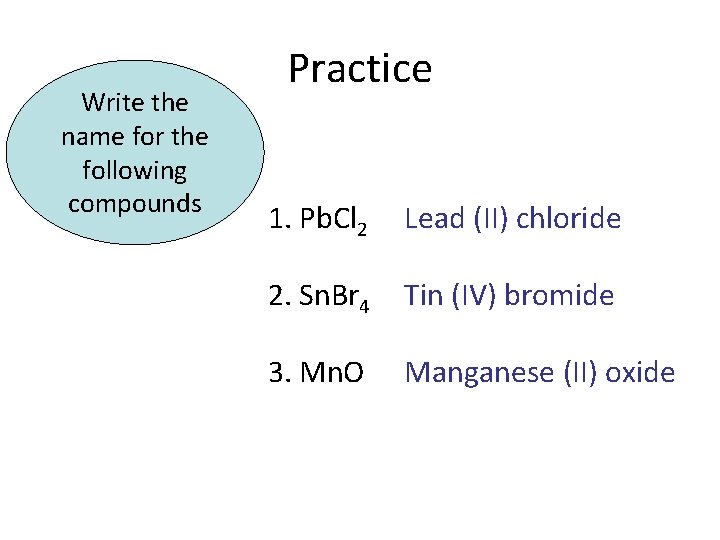
Write the name for the following compounds Practice 1. Pb. Cl 2 Lead (II) chloride 2. Sn. Br 4 Tin (IV) bromide 3. Mn. O Manganese (II) oxide
Polyatomic Ionic Compounds
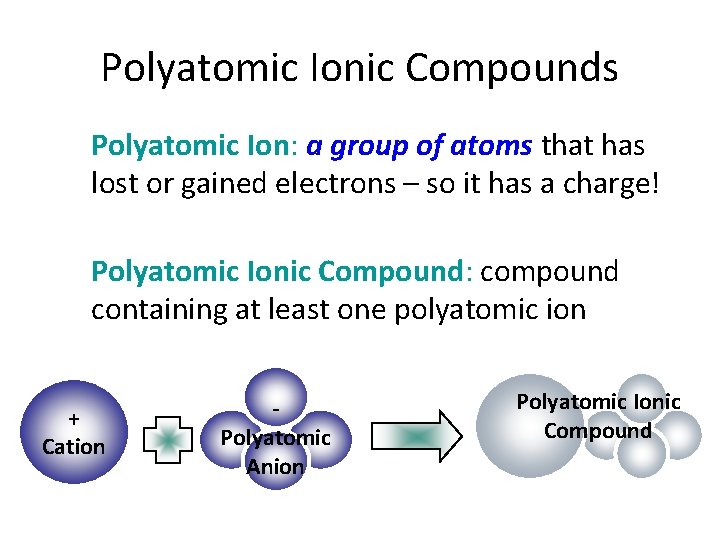
Polyatomic Ionic Compounds Polyatomic Ion: a group of atoms that has lost or gained electrons – so it has a charge! Polyatomic Ionic Compound: compound containing at least one polyatomic ion + Cation Polyatomic Anion Polyatomic Ionic Compound
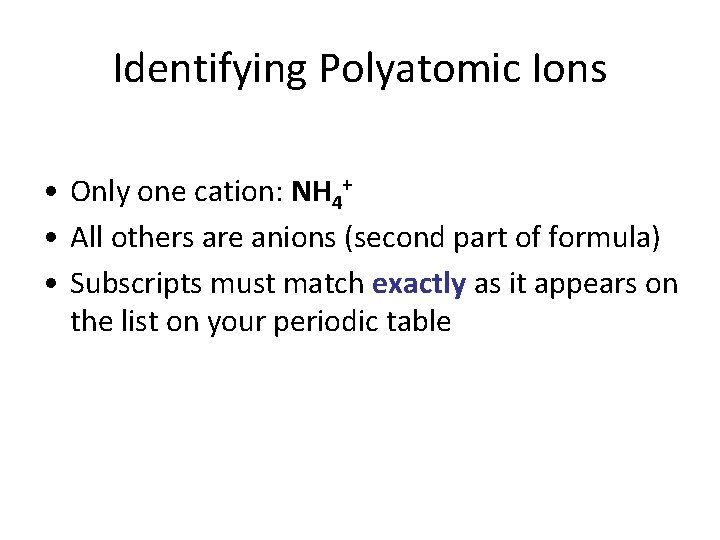
Identifying Polyatomic Ions • Only one cation: NH 4+ • All others are anions (second part of formula) • Subscripts must match exactly as it appears on the list on your periodic table
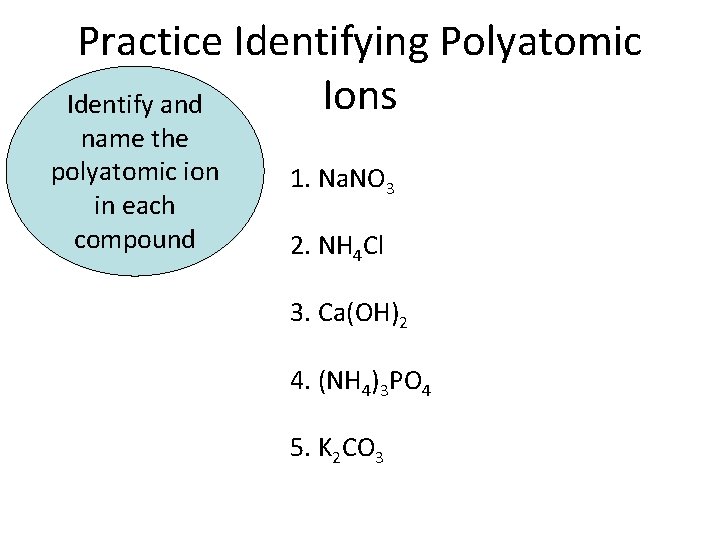
Practice Identifying Polyatomic Ions Identify and name the polyatomic ion in each compound 1. Na. NO 3 2. NH 4 Cl 3. Ca(OH)2 4. (NH 4)3 PO 4 5. K 2 CO 3
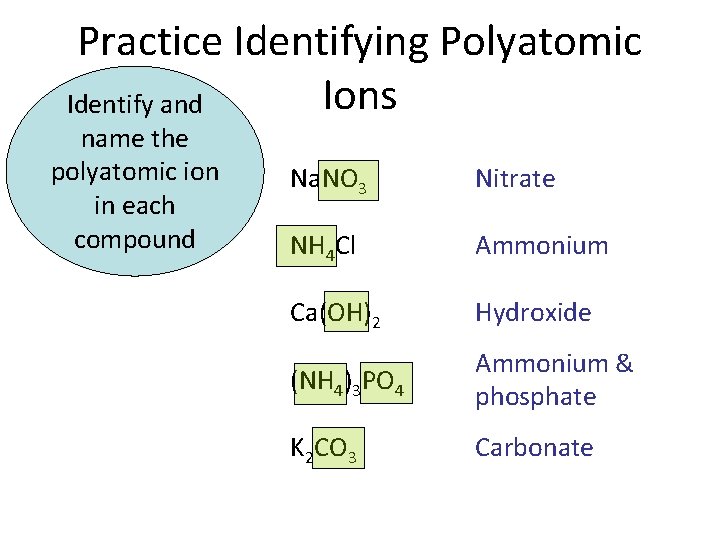
Practice Identifying Polyatomic Ions Identify and name the polyatomic ion in each compound Na. NO 3 Nitrate NH 4 Cl Ammonium Ca(OH)2 Hydroxide (NH 4)3 PO 4 Ammonium & phosphate K 2 CO 3 Carbonate
Polyatomic Ionic Compounds Formula to Name
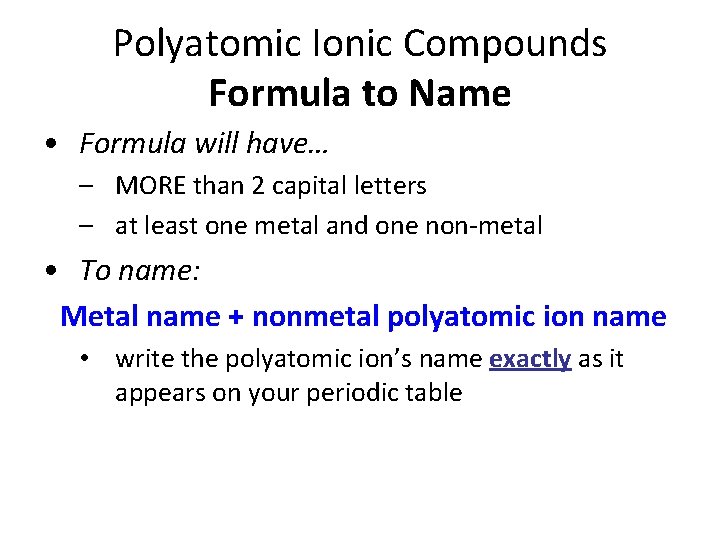
Polyatomic Ionic Compounds Formula to Name • Formula will have… – MORE than 2 capital letters – at least one metal and one non-metal • To name: Metal name + nonmetal polyatomic ion name • write the polyatomic ion’s name exactly as it appears on your periodic table
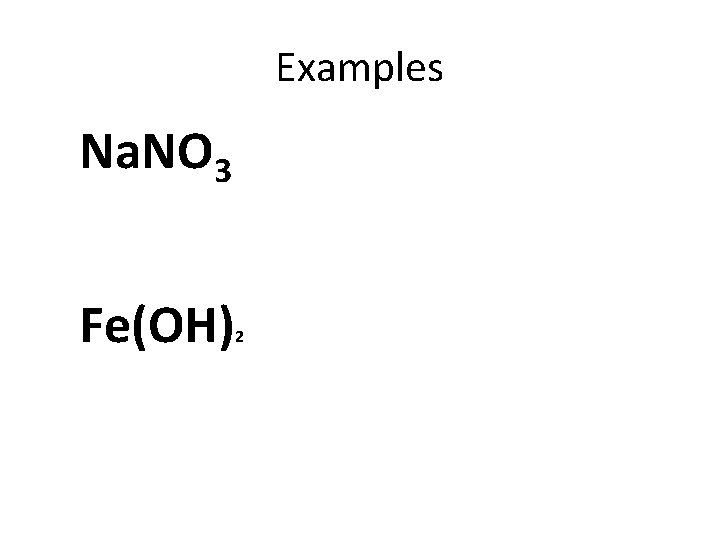
Examples Na. NO 3 Fe(OH) 2
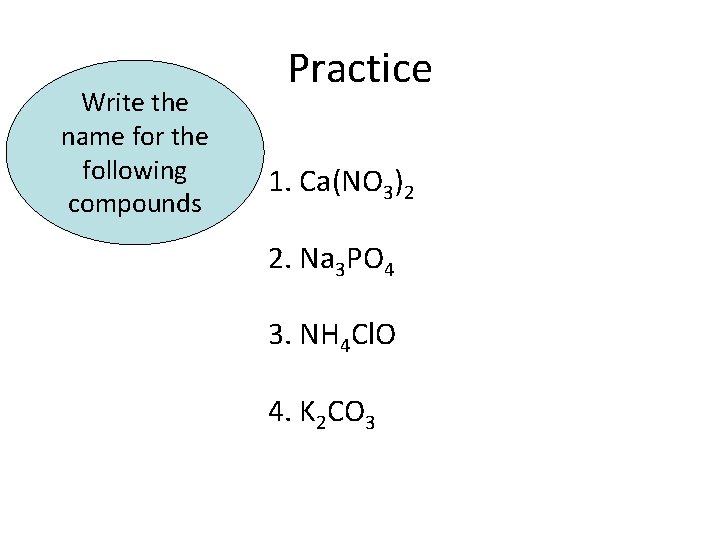
Write the name for the following compounds Practice 1. Ca(NO 3)2 2. Na 3 PO 4 3. NH 4 Cl. O 4. K 2 CO 3
Polyatomic Ionic Compounds Name to Formula
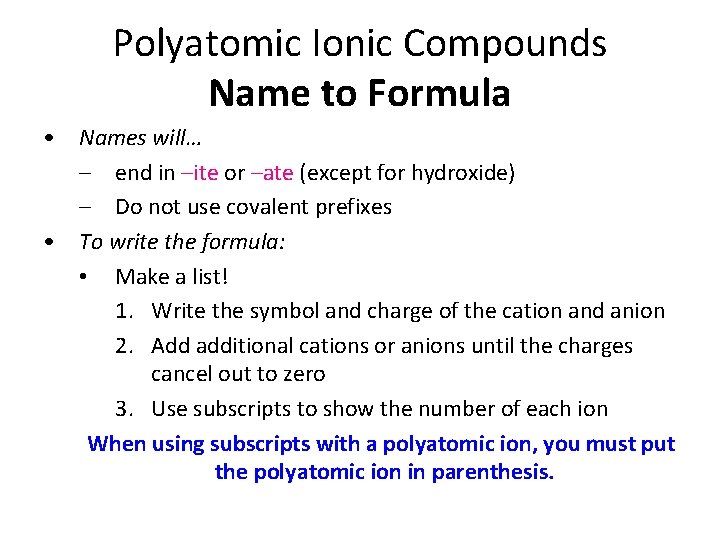
Polyatomic Ionic Compounds Name to Formula • Names will… – end in –ite or –ate (except for hydroxide) – Do not use covalent prefixes • To write the formula: • Make a list! 1. Write the symbol and charge of the cation and anion 2. Add additional cations or anions until the charges cancel out to zero 3. Use subscripts to show the number of each ion When using subscripts with a polyatomic ion, you must put the polyatomic ion in parenthesis.
Examples Sodium carbonate Magnesium nitrate
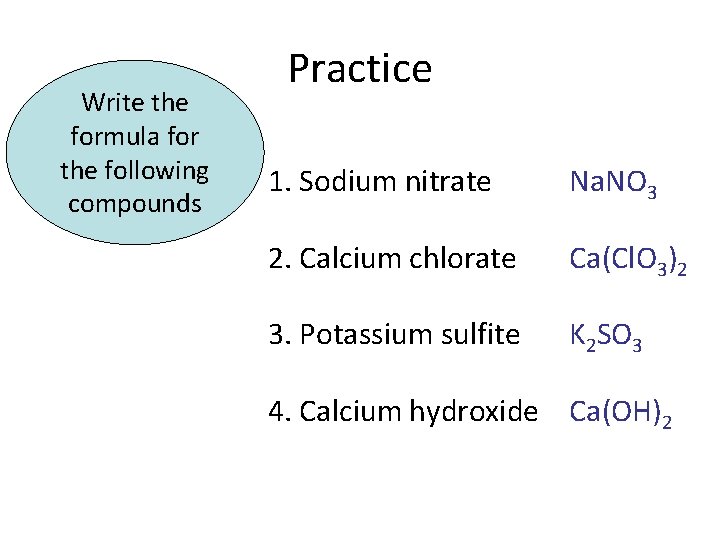
Write the formula for the following compounds Practice 1. Sodium nitrate Na. NO 3 2. Calcium chlorate Ca(Cl. O 3)2 3. Potassium sulfite K 2 SO 3 4. Calcium hydroxide Ca(OH)2
Example Anion Fe 2 O 3 Total negative positive charge in compound Cation Name