
Ionic Bonding Electrons are transferred Electronegativity differences are
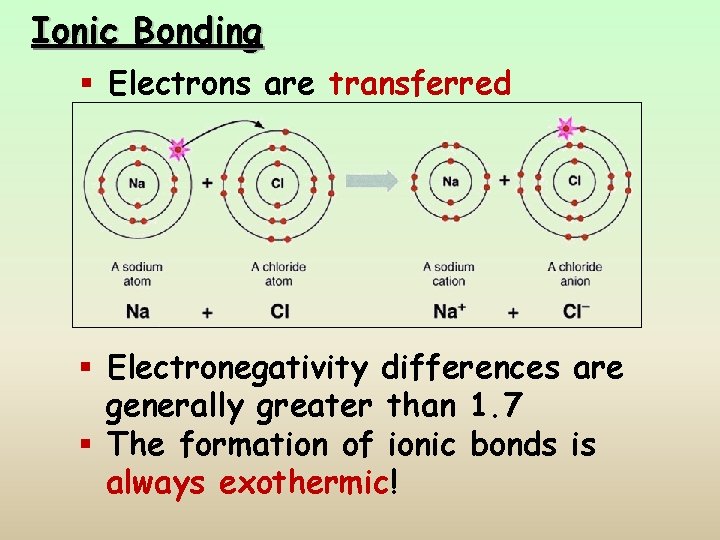
Ionic Bonding § Electrons are transferred § Electronegativity differences are generally greater than 1. 7 § The formation of ionic bonds is always exothermic!
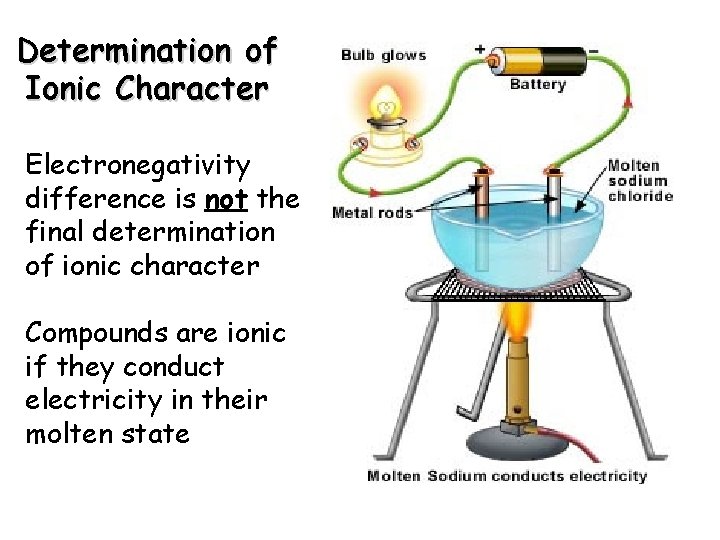
Determination of Ionic Character Electronegativity difference is not the final determination of ionic character Compounds are ionic if they conduct electricity in their molten state
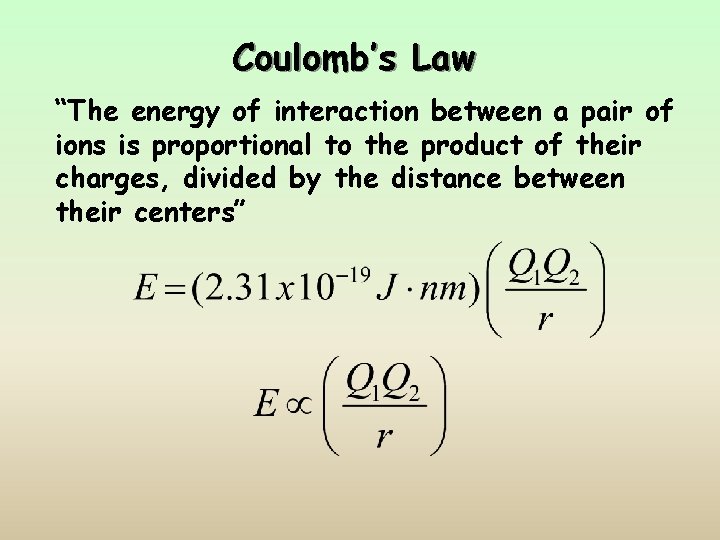
Coulomb’s Law “The energy of interaction between a pair of ions is proportional to the product of their charges, divided by the distance between their centers”
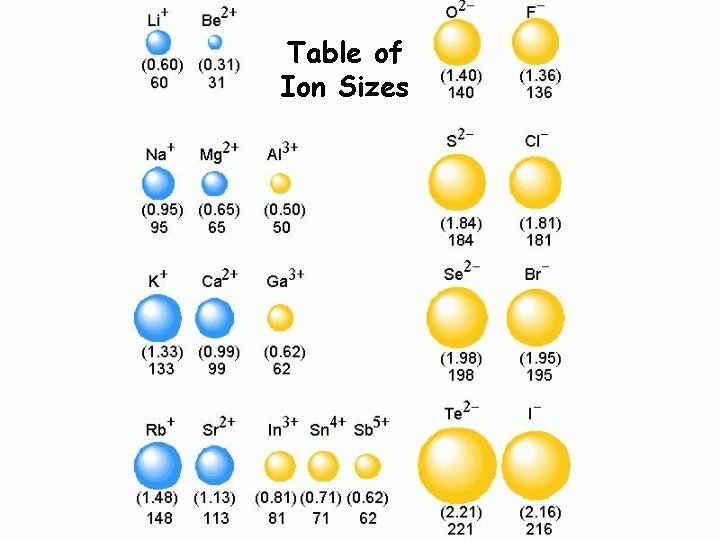
Table of Ion Sizes
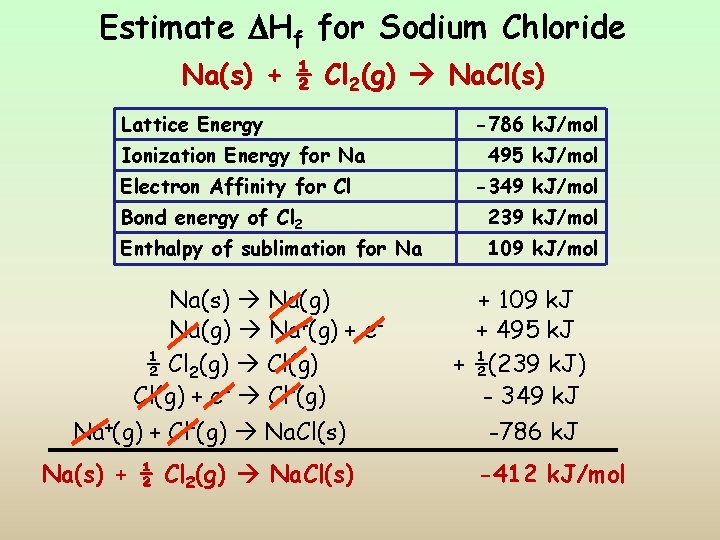
Estimate Hf for Sodium Chloride Na(s) + ½ Cl 2(g) Na. Cl(s) Lattice Energy Ionization Energy for Na Electron Affinity for Cl -786 k. J/mol 495 k. J/mol -349 k. J/mol Bond energy of Cl 2 239 k. J/mol Enthalpy of sublimation for Na 109 k. J/mol Na(s) Na(g) Na+(g) + e½ Cl 2(g) Cl(g) + e- Cl-(g) Na+(g) + Cl-(g) Na. Cl(s) Na(s) + ½ Cl 2(g) Na. Cl(s) + 109 k. J + 495 k. J + ½(239 k. J) - 349 k. J -786 k. J -412 k. J/mol
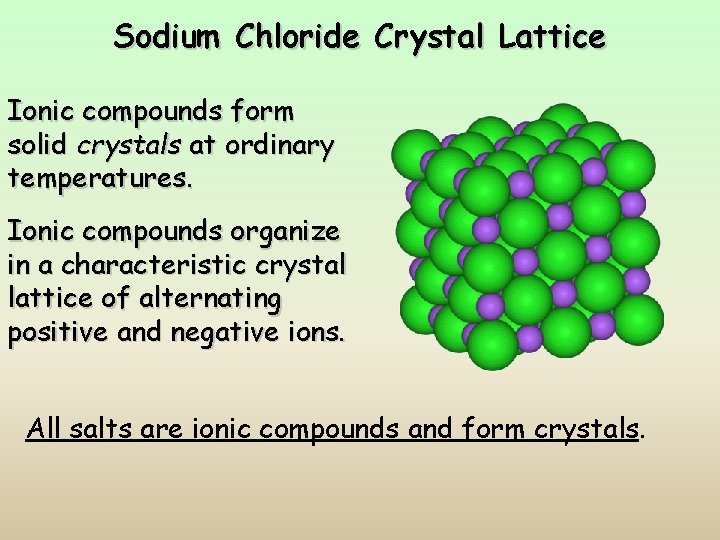
Sodium Chloride Crystal Lattice Ionic compounds form solid crystals at ordinary temperatures. Ionic compounds organize in a characteristic crystal lattice of alternating positive and negative ions. All salts are ionic compounds and form crystals.
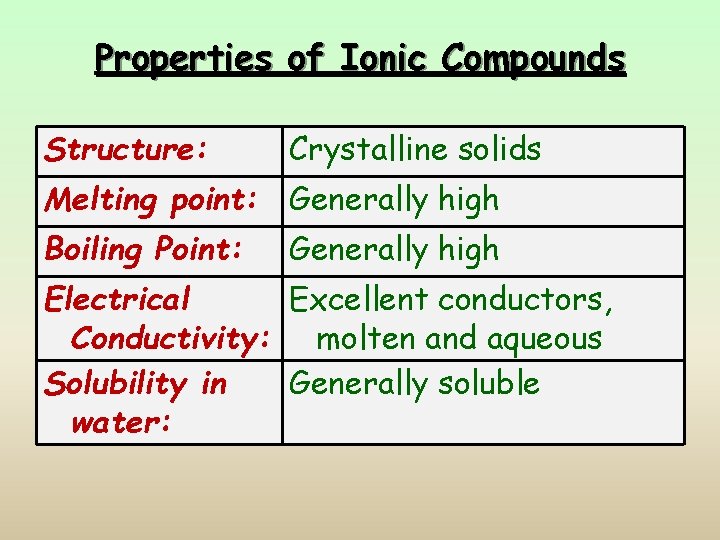
Properties of Ionic Compounds Structure: Crystalline solids Melting point: Generally high Boiling Point: Generally high Electrical Excellent conductors, Conductivity: molten and aqueous Solubility in Generally soluble water:
- Slides: 7