
IONIC BONDING AND NOMENCLATURE Quick Review Parts of
IONIC BONDING AND NOMENCLATURE
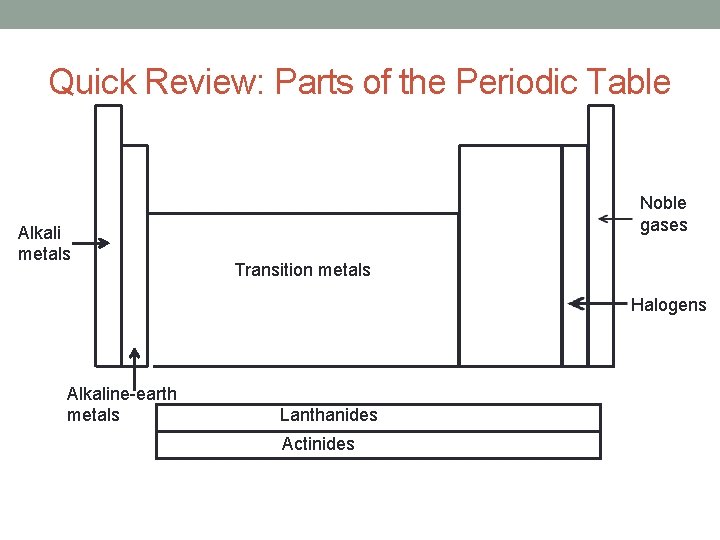
Quick Review: Parts of the Periodic Table Alkali metals Noble gases Transition metals Halogens Alkaline-earth metals Lanthanides Actinides
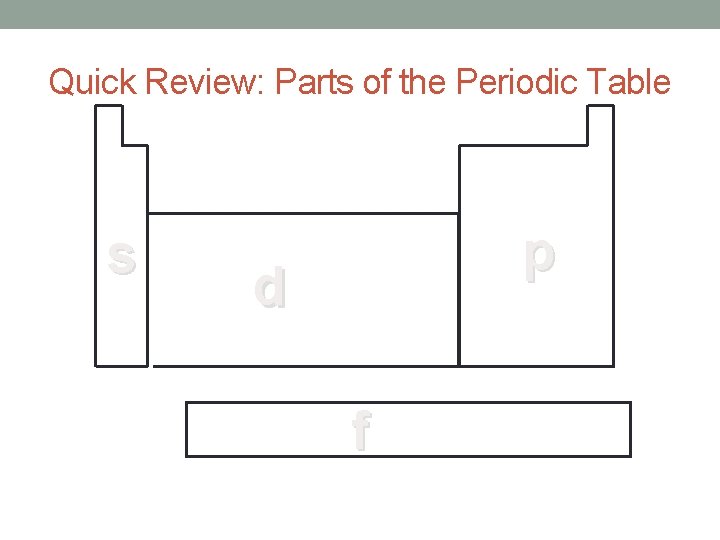
Quick Review: Parts of the Periodic Table s p d f
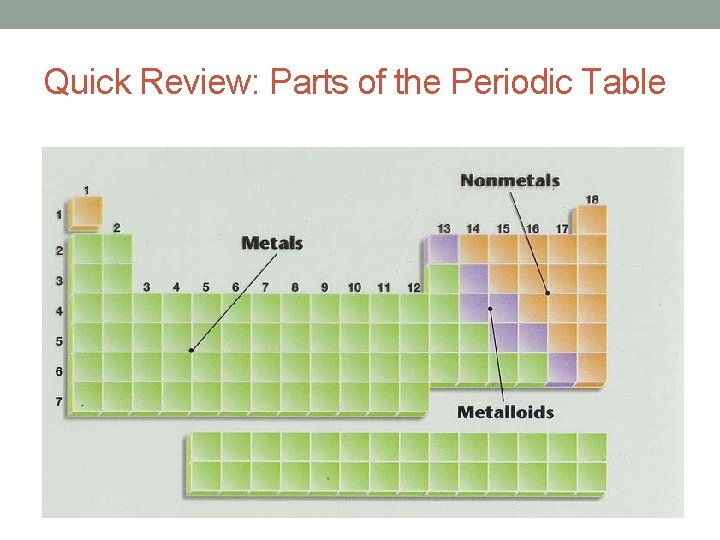
Quick Review: Parts of the Periodic Table

What is an ion? Ions are atoms that carry either a positive or negative charge. Cations are positively charged. Anions are negatively charged.
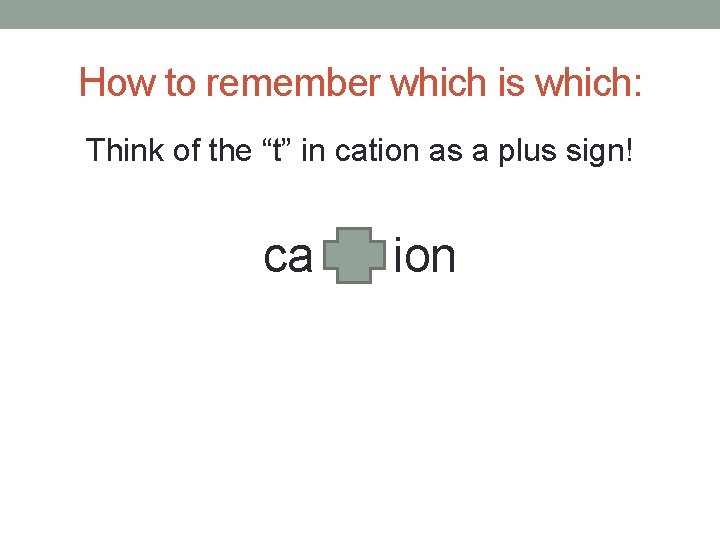
How to remember which is which: Think of the “t” in cation as a plus sign! ca ion
How are ions formed? Part 1 • Remember that an atom of any element ALWAYS has the same number of protons. (If the number of protons changed, then you would have a different element!!) • Remember that neutral atoms (atoms that are NOT ions) have EQUAL numbers of electrons and protons • This means that the positive and negative charges CANCEL OUT!
How are ions formed? Part 2 • In order for an ion to be negatively charged (meaning it is an anion), there must be more electrons than protons • The number of protons can’t change, so how can there be more electrons than protons? • The atom must gain an electron in order to have more electrons than protons!
How are ions formed? Part 3 • In order for an ion to be positively charged (meaning it is a cation), there must be more protons than electrons • The number of protons can’t change, so how can there be more protons than electrons? • The atom must lose an electron in order to have fewer electrons than protons!
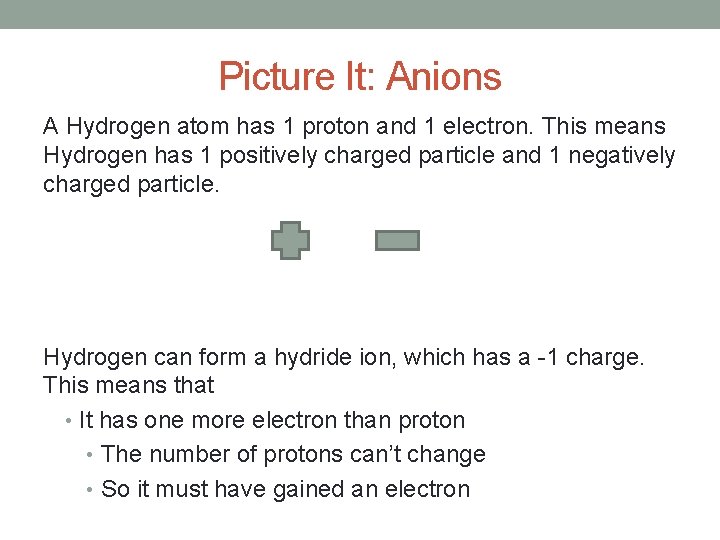
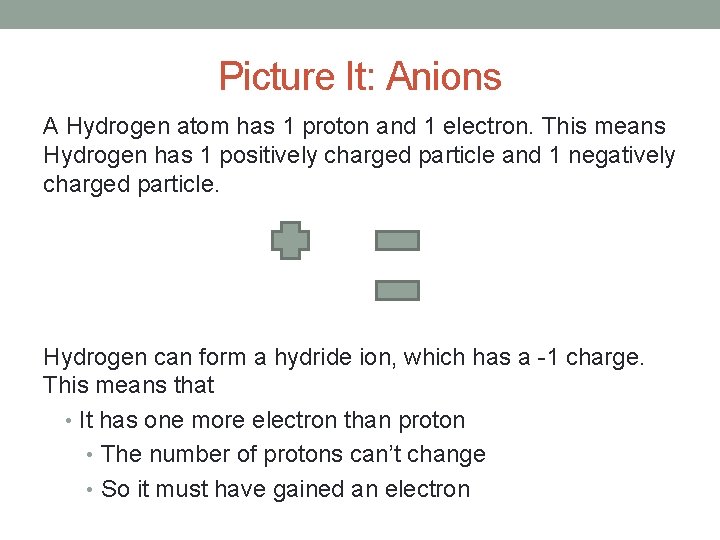
Picture It: Anions A Hydrogen atom has 1 proton and 1 electron. This means Hydrogen has 1 positively charged particle and 1 negatively charged particle. Hydrogen can form a hydride ion, which has a -1 charge. This means that • It has one more electron than proton • The number of protons can’t change • So it must have gained an electron
Picture It: Anions A Hydrogen atom has 1 proton and 1 electron. This means Hydrogen has 1 positively charged particle and 1 negatively charged particle. Hydrogen can form a hydride ion, which has a -1 charge. This means that • It has one more electron than proton • The number of protons can’t change • So it must have gained an electron
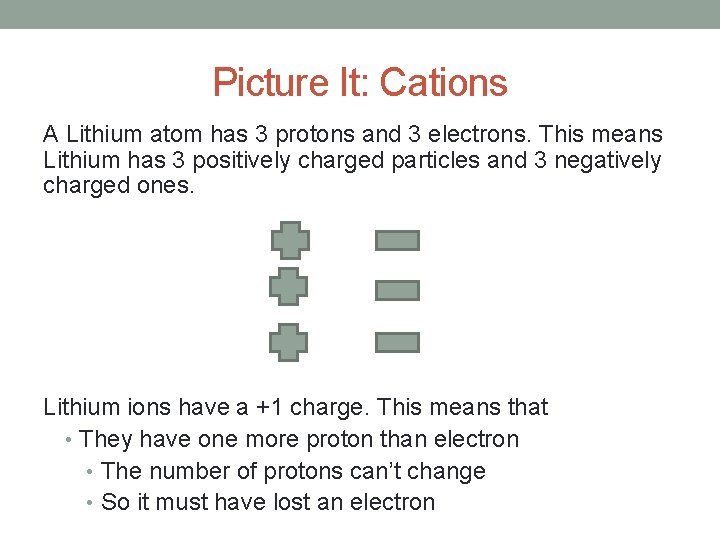
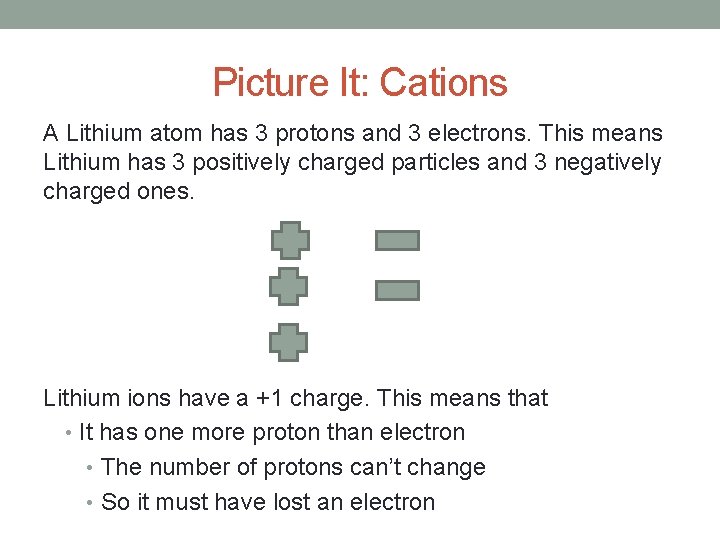
Picture It: Cations A Lithium atom has 3 protons and 3 electrons. This means Lithium has 3 positively charged particles and 3 negatively charged ones. Lithium ions have a +1 charge. This means that • They have one more proton than electron • The number of protons can’t change • So it must have lost an electron
Picture It: Cations A Lithium atom has 3 protons and 3 electrons. This means Lithium has 3 positively charged particles and 3 negatively charged ones. Lithium ions have a +1 charge. This means that • It has one more proton than electron • The number of protons can’t change • So it must have lost an electron
Notation When writing an ion, you write the symbol of the element, followed by a superscript of the element’s charge. It doesn’t matter if you write the + and – signs before or after the number. If the number of the charge is 1, you can write just the + or – sign.
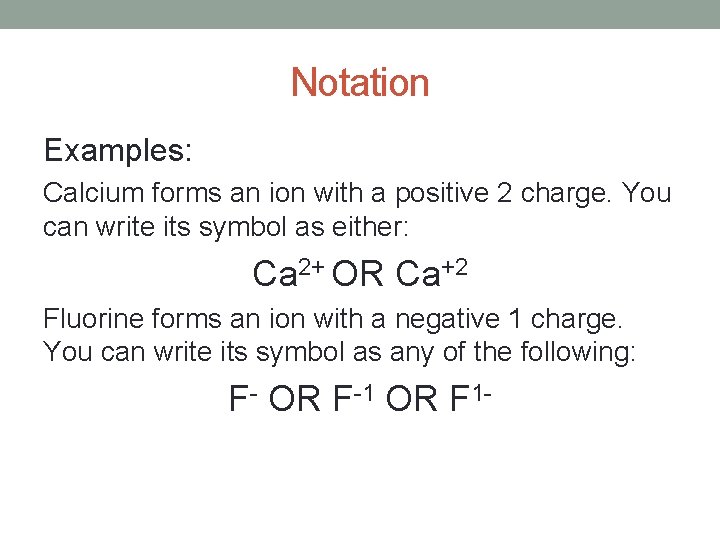
Notation Examples: Calcium forms an ion with a positive 2 charge. You can write its symbol as either: Ca 2+ OR Ca+2 Fluorine forms an ion with a negative 1 charge. You can write its symbol as any of the following: F- OR F-1 OR F 1 -
How do you know what kind of ion forms? Remember: Noble gases are the most stable elements—they don’t really react with anything. This is because they have full valence shells (their outermost shell of electrons is full). In actuality, ANY atom will be stable if it can get a full valence shell.
How do you know what kind of ion forms? • To determine how many electrons an atom will gain or lose, figure out what would be the easiest way for it to have the same number of electrons as the closest noble gas on the periodic table.
The Octet Rule • As a general rule, atoms are most stable with eight valence electrons. This is called the Octet Rule. • Note that this is not always true! But MOST of the time it works. • When deciding what kind of ion an atom will form, ask yourself if it would be easier for the element to lose all of its valence electrons or gain enough to have eight total.
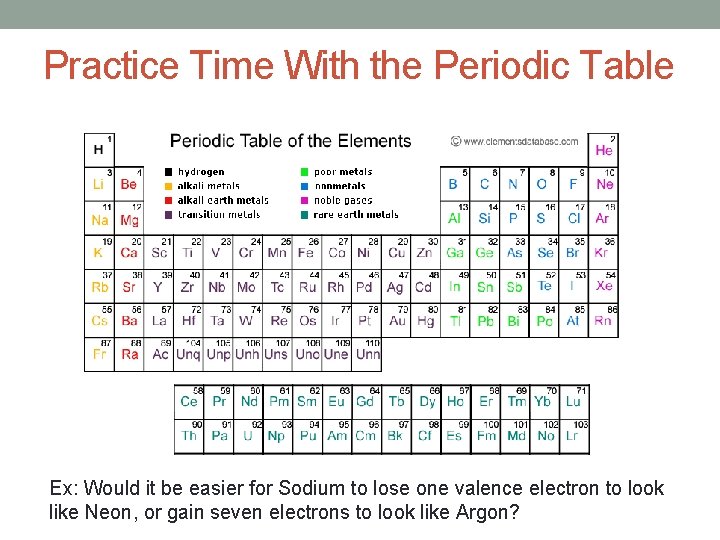
Practice Time With the Periodic Table Ex: Would it be easier for Sodium to lose one valence electron to look like Neon, or gain seven electrons to look like Argon?
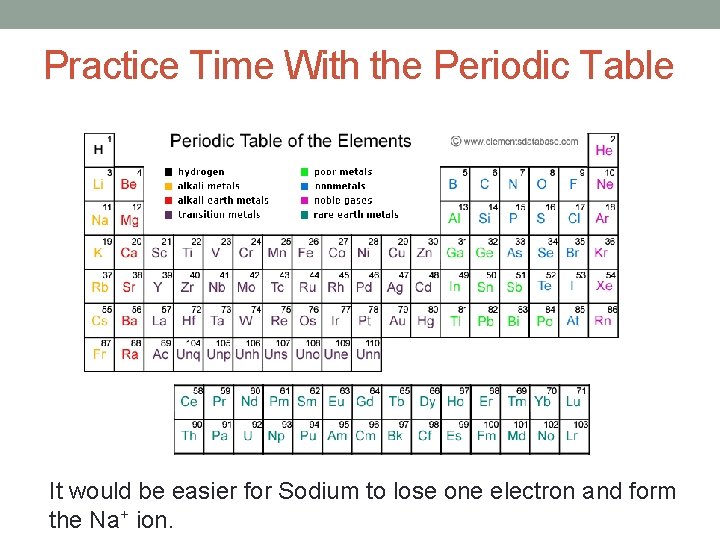
Practice Time With the Periodic Table It would be easier for Sodium to lose one electron and form the Na+ ion.
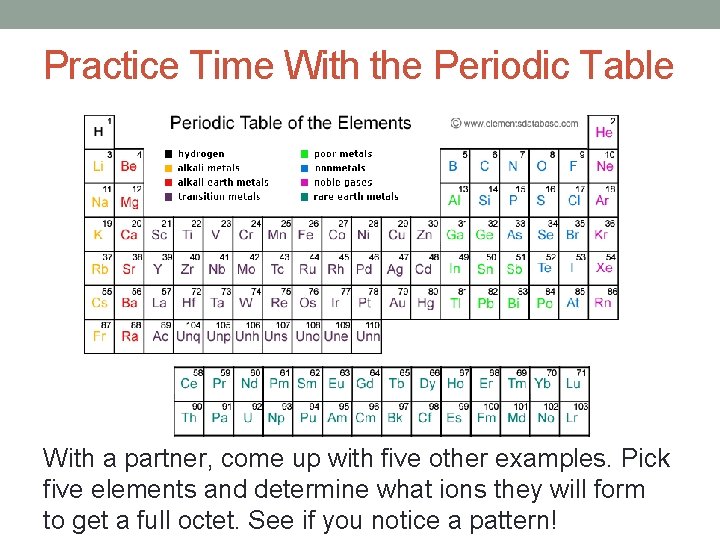
Practice Time With the Periodic Table With a partner, come up with five other examples. Pick five elements and determine what ions they will form to get a full octet. See if you notice a pattern!
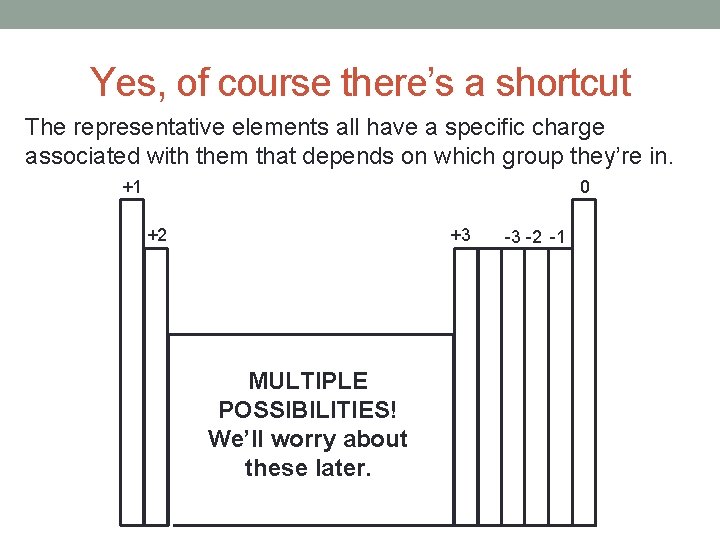
Yes, of course there’s a shortcut The representative elements all have a specific charge associated with them that depends on which group they’re in. +1 0 +3 +2 MULTIPLE POSSIBILITIES! We’ll worry about these later. -3 -2 -1
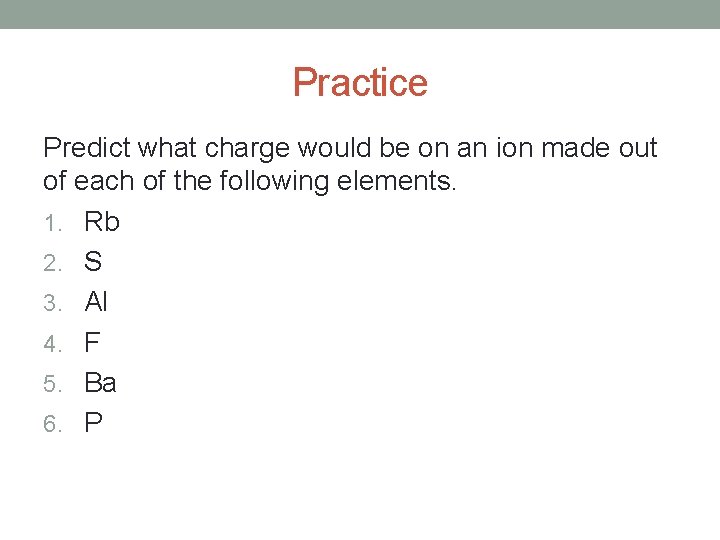
Practice Predict what charge would be on an ion made out of each of the following elements. 1. Rb 2. S 3. Al 4. F 5. Ba 6. P
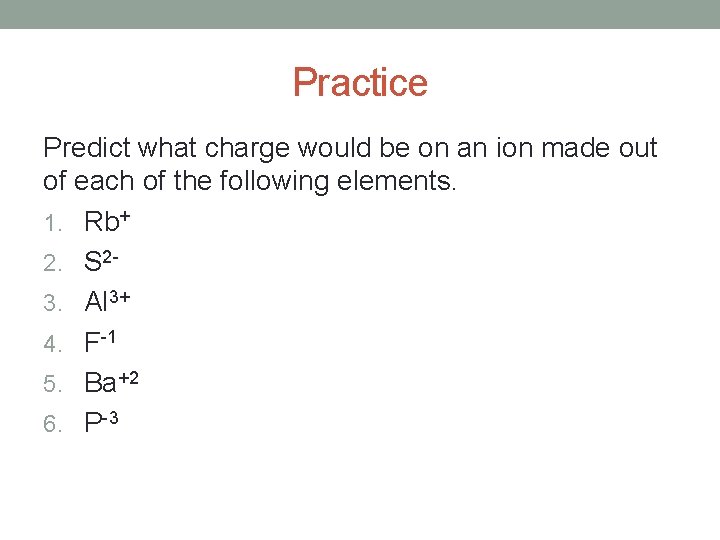
Practice Predict what charge would be on an ion made out of each of the following elements. 1. Rb+ 2. S 23. Al 3+ 4. F-1 5. Ba+2 6. P-3
Ionic Bonds • What happens when two magnets of the same type get near each other? • They repel! • Magnetism is sometimes caused by electricity— moving charged particles. • So what will happen when two ions of the same charge get near each other? • They will repel!
Ionic Bonds • What happens when two magnets of the OPPOSITE type get near each other? • They attract! • So what will happen when two ions of the opposite charge get near each other? • They will attract!
Ionic Bonds An ionic bond is formed when: 1. Two atoms get near each other, and 2. One donates an electron to the other (meaning one will lose an electron and the other will gain that same electron) and the atoms become ions. 3. The two ions now have an opposite charge and are attracted to each other. 4. They stick together!
![Ionic Bond Example Na Cl + [Na] [ [ Cl Cl ] ]](http://slidetodoc.com/presentation_image_h2/16febf2c3dc1a29516c1ab1d0b5d4d0f/image-28.jpg "Ionic Bond Example Na Cl + [Na] [ [ Cl Cl ] ]")
Ionic Bond Example Na Cl + [Na] [ [ Cl Cl ] ]
Ionic Bond Formation Practice Try drawing the formation of an ionic bond between Ca and F. Hint: You may need more than one atom of one of the elements!
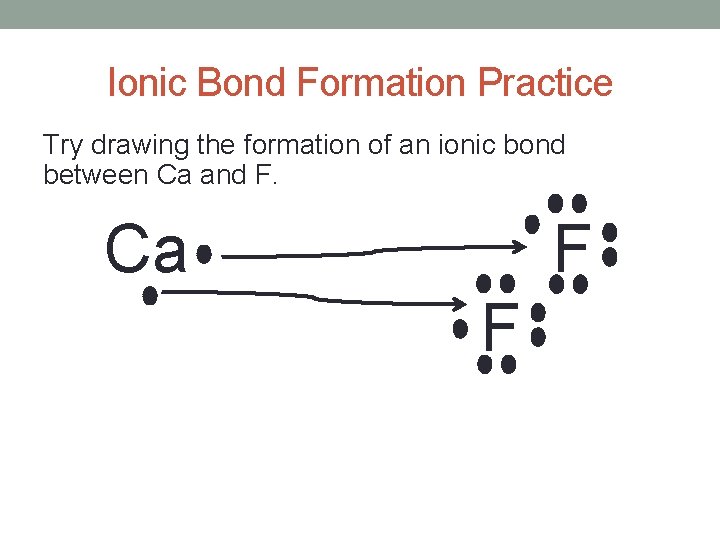
Ionic Bond Formation Practice Try drawing the formation of an ionic bond between Ca and F. Ca F F
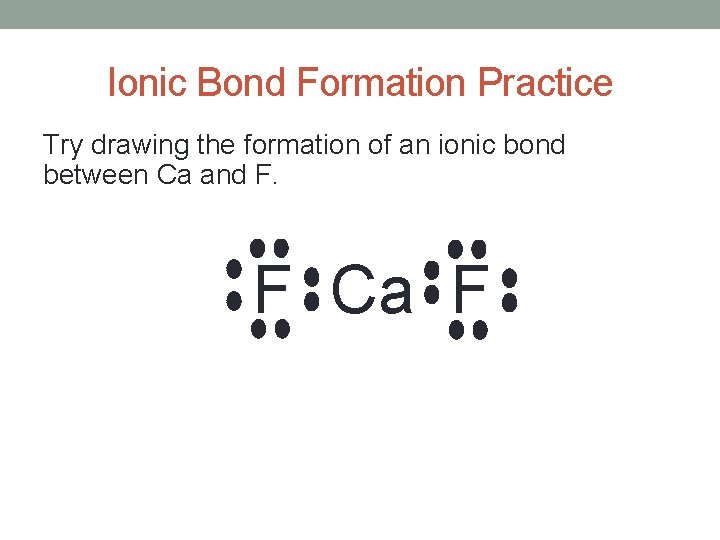
Ionic Bond Formation Practice Try drawing the formation of an ionic bond between Ca and F. F Ca F
Ionic Compounds When two ions bond together, they form an ionic compound. You can recognize an ionic compound because it will contain • An ion of one type of METAL • An ion of at least one type of NONMETAL
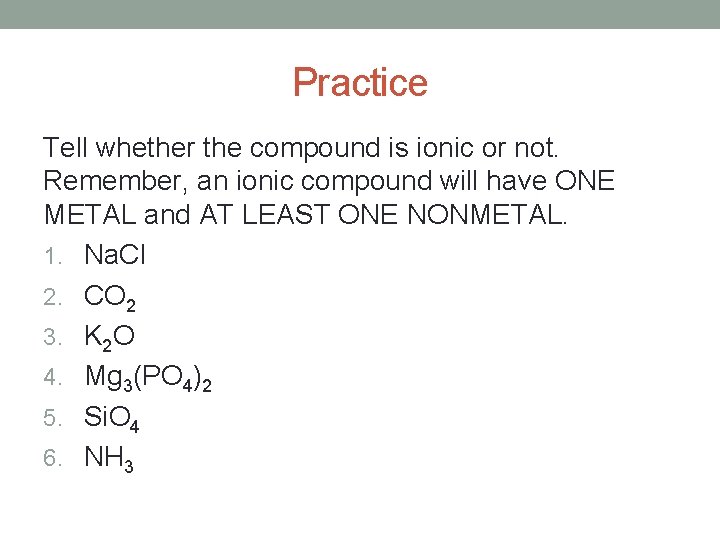
Practice Tell whether the compound is ionic or not. Remember, an ionic compound will have ONE METAL and AT LEAST ONE NONMETAL. 1. Na. Cl 2. CO 2 3. K 2 O 4. Mg 3(PO 4)2 5. Si. O 4 6. NH 3
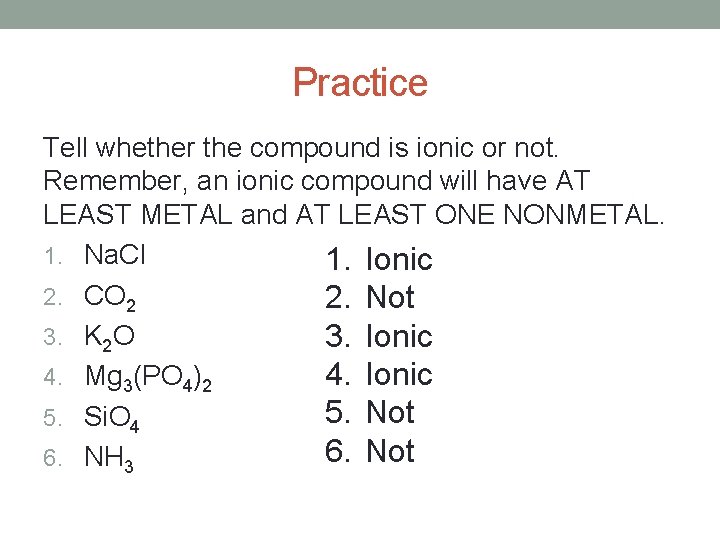
Practice Tell whether the compound is ionic or not. Remember, an ionic compound will have AT LEAST METAL and AT LEAST ONE NONMETAL. 1. Na. Cl 1. Ionic 2. CO 2 2. Not 3. K 2 O 3. Ionic 4. Mg 3(PO 4)2 5. Not 5. Si. O 4 6. Not 6. NH 3
Nomenclature is a fancy-sounding word that just means a system of naming. Ionic compounds have a special set of nomenclature rules. If you know the formula of an ionic compound, you can follow the rules to write the compound’s name. Let’s try it with Ca. Cl 2.
Step 1: Write the NAME of the Cation (Metal) • All metals ions have positive charges • Therefore all metal ions are cations • What is the cation (metal) in Ca. Cl 2? • Calcium • So you just write the word “Calcium. ” • This step never changes! You can always at least do this part.
Step 2: Determine the anion • The cation (metal) has to be paired with an anion. • If the anion is one single type of element, the compound is BINARY. • If the anion is multiple elements, the compound contains a POLYATOMIC ION— an ion made up of multiple types of atoms. • We’ll come back to these.
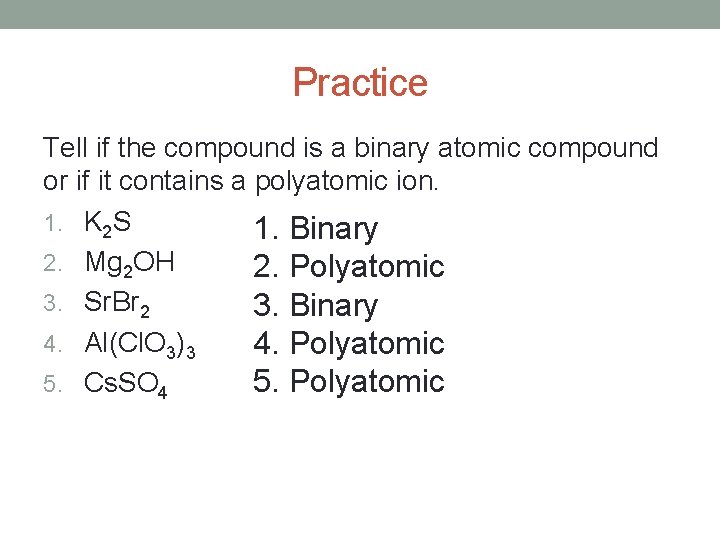
Practice Tell if the compound is a binary atomic compound or if it contains a polyatomic ion. 1. K 2 S 1. Binary 2. Mg 2 OH 2. Polyatomic 3. Sr. Br 2 3. Binary 4. Al(Cl. O 3)3 4. Polyatomic 5. Cs. SO 4 5. Polyatomic
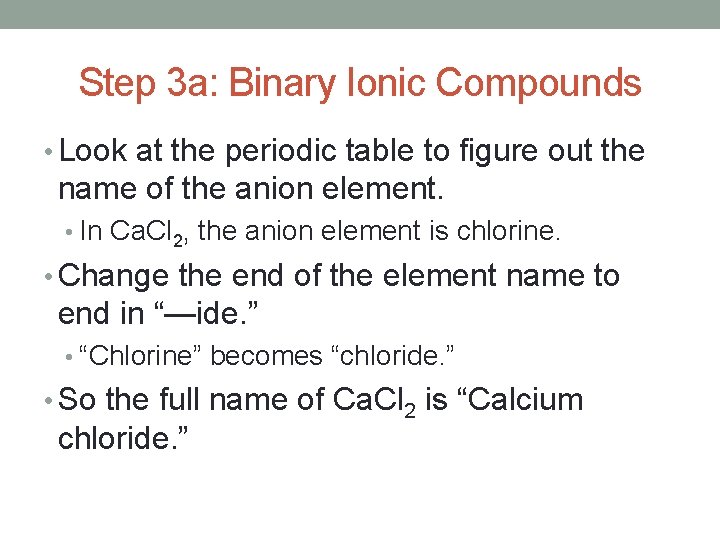
Step 3 a: Binary Ionic Compounds • Look at the periodic table to figure out the name of the anion element. • In Ca. Cl 2, the anion element is chlorine. • Change the end of the element name to end in “—ide. ” • “Chlorine” becomes “chloride. ” • So the full name of Ca. Cl 2 is “Calcium chloride. ”
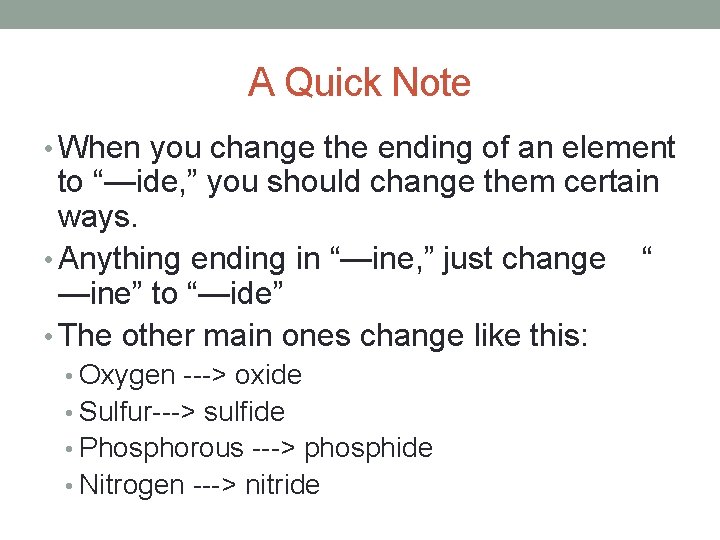
A Quick Note • When you change the ending of an element to “—ide, ” you should change them certain ways. • Anything ending in “—ine, ” just change “ —ine” to “—ide” • The other main ones change like this: • Oxygen ---> oxide • Sulfur---> sulfide • Phosphorous ---> phosphide • Nitrogen ---> nitride
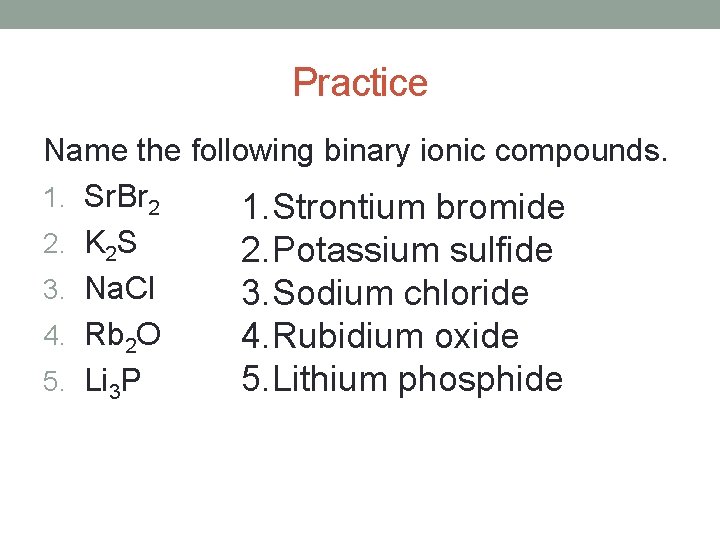
Practice Name the following binary ionic compounds. 1. Sr. Br 2 1. Strontium bromide 2. K 2 S 2. Potassium sulfide 3. Na. Cl 3. Sodium chloride 4. Rb 2 O 4. Rubidium oxide 5. Li 3 P 5. Lithium phosphide
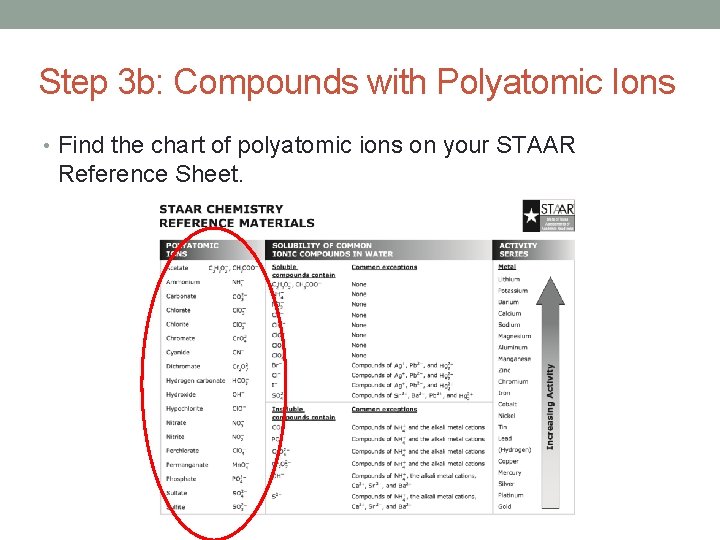
Step 3 b: Compounds with Polyatomic Ions • Find the chart of polyatomic ions on your STAAR Reference Sheet.
Step 3 b continued • Find the name of the polyatomic ion you’re looking for on the chart. • Write the name of the polyatomic ion next to the name of the metal. • You’re done!
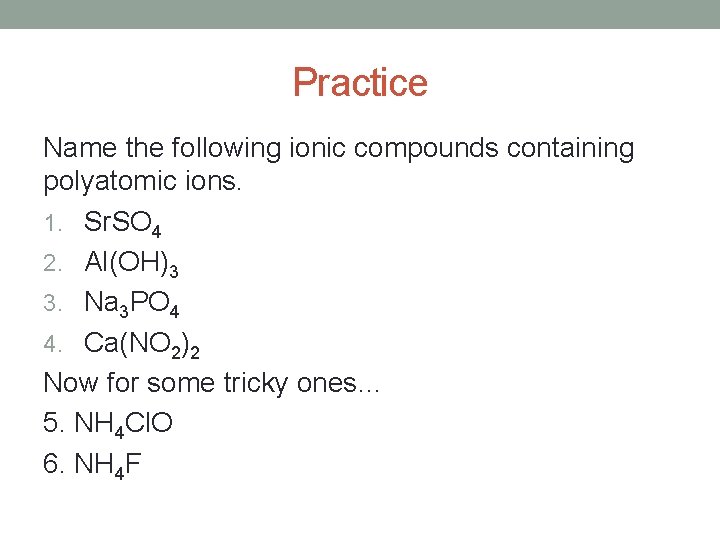
Practice Name the following ionic compounds containing polyatomic ions. 1. Sr. SO 4 2. Al(OH)3 3. Na 3 PO 4 4. Ca(NO 2)2 Now for some tricky ones… 5. NH 4 Cl. O 6. NH 4 F
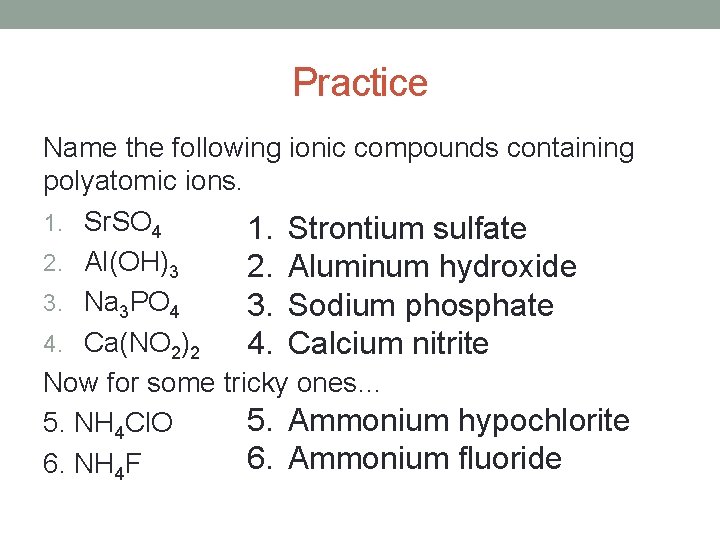
Practice Name the following ionic compounds containing polyatomic ions. 1. Sr. SO 4 1. Strontium sulfate 2. Al(OH)3 2. Aluminum hydroxide 3. Na 3 PO 4 3. Sodium phosphate 4. Ca(NO 2)2 4. Calcium nitrite Now for some tricky ones… 5. Ammonium hypochlorite 5. NH 4 Cl. O 6. Ammonium fluoride 6. NH 4 F
Writing Formulas If you’re given a name and asked to write the formula, there are some separate steps to take. 1. Look at the name. Figure out the symbols for the cation and anion. Write the symbols by each other. 2. Figure out the charge on each ion and write it to the upper right of the element symbol. 3. Balance the charges—figure out how many of each ion you would need to have the same amount of positives as negatives. 4. Write how many of each element/ion you need as a SUBSCRIPT written AFTER the element symbol.
Example Write the formula for Magnesium nitrate. Step 1: Write the symbols for the cation and anion. Magnesium: Mg Nitrate (check your ion sheet!): NO 3
Example Step 2: Figure out and write the charges. Mg has 2 valence electrons and will lose them both to look like a noble gas, giving it a 2+ charge. According to the ion sheet, NO 3 has a -1 charge. Mg 2+ NO 3 -
Example Step 3: Balance the charges. You need the charges to cancel out—meaning that for every + you have, you need a – and vice versa. Mg has 2+ NO 3 has 1 – To get a second – to balance out the second +, you need two nitrates!
Example Mg + - NO 3 Since we need one Mg and two NO 3, we write our formula as Mg. NO 32 But if we leave it like that it looks like we are saying we need 32 oxygens! To show that we need 2 nitrates and not 32 oxygens, we write nitrate in parentheses. Mg(NO 3)2
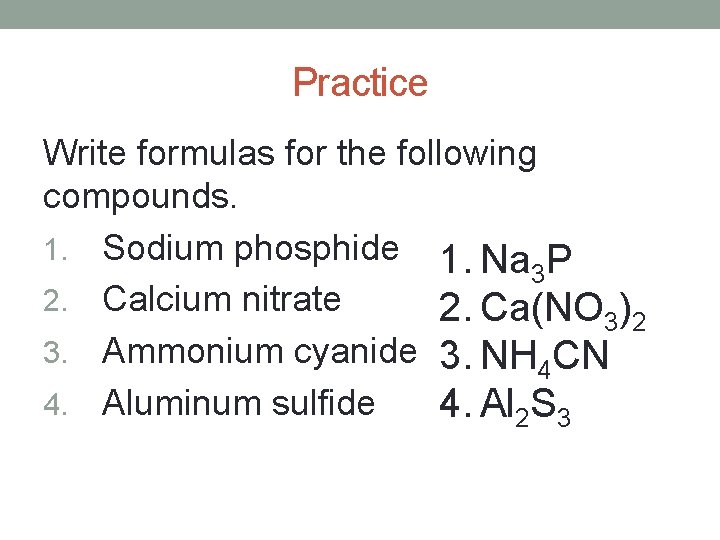
Practice Write formulas for the following compounds. 1. Sodium phosphide 1. Na P 3 2. Calcium nitrate 2. Ca(NO 3)2 3. Ammonium cyanide 3. NH CN 4 4. Aluminum sulfide 4. Al 2 S 3
It gets weird: Transition Metals Most transition metals have multiple possible charges. We have to identify which charge we are talking about for any transition metal in a compound. We identify the transition metal charge using Roman numerals.
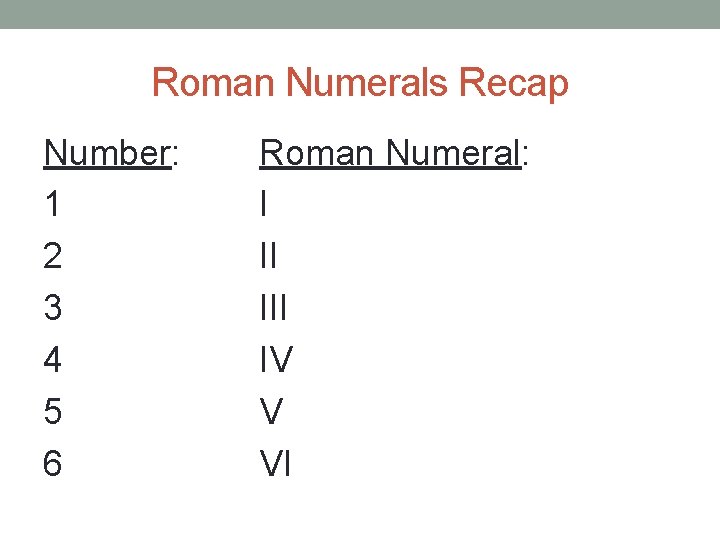
Roman Numerals Recap Number: 1 2 3 4 5 6 Roman Numeral: I II IV V VI
Writing names with transition metals Step 1. Figure out the charge on the transition metal based on the formula. Remember that the cations and anions have to balance charges. WF 5 Each F anion has a -1 charge. There are 5 F ions. That means there is a total of -5 charge coming from the F ions. The W cation has to balance out the -5 from the F ions.
Writing names with transition metals • If all the F add up to -5, the W has to balance it out. • If there are 5 negatives, we need 5 positives • That means W must have a +5 charge!
Writing names with transition metals • Step 2: Once you know the charge on the transition metal, write the name of the transition metal and then the charge, as a Roman numeral, in parenthesis. • W 5+ ------> Tungsten (V) • Step 3: write the name of the anion • If it is a monatomic anion, make sure you change the ending to “ide” • If it is a polyatomic anion, write the whole ion’s name. • WF 5 -----> Tungsten (V) fluoride
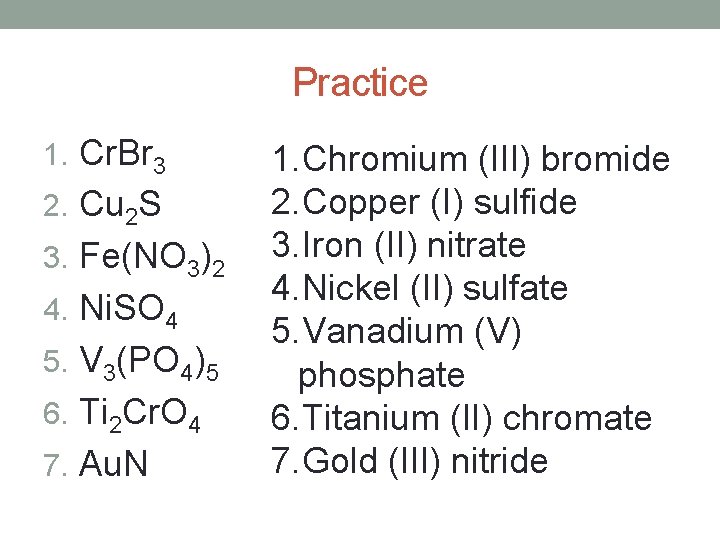
Practice 1. Cr. Br 3 2. Cu 2 S 3. Fe(NO 3)2 4. Ni. SO 4 5. V 3(PO 4)5 6. Ti 2 Cr. O 4 7. Au. N 1. Chromium (III) bromide 2. Copper (I) sulfide 3. Iron (II) nitrate 4. Nickel (II) sulfate 5. Vanadium (V) phosphate 6. Titanium (II) chromate 7. Gold (III) nitride
Writing formulas with transition metals Writing formulas for compounds with transition metals is exactly the same as writing formulas for compounds without them…only easier! Because the name of the compound tells you the charge on the cation!
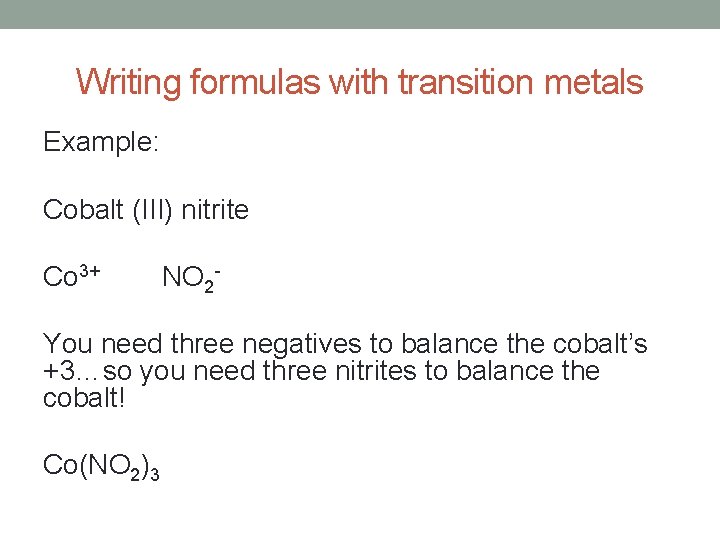
Writing formulas with transition metals Example: Cobalt (III) nitrite Co 3+ NO 2 - You need three negatives to balance the cobalt’s +3…so you need three nitrites to balance the cobalt! Co(NO 2)3
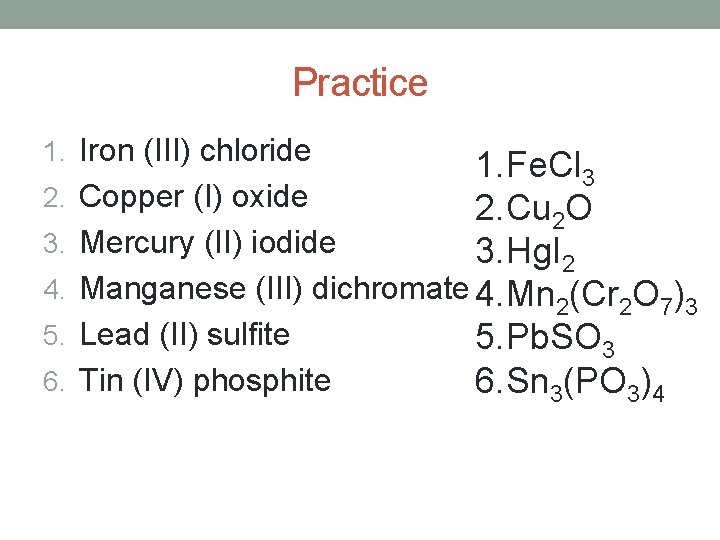
Practice 1. Iron (III) chloride 2. 3. 4. 5. 6. 1. Fe. Cl 3 Copper (I) oxide 2. Cu 2 O Mercury (II) iodide 3. Hg. I 2 Manganese (III) dichromate 4. Mn (Cr O ) 2 2 7 3 Lead (II) sulfite 5. Pb. SO 3 Tin (IV) phosphite 6. Sn 3(PO 3)4
- Slides: 60