
Ionic Bonding aka Electrovalent bonds Ionic Bond u
Ionic Bonding aka Electrovalent bonds
Ionic Bond u Chemical bond resulting from electrostatic attraction between positive and negative ions. – Goal: achieve stable octet of electrons (noble gas configuration) u Illustrate by – Orbital notation – Lewis Dot diagrams

Three Types of Bonding u Ionic – electrons are transferred. u Covalent – electrons are shared. u Metallic – “sea of mobile electrons. ”
Identify Bond Type from Formula u Ionic Compounds – metal + nonmetal u Covalent Compounds – all nonmetals u Metallic – all metals

Force of Attraction

Show transfer of VALENCE electrons to achieve octet But WHICH electrons (i. e. what orbitals) are involved? Formation of The Octets A quantum mechanical representation of the electron transfer

Na metal Metals lose e-
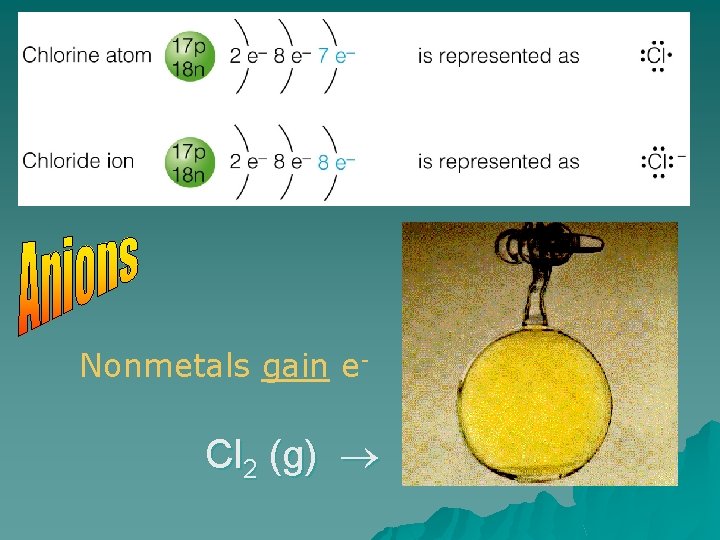
Nonmetals gain e- Cl 2 (g)
Ionic Compounds u u u Composed of positive and negative ions combined so that compound is NEUTRAL. Most ionic compounds are … crystalline solids. Expressed as Formula Units, not molecules (which are covalent)! – Simplest ratio of atoms (empirical formula)
Structure of Ionic Compounds u u Ions are attracted to each other by strong electrostatic interactions. Form a crystal lattice – a regular 3 -D pattern or array. – Ions are held in fixed positions in the solid state. u Unit Cell = smallest repetitive unit in lattice
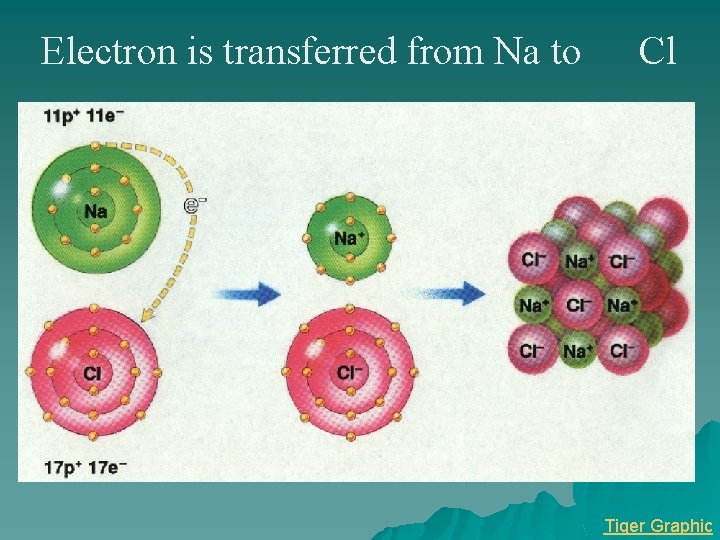
Electron is transferred from Na to Cl Tiger Graphic
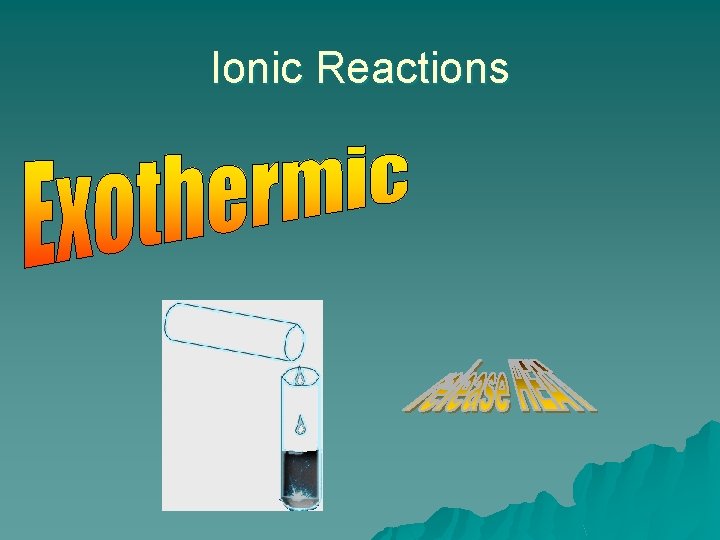
Ionic Reactions
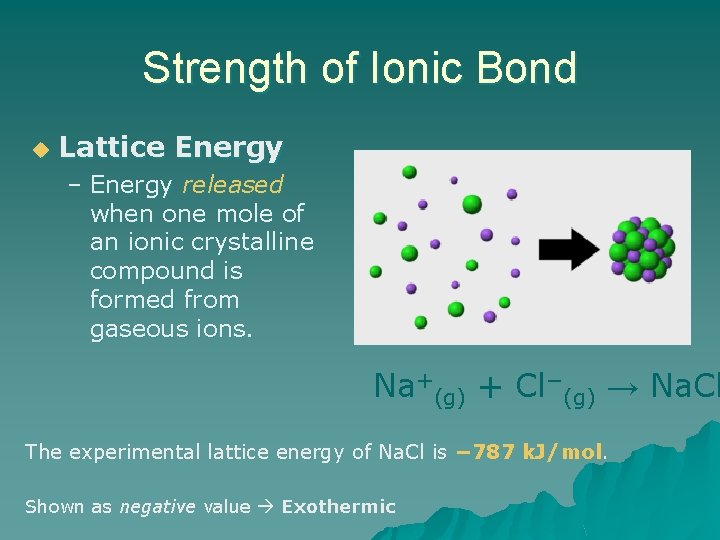
Strength of Ionic Bond u Lattice Energy – Energy released when one mole of an ionic crystalline compound is formed from gaseous ions. Na+(g) + Cl−(g) → Na. Cl The experimental lattice energy of Na. Cl is − 787 k. J/mol. Shown as negative value Exothermic
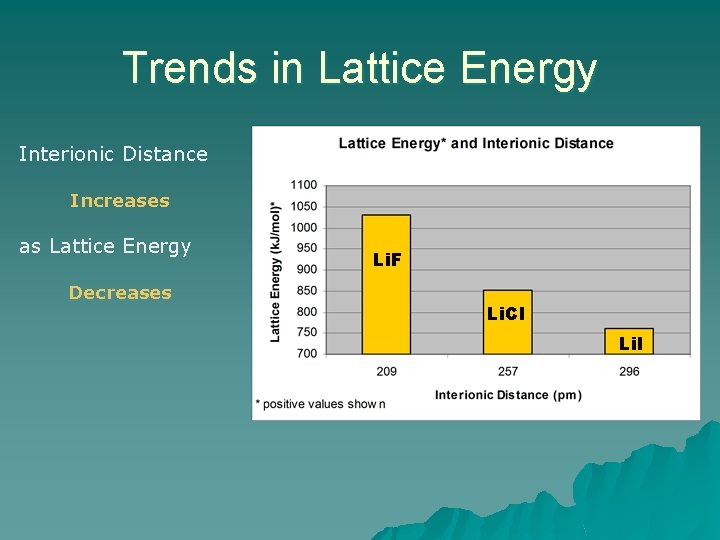
Trends in Lattice Energy Interionic Distance Increases as Lattice Energy Decreases Li. F Li. Cl Li. I
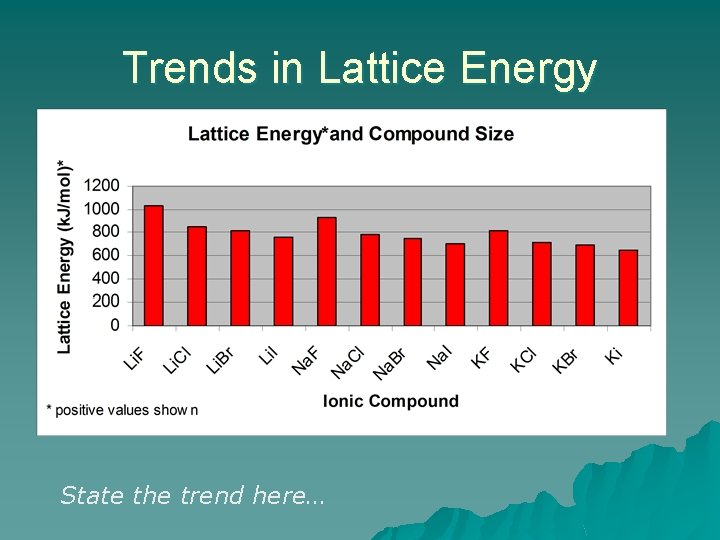
Trends in Lattice Energy State the trend here…
Factors that Affect Lattice Energy u Related bonded. to the SIZE of the ions – Smaller ions generally have a more negative (larger) lattice energy. u Affected by the CHARGE on the ion. – Larger charged atoms generally have a more negative (larger) lattice energy
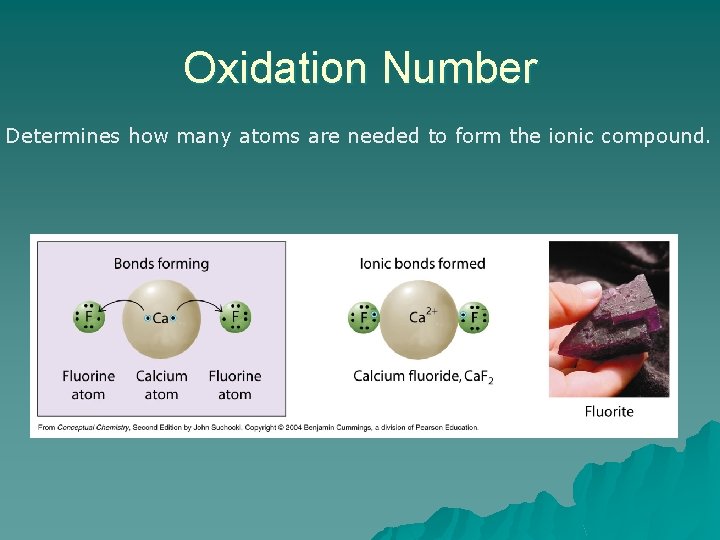
Oxidation Number Determines how many atoms are needed to form the ionic compound.
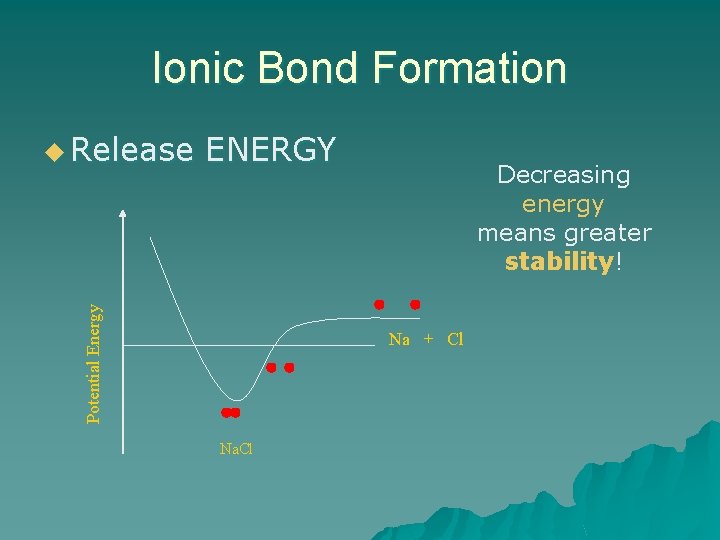
Ionic Bond Formation ENERGY Potential Energy u Release Decreasing energy means greater stability! Na + Cl Na. Cl
Properties of Ionic Compounds u High melting points u Low vapor pressures u Solids do not conduct electricity u Melts (liquids) do conduct electricity u Solutions (aq) conduct electricity – electrolytes: u Tend substances whose water solution conducts an electric current. to be hard and brittle u High solubility in water.
Linus Pauling u 1954 Nobel Prize Chemistry u First to show that chemical bonds could show degrees of both a covalent and ionic nature. u Led to the development of electronegativity values.
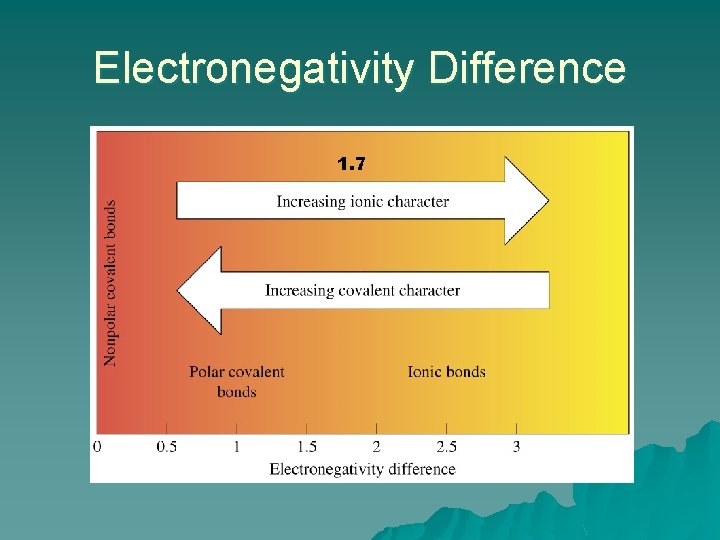
Electronegativity Difference 1. 7
Electronegavitity Difference u u u Bonding between atoms is a continuum from ionic to covalent. The larger the difference in electronegativity between two bonded elements, the more ionic in character the bond has. Which has more ionic character? – Ca. O or KF or Li. H
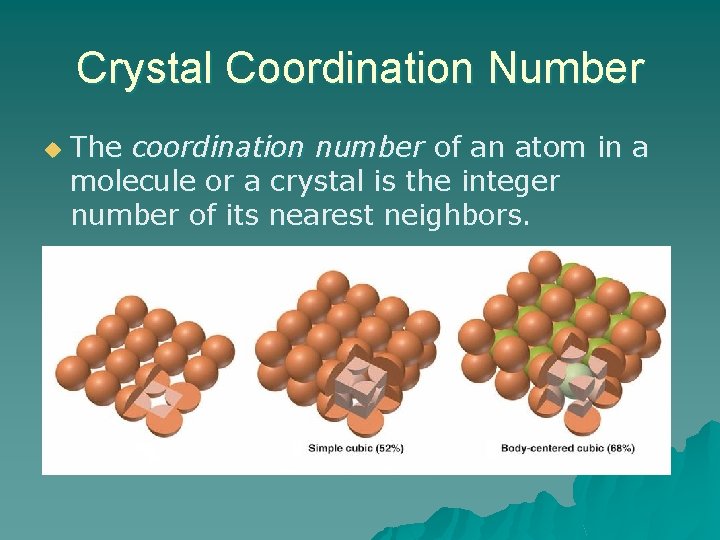
Crystal Coordination Number u The coordination number of an atom in a molecule or a crystal is the integer number of its nearest neighbors.
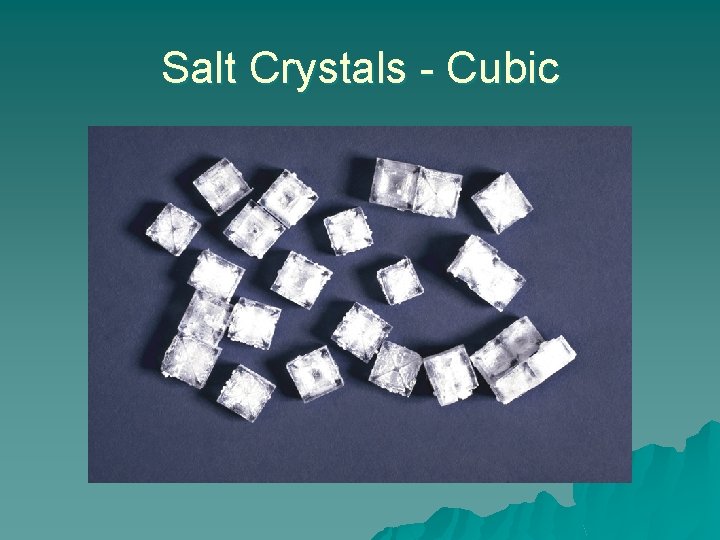
Salt Crystals - Cubic
- Slides: 24