
Ionic and Covalent Bonds Ion Ion atom or
Ionic and Covalent Bonds
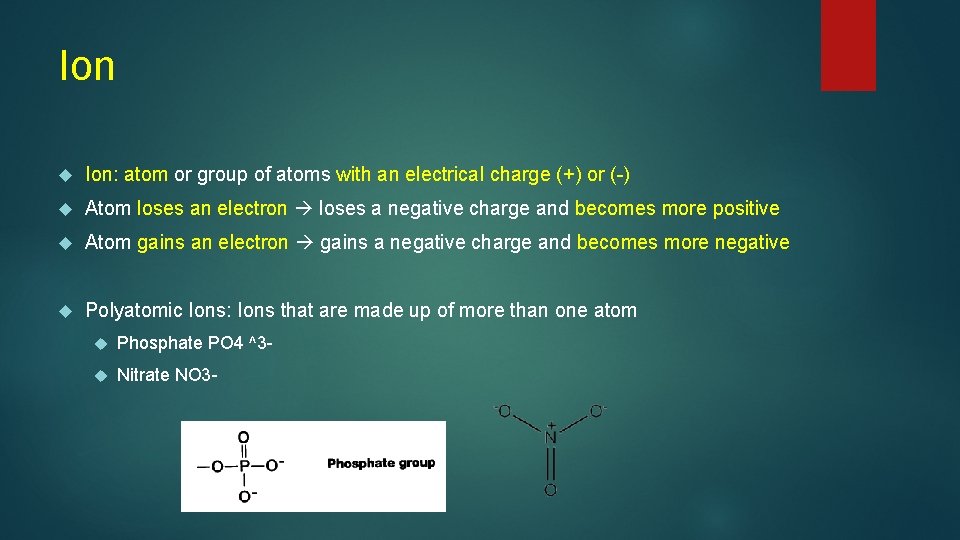
Ion Ion: atom or group of atoms with an electrical charge (+) or (-) Atom loses an electron loses a negative charge and becomes more positive Atom gains an electron gains a negative charge and becomes more negative Polyatomic Ions: Ions that are made up of more than one atom Phosphate PO 4 ^3 - Nitrate NO 3 -
Fill in the Blank An ion is an atom with an __________ charge. (+) or (-) When an atom loses an electron it becomes more _____ When an atom gains an electron it become more _______
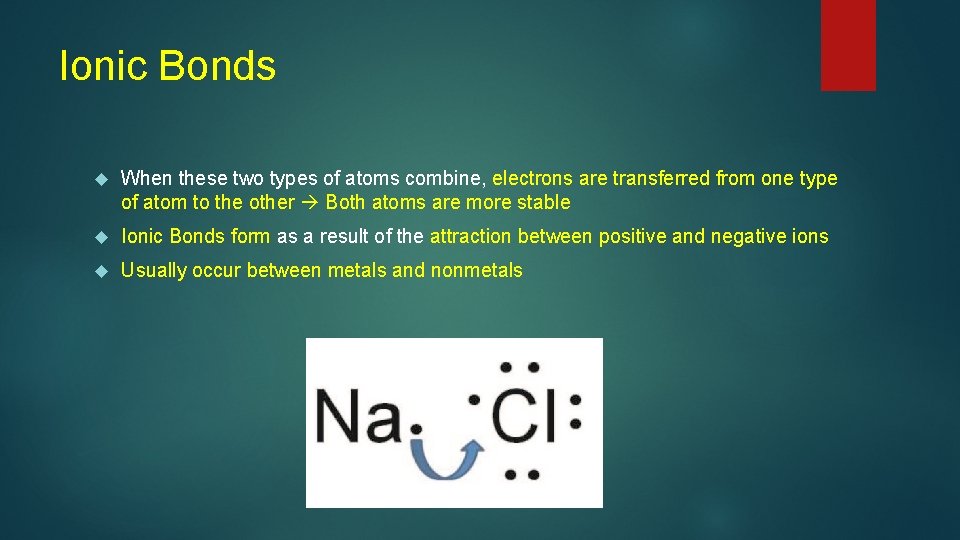
Ionic Bonds When these two types of atoms combine, electrons are transferred from one type of atom to the other Both atoms are more stable Ionic Bonds form as a result of the attraction between positive and negative ions Usually occur between metals and nonmetals
Fill in the Blank An Ionic bond is when an atom ______ its ______ to another atom Ionic Bonds form as a result of the attraction between _______ & ________ ions Ionic bonds occur between ________ & ________
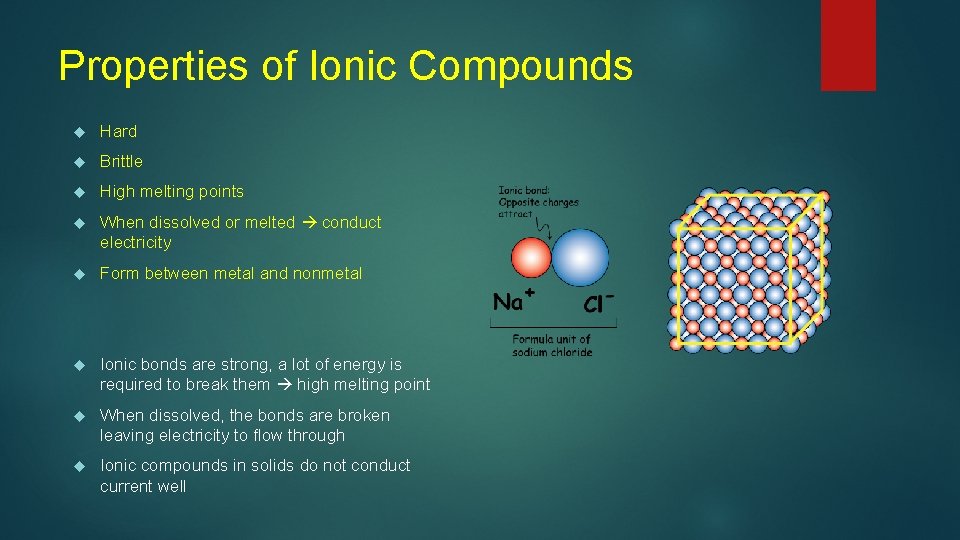
Properties of Ionic Compounds Hard Brittle High melting points When dissolved or melted conduct electricity Form between metal and nonmetal Ionic bonds are strong, a lot of energy is required to break them high melting point When dissolved, the bonds are broken leaving electricity to flow through Ionic compounds in solids do not conduct current well
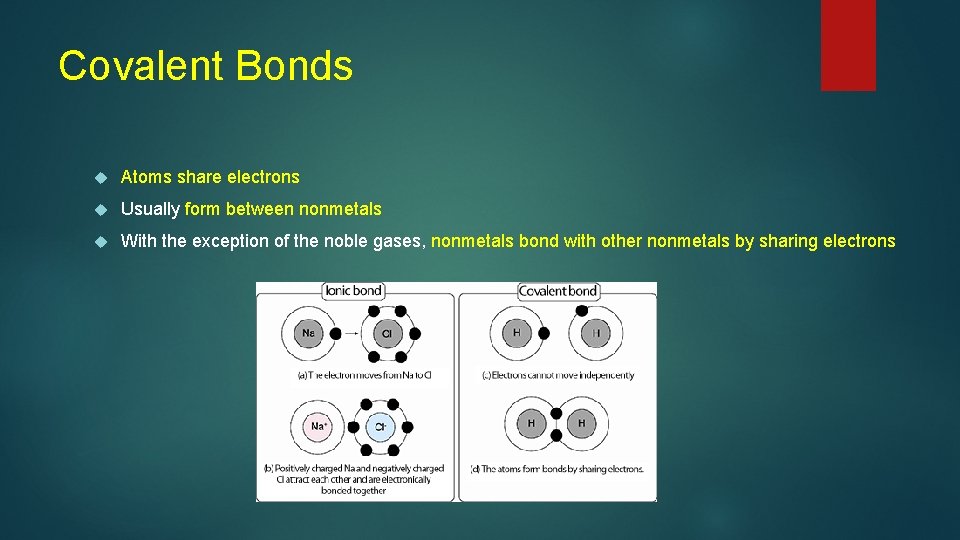
Covalent Bonds Atoms share electrons Usually form between nonmetals With the exception of the noble gases, nonmetals bond with other nonmetals by sharing electrons
Fill in the blank Covalent bond occurs when atoms _______ electrons Covalent bond form between ________ Dogs explain chemical bonds https: //www. youtube. com/watch? v=_M 9 khs 87 x. Q 8
Chemical Formulas and Names Chemical Formula: Combination of symbols that show the ratio of elements in a compound Ex. Mg. Cl 2 What does this formula tell you? 1 Magnesium and 2 Chlorides Ex. Ca. CO 3 1 Calcium 1 Carbon 3 Oxygen Ex. H 2 O
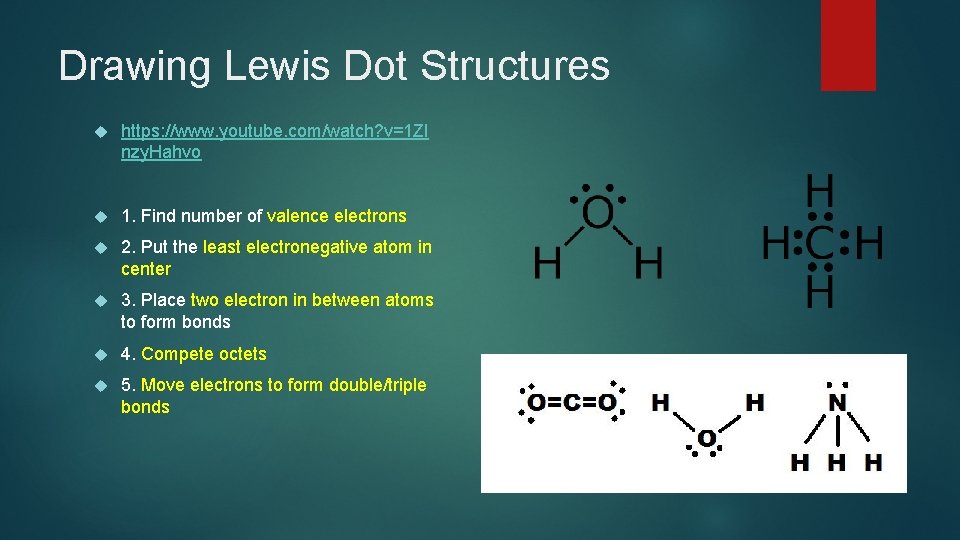
Drawing Lewis Dot Structures https: //www. youtube. com/watch? v=1 Zl nzy. Hahvo 1. Find number of valence electrons 2. Put the least electronegative atom in center 3. Place two electron in between atoms to form bonds 4. Compete octets 5. Move electrons to form double/triple bonds
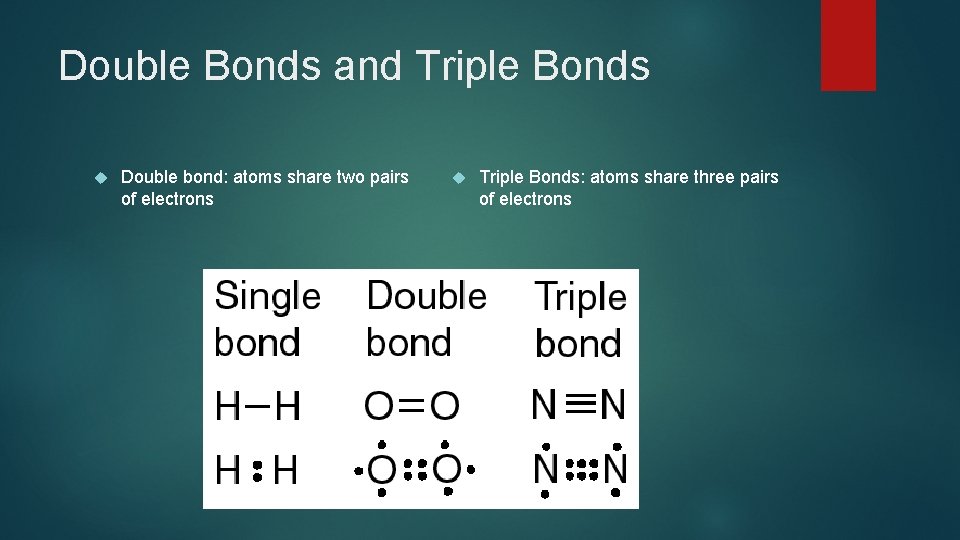
Double Bonds and Triple Bonds Double bond: atoms share two pairs of electrons Triple Bonds: atoms share three pairs of electrons
Molecular Compound Molecular compounds are covalently bonded Different properties than Ionic compounds Lower melting/boiling points Do not conduct electricity when dissolved
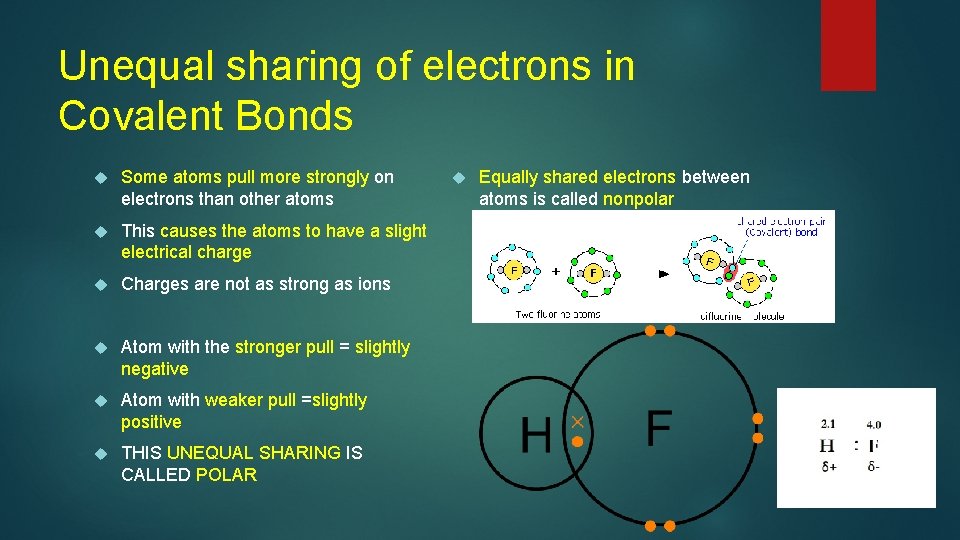
Unequal sharing of electrons in Covalent Bonds Some atoms pull more strongly on electrons than other atoms This causes the atoms to have a slight electrical charge Charges are not as strong as ions Atom with the stronger pull = slightly negative Atom with weaker pull =slightly positive THIS UNEQUAL SHARING IS CALLED POLAR Equally shared electrons between atoms is called nonpolar
Fill in the blank Atom with the stronger pull have a slightly _______ charge Atom with weaker pull have a slightly _______ charge Unequal sharing of electrons are called a ________ bond
- Slides: 14