
Ion Homeostasis Channels and Transporters An Update on
![References: Textbooks • Boron and Boulpaep (2002) Medical Physiology [Saunders] • Alberts et al.](https://slidetodoc.com/presentation_image_h2/efb32dc8ec18efce727e60c1078a71b0/image-43.jpg "References: Textbooks • Boron and Boulpaep (2002) Medical Physiology [Saunders] • Alberts et al.")
- Slides: 43
Ion Homeostasis, Channels, and Transporters: An Update on Cellular Mechanisms Experimental Biology 2004: APS Refresher Course Washington, DC George R. Dubyak, Ph. D. Dept of Physiology & Biophysics
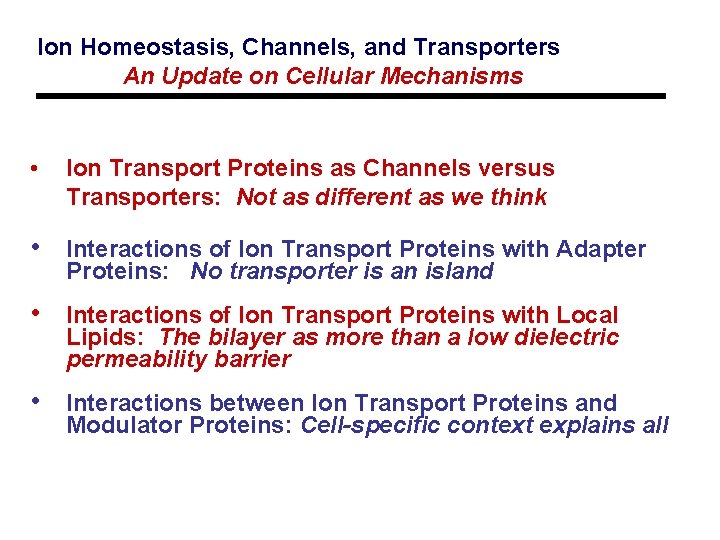
Ion Homeostasis, Channels, and Transporters An Update on Cellular Mechanisms • Ion Transport Proteins as Channels versus Transporters: Not as different as we think • Interactions of Ion Transport Proteins with Adapter Proteins: No transporter is an island • Interactions of Ion Transport Proteins with Local Lipids: The bilayer as more than a low dielectric permeability barrier • Interactions between Ion Transport Proteins and Modulator Proteins: Cell-specific context explains all
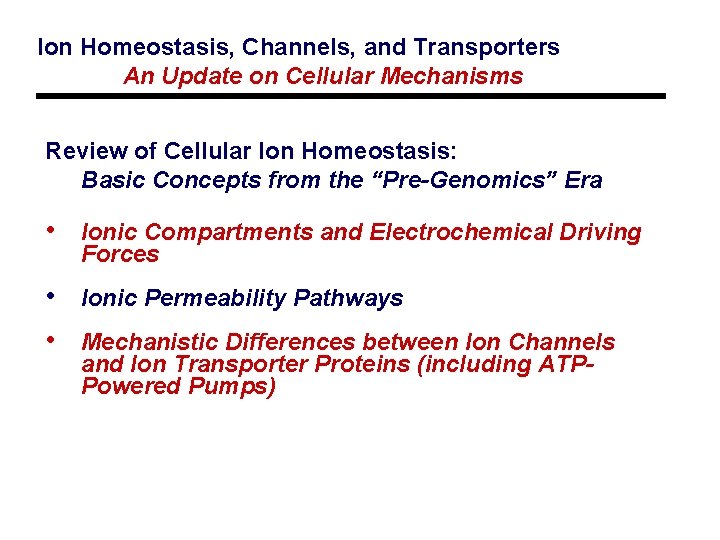
Ion Homeostasis, Channels, and Transporters An Update on Cellular Mechanisms Review of Cellular Ion Homeostasis: Basic Concepts from the “Pre-Genomics” Era • Ionic Compartments and Electrochemical Driving Forces • Ionic Permeability Pathways • Mechanistic Differences between Ion Channels and Ion Transporter Proteins (including ATPPowered Pumps)
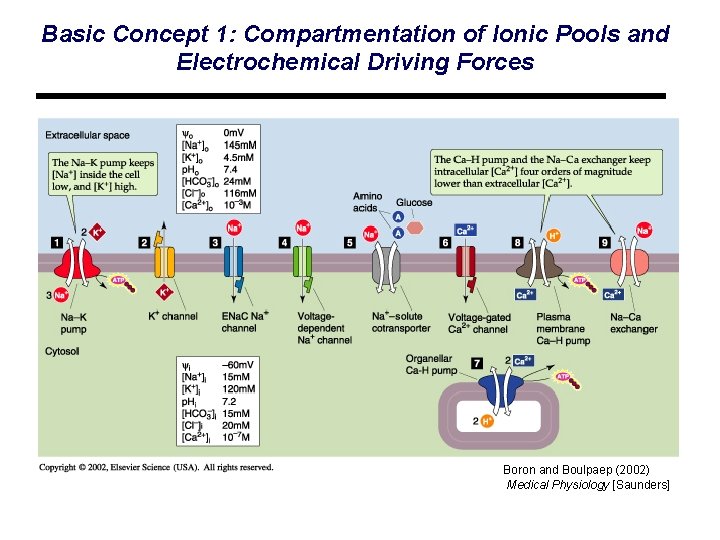
Basic Concept 1: Compartmentation of Ionic Pools and Electrochemical Driving Forces Boron and Boulpaep (2002) Medical Physiology [Saunders]
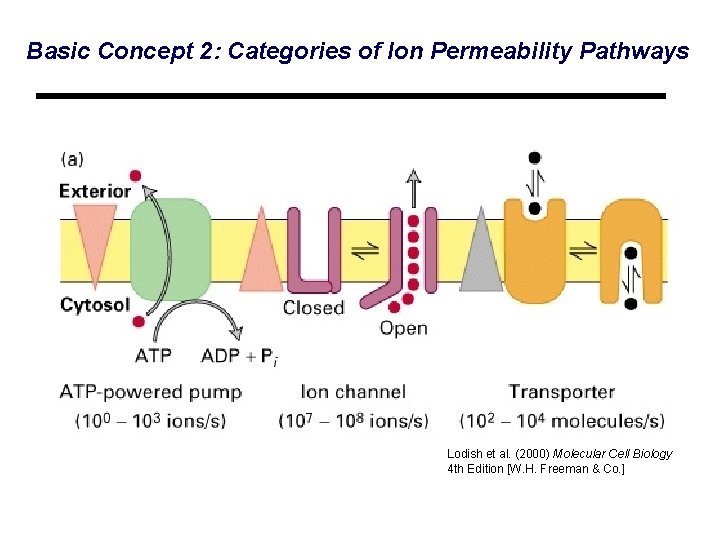
Basic Concept 2: Categories of Ion Permeability Pathways Lodish et al. (2000) Molecular Cell Biology 4 th Edition [W. H. Freeman & Co. ]
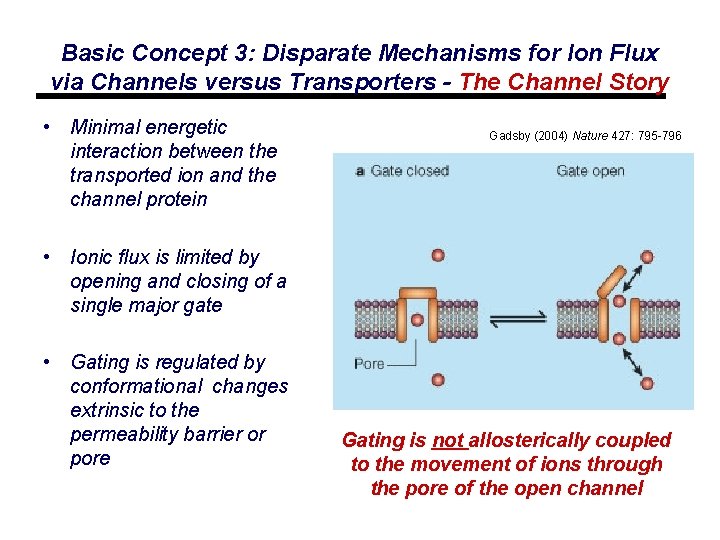
Basic Concept 3: Disparate Mechanisms for Ion Flux via Channels versus Transporters - The Channel Story • Minimal energetic interaction between the transported ion and the channel protein Gadsby (2004) Nature 427: 795 -796 • Ionic flux is limited by opening and closing of a single major gate • Gating is regulated by conformational changes extrinsic to the permeability barrier or pore Gating is not allosterically coupled to the movement of ions through the pore of the open channel
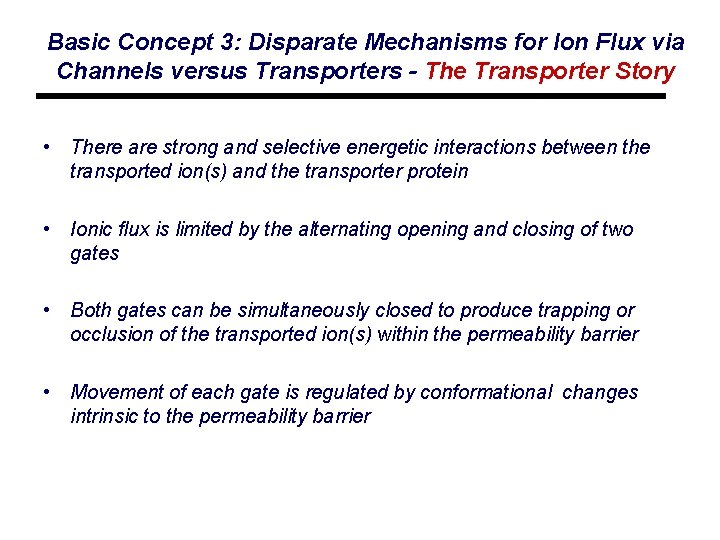
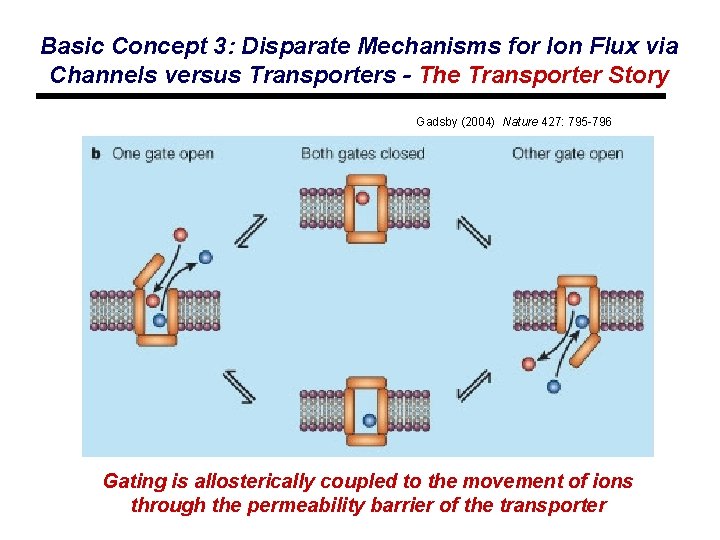
Basic Concept 3: Disparate Mechanisms for Ion Flux via Channels versus Transporters - The Transporter Story • There are strong and selective energetic interactions between the transported ion(s) and the transporter protein • Ionic flux is limited by the alternating opening and closing of two gates • Both gates can be simultaneously closed to produce trapping or occlusion of the transported ion(s) within the permeability barrier • Movement of each gate is regulated by conformational changes intrinsic to the permeability barrier
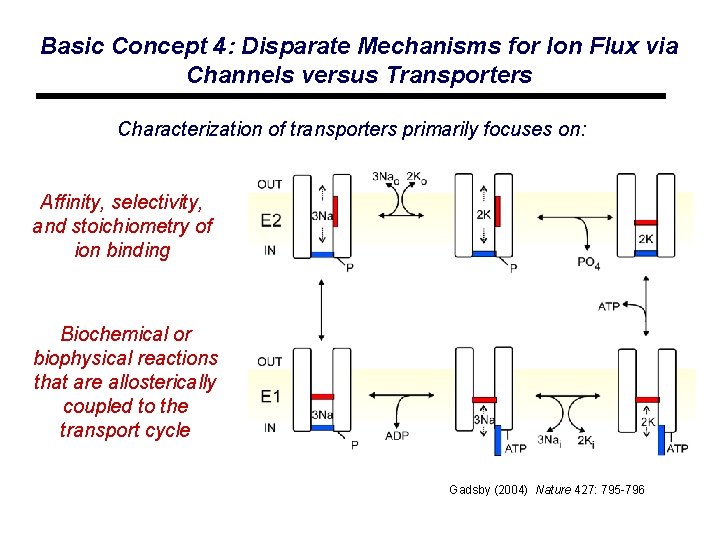
Basic Concept 3: Disparate Mechanisms for Ion Flux via Channels versus Transporters - The Transporter Story Gadsby (2004) Nature 427: 795 -796 Gating is allosterically coupled to the movement of ions through the permeability barrier of the transporter
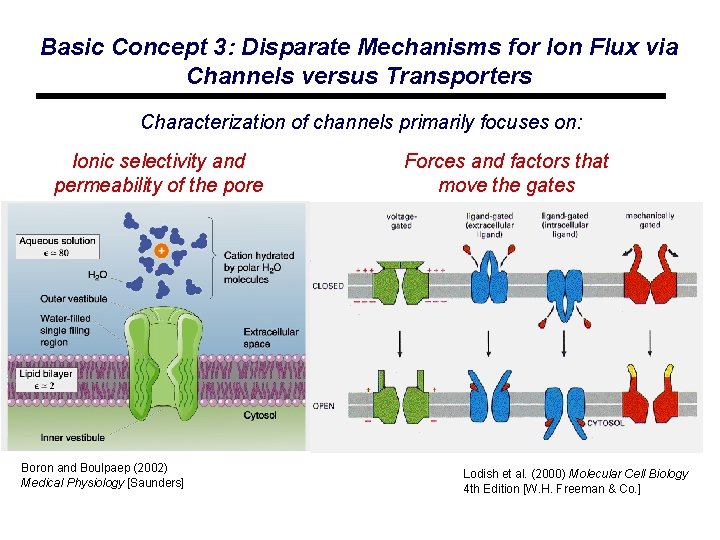
Basic Concept 3: Disparate Mechanisms for Ion Flux via Channels versus Transporters Characterization of channels primarily focuses on: Ionic selectivity and permeability of the pore Boron and Boulpaep (2002) Medical Physiology [Saunders] Forces and factors that move the gates Lodish et al. (2000) Molecular Cell Biology 4 th Edition [W. H. Freeman & Co. ]
Basic Concept 4: Disparate Mechanisms for Ion Flux via Channels versus Transporters Characterization of transporters primarily focuses on: Affinity, selectivity, and stoichiometry of ion binding Biochemical or biophysical reactions that are allosterically coupled to the transport cycle Gadsby (2004) Nature 427: 795 -796
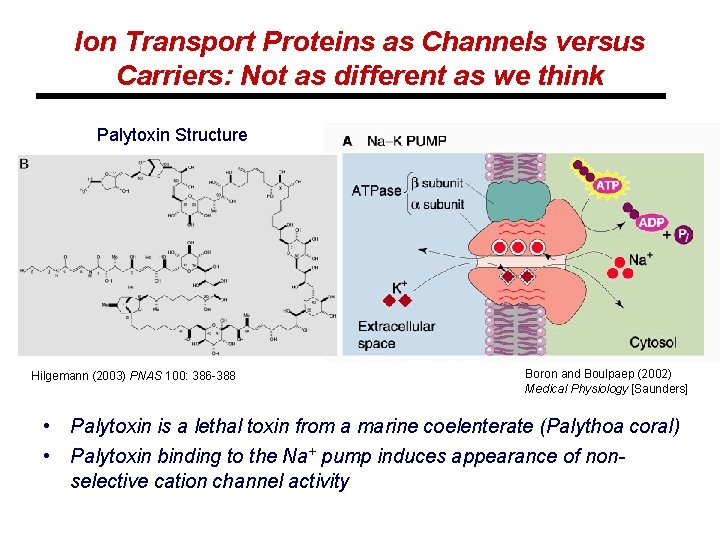
Ion Transport Proteins as Channels versus Carriers: Not as different as we think Concept: Both channel-like activity and transporterlike activity can be accommodated within the basic structures of most transport proteins Model Example: The induction of channel activity in the Na+, K+-ATPase pump upon binding of palytoxin, a marine toxin, that stabilizes both gates of the Na+ pump in the open state
Ion Transport Proteins as Channels versus Carriers: Not as different as we think Palytoxin Structure Hilgemann (2003) PNAS 100: 386 -388 Boron and Boulpaep (2002) Medical Physiology [Saunders] • Palytoxin is a lethal toxin from a marine coelenterate (Palythoa coral) • Palytoxin binding to the Na+ pump induces appearance of nonselective cation channel activity
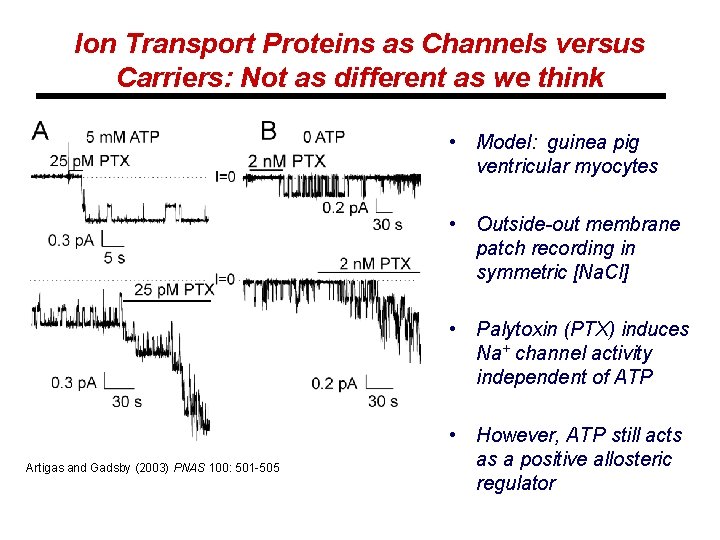
Ion Transport Proteins as Channels versus Carriers: Not as different as we think • Model: guinea pig ventricular myocytes • Outside-out membrane patch recording in symmetric [Na. Cl] • Palytoxin (PTX) induces Na+ channel activity independent of ATP Artigas and Gadsby (2003) PNAS 100: 501 -505 • However, ATP still acts as a positive allosteric regulator
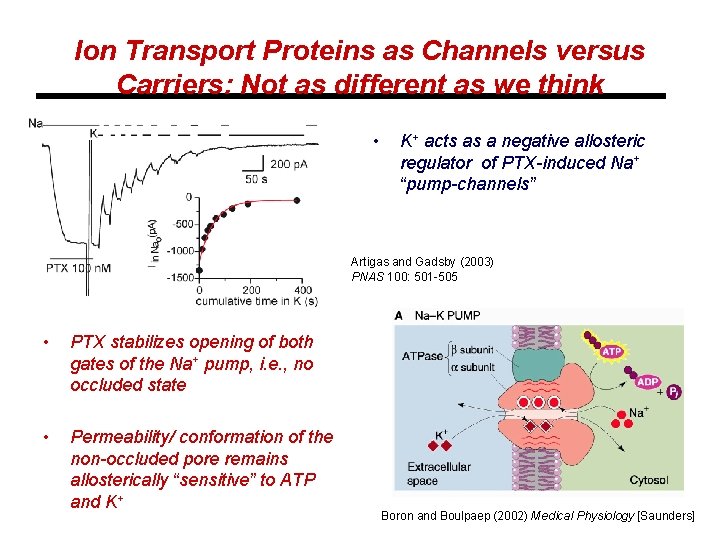
Ion Transport Proteins as Channels versus Carriers: Not as different as we think • K+ acts as a negative allosteric regulator of PTX-induced Na+ “pump-channels” Artigas and Gadsby (2003) PNAS 100: 501 -505 • PTX stabilizes opening of both gates of the Na+ pump, i. e. , no occluded state • Permeability/ conformation of the non-occluded pore remains allosterically “sensitive” to ATP and K+ Boron and Boulpaep (2002) Medical Physiology [Saunders]
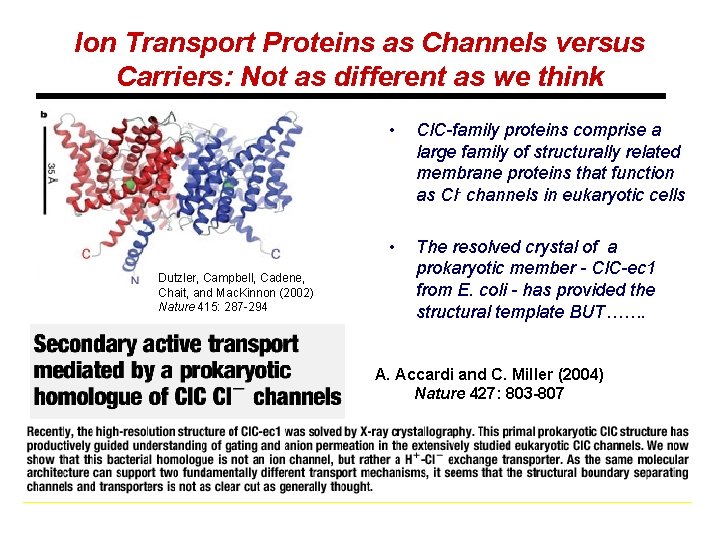
Ion Transport Proteins as Channels versus Carriers: Not as different as we think Dutzler, Campbell, Cadene, Chait, and Mac. Kinnon (2002) Nature 415: 287 -294 • Cl. C-family proteins comprise a large family of structurally related membrane proteins that function as Cl- channels in eukaryotic cells • The resolved crystal of a prokaryotic member - Cl. C-ec 1 from E. coli - has provided the structural template BUT……. A. Accardi and C. Miller (2004) Nature 427: 803 -807
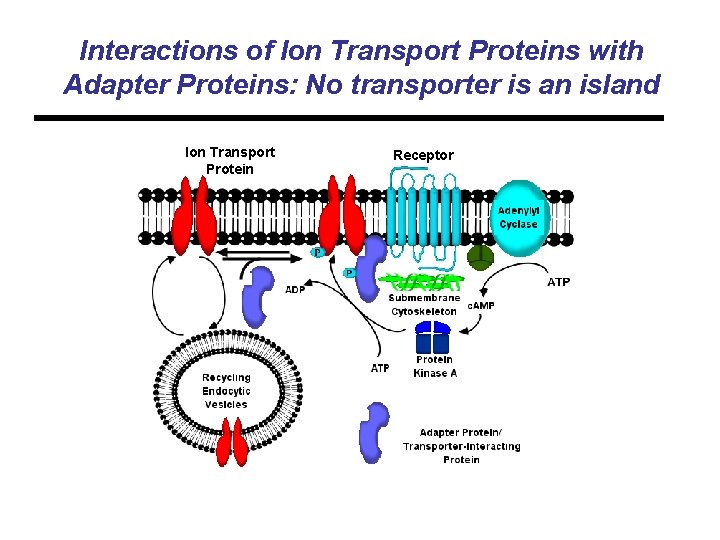
Interactions of Ion Transport Proteins with Adapter Proteins: No transporter is an island Concept: Many channels and transporters physically associate with adapter proteins that regulate the subcellular localization of the transport protein and/or its direct interaction within signal transduction complexes that include receptors, 2 ndmessenger effector enzymes, and protein kinases Model Example: The role of NHERF-family adapter proteins in the localization and acute regulation of Na-Phosphate cotransporters within apical signaling complexes of renal epithelial cells
Interactions of Ion Transport Proteins with Adapter Proteins: No transporter is an island Ion Transport Protein Receptor
Interactions of Ion Transport Proteins with Adapter Proteins: No transporter is an island • PDZ (PSD-95, discs large, ZO 1) domains are protein-protein interaction sites found in a large number of adapter proteins • Such adapter proteins act to localize channels or transporters within large signaling complexes at the sub-membrane cytoskeleton • Examples include the PSD-95 (post-synaptic density) adapter that co -assembles neurotransmitter-gated ion channels with cytoskeletal elements, kinases, and small GTPases into signaling complexes at the neuronal synapses • NHERFs (Na+/H+ Exchanger Regulatory Factors) comprise another family of PDZ-containing adapters expressed in many epithelia
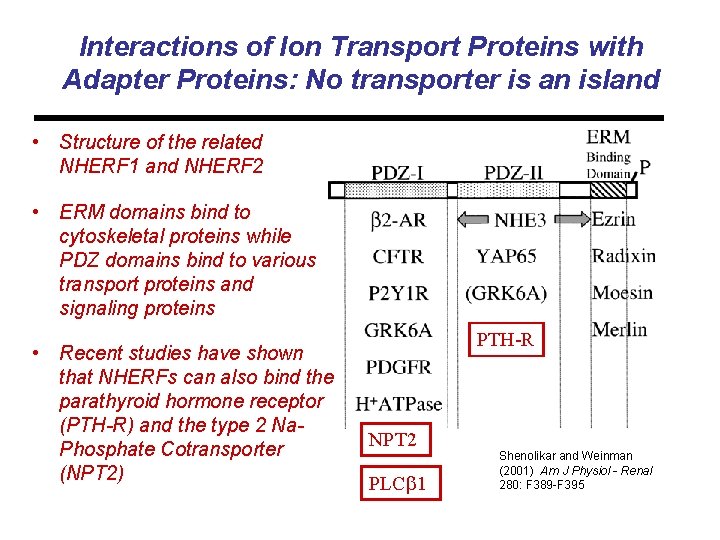
Interactions of Ion Transport Proteins with Adapter Proteins: No transporter is an island • Structure of the related NHERF 1 and NHERF 2 • ERM domains bind to cytoskeletal proteins while PDZ domains bind to various transport proteins and signaling proteins • Recent studies have shown that NHERFs can also bind the parathyroid hormone receptor (PTH-R) and the type 2 Na. Phosphate Cotransporter (NPT 2) PTH-R NPT 2 PLCb 1 Shenolikar and Weinman (2001) Am J Physiol - Renal 280: F 389 -F 395
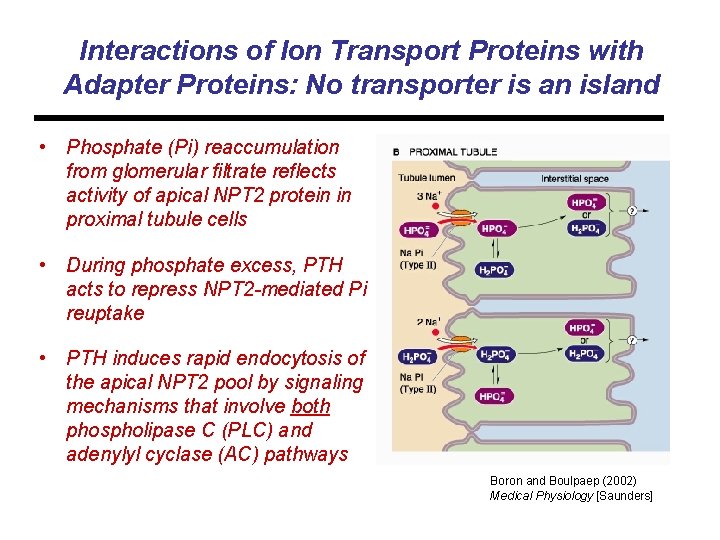
Interactions of Ion Transport Proteins with Adapter Proteins: No transporter is an island • Phosphate (Pi) reaccumulation from glomerular filtrate reflects activity of apical NPT 2 protein in proximal tubule cells • During phosphate excess, PTH acts to repress NPT 2 -mediated Pi reuptake • PTH induces rapid endocytosis of the apical NPT 2 pool by signaling mechanisms that involve both phospholipase C (PLC) and adenylyl cyclase (AC) pathways Boron and Boulpaep (2002) Medical Physiology [Saunders]
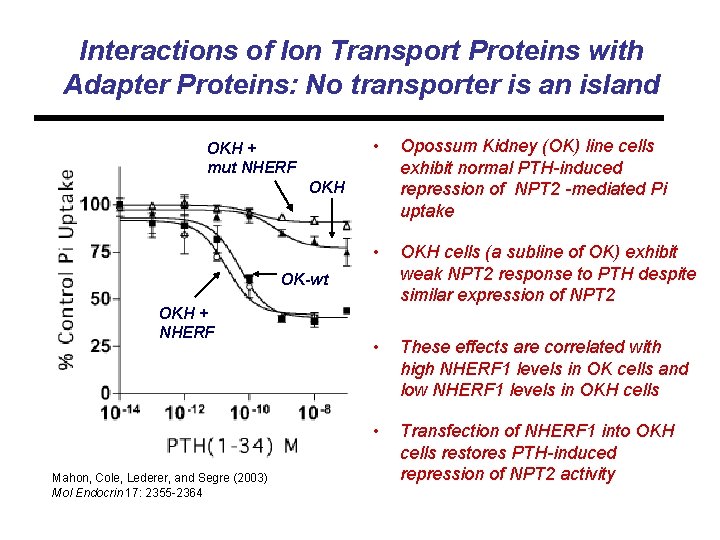
Interactions of Ion Transport Proteins with Adapter Proteins: No transporter is an island OKH + mut NHERF • Opossum Kidney (OK) line cells exhibit normal PTH-induced repression of NPT 2 -mediated Pi uptake • OKH cells (a subline of OK) exhibit weak NPT 2 response to PTH despite similar expression of NPT 2 • These effects are correlated with high NHERF 1 levels in OK cells and low NHERF 1 levels in OKH cells • Transfection of NHERF 1 into OKH cells restores PTH-induced repression of NPT 2 activity OKH OK-wt OKH + NHERF Mahon, Cole, Lederer, and Segre (2003) Mol Endocrin 17: 2355 -2364
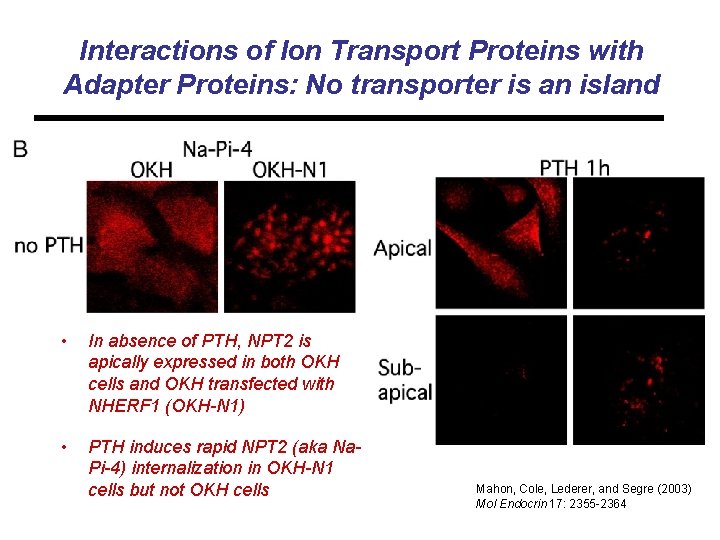
Interactions of Ion Transport Proteins with Adapter Proteins: No transporter is an island • In absence of PTH, NPT 2 is apically expressed in both OKH cells and OKH transfected with NHERF 1 (OKH-N 1) • PTH induces rapid NPT 2 (aka Na. Pi-4) internalization in OKH-N 1 cells but not OKH cells Mahon, Cole, Lederer, and Segre (2003) Mol Endocrin 17: 2355 -2364
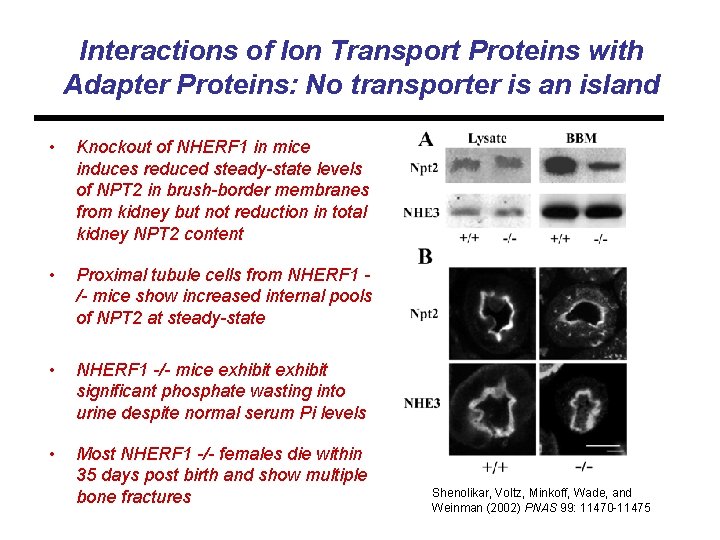
Interactions of Ion Transport Proteins with Adapter Proteins: No transporter is an island • Knockout of NHERF 1 in mice induces reduced steady-state levels of NPT 2 in brush-border membranes from kidney but not reduction in total kidney NPT 2 content • Proximal tubule cells from NHERF 1 /- mice show increased internal pools of NPT 2 at steady-state • NHERF 1 -/- mice exhibit significant phosphate wasting into urine despite normal serum Pi levels • Most NHERF 1 -/- females die within 35 days post birth and show multiple bone fractures Shenolikar, Voltz, Minkoff, Wade, and Weinman (2002) PNAS 99: 11470 -11475
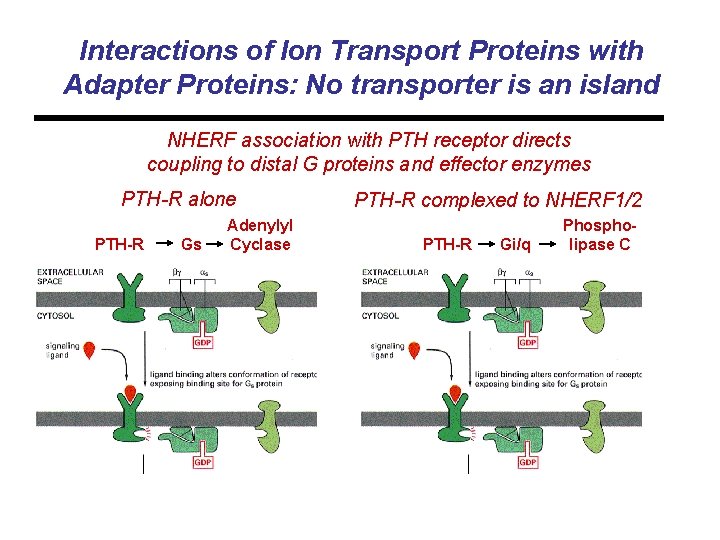
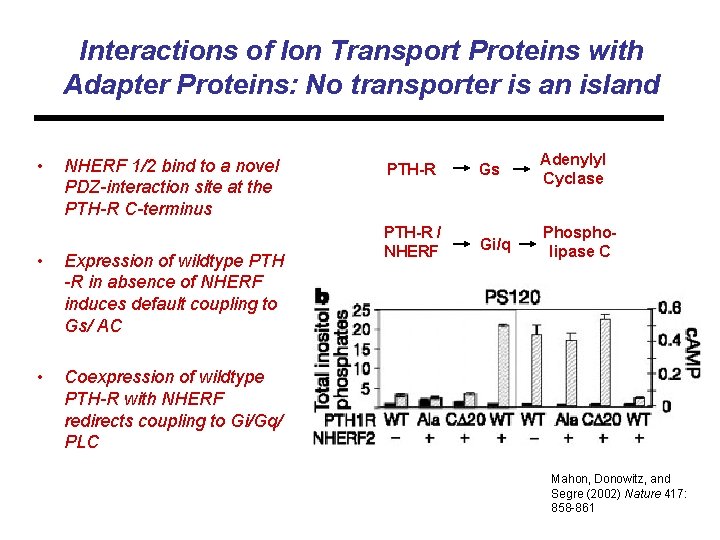
Interactions of Ion Transport Proteins with Adapter Proteins: No transporter is an island NHERF association with PTH receptor directs coupling to distal G proteins and effector enzymes PTH-R alone PTH-R Gs Adenylyl Cyclase PTH-R complexed to NHERF 1/2 PTH-R Gi/q Phospholipase C
Interactions of Ion Transport Proteins with Adapter Proteins: No transporter is an island • NHERF 1/2 bind to a novel PDZ-interaction site at the PTH-R C-terminus • Expression of wildtype PTH -R in absence of NHERF induces default coupling to Gs/ AC • Coexpression of wildtype PTH-R with NHERF redirects coupling to Gi/Gq/ PLC PTH-R Gs Adenylyl Cyclase PTH-R / NHERF Gi/q Phospholipase C Mahon, Donowitz, and Segre (2002) Nature 417: 858 -861
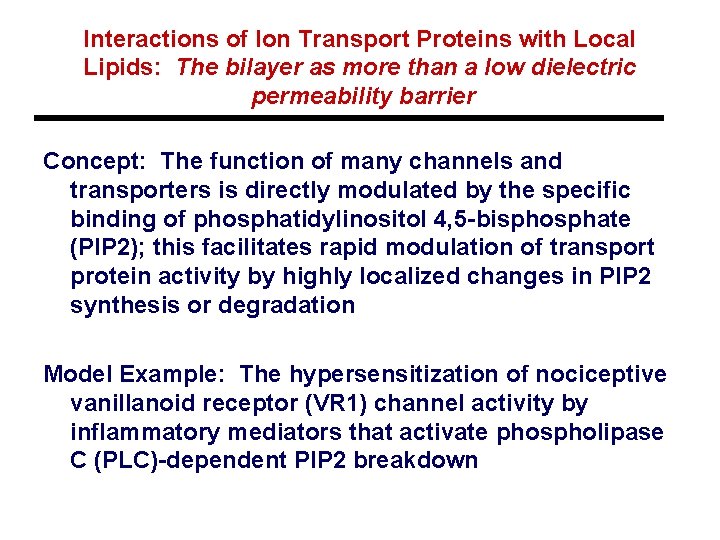
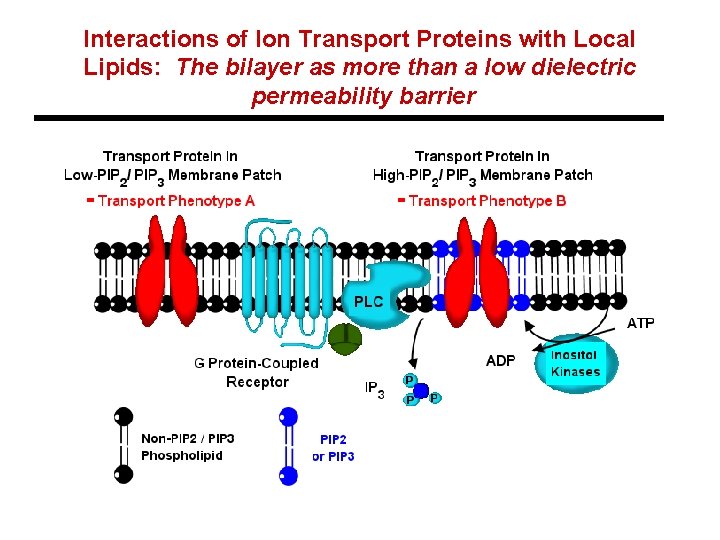
Interactions of Ion Transport Proteins with Local Lipids: The bilayer as more than a low dielectric permeability barrier Concept: The function of many channels and transporters is directly modulated by the specific binding of phosphatidylinositol 4, 5 -bisphosphate (PIP 2); this facilitates rapid modulation of transport protein activity by highly localized changes in PIP 2 synthesis or degradation Model Example: The hypersensitization of nociceptive vanillanoid receptor (VR 1) channel activity by inflammatory mediators that activate phospholipase C (PLC)-dependent PIP 2 breakdown
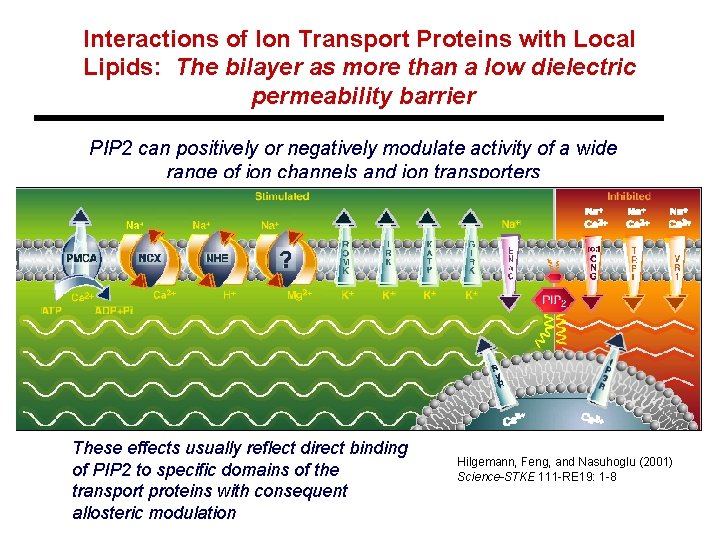
Interactions of Ion Transport Proteins with Local Lipids: The bilayer as more than a low dielectric permeability barrier PIP 2 can positively or negatively modulate activity of a wide range of ion channels and ion transporters These effects usually reflect direct binding of PIP 2 to specific domains of the transport proteins with consequent allosteric modulation Hilgemann, Feng, and Nasuhoglu (2001) Science-STKE 111 -RE 19: 1 -8
Interactions of Ion Transport Proteins with Local Lipids: The bilayer as more than a low dielectric permeability barrier
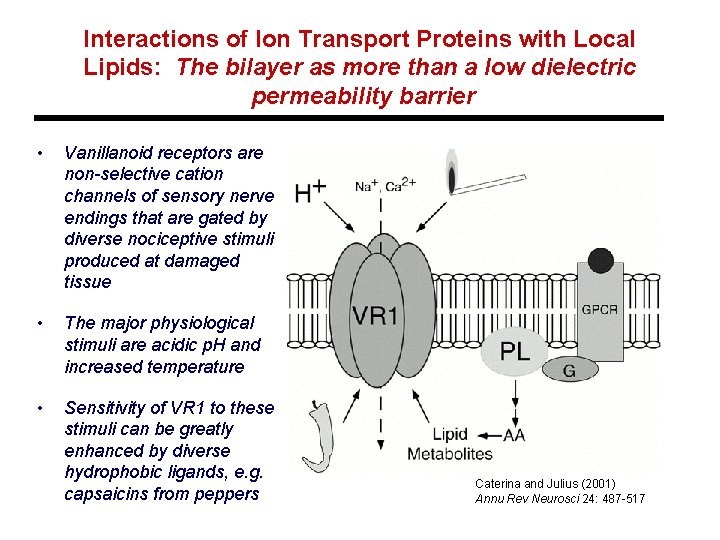
Interactions of Ion Transport Proteins with Local Lipids: The bilayer as more than a low dielectric permeability barrier • Vanillanoid receptors are non-selective cation channels of sensory nerve endings that are gated by diverse nociceptive stimuli produced at damaged tissue • The major physiological stimuli are acidic p. H and increased temperature • Sensitivity of VR 1 to these stimuli can be greatly enhanced by diverse hydrophobic ligands, e. g. capsaicins from peppers Caterina and Julius (2001) Annu Rev Neurosci 24: 487 -517
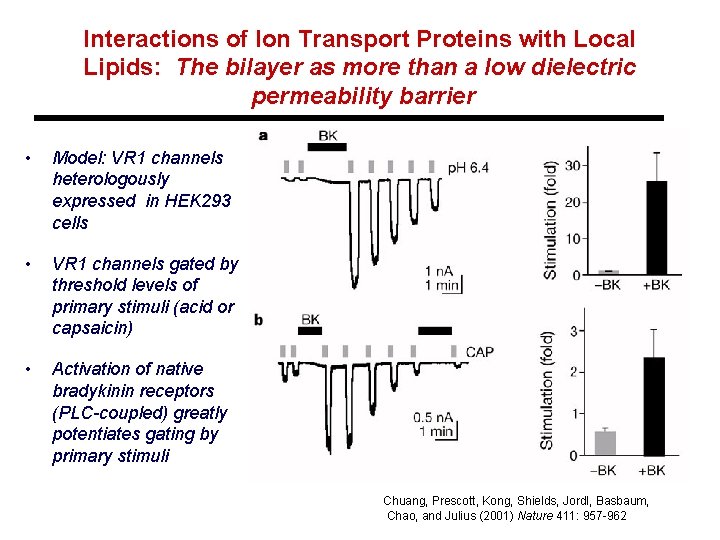
Interactions of Ion Transport Proteins with Local Lipids: The bilayer as more than a low dielectric permeability barrier • Model: VR 1 channels heterologously expressed in HEK 293 cells • VR 1 channels gated by threshold levels of primary stimuli (acid or capsaicin) • Activation of native bradykinin receptors (PLC-coupled) greatly potentiates gating by primary stimuli Chuang, Prescott, Kong, Shields, Jordl, Basbaum, Chao, and Julius (2001) Nature 411: 957 -962
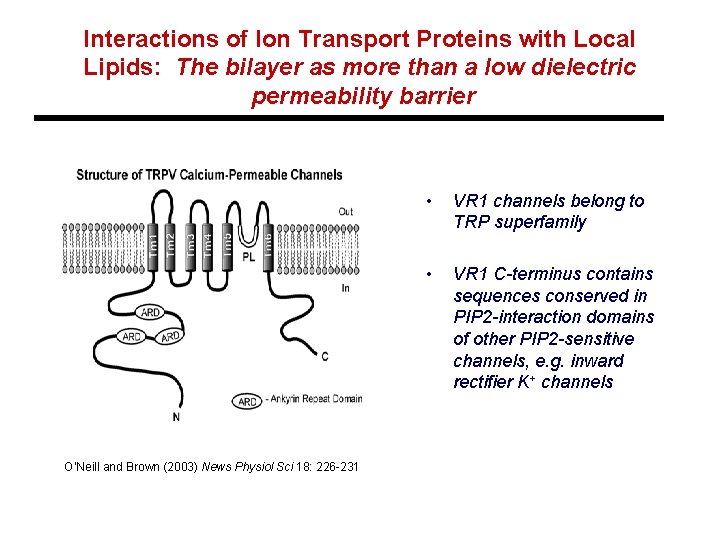
Interactions of Ion Transport Proteins with Local Lipids: The bilayer as more than a low dielectric permeability barrier O’Neill and Brown (2003) News Physiol Sci 18: 226 -231 • VR 1 channels belong to TRP superfamily • VR 1 C-terminus contains sequences conserved in PIP 2 -interaction domains of other PIP 2 -sensitive channels, e. g. inward rectifier K+ channels
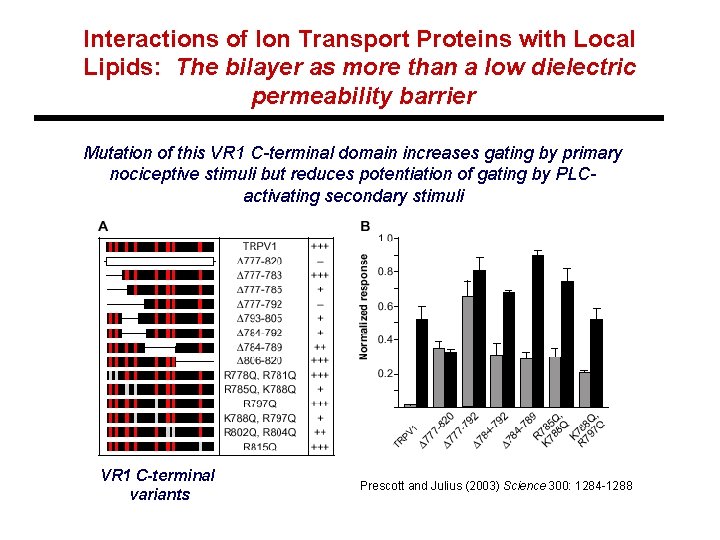
Interactions of Ion Transport Proteins with Local Lipids: The bilayer as more than a low dielectric permeability barrier Mutation of this VR 1 C-terminal domain increases gating by primary nociceptive stimuli but reduces potentiation of gating by PLCactivating secondary stimuli VR 1 C-terminal variants Prescott and Julius (2003) Science 300: 1284 -1288
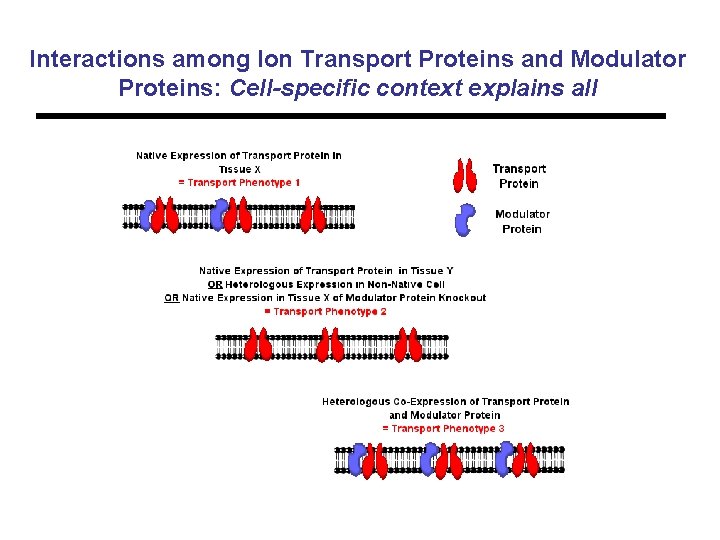
Interactions among Ion Transport Proteins and Modulator Proteins: Cell-specific context explains all Concept: An ion transport protein can exhibit tissuespecific differences in function that reflect its direct association with modulator proteins that are expressed in a tissue-specific or stimulus-specific manner. Model Example: The role of FXYD-family membrane proteins in the tissue-specific modulation of Na+, K+ATPase pump activity
Interactions among Ion Transport Proteins and Modulator Proteins: Cell-specific context explains all
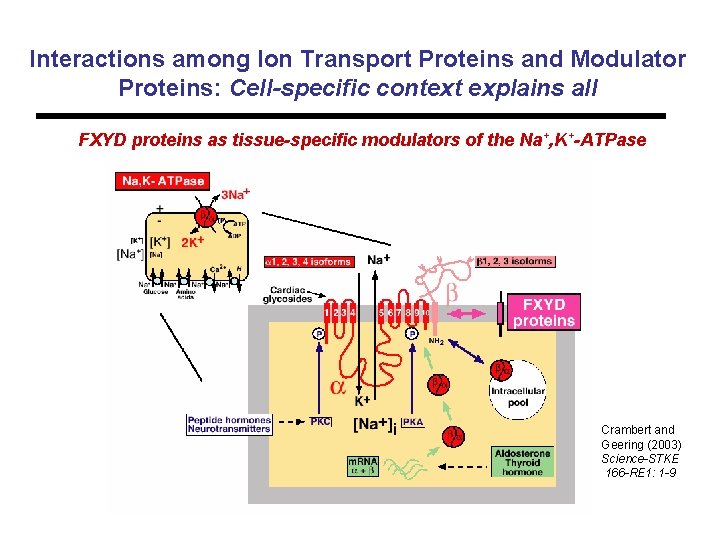
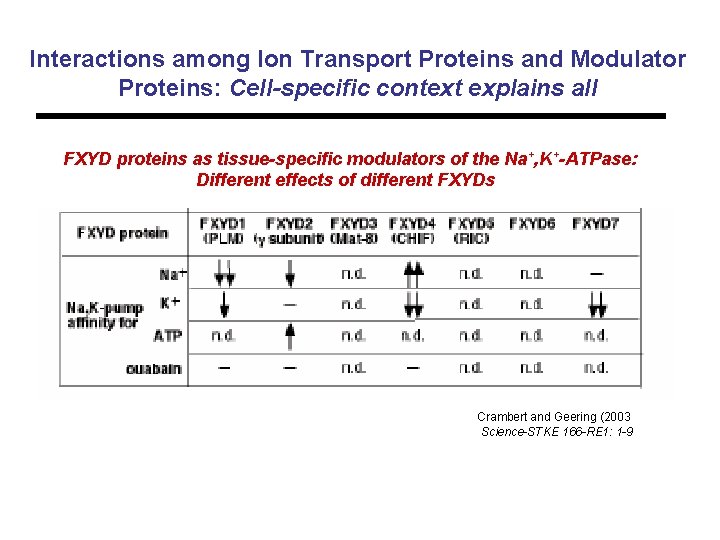
Interactions among Ion Transport Proteins and Modulator Proteins: Cell-specific context explains all FXYD proteins as tissue-specific modulators of the Na+, K+-ATPase Crambert and Geering (2003) Science-STKE 166 -RE 1: 1 -9
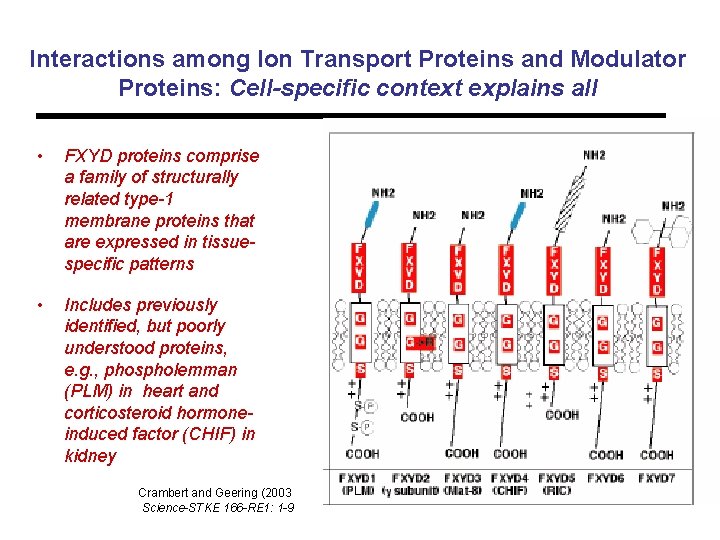
Interactions among Ion Transport Proteins and Modulator Proteins: Cell-specific context explains all • FXYD proteins comprise a family of structurally related type-1 membrane proteins that are expressed in tissuespecific patterns • Includes previously identified, but poorly understood proteins, e. g. , phospholemman (PLM) in heart and corticosteroid hormoneinduced factor (CHIF) in kidney Crambert and Geering (2003 Science-STKE 166 -RE 1: 1 -9
Interactions among Ion Transport Proteins and Modulator Proteins: Cell-specific context explains all FXYD proteins as tissue-specific modulators of the Na+, K+-ATPase: Different effects of different FXYDs Crambert and Geering (2003 Science-STKE 166 -RE 1: 1 -9
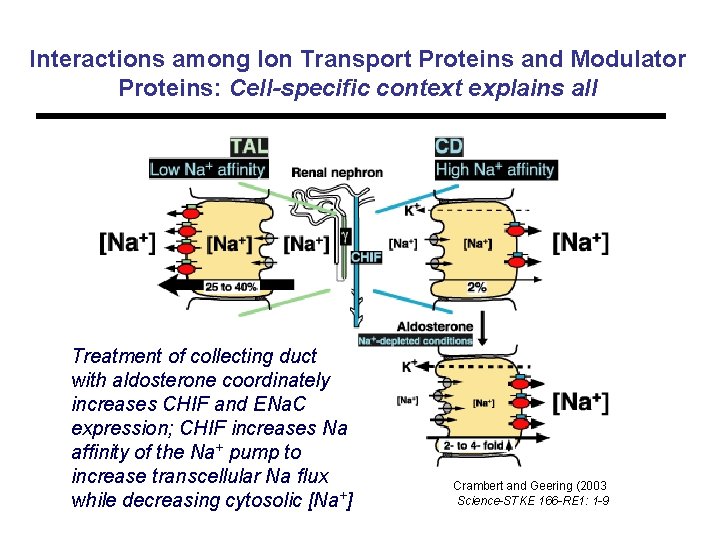
Interactions among Ion Transport Proteins and Modulator Proteins: Cell-specific context explains all Treatment of collecting duct with aldosterone coordinately increases CHIF and ENa. C expression; CHIF increases Na affinity of the Na+ pump to increase transcellular Na flux while decreasing cytosolic [Na+] Crambert and Geering (2003 Science-STKE 166 -RE 1: 1 -9
Take-Home Lessons • Precise homeostasis of the major inorganic cations (Na+, K+, H+) and anions (Cl-, PO 43 -, HCO 3 -) is fundamental to all cells • However, cell-specific expression of different membrane transport proteins and regulatory factors permits wide variations in the absolute rates of transmembrane flux of these ions • These cell-specific differences in ionic flux are exploited for tissue-specific differences in function such as solute flow (e. g. transepithelial movements of metabolites) or information transfer
Take-Home Lessons • These tissue-specific differences in ionic flux are regulated at multiple levels: – via increased/ decreased expression of membrane transport protein genes – via changes in the steady-state trafficking of membrane transport protein to and from the plasma membrane – via direct post-translational modification (e. g. phosphorylation) of the membrane transport proteins – via direct association with tissue-specific adapter or modulator proteins – via the local lipid composition of the membrane bilayer
References: Original Research Papers • • Accardi and Miller (2004) Nature 427: 803 -807 Artigas and Gadsby (2003) PNAS 100: 501 -505 Chuang, Prescott, Kong, Shields, Jordl, Basbaum, Chao, and Julius (2001) Nature 411: 957 -962 Dutzler, Campbell, Cadene, Chait, and Mac. Kinnon (2002) Nature 415: 287294 Mahon, Cole, Lederer, and Segre (2003) Mol Endocrin 17: 2355 -2364 Mahon, Donowitz, and Segre (2002) Nature 417: 858 -861 Prescott and Julius (2003) Science 300: 1284 -1288 Shenolikar, Voltz, Minkoff, Wade, and Weinman (2002) PNAS 99: 1147011475
References: Reviews and Commentaries • Channel versus Transporter Mechanisms – Hilgemann (2003) PNAS 100: 386 -388 – Gadsby (2004) Nature 427: 795 -796 • Adapter/ PDZ Proteins and Channel/ Transporter Regulation – Shenolikar and Weinman (2001) Am J Physiol - Renal 280: F 389 -F 395 – Noury, Grant, and Borg (2003) Science-STKE 179 -RE 7: 1 -12 • PIP 2 and Channel/ Transporter Regulation – O’Neill and Brown (2003) News Physiol Sci 18: 226 -231 – Hilgemann, Feng, and Nasuhoglu (2001) Science-STKE 111 -RE 19: 1 -8 – Caterina and Julius (2001) Annu Rev Neurosci 24: 487 -517 • Modulator/ FXYD Proteins and Channel/ Transporter Regulation – Cornelius and Mahmmoud (2003) News Physiol Sci 18: 119 -124 – Crambert and Geering (2003) Science-STKE 166 -RE 1: 1 -9
References: Textbooks • Boron and Boulpaep (2002) Medical Physiology [Saunders] • Alberts et al. (2001) Molecular Biology of the Cell, 4 th Edition [Garland] • Lodish et al. (2000) Molecular Cell Biology, 4 th Edition [W. H. Freeman & Co. ]