
ION EXCHANGE AND DIALYSIS THE REMOVAL OF IONS
- Slides: 34
ION EXCHANGE AND DIALYSIS THE REMOVAL OF IONS FROM SOLUTION USING RESINS
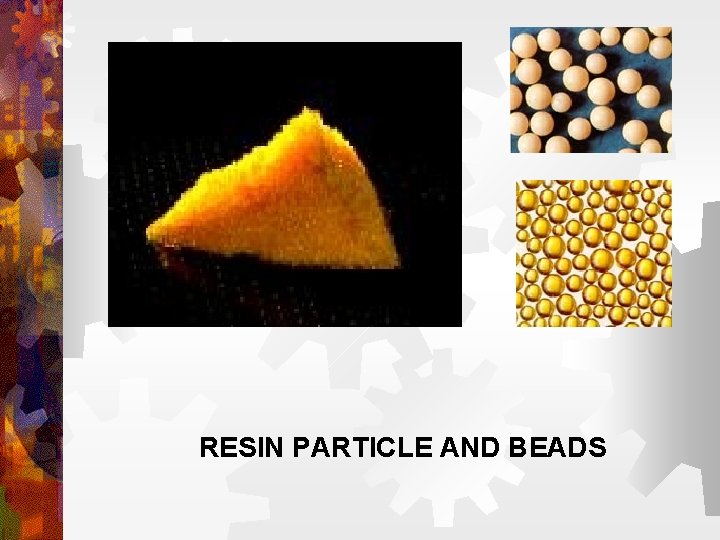
RESIN PARTICLE AND BEADS
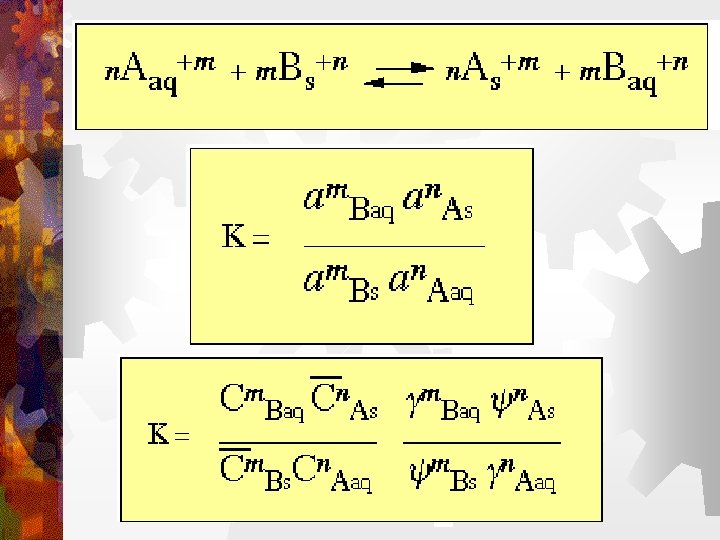
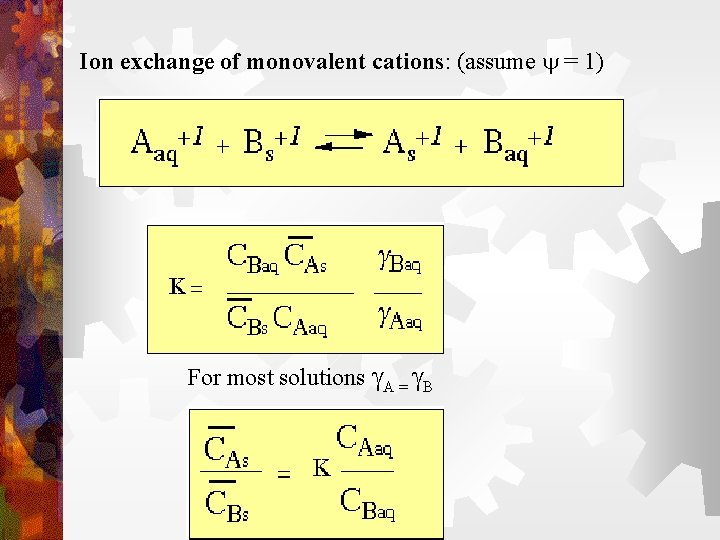
Ion exchange of monovalent cations: (assume y = 1) For most solutions A = B
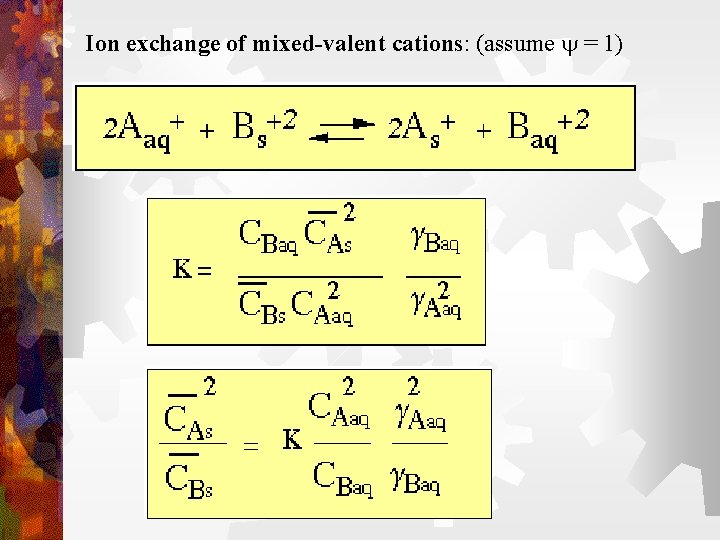
Ion exchange of mixed-valent cations: (assume y = 1)
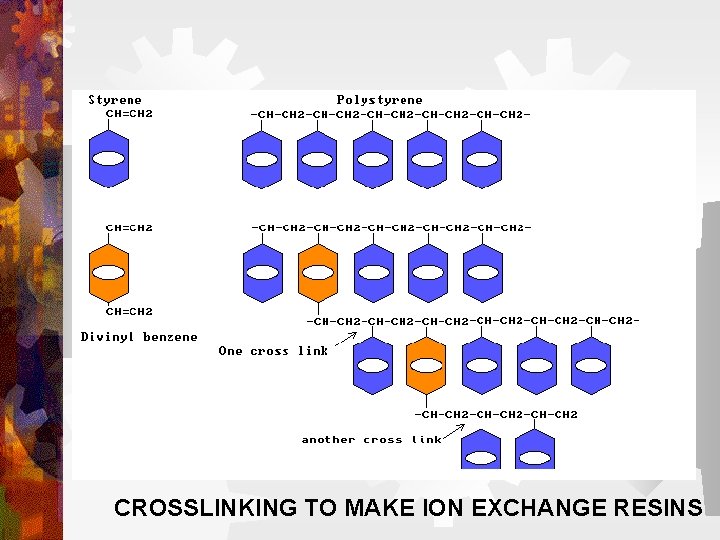
CROSSLINKING TO MAKE ION EXCHANGE RESINS
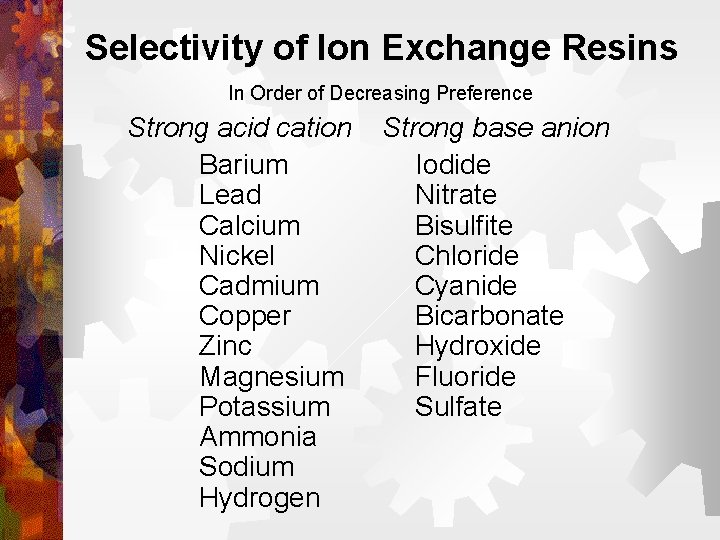
Selectivity of Ion Exchange Resins In Order of Decreasing Preference Strong acid cation Barium Lead Calcium Nickel Cadmium Copper Zinc Magnesium Potassium Ammonia Sodium Hydrogen Strong base anion Iodide Nitrate Bisulfite Chloride Cyanide Bicarbonate Hydroxide Fluoride Sulfate
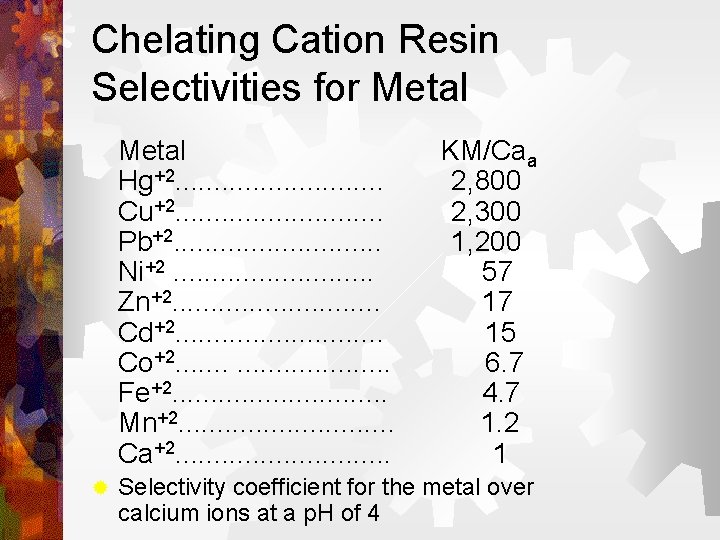
Chelating Cation Resin Selectivities for Metal KM/Caa Hg+2. . . . 2, 800 Cu+2. . . . 2, 300 Pb+2. . . . 1, 200 Ni+2. . . 57 Zn+2. . . . 17 Cd+2. . . . 15 Co+2. . . . 6. 7 Fe+2. . . . 4. 7 Mn+2. . . . 1. 2 Ca+2. . . . 1 ® Selectivity coefficient for the metal over calcium ions at a p. H of 4
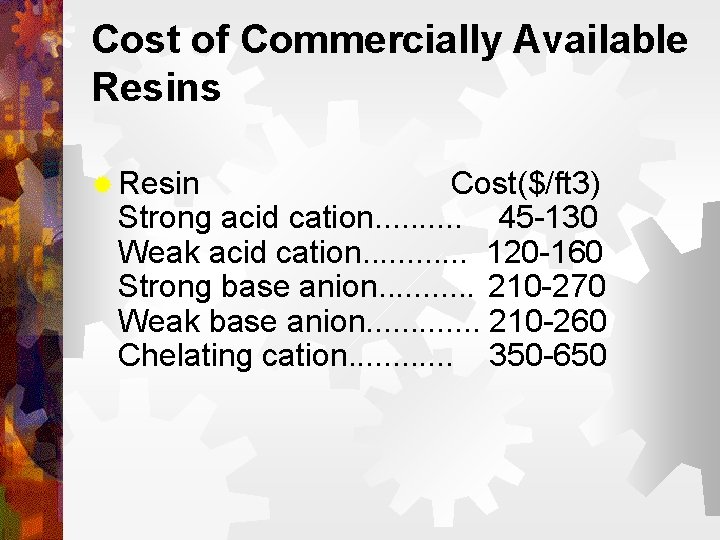
Cost of Commercially Available Resins ® Resin Cost($/ft 3) Strong acid cation. . 45 -130 Weak acid cation. . . 120 -160 Strong base anion. . . 210 -270 Weak base anion. . . 210 -260 Chelating cation. . . 350 -650
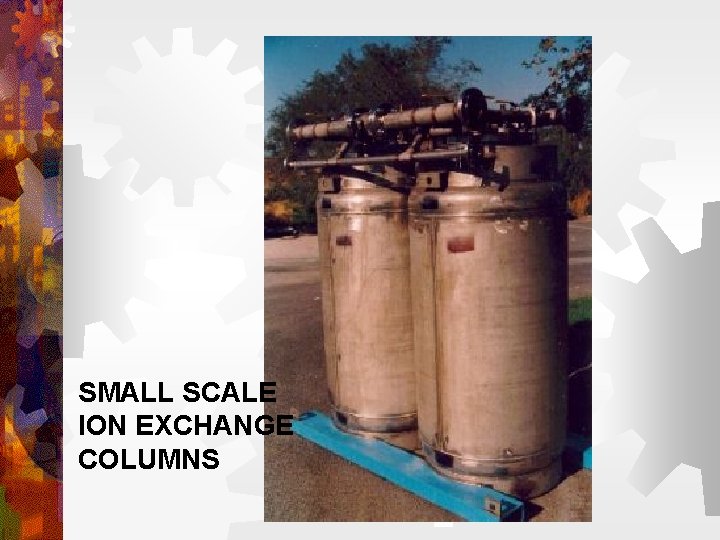
SMALL SCALE ION EXCHANGE COLUMNS
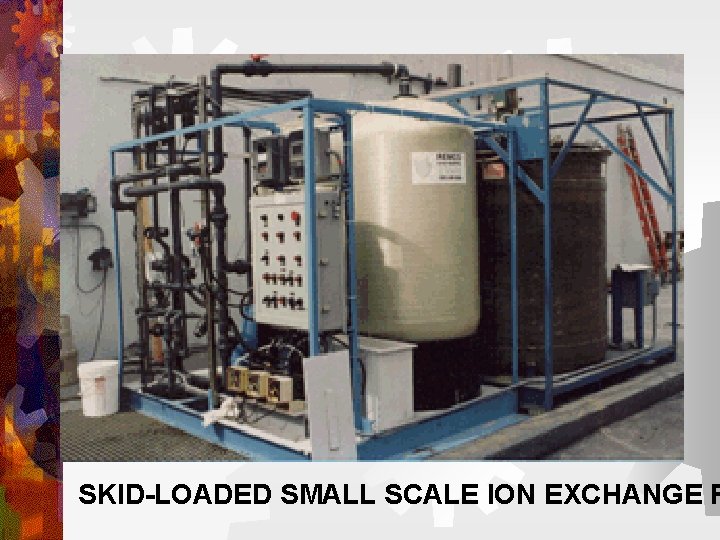
SKID-LOADED SMALL SCALE ION EXCHANGE P
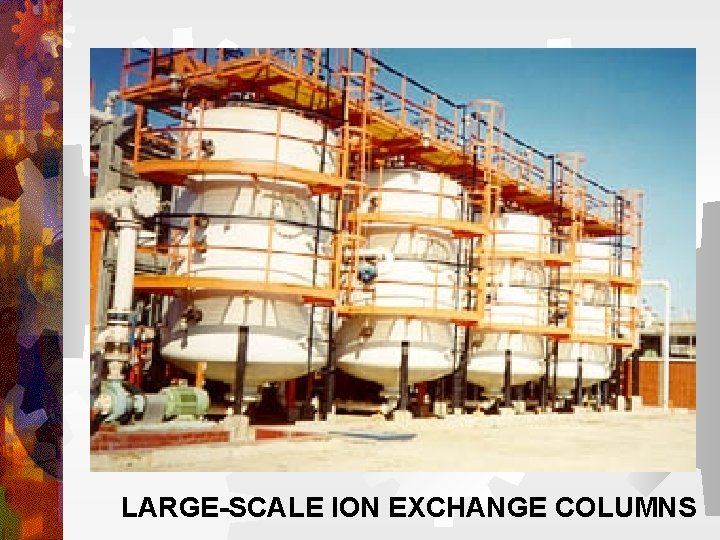
LARGE-SCALE ION EXCHANGE COLUMNS
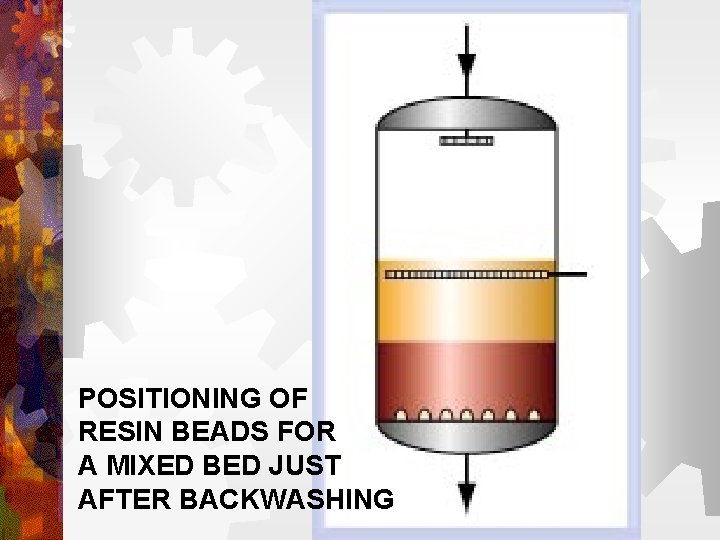
POSITIONING OF RESIN BEADS FOR A MIXED BED JUST AFTER BACKWASHING
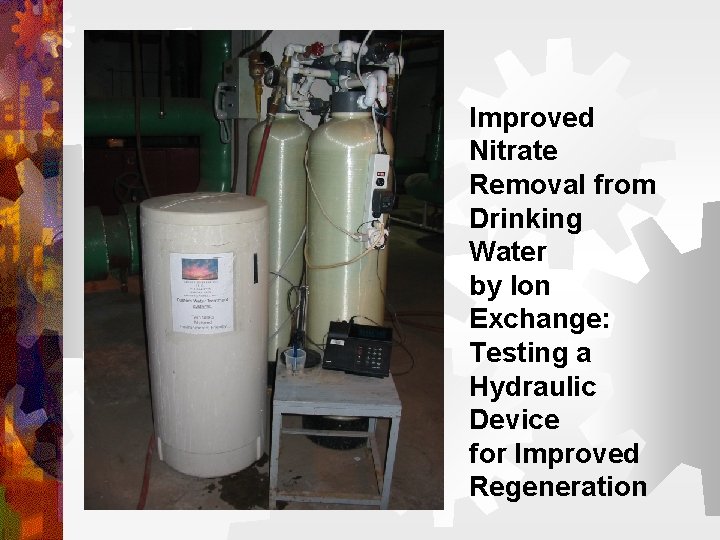
Improved Nitrate Removal from Drinking Water by Ion Exchange: Testing a Hydraulic Device for Improved Regeneration
IXCalc. TM A powerful computer program
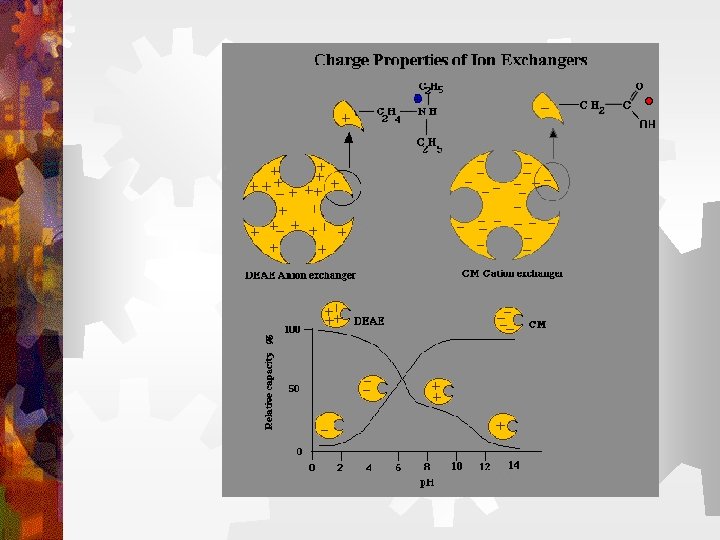
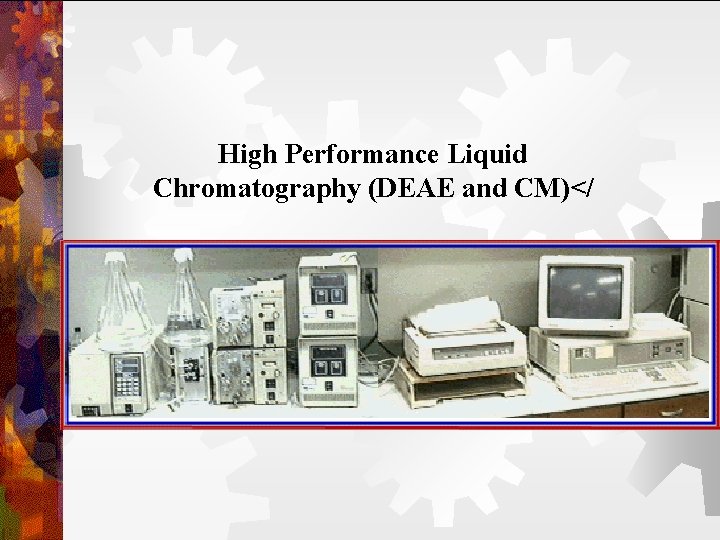
High Performance Liquid Chromatography (DEAE and CM)</
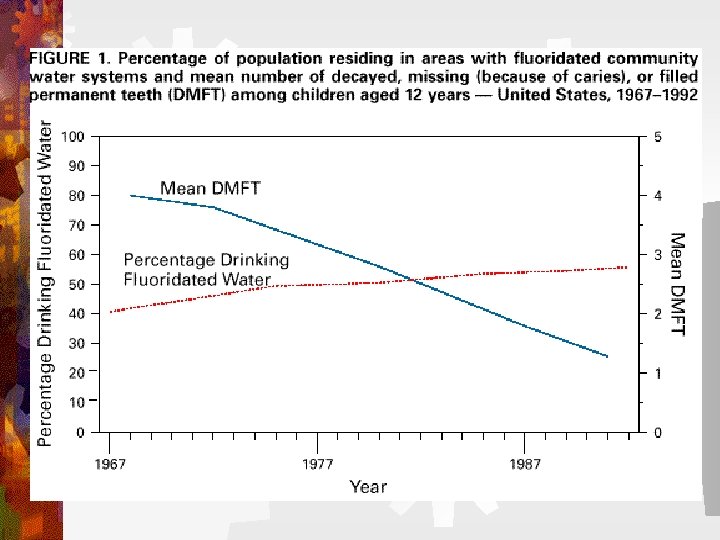
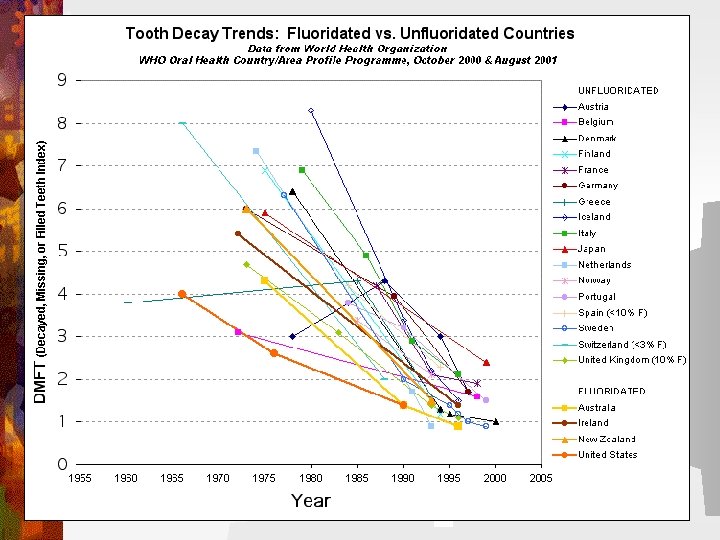
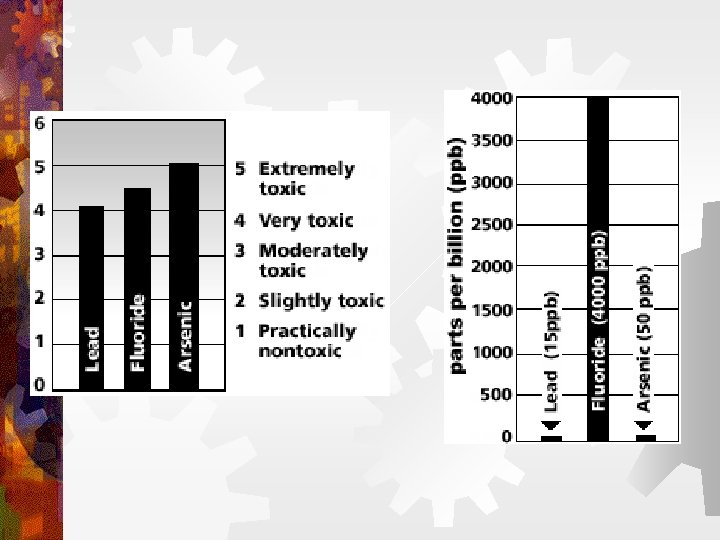
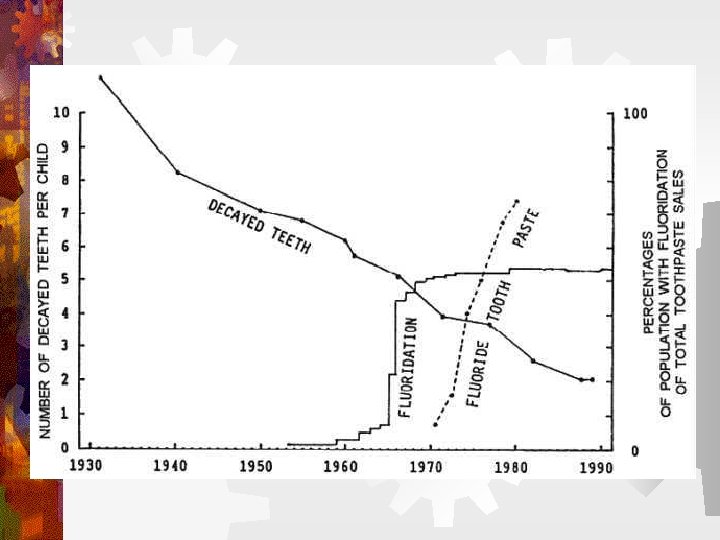
America's really big sacred cow is fluoridation of drinking water. Fact: Fluoride is so toxic that only one milligram constitutes a prescription dose. In spite of this, the Environmental Protection Agency (EPA) allows up to this amount in a single glass of drinking water. Fact: Virtually every country in Europe has stopped fluoridation. Research shows that fluoride confers little if any real benefit. Fact: Persons who have grown up with fluoridated water have, on the average, only 1/2 of one filling less per lifetime than people who did not drink fluoridated water (Chemical and Engineering News, May 8, 1989).
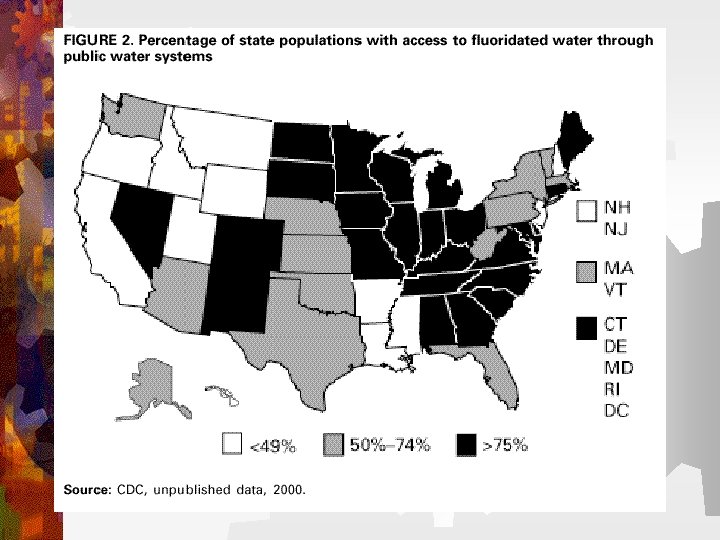
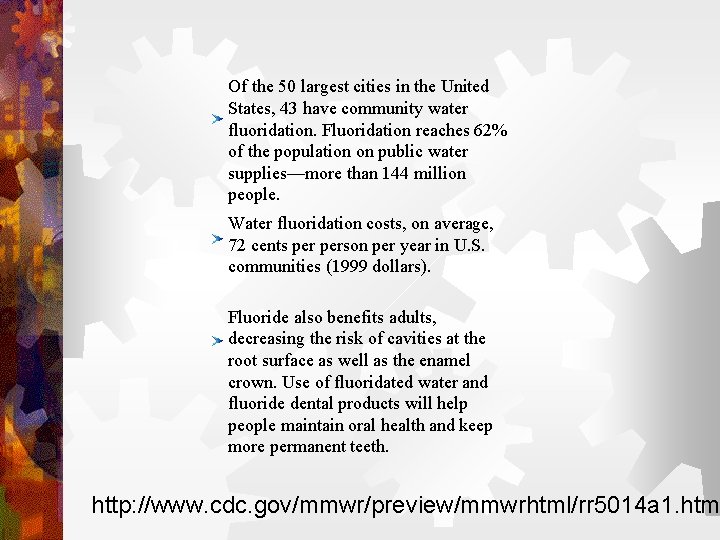
Of the 50 largest cities in the United States, 43 have community water fluoridation. Fluoridation reaches 62% of the population on public water supplies—more than 144 million people. Water fluoridation costs, on average, 72 cents person per year in U. S. communities (1999 dollars). Fluoride also benefits adults, decreasing the risk of cavities at the root surface as well as the enamel crown. Use of fluoridated water and fluoride dental products will help people maintain oral health and keep more permanent teeth. http: //www. cdc. gov/mmwr/preview/mmwrhtml/rr 5014 a 1. htm
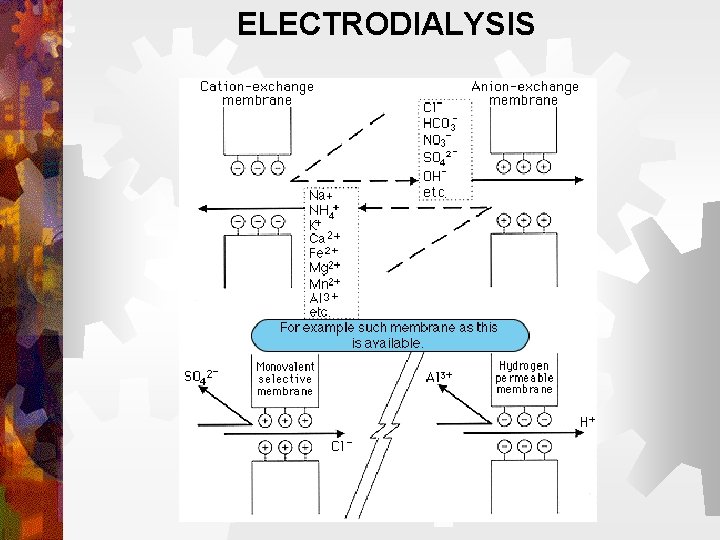
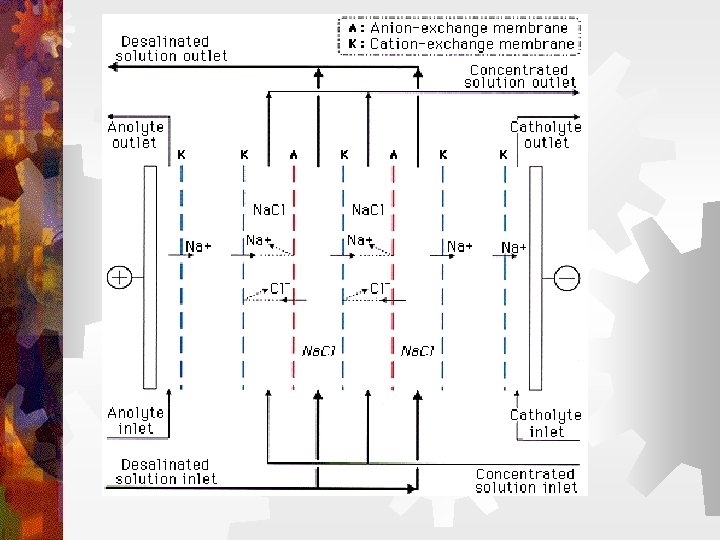
ELECTRODIALYSIS