
Ion detector for Accelerator Mass Spectrometry based on
Ion detector for Accelerator Mass Spectrometry based on low-pressure TPC with THGEM readout A. Bondar, A. Buzulutskov, E. Frolov, V. Parkhomchuk, A. Petrozhitskiy, T. Shakirova (speaker), A. Sokolov Budker Institute of Nuclear Physics Novosibirsk, Russia Asian Forum for Accelerators and Detectors
Outline 1. Accelerator mass spectrometry 2. SRIM simulation 3. Experimental setup 4. Measurements of energy spectra using semiconductor detector 5. Measurements of track ranges using TPC 2

Accelerator mass spectrometry (AMS) is an ultra-sensitive method of counting individual atoms. Usually it is the rare radioactive atoms with a long half-life. The archetypal example is 14 C which has a half-life of 5730 years and an abundance in living organisms of 10 -12 relative to stable 12 C isotope. AMS facilities operate in more than 100 physical laboratories worldwide, one of which is located in Novosibirsk at Geochronology of the Cenozoic Era Center for Collective Use. 3
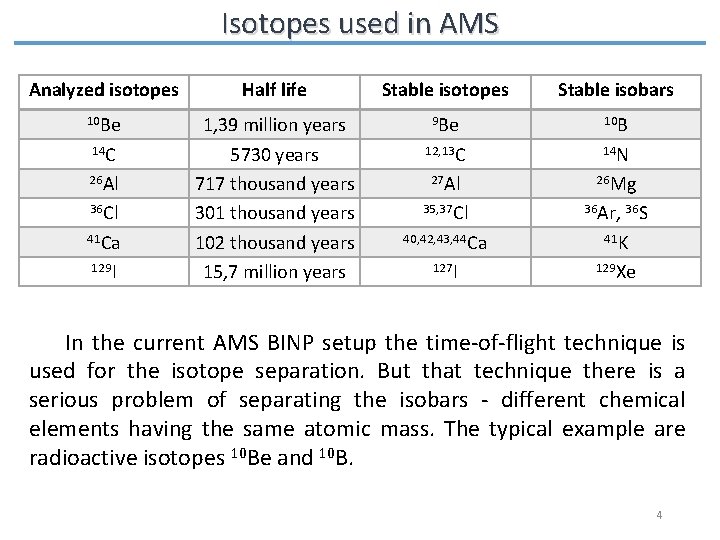
Isotopes used in AMS Analyzed isotopes Half life Stable isotopes Stable isobars 10 Ве 1, 39 million years 5730 years 717 thousand years 301 thousand years 102 thousand years 15, 7 million years 9 Be 10 B 12, 13 С 14 N 27 Al 26 Mg 35, 37 Cl 36 Ar, 36 S 40, 42, 43, 44 Ca 41 K 127 I 129 Xe 14 C 26 Al 36 Cl 41 Ca 129 I In the current AMS BINP setup the time-of-flight technique is used for the isotope separation. But that technique there is a serious problem of separating the isobars - different chemical elements having the same atomic mass. The typical example are radioactive isotopes 10 Be and 10 B. 4
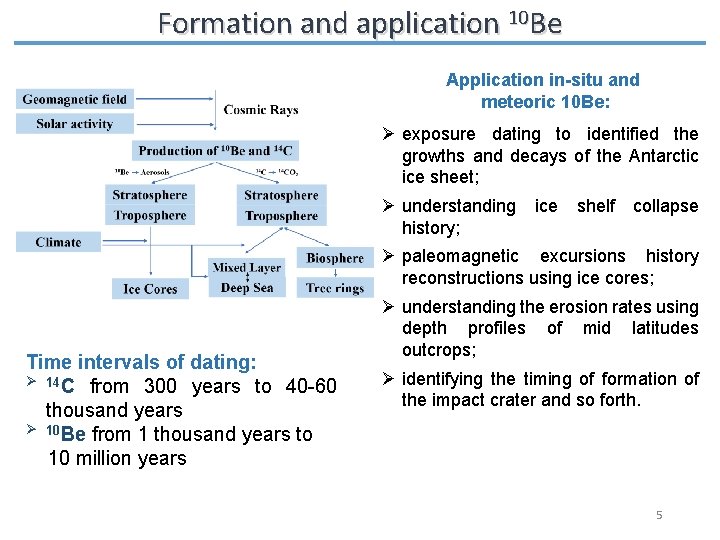
Formation and application 10 Be Application in-situ and meteoric 10 Be: Ø exposure dating to identified the growths and decays of the Antarctic ice sheet; Ø understanding history; ice shelf collapse Ø paleomagnetic excursions history reconstructions using ice cores; Time intervals of dating: Ø 14 C from 300 years to 40 -60 thousand years Ø 10 Be from 1 thousand years to 10 million years Ø understanding the erosion rates using depth profiles of mid latitudes outcrops; Ø identifying the timing of formation of the impact crater and so forth. 5
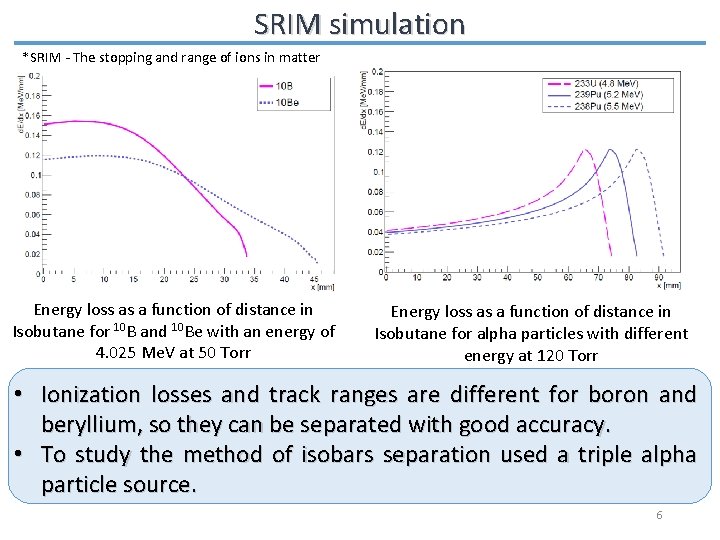
SRIM simulation *SRIM - The stopping and range of ions in matter Energy loss as a function of distance in Isobutane for 10 B and 10 Be with an energy of 4. 025 Me. V at 50 Torr Energy loss as a function of distance in Isobutane for alpha particles with different energy at 120 Torr • Ionization losses and track ranges are different for boron and beryllium, so they can be separated with good accuracy. • To study the method of isobars separation used a triple alpha particle source. 6
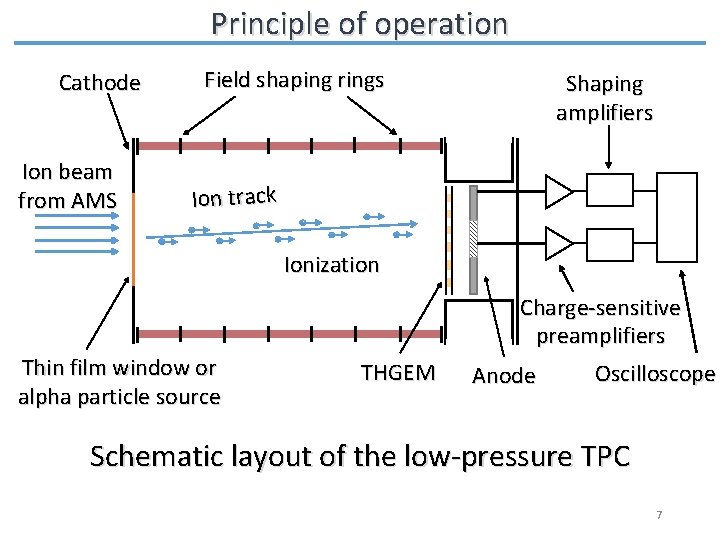
Principle of operation Cathode Ion beam from AMS Field shaping rings Shaping amplifiers Ion track Ionization Charge-sensitive preamplifiers Thin film window or alpha particle source THGEM Anode Oscilloscope Schematic layout of the low-pressure TPC 7
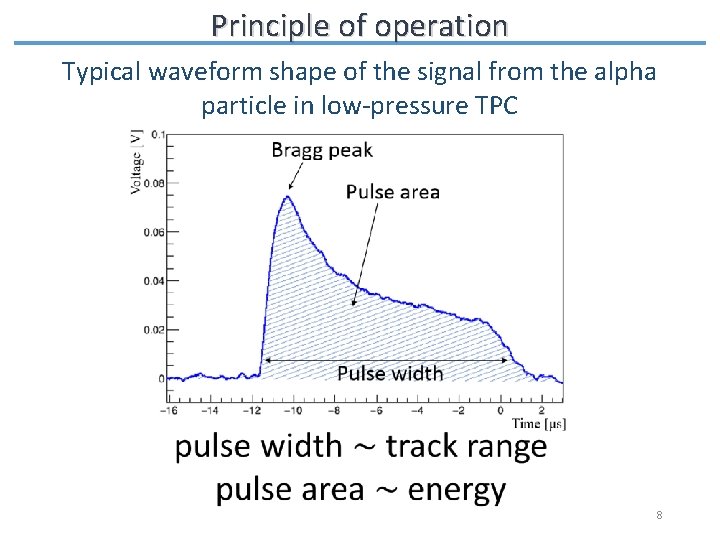
Principle of operation Typical waveform shape of the signal from the alpha particle in low-pressure TPC 8
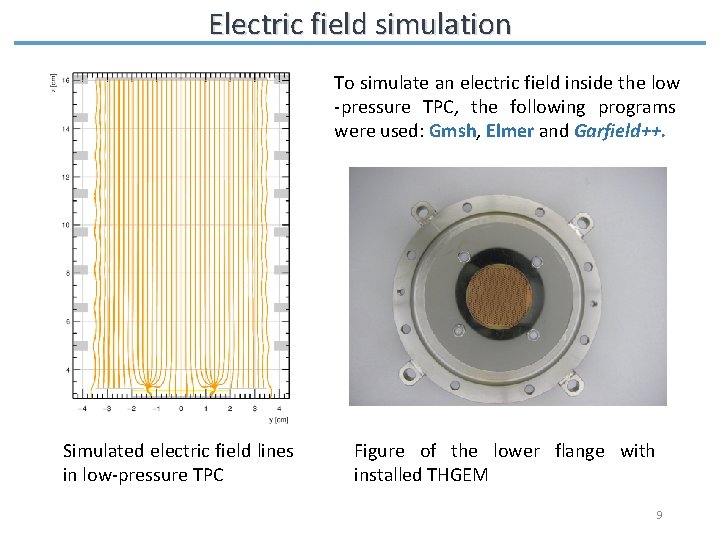
Electric field simulation To simulate an electric field inside the low -pressure TPC, the following programs were used: Gmsh, Elmer and Garfield++. Simulated electric field lines in low-pressure TPC Figure of the lower flange with installed THGEM 9
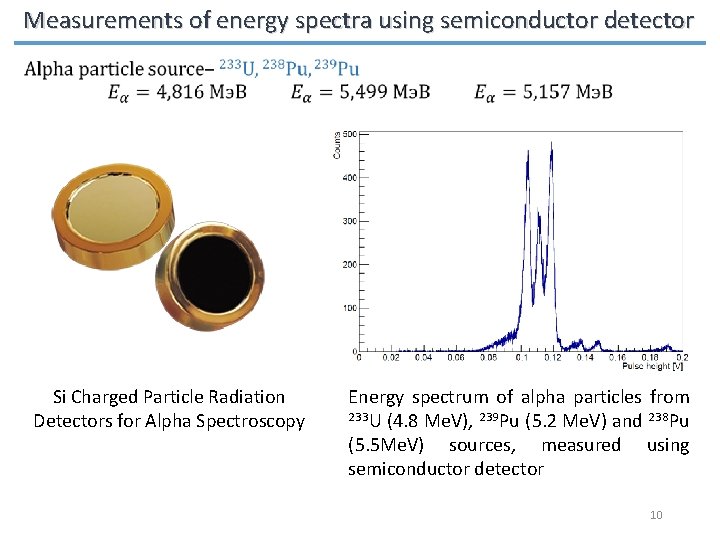
Measurements of energy spectra using semiconductor detector Si Charged Particle Radiation Detectors for Alpha Spectroscopy Energy spectrum of alpha particles from 233 U (4. 8 Me. V), 239 Pu (5. 2 Me. V) and 238 Pu (5. 5 Me. V) sources, measured using semiconductor detector 10
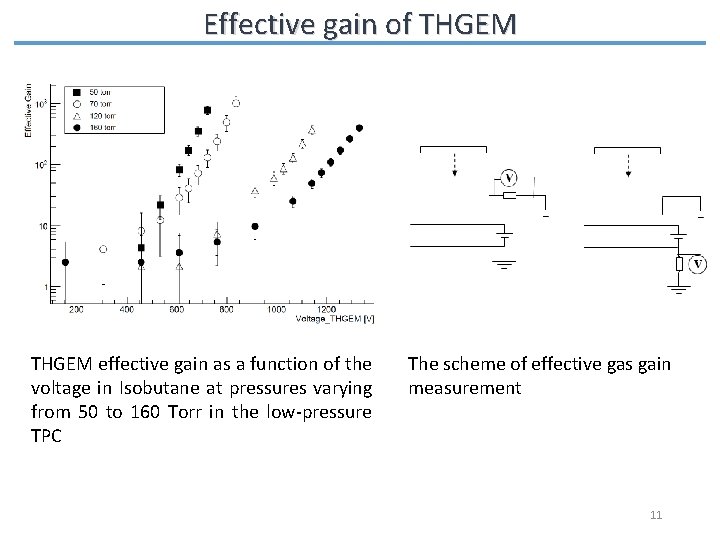
Effective gain of THGEM effective gain as a function of the voltage in Isobutane at pressures varying from 50 to 160 Torr in the low-pressure TPC The scheme of effective gas gain measurement 11
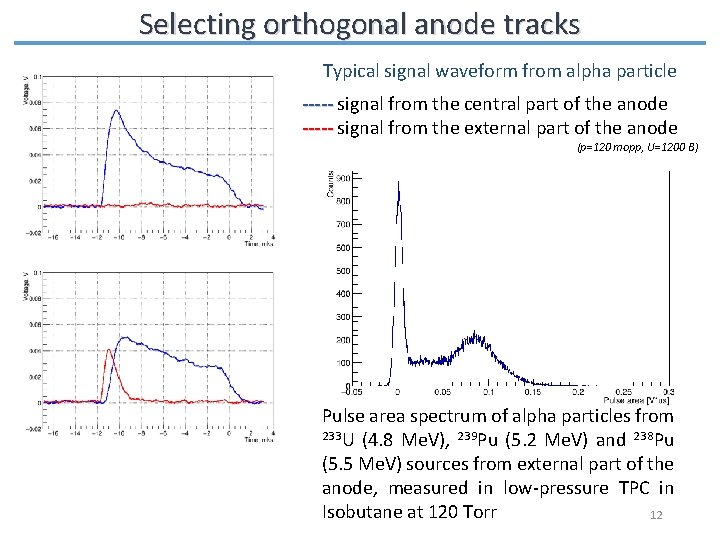
Selecting orthogonal anode tracks Typical signal waveform from alpha particle ----- signal from the central part of the anode ----- signal from the external part of the anode (p=120 торр, U=1200 В) Pulse area spectrum of alpha particles from 233 U (4. 8 Me. V), 239 Pu (5. 2 Me. V) and 238 Pu (5. 5 Me. V) sources from external part of the anode, measured in low-pressure TPC in Isobutane at 120 Torr 12
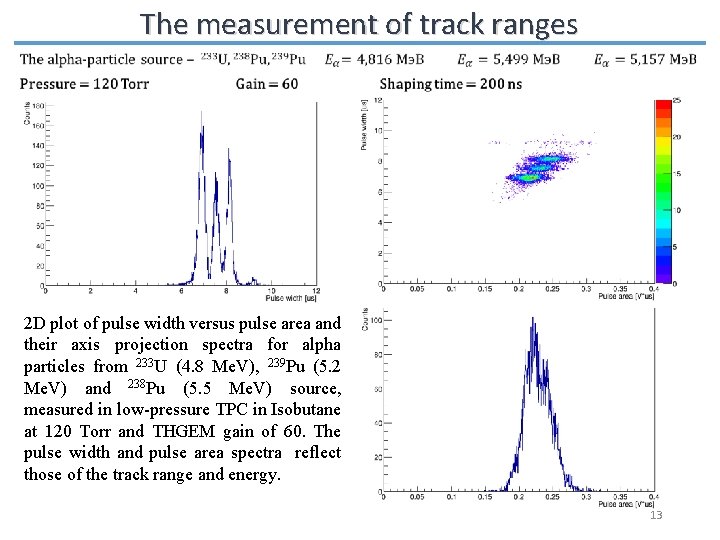
The measurement of track ranges 2 D plot of pulse width versus pulse area and their axis projection spectra for alpha particles from 233 U (4. 8 Me. V), 239 Pu (5. 2 Me. V) and 238 Pu (5. 5 Me. V) source, measured in low-pressure TPC in Isobutane at 120 Torr and THGEM gain of 60. The pulse width and pulse area spectra reflect those of the track range and energy. 13
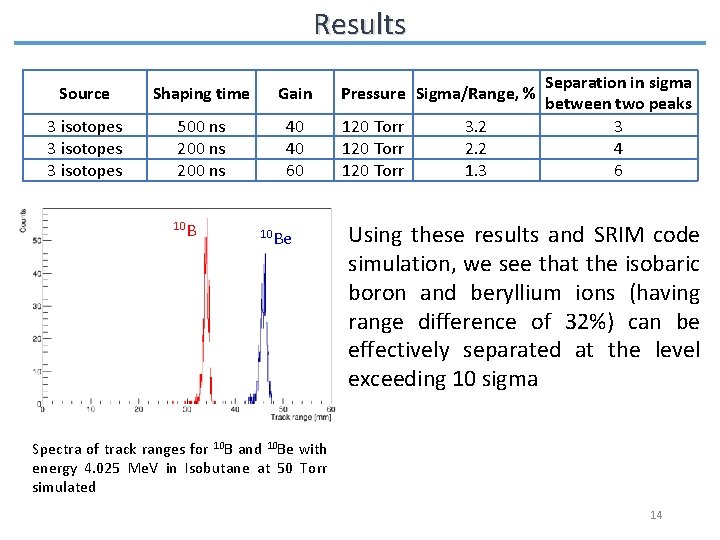
Results Source Shaping time Gain 3 isotopes 500 ns 200 ns 40 40 60 10 Be Pressure Sigma/Range, % 120 Torr 3. 2 2. 2 1. 3 Separation in sigma between two peaks 3 4 6 Using these results and SRIM code simulation, we see that the isobaric boron and beryllium ions (having range difference of 32%) can be effectively separated at the level exceeding 10 sigma Spectra of track ranges for 10 B and 10 Be with energy 4. 025 Me. V in Isobutane at 50 Torr simulated 14

Silicon nitride membrane windows Figure of silicon nitride membrane windows M. Dobeli et al. , Nucl. Instr. and Meth. B, 219 -220 (2004) 415 -419 doi: 10. 1016/j. nimb. 2004. 01. 093 15
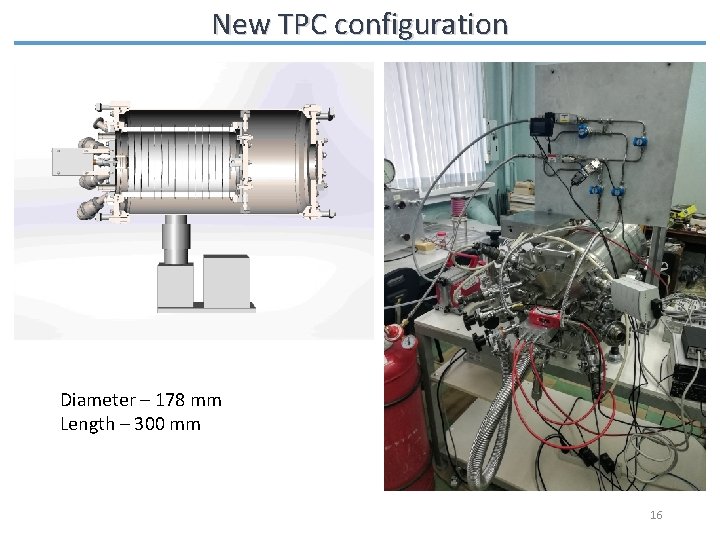
New TPC configuration Diameter – 178 mm Length – 300 mm 16
Summary ü The low-pressure TPC with THGEM readout was developed and successfully tested in our laboratory. ü The track ranges of alpha-particles were measured in the TPC with a rather high accuracy, reaching 1. 3%. Based on these results and SRIM code simulations, one may conclude that the isobaric boron and beryllium ions (having range difference of 32%) can be effectively separated in AMS, at the level exceeding 10 sigma, by measuring the ion track ranges. ü This technique is expected to be applied in the AMS facility in Novosibirsk for dating geological objects, in particular for geochronology of Cenozoic Era. 17

Thanks for your attention! 18
Backup slides 19
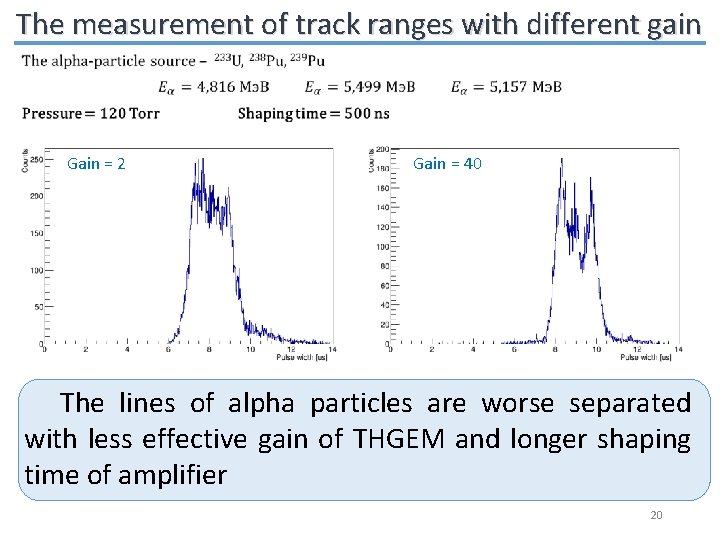
The measurement of track ranges with different gain Gain = 2 Gain = 40 The lines of alpha particles are worse separated with less effective gain of THGEM and longer shaping time of amplifier 20
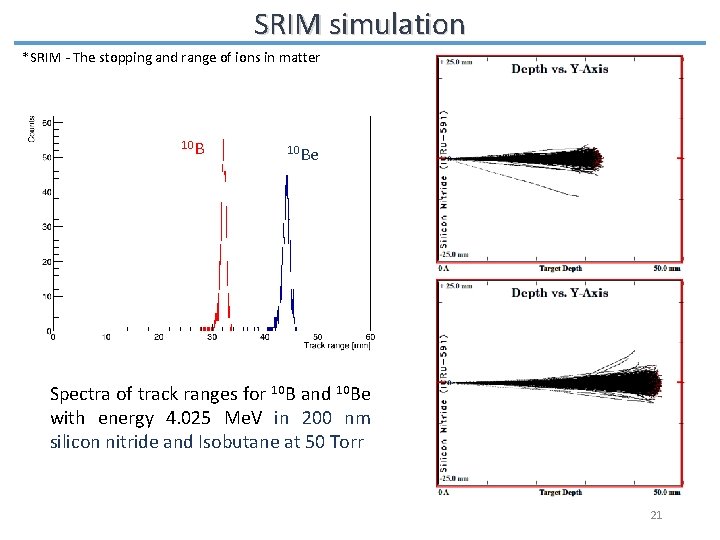
SRIM simulation *SRIM - The stopping and range of ions in matter 10 Be Spectra of track ranges for 10 B and 10 Be with energy 4. 025 Me. V in 200 nm silicon nitride and Isobutane at 50 Torr 21
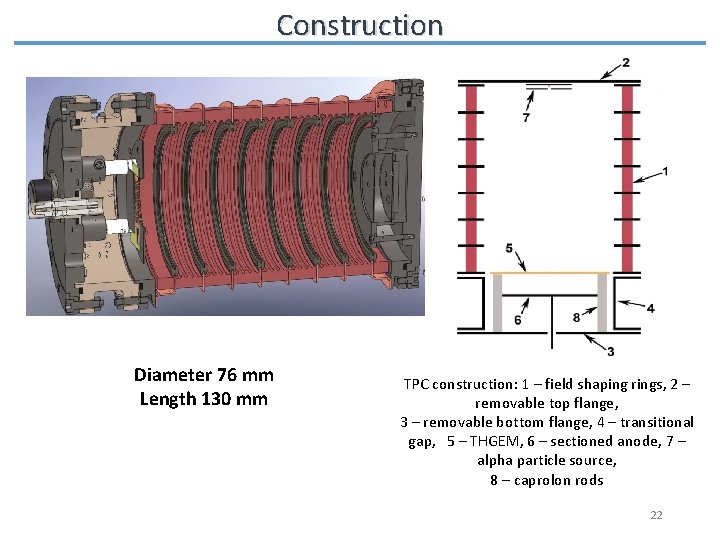
Construction Diameter 76 mm Length 130 mm TPC construction: 1 – field shaping rings, 2 – removable top flange, 3 – removable bottom flange, 4 – transitional gap, 5 – THGEM, 6 – sectioned anode, 7 – alpha particle source, 8 – caprolon rods 22
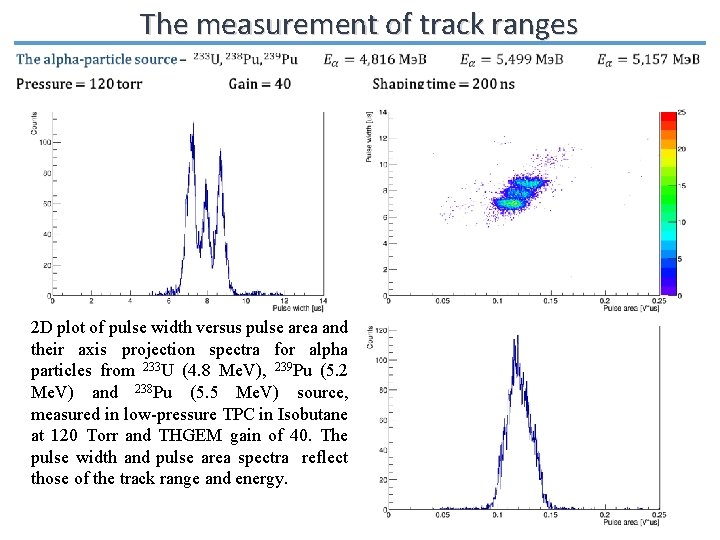
The measurement of track ranges 2 D plot of pulse width versus pulse area and their axis projection spectra for alpha particles from 233 U (4. 8 Me. V), 239 Pu (5. 2 Me. V) and 238 Pu (5. 5 Me. V) source, measured in low-pressure TPC in Isobutane at 120 Torr and THGEM gain of 40. The pulse width and pulse area spectra reflect those of the track range and energy.
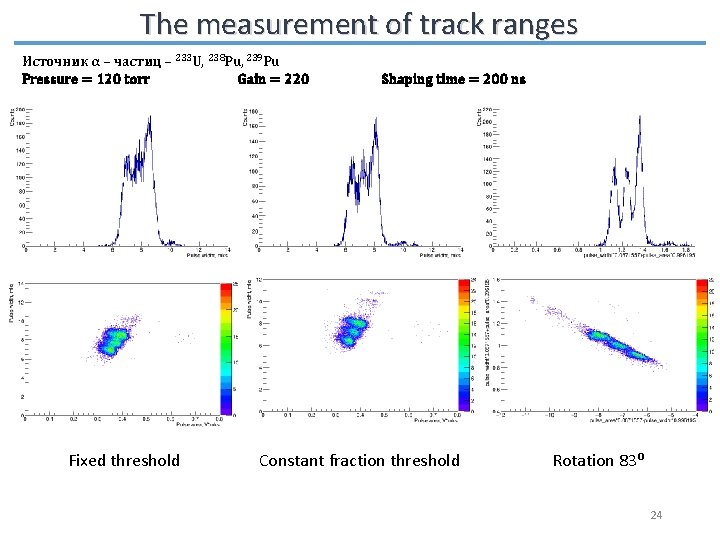
The measurement of track ranges Источник α – частиц – 233 U, 238 Pu, 239 Pu Pressure = 120 torr Gain = 220 Fixed threshold Shaping time = 200 ns Constant fraction threshold Rotation 83⁰ 24
- Slides: 24