
Ion Channels Melvin Bae 2 nd Faculty of
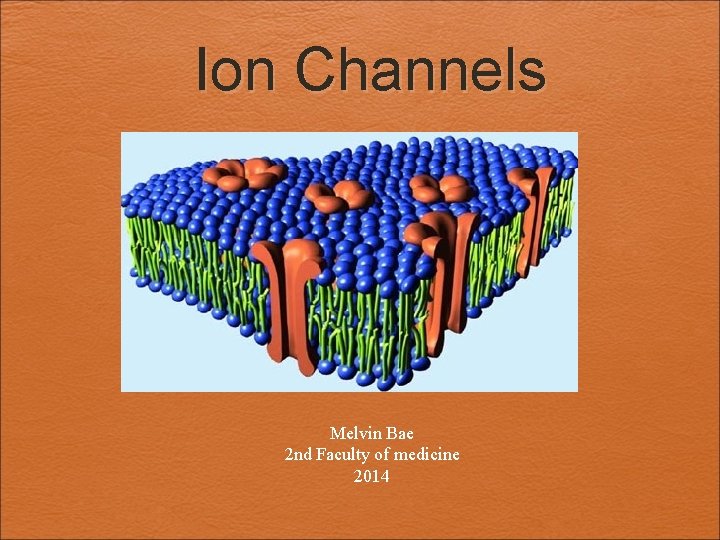
Ion Channels Melvin Bae 2 nd Faculty of medicine 2014
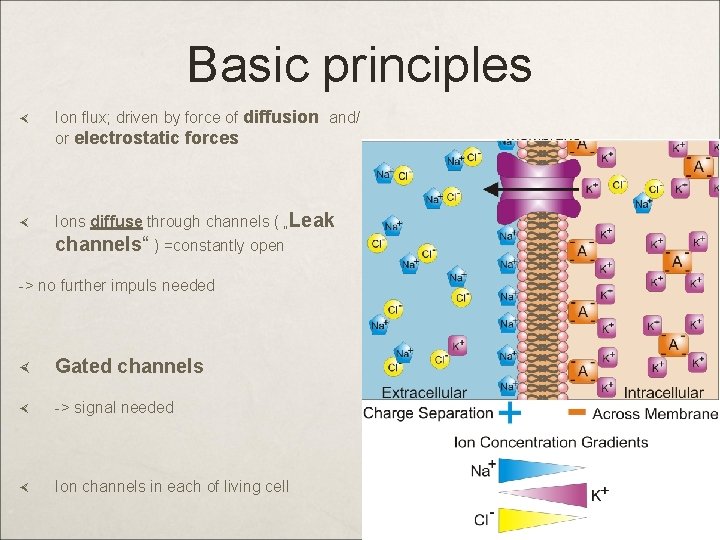
Basic principles Ion flux; driven by force of diffusion and/ or electrostatic forces Ions diffuse through channels ( „Leak channels“ ) =constantly open -> no further impuls needed Gated channels -> signal needed Ion channels in each of living cell
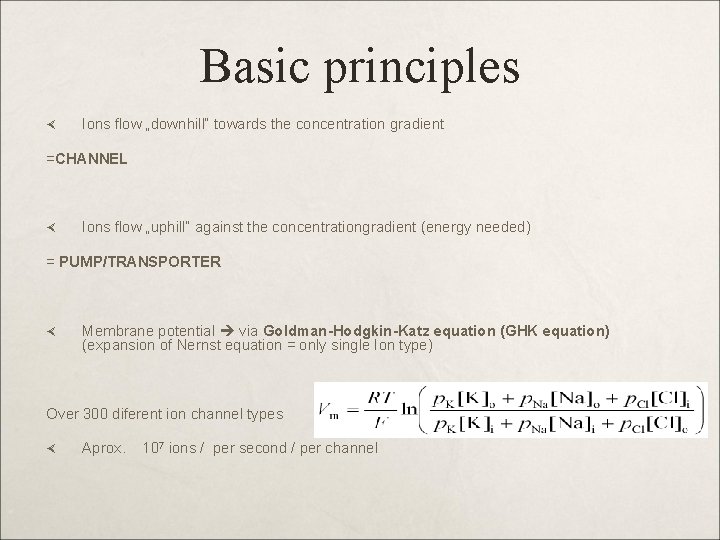
Basic principles Ions flow „downhill“ towards the concentration gradient =CHANNEL Ions flow „uphill“ against the concentrationgradient (energy needed) = PUMP/TRANSPORTER Membrane potential via Goldman-Hodgkin-Katz equation (GHK equation) (expansion of Nernst equation = only single Ion type) Over 300 diferent ion channel types Aprox. 107 ions / per second / per channel
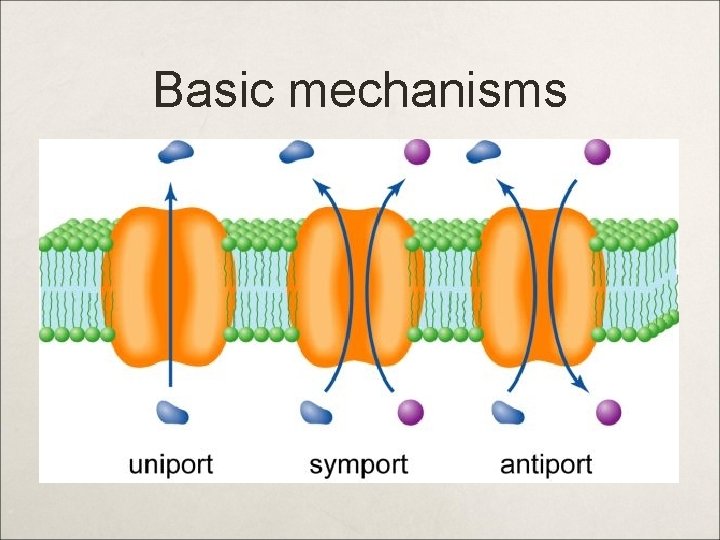
Basic mechanisms
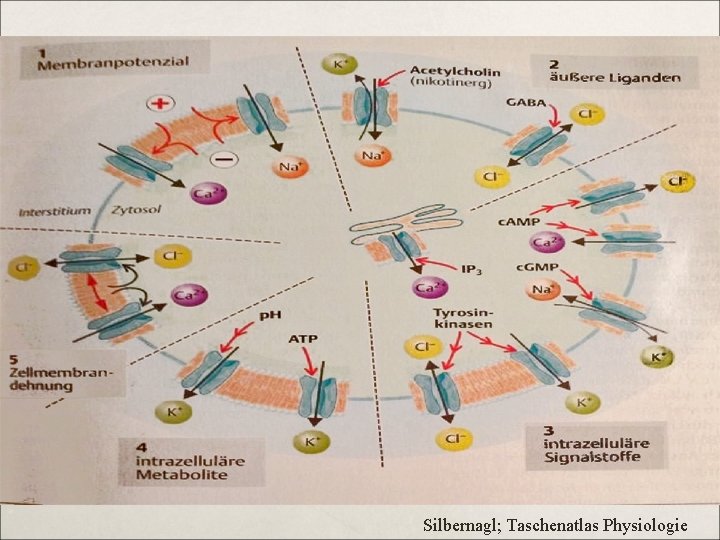
Silbernagl; Taschenatlas Physiologie
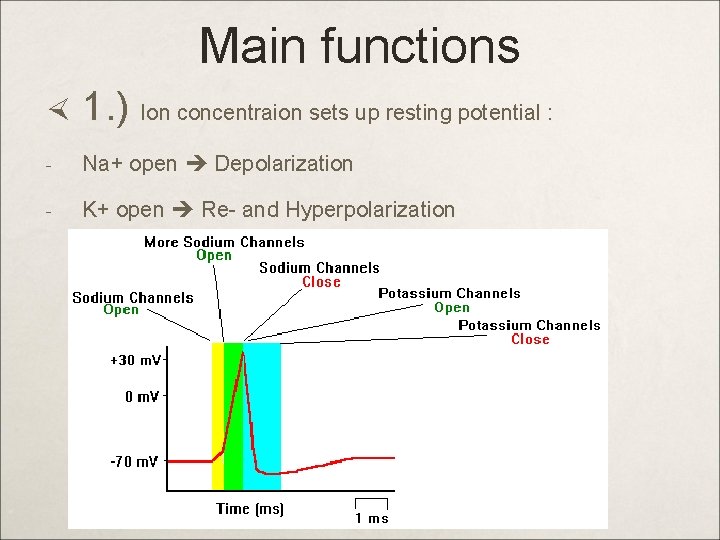
Main functions 1. ) Ion concentraion sets up resting potential : - Na+ open Depolarization - K+ open Re- and Hyperpolarization
Main functions 2. ) Volume Regulation and Salt balance: - Ion flux controles electrolyte distribution - Across epithel (basal labyrinth - typical) - Examples : gut, kidney, sweat glands or the choroid plexus.
Main functions 3. ) hormone secretion, neurotransmitter release, muscle contraction
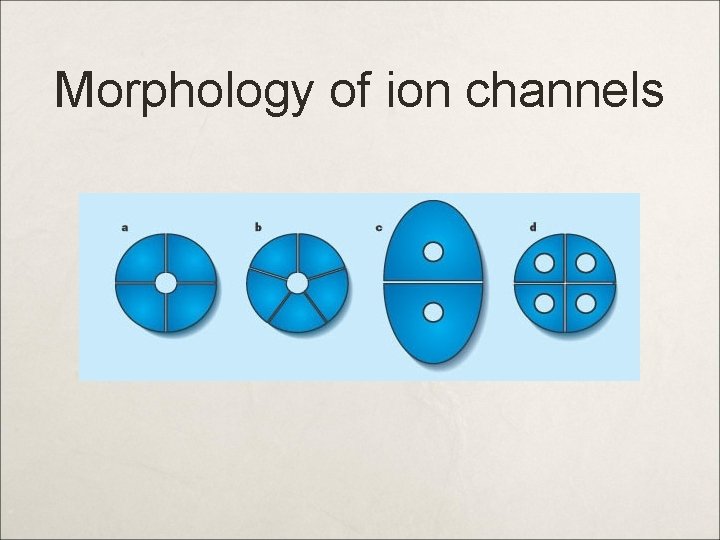
Morphology of ion channels
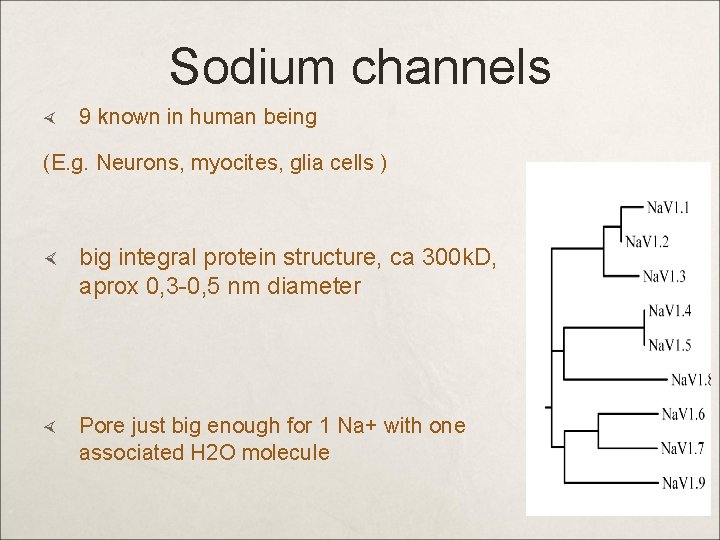
Sodium channels 9 known in human being (E. g. Neurons, myocites, glia cells ) big integral protein structure, ca 300 k. D, aprox 0, 3 -0, 5 nm diameter Pore just big enough for 1 Na+ with one associated H 2 O molecule
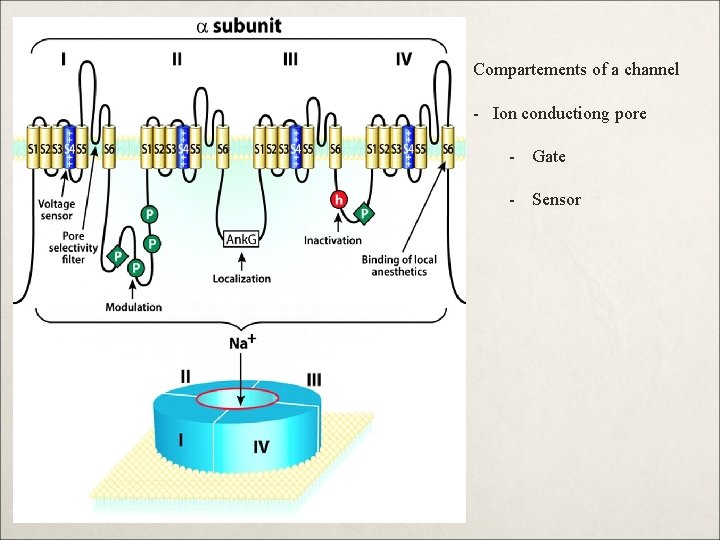
Compartements of a channel - Ion conductiong pore - Gate - Sensor
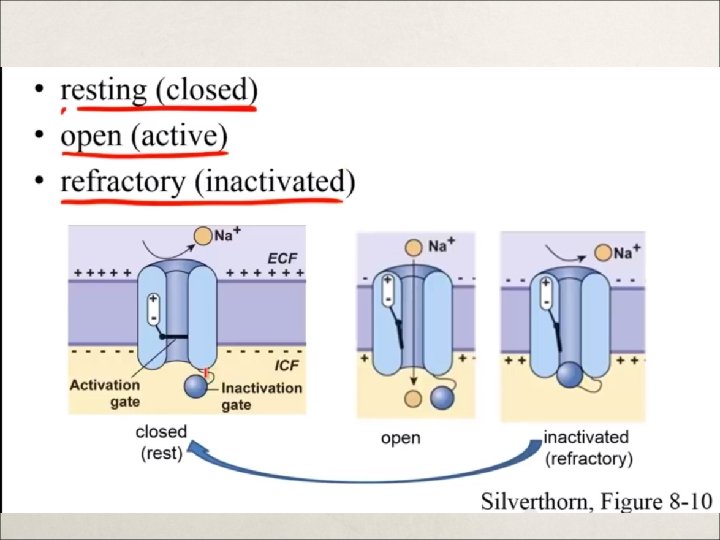
Potassium Channels
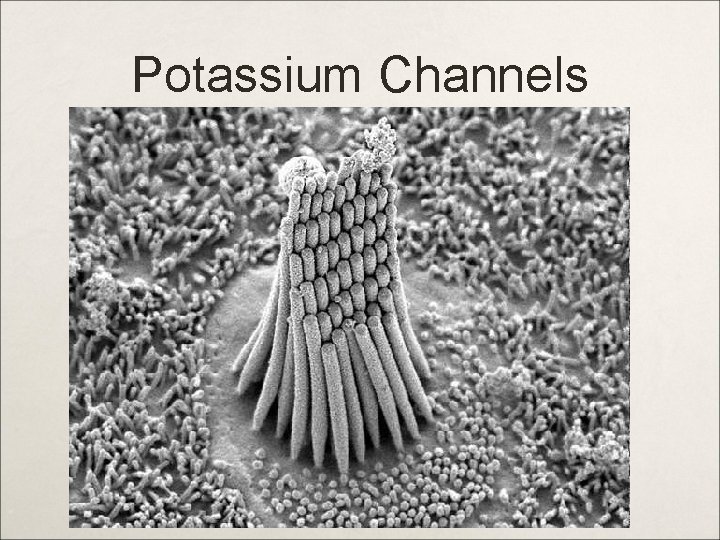
Potassium Channels 1. (Ion) Ligand gated (e. g. Ca++) 2. Mechanical (e. g. tip links; stereocilia; inner hair cell -> ear ) 3. G Protein –(e. g. in cardiac muscle) 4. (Metabolite) Ligand (e. g ATP reactive Beta cells) - Voltage gated K+ channels , only have open – closed state - ( Na+ =O/C/I) Blockers -> Tetraethylamoniom closes K+ Channels ; -> further more over 40 peptides from scorpion toxins; -> Apamin (Toxin of bees)
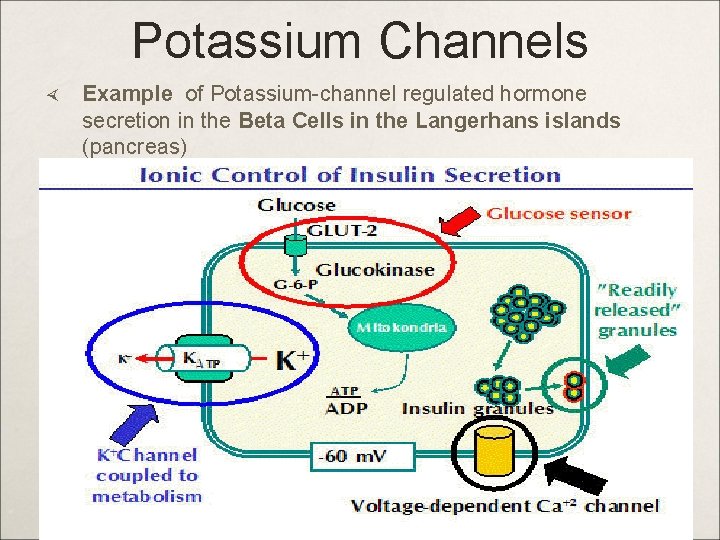
Potassium Channels Example of Potassium-channel regulated hormone secretion in the Beta Cells in the Langerhans islands (pancreas)
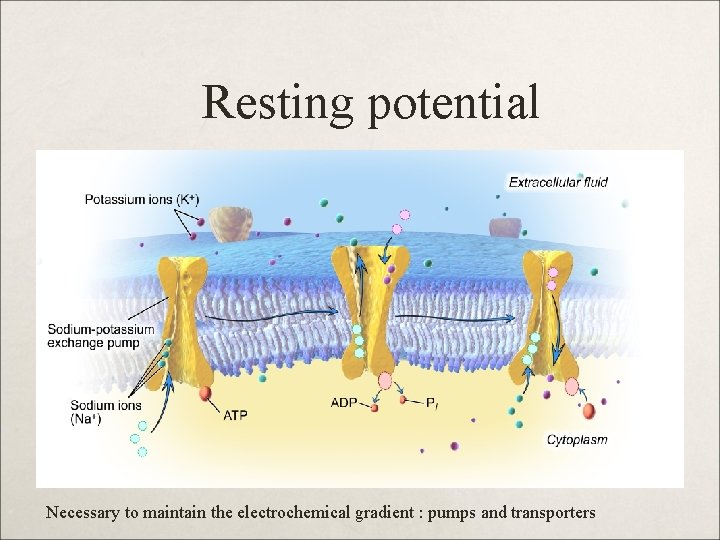
Resting potential Necessary to maintain the electrochemical gradient : pumps and transporters
Patch clamp method Refinement of voltage clamp method by Hodgkin and Huxley – nobel price (1952) Possible to measure selectively the Ion current through channels Hollow end pipette 0, 3 -3 micrometer -> small membrane area selcected/torn out and isolated Similar to the programm which we had in class !! Experiments with channel blocking drugs: -> Tetradotoxin = blocks Na channels -> Tetrathylammonium = blocks K Channels
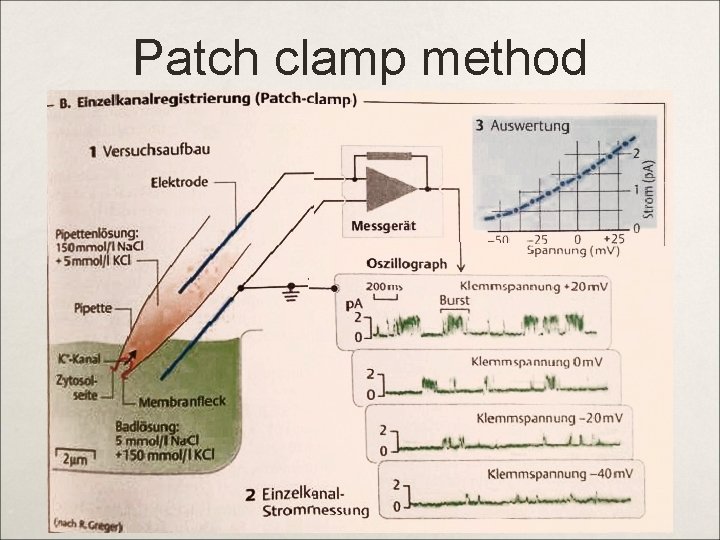
Patch clamp method
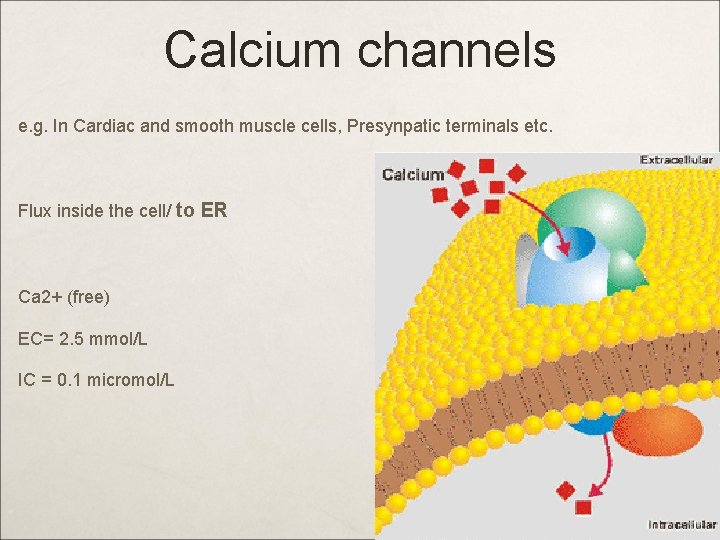
Calcium channels e. g. In Cardiac and smooth muscle cells, Presynpatic terminals etc. Flux inside the cell/ to ER Ca 2+ (free) EC= 2. 5 mmol/L IC = 0. 1 micromol/L
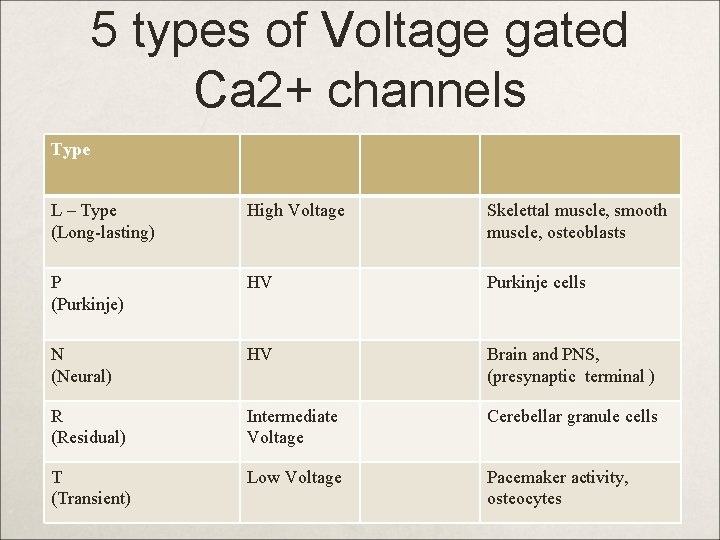
5 types of Voltage gated Ca 2+ channels Type L – Type (Long-lasting) High Voltage Skelettal muscle, smooth muscle, osteoblasts P (Purkinje) HV Purkinje cells N (Neural) HV Brain and PNS, (presynaptic terminal ) R (Residual) Intermediate Voltage Cerebellar granule cells T (Transient) Low Voltage Pacemaker activity, osteocytes
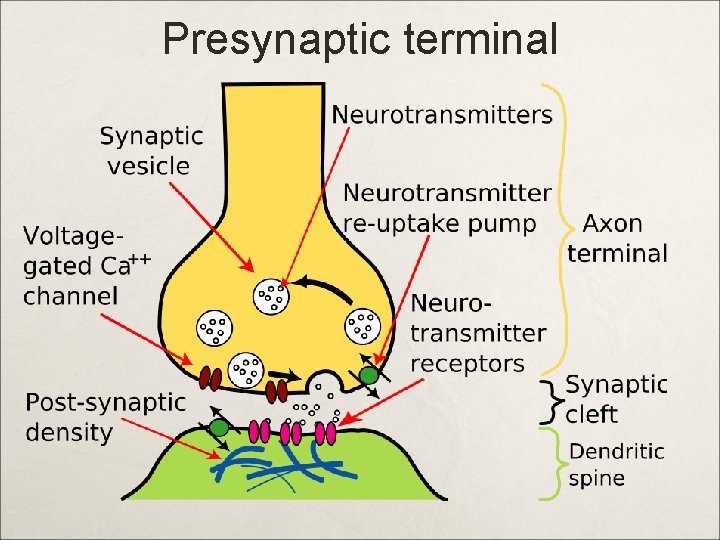
Presynaptic terminal
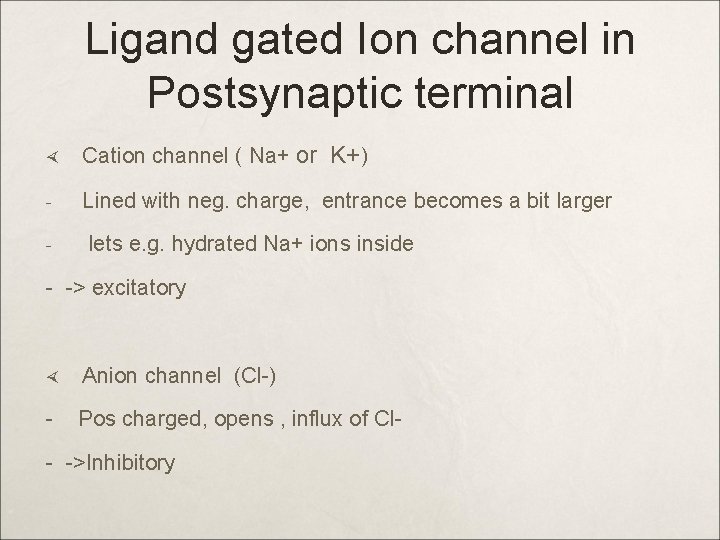
Ligand gated Ion channel in Postsynaptic terminal Cation channel ( Na+ or K+) - Lined with neg. charge, entrance becomes a bit larger - lets e. g. hydrated Na+ ions inside - -> excitatory Anion channel (Cl-) - Pos charged, opens , influx of Cl- - ->Inhibitory
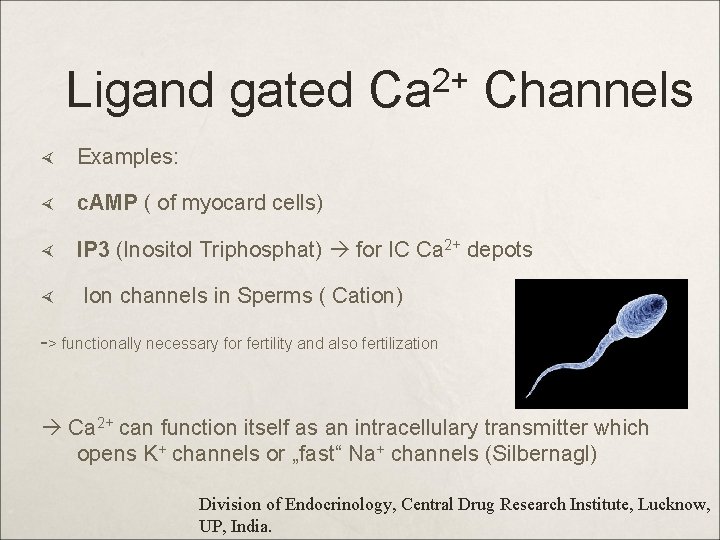
Ligand gated 2+ Ca Channels Examples: c. AMP ( of myocard cells) IP 3 (Inositol Triphosphat) for IC Ca 2+ depots Ion channels in Sperms ( Cation) -> functionally necessary for fertility and also fertilization Ca 2+ can function itself as an intracellulary transmitter which opens K+ channels or „fast“ Na+ channels (Silbernagl) Division of Endocrinology, Central Drug Research Institute, Lucknow, UP, India.
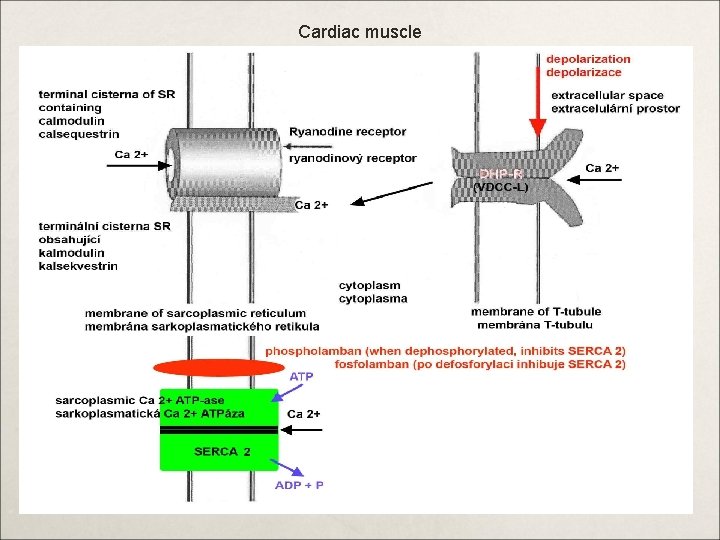
Cardiac muscle
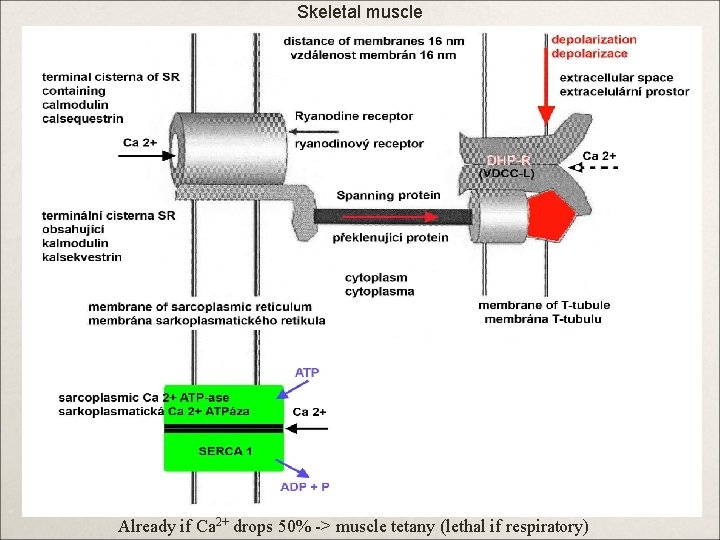
Skeletal muscle Already if Ca 2+ drops 50% -> muscle tetany (lethal if respiratory)
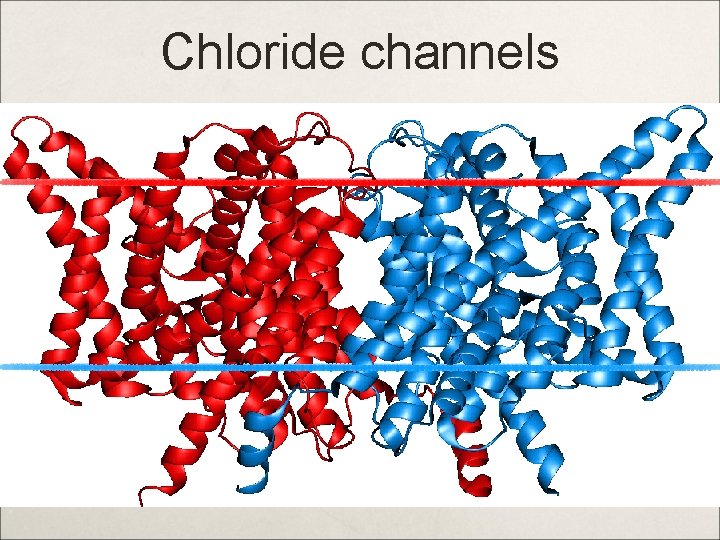
Chloride channels
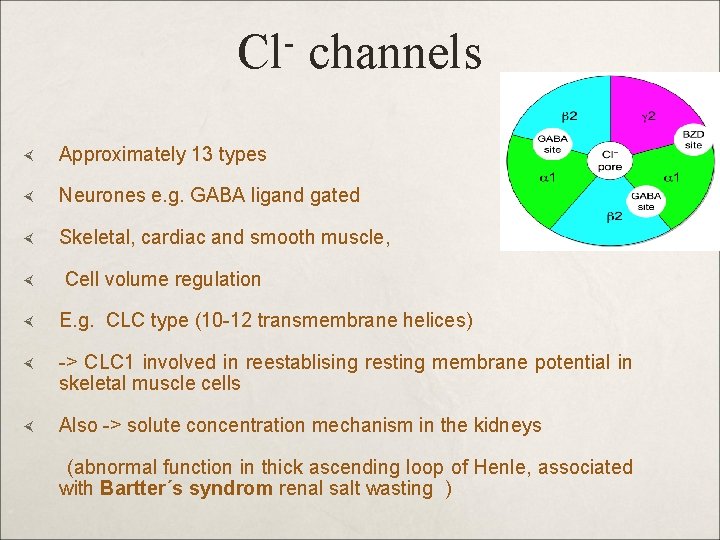
Cl channels Approximately 13 types Neurones e. g. GABA ligand gated Skeletal, cardiac and smooth muscle, Cell volume regulation E. g. CLC type (10 -12 transmembrane helices) -> CLC 1 involved in reestablising resting membrane potential in skeletal muscle cells Also -> solute concentration mechanism in the kidneys (abnormal function in thick ascending loop of Henle, associated with Bartter´s syndrom renal salt wasting )
Cl channels - transepithelial salt transport, Or cystic fibrosis transmembrane conductance regulator (CFTR) gene cystic fibrosis Genetic disorder Gland secretions are abnormally thick Chloride Ion Channels may be targeted as a treatment for some Respiratory Diseases by regulating abnormal mucus production.

Thank you for your attention !
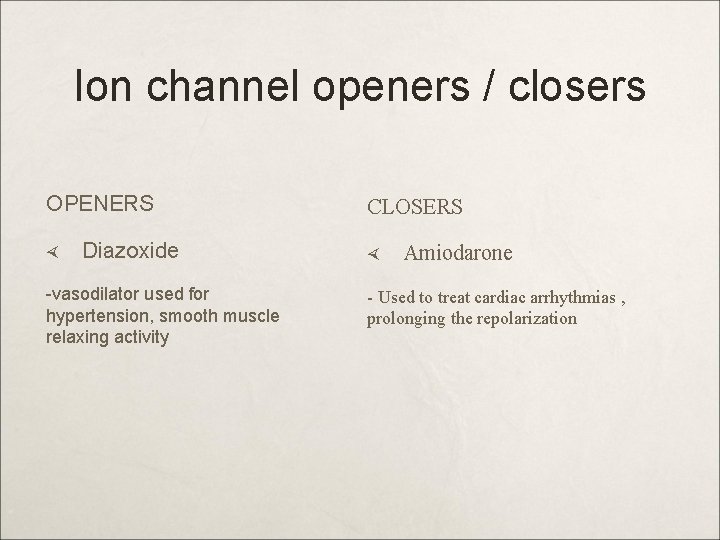
Ion channel openers / closers OPENERS Diazoxide -vasodilator used for hypertension, smooth muscle relaxing activity CLOSERS Amiodarone - Used to treat cardiac arrhythmias , prolonging the repolarization
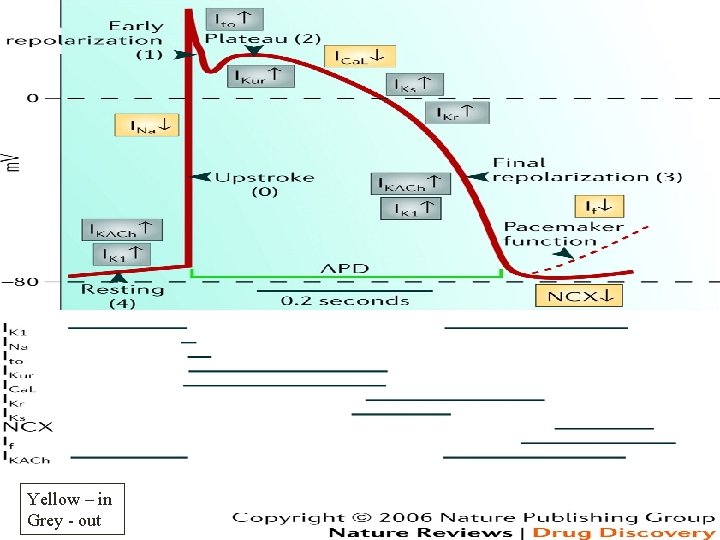
Yellow – in Grey - out
Sources http: //www. creative-biogene. com/images/Ion-Channel. jpg http: //en. wikipedia. org/wiki/Membrane_potential#mediaviewer/File: Basis_of_Membrane_Potential 2. png http: //www. nature. com/scitable/content/ne 0000/ne 0000/14615258/f 1_marban_415213 a-f 1. 2. jpg http: //www 1. appstate. edu/~kms/classes/psy 3203/Ear/hair_cell_tip. jpg http: //www. medbio. info/images/Time%203 -4/wpeozyop. gif http: //upload. wikimedia. org/wikipedia/commons/thumb/e/e 0/Synapse_Illustration 2_tweaked. svg/2000 px-Synapse_Illustration 2_tweaked. svg. png https: //www 3. nd. edu/~aseriann/nak. gif http: //www. uibk. ac. at/pharmazie/pharmakologie/images/cachannel. gif? m=e http: //www. neurology. org/content/68/3/233/F 1. large. jpg http: //en. wikipedia. org/wiki/Sodium_channel#mediaviewer/File: Sodium_channel_phylogram. png = evolution of those channels homepage: Alexander Chew: Florida State University; BSC 5936; February 2005 http: //upload. wikimedia. org/wikipedia/commons/4/45/GABAA-receptor-protein-example. png http: //cbsnews 1. cbsistatic. com/hub/i/r/2010/09/22/86 b 3 c 5 fb-a 643 -11 e 2 -a 3 f 0 -029118418759/resize/620 x 465/9 f 5987 c 0 e 770 cce 5 ce 393581 bd 1 aac 6 e/sperm_1. jpg http: //upload. wikimedia. org/wikipedia/commons/8/81/1 ots_opm. png Source: Mizutani S , "Milestones in the Evolution of the Study of Arrhythmias" http: //circep. ahajournals. org/content/2/2/185/F 1. large. jpg Literature: (german book edition) Silbernagl; Taschenatlas Physiologie guyton & Hall : textbook medical physiology (german book edition) Golenhofen; Basislehrbuch physiologie (4 th edition)
- Slides: 32