
Iodine in human health Iodine Deficiency Disorderes Iodine





- Slides: 38
Iodine in human health Iodine Deficiency Disorderes
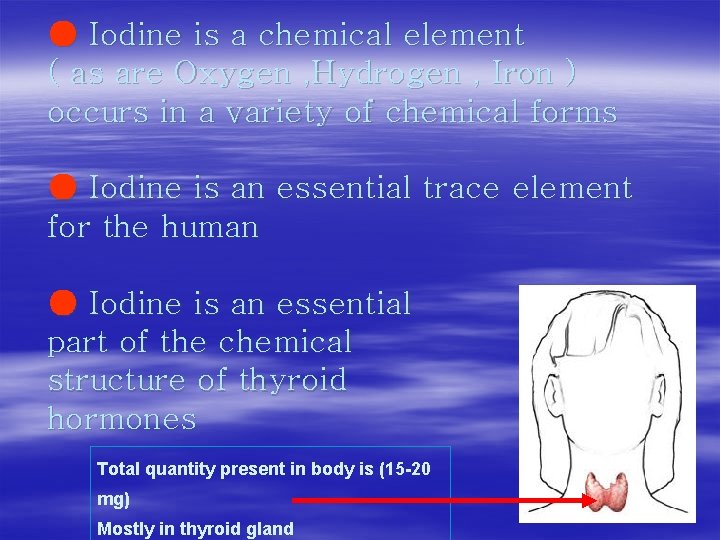
● Iodine is a chemical element ( as are Oxygen , Hydrogen , Iron ) occurs in a variety of chemical forms ● Iodine is an essential trace element for the human ● Iodine is an essential part of the chemical structure of thyroid hormones Total quantity present in body is (15 -20 mg) Mostly in thyroid gland
Deficiency § According to the World Health Organization (WHO), iodine deficiency disorders (IDD) affect 740 million people throughout the world, and nearly 50 million people suffer from some degree of IDD-related brain damage § mental retardation, hypothyroidism, goiter, and varying degrees of other growth and developmental abnormalities
§ Seawater contains 50 ppm (parts per million) iodine which means that there approximately 76 billion pounds of iodine in the world’s oceans. § Seaweed was a major source of iodine before 1959. § Seaweed is a significant source for iodine in the diets of many people around the world. 6/5/2021 5
§ Daily adult requirements, currently recommended at 150 µg/day, could be covered by very small quantities of seaweed. § Just one gram of dried brown algae provides from 500 -8, 000 µg of iodine § Even the green and red algae (such as the purple nori that is used in Japanese cuisine) provides 100 -300 µg in a single gram. 6/5/2021 6
Iodine absorption § Oral. Iodine appears to be inactivated by combination with gastrointestinal contents. Absorption is poor due to rapid conversion of iodine to iodide. (Reynolds, 1989; Gilman et al. , 1990). § "Inhalation. Iodine is absorbed from the lungs, converted to iodide in the body, (ILO 1971). Pulmonary absorption of vapour may result in systemic poisoning (Gosselin et al. , 1984). 6/5/2021 7 6/5/2021
Absorption……. "Dermal. Only very small quantities of iodine are absorbed through an intact skin, (Reynolds, 1989). § Iodine can be absorbed by wounds and abrasions. § Enhanced absorption occurs through denuded skin, decubitus ulcers, mucosal surfaces with high absorptive capacity , or large areas of intact skin, (Dela Cruz et al. , 1987; Vorherr et al. , 1989; Prager & Gardner 1979; Cosman et al. , 1988). § "Eye. Iodine can be absorbed when applied on the eye, (Geisthoevel, 1984). 6/5/2021 8
Iodine transport § Active I- accumulation in the thyroid is mediated by the Na+/ I- symporter (NIS), a plasma membrane glycoprotein § Using as its driving force the Na+ gradient generated by the Na+_-K+_-ATPase, NIS couples the inward movement of Na+ in favor of its concentration gradient to the inward movement of I- against its electrochemical gradient. § Characteristic hallmarks of NIS are its Na dependence 6/5/2021 9
§ NIS mediates I uptake in several tissues besides the thyroid, including : § Lactating mammary gland, § Gastric mucosa, § & salivary glands § It appears that Na+/ I- symporter is present in GI tract small intestine) 6/5/2021 10
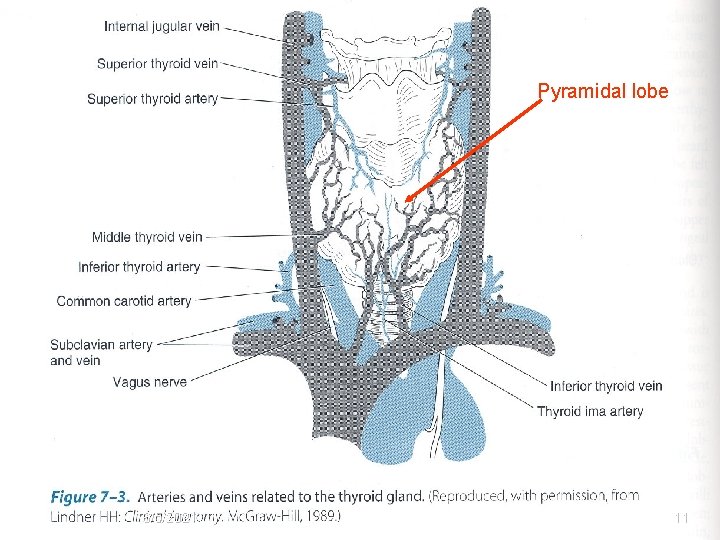
Pyramidal lobe 6/5/2021 11
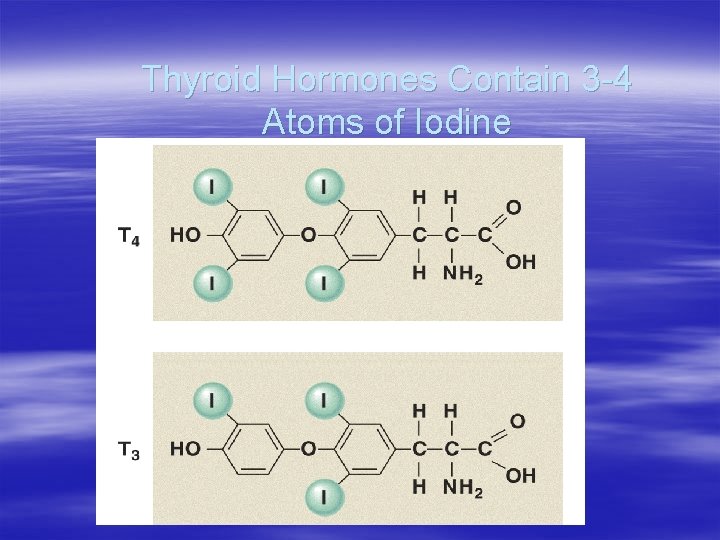
Thyroid Hormones Contain 3 -4 Atoms of Iodine
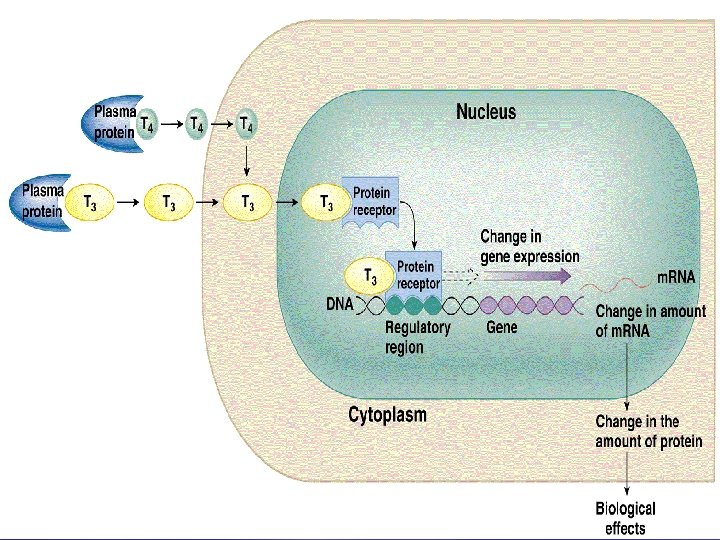
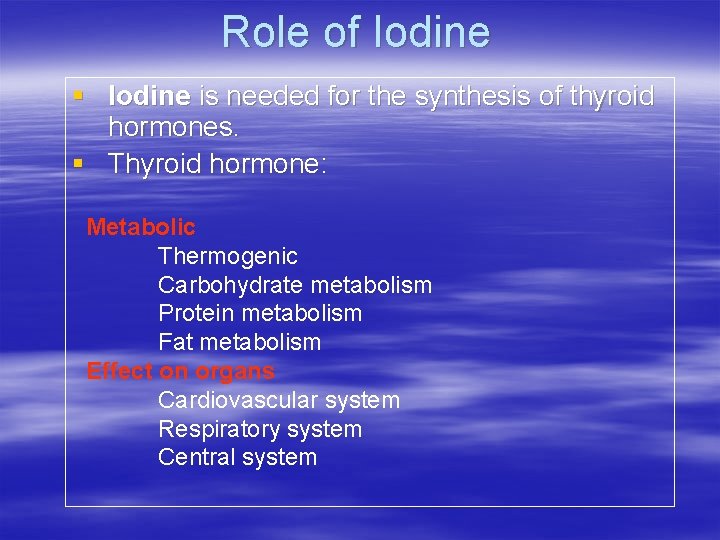
Role of Iodine § Iodine is needed for the synthesis of thyroid hormones. § Thyroid hormone: Metabolic Thermogenic Carbohydrate metabolism Protein metabolism Fat metabolism Effect on organs Cardiovascular system Respiratory system Central system
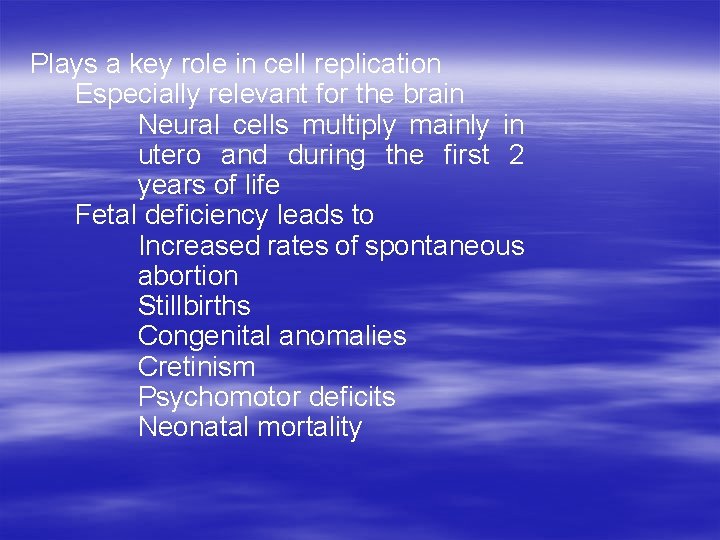
Plays a key role in cell replication Especially relevant for the brain Neural cells multiply mainly in utero and during the first 2 years of life Fetal deficiency leads to Increased rates of spontaneous abortion Stillbirths Congenital anomalies Cretinism Psychomotor deficits Neonatal mortality
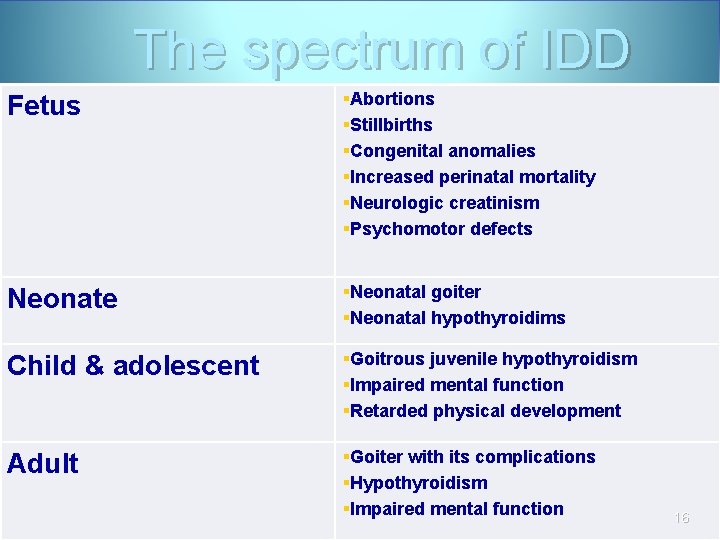
The spectrum of IDD Fetus §Abortions §Stillbirths §Congenital anomalies §Increased perinatal mortality §Neurologic creatinism §Psychomotor defects Neonate §Neonatal goiter §Neonatal hypothyroidims Child & adolescent §Goitrous juvenile hypothyroidism §Impaired mental function §Retarded physical development Adult §Goiter with its complications §Hypothyroidism §Impaired mental function 16
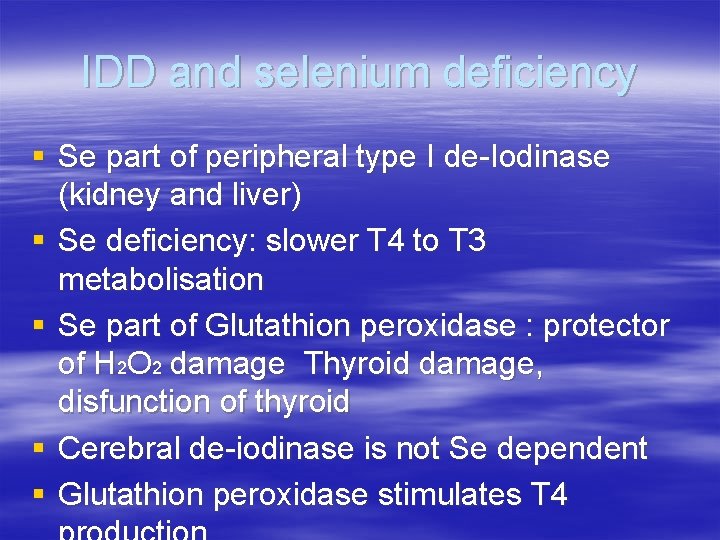
IDD and selenium deficiency § Se part of peripheral type I de-Iodinase (kidney and liver) § Se deficiency: slower T 4 to T 3 metabolisation § Se part of Glutathion peroxidase : protector of H 2 O 2 damage Thyroid damage, disfunction of thyroid § Cerebral de-iodinase is not Se dependent § Glutathion peroxidase stimulates T 4
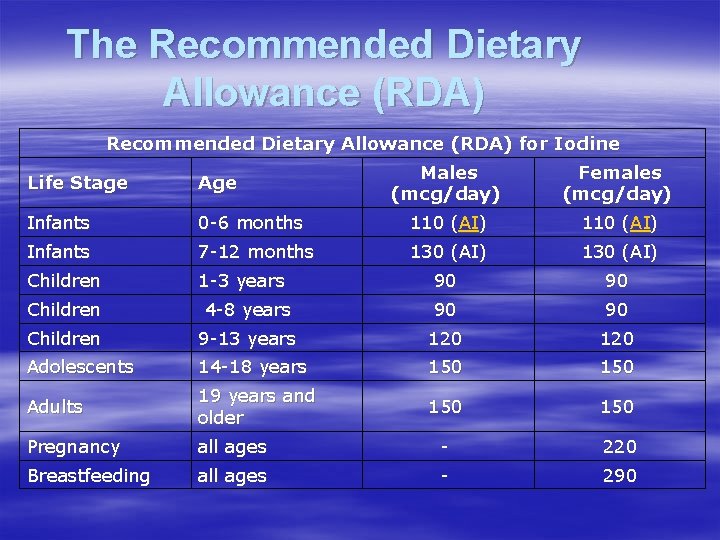
The Recommended Dietary Allowance (RDA) for Iodine Males (mcg/day) Females (mcg/day) 0 -6 months 110 (AI) Infants 7 -12 months 130 (AI) Children 1 -3 years 90 90 Life Stage Age Infants Children 4 -8 years 90 90 Children 9 -13 years 120 Adolescents 14 -18 years 150 Adults 19 years and older 150 Pregnancy all ages - 220 Breastfeeding all ages - 290
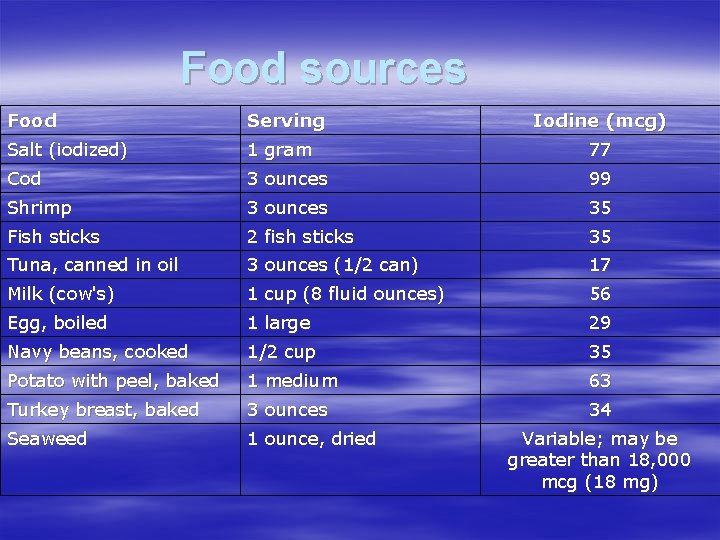
Food sources Food Serving Iodine (mcg) Salt (iodized) 1 gram 77 Cod 3 ounces 99 Shrimp 3 ounces 35 Fish sticks 2 fish sticks 35 Tuna, canned in oil 3 ounces (1/2 can) 17 Milk (cow's) 1 cup (8 fluid ounces) 56 Egg, boiled 1 large 29 Navy beans, cooked 1/2 cup 35 Potato with peel, baked 1 medium 63 Turkey breast, baked 3 ounces 34 Seaweed 1 ounce, dried Variable; may be greater than 18, 000 mcg (18 mg)
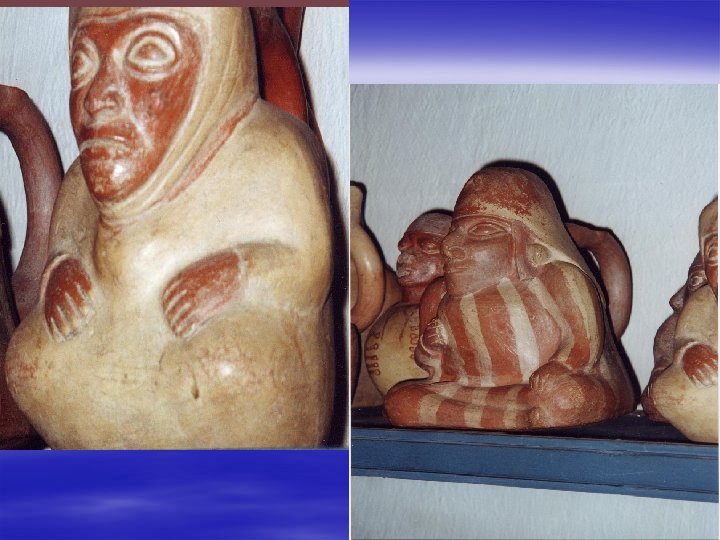
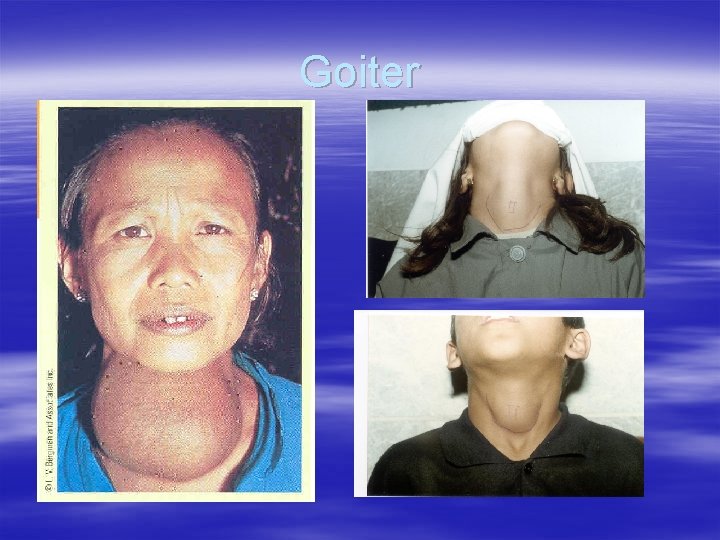
Goiter
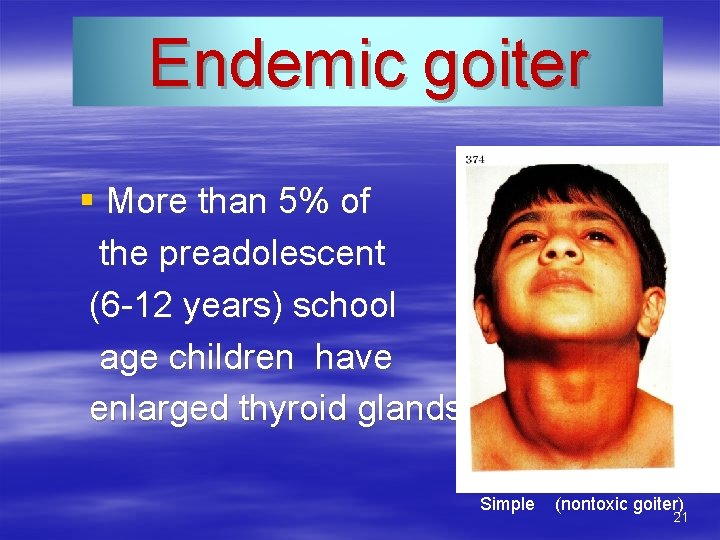
Endemic goiter § More than 5% of the preadolescent (6 -12 years) school age children have enlarged thyroid glands. Simple (nontoxic goiter) 21
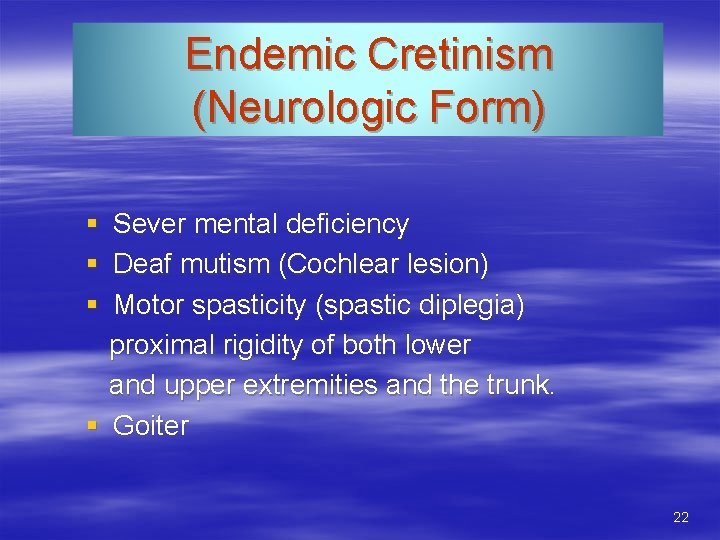
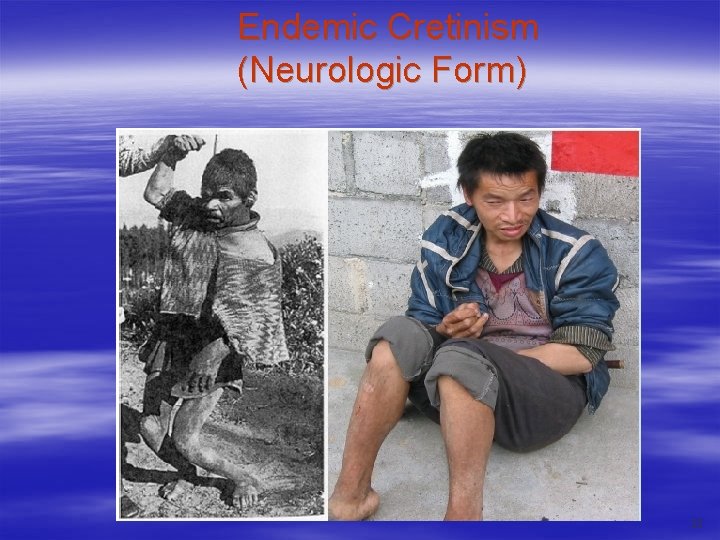
Endemic Cretinism (Neurologic Form) § Sever mental deficiency § Deaf mutism (Cochlear lesion) § Motor spasticity (spastic diplegia) proximal rigidity of both lower and upper extremities and the trunk. § Goiter 22
Endemic Cretinism (Neurologic Form) 23
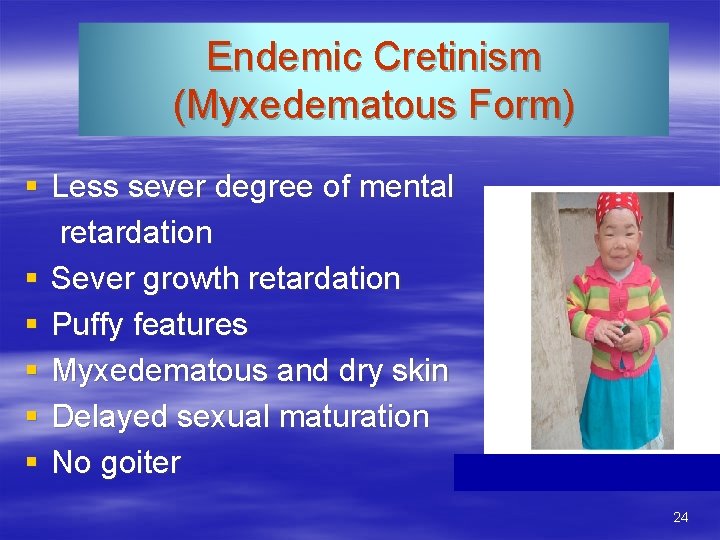
Endemic Cretinism (Myxedematous Form) § Less sever degree of mental retardation § Sever growth retardation § Puffy features § Myxedematous and dry skin § Delayed sexual maturation § No goiter 24
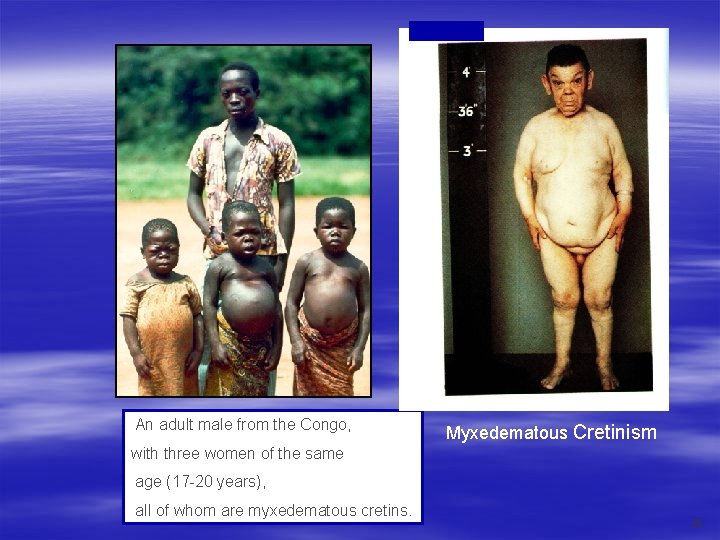
An adult male from the Congo, Myxedematous Cretinism with three women of the same age (17 -20 years), all of whom are myxedematous cretins. 25
Individuals at risk of iodine deficiency § Vegetarian and nonvegetarian diets that exclude iodized salt, fish, and seaweed have been found to contain very little iodine
Goitrogens § Some foods contain substances that interfere with iodine utilization or thyroid hormone production § Some species of millet and cruciferous vegetables (for example, cabbage, broccoli, cauliflower, and Brussel sprouts) § The soybean isoflavones, genistein and daidzein, have also been found to inhibit thyroid hormone synthesis § Most of these goitrogens are not of clinical importance unless they are consumed in large amounts or there is coexisting iodine deficiency § Goitrogens are inactived in heat
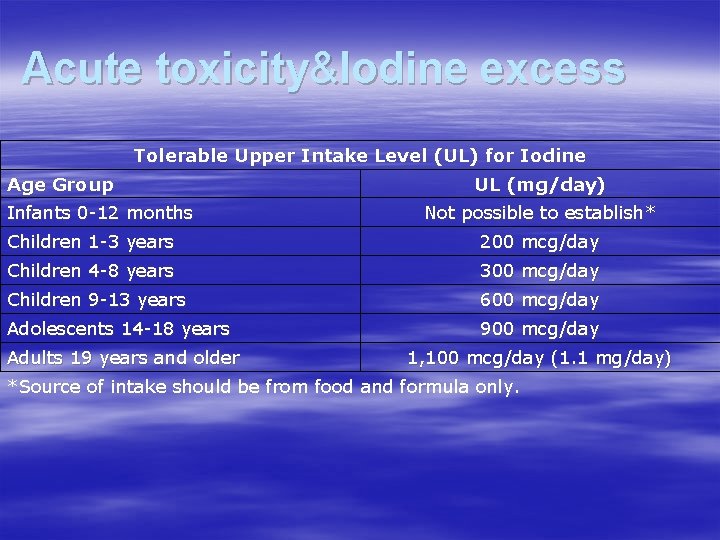
Acute toxicity&Iodine excess Tolerable Upper Intake Level (UL) for Iodine Age Group Infants 0 -12 months UL (mg/day) Not possible to establish* Children 1 -3 years 200 mcg/day Children 4 -8 years 300 mcg/day Children 9 -13 years 600 mcg/day Adolescents 14 -18 years 900 mcg/day Adults 19 years and older 1, 100 mcg/day (1. 1 mg/day) *Source of intake should be from food and formula only.
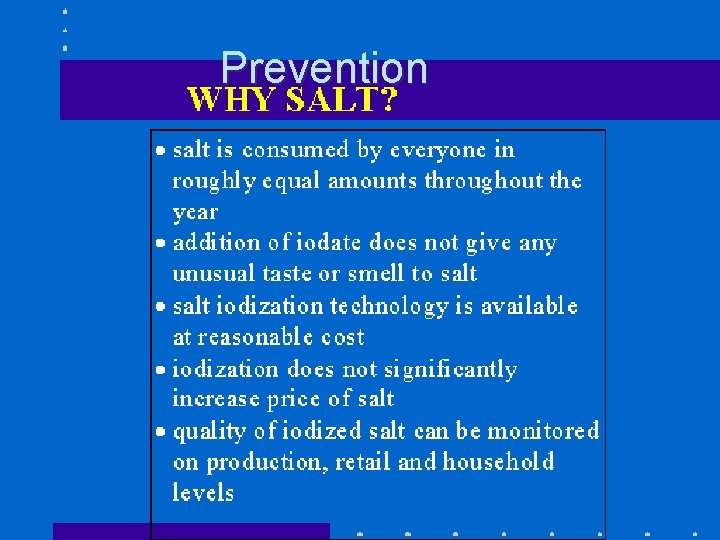
Prevention
Prevention § - Use of iodine solution(oral or injectional): In population that incidence is >70% If iodide salt is not available One IM injection 0/5 -1 ml is sufficient for 3 -5 years - One oral dose is sufficient for 1 -2 years
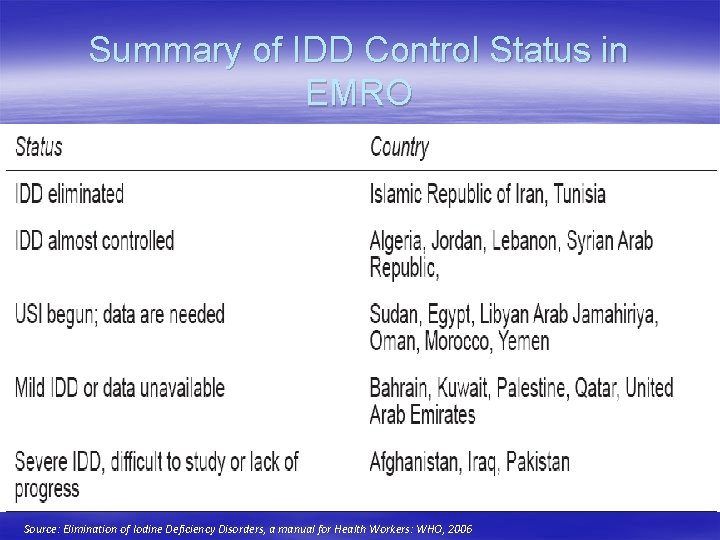
Summary of IDD Control Status in EMRO Source: Elimination of Iodine Deficiency Disorders, a manual for Health Workers: WHO, 2006
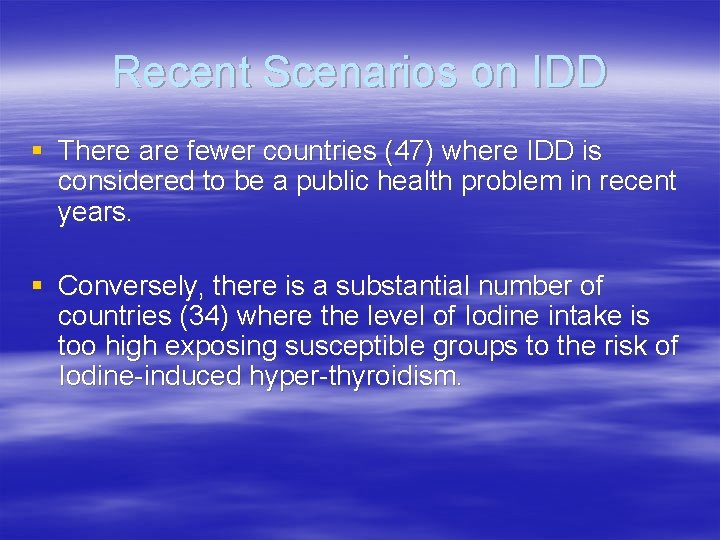
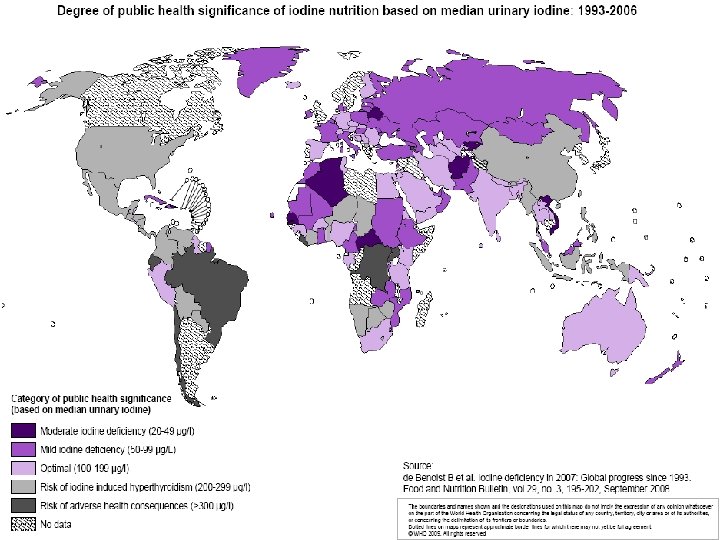
Recent Scenarios on IDD § There are fewer countries (47) where IDD is considered to be a public health problem in recent years. § Conversely, there is a substantial number of countries (34) where the level of Iodine intake is too high exposing susceptible groups to the risk of Iodine-induced hyper-thyroidism.
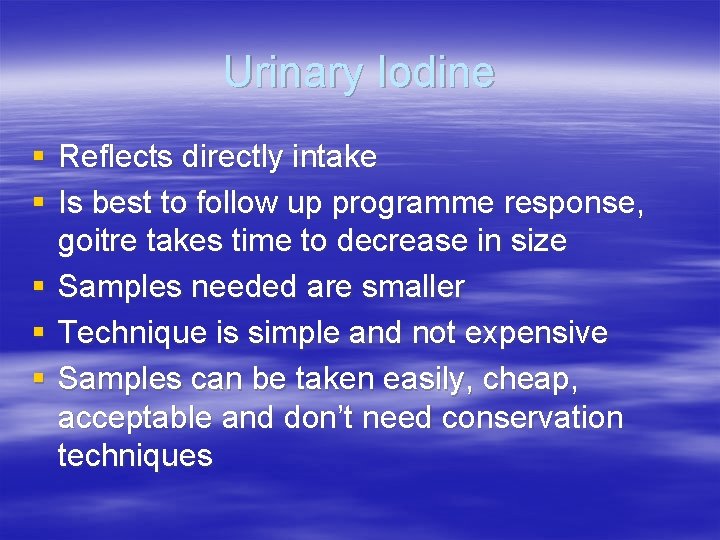
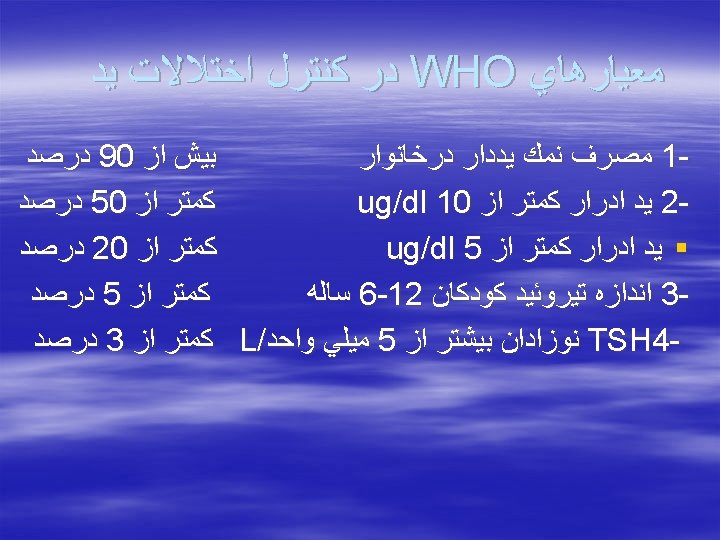
Urinary Iodine § Reflects directly intake § Is best to follow up programme response, goitre takes time to decrease in size § Samples needed are smaller § Technique is simple and not expensive § Samples can be taken easily, cheap, acceptable and don’t need conservation techniques
6/5/2021 38