
Iodine Function Essential component of thyroid hormones Important

- Slides: 20
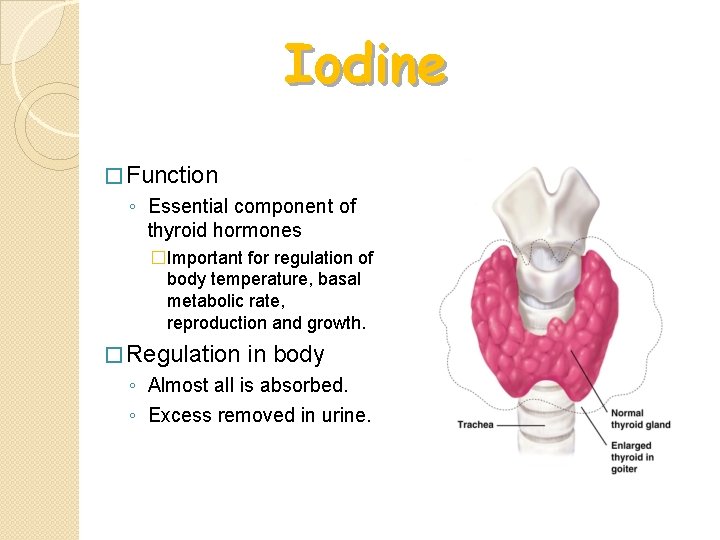
Iodine � Function ◦ Essential component of thyroid hormones �Important for regulation of body temperature, basal metabolic rate, reproduction and growth. � Regulation in body ◦ Almost all is absorbed. ◦ Excess removed in urine.
Iodine Dietary Sources �Seafoods �Milk/dairy products �Iodized salt
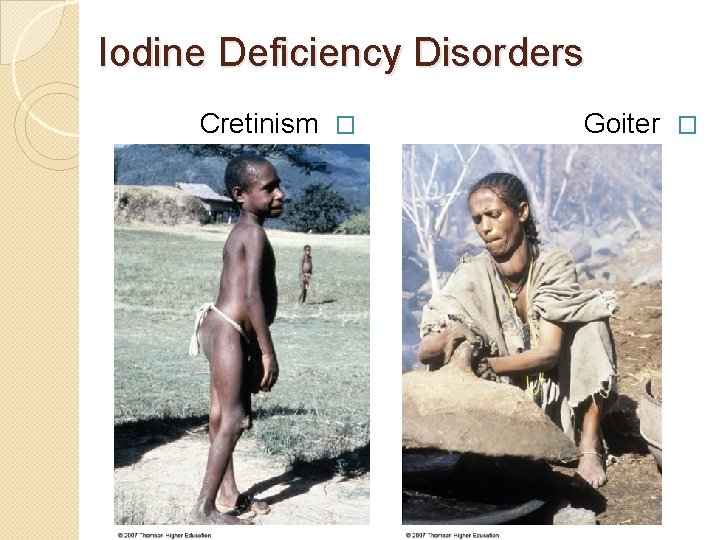
Iodine Deficiency �Goiter (less severe) ◦ Enlarged thyroid gland due to body’s attempt to increase thyroid hormone production �Cretinism (more severe) ◦ Severe iodine deficiency during pregnancy serious problems in baby �Stunted growth, deaf, mute, mentally retarded.
Iodine Deficiency Disorders Cretinism � Goiter �
Iodine Absorption, Metabolism, & Regulation of Iodine �Absorbed in small intestine & stomach �Taken up by thyroid gland �Thyroid-stimulating hormone regulates uptake
Iodine Functions of Iodine �Component of: ◦ Thyroxine (T 4) ◦ Triiodothyronine (T 3) �Regulates energy metabolism, growth, development �Signs of deficiency ◦ Severe fatigue ◦ Lethargy
Iodine Focus on Food: Iodine Deficiency & Iodine Fortification of Salt � 1920 s – “Goiter Belt” �Statewide campaigns �Started providing iodized salt to children �Goiter almost eliminated �Current – Public Health working to eradicate goiter internationally
Iodine Toxicity �Hypothyroidism �Hyperthyroidism �Formation of goiters
Selenium Absorption, Metabolism, & Regulation of Selenium �Most Se enters blood �Incorporated into selenomethionine �Makes selenoproteins �Stored in muscles �Maintenance of Se through excretion in urine
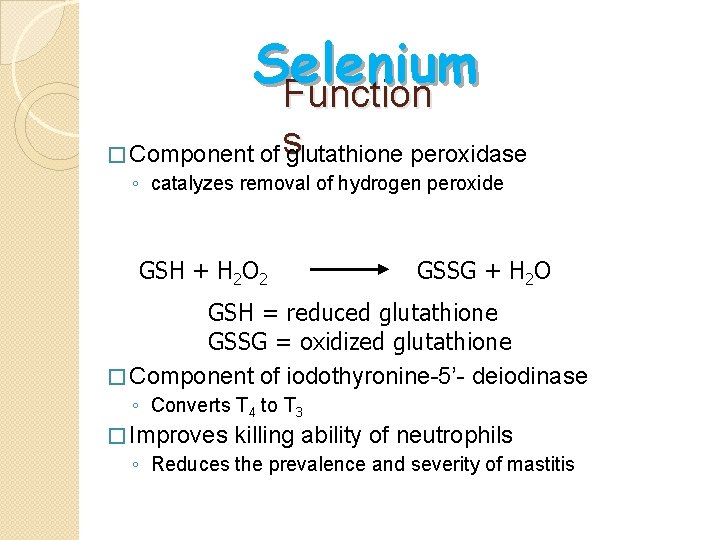
Selenium Function s � Component of glutathione peroxidase ◦ catalyzes removal of hydrogen peroxide GSH + H 2 O 2 GSSG + H 2 O GSH = reduced glutathione GSSG = oxidized glutathione � Component of iodothyronine-5’- deiodinase ◦ Converts T 4 to T 3 � Improves killing ability of neutrophils ◦ Reduces the prevalence and severity of mastitis
Selenium �Protects cells from autooxidative damage �Shares this role with vitamin E ◦ Important antioxidant �Deficiencies ◦ White muscle disease in lambs and calves �Skeletal and cardiac myopathies ◦ Exudative diathesis (hemorrhagic disease) in chicks
Selenium �Toxicity ◦ Blind staggers or alkali disease �Range between minimum requirement and maximum tolerable level is narrow ◦ Supplementation must be done with care! �FDA regulations allow two forms of inorganic Se (Na selenite and Na selenate) to be used ◦ 0. 3 mg of supplemental Se/kg of DM is maximum ◦ Organic form available
Selenium Deficiency & Toxicity �Deficiency ◦ Keshan disease �Toxicity ◦ ◦ ◦ Garlic-like odor of breath Nausea Vomiting Diarrhea Brittleness of teeth & fingernails
Chromium � Food content depends on soil � Whole grains, fruits/veg, processed meats, beer, wine � Bioavailability affected by: ◦ Vitamin C ◦ Acidic medications ◦ Antacids � Transported in blood to liver � Excess excreted in urine & feces
Chromium �Regulates insulin �Growth & development �Lab animals ◦ Increases lean mass ◦ Decreases fat mass �Ergogenic aid ◦ Chromium picolinate
Fluoride � 99% is found in bones and teeth �Function ◦ to promote mineralization of calcium and phosphate. ◦ Inhibits bacterial growth in mouth decreases cavity formation.
Fluoride �Not an essential nutrient �Potatoes, tea, legumes, fish w/bones, toothpaste, added to drinking water �American Dental Association ◦ Fluoridation 1 -2 ppm �Absorbed via small intestine �Circulates in blood to liver & then teeth & bone �Excess excreted in urine
Fluoride Function s �Part of bone & teeth matrix �Stimulates maturation of osteoblasts �Topical application decreases bacteria in mouth ◦ Fewer cavities
Fluoride Deficiency & Toxicity �Deficiency ◦ None known �Toxicity ◦ GI upset, excessive production of saliva, watery eyes, heart problems, coma ◦ Dental fluorosis ◦ Skeletal fluorosis
Other Trace Minerals More research needed about: �Nickel �Aluminum �Silicon �Vanadium �Arsenic �Boron