
IOC Capacity Development Strategy and the role of
- Slides: 18
IOC Capacity Development Strategy and the role of the Ocean. Teacher Global Academy (OTGA) Peter Pissierssens Head, IOC Project Office for IODE Programme Manager IOC Capacity Development Coordinator Claudia Delgado IODE Training Coordinator & OTGA Project Manager
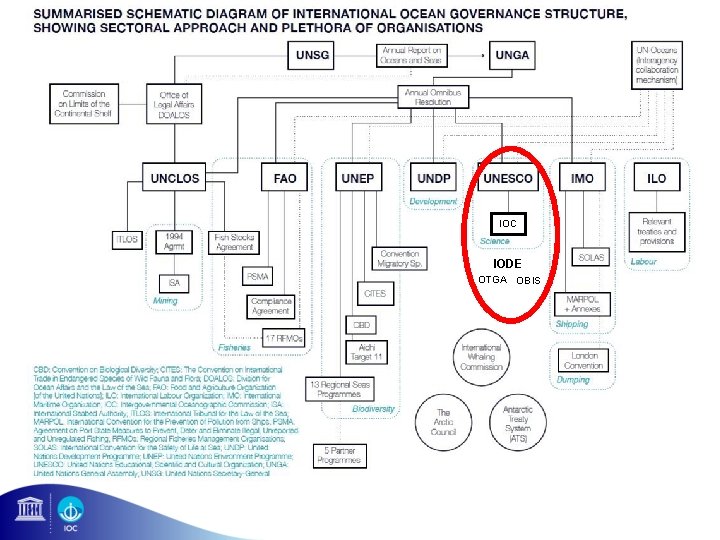
IOC IODE OTGA OBIS
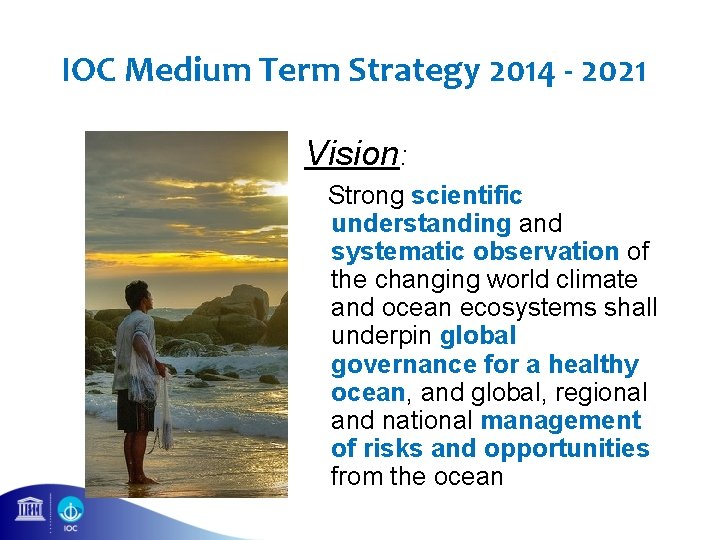
IOC Medium Term Strategy 2014 - 2021 Vision: Strong scientific understanding and systematic observation of the changing world climate and ocean ecosystems shall underpin global governance for a healthy ocean, and global, regional and national management of risks and opportunities from the ocean
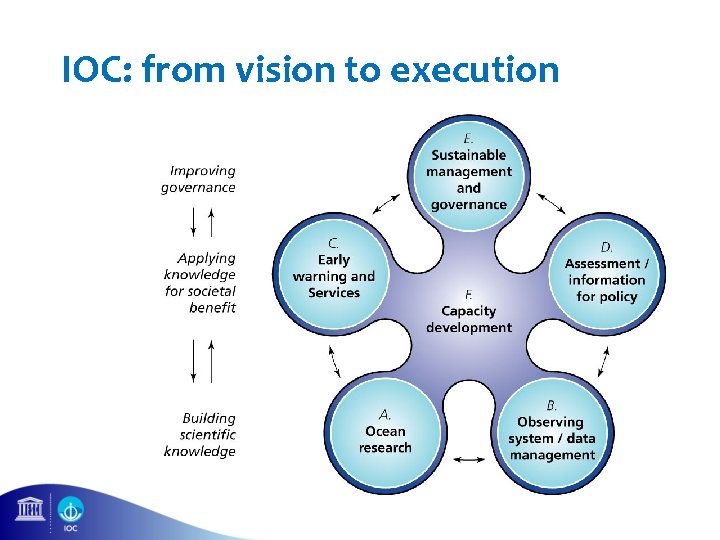
IOC: from vision to execution
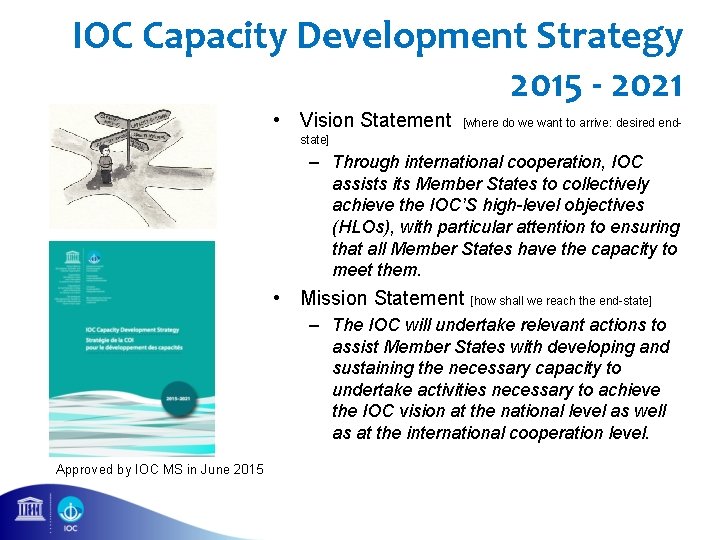
IOC Capacity Development Strategy 2015 - 2021 • Vision Statement [where do we want to arrive: desired end- state] – Through international cooperation, IOC assists its Member States to collectively achieve the IOC’S high-level objectives (HLOs), with particular attention to ensuring that all Member States have the capacity to meet them. • Mission Statement [how shall we reach the end-state] – The IOC will undertake relevant actions to assist Member States with developing and sustaining the necessary capacity to undertake activities necessary to achieve the IOC vision at the national level as well as at the international cooperation level. Approved by IOC MS in June 2015
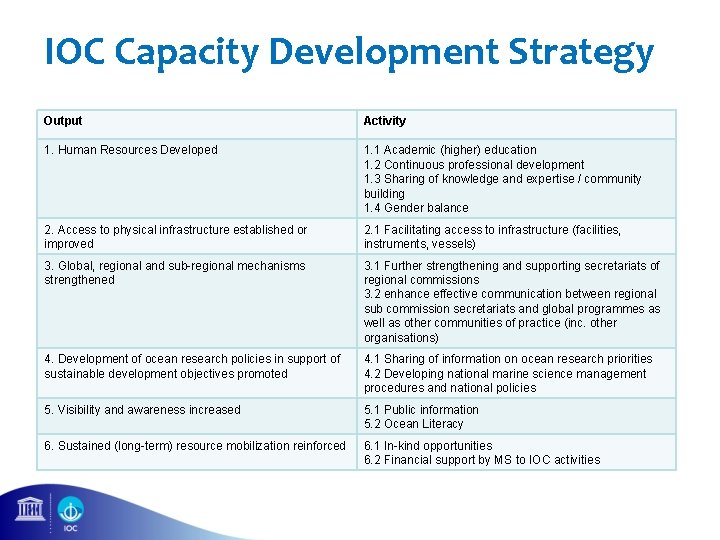
IOC Capacity Development Strategy Output Activity 1. Human Resources Developed 1. 1 Academic (higher) education 1. 2 Continuous professional development 1. 3 Sharing of knowledge and expertise / community building 1. 4 Gender balance 2. Access to physical infrastructure established or improved 2. 1 Facilitating access to infrastructure (facilities, instruments, vessels) 3. Global, regional and sub-regional mechanisms strengthened 3. 1 Further strengthening and supporting secretariats of regional commissions 3. 2 enhance effective communication between regional sub commission secretariats and global programmes as well as other communities of practice (inc. other organisations) 4. Development of ocean research policies in support of sustainable development objectives promoted 4. 1 Sharing of information on ocean research priorities 4. 2 Developing national marine science management procedures and national policies 5. Visibility and awareness increased 5. 1 Public information 5. 2 Ocean Literacy 6. Sustained (long-term) resource mobilization reinforced 6. 1 In-kind opportunities 6. 2 Financial support by MS to IOC activities
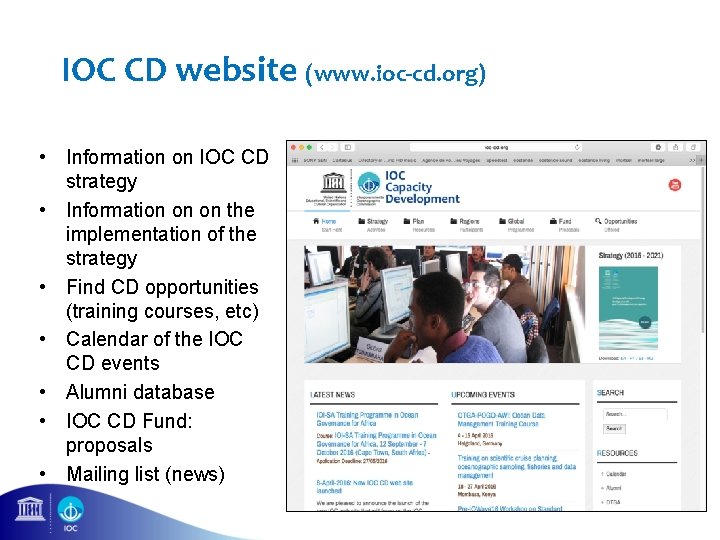
IOC CD website (www. ioc-cd. org) • Information on IOC CD strategy • Information on on the implementation of the strategy • Find CD opportunities (training courses, etc) • Calendar of the IOC CD events • Alumni database • IOC CD Fund: proposals • Mailing list (news)
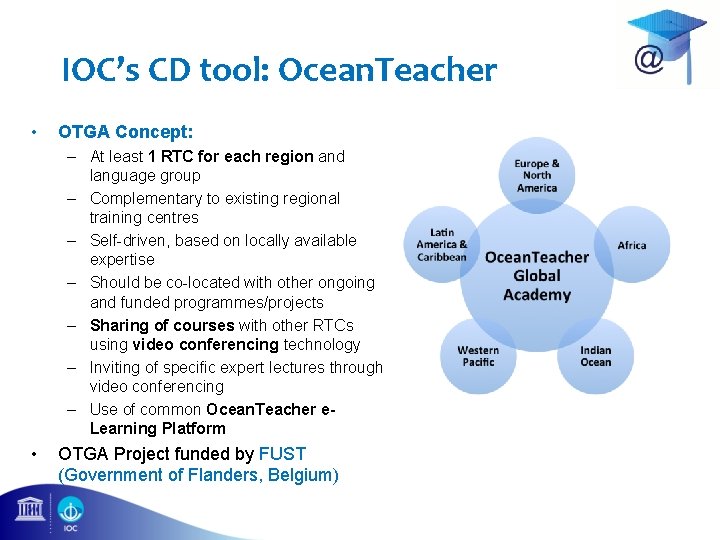
IOC’s CD tool: Ocean. Teacher • OTGA Concept: – At least 1 RTC for each region and language group – Complementary to existing regional training centres – Self-driven, based on locally available expertise – Should be co-located with other ongoing and funded programmes/projects – Sharing of courses with other RTCs using video conferencing technology – Inviting of specific expert lectures through video conferencing – Use of common Ocean. Teacher e. Learning Platform • OTGA Project funded by FUST (Government of Flanders, Belgium)
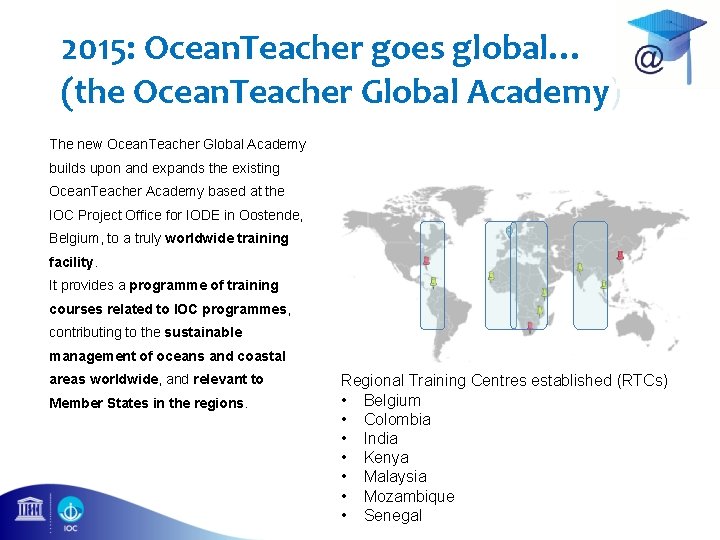
2015: Ocean. Teacher goes global… (the Ocean. Teacher Global Academy) The new Ocean. Teacher Global Academy builds upon and expands the existing Ocean. Teacher Academy based at the IOC Project Office for IODE in Oostende, Belgium, to a truly worldwide training facility. It provides a programme of training courses related to IOC programmes, contributing to the sustainable management of oceans and coastal areas worldwide, and relevant to Member States in the regions. Regional Training Centres established (RTCs) • Belgium • Colombia • India • Kenya • Malaysia • Mozambique • Senegal
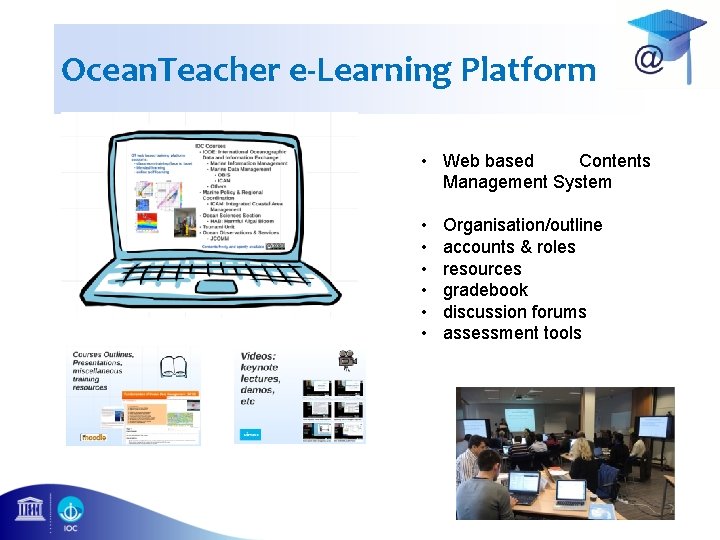
Ocean. Teacher e-Learning Platform • Web based Contents Management System • • • Organisation/outline accounts & roles resources gradebook discussion forums assessment tools 10
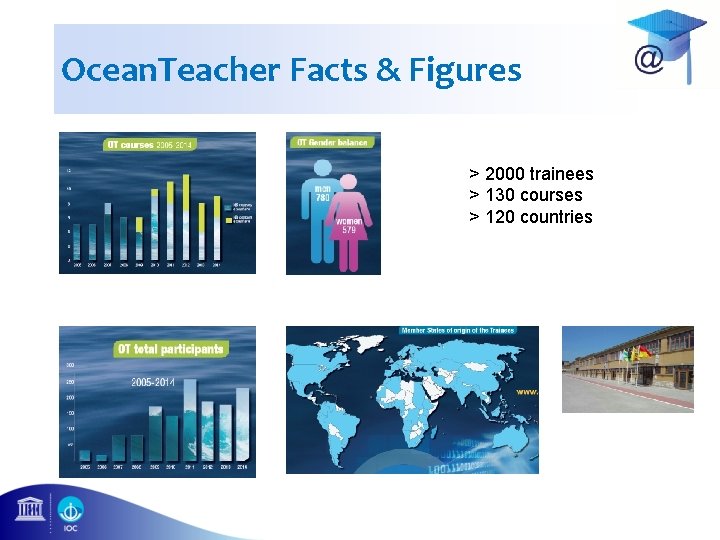
Ocean. Teacher Facts & Figures > 2000 trainees > 130 courses > 120 countries
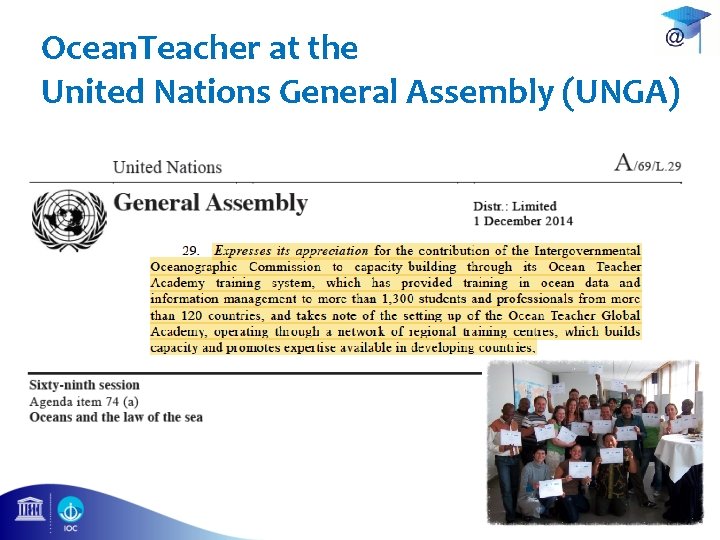
Ocean. Teacher at the United Nations General Assembly (UNGA)
• 12 training courses / workshops since 2014 • 260 course participants • Languages: English, Spanish & French With the support of the Government of Flanders, Belgium
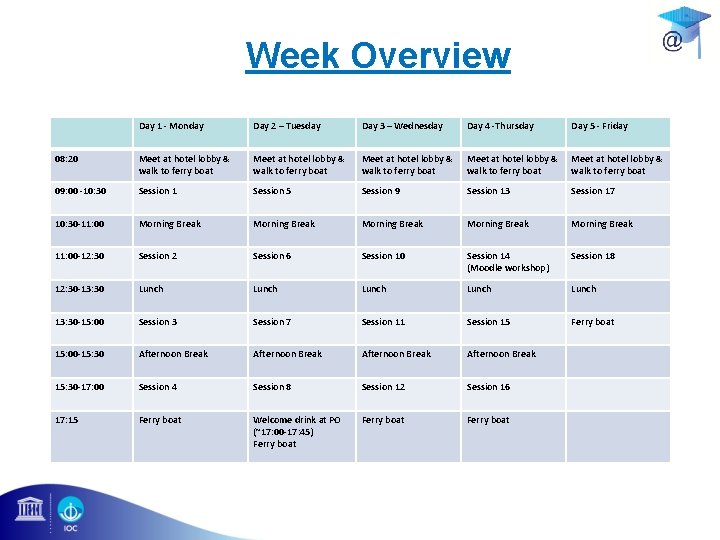
Week Overview Day 1 - Monday Day 2 – Tuesday Day 3 – Wednesday Day 4 -Thursday Day 5 - Friday 08: 20 Meet at hotel lobby & walk to ferry boat Meet at hotel lobby & walk to ferry boat 09: 00 -10: 30 Session 1 Session 5 Session 9 Session 13 Session 17 10: 30 -11: 00 Morning Break Morning Break 11: 00 -12: 30 Session 2 Session 6 Session 10 Session 14 (Moodle workshop) Session 18 12: 30 -13: 30 Lunch Lunch 13: 30 -15: 00 Session 3 Session 7 Session 11 Session 15 Ferry boat 15: 00 -15: 30 Afternoon Break 15: 30 -17: 00 Session 4 Session 8 Session 12 Session 16 17: 15 Ferry boat Welcome drink at PO (~17: 00 -17: 45) Ferry boat
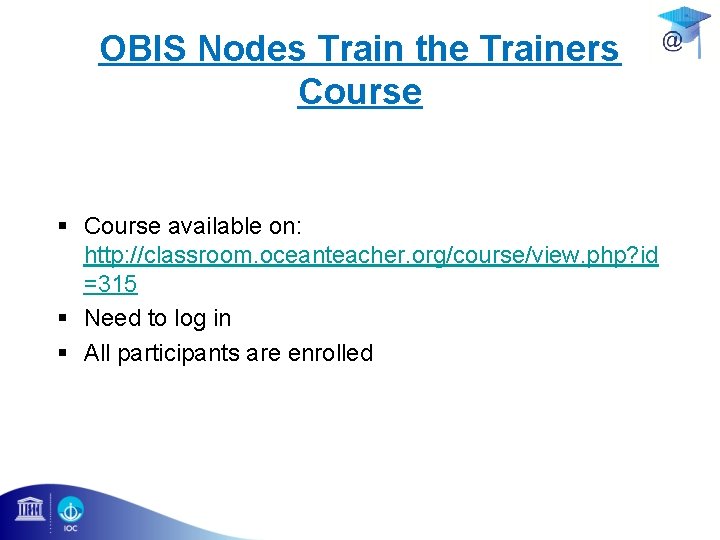
OBIS Nodes Train the Trainers Course § Course available on: http: //classroom. oceanteacher. org/course/view. php? id =315 § Need to log in § All participants are enrolled
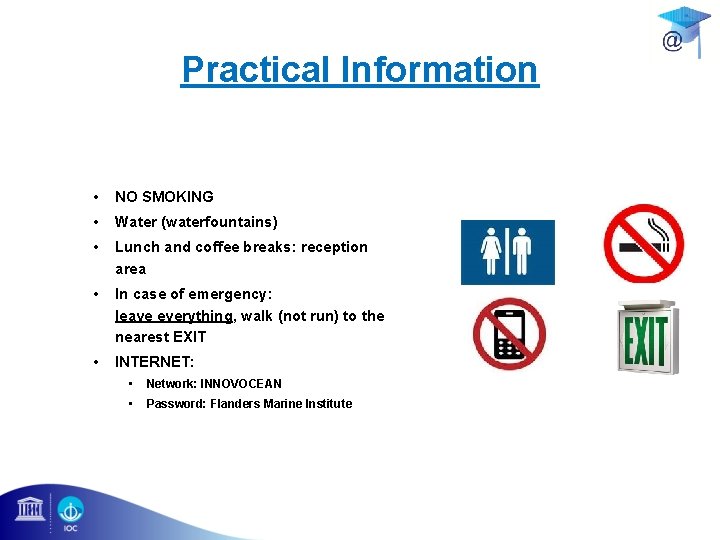
Practical Information • NO SMOKING • Water (waterfountains) • Lunch and coffee breaks: reception area • In case of emergency: leave everything, walk (not run) to the nearest EXIT • INTERNET: • Network: INNOVOCEAN • Password: Flanders Marine Institute
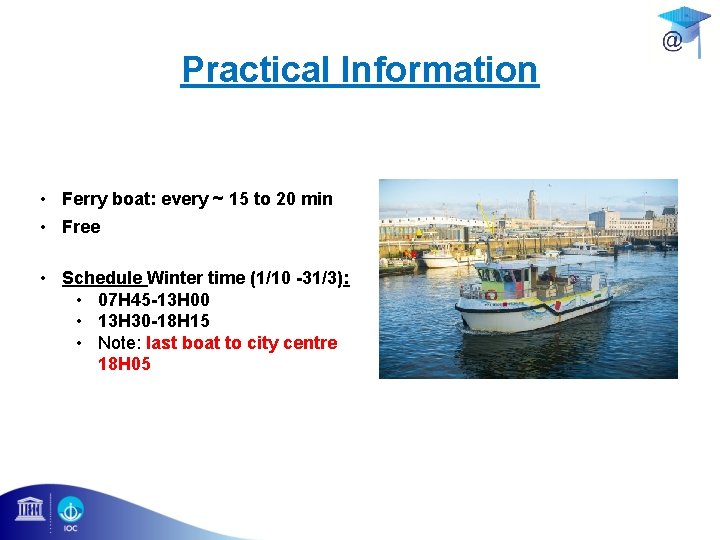
Practical Information • Ferry boat: every ~ 15 to 20 min • Free • Schedule Winter time (1/10 -31/3): • 07 H 45 -13 H 00 • 13 H 30 -18 H 15 • Note: last boat to city centre 18 H 05
www. oceanteacher. org Email: c. delgado@unesco. org With the support of the Government of Flanders, Belgium