
IO 4 Intellectual Output 4 CORPORATE SOCIAL RESPONSIBILITY
IO 4 Intellectual Output 4 CORPORATE SOCIAL RESPONSIBILITY (CSR) Background & Basic Overview
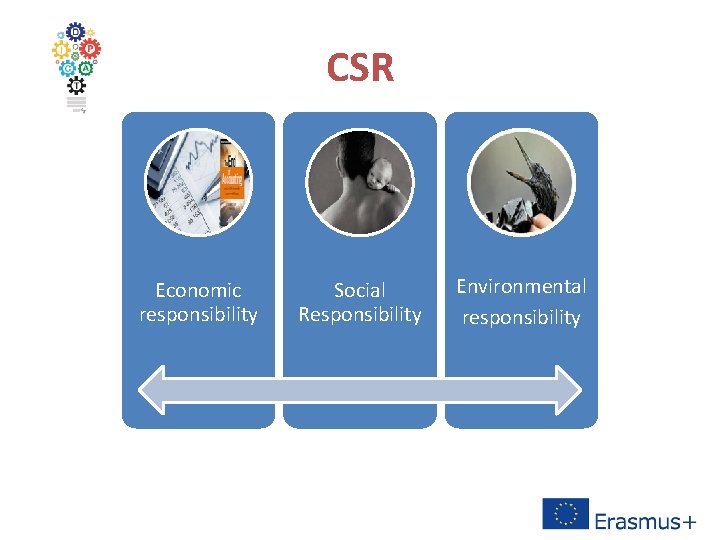
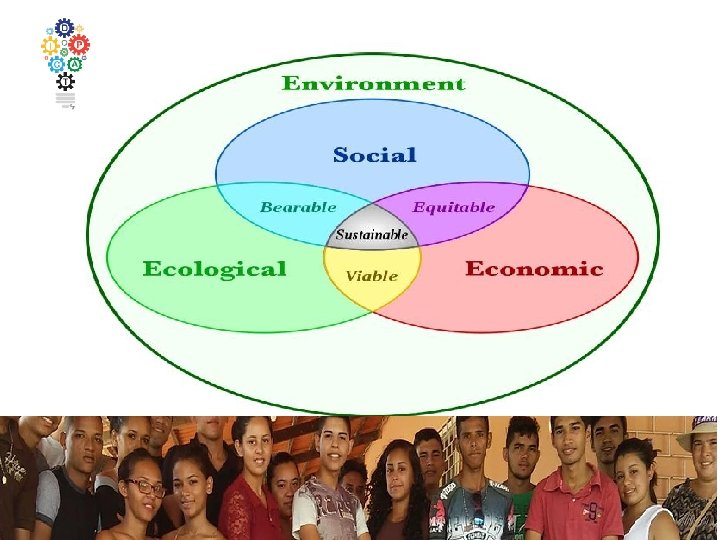
CSR Economic responsibility Social Responsibility Environmental responsibility
CONCEPTS & DEFINITIONS CSR’ expresses more than simply the requirement that business should be conducted ethically – it refers to the notion of responsibility for the impact of corporate activity on the wider body of stakeholders, both internal and external stakeholders, and both economic (employees, customers, banks, suppliers, competitors) and social stakeholders (family members, the physical environment, the government, trade and business association, etc. ) and it is this attribution of responsibility that underpins the willingness of society to legitimate business” (Gray et al. , 1996).
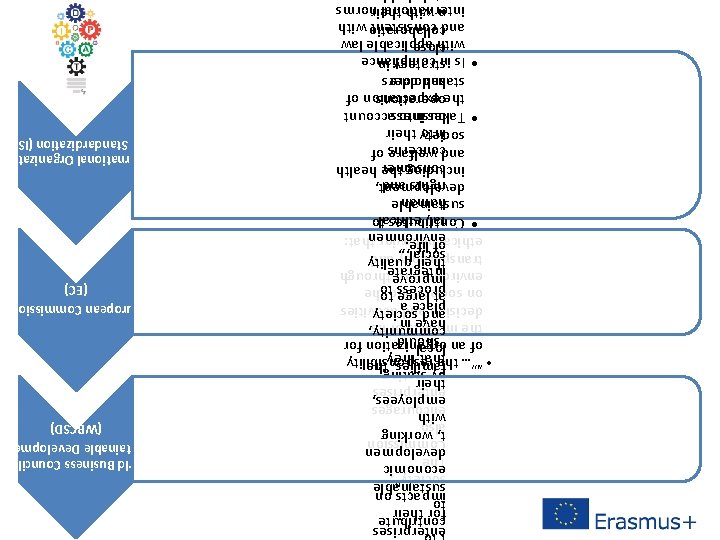
t to enterprises contribute for their to impacts on sustainable society". economic The developmen Commission t, working also with encourages employees, enterprises their by stating families, the • “”… the responsibility that they local of an organization for "should community, the impacts have inof its andand society decision place a activities at large on society andto process tothe improve through environment, integrate their quality transparency and social, ofbehavior life. ” that: ethicalenvironmen • Contributes tal, ethicalto sustainable human development, rights and including the health consumer andconcerns welfare of society into their business • Takes into account theoperations expectation of and core stakeholders in • Is instrategy compliance close with applicable law andcollaboratio consistent with n with theirnorms international World Business Council fo Sustainable Development (WBCSD) European Commission (EC) International Organizatio for Standardization (ISO)
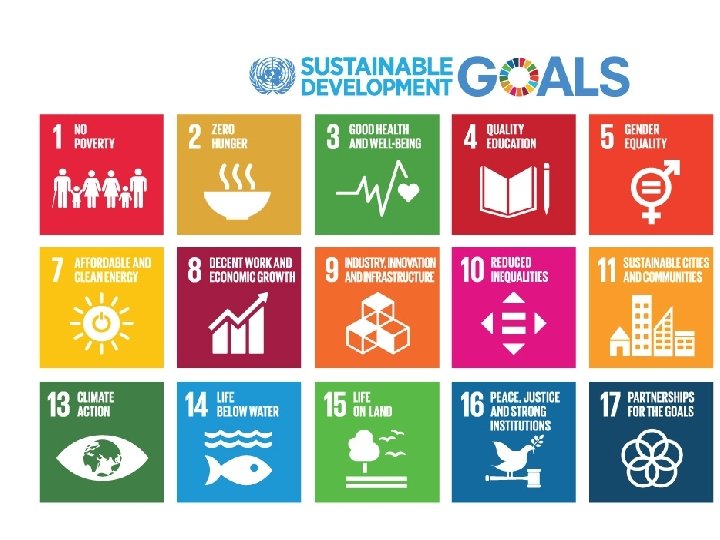
Transforming our world: the 2030 Agenda for Sustainable Development United Nations General Assembly New York, 25 -27 September, 2015 contained in document A/70/L. 1, the agreement on a set of 17 goals and 169 targets would come into effect on 1 January 2016, replacing the Millennium Development Goals set in 2000 https: //www. unric. org/it/agenda-2030 Agenda 2030
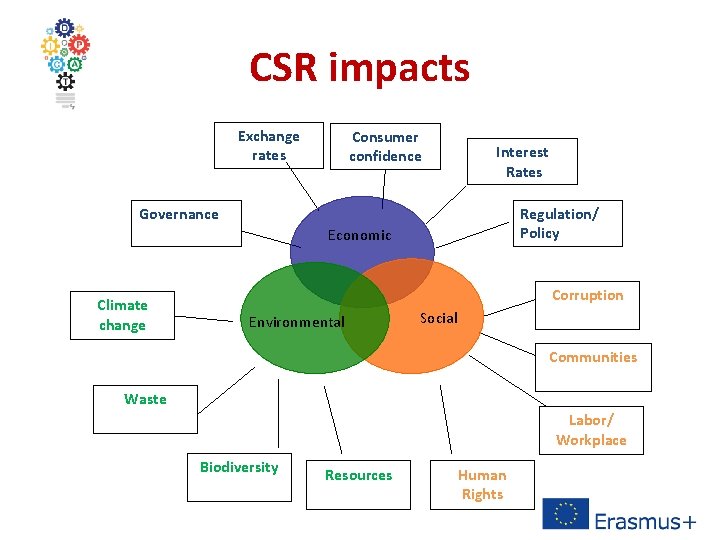
CSR impacts Exchange rates Consumer confidence Interest Rates Governance Regulation/ Policy Economic Climate change Corruption Environmental Social Communities Waste Labor/ Workplace Biodiversity Resources Human Rights
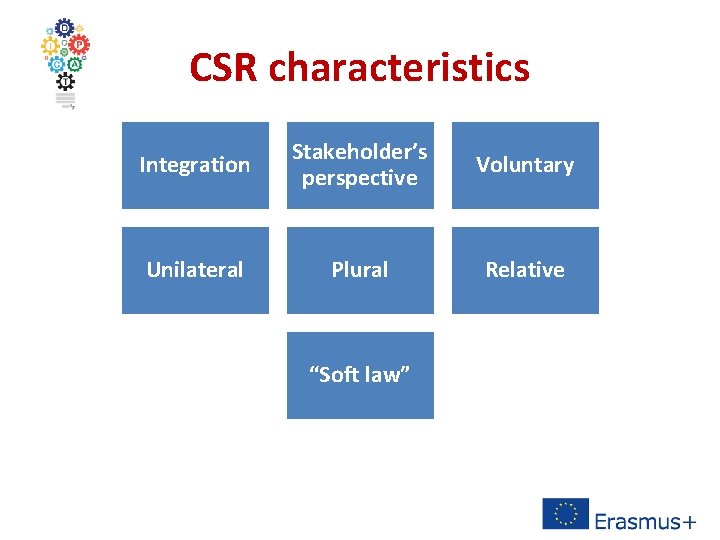
CSR characteristics Integration Stakeholder’s perspective Voluntary Unilateral Plural Relative “Soft law”
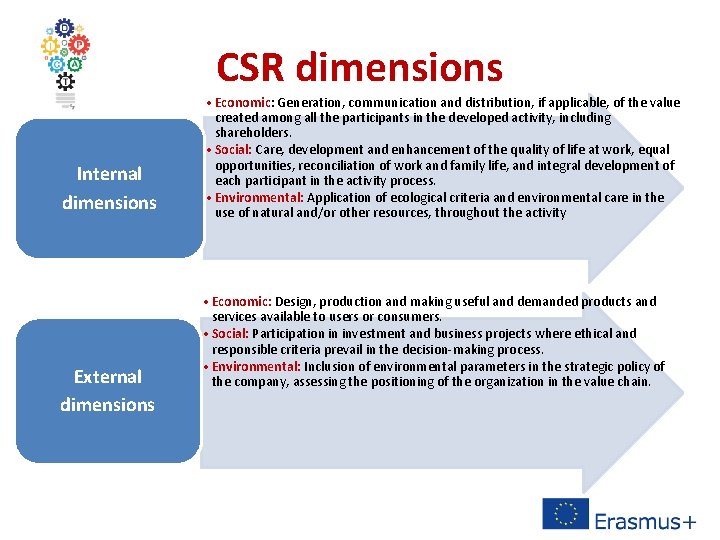
CSR dimensions Internal dimensions External dimensions • Economic: Generation, communication and distribution, if applicable, of the value created among all the participants in the developed activity, including shareholders. • Social: Care, development and enhancement of the quality of life at work, equal opportunities, reconciliation of work and family life, and integral development of each participant in the activity process. • Environmental: Application of ecological criteria and environmental care in the use of natural and/or other resources, throughout the activity • Economic: Design, production and making useful and demanded products and services available to users or consumers. • Social: Participation in investment and business projects where ethical and responsible criteria prevail in the decision-making process. • Environmental: Inclusion of environmental parameters in the strategic policy of the company, assessing the positioning of the organization in the value chain.
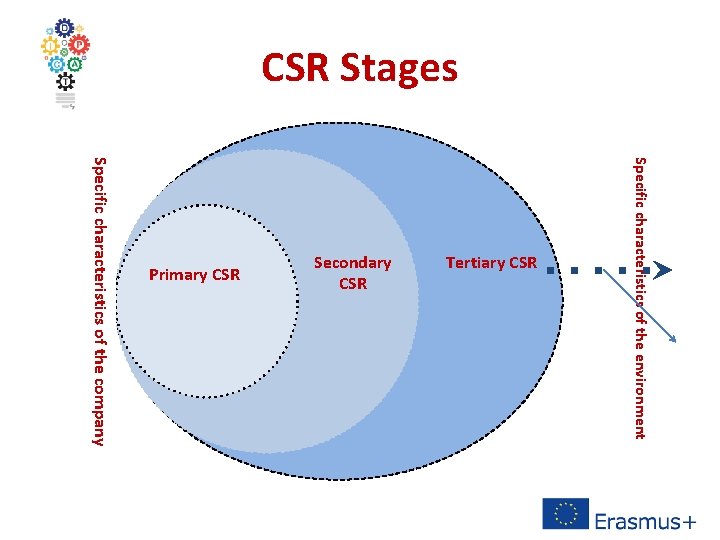
CSR Stages Specific characteristics of the environment Tertiary CSR Specific characteristics of the company Primary CSR Secondary CSR
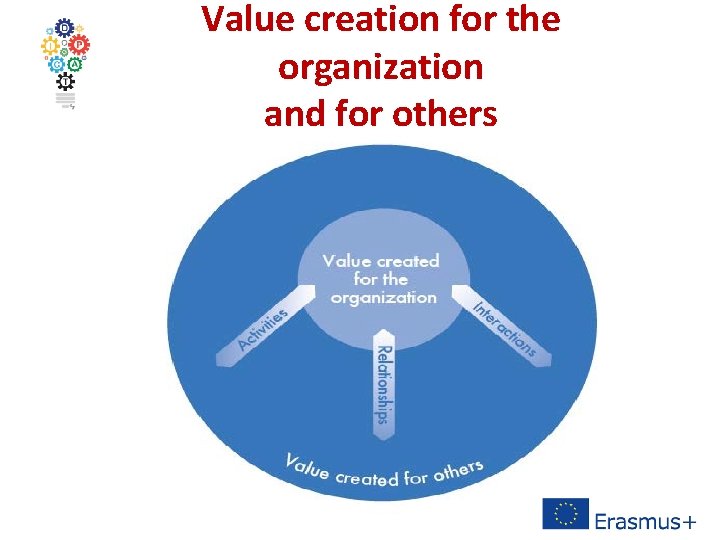
Value creation for the organization and for others
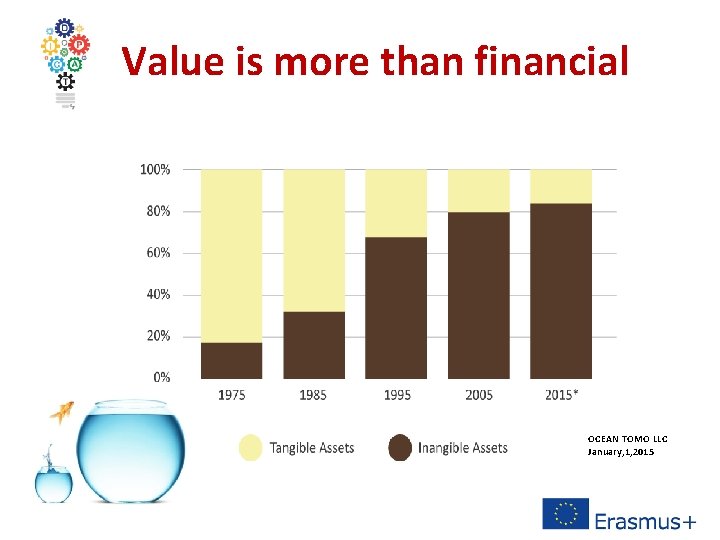
Value is more than financial OCEAN TOMO LLC January, 1, 2015
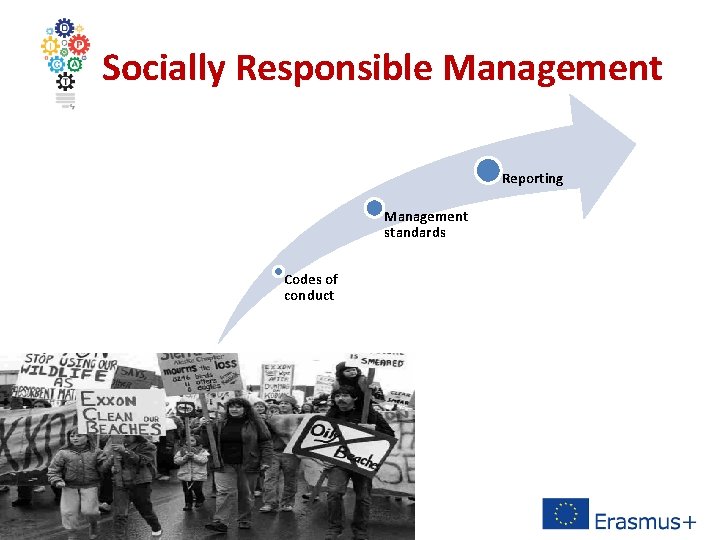
S Socially Responsible Management Reporting Management standards Codes of conduct
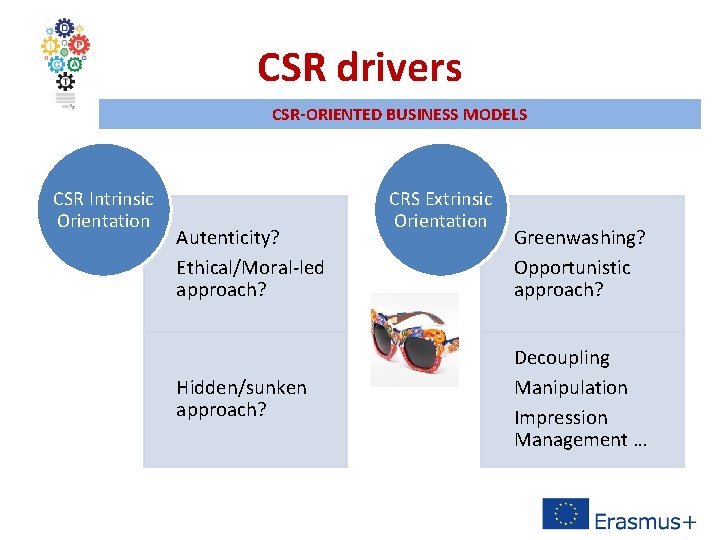
CSR drivers CSR-ORIENTED BUSINESS MODELS CSR Intrinsic Orientation Autenticity? Ethical/Moral-led approach? Hidden/sunken approach? CRS Extrinsic Orientation Greenwashing? Opportunistic approach? Decoupling Manipulation Impression Management …
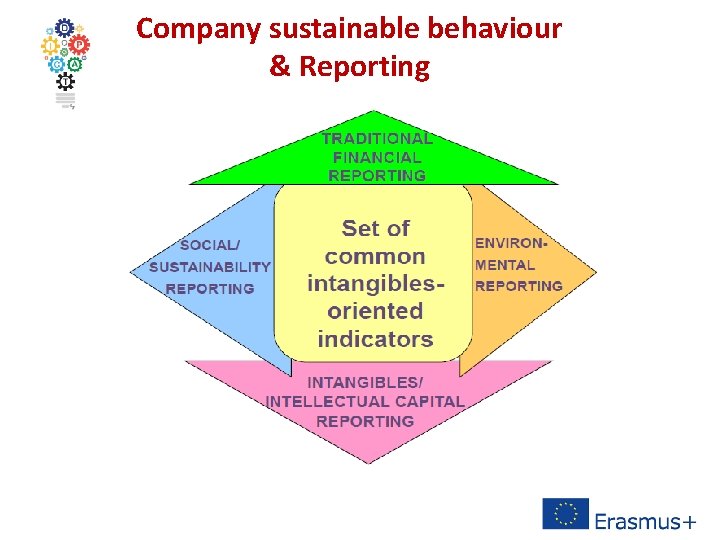
Company sustainable behaviour & Reporting
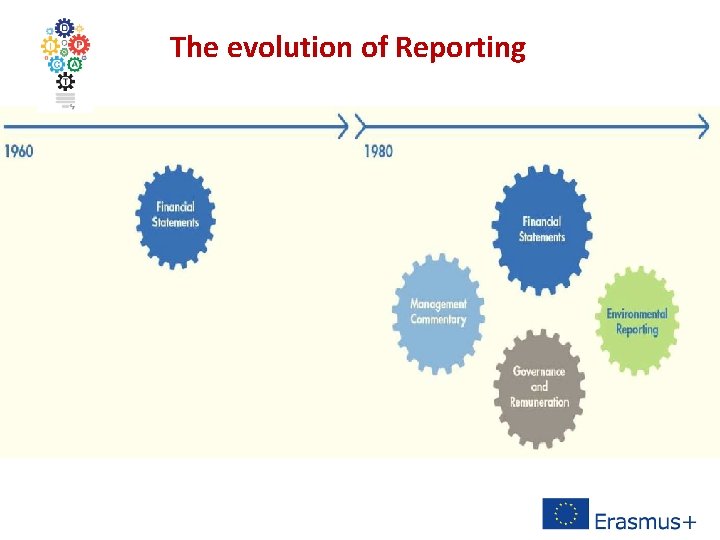
The evolution of Reporting
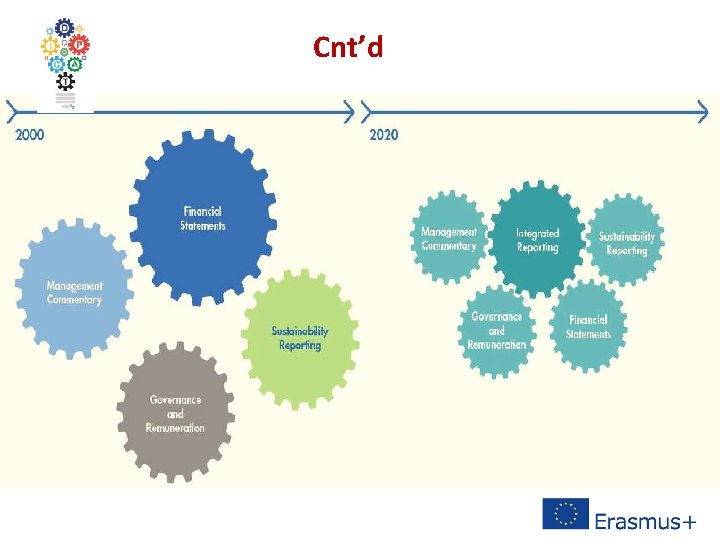
Cnt’d
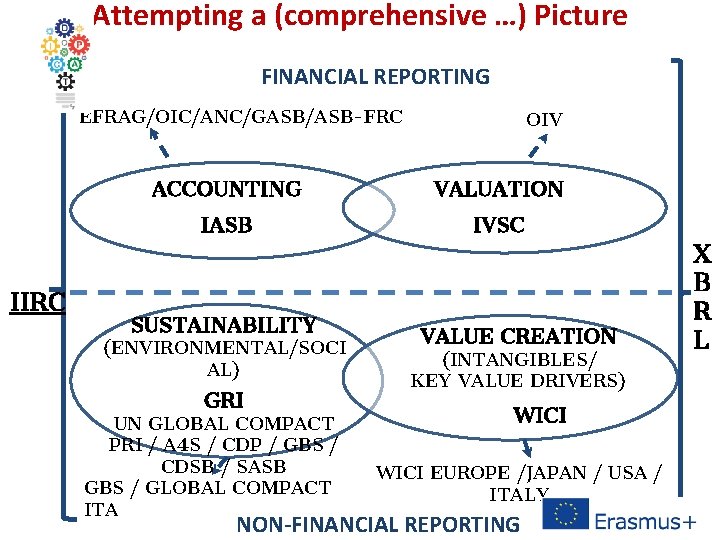
Attempting a (comprehensive …) Picture FINANCIAL REPORTING EFRAG/OIC/ANC/GASB/ASB-FRC IIRC OIV ACCOUNTING VALUATION IASB IVSC SUSTAINABILITY (ENVIRONMENTAL/SOCI AL) GRI UN GLOBAL COMPACT PRI / A 4 S / CDP / GBS / CDSB / SASB GBS / GLOBAL COMPACT ITA VALUE CREATION (INTANGIBLES/ KEY VALUE DRIVERS) WICI EUROPE /JAPAN / USA / ITALY NON-FINANCIAL REPORTING X B R L
The New EU Directive on «Non-Financial Information» Approved on 15 April 2014 by the EU Parliament with a large consensus: 599 favorable; 55 against; 21 abstentions. It will integrate the EU Accounting Directive 2013/34/UE dated 26. 6. 2013. National legislations implementing CSR/ESG Issues in Corporate Reporting ( • France, 2001/2009 (more prescriptive) • Denmark from 2009 disclose CSR policies on a «comply or explain» basis (quite «mild» ) • Sweden mandatory sustainability report for 55 state-owned companies from Jan 2008 • Netherlands from 2008 listed companies (and now all companies) to report on CSR issues • UK government to publish guidance on how companies should measure and report their emissions • More in general, implementation of the IV Directive requirement on employees and environmental issues into national accounting legislations
Cnt’d Scope: aprox 6, 000 large entities of “public interest”: all listed companies, banks, insurances with > 500 employees (average/year) ✓Freedom to member states to extend it to non-listed companies. ✓Flexibility on modalities (separated report; internet site) and the framework (UN Global Compact; GRI; ISO 26000; German Sustainability Code) to be utilised. ✓Information on • Environmental, social (labour), respect of human rights and anti-corruption policies aspects. In particular, disclosure of the policies; the results (indicators) of those policies; the management of the risks linked to those aspects; • Diversity policies in the company board (gender, age, geographical balance)
Thank you for listening!
- Slides: 22