
Involving people with stroke in stroke research Nina
- Slides: 16
Involving people with stroke in stroke research Nina Fudge Chris Mc. Kevitt Stroke Research Patients and Family Group
What is the talk about? • How we involved people with stroke in stroke research • What different perspective can people with stroke bring to stroke research? • What are the challenges and implications for researchers for involving people in research?
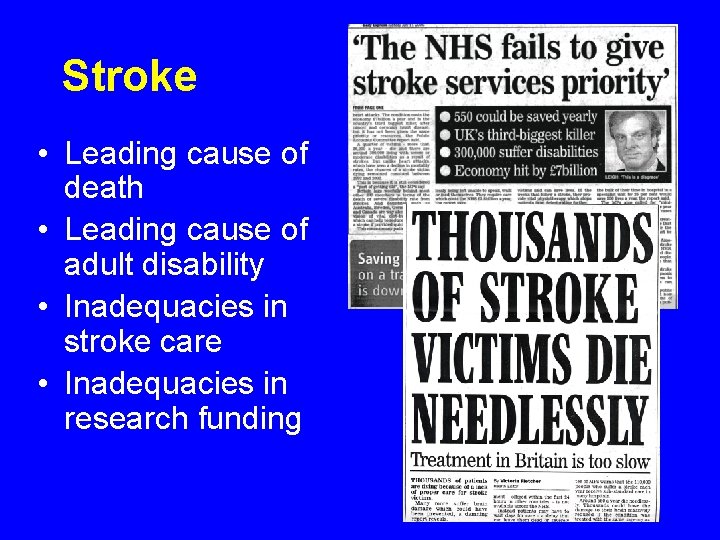
Stroke • Leading cause of death • Leading cause of adult disability • Inadequacies in stroke care • Inadequacies in research funding
User involvement in stroke research • Few examples in stroke research • User involvement in the design of clinical trials to test new treatments (Koops & Lindley 2002 BMJ; Ali et al 2006 Stroke) • User involvement in research to assess general public’s knowledge and awareness of stroke (Morgan et al 2005 Family Practice)
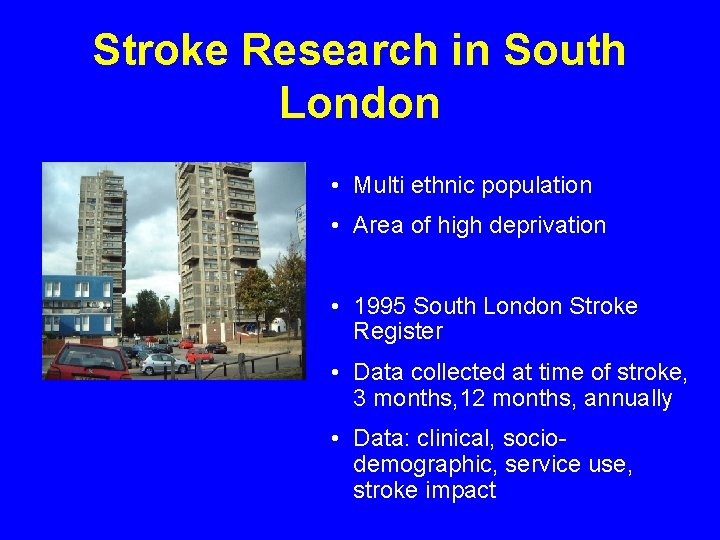
Stroke Research in South London • Multi ethnic population • Area of high deprivation • 1995 South London Stroke Register • Data collected at time of stroke, 3 months, 12 months, annually • Data: clinical, sociodemographic, service use, stroke impact
Stroke research questions • How many strokes? What kinds of strokes? • What happens to people who have stroke over time? • What care do people need? • How good is the care? • Develop and evaluate new ways of providing care
Stroke Research Patients and Family Group • Register participants and relatives • 25 people, 15 attend meetings • Initial aims – tell people on the register about stroke research – listen to their ideas and views about stroke research – find out how we could work together
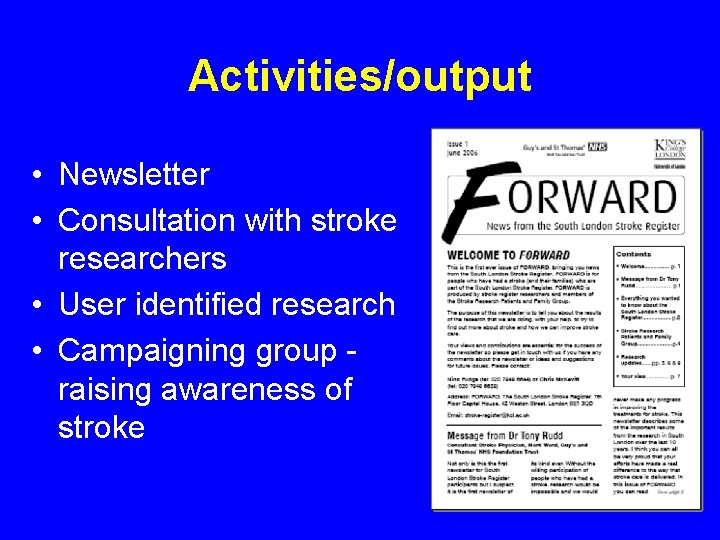
Activities/output • Newsletter • Consultation with stroke researchers • User identified research • Campaigning group raising awareness of stroke
Having a stroke: what does it cost individuals and families?
Background aims of research • Health economics literature focuses on costs to state, national health service. • National Audit Office report: £ 7 billion • What costs are associated with having a stroke? • What sources of assistance do people turn to? • What assistance do they manage to get?
Planning the research • Dilemma: maintain engagement AND wait for funding • Pilot study to explore the research • Methodological issues: How do we collect robust data on costs incurred?
Guided conversations findings • Extra expenses depended on age and stroke severity • What kinds of extra expenses? • • Adaptations to home Furniture Time off work Food and supplements • Complementary therapies • Clothing • Transport
Who takes part? • Not all members of the group actively took part in the research • Research isn’t primary motivation to come to meetings
Researcher fears? • Questioned the ‘quality’ of the research project • Assumed involving users would lead to ‘biased’ research • Concerned about which journals would want to publish the study
Summary • People with stroke can be involved in identifying, planning and undertaking research in collaboration with researchers • Challenges for user involvement in research – Is the research timetable compatible with user involvement? – How do we overcome the reservations of some researchers? – The promotion of user involvement by research bodies and governments needs to take into account the realities of the research environment.
Acknowledgements • Members of the Stroke Research Patients and Family Group • Stanley Thomas Johnson Foundation • UK Department of Health