
Involuntary Movement An involuntary movement occurs when you
- Slides: 10
Involuntary Movement An involuntary movement occurs when you move your body in an uncontrollable and unintended way. These movements can be anything from quick, jerking tics to longer tremors and seizures. You can experience these movements in almost any part of the body, including: neck
Cause of Involuntary Movements �In adults, some of the most common causes of involuntary movements include: drug use of neuroleptic medications prescribed for psychiatric disorders over a long period. . genetic disorders, including Huntington's disease and Wilson's disease.
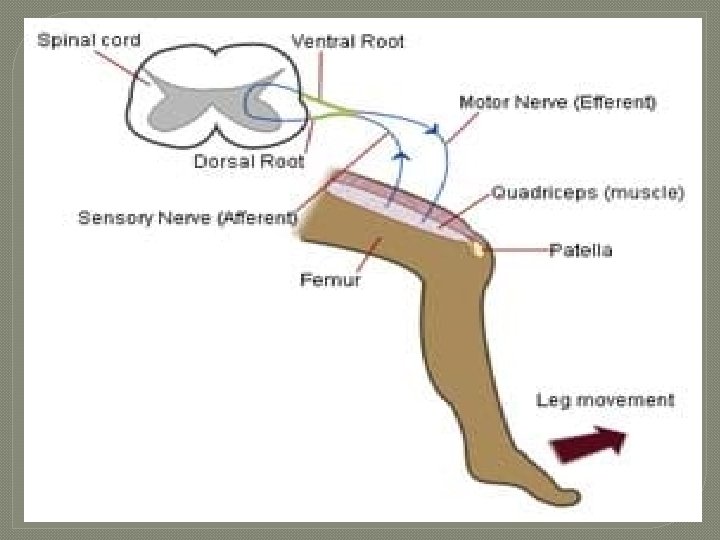
Reflex Movement �A reflex, or reflex action, is an involuntary and nearly instantaneous movement in response to a stimulus. A reflex is made possible by neural pathways called reflex arcs which can act on an impulse before that impulse reaches the brain.
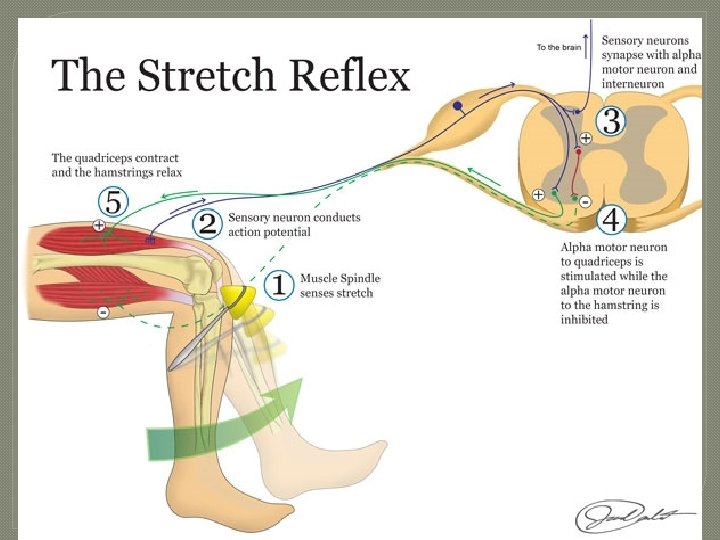
Stretch Reflex �The stretch reflex can be a monosynaptic reflex which provides automatic regulation of skeletal muscle length, whereby the signal entering the spinal cord arises from a change in muscle length or velocity. When a muscle lengthens, the muscle spindle is stretched and its nerve activity increases.
Primary Function of Stretch. Reflex �The first major function of the stretch reflex is muscle protection. When a muscle length increases, the muscle spindle within that muscle stretches, and its nerve activity will increase. Resulting from this is increased alpha motor neuron activity.
Stretch Reflex �Create very mild, pleasant stretch. �Hold perfectly still until sensation of stretch fades or disappears. �Slowly move deeper into pose, just enough to reinstate same mild, pleasant stretch. �Repeat. �
Righting Reflexes �The righting reflex, also known as the labyrinthine righting reflex, is a reflex that corrects the orientation of the body when it is taken out of its normal upright position
Postural Reflexes �Postural reflexes are responsible for the subconscious maintenance of the body's posture when movement and position is altered and they ensure that the body remains upright and aligned. . The postural reflexes are divided into two groups – the righting reflexes and the equilibrium reactions.