
Invitation to Human Communication Chapter Two Communication Perception
- Slides: 12
Invitation to Human Communication Chapter Two: Communication, Perception, and Self
Definition of Perception: the process of acquiring and interpreting information from sensory data Selective attention: the process of consciously or unconsciously selecting sensory data to maintain our focus
Definition of Perception Process of perception Intensity and size Repetition Contrast Personal motivations
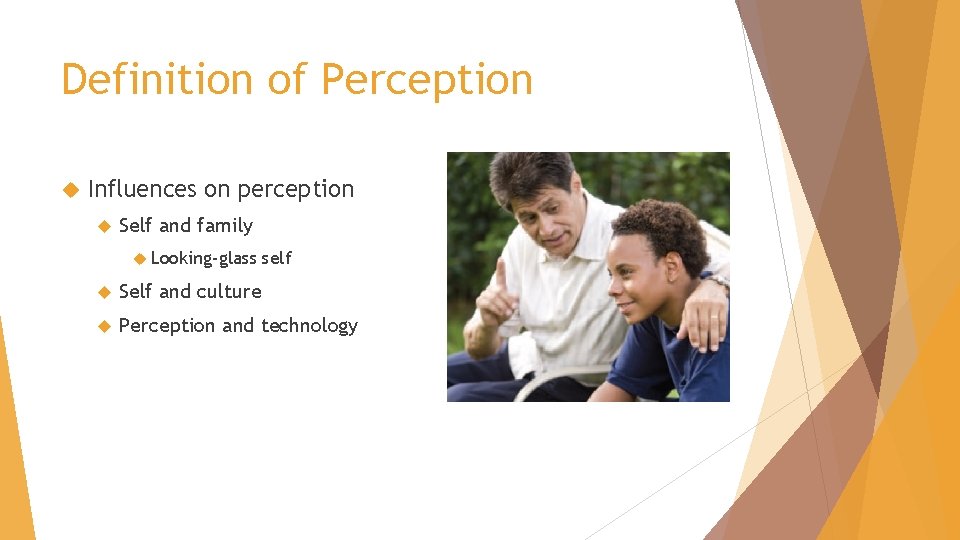
Definition of Perception Influences on perception Self and family Looking-glass self Self and culture Perception and technology
Definition of Perception, identity, and standpoint Identity Primary dimensions Secondary Standpoint dimensions
Perceiving Our Self-concept: the perception of who we are and what makes us unique as well as similar to others Self-concept and family Labels Self-concept and culture Self-concept and communication Symbolic interaction Self-fulfilling prophecy
Perceiving Our Self-esteem: how we feel about ourselves based on perceptions of our own strengths and weaknesses Assessing self-esteem Reflected Social appraisal comparison
Perceiving Our Self-esteem (continued) Enhancing or maintaining self-esteem Get involved Move forward Make friends Exercise Family
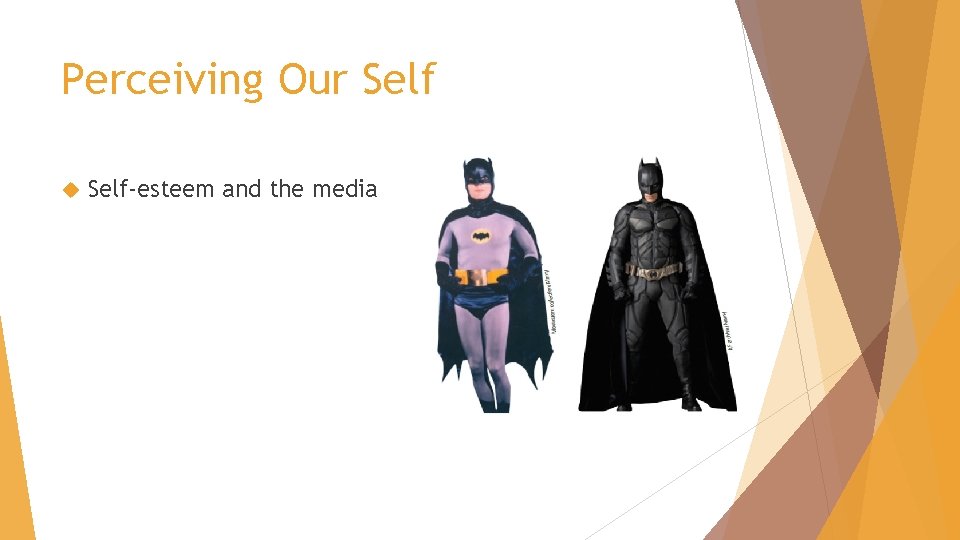
Perceiving Our Self-esteem and the media
Perceiving Others The power of first impressions Perception checking 1. Describe the verbal and nonverbal behavior observed 2. Provide at least two possible interpretations for the behavior 3. Seek clarification of or an explanation for the behavior Understanding stereotypes
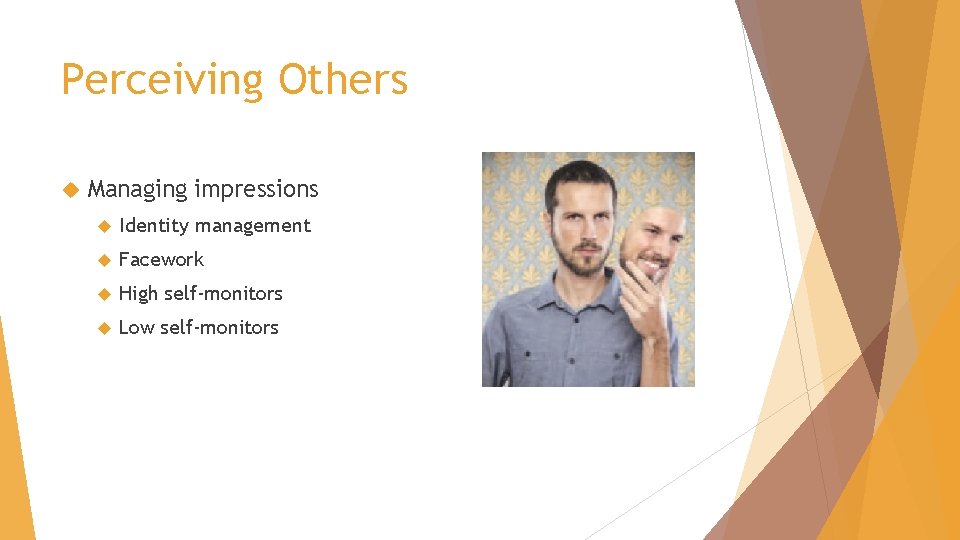
Perceiving Others Managing impressions Identity management Facework High self-monitors Low self-monitors
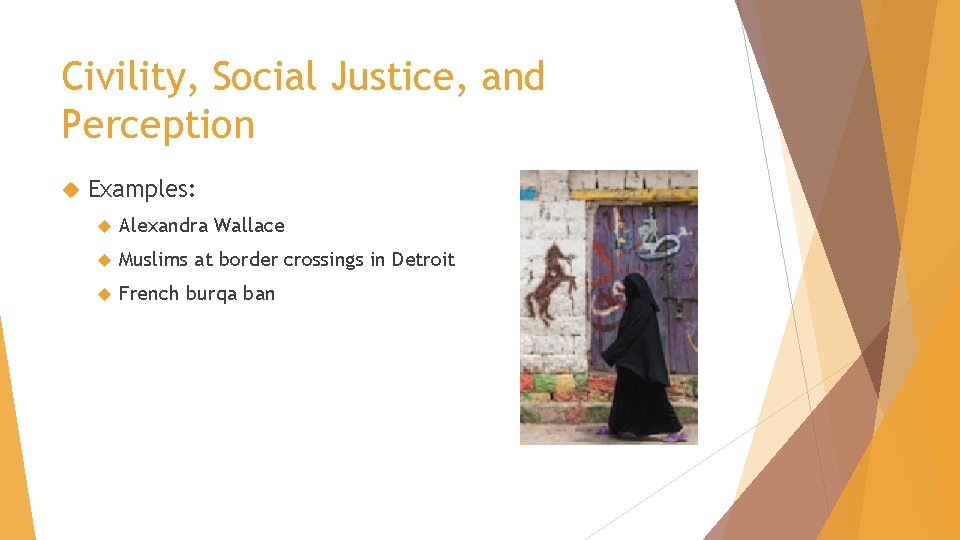
Civility, Social Justice, and Perception Examples: Alexandra Wallace Muslims at border crossings in Detroit French burqa ban