
Investment Basics A Guide to Your Investment Options
Investment Basics A Guide to Your Investment Options Brian Doughney, CFP® Wealth Management Senior Manager
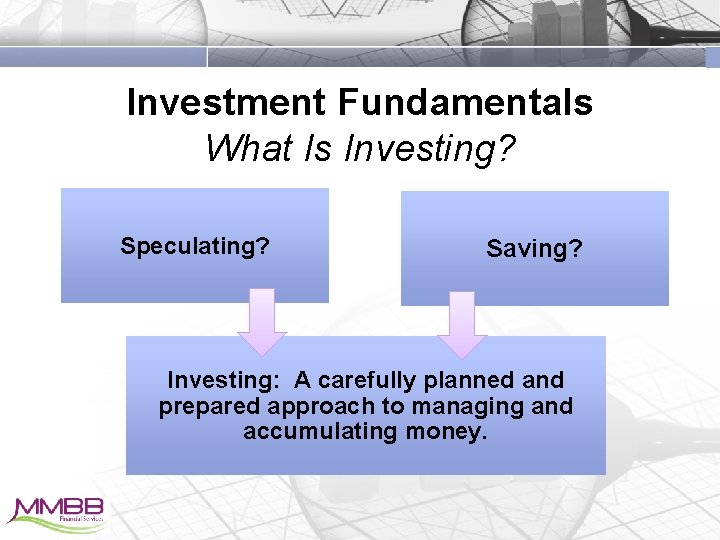
Investment Fundamentals What Is Investing? Speculating? Saving? Investing: A carefully planned and prepared approach to managing and accumulating money.
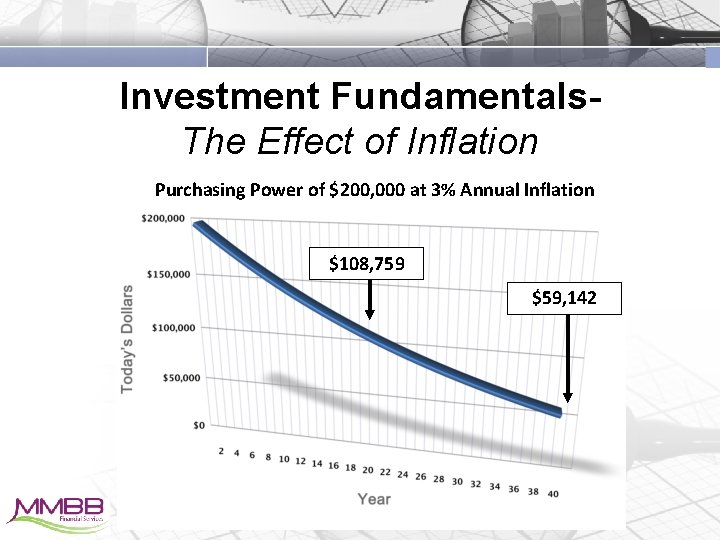
Investment Fundamentals. The Effect of Inflation Purchasing Power of $200, 000 at 3% Annual Inflation $108, 759 $59, 142
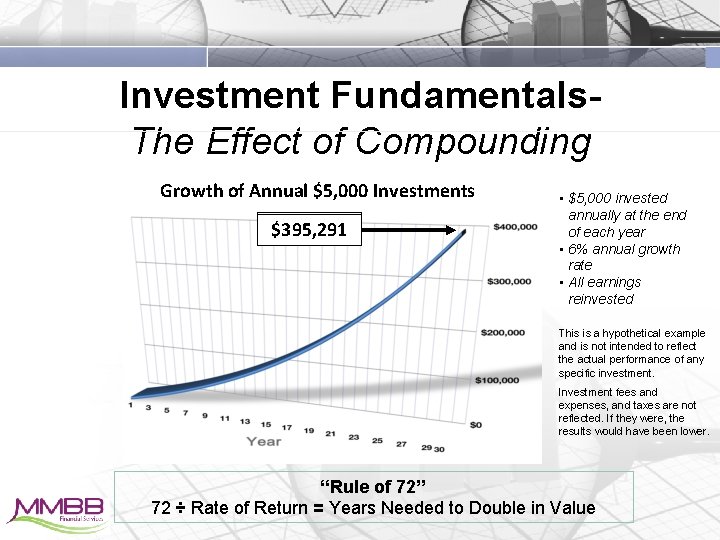
Investment Fundamentals. The Effect of Compounding Growth of Annual $5, 000 Investments $395, 291 • $5, 000 invested annually at the end of each year • 6% annual growth rate • All earnings reinvested This is a hypothetical example and is not intended to reflect the actual performance of any specific investment. Investment fees and expenses, and taxes are not reflected. If they were, the results would have been lower. “Rule of 72” 72 ÷ Rate of Return = Years Needed to Double in Value
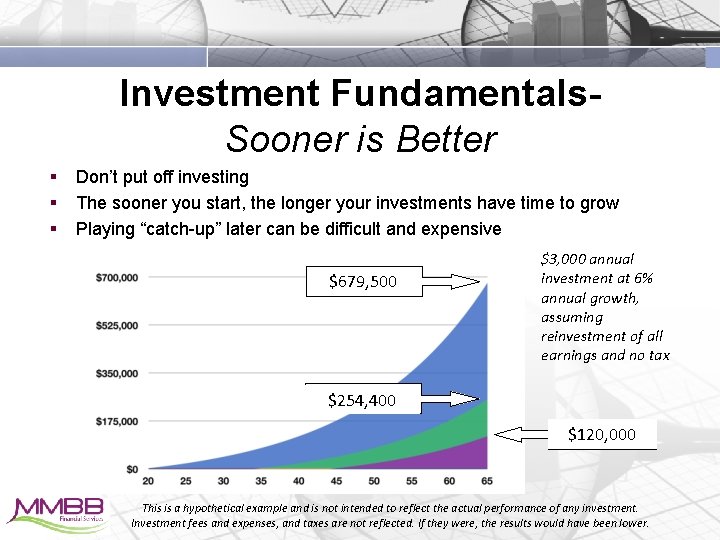
Investment Fundamentals. Sooner is Better § § § Don’t put off investing The sooner you start, the longer your investments have time to grow Playing “catch-up” later can be difficult and expensive $679, 500 $3, 000 annual investment at 6% annual growth, assuming reinvestment of all earnings and no tax $254, 400 $120, 000 This is a hypothetical example and is not intended to reflect the actual performance of any investment. Investment fees and expenses, and taxes are not reflected. If they were, the results would have been lower.
Investment Fundamentals. Identifying Goals and Time Horizons § Investment Goals § Retirement § Education § Special purchase § Financial security § Short-term goals vs. long-term goals § In general, the longer your investment horizon, the more risks you can afford to take
Investment Fundamentals. Risk Tolerance § Ability of investment plan to absorb loss § Personal tolerance for risk § Aggressive § Moderate § Conservative
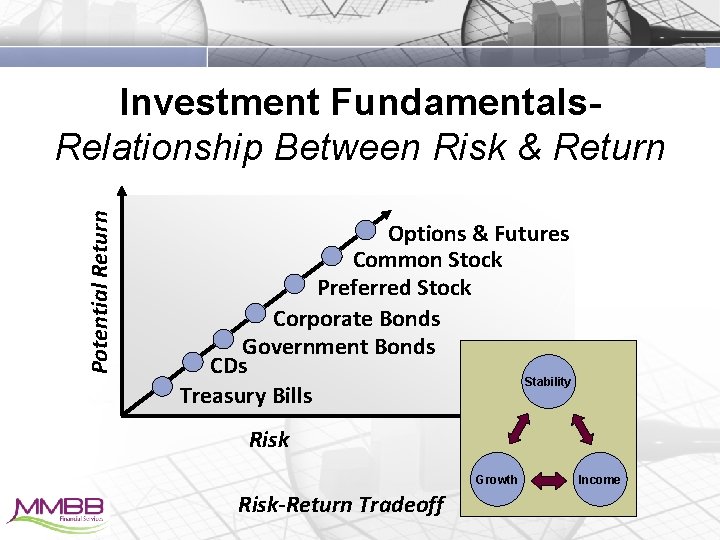
Potential Return Investment Fundamentals. Relationship Between Risk & Return Options & Futures Common Stock Preferred Stock Corporate Bonds Government Bonds CDs Stability Treasury Bills Risk Growth Risk-Return Tradeoff Income
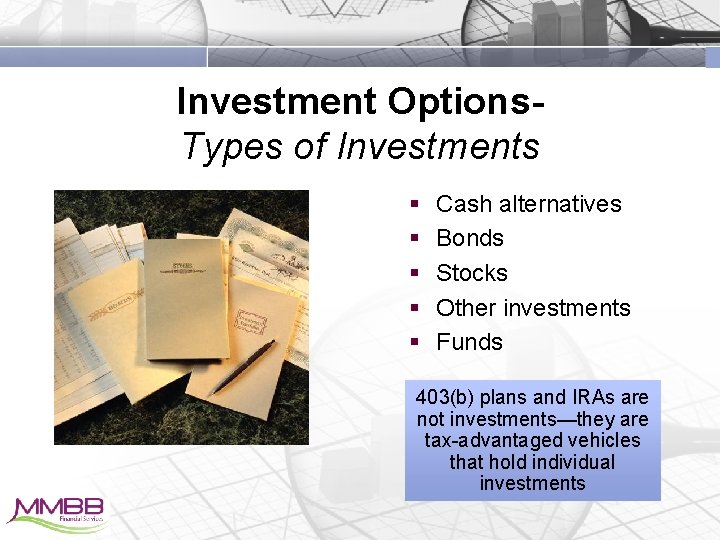
Investment Options. Types of Investments § § § Cash alternatives Bonds Stocks Other investments Funds 403(b) plans and IRAs are not investments—they are tax-advantaged vehicles that hold individual investments
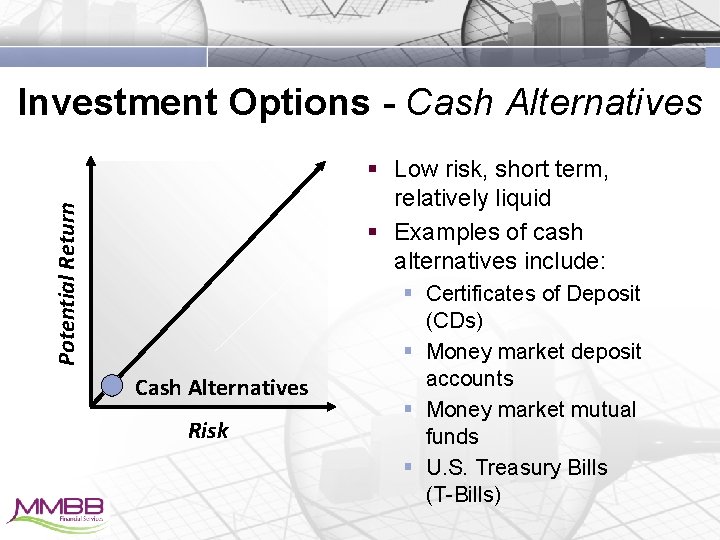
Investment Options - Cash Alternatives Potential Return § Low risk, short term, relatively liquid § Examples of cash alternatives include: Cash Alternatives Risk § Certificates of Deposit (CDs) § Money market deposit accounts § Money market mutual funds § U. S. Treasury Bills (T-Bills)
Investment Options - Cash Alternatives Advantages § Predictable earnings § Highly liquid § Little risk to principal Disadvantages § Relatively low returns § May not keep up with inflation
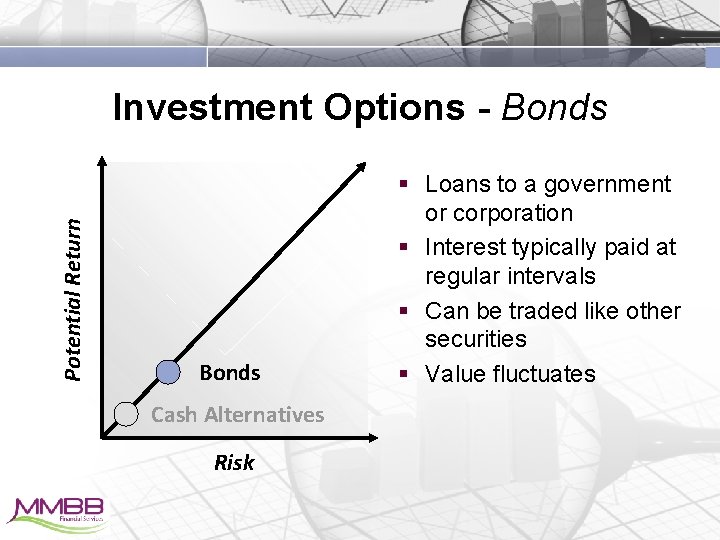
Potential Return Investment Options - Bonds Cash Alternatives Risk § Loans to a government or corporation § Interest typically paid at regular intervals § Can be traded like other securities § Value fluctuates
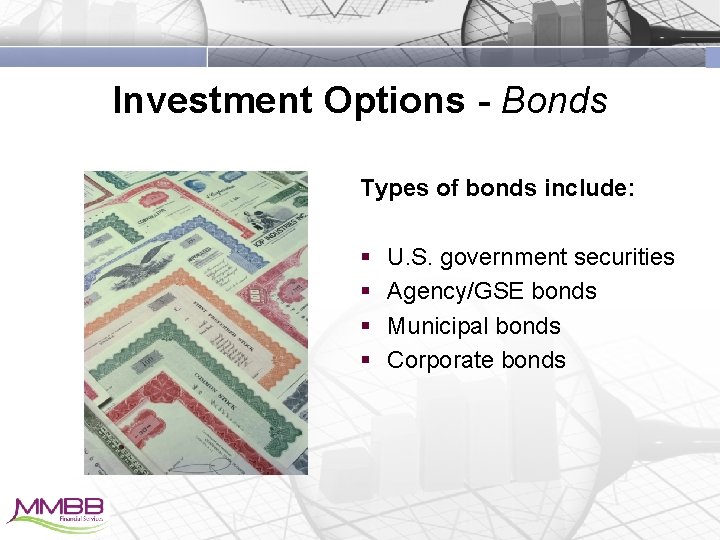
Investment Options - Bonds Types of bonds include: § § U. S. government securities Agency/GSE bonds Municipal bonds Corporate bonds
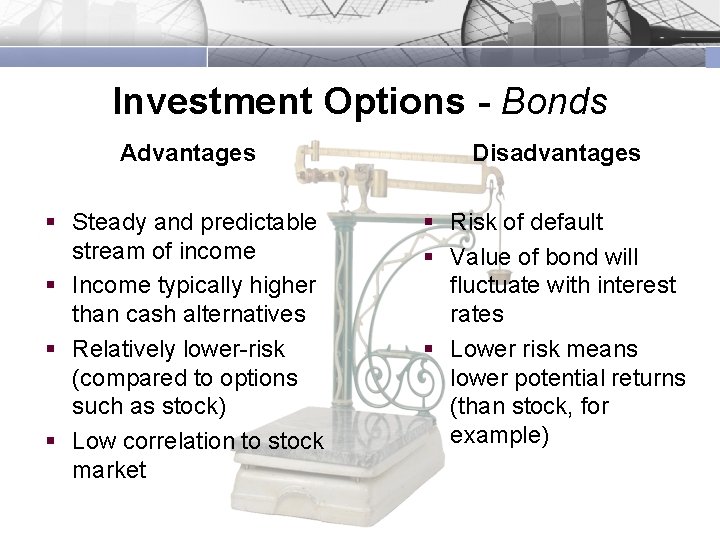
Investment Options - Bonds Advantages Disadvantages § Steady and predictable stream of income § Income typically higher than cash alternatives § Relatively lower-risk (compared to options such as stock) § Low correlation to stock market § Risk of default § Value of bond will fluctuate with interest rates § Lower risk means lower potential returns (than stock, for example)
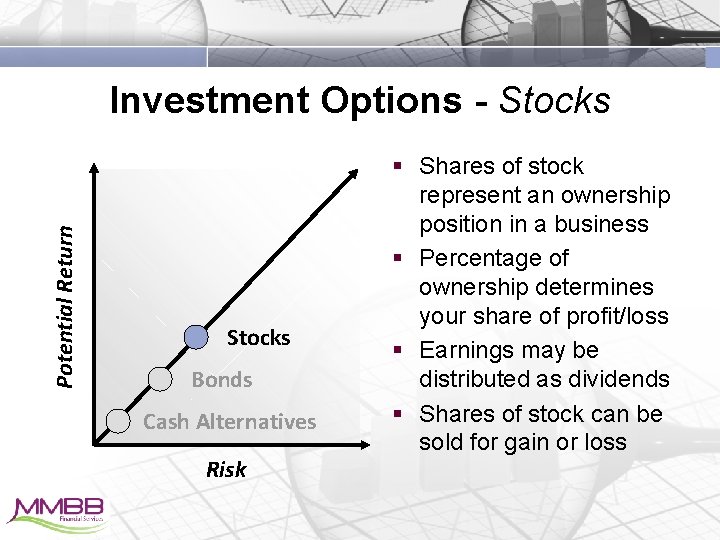
Potential Return Investment Options - Stocks Bonds Cash Alternatives Risk § Shares of stock represent an ownership position in a business § Percentage of ownership determines your share of profit/loss § Earnings may be distributed as dividends § Shares of stock can be sold for gain or loss
Investment Options - Stocks § Common vs. preferred § Categories: § Small-Cap § Mid-Cap § Large-Cap § Stock terminology: § § Growth stock Value stock Income stock Blue chip stock
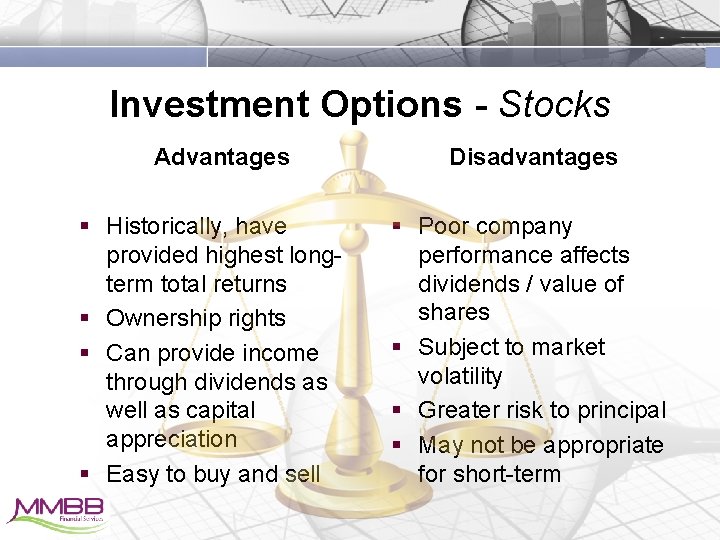
Investment Options - Stocks Advantages § Historically, have provided highest longterm total returns § Ownership rights § Can provide income through dividends as well as capital appreciation § Easy to buy and sell Disadvantages § Poor company performance affects dividends / value of shares § Subject to market volatility § Greater risk to principal § May not be appropriate for short-term
Investment Options - Other Investments § Real estate § Stock options § Futures, and commodities § Collectibles
Investment Options - Mutual Funds § Your money is pooled with that of other investors § Fund invests dollars according to stated investment strategy § You own a portion of the securities held by the fund (instant diversification)
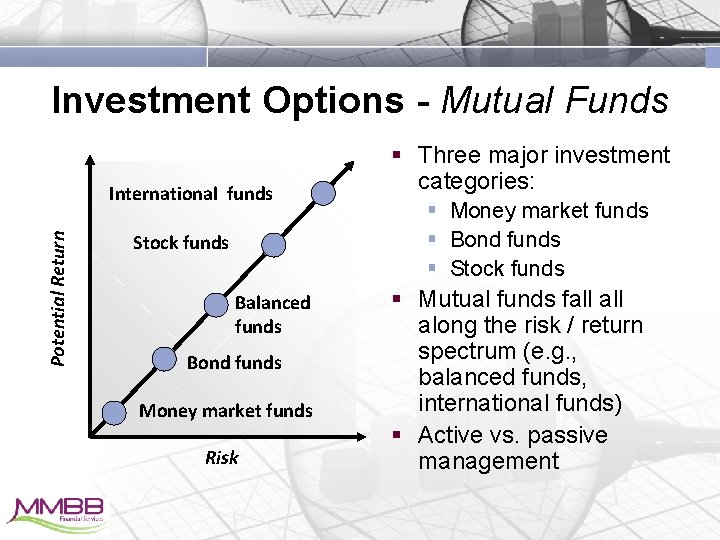
Investment Options - Mutual Funds Potential Return International funds Stock funds Balanced funds Bond funds Money market funds Risk § Three major investment categories: § Money market funds § Bond funds § Stock funds § Mutual funds fall along the risk / return spectrum (e. g. , balanced funds, international funds) § Active vs. passive management
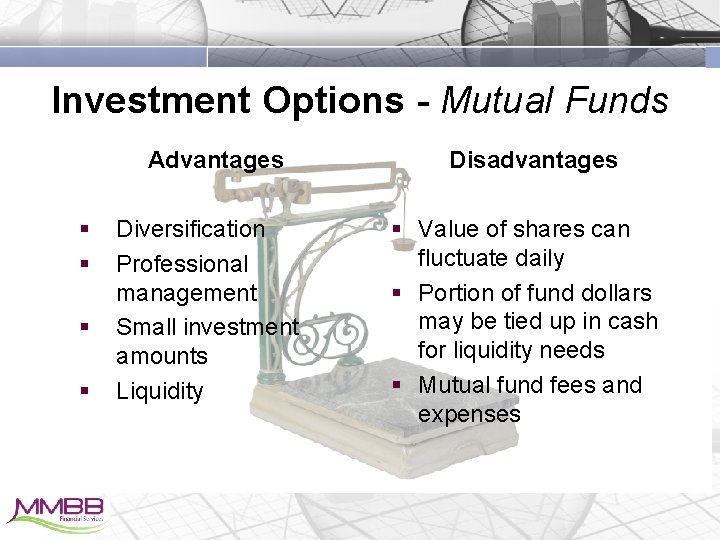
Investment Options - Mutual Funds Advantages § § Diversification Professional management Small investment amounts Liquidity Disadvantages § Value of shares can fluctuate daily § Portion of fund dollars may be tied up in cash for liquidity needs § Mutual fund fees and expenses
Investment Options. Exchange-Traded Funds (ETFs) § Most ETFs are based on an index § Passive management may lower fund costs § Can be traded throughout the day
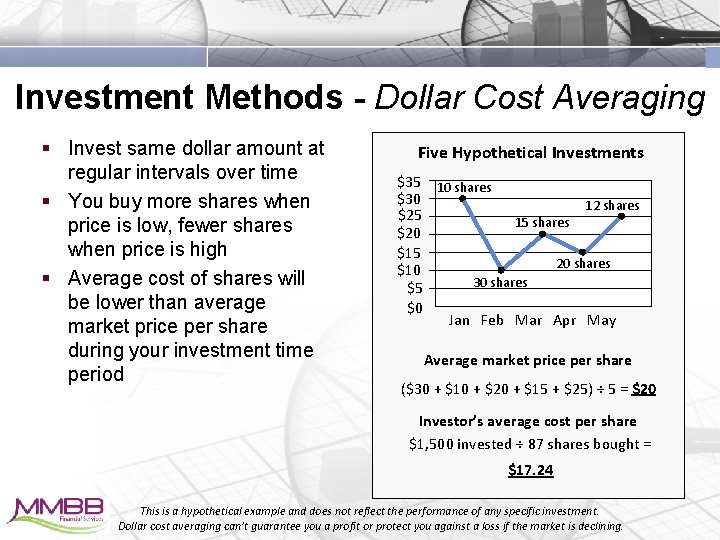
Investment Methods - Dollar Cost Averaging § Invest same dollar amount at regular intervals over time § You buy more shares when price is low, fewer shares when price is high § Average cost of shares will be lower than average market price per share during your investment time period Five Hypothetical Investments $35 10 shares $30 12 shares $25 15 shares $20 $15 20 shares $10 30 shares $5 $0 Jan Feb Mar Apr May Average market price per share ($30 + $10 + $20 + $15 + $25) ÷ 5 = $20 Investor’s average cost per share $1, 500 invested ÷ 87 shares bought = $17. 24 This is a hypothetical example and does not reflect the performance of any specific investment. Dollar cost averaging can’t guarantee you a profit or protect you against a loss if the market is declining.
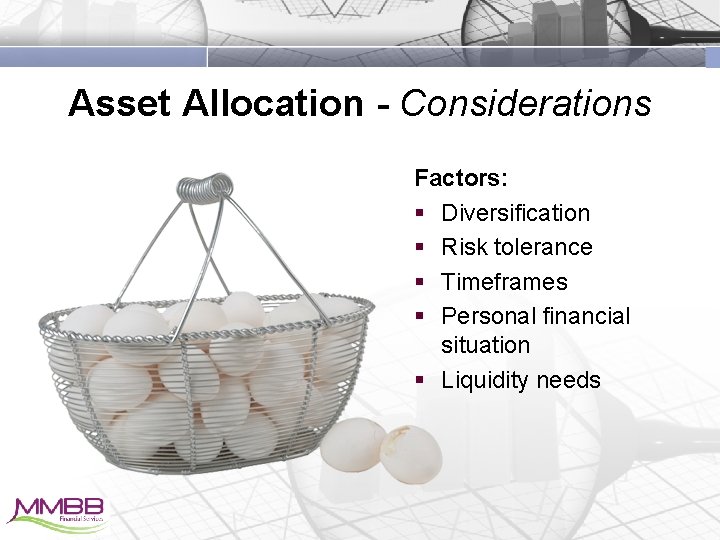
Asset Allocation - Considerations Factors: § Diversification § Risk tolerance § Timeframes § Personal financial situation § Liquidity needs
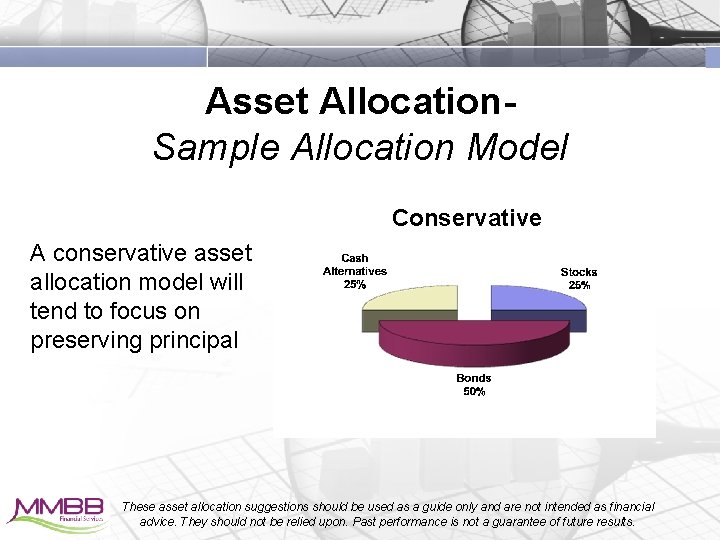
Asset Allocation. Sample Allocation Model Conservative A conservative asset allocation model will tend to focus on preserving principal These asset allocation suggestions should be used as a guide only and are not intended as financial advice. They should not be relied upon. Past performance is not a guarantee of future results.
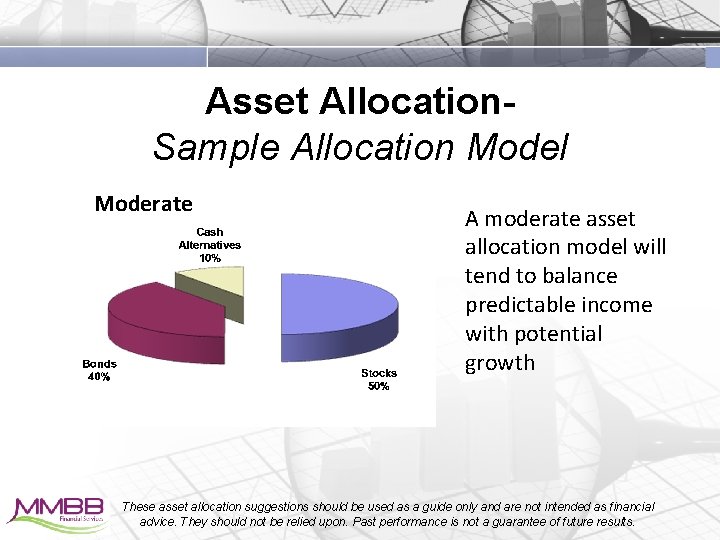
Asset Allocation. Sample Allocation Model Moderate A moderate asset allocation model will tend to balance predictable income with potential growth These asset allocation suggestions should be used as a guide only and are not intended as financial advice. They should not be relied upon. Past performance is not a guarantee of future results.
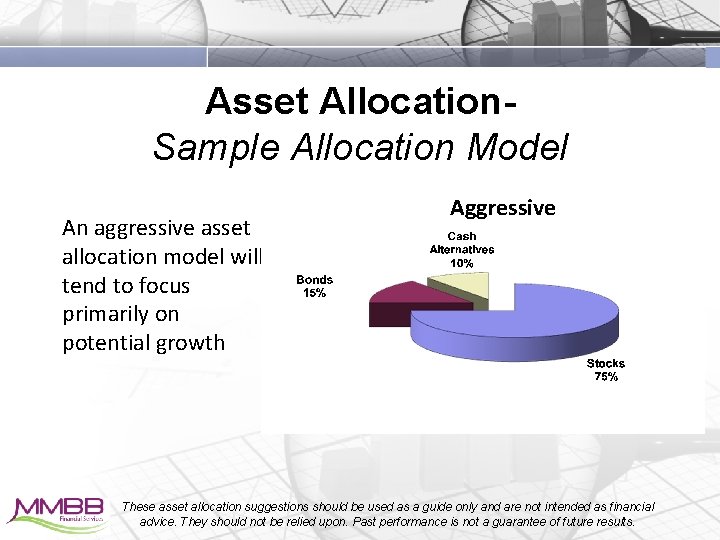
Asset Allocation. Sample Allocation Model An aggressive asset allocation model will tend to focus primarily on potential growth Aggressive These asset allocation suggestions should be used as a guide only and are not intended as financial advice. They should not be relied upon. Past performance is not a guarantee of future results.
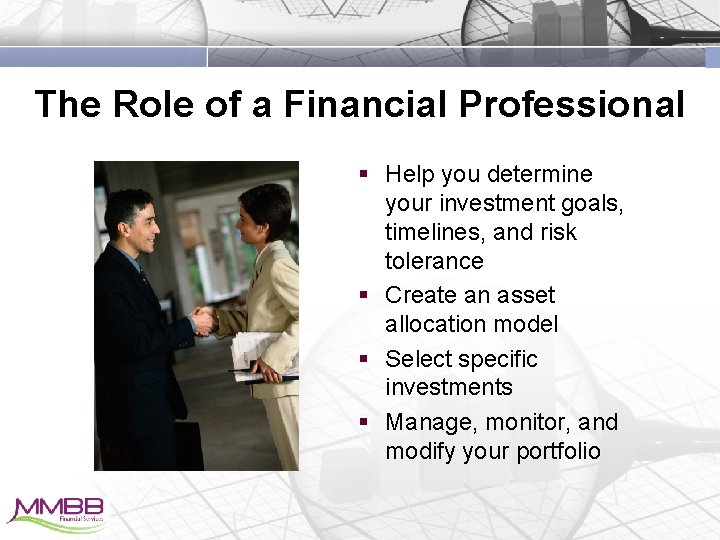
The Role of a Financial Professional § Help you determine your investment goals, timelines, and risk tolerance § Create an asset allocation model § Select specific investments § Manage, monitor, and modify your portfolio
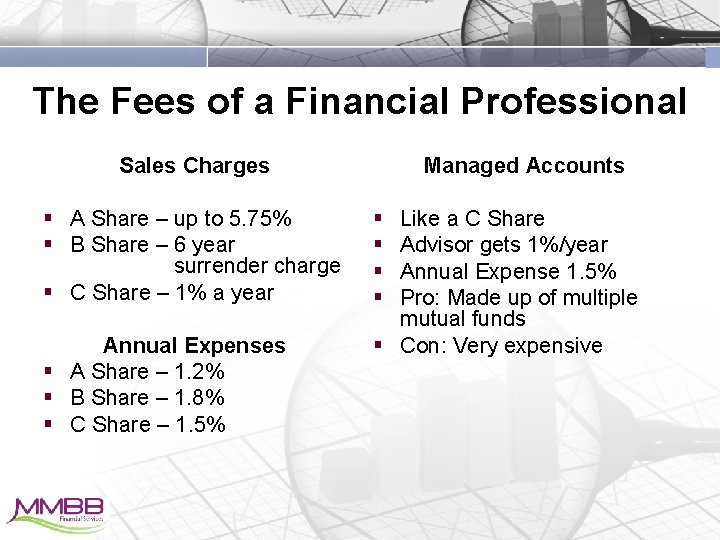
The Fees of a Financial Professional Sales Charges § A Share – up to 5. 75% § B Share – 6 year surrender charge § C Share – 1% a year Annual Expenses § A Share – 1. 2% § B Share – 1. 8% § C Share – 1. 5% Managed Accounts § § Like a C Share Advisor gets 1%/year Annual Expense 1. 5% Pro: Made up of multiple mutual funds § Con: Very expensive
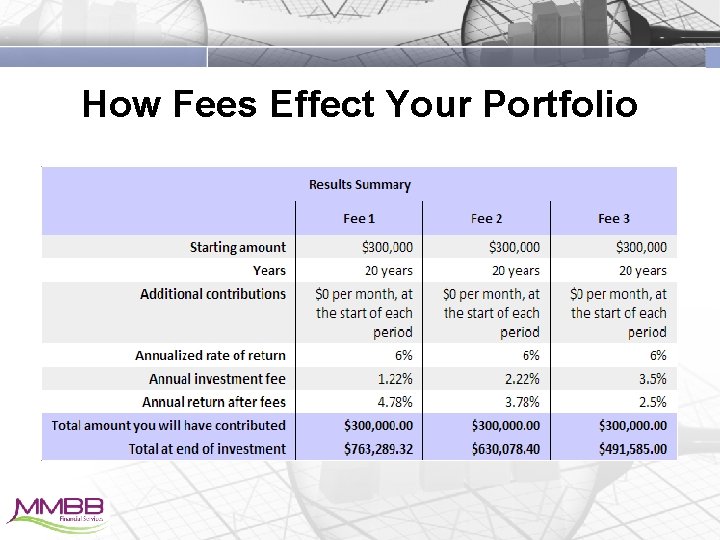
How Fees Effect Your Portfolio
Questions or Comments
- Slides: 31