
Investigator THE CRIME SCENE SKETCH PACKET INTRODUCTION The

- Slides: 18
Investigator: THE CRIME SCENE SKETCH PACKET
INTRODUCTION The crime scene sketch: � Accurately portrays the physical facts � Relates the sequence of events at the scene � Establishes the precise location and relationship of objects and evidence at the scene � Creates a mental picture of the scene for those not present � Is a permanent record of the scene
OVERVIEW A crime scene sketch assists in: 1) Interviewing and interrogating persons 2) Preparing an investigative report 3) Presenting the case in court � The sketch supplements photographs, notes, plaster casts and other investigative techniques. � Two types of sketches � Rough sketch � Finished or scale sketch
THE ROUGH SKETCH The rough sketch is the first pencil-drawn outline of the scene and the location of objects and evidence within this outline. � Usually not drawn to scale � � Although distances are measured and indicated in the sketch Sketch after photographs are taken and before anything is moved. � Sketch as much as possible. � Sketch as fast as possible: � so evidence can be collected and processed as soon as possible � To prevent evidence from being contaminated/ruined �
SKETCHING MATERIALS � Paper � Pencil � Measuring � Ruler � Clipboard � Eraser � Compass tape
STEPS IN SKETCHING THE CRIME SCENE � Observe and plan � Measure distances � Outline the area � Locate objects and evidence within the outline � Record details � Make notes � Identify the sketch with a legend a scale
MEASURE AND OUTLINE AREA �A steel tape is best �It doesn’t stretch �Use conventional units of measurement �Inches �Feet �Centimeters �Meters
MEASURE AND OUTLINE AREA � North should be at the top of the paper. � Determine Scale � Take the longest measurement at the scene and divide it by the longest measurement of the paper used for sketching. � small rooms: ½”= 1’ � large rooms: ¼”= 1’ � very large rooms: 1/8”= 1’ � large building: ½”= 10’ � 1/8”= 10’large land area
MEASURE AND OUTLINE AREA Measure from fixed locations � Walls � Trees � Telephone poles � Corners � Curbs � Outlets � Any Immovable Object
PLOT OBJECTS AND EVIDENCE �Plotting methods are used to locate objects and evidence on the sketch. �They include the use of: �Rectangular �A coordinates baseline �Triangulation �Compass points
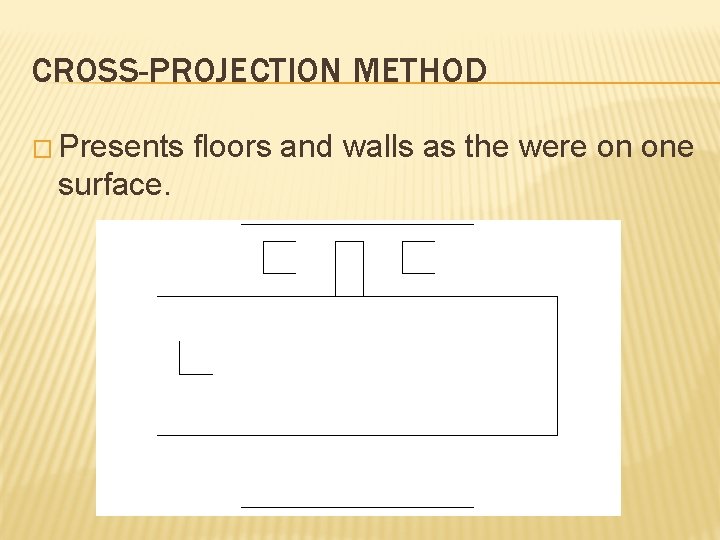
CROSS-PROJECTION METHOD � Presents surface. floors and walls as the were on one
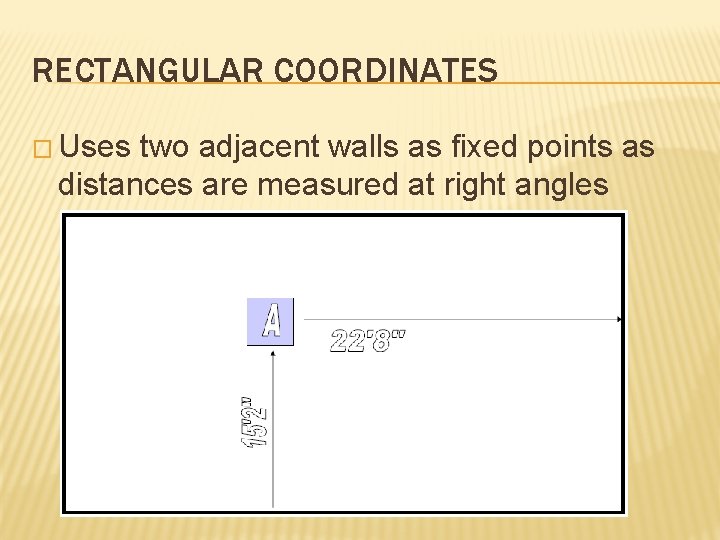
RECTANGULAR COORDINATES � Uses two adjacent walls as fixed points as distances are measured at right angles
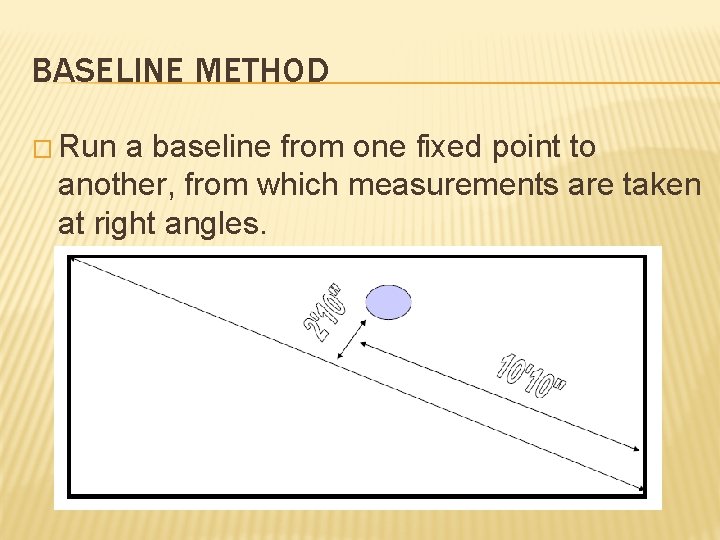
BASELINE METHOD � Run a baseline from one fixed point to another, from which measurements are taken at right angles.
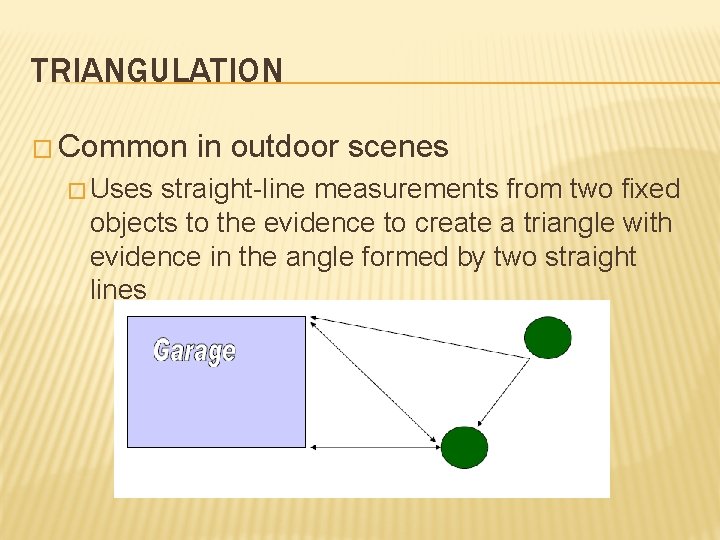
TRIANGULATION � Common � Uses in outdoor scenes straight-line measurements from two fixed objects to the evidence to create a triangle with evidence in the angle formed by two straight lines
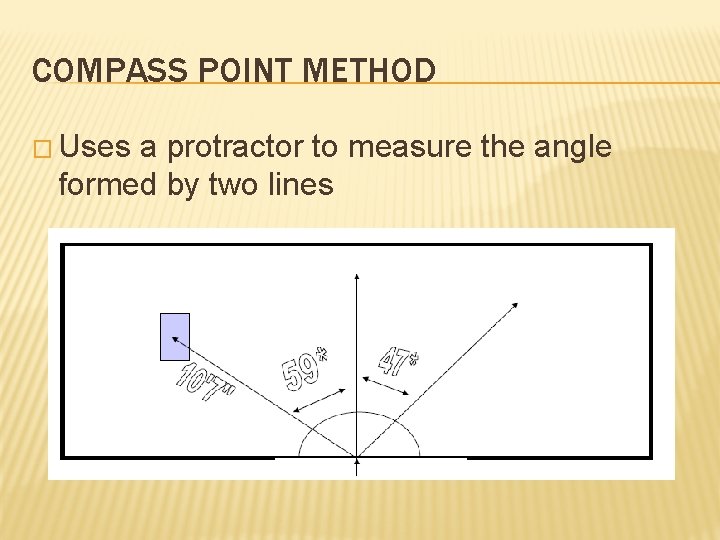
COMPASS POINT METHOD � Uses a protractor to measure the angle formed by two lines
MAKE A LEGEND A KEY � Make a Legend � Contains: � Case number � Type of crime � Investigator � Persons assisting � Direction of North � Identifying information in sketch -Key � Scale
� https: //www. youtube. com/watch? v=qt. Leko 20 xec