
Investigative Process 1 Investigation and trial process What


- Slides: 14
Investigative Process 1 • Investigation and trial process • What is a legal arrest? • What are the rights of the police and the accused? • The fine line between protection and freedom.
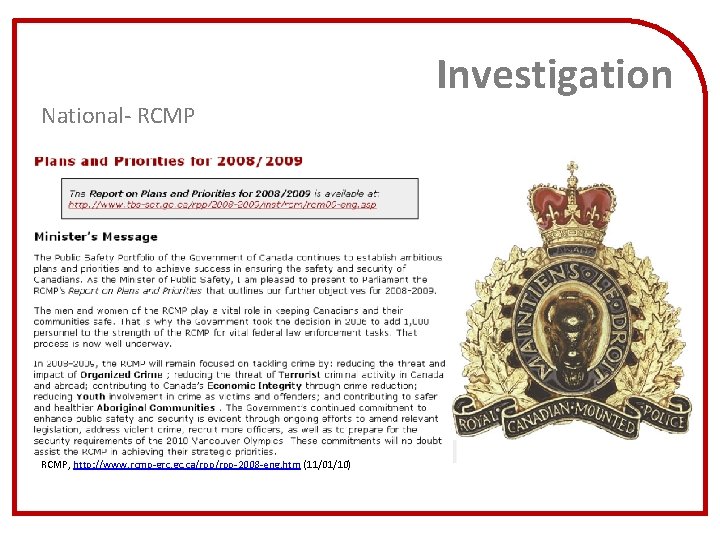
Investigation National- RCMP, http: //www. rcmp-grc. gc. ca/rpp-2008 -eng. htm (11/01/10)
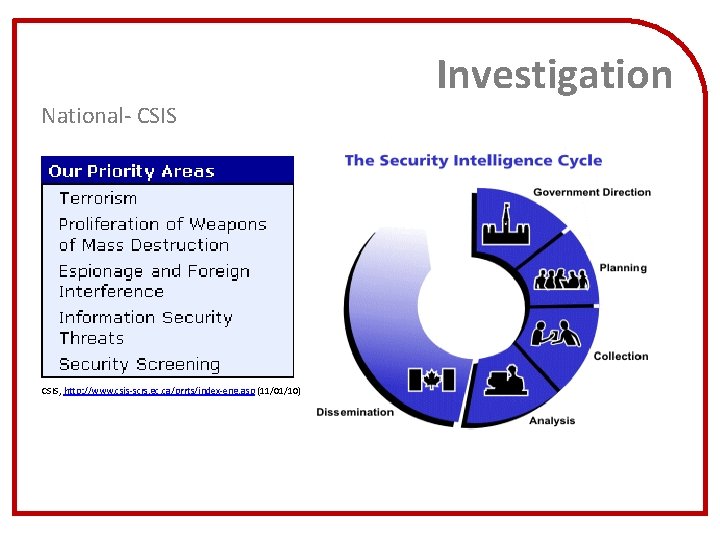
Investigation National- CSIS, http: //www. csis-scrs. gc. ca/prrts/index-eng. asp (11/01/10)
Investigation Provincial- OPP & Sûreté du Québec
Investigation Local- VPD, WPS, HRP
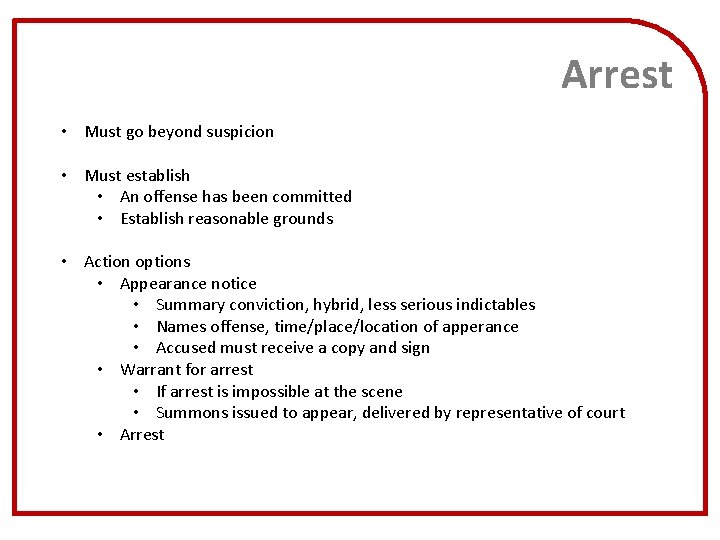
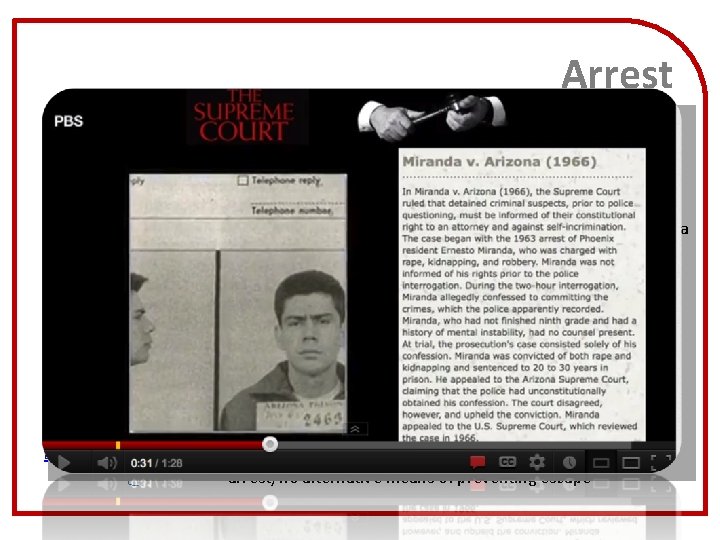
Arrest • Must go beyond suspicion • Must establish • An offense has been committed • Establish reasonable grounds • Action options • Appearance notice • Summary conviction, hybrid, less serious indictables • Names offense, time/place/location of apperance • Accused must receive a copy and sign • Warrant for arrest • If arrest is impossible at the scene • Summons issued to appear, delivered by representative of court • Arrest
Arrest Miranda Rights in Canada? • Action options • Arrest "You are under arrest for _____ (charge), do you understand? You have the right • Purpose: lay charges, preserve evidence, preventative to retain and instruct counsel without delay. We will provide you with a toll-free • Can be done without warrant if sufficient evidence exists that an telephone lawyer referral service, if you do not have your own lawyer. Anything you offense has, is or will occur. say can be used in court as evidence. Do you understand? Would you like to speak to a • Musts: lawyer? " (See: R. v. Hebert [1990] 2 S. C. R. 151) • Identification by police officers • Advise of arrest “While Section 7 of the Charter guarantees the right to remain silent, Canadian law • Inform of charges (section 10 (a) of Canadian Charter of Rights does not entitle the criminal suspect to have counsel present during the course of an and Freedoms) interrogation. Once a suspect has asserted their right to counsel, the police are • Inform of rights (section 10 (b) of Canadian Charter of Rights and obliged to hold off in attempting to obtain evidence until the suspect has had a Freedoms) reasonable opportunity to contact legal counsel, however suspects do not have the • If resistance occurs: right to have counsel present during the questioning. Also, in Canada even if the Criminal • Mays suspect emphatically asserts his decision to remain silent, the police may continue to Liability • Use as much force as is necessary to prevent escape interrogate him. “ Exists • Use deadly force if: harm/death to others, flees to escape arrest, no alternative means of preventing escape
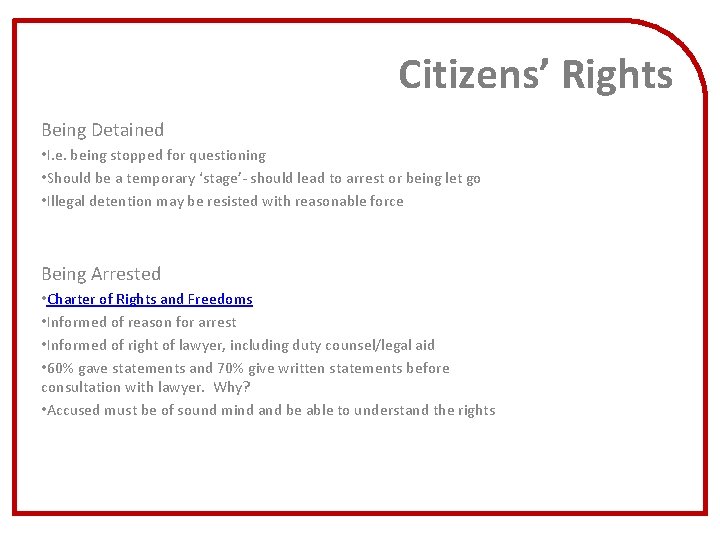
Citizens’ Rights Being Detained • I. e. being stopped for questioning • Should be a temporary ‘stage’- should lead to arrest or being let go • Illegal detention may be resisted with reasonable force Being Arrested • Charter of Rights and Freedoms • Informed of reason for arrest • Informed of right of lawyer, including duty counsel/legal aid • 60% gave statements and 70% give written statements before consultation with lawyer. Why? • Accused must be of sound mind and be able to understand the rights
Citizens’ Rights
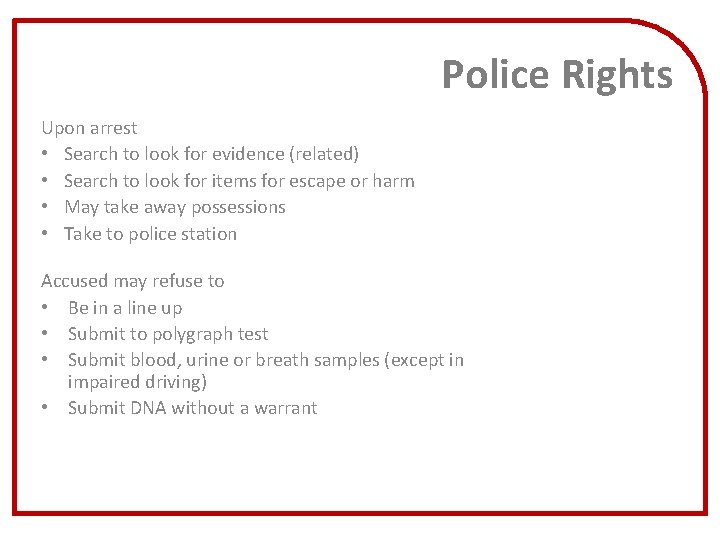
Police Rights Upon arrest • Search to look for evidence (related) • Search to look for items for escape or harm • May take away possessions • Take to police station Accused may refuse to • Be in a line up • Submit to polygraph test • Submit blood, urine or breath samples (except in impaired driving) • Submit DNA without a warrant
Search Laws and Procedures Search Warrants • Required legal documents that must be obtained before search of any property belonging to the accused. • Obtaining • • Police must swear to judge/JOP that offense committed and reasonable grounds of evidence on the property Counterbalance: Section 8 of Charter Telewarrants Using • Date indicated between 6 am and 9 pm • Only in areas indicated • Seized items may be kept for 3 months, unless needed as evidence in imminent trial
Search Laws and Procedures • Entry • Use of Force • Searching of Persons • Electronic Surveillance • Limits: bodily integrity and property • Exceptions: Controlled Drugs and Substances Act, provincial liquor laws, antiterrorism, non-private residences • Cases page 198, 199
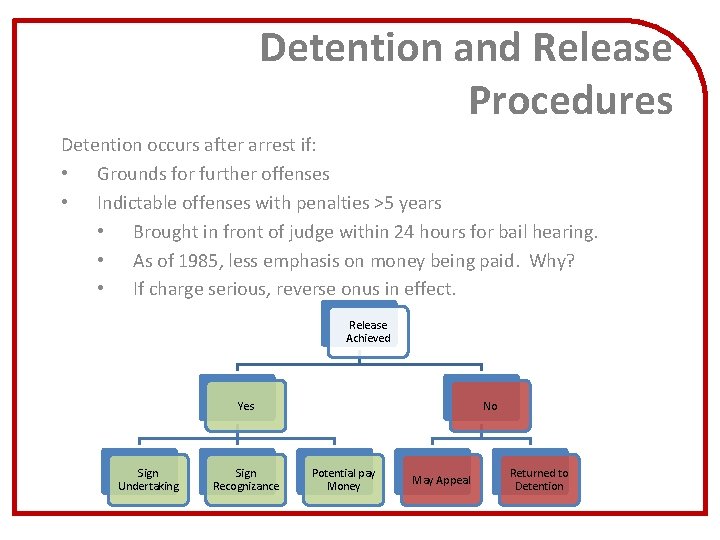
Detention and Release Procedures Detention occurs after arrest if: • Grounds for further offenses • Indictable offenses with penalties >5 years • Brought in front of judge within 24 hours for bail hearing. • As of 1985, less emphasis on money being paid. Why? • If charge serious, reverse onus in effect. Release Achieved Yes Sign Undertaking Sign Recognizance No Potential pay Money May Appeal Returned to Detention
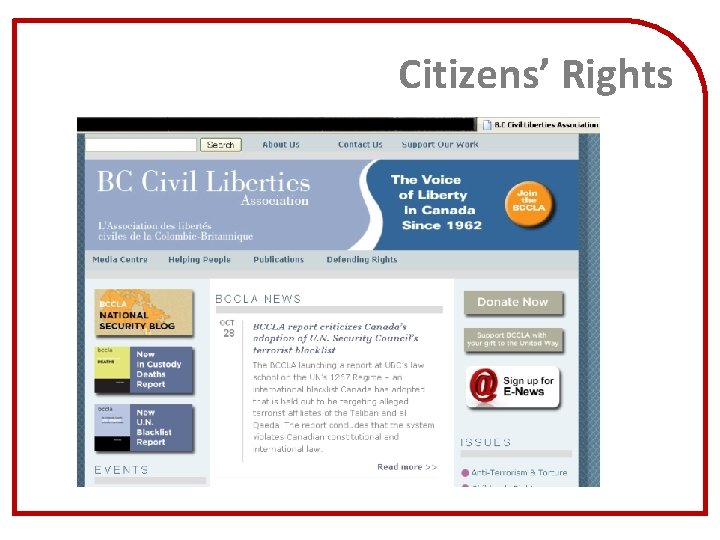
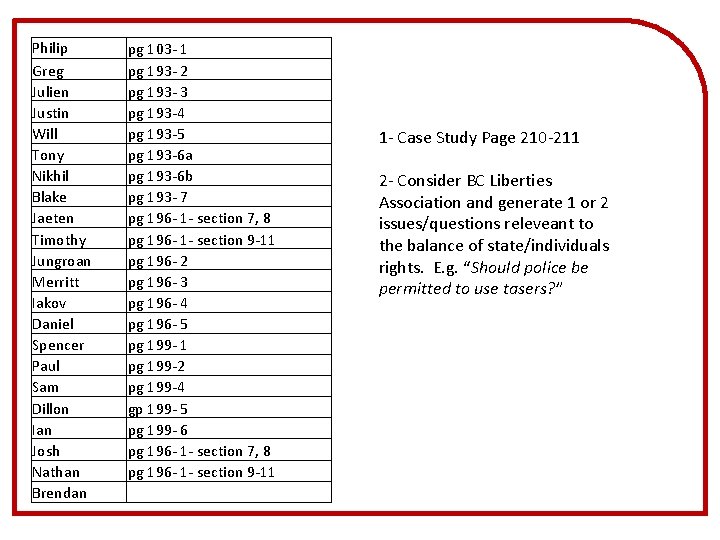
Philip Greg Julien Justin Will Tony Nikhil Blake Jaeten Timothy Jungroan Merritt Iakov Daniel Spencer Paul Sam Dillon Ian Josh Nathan Brendan pg 103 - 1 pg 193 - 2 pg 193 - 3 pg 193 -4 pg 193 -5 pg 193 -6 a pg 193 -6 b pg 193 - 7 pg 196 - 1 - section 7, 8 pg 196 - 1 - section 9 -11 pg 196 - 2 pg 196 - 3 pg 196 - 4 pg 196 - 5 pg 199 - 1 pg 199 -2 pg 199 -4 gp 199 - 5 pg 199 - 6 pg 196 - 1 - section 7, 8 pg 196 - 1 - section 9 -11 1 - Case Study Page 210 -211 2 - Consider BC Liberties Association and generate 1 or 2 issues/questions releveant to the balance of state/individuals rights. E. g. “Should police be permitted to use tasers? ”