
Investigative analytics and derived data The example of
- Slides: 20
Investigative analytics and derived data The example of customer acquisition & retention Curt A. Monash, Ph. D. President, Monash Research Editor, DBMS 2 http: //www. monash. com http: //www. DBMS 2. com
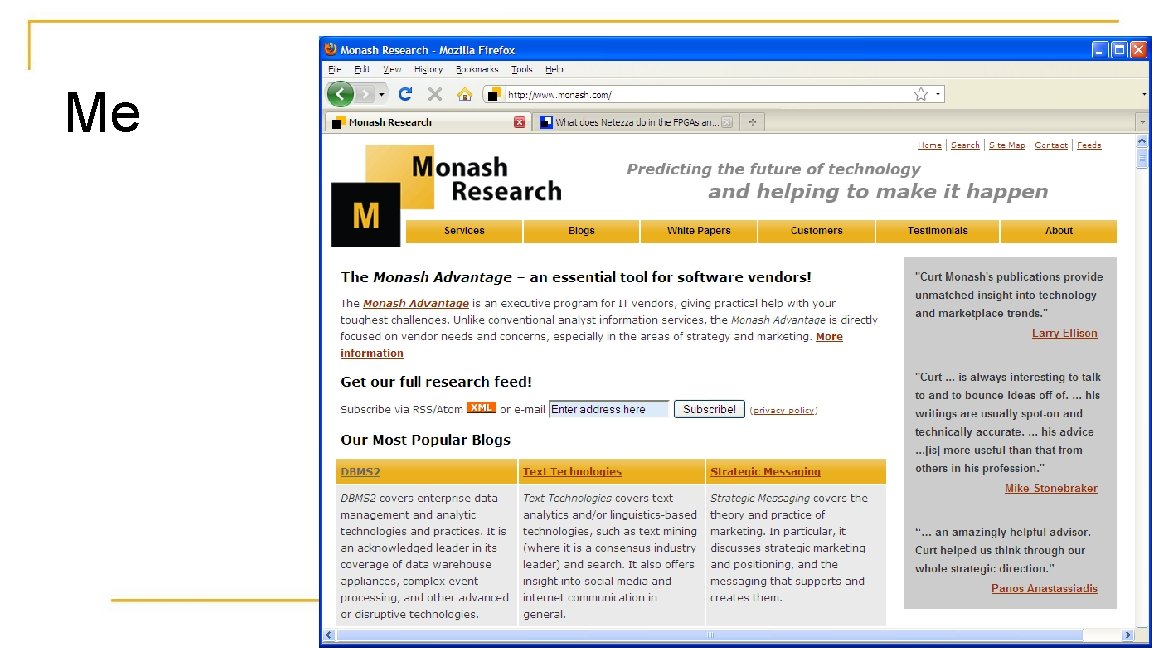
Me
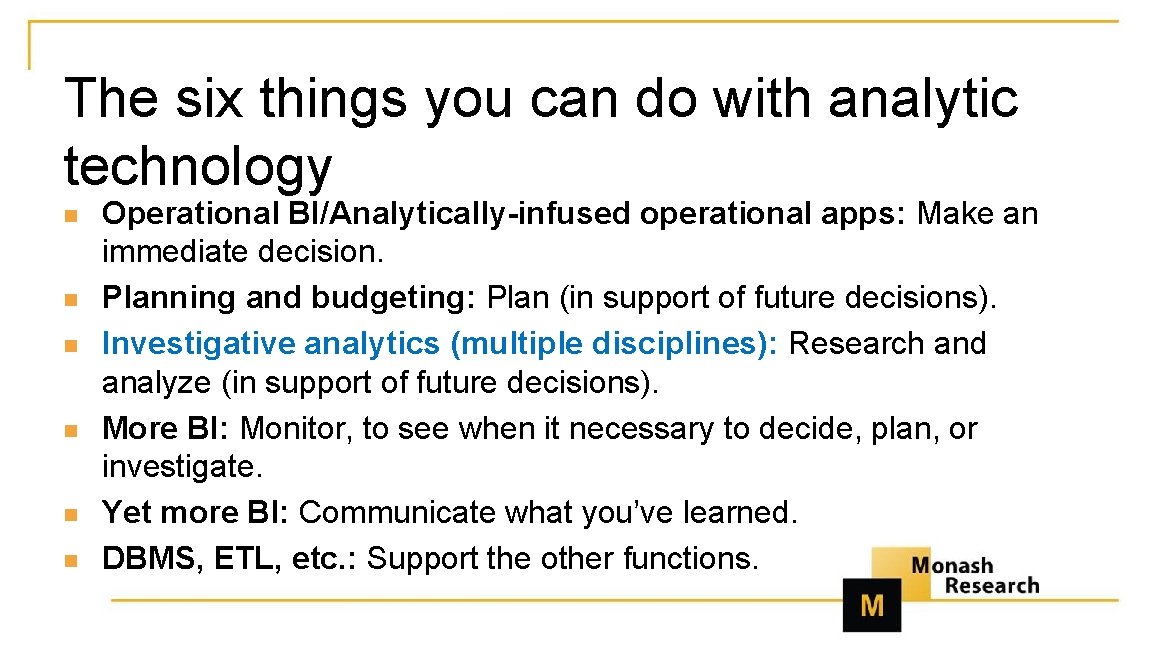
The six things you can do with analytic technology n n n Operational BI/Analytically-infused operational apps: Make an immediate decision. Planning and budgeting: Plan (in support of future decisions). Investigative analytics (multiple disciplines): Research and analyze (in support of future decisions). More BI: Monitor, to see when it necessary to decide, plan, or investigate. Yet more BI: Communicate what you’ve learned. DBMS, ETL, etc. : Support the other functions.
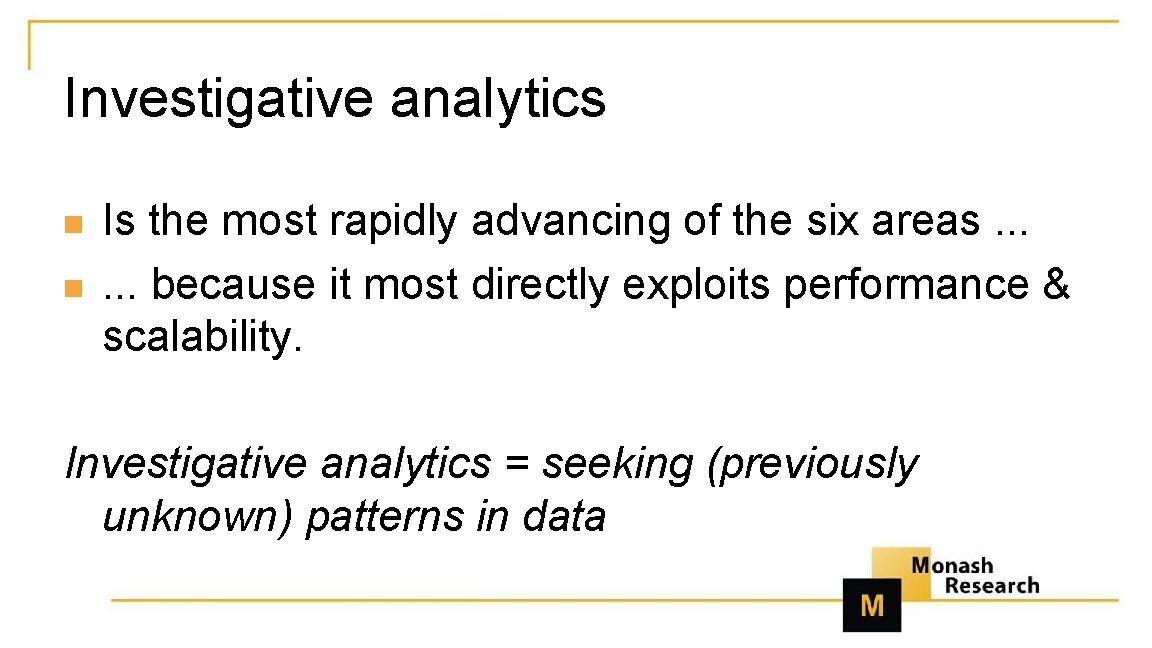
Investigative analytics n n Is the most rapidly advancing of the six areas. . . because it most directly exploits performance & scalability. Investigative analytics = seeking (previously unknown) patterns in data
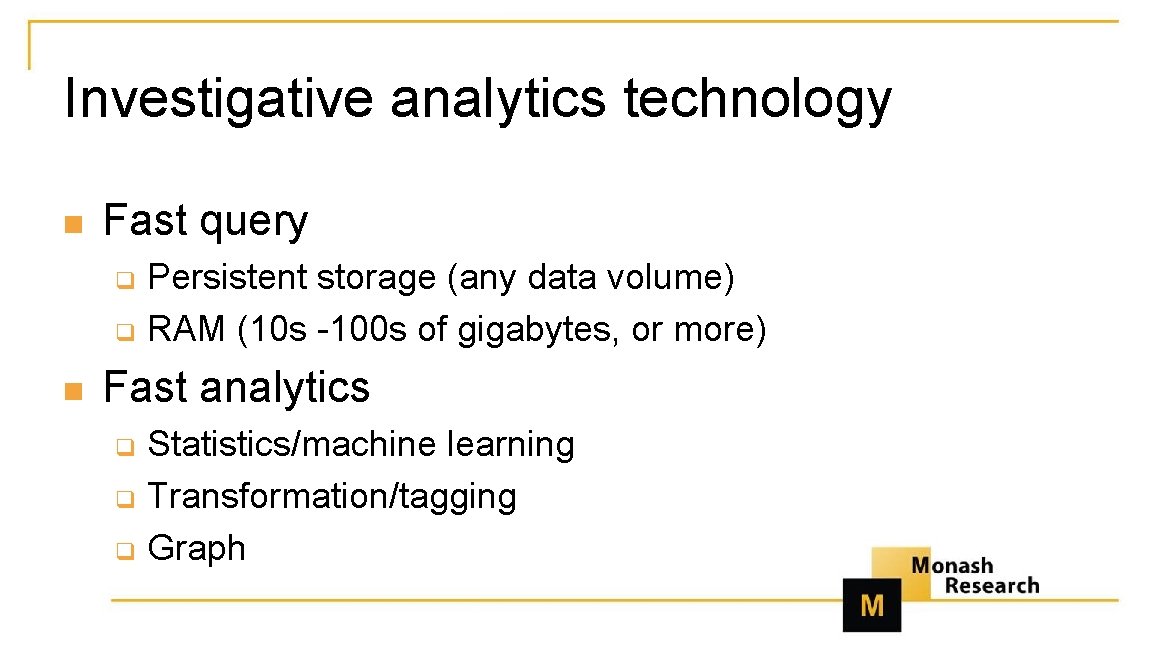
Investigative analytics technology n Fast query q q n Persistent storage (any data volume) RAM (10 s -100 s of gigabytes, or more) Fast analytics q q q Statistics/machine learning Transformation/tagging Graph
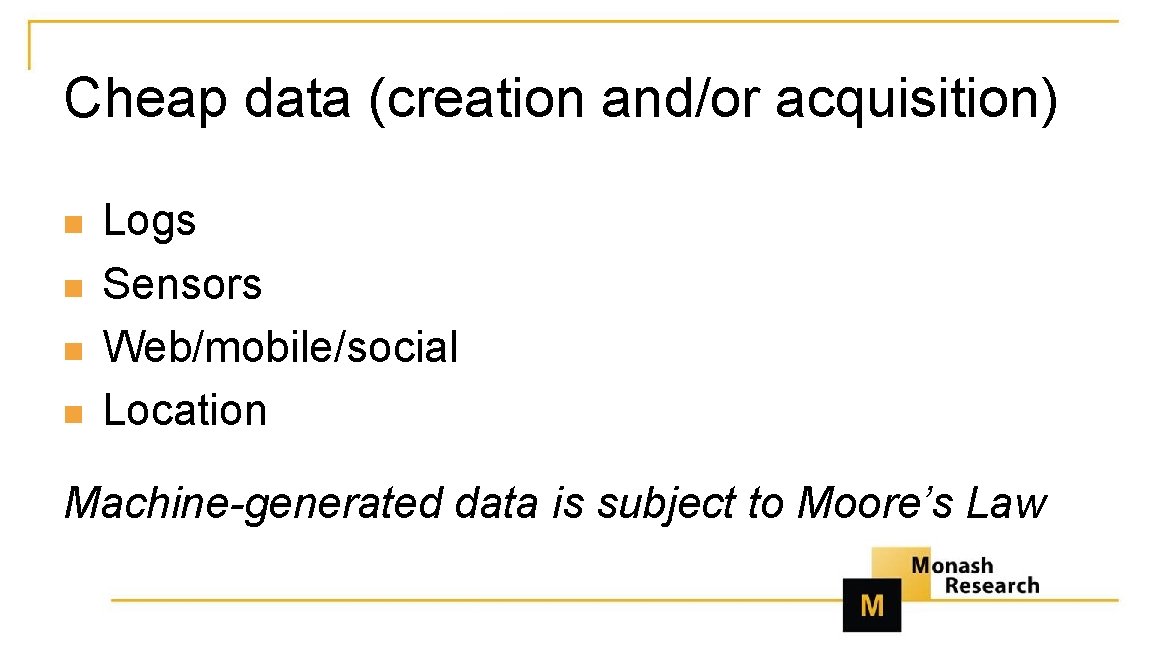
Cheap data (creation and/or acquisition) n n Logs Sensors Web/mobile/social Location Machine-generated data is subject to Moore’s Law
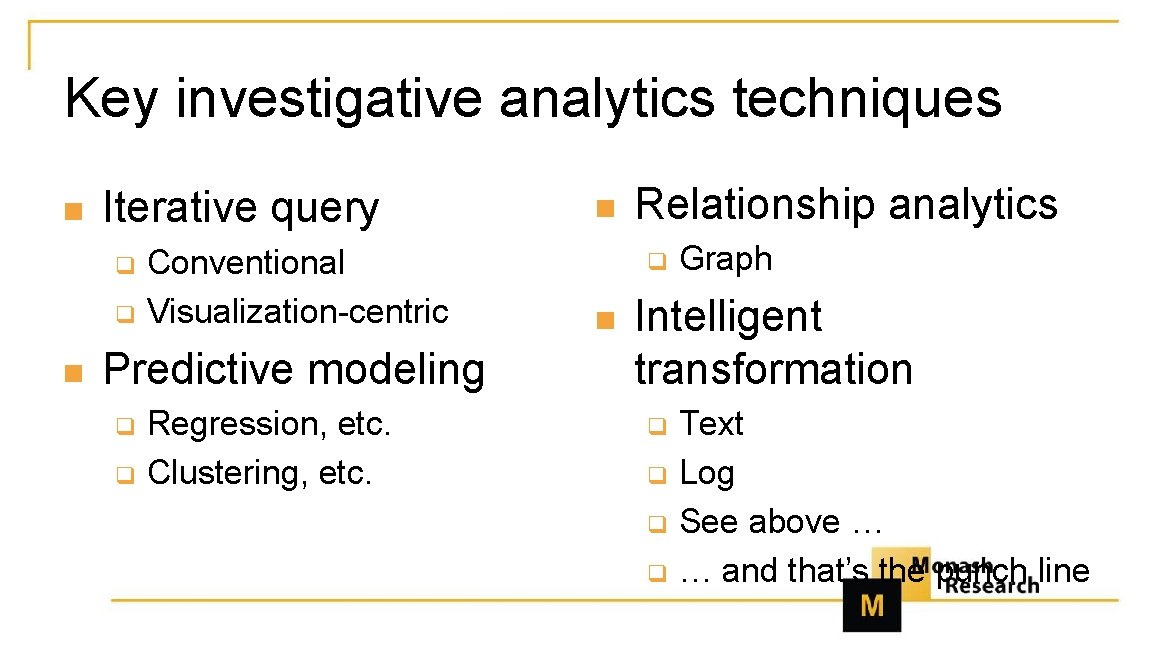
Key investigative analytics techniques n Iterative query q q n Conventional Visualization-centric Predictive modeling q q Regression, etc. Clustering, etc. n Relationship analytics q n Graph Intelligent transformation q q Text Log See above … … and that’s the punch line
Today's example application area Customer acquisition and retention, which n Exploits most cool aspects of analytic technology n Is needed by almost everybody In the interest of time, we'll focus on consumertype customers (as opposed to complex organizations)
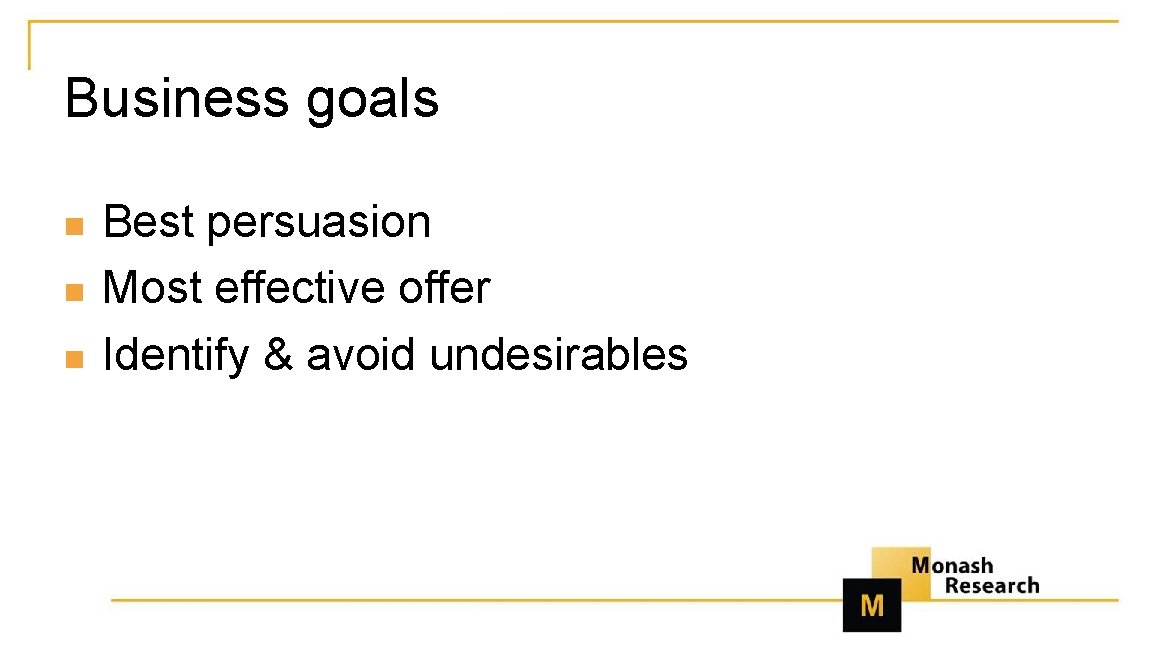
Business goals n n n Best persuasion Most effective offer Identify & avoid undesirables
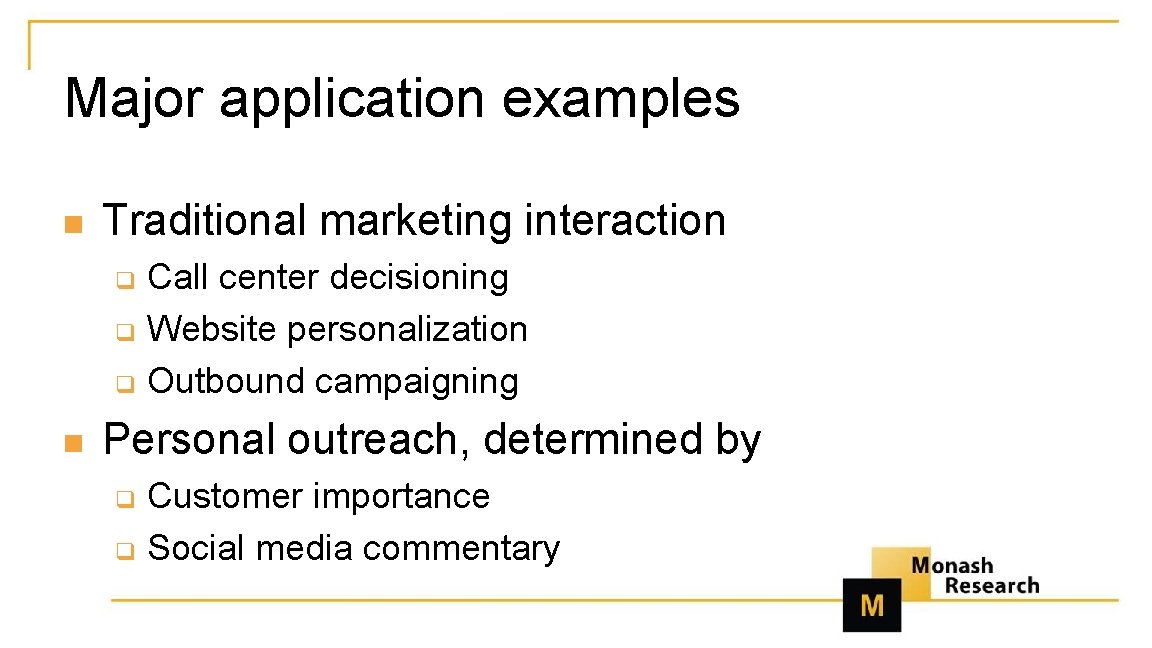
Major application examples n Traditional marketing interaction q q q n Call center decisioning Website personalization Outbound campaigning Personal outreach, determined by q q Customer importance Social media commentary
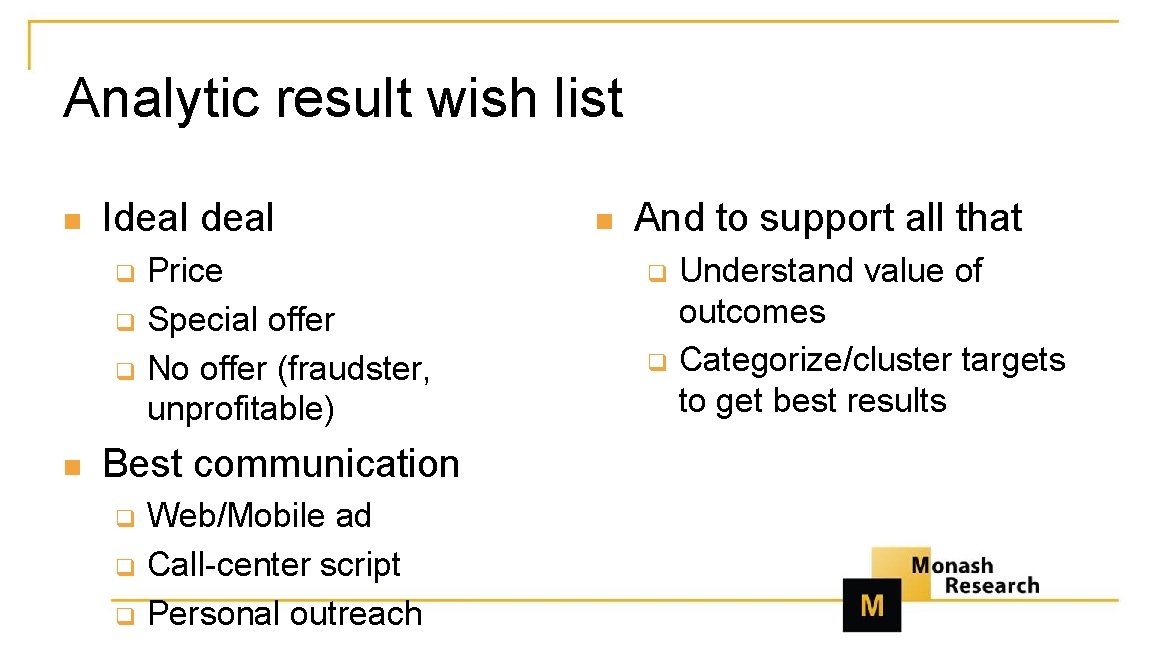
Analytic result wish list n Ideal q q q n Price Special offer No offer (fraudster, unprofitable) Best communication q q q Web/Mobile ad Call-center script Personal outreach n And to support all that q q Understand value of outcomes Categorize/cluster targets to get best results
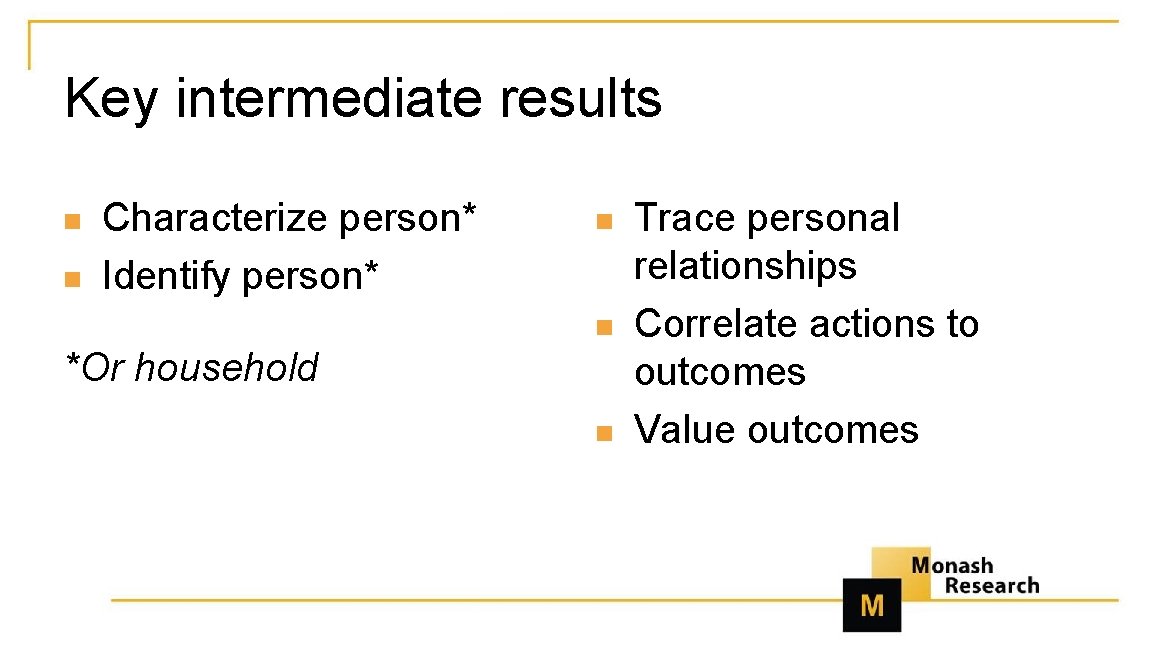
Key intermediate results n n Characterize person* Identify person* n n *Or household n Trace personal relationships Correlate actions to outcomes Value outcomes
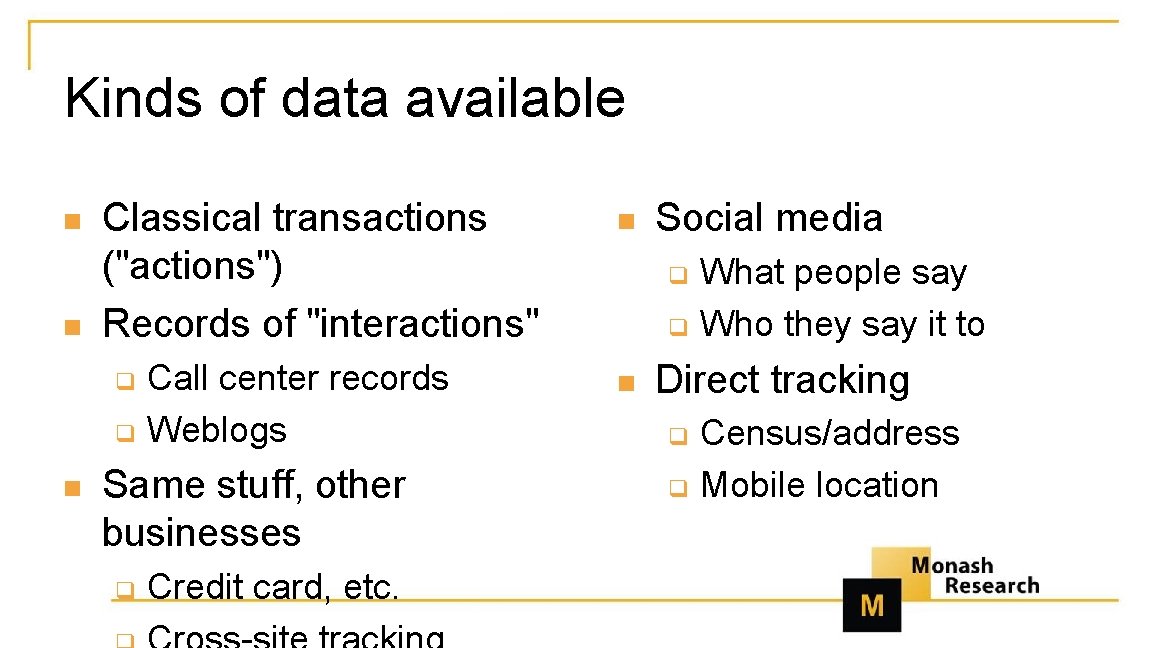
Kinds of data available n n Classical transactions ("actions") Records of "interactions" q q n Call center records Weblogs Same stuff, other businesses q Credit card, etc. n Social media q q n What people say Who they say it to Direct tracking q q Census/address Mobile location
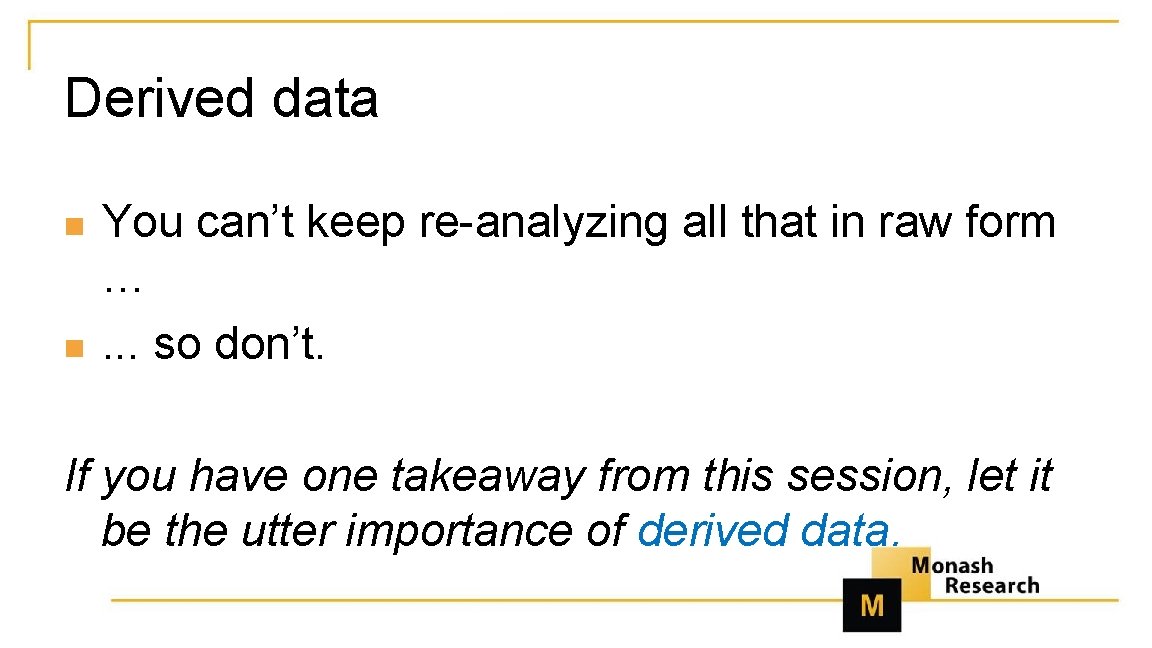
Derived data n n You can’t keep re-analyzing all that in raw form …. . . so don’t. If you have one takeaway from this session, let it be the utter importance of derived data.
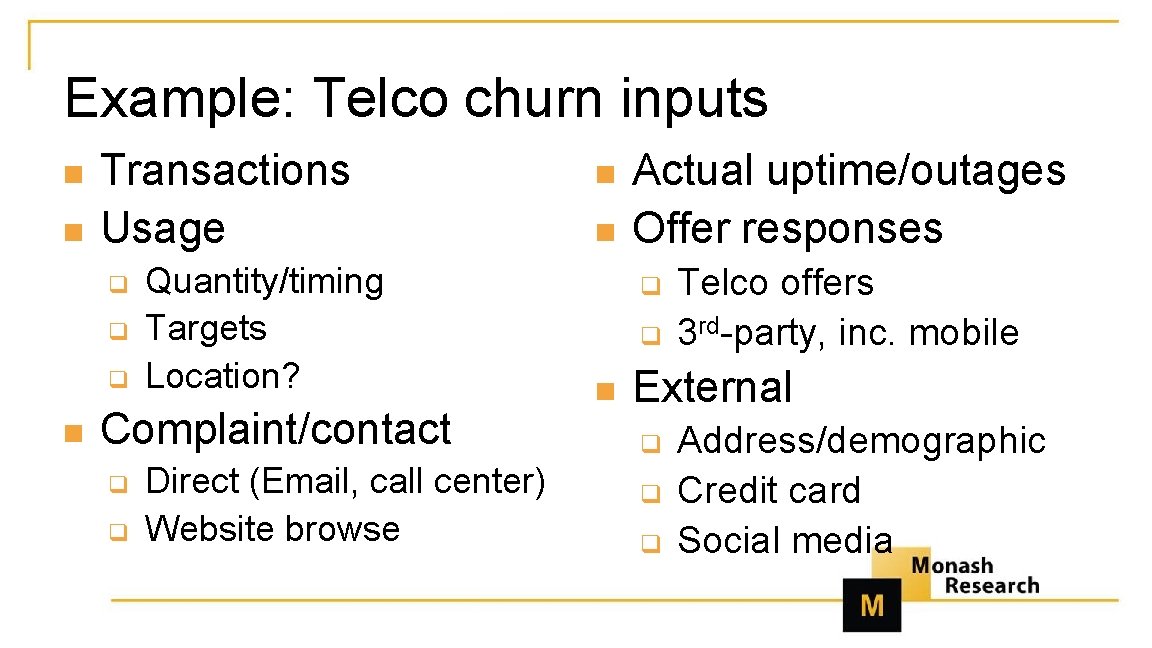
Example: Telco churn inputs n n Transactions Usage q q q n Quantity/timing Targets Location? Complaint/contact q q Direct (Email, call center) Website browse n n Actual uptime/outages Offer responses q q n Telco offers 3 rd-party, inc. mobile External q q q Address/demographic Credit card Social media
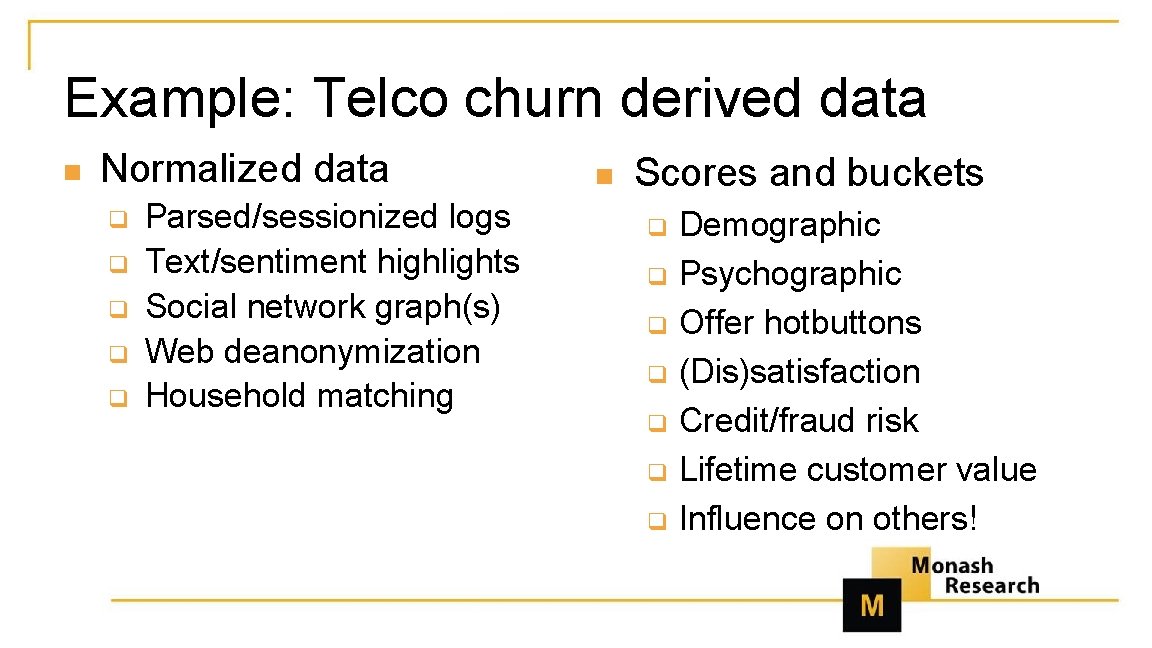
Example: Telco churn derived data n Normalized data q q q Parsed/sessionized logs Text/sentiment highlights Social network graph(s) Web deanonymization Household matching n Scores and buckets q q q q Demographic Psychographic Offer hotbuttons (Dis)satisfaction Credit/fraud risk Lifetime customer value Influence on others!
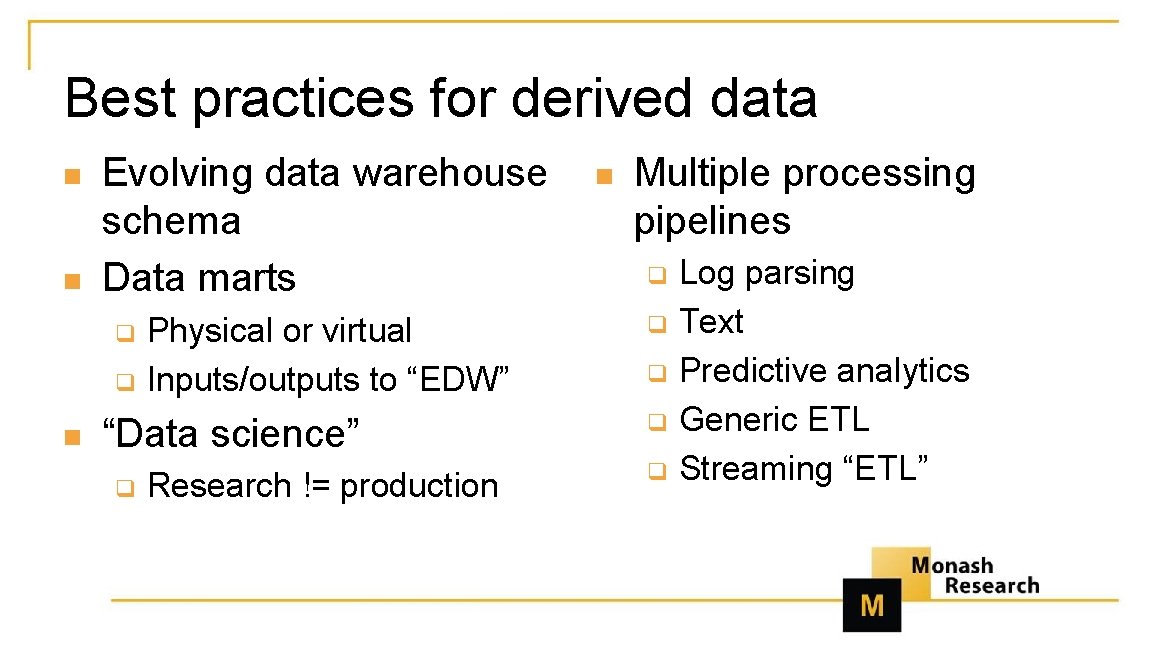
Best practices for derived data n n Evolving data warehouse schema Data marts q q n Physical or virtual Inputs/outputs to “EDW” “Data science” q Research != production n Multiple processing pipelines q q q Log parsing Text Predictive analytics Generic ETL Streaming “ETL”
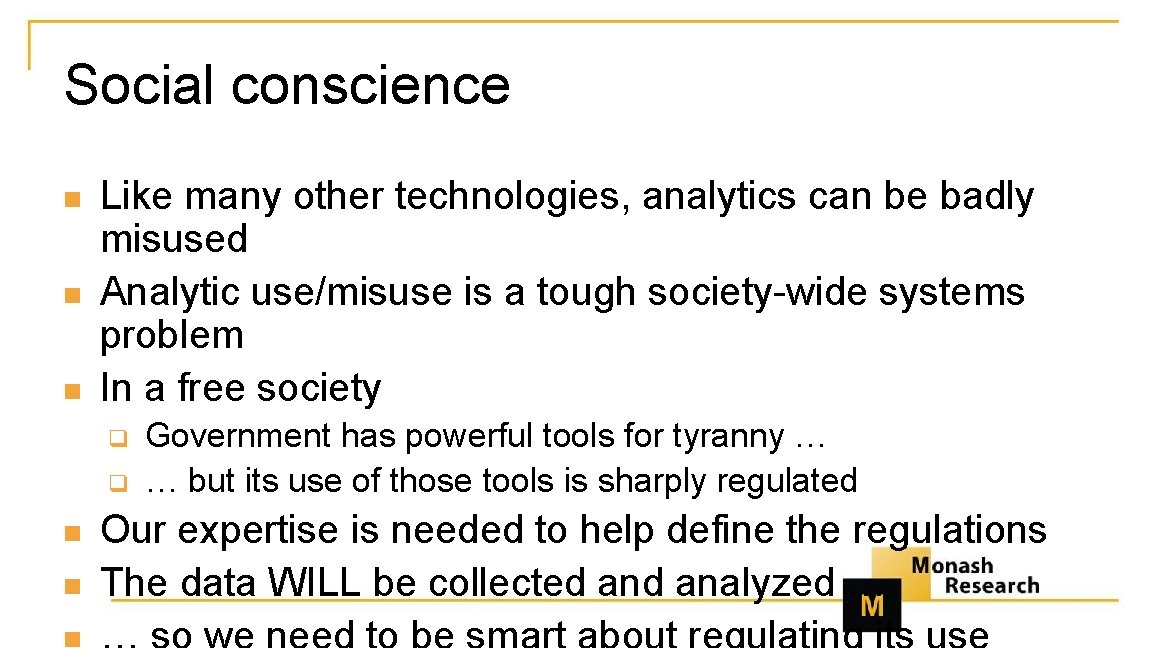
Social conscience n n n Like many other technologies, analytics can be badly misused Analytic use/misuse is a tough society-wide systems problem In a free society q q n n Government has powerful tools for tyranny … … but its use of those tools is sharply regulated Our expertise is needed to help define the regulations The data WILL be collected analyzed …
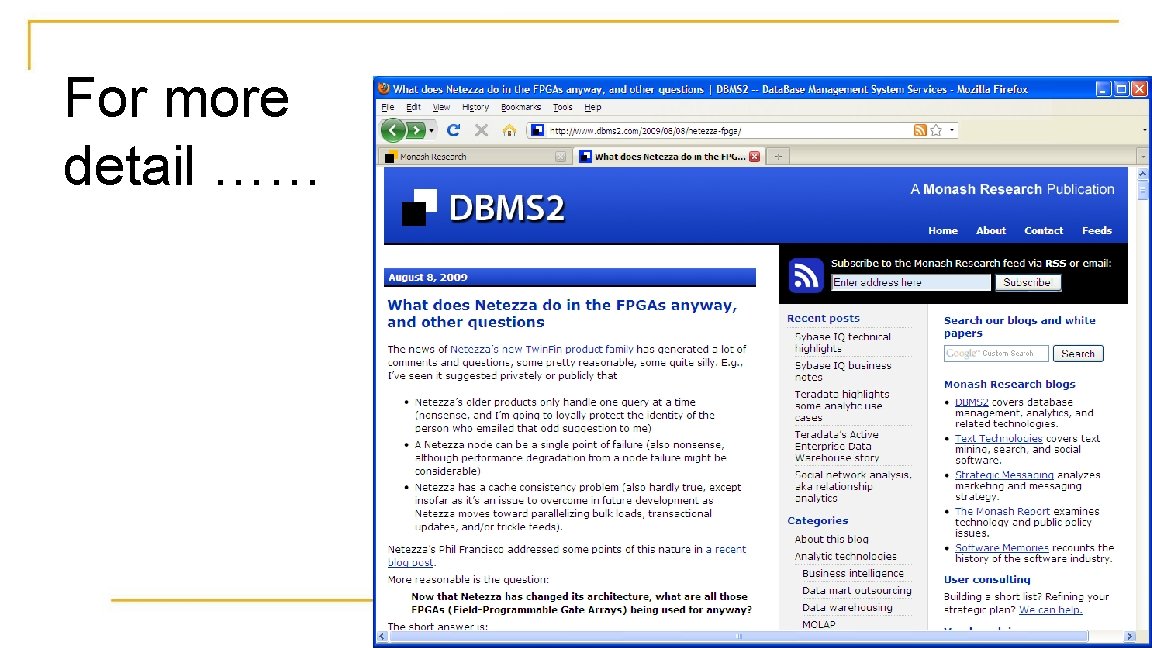
For more detail ……
Thank you! Curt A. Monash, Ph. D. President, Monash Research Editor, DBMS 2 contact @monash. com http: //www. DBMS 2. com