
Investigation of Gem Materials using 405 nm Laser
- Slides: 38
Investigation of Gem Materials using 405 nm Laser Spectroscopy Henry Barwood Troy University Troy, Alabama
405 nm laser diode Ga. N diode lasers were developed for Blu-Ray players. They are now widely manufactured in power levels ranging up to 500 m. W. Inexpensive diode assemblies are now available in the 5 -200 m. W range, both battery powered (laser pointers) and with AC power supplies and collimating lenses that provide either a spot or line focus.
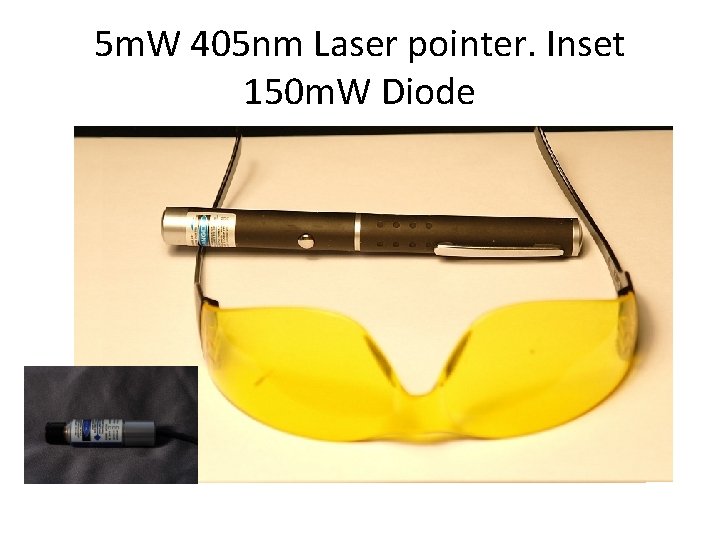
5 m. W 405 nm Laser pointer. Inset 150 m. W Diode
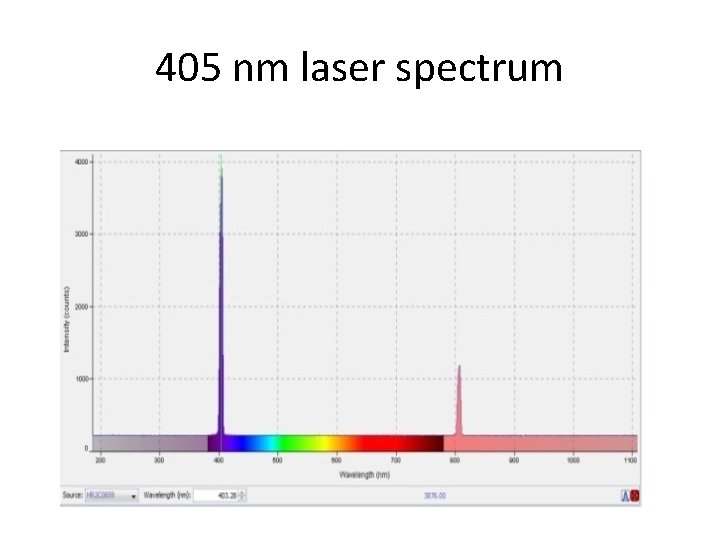
405 nm laser spectrum
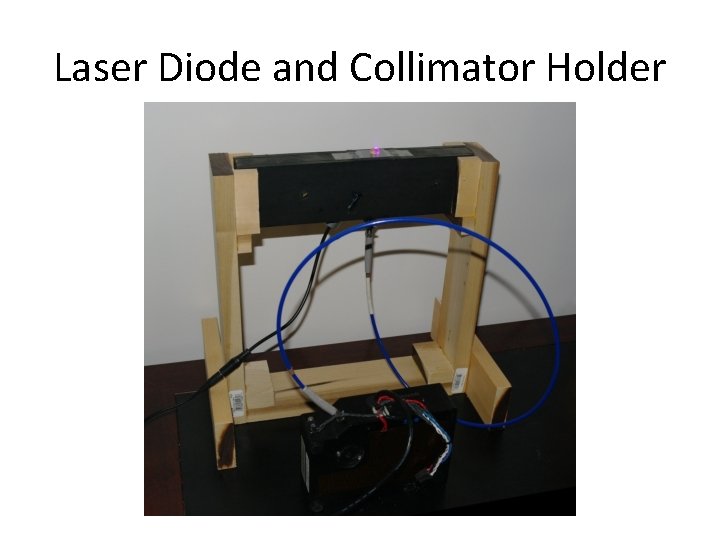
Spectrometer/Diode holder for spectroscopy of small sample areas A simple holder was constructed that focuses the laser beam onto a small aperture that is centered on the focus of the spectrometer collimator (UV-NIR). The resultant fluorescence is fed into the spectrometer via a standard fiber optic cable (also UV-NIR).
Laser Diode and Collimator Holder
Spectrometer modification An Ocean Optics HR 2000 spectrometer was modified with the addition of a new grating that increased the wavelength range to 200 -1100 nm. The 10 micron slit on the spectrometer was replaced with a 100 micron slit to improve light gathering power. A UV-IR fiber optic cable and collimator were added that allow the full 200 -1100 nm wavelength range. While stiff, a 200 micron fiber was selected for maximum light transmission.
Laser imaging for photomicrography Spot focusing lasers are adaptable for imaging gems, small crystals, or areas of petrographic slides. The high visible output of the laser must be blocked with a yellow filter before a useful image may be obtained. Imaging as a substage light source is dangerous, and only incident illumination should be used
Imaging of Samples with an Un-collimated Laser Beam The output of a laser diode operated without the collimating lens can be scanned across a specimen while the camera is in Bulb mode. This allows the collection of a macro image of the specimen. By blocking most of the visible light with a yellow filter, minerals having a response to the 405 nm laser emissions may be imaged. Processing of the images can also provide a quantitative measure of the amount of the fluorescent mineral.
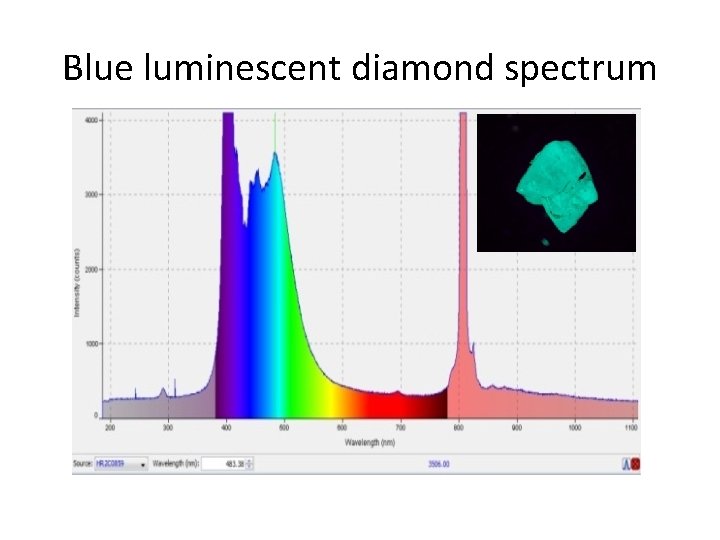
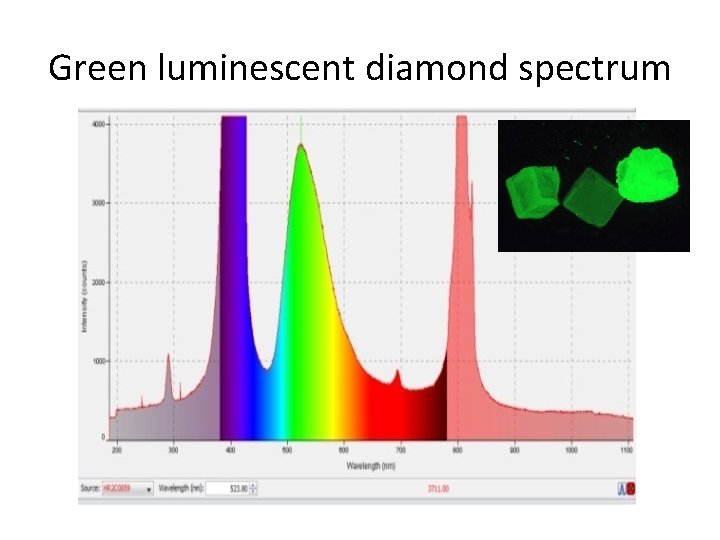
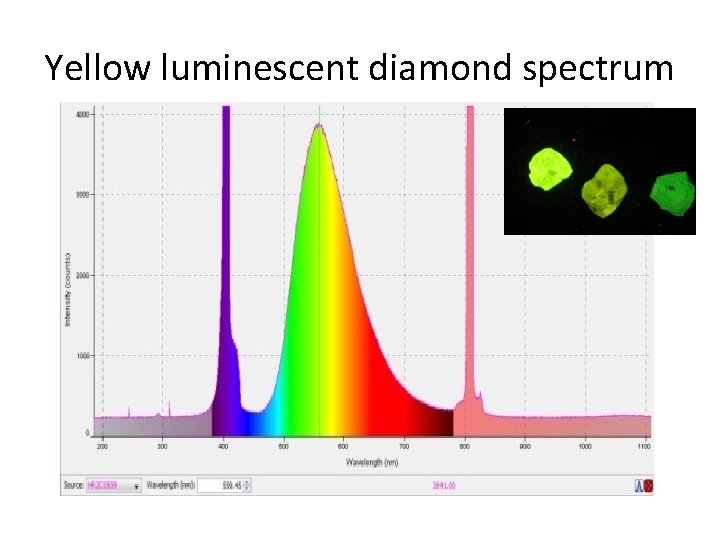
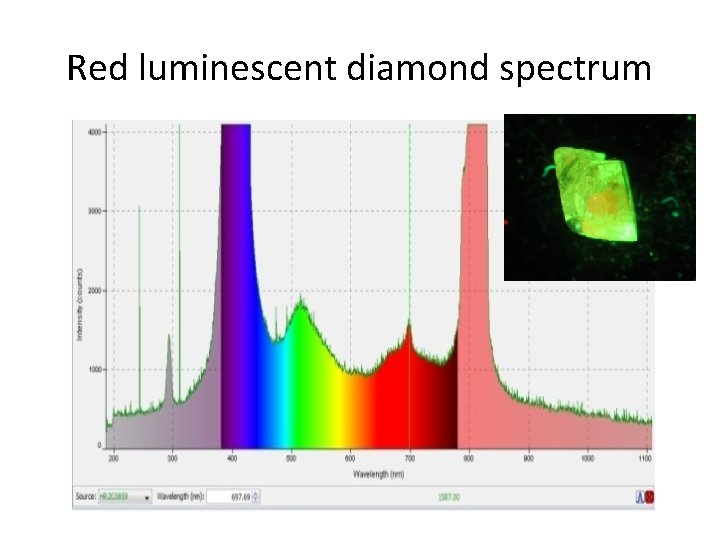
• In order to test the laser fluorescence of diamonds, small < 1 mm crystals were purchased from a number of sources. No information as to the actual source localities of the diamonds was available; however, they were simply listed as “Congo”. The body colors of the diamonds were mostly yellow to off white.
Diamonds Fluorescent colors observed in diamonds using 405 nm laser • • Green (common) Yellow ( 5 examples) Blue (single example) Red (single example)
In all subsequent figures, the fluorescent specimen is pasted in the upper right hand corner of the figure
Blue luminescent diamond spectrum
Green luminescent diamond spectrum
Yellow luminescent diamond spectrum
Red luminescent diamond spectrum
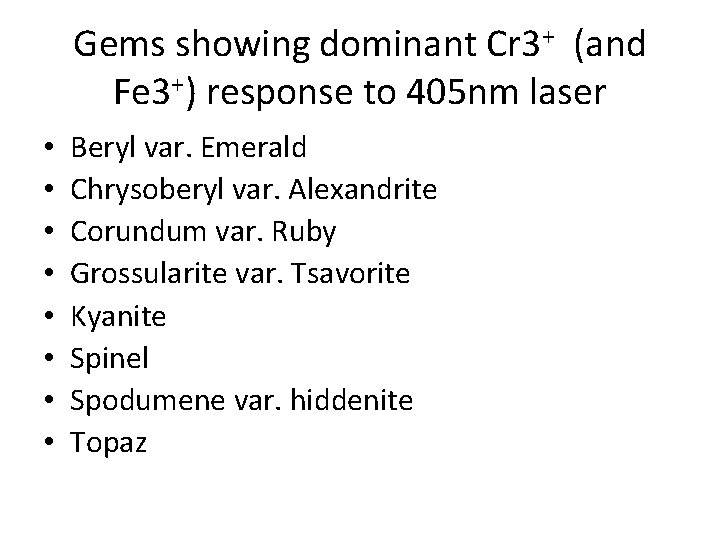
Gems showing dominant Cr 3+ (and Fe 3+) response to 405 nm laser • • Beryl var. Emerald Chrysoberyl var. Alexandrite Corundum var. Ruby Grossularite var. Tsavorite Kyanite Spinel Spodumene var. hiddenite Topaz
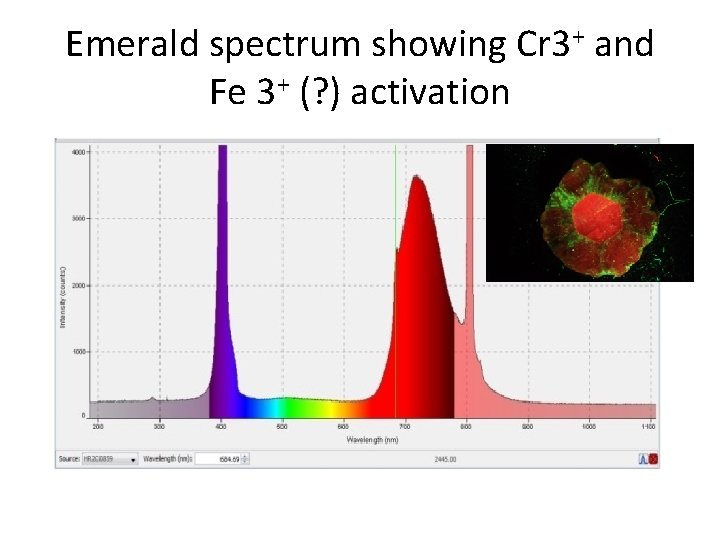
Emerald spectrum showing Cr 3+ and Fe 3+ (? ) activation
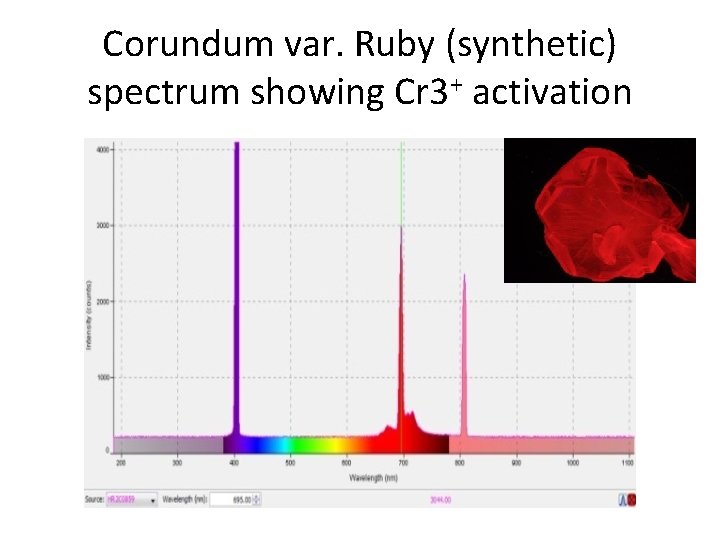
Corundum var. Ruby (synthetic) spectrum showing Cr 3+ activation
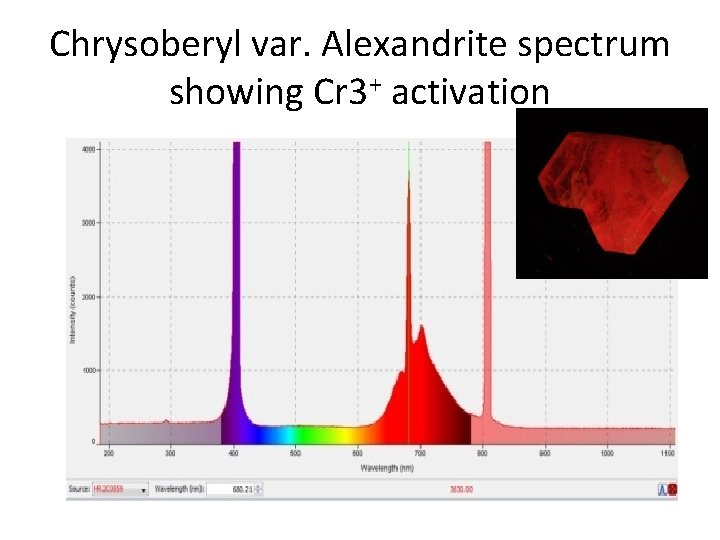
Chrysoberyl var. Alexandrite spectrum showing Cr 3+ activation
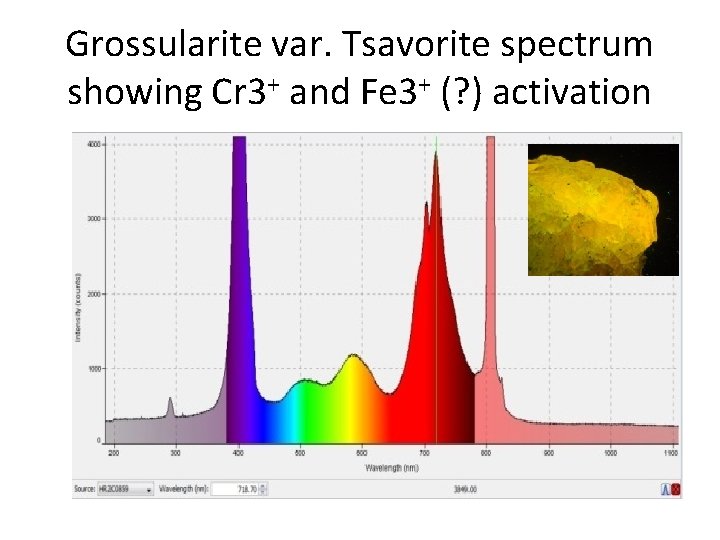
Grossularite var. Tsavorite spectrum showing Cr 3+ and Fe 3+ (? ) activation
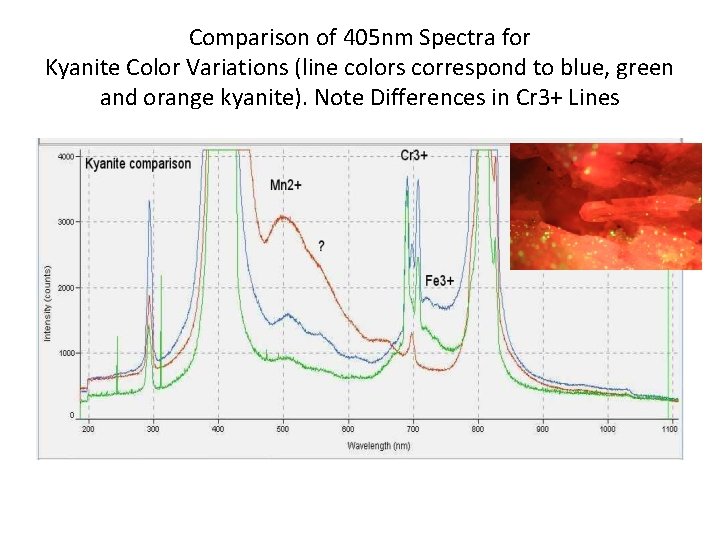
Comparison of 405 nm Spectra for Kyanite Color Variations (line colors correspond to blue, green and orange kyanite). Note Differences in Cr 3+ Lines
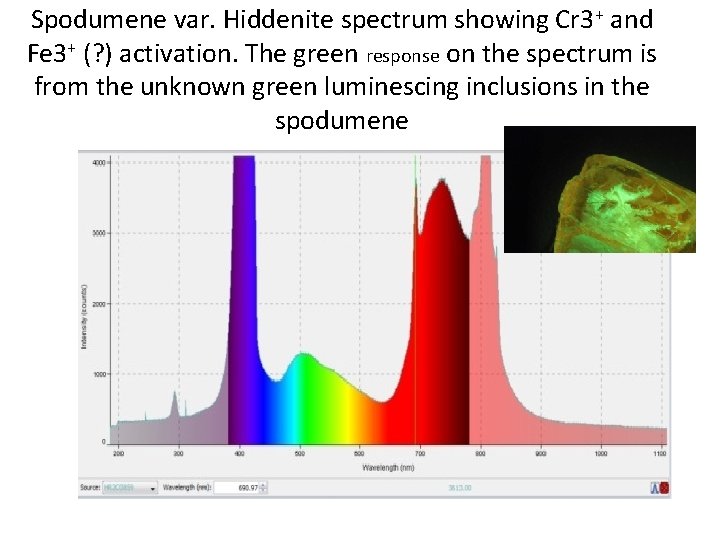
Spodumene var. Hiddenite spectrum showing Cr 3+ and Fe 3+ (? ) activation. The green response on the spectrum is from the unknown green luminescing inclusions in the spodumene
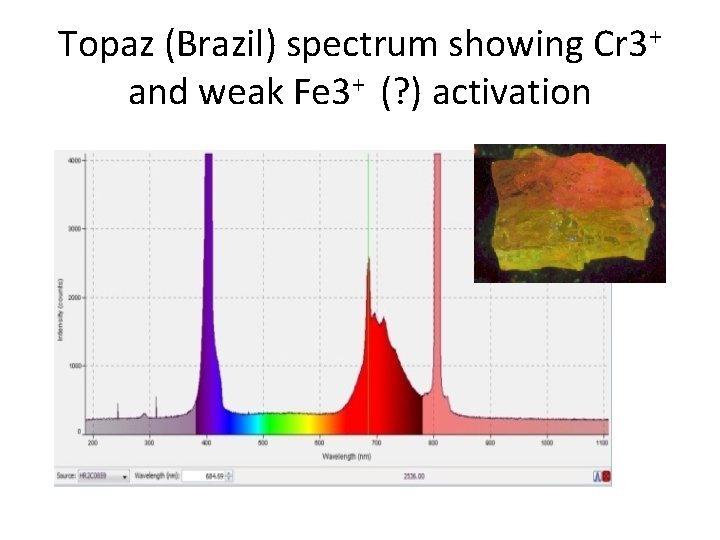
Topaz (Brazil) spectrum showing Cr 3+ and weak Fe 3+ (? ) activation
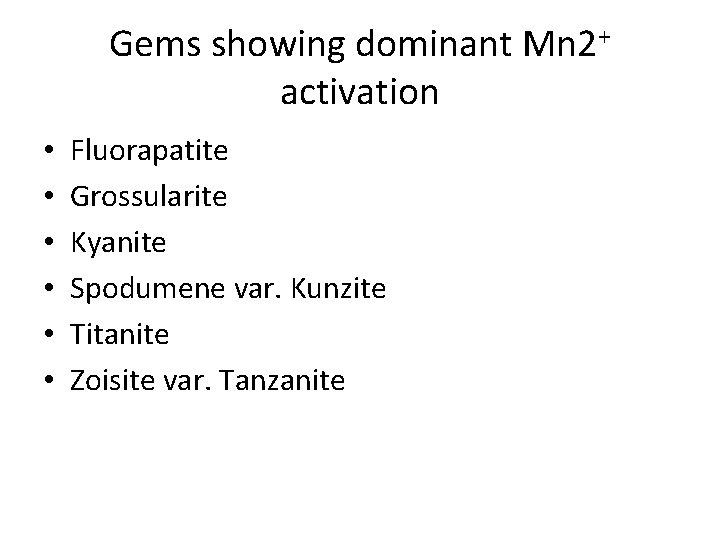
Gems showing dominant Mn 2+ activation • • • Fluorapatite Grossularite Kyanite Spodumene var. Kunzite Titanite Zoisite var. Tanzanite
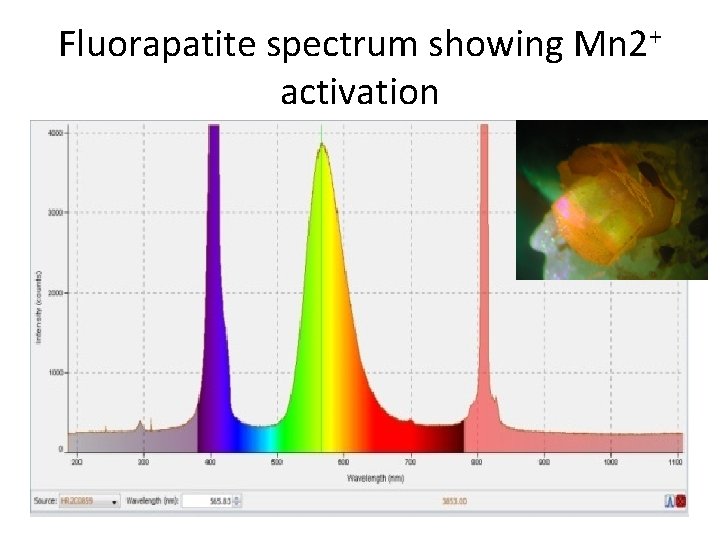
Fluorapatite spectrum showing Mn 2+ activation
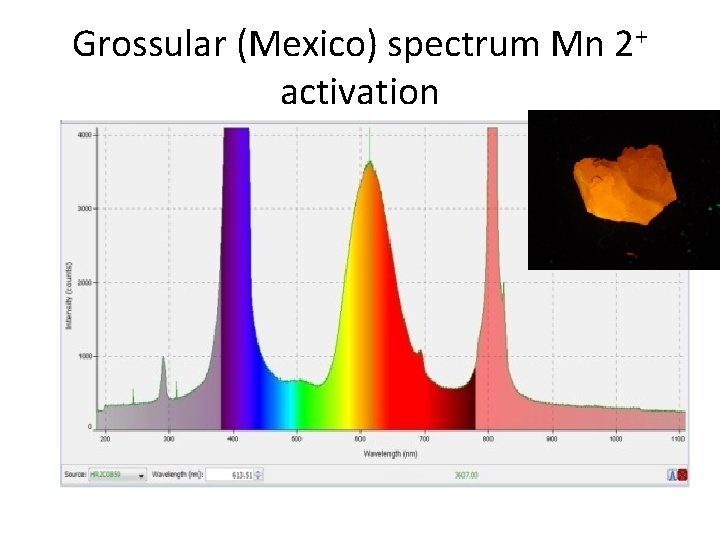
Grossular (Mexico) spectrum Mn 2+ activation
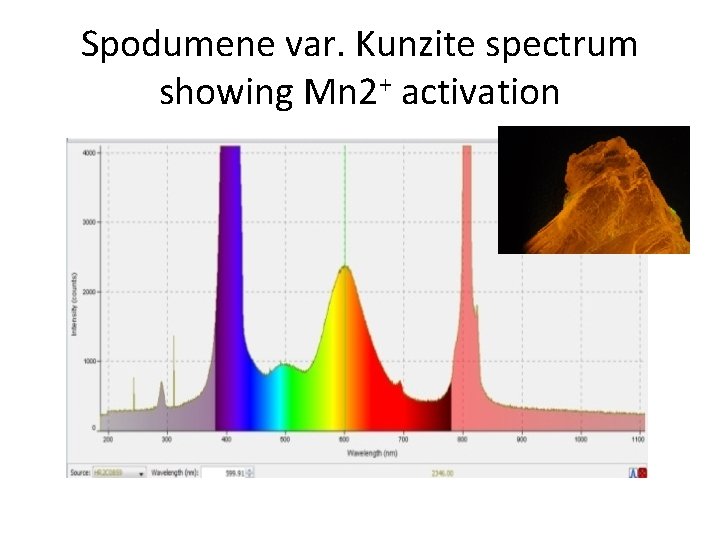
Spodumene var. Kunzite spectrum showing Mn 2+ activation
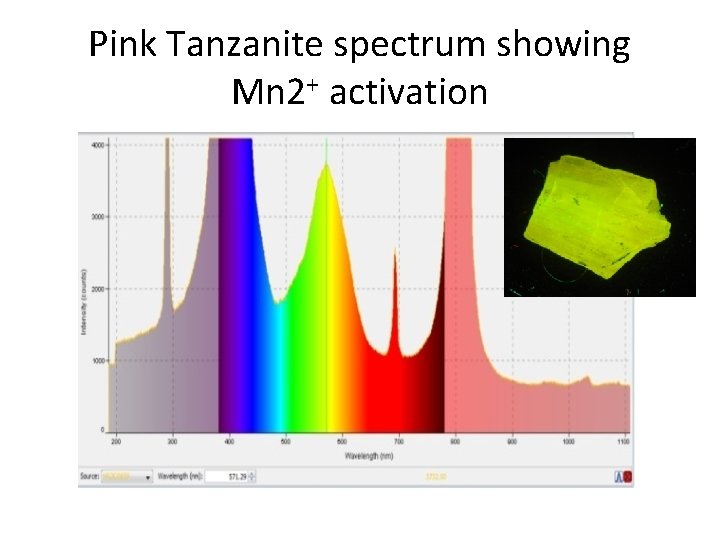
Pink Tanzanite spectrum showing Mn 2+ activation
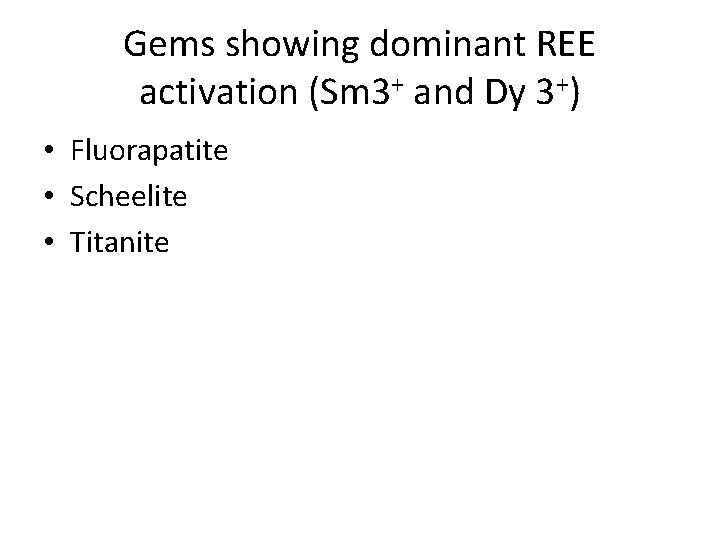
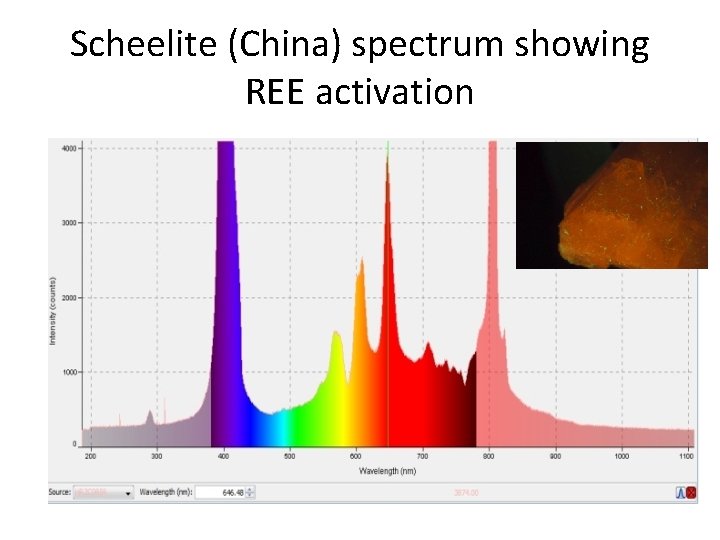
Gems showing dominant REE activation (Sm 3+ and Dy 3+) • Fluorapatite • Scheelite • Titanite
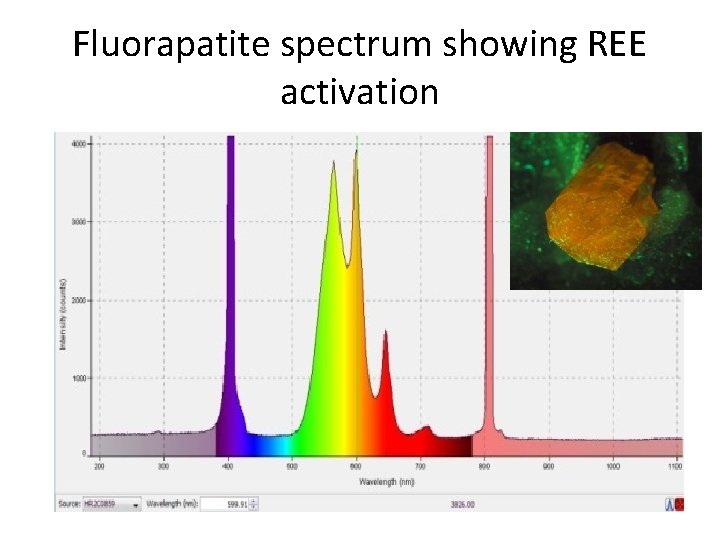
Fluorapatite spectrum showing REE activation
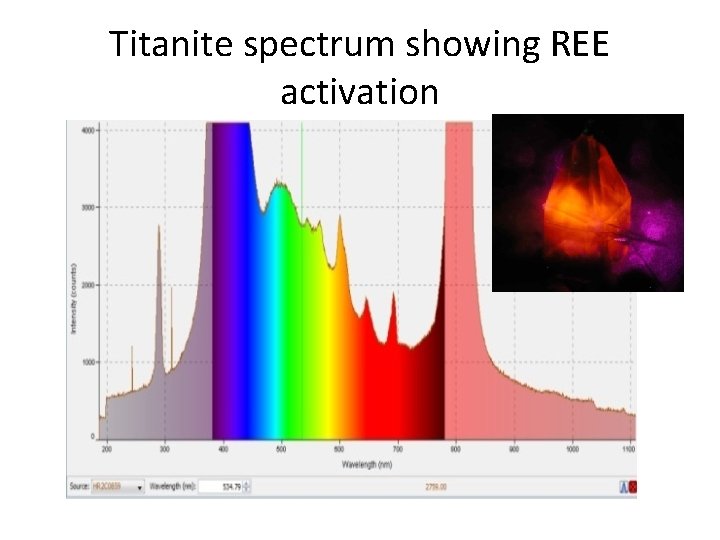
Titanite spectrum showing REE activation
Scheelite (China) spectrum showing REE activation
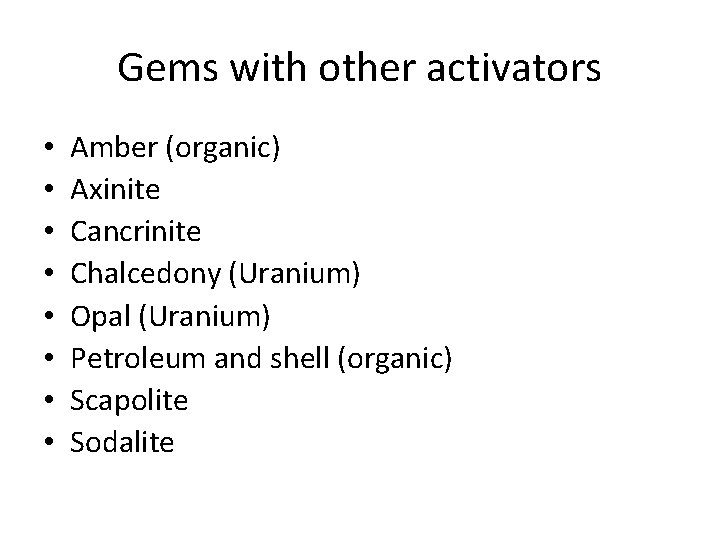
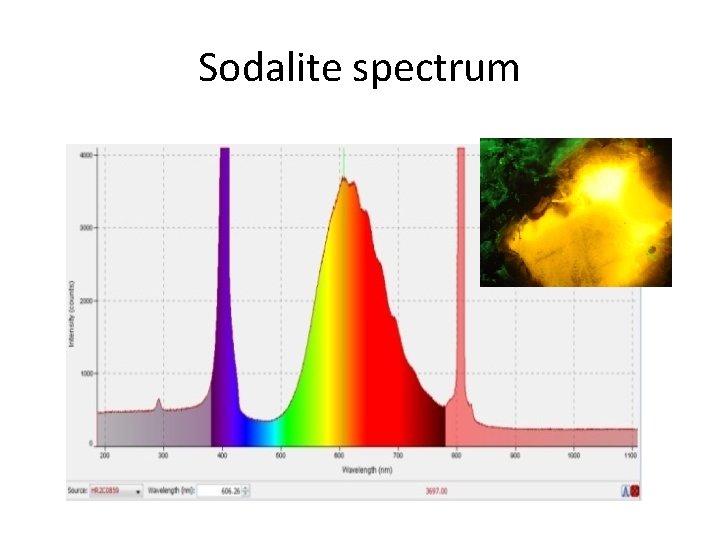
Gems with other activators • • Amber (organic) Axinite Cancrinite Chalcedony (Uranium) Opal (Uranium) Petroleum and shell (organic) Scapolite Sodalite
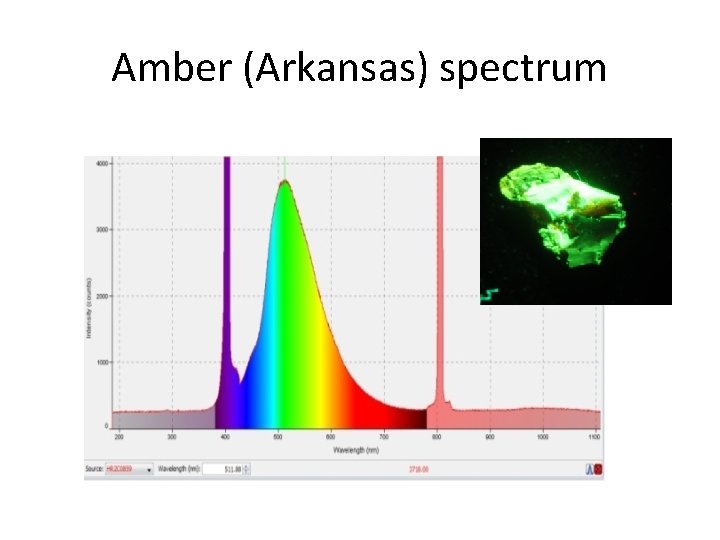
Amber (Arkansas) spectrum
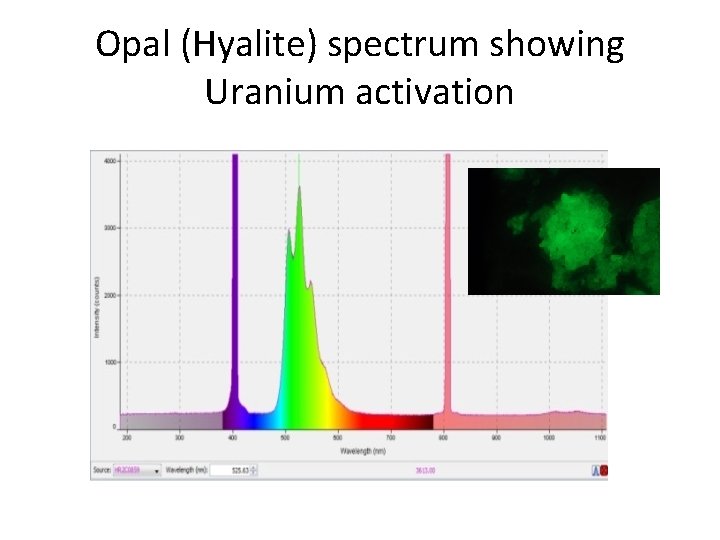
Opal (Hyalite) spectrum showing Uranium activation
Sodalite spectrum
Summary of Initial Research • Diamond provenance, and activators need to be defined • Other gem materials should be investigated for additional activators • Potential for gem identification should be investigated