
Investigation 4 Part 2 Mono Lake Food Web
Investigation 4, Part 2 Mono Lake Food Web
Warm up �What is an ecosystem? �What is a community? �One of the main points about an ecosystem is the interaction between biotic and abiotic factors. �A community is groups of populations interacting with one another.
Mono Lake �One way the organisms in the Mono Lake system interact is by eating each other. (Nom, nom…. Lunch!) �This is called a feeding relationship. �I have sets of cards of important organisms from Mono Lake. �Each card contains: �Photo �Common and scientific name �Life cycle and population dynamics �How it gets food �It’s role in the ecosystem
Mono Lake Cards �Read the cards to become familiar with the organism. �Organize the cards, picture side up. �Use the arrow strips to show feeding relationships between the organisms. (Who eats who? ) �Every organism should be included in this chart. �If an organism is involved in more than one feeding relationship, indicate that with arrows.
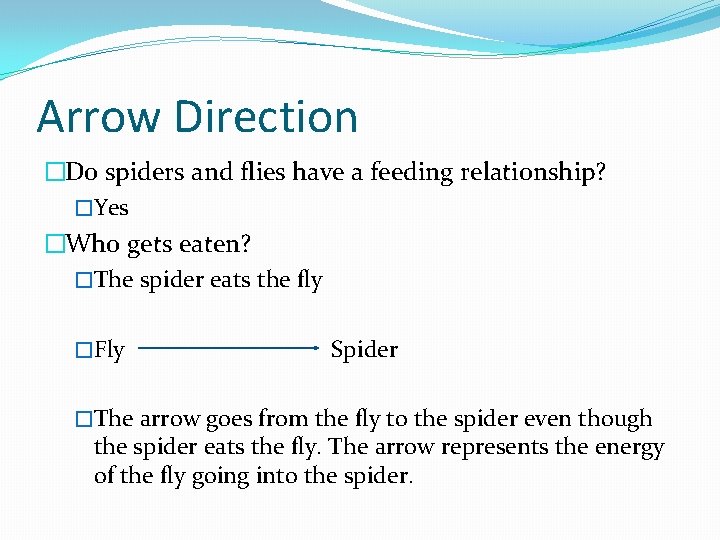
Arrow Direction �Do spiders and flies have a feeding relationship? �Yes �Who gets eaten? �The spider eats the fly �Fly Spider �The arrow goes from the fly to the spider even though the spider eats the fly. The arrow represents the energy of the fly going into the spider.
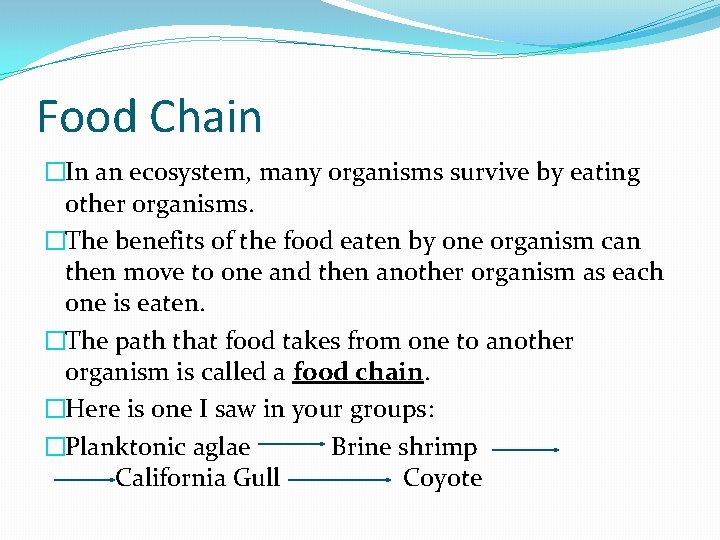
Food Chain �In an ecosystem, many organisms survive by eating other organisms. �The benefits of the food eaten by one organism can then move to one and then another organism as each one is eaten. �The path that food takes from one to another organism is called a food chain. �Here is one I saw in your groups: �Planktonic aglae Brine shrimp California Gull Coyote
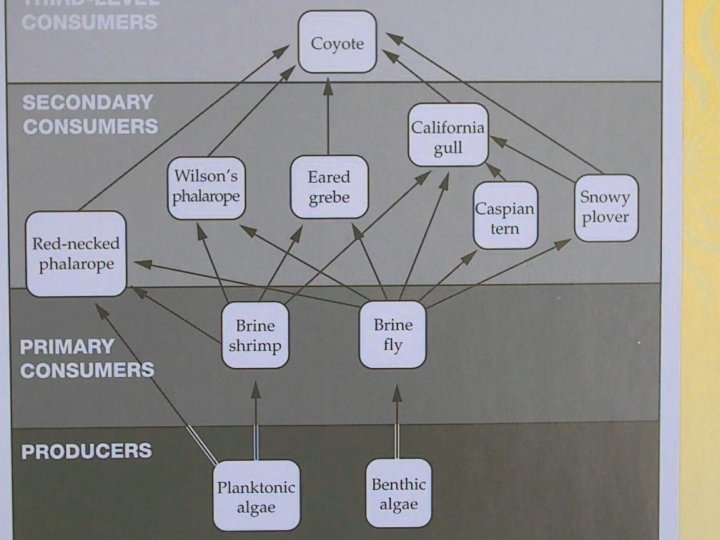
Food Web �I saw lots of organisms in your groups that were connected by more than one arrow. �Some organisms like phalaropes eat more than one organism. �Some organisms like brine shrimp are eaten by many organisms. �When you connect all the arrows, the arrows cross each other in complicated ways. �A diagram that shows all the feeding relationships is called a food web.
Types of Organisms �What types of organisms do not eat other organisms? �The two kinds of algae �How do they survive with out eating? �All living things need food/energy to survive, so they must make their own. �Organisms that make their own food are producers. They make food that is consumed in an ecosystem. �In the Mono Lake ecosystem, the producers are algae.
Types of Organisms �Producers like algae make their own food, but animals like brine shrimp and gulls do not. �How do they get their food? �They eat other organisms. �Organisms that eat other organisms are called consumers.
Types of Consumers �Consumers that eat producers are primary or firstlevel consumers. �Consumers that eat primary or first-level consumers are secondary or second-level consumers. �Consumers that eat secondary or second-level consumers are tertiary or third-level consumers. �Consumers that eat tertiary or third-level consumers are fourth-level consumers. �And so on……. .
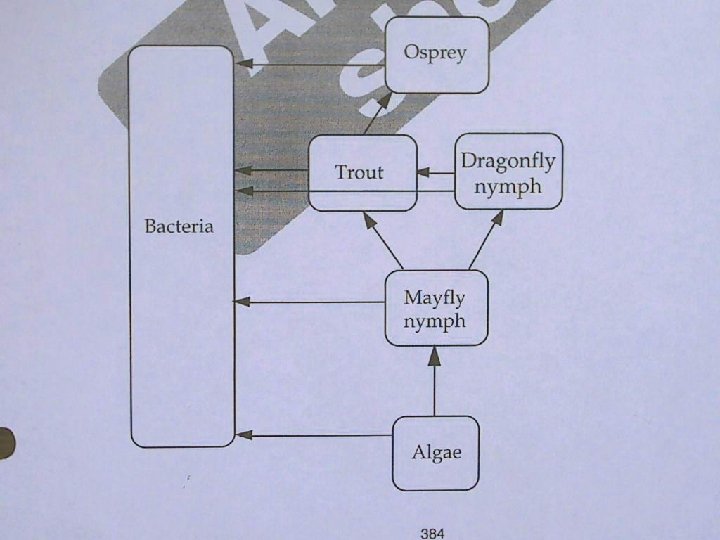
Another Type of organism �Some things never get eaten. �They die natural deaths. �These dead organisms are broken down and consumed by microorganisms called decomposers. �Bacteria and fungi are decomposers. �Everything that is not eaten by a consumer is eventually eaten by a decomposer.
Revisit your Food Web �This time show the LEVEL of the organisms in your web. �Producers on the bottom. �Primary consumers are the next level up, etc…
Some are Tricky � Red-necked phalaropes �Eat both brine shrimp and brine flies making them secondary consumers. �Also eat planktonic algae making them primary consumers. �California gulls �Eat mostly brine shrimp and flies. �Given the chance will eat eggs and chicks of snowy plovers and Caspian terns. �How can we show these dual roles on our charts? �What about decomposers? How should we show them?
Finish up Lab sheet 21.
- Slides: 15