
Investigation 3 1 Law of Inertia Key Question
- Slides: 28
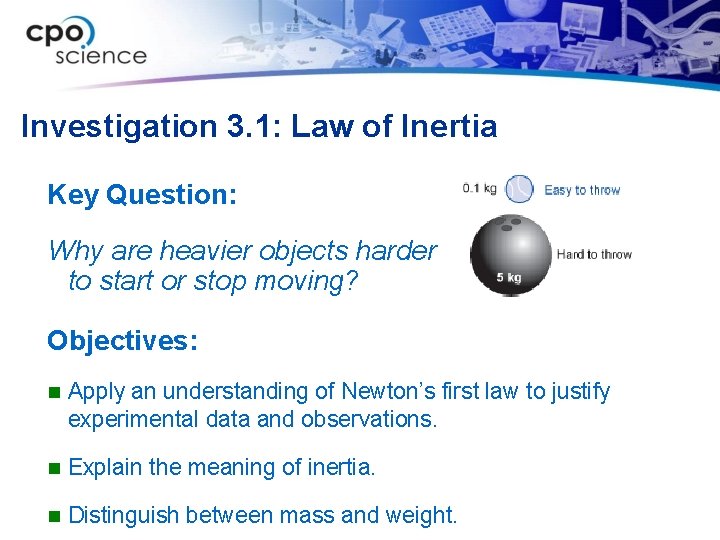
Investigation 3. 1: Law of Inertia Key Question: Why are heavier objects harder to start or stop moving? Objectives: n Apply an understanding of Newton’s first law to justify experimental data and observations. n Explain the meaning of inertia. n Distinguish between mass and weight.
DO NOW n. Based on Investigation 3. 1, why do heavier objects appear to move faster?
Objective n. SWBAT describe Newton’s First Law of Motion.
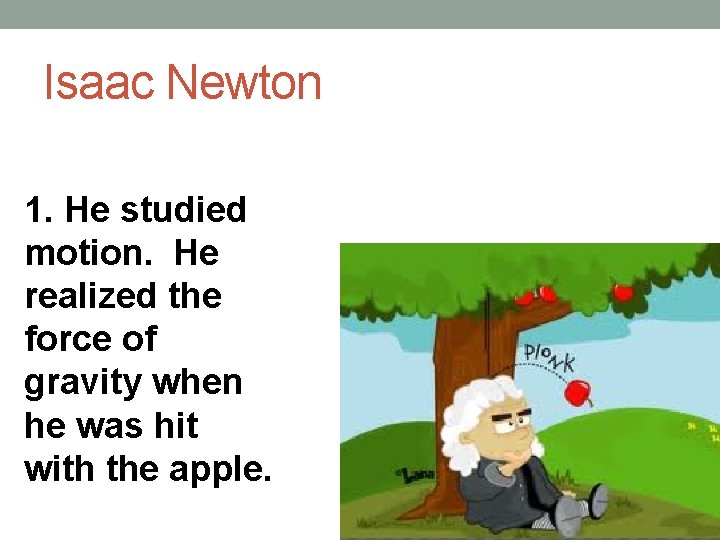
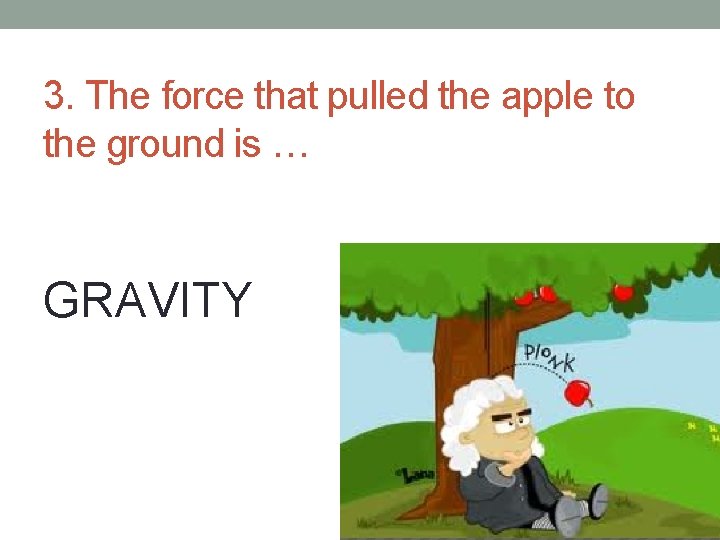
Isaac Newton 1. He studied motion. He realized the force of gravity when he was hit with the apple.
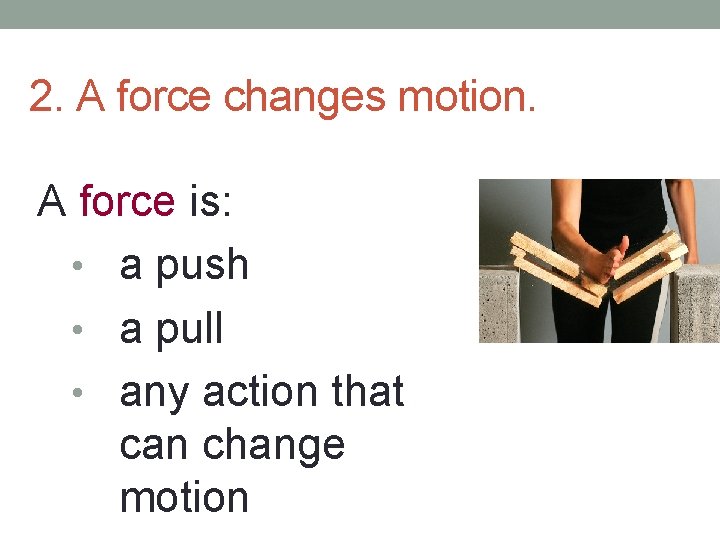
2. A force changes motion. A force is: • a push • a pull • any action that can change motion
3. The force that pulled the apple to the ground is … GRAVITY
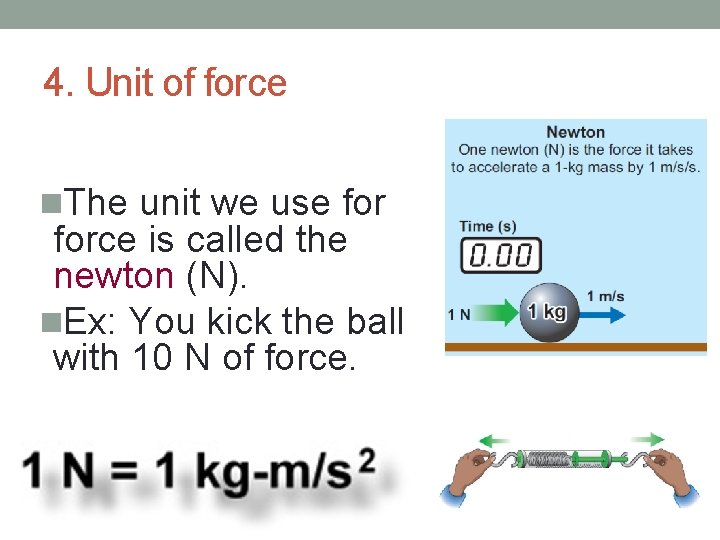
4. Unit of force n. The unit we use force is called the newton (N). n. Ex: You kick the ball with 10 N of force.
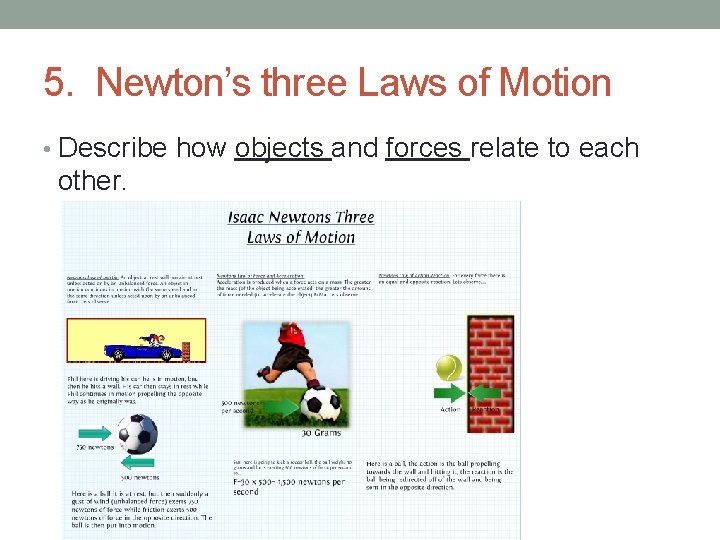
5. Newton’s three Laws of Motion • Describe how objects and forces relate to each other.
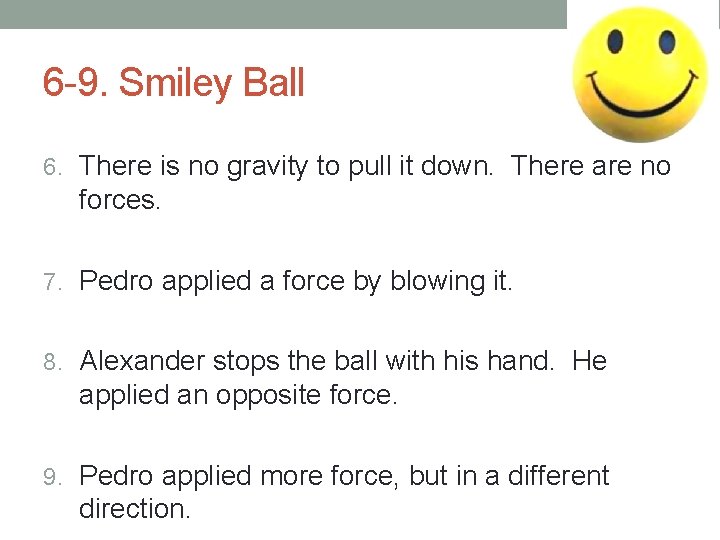
6 -9. Smiley Ball 6. There is no gravity to pull it down. There are no forces. 7. Pedro applied a force by blowing it. 8. Alexander stops the ball with his hand. He applied an opposite force. 9. Pedro applied more force, but in a different direction.
10. Newton’s first law • is also called the Law of Inertia.
It states … nan object in motion or at rest nremains in that state nunless an unbalanced force is applied to it.
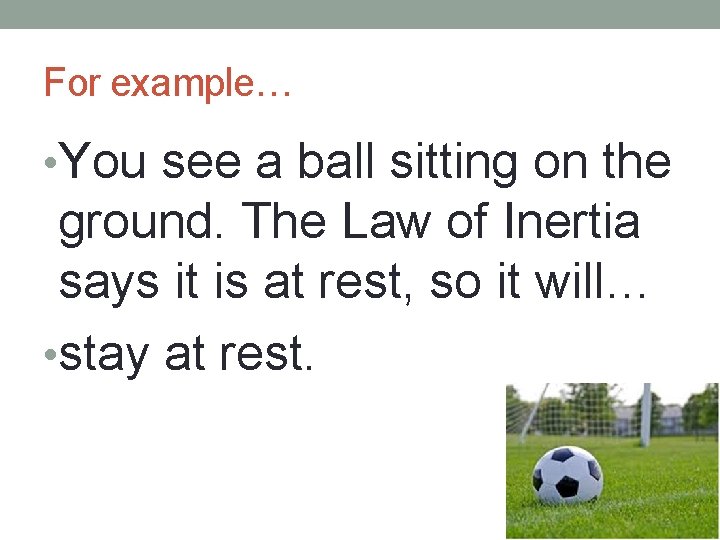
For example… • You see a ball sitting on the ground. The Law of Inertia says it is at rest, so it will… • stay at rest.
But you want it to move! • These are all examples of applying a… • force.
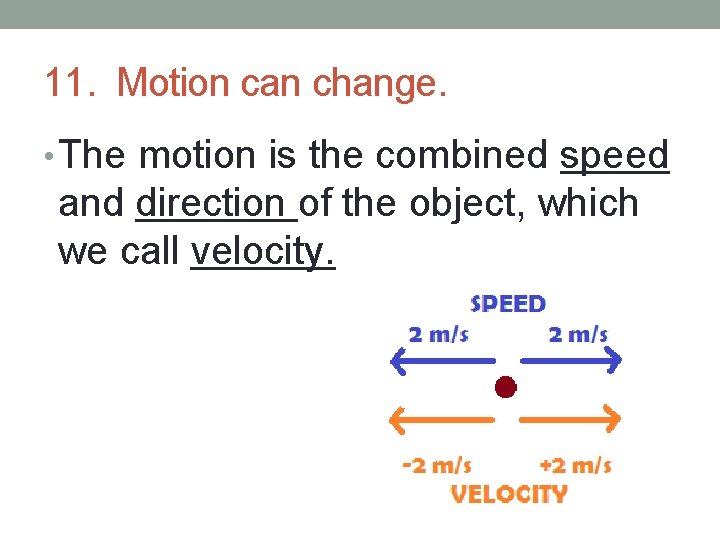
11. Motion can change. • The motion is the combined speed and direction of the object, which we call velocity.
12. At Rest n An object at rest have a velocity of 0 m/s.
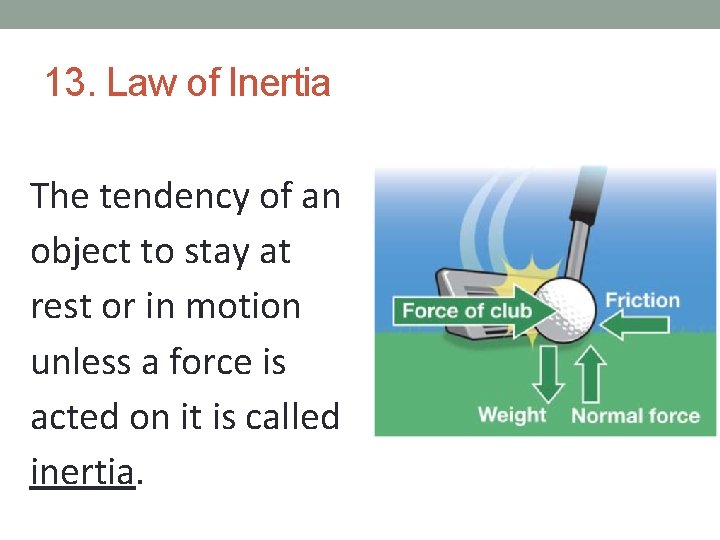
13. Law of Inertia The tendency of an object to stay at rest or in motion unless a force is acted on it is called inertia.
14 & 15: Acceleration • Velocity changes if you change the speed or direction. • The rate velocity is changed is called acceleration (a).
16. Inertia in Action • The apple keeps moving because the force was only applied to the skateboard. • Gravity pulls the apple to the ground.
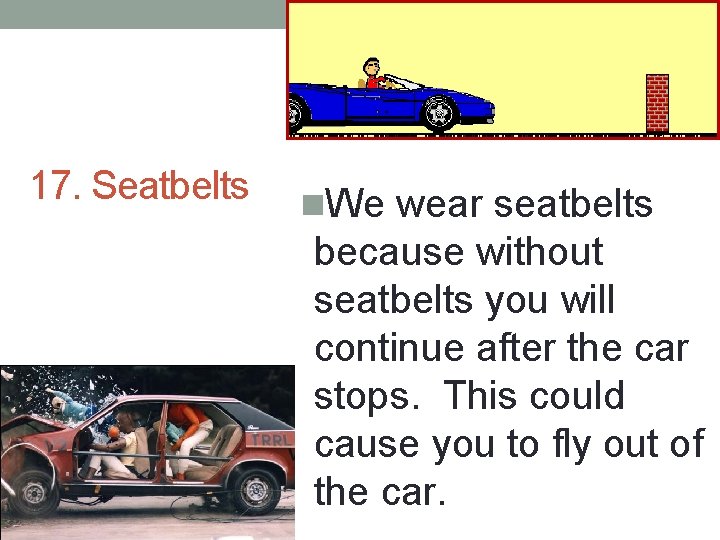
17. Seatbelts n. We wear seatbelts because without seatbelts you will continue after the car stops. This could cause you to fly out of the car.
18. Cars in Space • If you didn’t have a seat belt in a car in space, then you would continue to float away because there is no gravitational force to pull you down.
19. Forces At Rest n Objects at rest have forces acting on them that are balanced (equal). n The net force is 0 N.
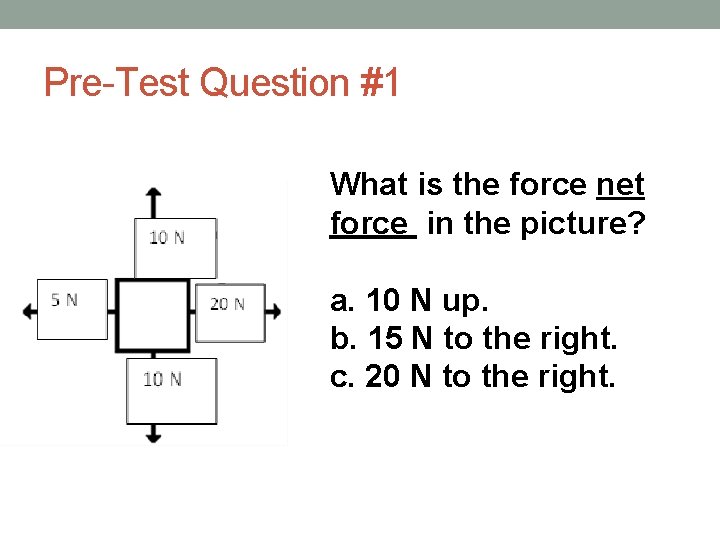
Pre-Test Question #1 What is the force net force in the picture? a. 10 N up. b. 15 N to the right. c. 20 N to the right.
20. Support & Gravity • Objects stay at rest until forces are not equal. When the support is removed, gravity is the force that pulls them to the ground. The forces are now unbalanced. The support force is called the normal force.
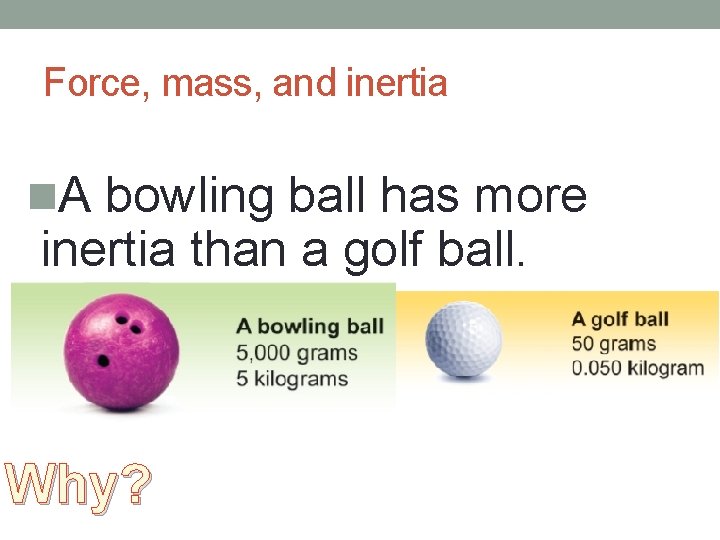
Force, mass, and inertia n. A bowling ball has more inertia than a golf ball. Why?
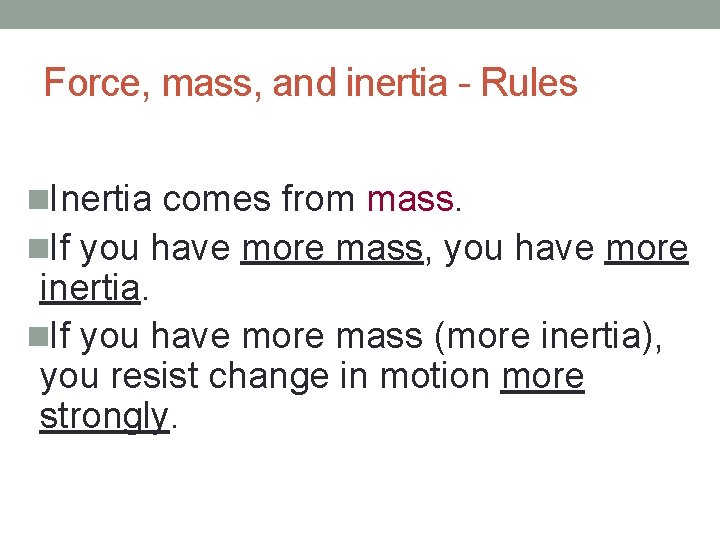
Force, mass, and inertia - Rules n. Inertia comes from mass. n. If you have more mass, you have more inertia. n. If you have more mass (more inertia), you resist change in motion more strongly.
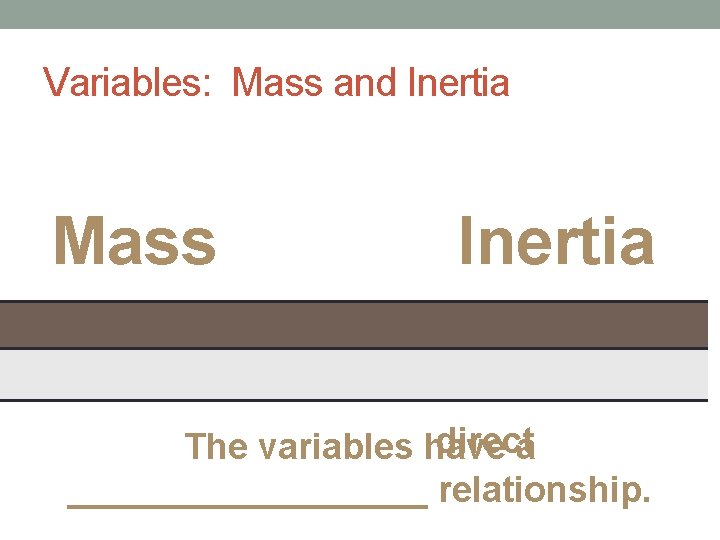
Variables: Mass and Inertia Mass Inertia direct The variables have a _________ relationship.
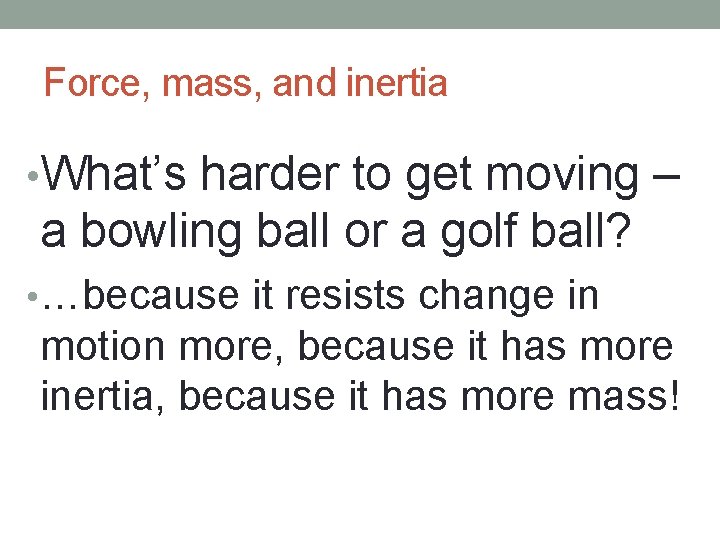
Force, mass, and inertia • What’s harder to get moving – a bowling ball or a golf ball? • …because it resists change in motion more, because it has more inertia, because it has more mass!