
Investigating System Requirements Chapter 2 Where are we

- Slides: 15
Investigating System Requirements Chapter 2
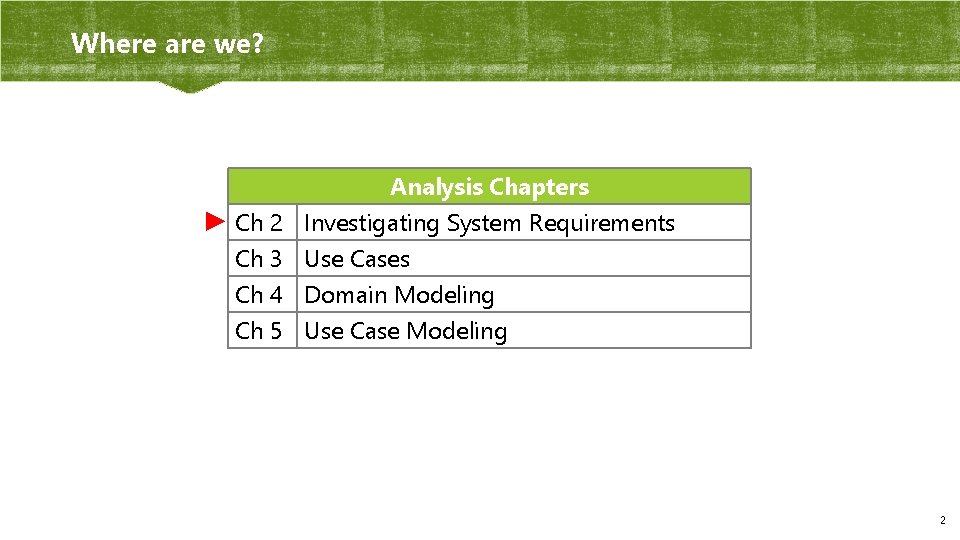
Where are we? Analysis Chapters Ch 2 Investigating System Requirements Ch 3 Use Cases Ch 4 Domain Modeling Ch 5 Use Case Modeling 2
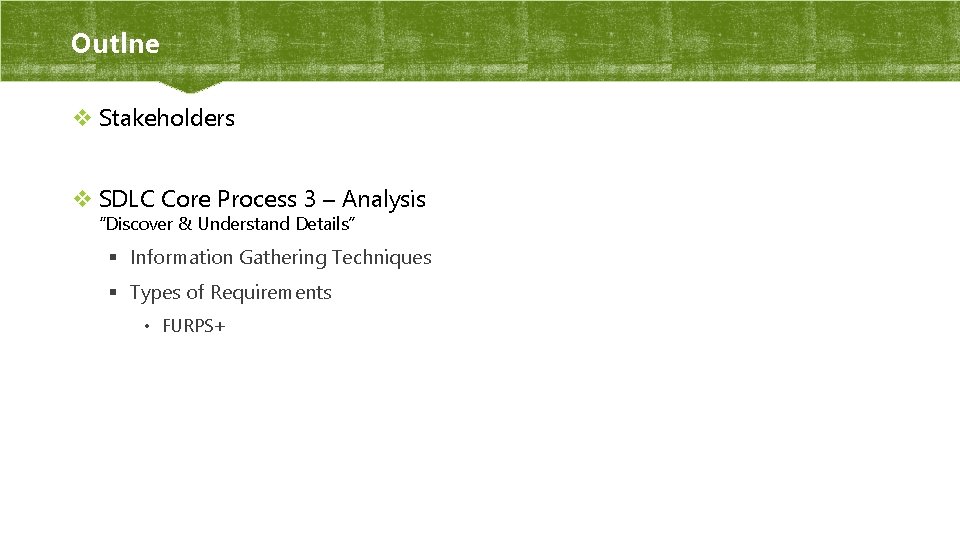
Outlne v Stakeholders v SDLC Core Process 3 – Analysis “Discover & Understand Details” § Information Gathering Techniques § Types of Requirements • FURPS+
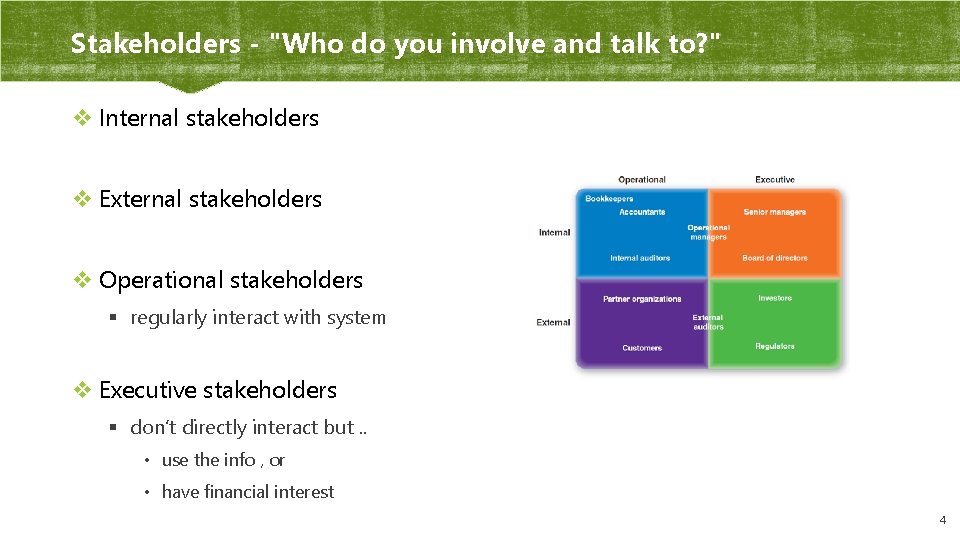
Stakeholders - "Who do you involve and talk to? " v Internal stakeholders v External stakeholders v Operational stakeholders § regularly interact with system v Executive stakeholders § don’t directly interact but. . • use the info , or • have financial interest 4
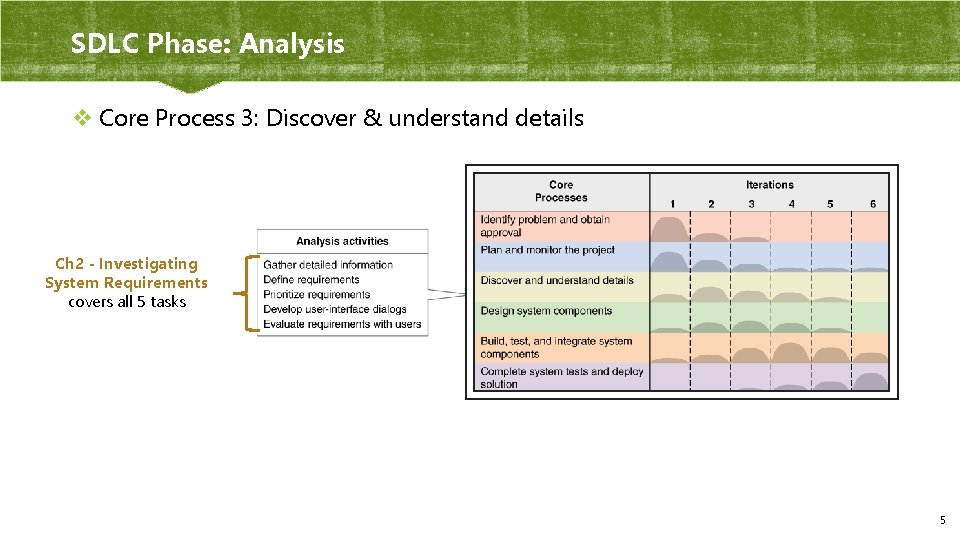
SDLC Phase: Analysis v Core Process 3: Discover & understand details Ch 2 - Investigating System Requirements covers all 5 tasks 5
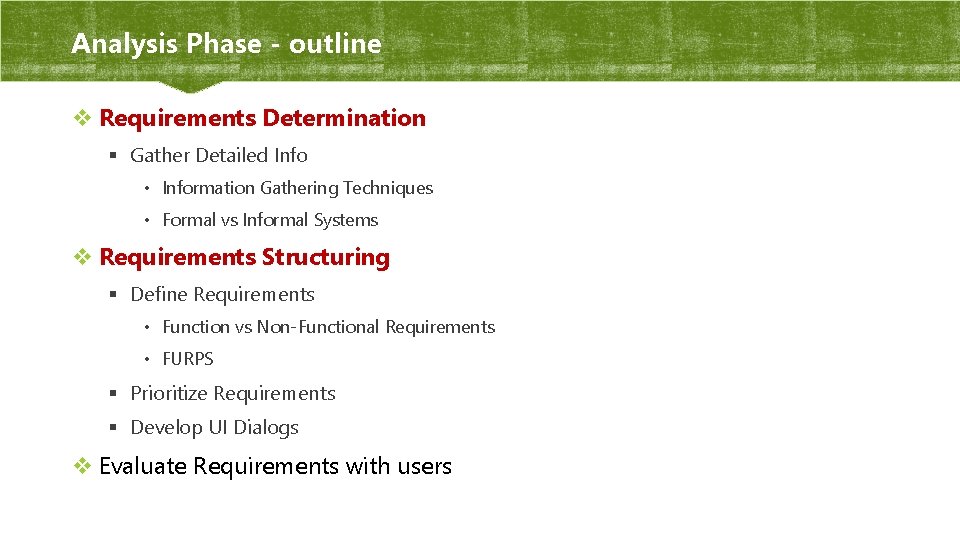
Analysis Phase - outline v Requirements Determination § Gather Detailed Info • Information Gathering Techniques • Formal vs Informal Systems v Requirements Structuring § Define Requirements • Function vs Non-Functional Requirements • FURPS § Prioritize Requirements § Develop UI Dialogs v Evaluate Requirements with users
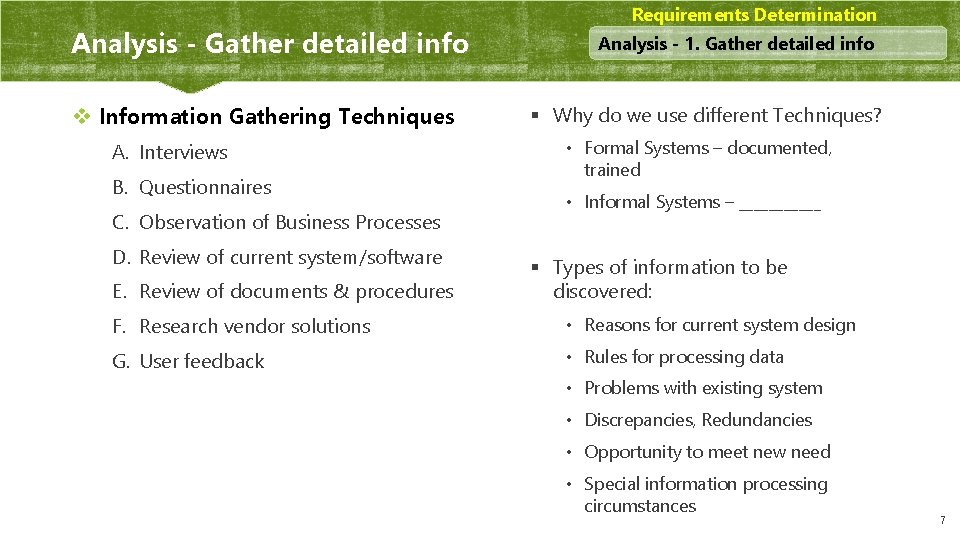
Analysis - Gather detailed info v Information Gathering Techniques A. Interviews B. Questionnaires C. Observation of Business Processes D. Review of current system/software E. Review of documents & procedures Requirements Determination Analysis - 1. Gather detailed info § Why do we use different Techniques? • Formal Systems – documented, trained • Informal Systems – ______ § Types of information to be discovered: F. Research vendor solutions • Reasons for current system design G. User feedback • Rules for processing data • Problems with existing system • Discrepancies, Redundancies • Opportunity to meet new need • Special information processing circumstances 7
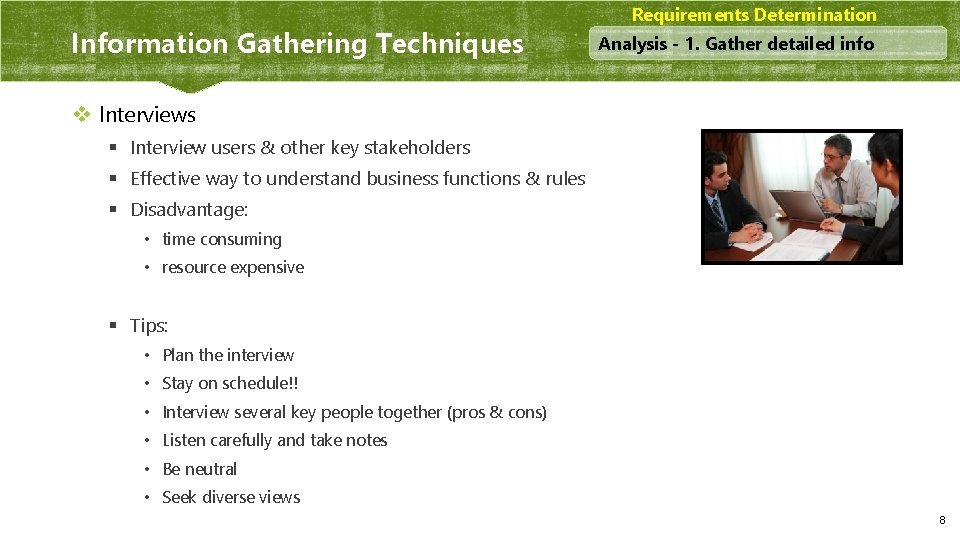
Information Gathering Techniques Requirements Determination Analysis - 1. Gather detailed info v Interviews § Interview users & other key stakeholders § Effective way to understand business functions & rules § Disadvantage: • time consuming • resource expensive § Tips: • Plan the interview • Stay on schedule!! • Interview several key people together (pros & cons) • Listen carefully and take notes • Be neutral • Seek diverse views 8
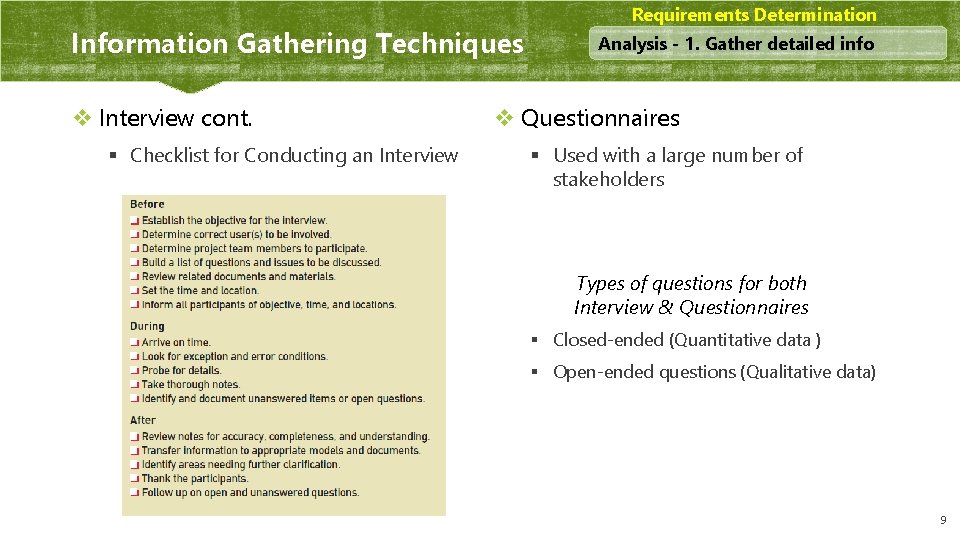
Information Gathering Techniques v Interview cont. § Checklist for Conducting an Interview Requirements Determination Analysis - 1. Gather detailed info v Questionnaires § Used with a large number of stakeholders Types of questions for both Interview & Questionnaires § Closed-ended (Quantitative data ) § Open-ended questions (Qualitative data) 9
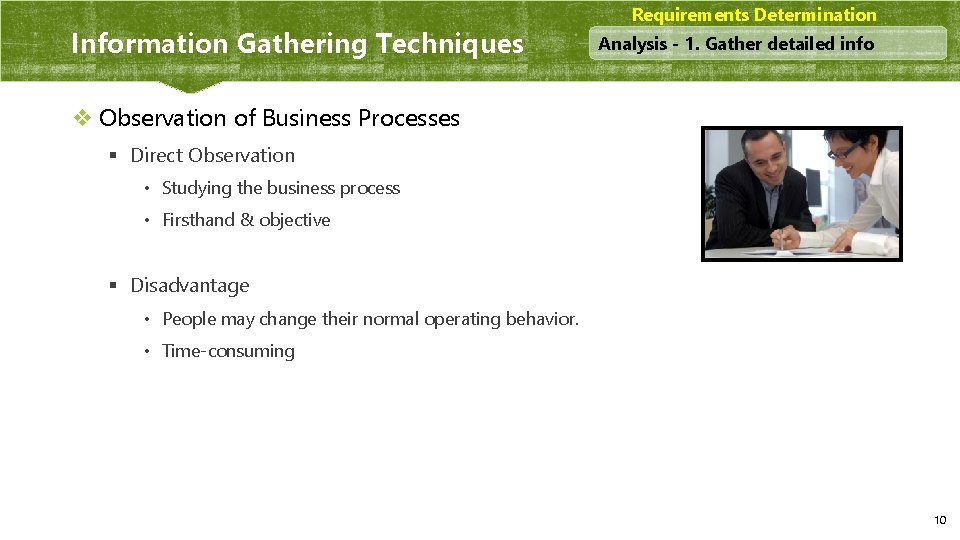
Information Gathering Techniques Requirements Determination Analysis - 1. Gather detailed info v Observation of Business Processes § Direct Observation • Studying the business process • Firsthand & objective § Disadvantage • People may change their normal operating behavior. • Time-consuming 10
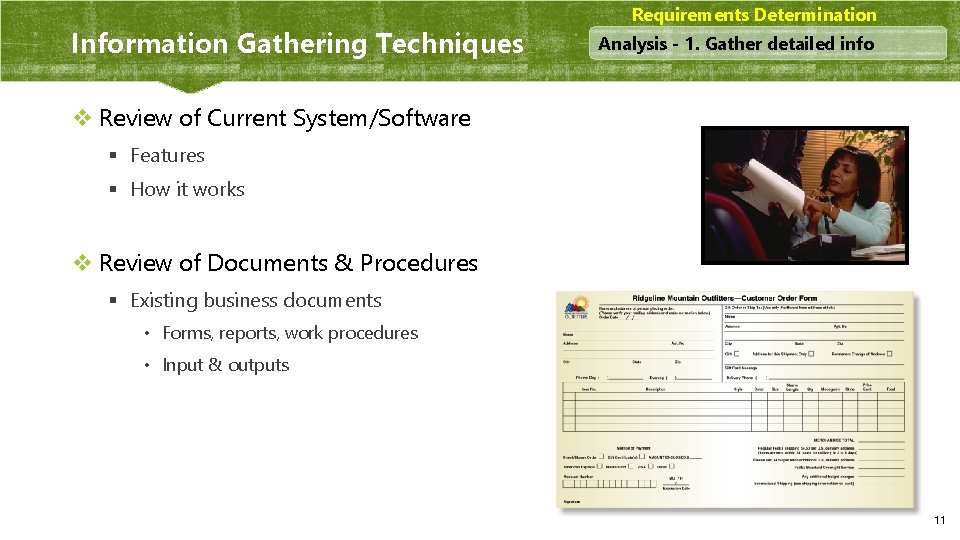
Information Gathering Techniques Requirements Determination Analysis - 1. Gather detailed info v Review of Current System/Software § Features § How it works v Review of Documents & Procedures § Existing business documents • Forms, reports, work procedures • Input & outputs 11
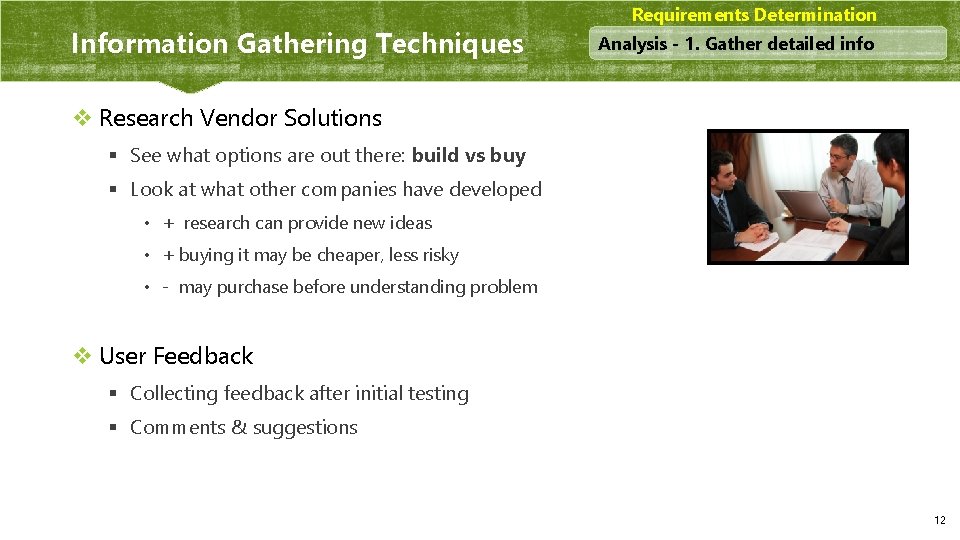
Information Gathering Techniques Requirements Determination Analysis - 1. Gather detailed info v Research Vendor Solutions § See what options are out there: build vs buy § Look at what other companies have developed • + research can provide new ideas • + buying it may be cheaper, less risky • - may purchase before understanding problem v User Feedback § Collecting feedback after initial testing § Comments & suggestions 12
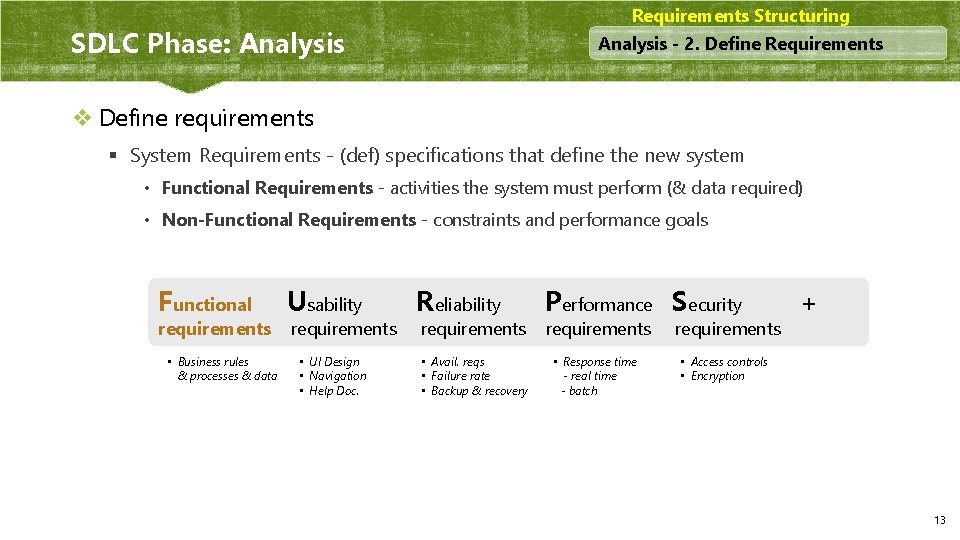
Requirements Structuring SDLC Phase: Analysis - 2. Define Requirements v Define requirements § System Requirements - (def) specifications that define the new system • Functional Requirements - activities the system must perform (& data required) • Non-Functional Requirements - constraints and performance goals Functional requirements • Business rules & processes & data Usability requirements • UI Design • Navigation • Help Doc. Reliability requirements • Avail. reqs • Failure rate • Backup & recovery Performance Security requirements • Response time - real time - batch • Access controls • Encryption + 13
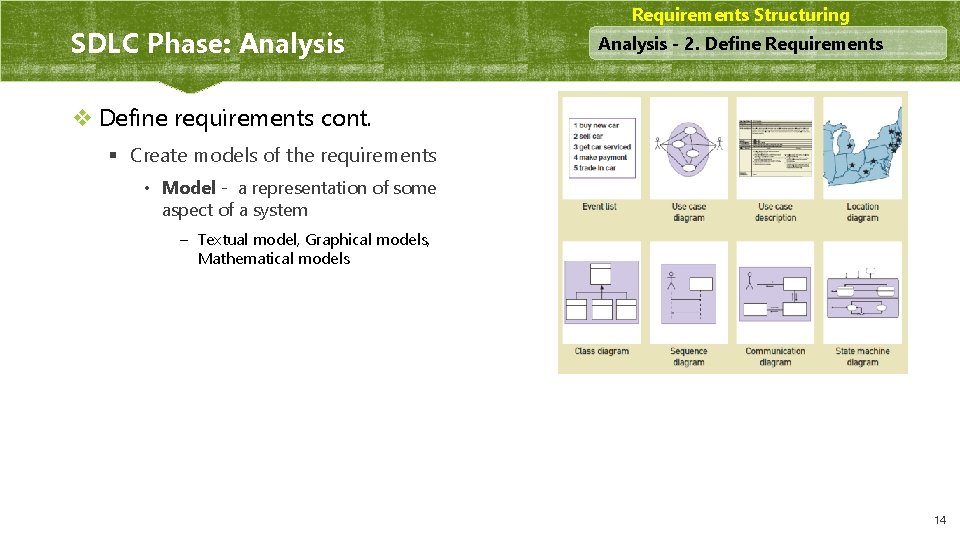
SDLC Phase: Analysis Requirements Structuring Analysis - 2. Define Requirements v Define requirements cont. § Create models of the requirements • Model - a representation of some aspect of a system – Textual model, Graphical models, Mathematical models 14
SDLC Phase: Analysis Requirements Structuring Analysis – Steps 3 -5 v Prioritize requirements § High vs. low priority § Scope creep v Develop UI Dialogs § Prototype § Can be better than an abstract model v Evaluate Requirements with users 15